
Siegfried Anthony/Variety via Getty Images


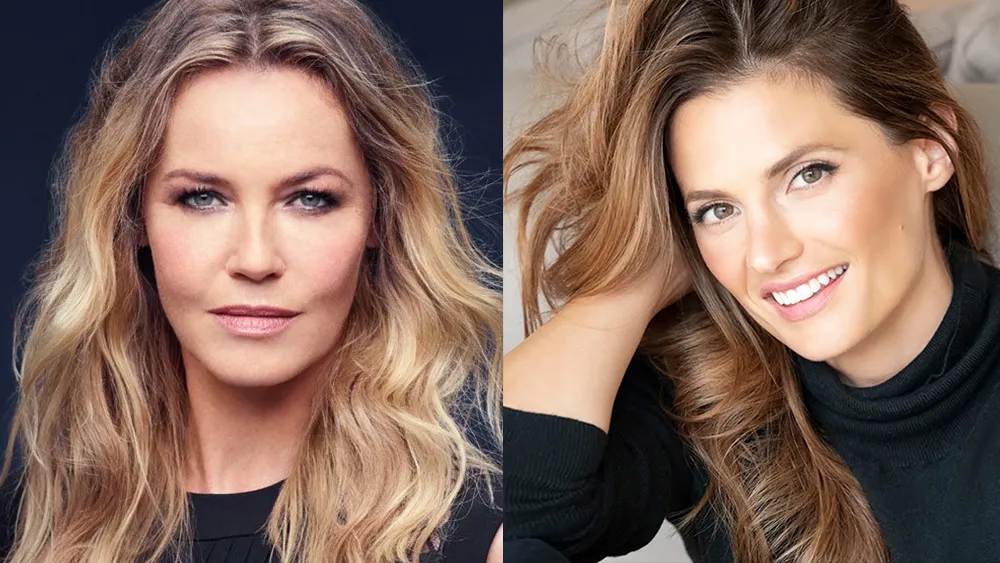
EXCLUSIVE: Legendary’s new Monsterverse series for Apple TV has added Connie Nielsen (Gladiator, Wonder Woman) and Stana Katic (Castle, Absentia) to its expanding cast led by Wyatt Russell, who also executive produces. Character details are under wraps.
Nielsen and Katic also join the previously announced Millie Brady, Pilou Asbaek, Corey Stoll, Ralph Ineson and Nyasha Hatendi.
From showrunner Joby Harold, the series will follow the story of Colonel Lee Shaw (Russell), an American operative who, in 1984, went on a secret mission behind enemy lines in an attempt to stop the Soviets from unleashing a horrific new Titan big enough to destroy the U.S. and turn the tide of the Cold War.
The character of Lee Shaw originated in the series Monarch: Legacy of Monsters, with Russell’s father Kurt Russell playing the older version and Wyatt Russell as the younger version.
Legendary’s Monsterverse is an expansive cross-platform story universe centered around humanity’s battle to survive in a world facing a catastrophic new reality – the monsters of myths and legends are real. Beginning with the Godzilla film in 2014 and continuing through 2017’s Kong: Skull Island, 2019’s Godzilla: King of the Monsters, 2021’s Godzilla vs. Kong, and most recently Godzilla x Kong: The New Empire, along with the eagerly anticipated sequel Godzilla x Kong: Supernova, which is set to release in 2027.
The new series is executive produced by Harold and Tory Tunnell for Safehouse Pictures, alongside Russell, Chris Black, Kyle Bradstreet, Alex Boden, Dillard, Andy Goddard, and James Skotchdopoloe. Hiro Matsuoka and Takemasa Arita executive produce on behalf of Toho Co., Ltd., the owner of the Godzilla character.
Nielson is represented by UTA, Untitled Entertainment, and Lichter, Grossman, Nichols. Katic is repped by The Gersh Agency, Principal Entertainment, and Nelson Davis Law.
>
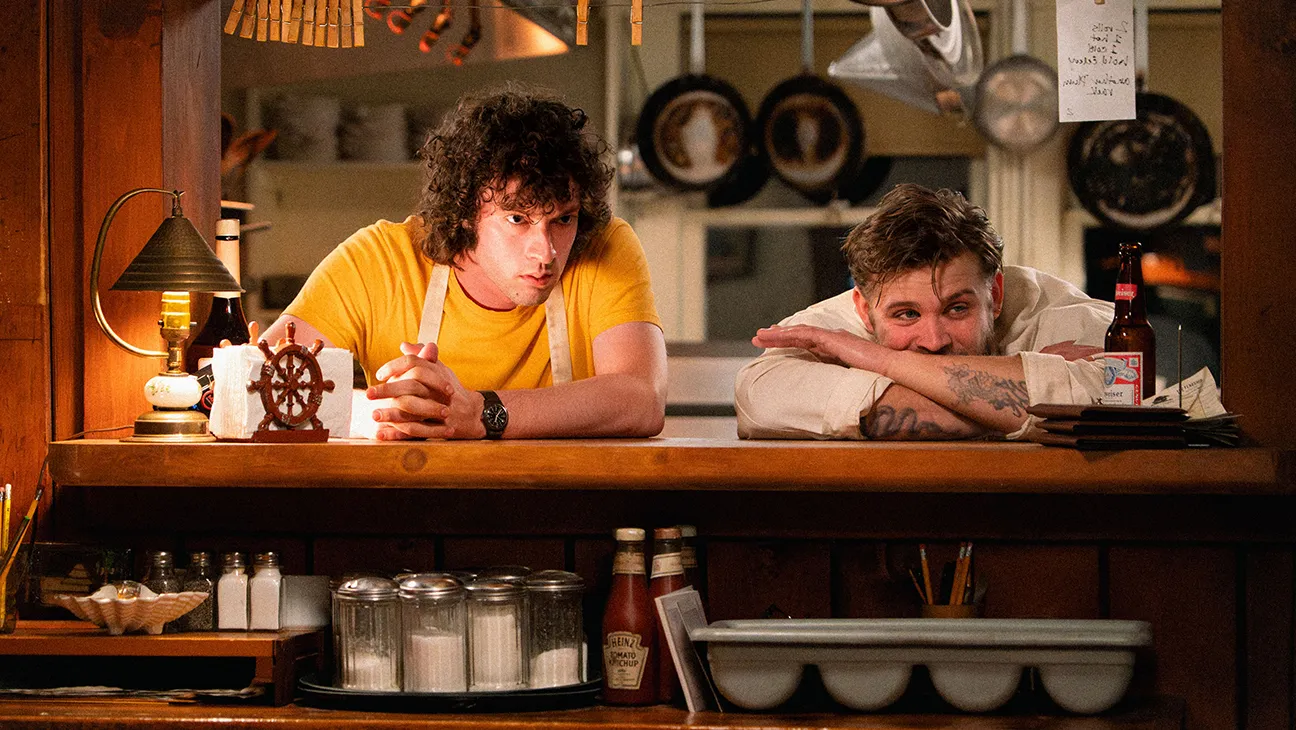
In the 1970s, a young Anthony Bourdain found himself in the small coastal town of Provincetown, Massachusetts. It’s where he spent four summers, getting his start in the culinary world as a dishwasher in a local restaurant and graduating to line cook.
Decades later, screenwriters Todd Bartels and Lou Howe trekked to Provincetown, retracing the steps of the young man who would become a cultural icon and host of the celebrated shows Parts Unknown and No Reservations.
The duo — pals from boarding school and later Harvard — wanted to write a movie about Bourdain, but didn’t want a cradle to grave story. They had a hunch a few chapters he wrote in his memoir Kitchen Confidential about his summers in Provincetown could be the key.
“The movie started kind of coming together in our minds,” says Howe hours spent in Bourdain’s favorite dive bar Old Colony Tap and other haunts.
Siegfried Anthony/Variety via Getty Images
That movie opened in limited release over the weekend, with Tony starring The Holdovers breakout Dominic Sessa as the chef, who died in 2018. A24 and director Matt Johnson are behind the project, telling the coming-of-age story about a guy who would later describe himself as “a spoiled, miserable, narcissistic, self-destructive and thoughtless young lout, and badly in need of a good ass-kicking.” That’s the kind of guy who makes for an interesting protagonist.
Before their Tony journey, Bartels and Howe established their biopic bona fides writing the Dolly Parton script Dumb Blonde, their first project together. It was strong enough to land on the Black List of best unproduced screenplays in 2022, and land the backing of producers Tim White and Trevor White, whose movie King Richard netted Will Smith an Oscar. Then, it met an unsurmountable hurtle: another producer was already working on a movie with Parton, forcing them to move on rather than battle a competing project.
Recalls Bartels: “We thought, ‘OK, well, now we’re biopic guys now. That was an experiment and we enjoyed it. What’s our next subject?”
Both were Bourdain fans, as was Emily Rose, who would become their manager at Mosaic. She responded with a resounding yes when they suggested it — the kind of encouragement that got their minds working.
Rose had some inroads in Bourdain world, and eventually landed the guys a meeting with Bourdain’s longtime literary agent Kimberly Witherspoon and with Ottavia Busia, his widow and mother of his child. Both are the de facto keepers of his estate.
Bartels and Howe pitched the movie as a love letter focusing on a single summer about a kid who stumbles into a restaurant and finds his calling. “The problem is, we didn’t know what else happened in the movie beyond that it ended in a clambake,” says Bartels. The estate liked the general concept, but said to come back when they had more.
The time to deliver more when the WGA strike hit in 2023. With nothing else to do, the scribes took a shot and wrote it as a spec. Eventually, director Johnson and star Sessa came aboard, with A24 following.
With all the pieces in place, the estate gave its blessing. There has been a lot of talk this year about biopics glossing over unflattering portraits of its subjects, particularly if the estate is involved. Not so here.
“If anything, Kim was, was encouraging of pushing it more,” says Howe. “Tony was very honest looking back on this period in his life. When he wrote about it or talked about it, he would, say things like, ‘I treated the world like my ashtray,’ or ‘I needed a good ass kicking.’”
The film bucked trends in other ways as well. In unusual circumstance for a pair of writers, the duo continued on with the project through its production, with director Johnson and his go-to scribe Matthew Miller forming something of a writers room with Bartels and Howe. All four men are credited on the screenplay, with Bartels and Howe’s earlier script landing on the 2024 Black List.
“We don’t want to be the kind of screenwriters who live in a cave by ourselves, and press send on an email,” says Bartels. “We want make our own movies, direct our own movies.”
They also were on set, earning executive producer credits. There, they got to observe how Johnson and master craftspeople operated, like One Battle After Another cinematographer Michael Bauman and The Holdovers production designer Ryan Warren Smith.
Howe and Bartels have been writing for years, but hit a new stride thanks to Tony. They’ve already worked on another high-profile project, Metal Gear Solid, the upcoming adaptation of the popular video games that have high flying filmmakers Zach Lipovsky and Adam B. Stein directing.
It might not seem like a natural project post-Tony move, but the biopic helped them land the deal. The directors wanted biopic energy for the project, and the guys treated the assignment as a biopic for protagonist Solid Snake.
But when they were in the running for the job, they’d never written an action scene, so they submitted the climactic clam bake from Tony, as well as a big concert scene from their never-made Dolly Parton script.
“Those were kind of the closest things to action sequences,” Howe says with a laugh. Good enough to show they could handle it, and they landed the job.
They also are developing the true crime podcast Murder 101 at Amazon Studios, with Jon Watts attached to direct and produce, and have a script about the origins of MTV, and another about Jacqueline Bouvier’s whirlwind romance with JFK.
As for Tony, Bartels sums it up: “It was a dream come true, honestly, that we were in a bar in Provincetown four years ago, dreaming up this thing.”
>
Following the release of his latest film, All of Us Strangers, Andrew Haigh found himself presented with options like never before. The British director, previously best known for gay cult faves like his breakout feature Weekend and HBO’s Looking, met widespread critical acclaim for the wrenching queer drama starring Andrew Scott, leading to his first BAFTA nominations for best screenplay and directing. It became his highest-grossing movie ever at the box office, pushing past $20 million globally. The opportunity to scale up, beyond the intimate character studies with which he’d made his name, couldn’t be ignored.
“When you have a thing that breaks through a little bit, you have to take advantage of it. It does make you take a lot more meetings afterwards, with lots of people sending you things — which is both good and then slightly exhausting,” Haigh says. “Part of me was like, ‘Should I go bigger? I could now go and do this thing over here that’s big and shiny and might get me more visibility.’ But I don’t necessarily need lots of visibility. The slightly more success you get, the harder it becomes to make those choices.”
And so Haigh looked inward. He did not go bigger. Instead, he turned toward the project he’d been trying to make for nearly 20 years — as tender, nuanced and subtle as anything in his oeuvre. A Long Winter feels, first and foremost, like an Andrew Haigh film.
Now 53, Haigh first read Colm Tóibín’s short story “A Long Winter” right around its 2006 publication, before he’d helmed a single movie. The tale follows 20-something Miquel, who lives with his father in a remote snowy village. His brother has just left on military service and his mother has suddenly walked out on the family. Miquel desperately searches for her in the freezing conditions, plumbing new depths of self-discovery in the process.
“Within that story was everything I wanted to make films about — I remember reading it and thinking, ‘This is the perfect manifestation of what I care about,’” Haigh says. This was roughly two decades ago. Then an aspiring filmmaker, Haigh convinced the prize-winning Irish author to grant him the rights to “A Long Winter.” As he built his career, he tried to make the movie, over and over — initially working off of a script set in Spain, as the original text was. “No one wanted to make it,” Haigh says. “I made it harder because I can’t speak Spanish and yet I was saying, ‘I want to shoot it in Spain.’”
Fred Hechinger in ‘A Long Winter.’
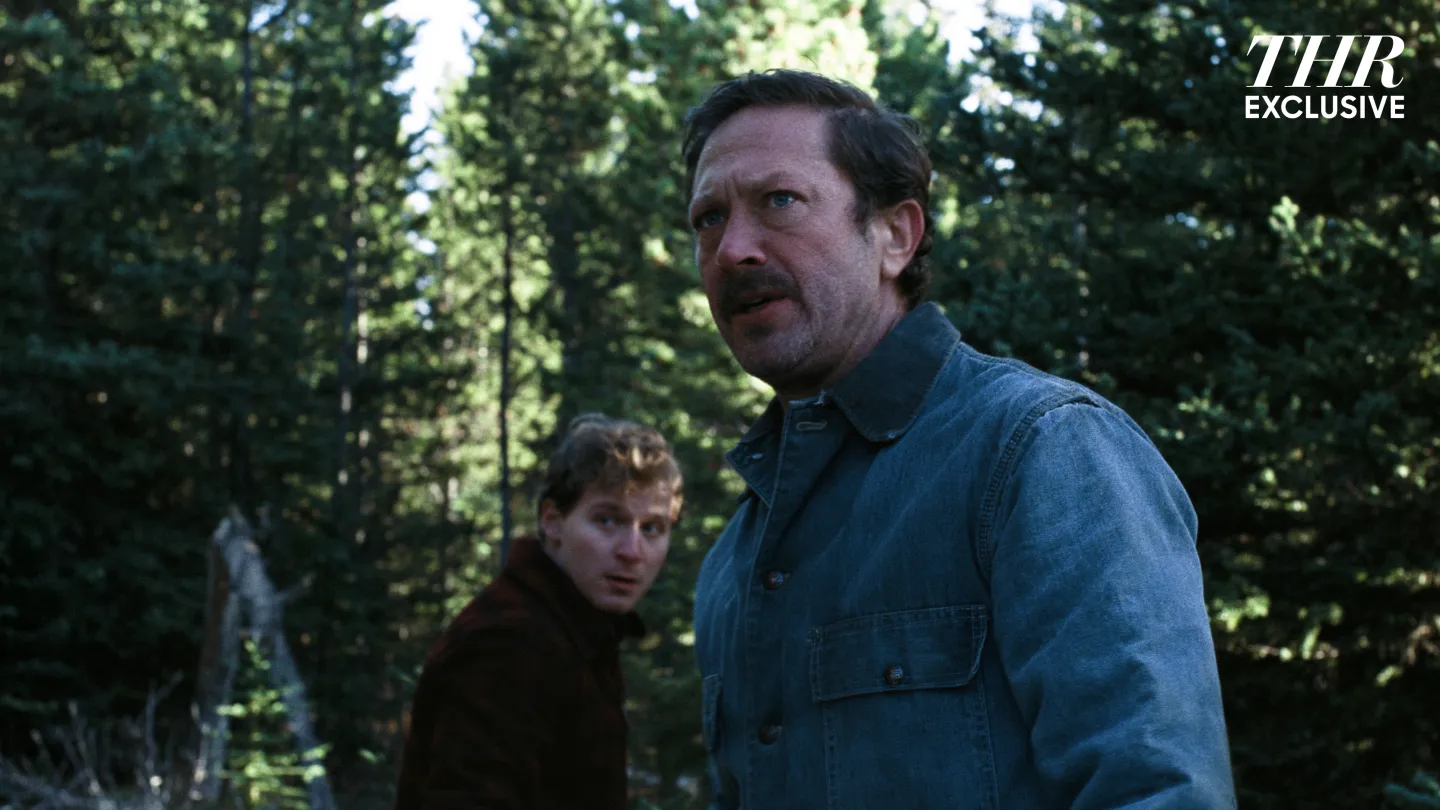
And so the moment finally arrived, in the wake of Strangers’ lauded run and with a revamped adaptation. Haigh’s ultimate film of A Long Winter is slated to screen at the Toronto and New York film festivals before hitting theaters via MUBI later this year. It’s set deep in the Rockies of ‘50s Colorado, with young Mike (Fred Hechinger) navigating a complex relationship with his lonely father, Lester (Ebon Moss-Bachrach), after his brother (Kit Connor) leaves for Korea and his mother (Caitríona Balfe) disappears, running away from a life she’d found unbearably isolating.
“If you look at all of the movies I’ve made, there are these themes bubbling under: longing and trying to deal with loss and trying to understand who you are in the world and how to fit into the world that doesn’t make sense to you,” Haigh says. “Those themes are very inherent in the story, but told in a [similar] way to what I’ve always tried to do with my filmmaking: Excavate the complicated emotions beneath the surface and find a way to get them onto the screen.”
It’s a visually ambitious film for Haigh, the haunting elements of Strangers extending to this rich family portrait. “It’s not a big movie, but we had big ambitions,” the director says. “It’s definitely moving away from the more naturalistic, realistic base that some of my earlier work lived in and finding this more metaphorical place.” As he’s committed to doing lately, Haigh shot on film — “There was no debate about that,” he says — and worked with D.P. André Turpin to execute a more subjective cinematic style.
“The camera follows the awakening of Mike. If you look at the film, it’s a lot more static at the beginning and it starts to breathe,” Haigh says. “The camera starts to open up. It starts to move independently. It starts to move without a character leading it across the frame. To me, the film was about breathing differently. It was about opening your eyes differently.”
A Long Winter shot up in Canada, a little over an hour outside of Calgary — Colorado was “too expensive,” Haigh concedes — and you can feel the intensity of the elements. The family home was an original construction in the woods, overseen by production designer Emmanuel Fréchette, following an extensive location scout. “I can stand in the kitchen window and I can look out and see the mountains — they’re above me, they’re below me,” Haigh says. “It’s still there now six months later, somewhere on the mountainside, surviving the extremes.
“We built that house up on the mountain, inside and out, no studio work, all up in 100-mile-hour winds and the snow,” Haigh continues. “It’s where they shot The Revenant, actually. So this is my version of The Revenant — a slightly more delicate version.”
Caitríona Balfe and Ebon Moss-Bachrach in ‘A Long Winter.’
**
Haigh has been working with his casting director Carmen Cuba for well over a decade, going back to Looking. For the past several years, Cuba has been telling him to cast Hechinger in something. “Since seeing him in The White Lotus’s first season — from that day onward it’s been, ‘You’ve got to work with Fred,’” Haigh says. “She adores him, and I understand why. She sees him as a young, Dustin Hoffman-type of actor.”
Several actors put themselves on tape for the part of Mike, and Hechinger won the lead role. His moving, intricate performance serves as a showcase of what he can do as a lead, following auspicious supporting turns in films like Thelma and Nickel Boys. “If you watch him at the beginning of the film and see him at the end, he even looks like a different person,” Haigh says. “It’s not an easy performance.”
It’s the consistent hallmark of Haigh’s work — the landscape for his characters to grow and change feels immense, even as the script hews to the tighter conventions of real life. Mike begins the film feeling relatively comfortable in the family’s isolated cabin bubble, if only because what lies beyond it feels so alien. His contentment is rocked by his mother’s absence — her yearning for something better. He must now look his devastated father in the eye each morning, seeing all of his pain and resentments and fears. He must consider what led his mother to risk her death to find something different for herself. And he must confront what he himself wants — particularly when a mysterious young man (Reservation Dogs’ D’Pharaoh Woon-A-Tai) begins living with the family to help out around the house.
As in Tóibín’s story, Mike is queer — but Haigh, known for his vividly realistic sex scenes from Weekend through to Strangers, communicates this onscreen with a surprising, impressionistic approach.
“What I love about Mike, and especially how Fred plays him, is he’s this sensitive soul within this world that isn’t sensitive — his sexuality for me is wrapped up in a different way of feeling about the world and seeing the world,” Haigh says. “He needs someone to understand how he sees the world. I’ve put sex in a lot of the films that I’ve done, and I wanted this to be different. Sometimes queerness is framed only within sexual desire and not within something else. But obviously when you are queer, you know that it’s not just about sexual desire itself. It’s more than that.”
Hechinger in ‘A Long Winter.’
In these subtle but intent pushes, Haigh arrived at what felt like the ending of a chapter in his life and career. “I think of this film as a bookend to a lot of things I’ve been exploring over the last 15 years of making films,” he says. “As I’ve grown up and my life has changed — all of these stories that have been me trying to understand my own background, my life, my childhood, absences in my own life and certain losses — I’ve come to terms with a lot. So I feel like this is an endpoint.”
As for what his next chapter might look like? Haigh politely demurs with a laugh: “Well, let’s see what happens.”
Just don’t expect his next era to go the way of tentpoles and blockbusters. Haigh can claim the rare feat of making modestly budgeted, emotionally driven, critically hailed dramas at a steady clip for the entirety of his career — during which time the very future of independent film has been put under existential threat. It has never been easy for Haigh to get his movies made. But this moment, he concedes, feels different — scarier than ever.
“It is a very, very challenging time, and everything is much more expensive. Making a film is so much more expensive than it used to be,” he says. “My first movie, I made it for $65,000. 45 Years was only $1.5 million. You couldn’t make that film now for $1.5 million — it would cost so much more. When I speak to younger filmmakers, it’s a terrible situation for them. It’s even harder for them.”
And yet: “I’m quite happy existing within this budget range. I like to tell these stories. I like to have control of how I tell my stories,” Haigh says. “I can’t be someone else. I can’t make films like other people. I can only make films like I can make them. And so when I tell myself I never want to do this again because it’s too difficult, I remind myself of that. It’s a pretty incredible thing that I’ve been able to do.”
Stay tuned for more exclusive features on this fall’s biggest festival-bound films.
>
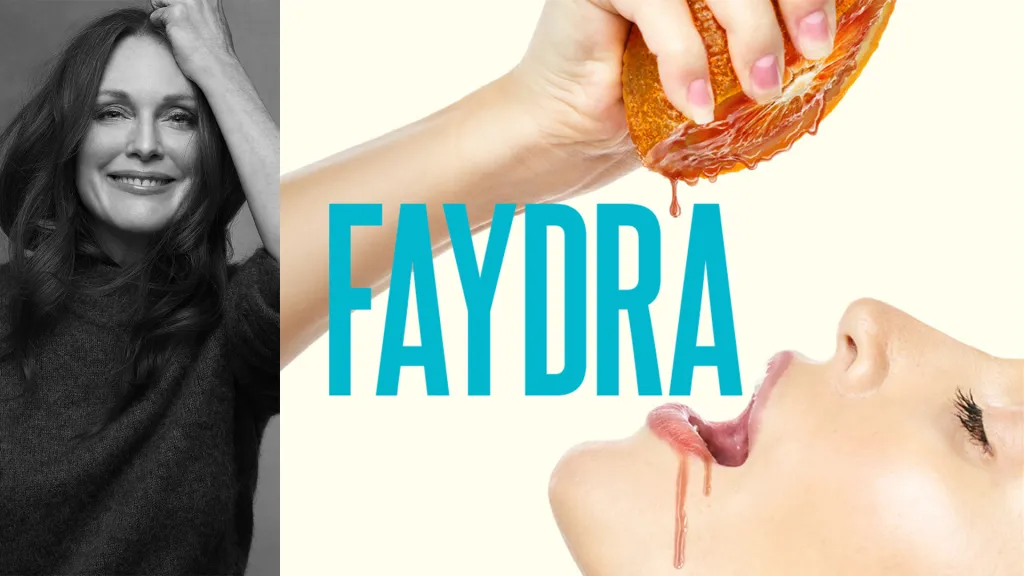
Oscar and Emmy winner Julianne Moore is set to play the title role in Faydra, a lusty new play by In the Next Room Tony nominee Sarah Ruhl that will have its world premiere Off Broadway next year.
Per the logline of the modern take on the Ancient Greek myth of Phaedra: Aphrodite aims her bow at Faydra and lets an arrow of love fly. Nothing is ever the same. Mostly because the object of Faydra’s sudden, all-devouring lust is her soon-to-be stepson. Faydra explores the impossibility of reconciling logic and longing — especially for a woman unwilling to deny desire.
Les Waters directs Faydra, which begins previews on February 2 at the Manhattan Theatre Club ahead of its February 25 opening. Other castings are TBA.
Moore won an Oscar for her lead role in 2014’s Still Alice and has been nominated four other times — twice as Lead Actress for Far from Heaven (2002) and The End of the Affair (1999) and twice for Supporting in The Hours (2002) and Boogie Nights (1997). Her big-screen credits also include The Room Next Door, May December, The Big Lebowski and many others. She won a Primetime Emmy for the 2011 telepic Game Change and a Daytime Emmy for As the World Turns in 1988. She next stars in writer-director Jesse Eisenberg’s The Debut, which will close the London Film Festival in October before hitting theaters December 11 via A24.
Two-time Pulitzer nominee Ruhl and Waters have a long shared history, collaborating on the 2010 Best Play Tony nominee In the Next Room (or the vibrator play) along with Eurydice, For Peter Pan on Her 70th Birthday and others.
“Sarah Ruhl’s bold, funny and devastating reimagining of this classic tale will draw the immensely gifted Julianne Moore back to the stage and mark Les Waters’ return to MTC after three decades,” MTC Artistic Director Nicki Hunter said in a statement.”
>


Search For Canadian TV Actor Stewart McLean Now Homicide Investigation


These ’90s fashion trends are making a comeback in 2017
According to Dior Couture, this taboo fashion accessory is back
Model Jocelyn Chew’s Instagram is the best vacation you’ve ever had
Your comprehensive guide to this fall’s biggest trends
9 Celebrities who have spoken out about being photoshopped
Emily Ratajkowski channels back-to-school style
A photo diary of the nightlife scene from LA To Ibiza