
‘Congo Boy’
Courtesy of Cannes Film Festival


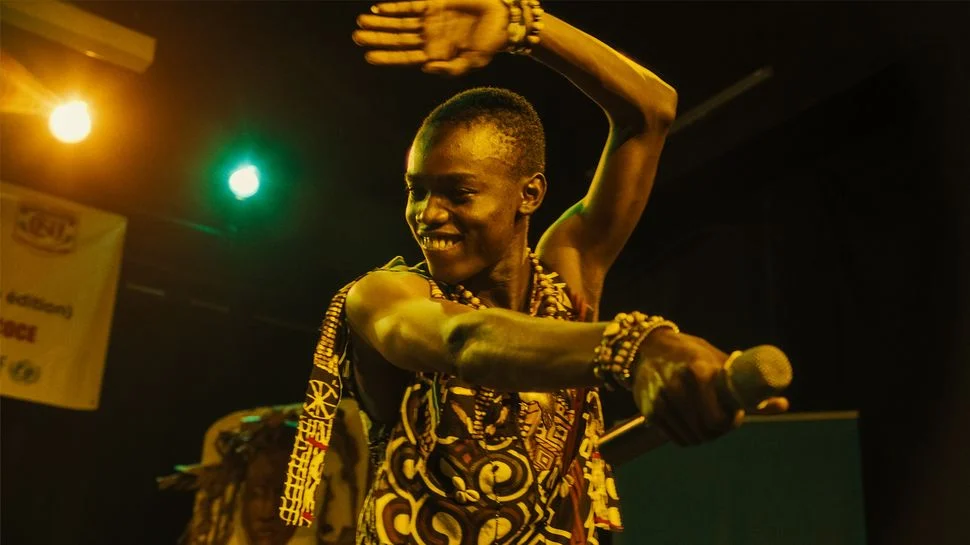
Robert is a 17-year-old Congolese refugee in Bangui, the capital of the Central African Republic (CAR). After his parents are imprisoned, he must care for his four younger siblings while striving to become a musician. That is the story of Congo Boy from director Rafiki Fariala. But it is also his, or at least inspired by his personal story.
The landmark co-production by the Democratic Republic of the Congo (DRC) and the CAR, which world premiered in the Un Certain Regard competition of the Cannes Film Festival, where it won its star Bradley Fiomona Dembeasset the best actor honor in the session, is now unspooling on the big outdoor square in Switzerland, namely the Piazza Grande as part of the 79th edition of the Locarno Film Festival, on Tuesday, Aug. 11.
Congo Boy‘s cast is led by Dembeasset and also features Christy Djomanda Louba, Pétruche Mbomba, Rosiana Kotozia, Gloria Ambacko and Dieufera Sana. The screenplay was written by Fariala, Tommy Baron and Boris Lojkine. Adrien Lallau handled the cinematography, with editing by César Simonot.
The autobiographical film – Fariala is the son of Congolese parents, based in the CAR and a self-taught musician – previously made the 2022 documentary We, Students!, in which he turned the camera on himself and his friends to capture everyday student life at Bangui University. Congo Boy is a production of Mahongo Films in the CAR, co-produced by Kiripifilms in the DRC, which is the company of filmmaker Dieudo Hamadi (Kinshasa Makambo, Downstream to Kinshasa), and France’s Unité.
You may wonder just how autobiographical the movie is. “It is really my own story, told through Robert, played by Bradley,” Fariala told THR via a translator just before the film’s world premiere. “When you see in the film that Robert is shot at, I was actually shot at.” The same is true for Robert’s stay with a colonel and his participation in a talent show, co-organized by UNICEF, among other things.
‘Congo Boy’
Courtesy of Cannes Film Festival
The filmmaker sees his experience as a refugee as something that reflects the lives of many people around the world and is showcased in the film. “My family fled the Congo because there was war there, and when we got to the Central African Republic, war started there, too,” Fariala explained. “They wanted to be in a country that was more at peace to protect their family. So they were thinking of going to Benin and then on to Europe to have some stability for our future. But unfortunately, they had passports and their refugee card that showed a different country, so they got arrested.”
After We, Students! was censored in the CAR, he had to go into exile in France, again as a refugee. “We often speak about refugees who want to go to Europe, but there are a lot of people who are refugees within different countries of Africa,” as the film shows, said the director. “And I want to convey that refugees are not beggars. They have to leave their home because this world is really crazy because of human destruction. But the young ones still want to fight; they still have hopes and dreams. I am proud to be a refugee.”
How did the director find his cast to tell a very personal story? “We did some street casting,” he recalled, highlighting that he added a French casting director to his Central African Republic crew to find the lead actor. “He’s my double,” emphasized Fariala. “It took months. I started looking into young singers on the music scene, but they lacked charisma. So I went to look for Congolese refugees, and we went to cultural centers in different neighborhoods. At this school at 6 a.m., we auditioned 50 young boys, including Bradley, and he was so different from the others. He was reserved and smiling, but he had something in common with me. He liked to sing and rap, but only in his bedroom, because his father didn’t want to hear anything about art. His father just wanted his son to do well in school, like mine. So I gave him an improv exercise about failing his high school degree, and it was very different from the others.”
Fariala was convinced that the young man was the right person to play the lead role. “But I had to talk to his parents, who didn’t agree at first,” he shared with THR. “So I had to be very persuasive.”
‘Congo Boy’
Courtesy of ‘Congo Boy’ – Makongo Films/Unité/Kiripifilms/Karta Film/Canal+
The rest of the cast is also made up of non-professional actors. And many portray their real-life experience, such as soldiers appearing in the film as soldiers, and Fariala’s aunt playing herself. That plays into the filmmaker’s interest in both documentary and fiction, and in mixing the two in his films. “I started out in documentary, but I always like to add a layer of fiction into my documentaries,” he told THR. And Congo Boy is a fictionalized version of his own life, with the reliance on a non-professional cast adding another layer of documentary vibe, he noted.
What’s next for Fariala? “For my next projects, whether they are documentary or fiction, I want to keep doing that,” mixing genres, the filmmaker told THR. “I have another documentary that I started filming before Congo Boy. It’s called To Live and is about one year of my life after We, Students! was released and was censored in the Central African Republic and I had to go into exile in France.”
What awaits audiences? “I was a bit lost in France,” the creative shared. “I was lonely, and I didn’t know how to talk to people, how to interact, and so I felt homesick. And I filmed myself to live. The camera became my friend; it kept me busy. At the same time, my little sister was sending me footage of the family back home, which helped me really hang in there. So, this will be my next film.”
But Fariala has more in the works. “I have written another fiction film which could be a sequel to Congo Boy, because of this character of Robert,” he told THR. “I want to see what happens when he has become a musician and when he becomes famous and how, when he’s accepted in the Central African Republic, he is going to live with success. I want to keep digging into that.”
>
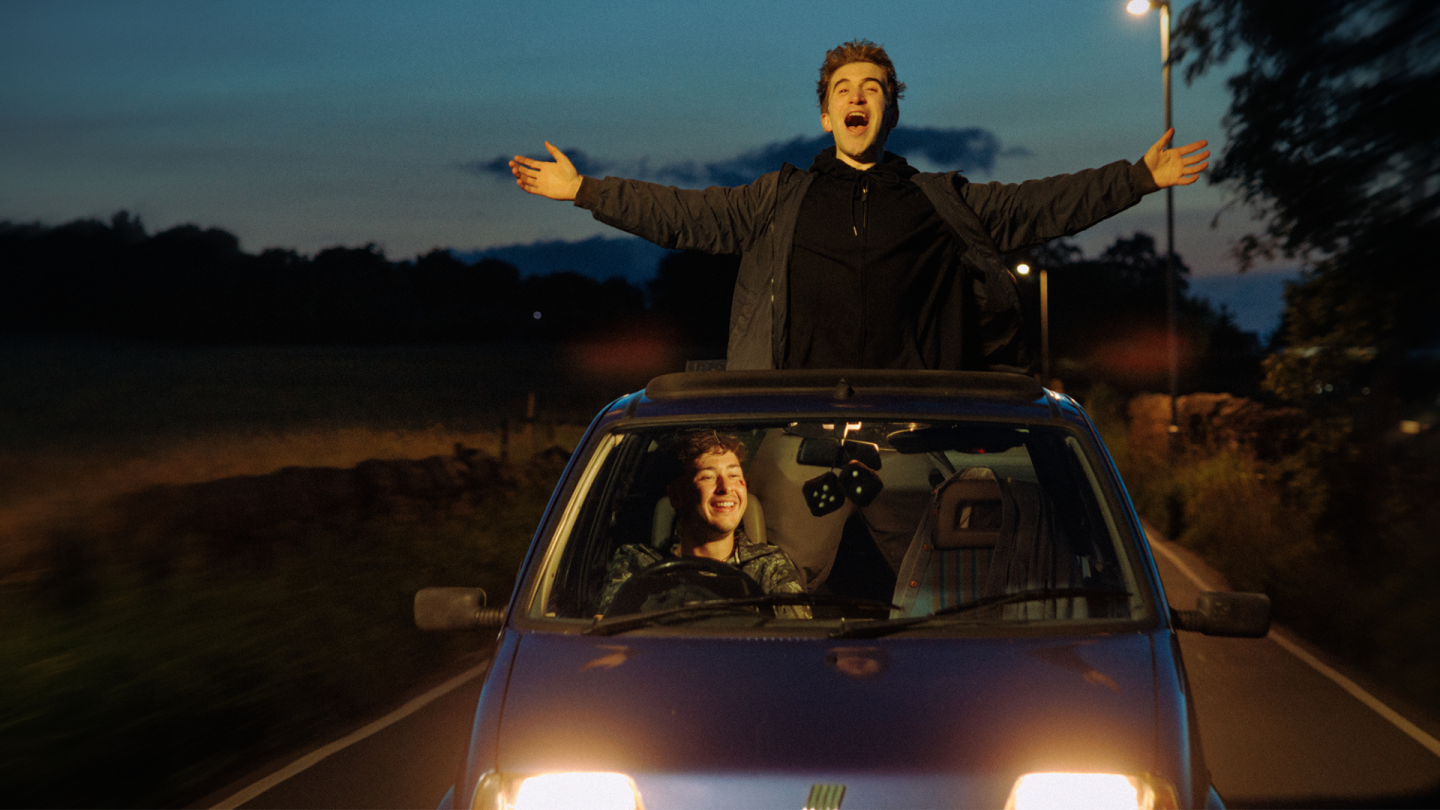
The Hollywood Reporter can unveil an exclusive clip from Ollie Gardner and Jake Harvey’s The State of Us, ahead of its premiere in competition at Edinburgh International Film Festival on Friday.
Led by California Schemin‘s Samuel Bottomley and It’s a Sin breakout star Callum Scott Howells, the British indie follows a boisterous tearaway called Frankie (Bottomley), who is struggling to come to terms with the inevitability of losing his best friend Taylor (Howells) to cancer. Frankie impulsively breaks Taylor out of hospice care for one final night of fun and debauchery, but what promises to be a night of hedonism quickly becomes something much more complicated.
In the clip, Bottomley’s character can be seen cajoling Howells’ Taylor into having a drink and letting loose at a house party. On the dance floor, Taylor feels some semblance of relief as he reconnects with his childhood best friend.
The characters in The State of Us are loosely based on Harvey’s childhood friendship group, in particular a friend called Jake Andrews, who died from cancer at the age of 18. Harvey and Gardner first met at university before pursuing careers in the arts — Harvey in TV, Gardner in theater — and with this movie, make their feature-length debuts. Co-starring with Bottomley and Howells are Frances Barber, Safia Oakley-Green, Seamus O’Hara, and Duggal Ram.
Gardner told THR ahead of the film’s premiere: “I think it’d be quite nice for young men to see this film and see themselves in it from a perspective of, ‘Oh I can joke around and I know where the line is, but I also can really tap into the love that I feel for those male friendships.’ This is one very small seed that we’re trying to [plant] in the discourse of masculinity. We really want to dig into it because it’s such an incredibly complex and complicated theme.”
Harvey added that he also hopes the humor lifts audiences heading to watch the film in the Scottish capital. “I think there’s a version of our film which was probably a bit more arthouse, a bit more serious, and more lends itself to that contemporary British type of independent cinema. But actually, [we’re] trying to do something that feels accessible,” he said. “It’s got its jokes and it’s dark humor, [and we hope] that it could actually reach the audience that it needs to speak to.”
The 2026 Edinburgh International Film Festival runs from Aug. 14-21, and kicks off on Thursday with Louis Paxton’s The Incomer. Festival director Paul Ridd told THR he thinks it’s their greatest competition slate since they rebooted the event three years ago. “I’ve been very proud of everything we’ve done in 2024 [and] 2025… But this one, I think, is really kind of surpassing expectations.”
Take a look at Samuel Bottomley and Callum Scott Howells in a clip from The State of Us below.
>
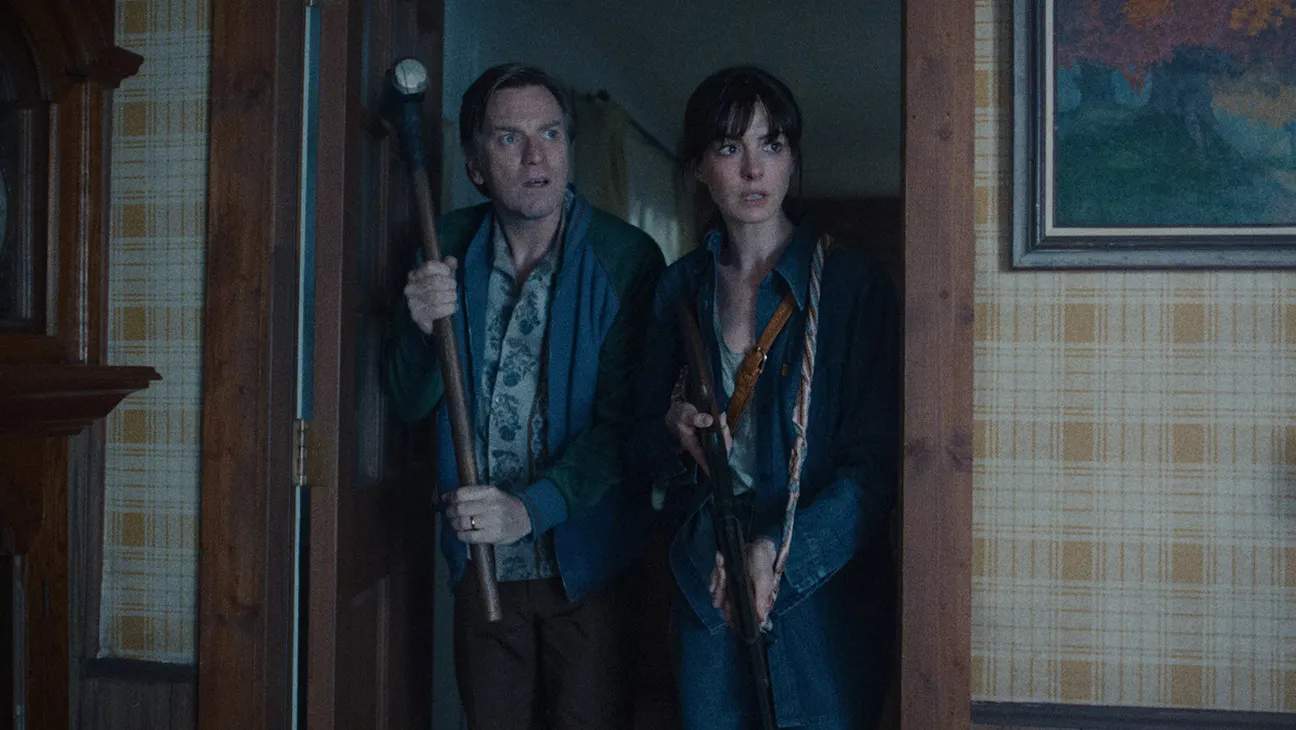
Warner Bros. held a series of press screenings for its high concept sci-fi survival feature The End of Oak Street in the last few days, and the early reaction on social media suggests the studio may, finally, have a film to get it out of its box office rut in 2026.
The logline for The End of Oak Street reads, “After a mysterious cosmic event rips Oak Street from suburbia and transports their neighborhood to someplace unknown, the Platt family soon discovers that their very survival depends on them sticking together as they navigate their now unrecognizable surroundings.”
Anne Hathaway, Ewan McGregor, Maisy Stella and Christian Convery star as the Platt family. The cast also includes P. J. Byrne and Chris Coy.
The film was written, directed and produced by David Robert Mitchell, the filmmaker behind the highly rated 2014 horror film It Follows and A24’s 2018 black comedy Under the Silver Lake. Notably, The End of Oak Street is produced by J.J. Abrams as well as Hannah Minghella, Jon Cohen, Matt Jackson and Tommy Harper.
There has been some online chatter that The End of Oak Street is secretly connected to Abrams’ Cloverfield franchise. Alas, Abrams shot down the speculation “The only connection to our Cloverfield movies is that Ewan’s partner is Mary Elizabeth Winstead, who was the star of 10 Cloverfield Lane, who we were very lucky to get to work with and who I adore,” Abrams told The Hollywood Reporter. “So there was that, but other than that, people are just making connections that they happen to see.”
Full reviews of The End of Oak Street are embargoed until Aug. 12, ahead of the film’s wide theatrical release on Aug. 14.
For Warners, there’s an added pressure for The End of Oak Street to succeed at the box office. The studio had a stellar 2025, when Sinners, A Minecraft Movie, Superman, Final Destination Bloodlines, Weapons and One Battle After Another all made hay at the global box office —and in the case of Sinners and OBAA dominated the Oscars. However, Warners has struggled this year, with The Bride!, Mortal Kombat II and Supergirl all proving to be huge bombs at the box office, with only Wuthering Heights finding any success.
See a selection of social media reaction to The End of Oak Street from the various screenings below.
>
Kill Jackie producer Fremantle saw its half-yearly revenues slide nearly 8% due to drama and film production, but earnings still shot up to nearly $70M.
In results released by parent RTL this morning, the London-based company posted revenues of €835M ($963M), down 7.7% on the €905M from the same period last year.
RTL attributed the fall to “timing effects at Fremantle’s drama and film business,” with entertainment and documentaries “broadly stable.”
Fremantle will see the dip reverse in the second half of 2026, RTL projected, and post “slightly higher” numbers that he previous year due to upcoming productions such as AMC+’s Kill Jackie and Fox’s Baywatch.
However, Fremantle was one of two units that RTL attributed to a significant increase in earnings across the group. Adjusted EBITA was up from €39M to €60, with the margin widening sharply from 4.3% to 7.2%. This puts Fremantle on track to reach a target margin of 9% for the full year.
The news comes less than two weeks after Deadline revealed Fremantle had hired Katie O’Connell Marsh to become CEO of its Global Scripted Hub. Her role will be include building out Fremantle’s drama and comedy slate, while improving the revenue take from productions. Days after her hire became public, the Baywatch reboot sold to Prime Video in numerous territories.
Fremantle’s latest financials come after RTL implemented cost saving measures at the production house following a strategic review. Part of the move saw Fremantle exit fully-financing films, though it will remain as a co-producer on projects.
RTL noted cost reduction plans will continue until 2030 by “optimisation of production costs, simplification of processes [and] reduction of technical costs – driven by AI.”
RTL profits rise
Overall, Luxembourg-based RTL posted group revenues up 0.1% at €2.9B, with adjusted EBITA coming in at €239M, significantly higher than the €160M delivered in H1 2025. Excluding the impact of buying Sky for €68M, RTL posted group adjusted EBITA up €18M.
Streaming revenue, which comes from services such as RTL+ and M6+, was up 27.2% to €299M, with the number of subscribers growing alongside higher pricing in Germany and “rapidly growing” ad money in Germany and France. In total, paid subscriptions for Germany and France – RTL’s biggest two territories – were up 20.7% to 8.7 million.
Adjusted EBITA from streaming was €31M and is expected to reach around €100M for the full year, way up on previous guidance to analysts of around €25M-€50M.
The result were also the first since RTL on June 1 completed a deal for Sky Deutschland, which posted adjusted EBITA of €61M in H1. RTL noted this would not be indicative of the whole year as June has no production costs attached to the Bundesliga or German Cup football.
Once RTL+ and Sky Deutschland merge operations, RTL will have more than 12 million paying subs across in Germany, Austria and Switzerland.
“RTL Group delivered a strong first half performance in 2026, driven by rapid streaming growth, gains in both TV audience and TV advertising market shares, and the successful completion of the acquisition of Sky Deutschland,” said RTL CEO Clément Schwebig. “We also demonstrated the unique power of our content and brands, as the coverage of the football World Cup on M6 and M6+ attracted 60 million viewers and generated exceptional digital engagement.
“Our streaming businesses deliver strong profitability. Streaming revenue and paid subscriptions continue to grow dynamically. As a result, streaming is now expected to contribute around €100M to our full-year operating profit.”
Schwebig, the former Warner Bros. Discovery exec, replaced Thomas Rabe as CEO earlier this year. Rabe remains boss of RTL parent Bertelsmann until later in the year.
>


Search For Canadian TV Actor Stewart McLean Now Homicide Investigation


These ’90s fashion trends are making a comeback in 2017
According to Dior Couture, this taboo fashion accessory is back
Model Jocelyn Chew’s Instagram is the best vacation you’ve ever had
Your comprehensive guide to this fall’s biggest trends
9 Celebrities who have spoken out about being photoshopped
Emily Ratajkowski channels back-to-school style
A photo diary of the nightlife scene from LA To Ibiza