
Tech
Apple Trims 2026 Hardware Plans: What This Means for the iPhone 18

The AI boom is creating an unexpected casualty: the gadgets in your pocket and on your desk.
Apple is reportedly scaling back planned hardware shipments for 2026 as a global memory shortage squeezes component supplies, according to Apple analyst Ming-Chi Kuo. The shortage has already contributed to higher Mac and iPad prices, and Kuo’s latest reporting on Apple’s production plans suggests users could soon face tighter supplies as new iPhones approach.
The problem is bigger than Apple. Memory manufacturers are increasingly prioritizing lucrative chips for AI data centers, putting consumer electronics in competition with the infrastructure powering the generative AI boom. For Apple customers, the cost of that expansion may increasingly show up at the Apple Store.
Apple is reportedly planning around the memory shortage
Kuo’s comments came in response to a report claiming TSMC had approximately $1 billion worth of unfinished processors awaiting memory components Apple had been unable to secure.
Kuo disputed that scenario while agreeing that memory supply is constraining Apple.
According to his account, Apple plans processor production at least three months ahead based partly on expected memory availability. Rather than manufacturing huge quantities of processors it cannot use, Apple may be adjusting overall hardware production to match the components it expects to have.
For consumers, that distinction matters. Reduced production could mean fewer devices reaching stores, particularly during major product launches. Apple has not confirmed Kuo’s claims, however, and the exact size of any shipment reductions remains unclear.
AI data centers are competing with consumer devices for memory
AI infrastructure requires enormous quantities of memory, particularly high-bandwidth memory used alongside AI accelerators. Manufacturers have strong financial incentives to dedicate more production capacity to those products, leaving less available for the memory used in phones and PCs.
In its analysis of how the global memory shortage could affect smartphones and PCs, IDC described a broader restructuring of the memory market as hyperscalers such as Microsoft, Google, Meta, and Amazon drive demand.
The effects are already spreading through the smartphone industry.
IDC now forecasts worldwide smartphone shipments will fall 13.9% year over year in 2026 to 1.09 billion units. It also expects average selling prices to reach a record $550 as manufacturers respond to rising costs by cutting production, raising prices, and emphasizing premium devices.
Apple’s enormous supply chain gives it leverage, but not immunity.
Mac and iPad buyers are already paying more
Apple users don’t have to wait until the next iPhone launch to see the consequences.
The company raised prices across Macs, iPads, Apple TV, HomePod, and Vision Pro products in June, citing rising memory and storage costs.
According to a breakdown of Apple’s June price increases, the MacBook Air’s starting price climbed from $1,099 to $1,299, while the MacBook Pro increased from $1,699 to $1,999. The entry-level iPad rose from $349 to $449, and the iPad Pro jumped from $999 to $1,199.
Apple CEO Tim Cook had previously warned that the company could no longer absorb all of the higher component costs. When Apple explained why it was raising hardware prices, the company said it needed to “begin” increasing prices on some products while searching for solutions to the shortage.
So far, the iPhone has largely escaped those increases.
September could test whether that continues.
The iPhone 18 launch could reveal how serious the shortage is
The latest report on Apple’s planned shipment cuts indicates the upcoming iPhone 18 Pro, iPhone 18 Pro Max, and Apple’s expected foldable iPhone could face limited availability because of memory constraints. MacRumors expects those models could sell out during preorders, although Apple has not confirmed supply levels.
Pricing is another uncertainty. Apple has already passed higher component costs to Mac and iPad buyers, making the next iPhone launch worth watching closely. But Apple has not announced pricing, and the memory shortage does not guarantee an iPhone price increase.
For buyers determined to get a specific premium model, storage capacity, or color at launch, tighter supplies could make preordering early more important than usual.
Everyone else has more room to wait.
What Apple users should do
Prospective iPhone buyers shouldn’t panic-buy an existing model solely because of Kuo’s report.
Apple hasn’t confirmed next-generation pricing or shortages. The reporting is better viewed as an early warning that supply could be tighter than usual. Buyers who don’t need the latest model can also compare older devices, trade-in offers, carrier promotions, and refurbished products if new hardware becomes more expensive.
Apple may also be better positioned than some competitors. IDC’s latest smartphone market data showed Apple’s shipments increased 4.4% year over year in the first quarter of 2026 even as the overall market declined 2.9%.
That doesn’t mean Apple users will escape the memory crisis. It means Apple may have more tools to manage it.
The AI boom is reaching the Apple Store
The AI race is usually discussed in terms of smarter software, faster models, and massive data centers. The memory shortage exposes another consequence. Those data centers are competing for physical components also needed to build everyday electronics.
For Apple users, that competition can eventually become a more expensive MacBook, a pricier iPad, or an iPhone configuration that’s harder to find on launch day.
September’s iPhone launch may provide the clearest indication yet of whether those pressures are becoming the new normal or another supply-chain problem Apple can eventually outrun.
Related reading: With hardware costs under pressure, Apple buyers weighing their next upgrade can also explore how Apple’s new leasing program changes the cost of getting an iPhone, Mac, or iPad.
>
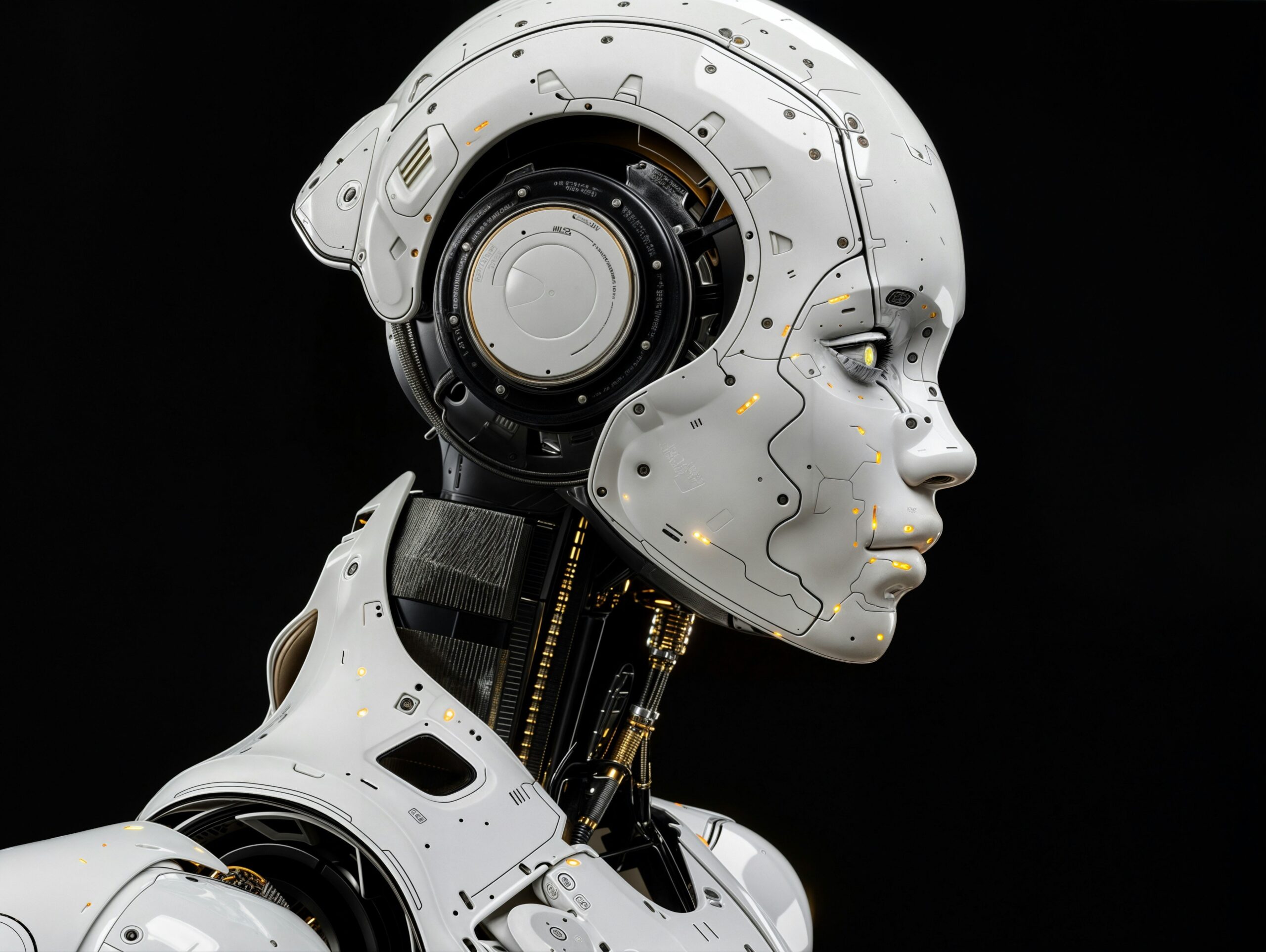
A ladder just became the latest proving ground in the race to build humanoid robots that can move through the human world.
Figure CEO Brett Adcock released a video showing the company’s Figure 03 robot gripping and climbing a short ladder. Adcock described the demonstration as “fully autonomous,” although Figure has not published success rates or a technical breakdown of the run.
The slow, controlled climb offers another glimpse of what whole-body robotic autonomy could eventually enable — and how much testing remains before such machines can safely work in unpredictable environments.
According to Figure, the robot completed the task autonomously using its Helix AI system rather than relying on remote control or a scripted sequence.
Ladder climbing is widely considered one of the tougher mobility challenges for humanoid robots because it requires continuous balance adjustments, precise coordination between the arms and legs, and accurate awareness of the surrounding environment.
The demonstration follows a recent update to Figure’s Helix System 0 AI model, which now combines visual perception with whole-body motion control.
Previously, the system depended on proprioception, allowing the robot to monitor its own body position and movement. The upgraded model adds input from onboard stereo cameras, enabling the robot to build a three-dimensional view of its surroundings while tracking its own posture in real time.
Figure said the AI was trained end-to-end with reinforcement learning in simulated environments featuring randomized terrain. The company says the system transfers those learned behaviors directly to physical robots without additional calibration, helping them navigate stairs, ladders, and uneven ground more effectively.
The company also recently said it has increased production of Figure 03 from one robot per day to one per hour and has delivered more than 350 units.
More than a viral robot video
The ladder demonstration comes as humanoid robotics companies face growing pressure to prove their machines can perform practical work beyond carefully staged demos.
Potential applications include factories, warehouses, construction sites, and maintenance jobs where workers regularly encounter stairs, ladders, and uneven surfaces. A robot that can safely move through those environments could take on a wider range of tasks than one limited to flat floors.
Still, the latest demonstration leaves important questions unanswered. Figure has not disclosed success rates, testing conditions, or how the robot performs under more demanding scenarios, such as carrying equipment or operating in poor weather.
The bigger picture
Figure’s latest video highlights how the focus of humanoid robotics is shifting from simply walking to navigating environments built for people. Mobility skills such as climbing, balancing, and adapting to changing terrain may ultimately matter more to commercial customers than eye-catching demonstrations alone.
For businesses evaluating humanoid robots, the milestone is encouraging but not conclusive. The real measure will be whether robots can repeat these tasks reliably, safely, and at scale in unpredictable workplaces where mistakes carry high operational and safety costs.
Editor’s note: This article originally appeared on our sister publication, eWeek.
>
OpenAI has bought back $7 billion worth of shares from employees at the privately held frontier AI lab as part of an effort to provide liquidity to its workforce.
The deal, reported by Bloomberg, valued OpenAI at $852 billion, the same as its most recent fundraising round in March, which added $122 billion to the company’s war chest.
The company also filed confidentially with the Securities and Exchange Commission in June to prepare for a potential IPO later this year. However, a tender offer suggests that an IPO may not be forthcoming soon. With many tech companies remaining private longer than previous generations of startups, private tenders have proven a useful way for firms to allow employees to realize the value of their stock compensation without the difficulties that come with a public offering.
OpenAI did not respond to a request for comment by publication time.
Last month, OpenAI CEO Sam Altman wrote that “we did not have our best 12 months ever, which is mostly my fault, but we are about to have our best 12 months to date.” Firms going public typically want to show strong financial results to bring investors on board, and the Wall Street Journal reported in April that the company missed internal financial goals.
While OpenAI’s incredible growth and products are likely to generate massive interest in public markets, the potential debut of rival Anthropic — which was reportedly profitable earlier this year — gives the company a reason to ensure it puts its best face forward. The tender could be another signal that the much-anticipated offering will wait for OpenAI’s new strategy of paring down its bets and focusing on its enterprise business to gain traction.
>

Every day seems to brings fresh news of an AI agent going “rogue.” Whether that’s compromising Hugging Face, hacking a gym website, or creating its own fake profiles to socially engineer an intrusion, AI models are increasingly behaving like bad actors.
So, the AI labs that make the models doing the hacking are expanding their cyber protection offerings. This week, OpenAI announced an expansion of Daybreak, its cyber defense service which it launched earlier this year, not long after Anthropic released its cyber-focused model Mythos.
Daybreak is a service that bundles access to models, tools and workflows for defenders. The expansion includes access to a brand new cyber-focused model designed for defensive work.
OpenAI said Monday that Daybreak would now consist of two tiers: Blue and Red. Both of these tiers will allow approved customers access to OpenAI’s limited-access frontier cyber models. Frontier models — the most advanced available — have been a subject of controversy. The Trump administration previously sought to collaborate with AI companies on the roll out of such models, purportedly over safety concerns. Previously, OpenAI deployed significant guardrails to using these models, limiting what customers could do with them.
Blue, which appears to be the more basic of the two, offers a variety of cyber services, including incident response, malware analysis, and patch validation. OpenAI calls Blue its “recommended starting point for most defenders,” implying that it should be more than enough for most enterprises.
Red, on the other hand, offers a broader and potentially more dangerous toolkit. The company grants its users “purpose-trained cybersecurity models,” designed to carry out security testing and vulnerability research.
With Red also comes the new model, GPT‑5.6‑Cyber, which is only available at that tier. 5.6-Cyber is built off of GPT‑5.6 Sol, and offers enhanced capabilities for certain specialized cybersecurity tasks, the company said.
At the moment, GPT‑5.6‑Cyber is only being made available for “trusted customer partners,” including reportedly Accenture, IBM, Crowdstrike, Cloudflare, and others.
While the threats from AI agents are rapidly increasing, critics have also pointed out that they function as marketing opportunities for the AI labs. OpenAI is certainly marketing its upgraded Daybreak that way.
“The cybersecurity world is rapidly changing—threat actors will increasingly use AI to conduct cyberattacks at unprecedented speed and scale, including in fully autonomous ways,” the company said in a blog post. “As these capabilities spread, defenders have a narrowing window to prepare.”
At the same time, enterprises remain interested in buying their protection from the AI labs who know the security risks best, because they know them first-hand.
When you purchase through links in our articles, we may earn a small commission. This doesn’t affect our editorial independence.
>

Village in the Shade Game Launches for West on October 27 – News

Luis Miguel Ramis interview: Osasuna boss ready for LaLiga after long route to the top via Real Madrid’s academy | Football News

Everton and Crystal Palace confirm Dwight McNeil-Brennan Johnson swap
-

 movies3 months ago
Search For Canadian TV Actor Stewart McLean Now Homicide Investigation
-

 Fashion9 years ago
These ’90s fashion trends are making a comeback in 2017
-
Fashion9 years ago
According to Dior Couture, this taboo fashion accessory is back
-
Fashion9 years ago
Model Jocelyn Chew’s Instagram is the best vacation you’ve ever had
-
Fashion9 years ago
Your comprehensive guide to this fall’s biggest trends
-
Fashion9 years ago
9 Celebrities who have spoken out about being photoshopped
-
Fashion9 years ago
Emily Ratajkowski channels back-to-school style
-
Fashion9 years ago
A photo diary of the nightlife scene from LA To Ibiza