
Sports
Ifeanyi Ndukwe: The Liverpool teenager who can’t play in Premier League because of Brexit

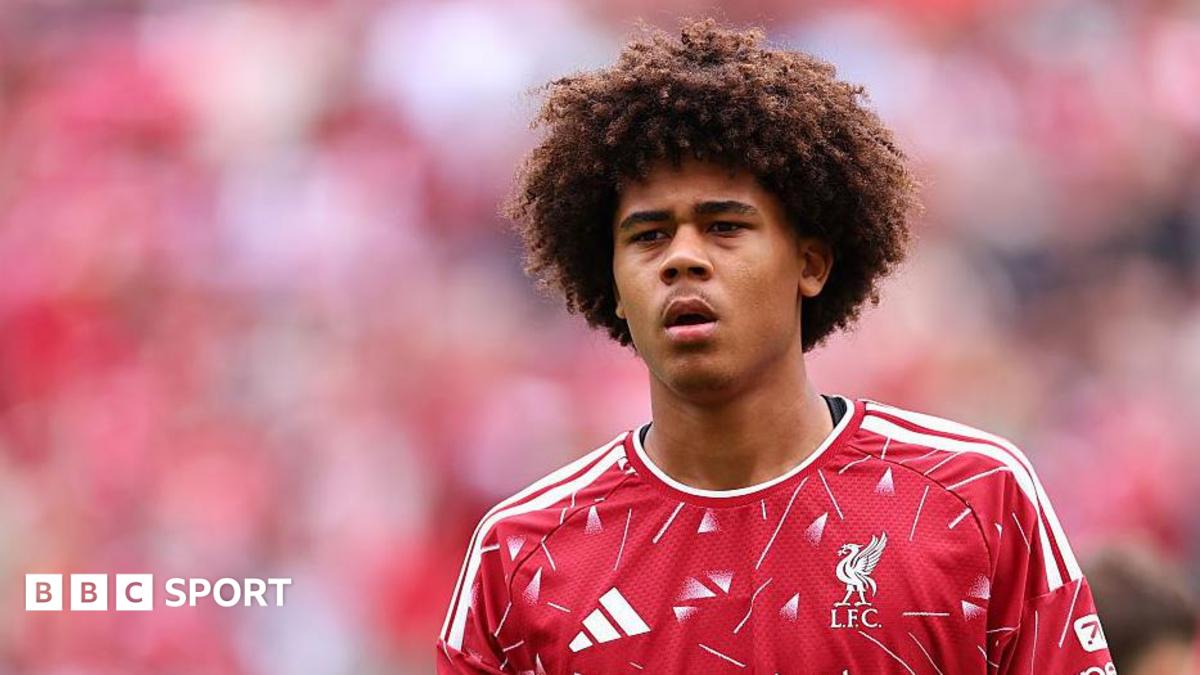
Since Brexit, and with the UK no longer part of the European Union, clubs now have to navigate a more complex work permit system to ensure players – especially those who are yet to establish themselves at the top level – are able to move to England.
Austria youth international Ndukwe doesn’t currently have enough points to obtain a Governing Body Endorsement (GBE) to obtain a work visa.
There is another route into the squad, through taking up an Elite Significant Contribution (ESC) slot, which is awarded to foreign players who do not qualify for the standard GBE.
Premier League and Championship clubs have up to four ESC places available, based on the percentage of minutes clubs gave to their England Qualified Players (EQP) in the previous campaign.
But clubs are not entitled to all four spots automatically.
The magic number is 35% of minutes, which means clubs can use four ESC players. Dropping below that begins to reduce the number of ESC slots available.
Liverpool‘s percentage last season means they only get one ESC place, which has already been taken by Senegalese 18-year-old Mor Talla Ndiaye.
Last season, Freddie Woodman, Gomez, Rhys Williams, Curtis Jones, Trey Nyoni and Rio Ngumoha were the only English players in Liverpool‘s squad, playing a collective 83 times in the Premier League.
This comes after Liverpool lost the likes of Trent Alexander-Arnold, Jarell Quansah, Tyler Morton and loaned out Harvey Elliott.
>
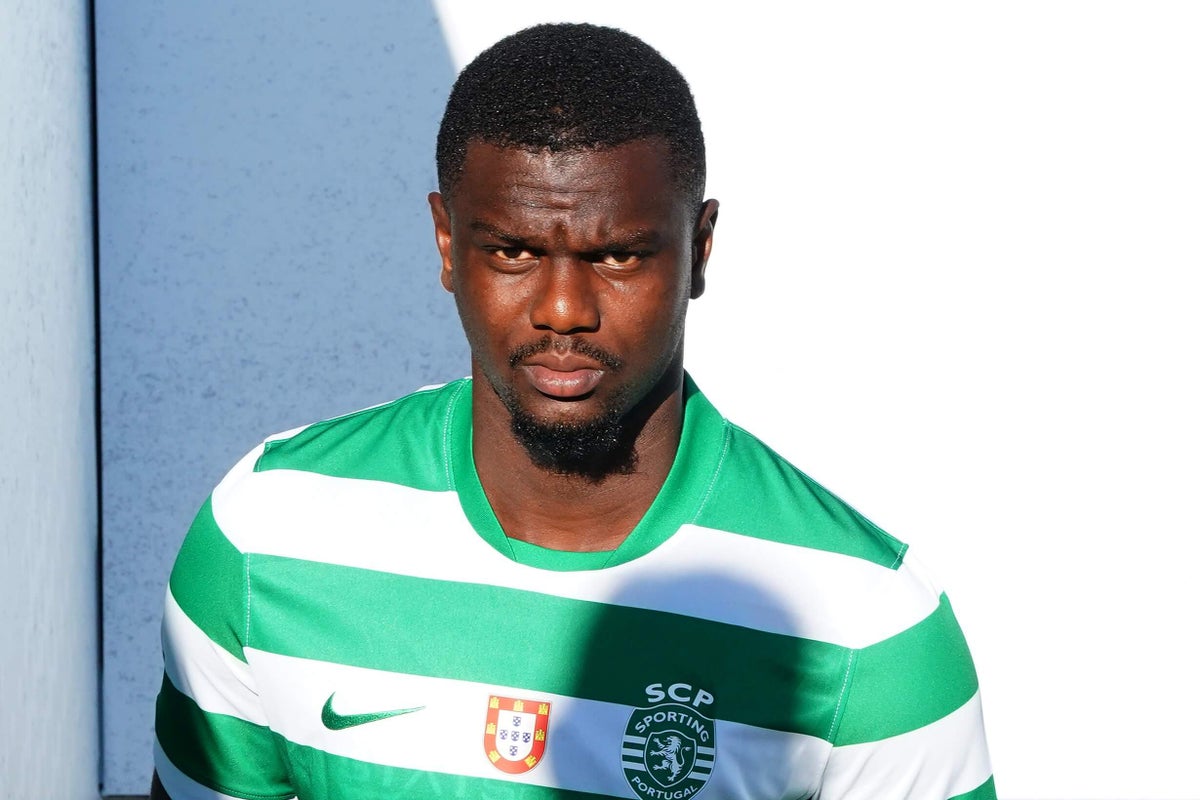
Nottingham Forest have confirmed the signing of defender Ousmane Diomande from Portuguese club Sporting CP.
The Athletic reported on Saturday that Forest were set to sign the Ivory Coast international in a deal worth €40million (£34.3m; $46.2m).
Diomande, who had attracted suitors from across Europe, has signed a four-year contract at the City Ground, with the option of a further year.
The 22-year-old is Forest’s second signing of the summer, following the arrival of Xaver Schlager on a free transfer from RB Leipzig. He bolster the defensive options of new head coach Oliver Glasner, who played with three central defenders while at Crystal Palace.
Welcome to Nottingham Forest, Ousmane Diomande! ✍️
— Nottingham Forest (@NFFC) August 11, 2026
“I am very happy to be here,” Diomande said upon signing. “It is a historic club, and it motivates me to join such a club. I believe we can achieve very good things this season and I am looking forward to meeting the players and head coach.
“I will give my best and all I can to help the team. I cannot wait to meet the supporters at the City Ground and together we can have a good season.”
Diomande joined Sporting in January 2023 from Danish club Midtjylland, going on to make 132 appearances for the Lisbon-based team. He won the Portuguese league title in both the 2023-24 and the 2024-25 seasons.
He was included in Ivory Coast’s 26-man squad for this summer’s World Cup, where they reached the round of 32 and were eliminated by Norway.
Diomande the final part of Glasner’s back three?
Analysis by Nottingham Forest correspondent Paul Taylor
The signing of Diomande is not only a significant statement of intent from Forest, but it could also provide a key piece of Oliver Glasner’s defensive jigsaw.
At Crystal Palace, Glasner had a back three that he viewed as having the perfect blend of attributes.
Marc Guehi had hugely intelligent instincts but was not the strongest in the air, Chris Richards was hugely powerful aerially but lacked a turn of speed, and Maxence Lacroix was both tall and could play out from the back.
Diomande is seen as a player who can add to the qualities of Murillo and Nikola Milenkovic, who have forged an impressive partnership in the centre of defence over the last few years, to create something similar at the City Ground.
Milenkovic is a leader and a dominant defender who is strong aerially, but who is not the fastest. Equally, Murillo’s heading ability is not his biggest asset, but he has pace and acceleration, can play out from the back, carry the ball and is a capable defender.
Diomande would add some of the height and physical presence Glasner believes his squad needs to help them to thrive from set pieces at both ends of the pitch. But he is also confident and capable on the ball.
Forest felt they were close to landing Diomande during their training camp in Portugal but, while it has taken longer than expected to get the final details of the deal agreed, it feels like a pivotal moment in the early stages of Glasner’s tenure.
The Austrian is now equipped to play with the back three he favoured as Palace won the FA Cup, the Community Shield and the Conference League over the last two seasons.
>
The story goes that when then-Associated Press sports editor Alan Gould declared Minnesota, Princeton and TCU tri-national champions after the 1935 college football season, Gophers fans hung him in effigy.
So, yeah, national championships have always been meaningful in college football, no matter how legitimately they were determined.
There is a reason the term “mythical national championship” was used for decades, with sports writers and coaches ultimately taking their best guess about who was No. 1 at season’s end.
Championship legitimacy has been an evolution. The more the powers that be redesigned the postseason to crown a clear champion, the more emphasis everyone placed on winning it all. Sentiment varies among fans as to whether that development was a positive one.
It’s all settled on the field now with a 12-team College Football Playoff.
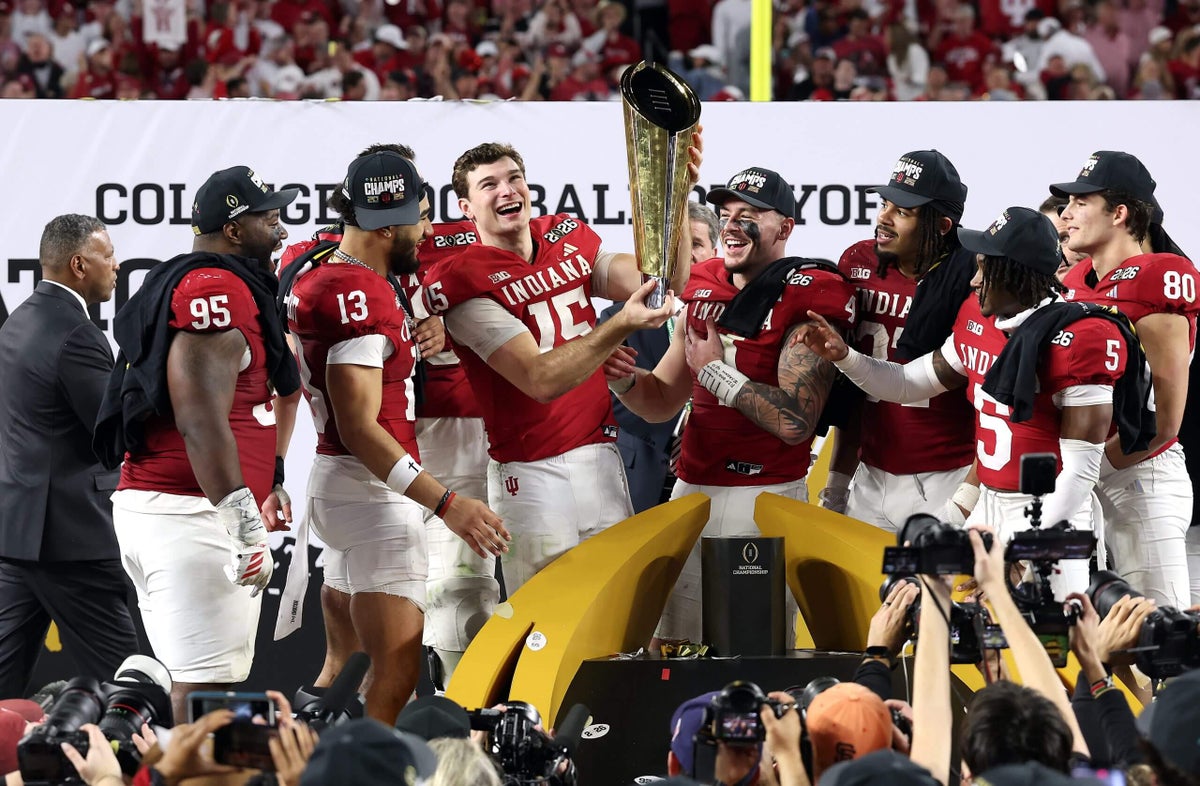
That’s what made Indiana’s breakthrough under coach Curt Cignetti last season so remarkable. Gone are the days when conference bowl tie-ins and convoluted formulas could play as big a role in determining a national championship as the quality of the teams.
Why 2026 Indiana is the best national champion
Ralph D. Russo
The Hoosiers’ 16-0 season included five victories against teams that finished ranked in the final top 10 (tied for the second-most among major poll national champions) and six against top-25 teams (tied for fourth). Where exactly major college football’s first 16-0 team since the 19th century ranks among all-time champs is a separate conversation. As good as 2019 LSU? How about 1995 Nebraska or 2001 Miami? You want dominance? Check out Army’s back-to-back championship teams from 1944 and ’45.
Place Coach Cig’s Hoosiers wherever you want in the pantheon of college football’s greatest teams. But when it comes to pure legitimacy, Indiana’s national title is unimpeachable. More so than any in college football history.
Others may match it, but two years into college football’s expanded postseason era, the Hoosiers have set a standard that can’t be surpassed.
In the past, the national title existed almost off to the side in college football.
The whole idea of crowning a national champion in such a far-flung sport was raised to stoke debate, not necessarily to settle it.
“It created a storm in the Big Ten in general, and Minneapolis-St. Paul, in particular,” Gould told the AP in 1986 about his 1935 proclamation.
The next year, the AP poll was born, with Gould welcoming votes from sports writers and newspaper editors all over the country. It was far from the most structured process, but the national title was born. The United Press International, another news wire service, started polling coaches to rank the best teams in college football in 1950.
Voting was done at the end of the regular season, an acknowledgment that the few bowl games that existed were more celebratory exhibitions than games that should be factored into determining a champion. Meaningless bowls, you say? Sounds familiar.
Not until 1968 did the final AP poll factor in bowls. The coaches poll switched to post-bowl final rankings in 1974. That fact alone makes any national champion from 1936 to 1967 worthy of scrutiny.
That’s not to say all those championships are illegitimate. The Mr. Inside (Doc Blanchard) and Mr. Outside (Glenn Davis) Army teams with two Heisman Trophy winners that won consecutive titles in the mid-1940s would be impossible to argue.
Both squads went unbeaten. The 1944 team beat opponents by 52 points per game, still an NCAA record for margin of victory. An argument can be made that the 1945 team was just as dominant against better competition. Those Black Knights had an average margin of victory of 40.7 points and beat six teams (in nine games) that finished the season ranked in the AP top 20. That’s as many as Indiana did last season in 16 games with a Top 25 poll. Among national champions, only 2019 LSU (14-0), 2010 Auburn (14-0) and 2022 Georgia (15-0) beat more teams that were ranked in the final poll (seven).
Champs with 5+ wins vs. final AP poll
|
Team
|
Year
|
Record
|
T-10 W
|
Final poll W
|
Point diff
|
|---|---|---|---|---|---|
|
2022 |
15-0 |
3 |
7 |
26.8 |
|
|
2019 |
15-0 |
5 |
7 |
26.5 |
|
|
2010 |
14-0 |
3 |
7 |
17.1 |
|
|
2025 |
16-0 |
5 |
6 |
29.9 |
|
|
2024 |
14-2 |
6 |
6 |
22.8 |
|
|
2016 |
14-1 |
3 |
6 |
21.2 |
|
|
2015 |
14-1 |
2 |
6 |
20.0 |
|
|
2001 |
12-0 |
1 |
6 |
32.9 |
|
|
1978 |
12-1 |
3 |
6 |
12.7 |
|
|
1945 |
9-0 |
4 |
6 |
40.7 |
|
|
1943 |
9-1 |
4 |
6 |
27.1 |
|
|
2023 |
15-0 |
3 |
5 |
25.5 |
|
|
2021 |
14-1 |
2 |
5 |
28.4 |
|
|
2020 |
13-0 |
4 |
5 |
29.1 |
|
|
2009 |
14-0 |
3 |
5 |
20.4 |
|
|
2007 |
12-2 |
2 |
5 |
18.7 |
|
|
2006 |
13-1 |
2 |
5 |
16.2 |
|
|
2000 |
13-0 |
4 |
5 |
22.1 |
|
|
1998 |
13-0 |
2 |
5 |
18.7 |
|
|
1997 |
13-0 |
2 |
5 |
30.2 |
|
|
1996 |
12-1 |
2 |
5 |
30.0 |
|
|
1993 |
12-1 |
2 |
5 |
31.3 |
|
|
1992 |
13-0 |
2 |
5 |
18.8 |
|
|
1990 |
11-1-1 |
2 |
5 |
13.1 |
|
|
1982 |
11-1 |
3 |
5 |
16.6 |
|
|
1975 |
11-1 |
3 |
5 |
15.9 |
Once the bowls started being factored into the national championship, it brought a new level of thoroughness to the process. Every contender had to take a final exam against a quality opponent from outside its conference or region, televised for everyone to see.
The more that teams directly controlled winning the national championship on the field, the more legitimate it became.
Now that final exam comes in three or four parts in the CFP. SEC fans can complain all they want about Indiana’s soft nonconference schedule, but when an SEC team had a chance to delegitimize IU in the Playoff, the Hoosiers stuffed Alabama into a Rose Bowl locker.
The major polls would often split on the final No. 1, which didn’t seem to really bother fans until the 1990s. It was also an acknowledgment that this whole exercise of crowning a champion was at best a noble effort but far from science.
National championships were awesome, but the stars had to align just right for a team to win one.
“As I was walking over to the stadium this morning, I thought it would be nice if we won, but we really have three national championships,” Joe Paterno told UPI in 1982 after Penn State beat Pitt in its regular-season finale to improve to 10-1.
Paterno, a longtime proponent of a playoff, already had three unbeaten seasons with no “official” titles by then.
He finally landed that first national championship by beating Georgia in the Sugar Bowl to end that ’82 season No. 1 in both major polls. He picked up another one a few years later, when the Nittany Lions upset mighty Miami in the 1987 Fiesta Bowl, and then again got snubbed with an unbeaten team in 1994 as a member of the Big Ten. Conference bowl tie-ins prevented a No. 1 vs. No. 2 matchup with Nebraska.
The Bowl Alliance and other precursors to the Bowl Championship Series tried to fix the postseason problem in the early 1990s, but from 1970 through ’97 the two major polls split seven times.
That’s not to say all the champions during that period were questionable. Nebraska’s 1971 powerhouse beat the teams ranked Nos. 2, 3 and 4 in the final poll. USC’s unbeaten 1972 squad went 12-0 and beat six teams that finished in the final rankings, including crushing No. 9 Ohio State in the Rose Bowl.
Fast forward to 1995 Nebraska, which also makes a case for the greatest team in college football history. The Cornhuskers beat opponents by an average of 38 points per game and capped it by annihilating Steve Spurrier’s Fun ‘n’ Gun Florida team in the Fiesta Bowl. Want to nitpick Tom Osborne’s greatest Huskers team? Nebraska beat only three teams in the regular season that finished ranked. The Huskers beat those three top-10 teams 134-49, though, so there is that.
Indiana flashed plenty of dominance on the way to completing college football’s greatest rags-to-riches story. After crushing Alabama 38-3, the Hoosiers pummeled Oregon 56-22. The national championship game against Miami provided a more stern test.
And who could question Miami’s worthiness after the Hurricanes beat Texas A&M on the road, Ohio State and Ole Miss to earn the chance to play Indiana?
That was the problem with the BCS. It promised to deliver a season-ending game between the best two teams, but there were plenty of times when its process was questionable at best.
Miami may have assembled the greatest collection of talent on any one roster in college football history in 2001, but the BCS served the Hurricanes in the Rose Bowl a Nebraska team that had finished its regular season by giving up 62 points to Big 12 rival Colorado. Hardly the most rigorous way to cap a perfect season. Right, Oregon fans? The Ducks beat Colorado handily in the Fiesta and finished No. 2. There was probably a sense of deja vu in Eugene watching Alabama pummel Notre Dame in the 2012 BCS championship game.
There was no doubting Vince Young and Texas’ 2005 title after the Longhorns snapped USC’s 34-game winning streak to stop a Trojans three-peat.
About that USC dynasty? As good as Pete Carroll’s 2003 and ’04 champions were, both are regarded with a side-eye in SEC country. The BCS formula denied the Trojans a spot in the title game against LSU after the 2003 season, which led to college football’s last split championship — probably ever.
And in 2004, Auburn was the odd team out of a three-unbeaten-team pileup with USC and Oklahoma at the end of the regular season. The Trojans crushed the Sooners in the Orange Bowl, leaving Auburn fans to forever believe their undefeated Tigers would have done better.
Golf Digest did follow through on coach Tommy Tuberville’s pleas for some type of recognition and named Auburn its national champ. Twenty years later, Auburn decided that was good enough and followed the lead of rival Alabama by “officially” claiming a title for the 2004 team.
Raise a glass to the undefeated 2017 UCF Knights, the last self-proclaimed national champion college football will ever have.
When the four-team College Football Playoff was born in 2014, Ohio State became the first team to win it, bouncing back from an earlier loss to Virginia Tech that would have otherwise eliminated the Buckeyes in previous seasons. After Urban Meyer’s team blew through Alabama and Oregon in the postseason, Ohio State named an intersection near the Horseshoe in Columbus Undisputed Way to honor a college football first: a champion that could not be questioned.
The regular-season absolutist might disagree.
In the four-team CFP era, Joe Burrow and LSU set the bar for undeniable champions in 2019, going 15-0 with a final flourish of 142-63 against teams that finished Nos. 4 (Georgia, SEC Championship Game), 7 (Oklahoma, CFP semifinal) and 2 (Clemson, CFP championship). LSU also won a regular-season 1 vs. 2 matchup at Alabama.
Alabama’s last title team under Nick Saban went 12-0, playing only SEC teams in the regular season and statistically rating as one of the best teams in college football history. But the pandemic made a mess of that 2020 season.
Four teams were better than two as far as playoffs go, but limits were exposed by the end of the format’s 10-year run when, in 2023, Florida State was left out after an unbeaten regular season, and Georgia was denied a chance at its own three-peat when it stumbled in the SEC Championship Game against Alabama.
Of course, some look at that Michigan 2023 national title as less than legitimate for other reasons.
The Buckeyes again broke the seal on a new playoff format by winning another title that could not have happened just a year earlier in 2024. After losing twice in the regular season, Ohio State plowed through four Playoff games to the tune of 145-75. But Michigan fans will always have Wolverines 13, Buckeyes 10 in the Horseshoe.
Indiana checked all the boxes and left nothing for skeptics to nitpick.
There has never been a time in college football history when Indiana would not have been No. 1.
>
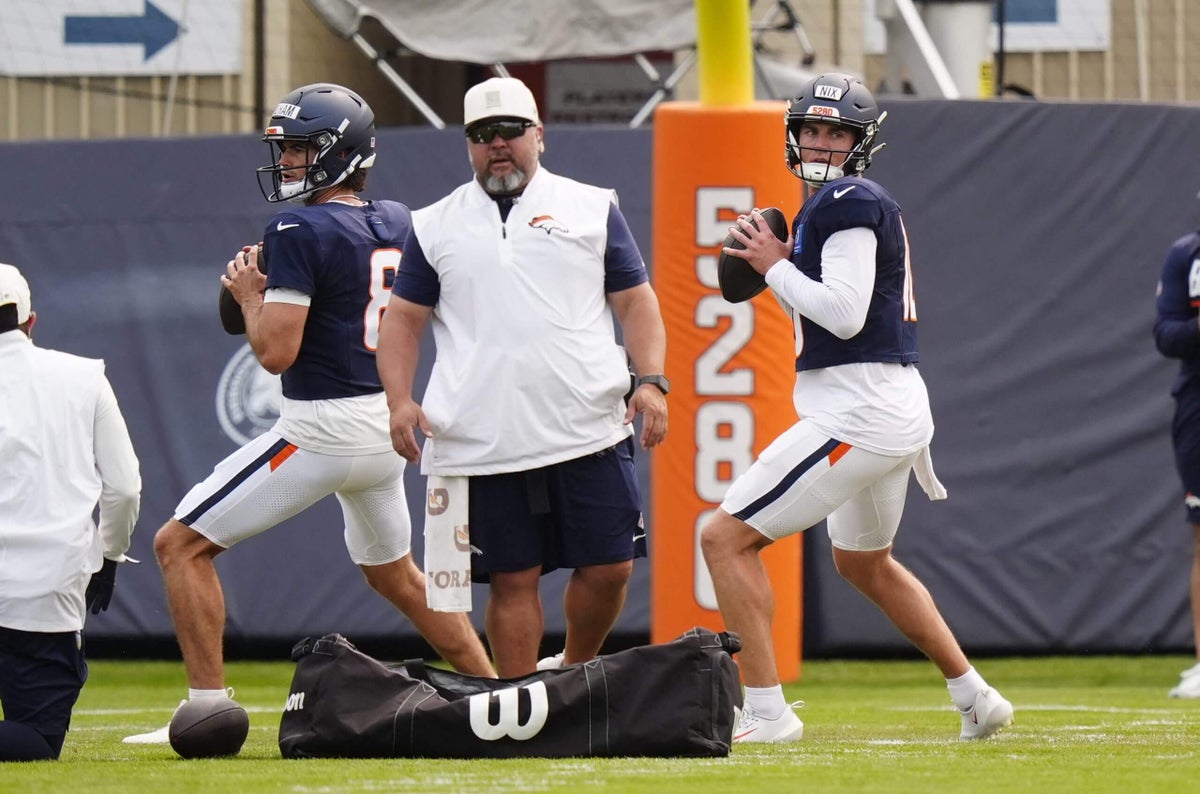
ENGLEWOOD, Colo. — Bo Nix escaped and scrambled to his right during a training camp practice last week as defensive backs blanketed his targets and the pass rush closed in around him. The Denver Broncos quarterback turned upfield and sprinted toward the safety who was dropping down to cut off his progress. Then, Nix planted his right foot firmly in the ground and sharply cut inside to continue his run.
Coach Sean Payton has described the traits displayed by Nix in that sequence as his “superpower.”
The evasiveness has helped the Broncos take sacks over the past two seasons at easily the lowest rate in the NFL (3.8 percent of dropbacks). The quarterback’s explosiveness and getaway speed in the open field have helped the Broncos win games, too. Like when he sprinted into the end zone on a combined quarterback crack run in the fourth quarter of a thrilling comeback against the New York Giants. Or when he darted into the open field to push Denver into field-goal range during another final-drive win, this one in Houston. Only Buffalo’s Josh Allen has more quarterback runs of 20 or more yards than Nix (nine) over the past two seasons.
Yet, for all the positives Nix’s feet can produce, the Broncos are targeting a subtle change with their franchise quarterback in his third year that could reduce the frequency with which he relies on them.
“He does a very good job of avoiding the sack, the minus play,” Payton said last week when asked for an area he’d like to see Nix improve in 2026. “Then, because of that, he’s very good with his progression. I mean, clean with it. He’s not someone who’s … slow to process; it’s the other way. So there are sometimes where he’s through one (progression) so fast. … But I’d rather deal with that than the slow processor who’s getting sacked.”
Nix excited for addition of Waddle
Nick Kosmider
The Broncos have had, by far, the NFL’s best sack differential over the past two seasons (plus-84; 53 points better than the second-ranked L.A. Rams). It is a critical part of their winning formula and a far cry from the minus-10 figure during Payton’s first season in Denver in 2023 with Russell Wilson at quarterback. That’s why Payton made clear the Broncos aren’t trying to keep Nix from accessing a strength that has ample benefits for Denver’s offensive attack. But the coach intimated there are opportunities for Nix to stick longer at times with the early reads in his progression.
“He’s a real good foot athlete,” Payton said. “You don’t feel someone who’s cumbersome at all. I think it’s one of his gifts. Within the framework of each pass play, the (defining) of a three (step drop), three-no-hitch, one big five (step-drop) and a hitch, some of those specifics that put him exactly in time with the depth of the route, I think is something I’m sure he’s working on.”
When Davis Webb was named the Broncos offensive coordinator in February, he quickly went to work on a project with the team’s passing-game staff that served as a deep audit of Nix’s first two seasons as the team’s quarterback. The big-picture goal was to identify how to best build upon Nix’s strengths in ways that benefit the efficiency of the offense as a whole. One aspect of that work, Webb said last week, was making sure routes were being designed to complement the way in which Nix scans the field.
“He’s definitely progressing in that area,” Webb said. “There were some long areas in the offseason with the pass-game staff of really trying to evaluate and watch the last two years of him playing and, ‘How does the first read marry up with our second read depth-wise and play-call wise, (given) where we are at a point in the game?’ I think we’ve done a good job managing that. … I think it’s noticeable the strides he’s taken in hanging on one (read), getting to two and three, and then getting to his legs.”
Webb said he sees a progression with Nix that closely mirrors where Allen was as he entered his third NFL season. The Buffalo quarterback in 2020 — Webb was one of the team’s backups that season — posted a 107.2 passer rating that still stands as the best in his career. He made the Pro Bowl for the first time as his completion percentage jumped from 58.8 as a second-year starter in 2019 to 69.2. Allen benefited that season from the arrival of standout receiver Stefon Diggs, and Webb said in the spring he views new Broncos receiver Jaylen Waddle as a similarly impactful addition.
“I think he’s right on par with the other guys I’ve been around going into Year 3,” Webb said. “I’m really satisfied where he’s at, both getting in and out of plays, getting to the huddle, getting in and out of the huddle fast, checking plays when it’s appropriate, not overthinking, getting completions underneath and using his feet. I think the injury last year, it was important for him to kind of move around a little bit early here, and I think he’s done a really good job. I’m really satisfied with where he is.”
The Broncos’ veteran defense has provided ample opportunities to test the tweaks the Broncos are making offensively. Defensive coordinator Vance Joseph has shown Nix “every defensive structure imaginable” during the camp’s first three weeks, the quarterback said Monday. Joseph on Saturday credited the way Nix has found answers to the new ways in which he’s being challenged, noting that the quarterback’s deep-ball accuracy has been “off the charts” in camp.
“It’s safeties from everywhere, blitzes from everywhere, fronts from everywhere,” Nix said of the defense. “That just helps you as a quarterback get your eyes up and then slow the game down once you get into a game setting. For me, it’s been irreplaceable to go against VJ, and not only his defense, but I can ask him questions and figure out the ‘why’ behind some things.”
One sign Nix is working on sticking with first reads a little bit more when circumstances allow: He is actually throwing in the direction of All-Pro cornerback Pat Surtain II. The quarterback during his first two training camps would quickly zoom past his first read if that receiver was being defended by Surtain, a decision commonly made during the season by opposing quarterbacks. In this camp, though, Nix hasn’t been shy about going after Surtain. Success has been predictably limited, but it sheds light on the comfort level Nix has to experiment with things as he prepares for his third season.
“My first two years, if he was over there, I pretty much worked the other side of the field,” Nix said. “But I don’t think that does him (due) diligence. (Let’s) get him better at the same time. I don’t mind throwing it his way and getting an incompletion on the stat sheet just to help him out. And then, every once in a while when you do complete one on him, it’s good for the morale of the offense and shows us we’re also really good and can attack the best player in football on the defense.”
The Broncos will play at least some starters Friday in their preseason opener at Atlanta, but Payton declined to say whether Nix would see the field in a game for the first time since suffering a broken ankle during the playoff win against the Bills. The quarterback, after two offseason procedures on that right ankle, has had a full workload running the first-team offense in camp, and Payton said last week that Nix’s “movement that we’re seeing right now is back to where it was.” That was evident as Nix sprinted into the open field while running the same quarterback sweep play that resulted in that aforementioned touchdown against the Giants.
Broncos trying to ‘get a handle’ on soft-tissue injuries
The Broncos finished Monday’s practice with a tweak to their normal schedule. After end-of-workout wind sprints, the team separated into lines for another stretching session, mirroring the one they conduct to begin practices. That change, Payton said, was a response to a handful of soft-tissue injuries that have crept up for the Broncos in camp over the past two weeks.
“We’ve got to get a handle on the soft tissues,” Payton said. “We’ve had a couple strains — either hamstring or groin — and we continue to fight through that.”
The latest player to deal with one of those issues is running back J.K. Dobbins, who left Monday’s practice early and didn’t return. Payton said he expected Dobbins to be fine and added that the team was “just being smart” with a veteran player with a significant injury history, but it has been a concerning enough issue that the coach addressed it without any prompting as he spoke to reporters following practice. Wide receivers Waddle and Marvin Mims Jr. are among the players who have missed practices in the past week due to the kind of injuries Payton described.
“I don’t think it’s heat related as much as, you’re always trying to look at your pre-practice routine,” Payton said. “Your hydration, obviously. It’s (also) incumbent on the player. It’s hard for anyone to know your soft tissue. I’m always looking at what we did leading up to a period where someone had a strain. We had a warm-down (stretch) after practice and we’ll continue to focus on it.”
>

Nottingham Forest complete Ousmane Diomande signing from Sporting CP

Did Indiana win the most legitimate national title in college football history?

Broncos and Bo Nix are targeting subtle area of improvement in QB’s third year
-

 movies3 months ago
Search For Canadian TV Actor Stewart McLean Now Homicide Investigation
-

 Fashion9 years ago
These ’90s fashion trends are making a comeback in 2017
-
Fashion9 years ago
According to Dior Couture, this taboo fashion accessory is back
-
Fashion9 years ago
Model Jocelyn Chew’s Instagram is the best vacation you’ve ever had
-
Fashion9 years ago
Your comprehensive guide to this fall’s biggest trends
-
Fashion9 years ago
9 Celebrities who have spoken out about being photoshopped
-
Fashion9 years ago
Emily Ratajkowski channels back-to-school style
-
Fashion9 years ago
A photo diary of the nightlife scene from LA To Ibiza