
Guitarricadelafuente


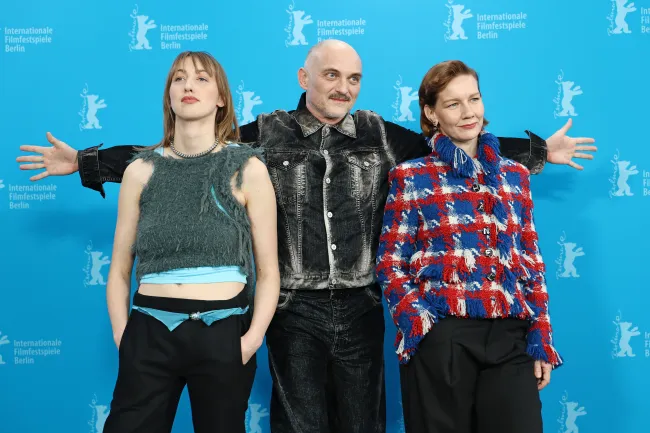
One of the strongest films of the year — in years, honestly — stars 2026 MVP Sandra Hüller as a 17th-century German soldier who’s survived a bullet to the face and disfigurement around the end of the Thirty Years War. In “Rose,” she’s also learned to disguise herself as a man to move more fluidly through the world, in a life where there’s “more freedom with trousers.” It’s an earth-shatteringly good, career-best turn from Hüller in a body of work built on career-best turns. At one point, her performance deliberately invokes Maria Falconetti in “The Passion of Joan of Arc.”
Directed and co-written by Markus Schleinzer, “Rose” won Hüller the Silver Bear Best Actress, the prize that last year went to eventual Oscar nominee Rose Byrne, back at the Berlin Film Festival in February. A deeply gifted filmmaker with rigorous control of the material but also a great deal of empathy, Schleinzer comes to this year’s festival circuit as a third-time feature director, after breaking out of Michael Haneke’s tutelage as his casting director to make 2011’s “Michael” and his 2018 follow-up “Angelo.” “Rose,” however, will put the director even more widely on the map this fall with a New York Film Festival debut and an expected (if you’re doing the math on premiere status) Telluride bow.


While this gorgeous film, shot in black-and-white, looks like an austere arthouse offering on its surface, Schleinzer delivers it with a tender touch that makes for one of this year’s grandest emotional statements. And one that belongs in this year’s awards season.
As I wrote out of Berlin: Not since Sally Potter’s breakout feature “Orlando” has a film explored gender privilege so effectively through a historical lens and via a singularly astounding European actress (then, it was Tilda Swinton). Playing Rose as a kind of gender-bending Joan d’Arc who will inevitably face plenty of persecution of her own, Oscar-nominated “Anatomy of a Fall” and “The Zone of Interest” star Hüller is tremendous in a role that allows writer/director Schleinzer to transcend the it-puts-the-austerity-in-Austria trappings of his compatriots; “Rose” is nothing short of shattering, and the centrifugal force of Hüller will, by the end, suck you into all her protagonist’s hurt. It’s an achievement built entirely upon emotional elisions, in almost imperceptible modulations of gesture and expression — especially in a final scene that cuts to black like a guillotine.
Ahead of the fall festivals, IndieWire sat down with Schleinzer for a wide-ranging chat about the making of “Rose,” his relationship with Michael Haneke, and where Haneke’s at currently given that he hasn’t made a film since 2017’s “Happy End.”
The interview below has been edited for brevity and clarity. Mubi will release “Rose” in theaters for a qualifying release in November with a wider theatrical rollout beginning in 2027.
IndieWire: How does your experience with working with Michael Haneke inform your filmmaking now?
Markus Schleinzer: I started working for him, I think at the age of 24 or 25. I became a casting director myself very early in the age of 21. Then there was a period of time where no one wanted to work with him anymore, the Austrian casting directors, because of his reputation. So they asked me and I knew little about him. We met, and it was a constant friendship. … I never studied filmmaking. So what I know about filmmaking, what I know about how to direct, what I know about this profession is what I learned from all the actresses and actors in front of my casting camera throughout the years.
How to organize a set and how to fight for the things you believe in is what I learned from Michael Haneke. Because my job was not only to do the casting for his movie, I was always on set and working on set. In some early movies I was directing the extras. On “The White Ribbon,” I had an upgrade, I was allowed to direct the children. It was in this period of time when he said, “OK, now I have the feeling I’m stealing from you. You really have to go out and become a director yourself,” and this is what I did. But it was never a pupil-and-teacher situation, and we are really good friends. But I never sent my scripts to him, and I never show him rushes because I really want to make my own mistakes.

Has he seen “Rose”? We haven’t heard from him in a while, so I’ve been worried.
He retired. He’s 85 years old now, and then he retired, but he’s still happy. We met two weeks ago, and he was cooking a very fine dish for myself. He has done his 10 movies like his all-time idol, Robert Bresson. He did what he could do, and he’s happy now. He was there at the premiere in Austria, and he’s such a very protective and very sweet friend. When I was in Cannes with the first movie … he was calling me every other minute, “Have you won a prize? Do you know something right now?” So it’s a really sweet friendship. And “Rose,” he said, “This is a masterpiece.” He does not say this easily, which doesn’t make it easier for me to handle a compliment like this from him. But he’s happy. He’s happy with the work. He’s happy with the result.
You co-starred as Emperor Franz Joseph of Austria with Sandra Hüller in “Sisi and I,” where she played Empress Elisabeth. Is this how you met?
I knew her as an actress … but we finally met in person on the set of this movie, “Sisi and I,” and this is where we found friendship and respect. I already had started to write “Rose,” and I already was considering her for the main character. So I took this opportunity to work together with her on set as an actor. Maybe it was a bit weird for her because I was observing her the entire day when she was acting, and I was like a stalker. I ordered all the pictures she did before, and I just watched everything I could find. I was traveling, I followed her around the world and was watching what she’s doing on stage just to get an idea of her talent.
Because for “Rose,” it was so important to find someone who connects so brilliantly in these very little, very small possibilities given by the story, given by me. I never told her that I had written this for her. It just came out at the Berlinale premiere when I said this because it would’ve been embarrassing to say to someone, “I’ve written this for you,” and maybe the person disliked it. Why not? I mean, it’s a free choice to do. She liked it very much because I write in prose always … She said she has never read something like this before, that’s not a script, that’s a poem. I think that was what made her very interested in doing it. A side of maybe an interesting character she was interested to portray herself.
So if she said no, you would’ve had a problem.
Yeah, definitely. Can I say this? I would’ve shot myself. I don’t know. I would’ve put it away, locked it away, and would’ve started writing something else. Because I would never do something if I’m not completely sure about this. Being a casting director for 17 years had given me the opportunity to see what outcome it takes when the person you really believe should do this is not going to do it out of various reasons.
How did you land on this particular story? You read about a woman who lived in Prussia in the 19th century disguised as a man.
This was a birthday … a friend of mine called me saying congrats. At the end of the call, she says, “I just finished reading about a trial … about a woman in Germany who had been executed, who had been killed because she was wearing pants and then pretended to be a man. And this was exactly 250 years before your birth.” […] I was starting trying to reach out to experts and was reading about this woman. But very soon I gained more interest in women in pants. And so finally “Rose,” the script, [became] this culmination of centuries of real women who adopted male identity to claim autonomy or to survive … I think at least 300 women I came across and read throughout three different centuries. The reasons why they stepped into the pants had always been different. Some of them hoped to avoid marriage, to marry the guy they did not want to. Some of them hoped to avoid violence, aggression. Some of them wanted to achieve education. There had been patriotism, women who wanted to fight for their own country and had not been allowed to because they were women. So they pretended to be men to go to war. Of course, there had been lots of lesbian desire and maybe a trans person … But what they all had in common was the goal to live a bit more free[ly].
This touched me very much because I think this is something that we can all find in ourselves … So it started with a woman in pants, and it ended up for me as a very open reading, possible readings about the idea of what is freedom, what is your own story, and then the authorship of your own story. Who held the authorship of your own story? Are we shaped by the society we actually live in? Who are we at the end of the day? And do we want to be that person?

Talk about the challenges of shooting in the Glasebach Valley in Germany, where you’re dealing with the elements and primarily shooting outdoors.
It was very, very hard to find this place because I was so eager to shoot this in an environment which can still be called nature and not culture. Meaning something wild, nature that had belonged to itself for some centuries and not been shaped by humans. These places are very little in Europe nowadays, and most of them are protected because there are rare plants or rare elements or rare animals. Luckily we found something like this in Germany near the so-called inner German border, this border where east and west had been divided because we were told there are still lots of landmines, so people should not go there. They have some sheeps and hope that they can get rid of the problem [using] sheep, that one day most of the sheep had stepped on landmines and exploded and things like this.
We knew that the story takes place in a period of some three years, and so we have to shoot at every season possible because three years do not take place only in summer or only in springtime. So it was very important to find a place where we can build this house or where we can build this church and just leave it there for a year to return and come back and shoot again. It was very cold summer, so it was raining all the time. It was snowing still in May. So I don’t know how we did it. We waited for one hour for this very small window of sunlight that the sun could come out to finally shoot. And then the impression that it’s not only raining all the time. So in my memory, I was wet the entire time … I was fighting for every piece of grass and every flower. And film teams, this is 40 to 70 people, when they step into grass, it’s done. Everyone had to take this very small path so that we do not disturb nature, not behind the camera. If we want, we do disturb it in front of the camera, but not behind the camera … It was so peaceful there and so quiet. And then the mobiles did not work. So it was very helpful. The animals were living there, the pigs, the horses, everyone was there. So it was very helpful to get into this idea of the early 17th century.
How would you characterize Sandra Hüller’s approach to performance?
Sandra is very hands-on, and this I like very much. What combines us is that we are both not very easily impressed. First of all, not by ourselves. Impressing ourselves is nothing that will happen easily. The script was written precisely in prose. I gave away the idea of dreams, wishes, longings, desires for the character so you’re free to choose if you want. If not, you can find similar things or your own things. We met four to five times. We repeatedly read the entire script over and over again, discussed each and every scene four to five times, and then it happened. So on a day of shooting, little rehearsal.
We started shooting for some weeks, and then she had to go to meet Ryan [Gosling] and do something [“Project Hail Mary”] with Ryan in London. And then she returned, and then we continued shooting, and then she left to do something with Tom [Cruise] again in London. And then she came back, and in between, she was doing some documentary about Ingeborg Bachmann, an Austrian author who had died in the ’70s. And then she came back and we finished “Rose” […] I don’t know when she sleeps, or maybe there are three or four of her so that luckily we can do all of our movies. I’m full of praise.
Where are you at with the Klaus Nomi biopic with Christian Friedel? You recently signed with Cinetic management, so there must be some movement here.
I finished the draft this morning […] What touches me about Klaus Nomi is that you have someone with a very, very, very great talent who is not allowed to share it with an audience. But he finally comes up with the idea to put on a mask. So he does not change his craft. He does not change his talent. He does not even change the way he was performing. He was just changing his surface to get accepted. And this is something I think still very popular nowadays with social media: How do I want to be read? And what is the idea of myself? And then how do I want to be perceived? It’s very stressful, and it became very stressful with the internet because everything will stay there forever. It’s again a story about a so-called outsider and the clash of civilization and society. But after “Rose” and after black and white, this time I chose Technicolor and a musical. There’s lots of songs and dance and even animation and things like this. It’s bittersweet and it’s again, of course, an unhappy ending. But again, I try to take on things in this matter of fact way … because this is how I see life and how the biggest emotions happen to me every day in the matter of fact way. And this touches me the most. And I can only tell stories the way I see the world.
>
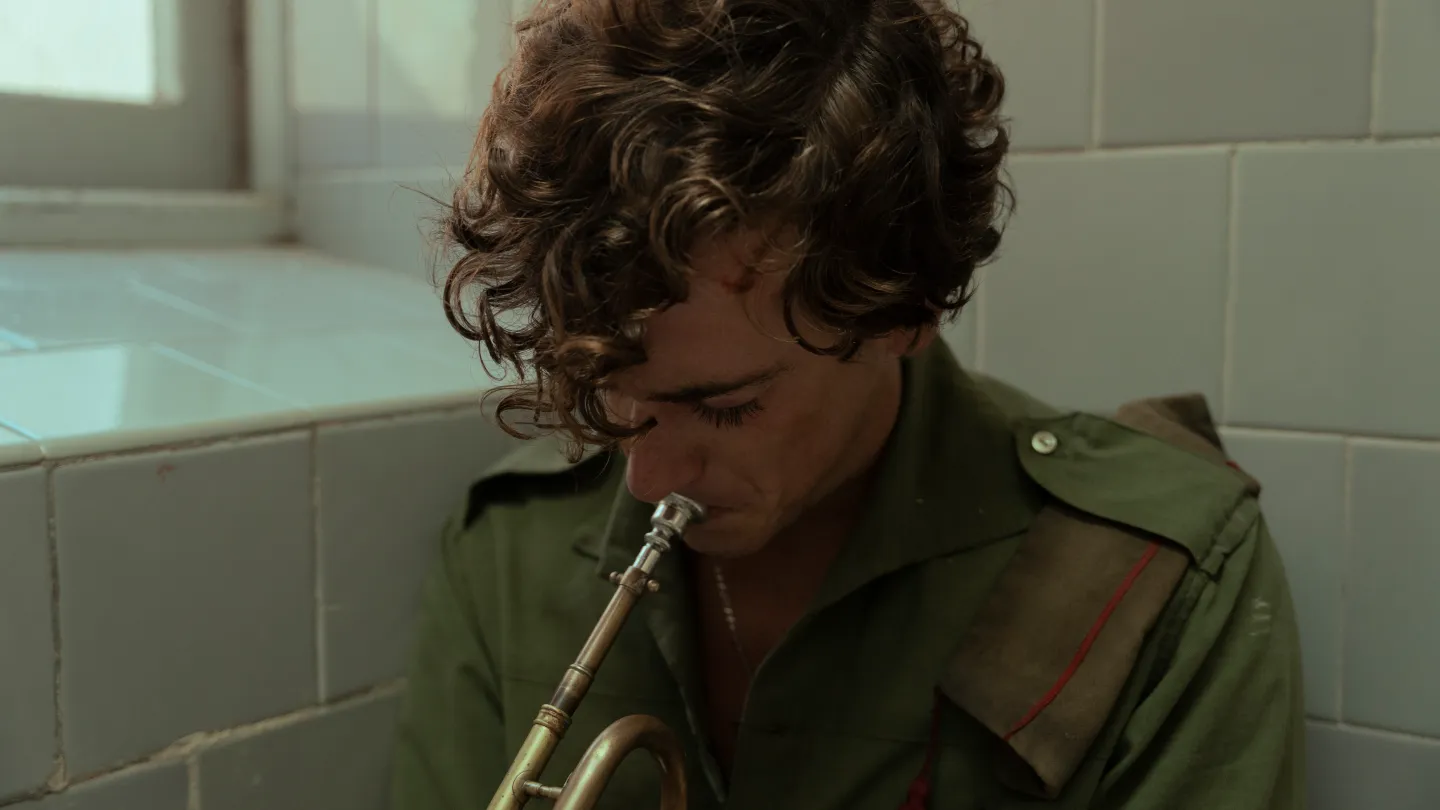
The best original song Oscar race — which already includes offerings from the likes of Taylor Swift and Travis Scott — just got a little more crowded: “La Nieve,” a Spanish-language tune featured in a key scene of Javier Ambrossi and Javier Calvo’s La Bola Negra, the Cannes breakout that Netflix acquired for an awards run, is being submitted for best original song Oscar consideration, The Hollywood Reporter has exclusively learned.
La Bola Negra chronicles three generations of Spaniards linked together by the last, unfinished play of the great Spanish poet and playwright Federico García Lorca, in whose work snow is a recurring element, particularly when exploring grief and loss. “La Nieve,” which translates to “The Snow,” plays over an emotional snow-set scene late in the film.
The song was co-written, with Raül Refree, and is performed in the film, by Álvaro Lafuente Calvo, aka Guitarricadelafuente, a 28-year-old multi-platinum recording artist and Latin Grammy nominee. Guitarricadelafuente also makes a highly impressive acting debut in the film as Sebastián, a Nationalist soldier who is tasked with guarding a Republican soldier (Miguel Bernardeau), with whom he forms a special bond, during the Spanish Civil War.
Guitarricadelafuente, who is currently on tour promoting his most recent album, Spanish Leather, and who recently performed his song “BABIECA!” on Jimmy Kimmel Live!, could become only the fifth person to land acting and songwriting Oscar nominations for the same film. The feat previously was accomplished by Mudbound’s Mary J. Blige (2018), A Star Is Born’s Lady Gaga (2019), Harriet’s Cynthia Erivo (2020) and One Night in Miami’s Leslie Odom Jr. (2021).
Earlier this month, Netflix revealed that La Bola Negra will be given a platform theatrical release in U.S. theaters starting on Oct. 16 and will subsequently begin streaming on Dec. 2. That 47-day period of theatrical exclusivity before streaming will be the longest yet for any Netflix film, surpassing the 31-day period accorded to Noah Baumbach’s Marriage Story in 2019.
Guitarricadelafuente
>
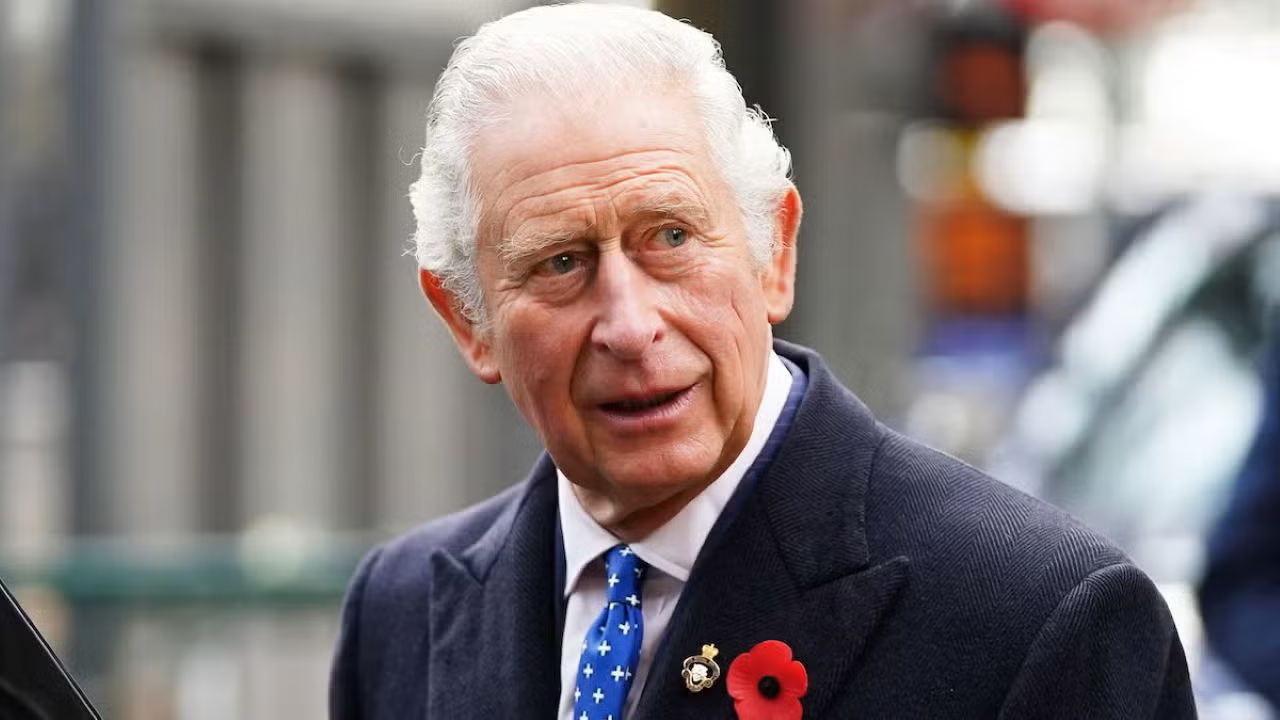
A British radio station mistakenly announced King Charles III’s death after a staffer played pre-recorded announcements “out of curiosity,” according to the U.K.’s media regulator.
Radio Caroline aired three statements declaring the King dead during “The Barry Marsh Show” on May 19, according to an Ofcom ruling released Monday. The national anthem was also played before one of the statements was repeated.
The station then went silent for roughly 16 minutes for listeners on DAB+, while AM listeners continued to hear music.
Radio Caroline told Ofcom that an employee performing maintenance on a studio computer discovered three audio files pre-recorded for use in the event of the King’s death. Despite “strict instructions” governing when they could be aired, the staffer played them “out of curiosity.”

The recordings interrupted the feed from the show’s remote presenter and went out over the air. After realizing what had happened, the staffer stopped the files, “panicked and left the premises,” according to the station.
The presenter did not immediately realize the show had been knocked off the air. Programming eventually resumed, with an apology and correction airing roughly 30 minutes after the false report.
Ofcom found Radio Caroline in breach of two provisions of its Broadcasting Code, including requirements that news be reported with “due accuracy” and that significant mistakes be corrected quickly. The regulator called the report a “very significant inaccuracy,” pointing to the repeated announcements, the claim that news media had confirmed the King’s death and the playing of the national anthem.
Radio Caroline said it took the incident “very seriously.” The staffer was reprimanded and apologized, while the recordings were removed from the studio computer to prevent another accidental broadcast.

>
Tom McCarthy’s A Statement and a new documentary by Jonathan Glazer, Joy of Joys, join Takashi Yamazaki’s Godzilla Minus Zero in world premieres at the New York Film Festival in the Spotlight section, unveiled today.
McCarthy’s A Statement is an ensemble piece set at a beachside resort in Florida in 1980 as twenty experts gather for a weekend conference to address a new global issue that’s starting to gain traction, the effects of CO2 emissions on the climate. It stars Paul Rudd, Evan Peters, Amy Ryan, Paul Giamatti, John Turturro, Tatiana Maslany and Jason Clarke.
Glazer’s Joy of Joys, in collaboration with Mica Levi, follows the recording of a star-studded charity album aiding children in conflict zones. The helmer enlisted London school kids with cameras to document the recording of War Child Records’ benefit album HELP(2) at Abbey Road.
The 13 Spotlight features include Cristian Mungiu’s Cannes Palme d’Or–winning Fjord, Louis Clichy’s animated feature Iron Boy, winner of the Un Certain Regard Special Jury Prize; Jordan Firstman’s Club Kid; Werner Herzog’s Bucking Fastard; and films by Maiken Baird, Jesse Eisenberg, Cindy Kleine and André Gregory, Noah Segan, Albert Serra and the late Eleanor Coppola.
Ten Spotlight shorts, shown in two programs, include works by The Secret Agent director Kleber Mendonça Filho and Aftersun’s Charlotte Wells, both world premieres.
The 64th edition of NYFF runs September 25 through October 12. The fest announced its larger main slate last week. It calls the Spotlight lineup “a curated, eclectic survey of the year’s most eagerly anticipated films … festival favorites, special presentations, timely conversation starters, and stellar performances.”
Spotlight selections:
Spotlight Gala: Godzilla Minus Zero (Takashi Yamazaki)
Bucking Fastard (Werner Herzog)
Club Kid (Jordan Firstman)
The Debut (Jesse Eisenberg)
Edward Said: Between Worlds (Maiken Baird)
Fjord (Cristian Mungiu)
Iron Boy (Louis Clichy)
Joy of Joys (Jonathan Glazer)
Making Marie Antoinette (Eleanor Coppola)
One More Time (Cindy Kleine and André Gregory)
The Only Living Pickpocket in New York (Noah Segan)
Sixteen Moments of My Life (Albert Serra)
A Statement (Tom McCarthy)
Spotlight Shorts:
South of Tehran (Kleber Mendonça Filho)
Masao Adachi Takes a Passport Photo (Kamal Aljafari)
A Stolen Movie (Camilo Restrepo)
Torino Shadow (Jia Zhangke)
Screening Room (Morgan Fisher)
New York Shorts
The People’s Beach (J. Wortham)
ee (Heather Landsman)
The House Call (Eliza Barry Callahan)
A Woman’s Place Is Everywhere (Fanny Texier)
New York Never Let Me Down (Charlotte Wells)
Spotlight Films with NYFF descriptions:
Godzilla Minus Zero / ゴジラ-0.0
Takashi Yamazaki, 2026, Japan, 135m
Japanese with English subtitles
World Premiere
After Godzilla Minus One’s triumphant reimagination of the timeless Godzilla franchise in 2023, with itsingenious, Oscar-winning visual effects and emotionally gripping back-to-basics storytelling approach, director Takashi Yamazaki returns with a supremely satisfying sequel. Godzilla Minus Zero picks up in 1949, two years after the tumultuous events of Godzilla Minus One, and continues the story of the Shikishima family as they face an all-new calamity. An experience that demands the big screen, featuring even more astounding effects choreography than its predecessor, Godzilla Minus Zero cranks up the terror while always keeping its post-WWII Japan narrative at human eye level. A GKIDS release.
Bucking Fastard
Werner Herzog, 2026, Ireland/U.S., 109m
New York Premiere
The oddball brilliance of Werner Herzog is in full effect in this tale of two sisters, Jean and Joan Holbrooke, who live entirely by their own social and emotional rules. They speak in unison, fall in love with the same man, and try to fulfill the same wild dreams and ambitions. As played by Kate and Rooney Mara, in total sync, the driven, single-minded Jean and Joan become classic Herzogian outsiders, like Kaspar Hauser or Fitzcarraldo, daring to transcend the limitations of everyday living and language. Shot across the teeming city streets and the majestic underground caves of Ireland, Bucking Fastard features operatic imagery from the director’s longtime cinematographer Peter Zeitlinger. It’s an uncanny, funny, properly eccentric film that moves from the comic to the grandly pastoral.
Club Kid
Jordan Firstman, 2026, U.S., 122m
New York Premiere
Washed-up thirtysomething New York scenester Peter (Jordan Firstman), awakening from a decade-long hangover, receives an unexpected visitor: the 10-year-old British son (Reggie Absolom) he never knew he had. The result of a lone, long-forgotten sexual encounter with a woman, the kid is in desperate need of care after his mother’s death, and though Peter has never put his heart into anything other than promoting massive parties, the experience of becoming an insta-dad prompts a reconsideration of his hedonistic, drug-fueled party boy lifestyle. Swerving from irreverent satire to genuine pathos, this wildly funny and remarkably assured feature debut from writer-director-actor Firstman is an unusual and satisfying take on the challenges and pleasures of queer millennial living, and a loving reminder that it’s never too late to come of age. An A24 release.
The Debut
Jesse Eisenberg, 2026, U.S., 105m
New York Premiere
Julianne Moore flings herself with delicious abandon into the role of Mona, a middle-aged New Jersey housewife who lands a part in a local musical production despite having zero stage experience. She quickly finds herself at odds with the show’s irascible and demanding director, Jerry (Paul Giamatti, in prime exasperation mode), who’s nevertheless determined to mold Mona into a performer. In contrast to her home existence, where she’s almost surreally neglected by her husband and teenage twins, the theater life proves enriching, transformative, and, as she begins to dig deeper into the reality of her character, excitingly dangerous. Writer-director Jesse Eisenberg (A Real Pain, NYFF62), who also wrote the show’s music and lyrics, keeps things expertly balanced on a knife’s edge between musical theater satire and cathartic character study. A lovingly crafted comedy, The Debut reminds us that to find your true self, it might also be necessary to lose yourself a little. An A24 release.
Edward Said: Between Worlds
Maiken Baird, 2026, U.S., 107m
English and Arabic with English subtitles
U.S. Premiere
The life and mind of the brilliant Palestinian-American professor, author, and public intellectual Edward Said (1935–2003) fuels this rich, engrossing documentary. Born in Jerusalem, Said was displaced, along with his refugee family, in 1948, with the founding of Israel. Sent to boarding school in Massachusetts, he would go on to become a Professor of Literature at Columbia University, later finding his calling as a world-renowned advocate for the Palestinian cause, and in essential books like Orientalism, a crucial critic of the way Arab people are othered in Western culture. Using all archival footage, Maiken Baird’s film follows Said from childhood to education to his social politicization, his relationship with his wife Mariam, and his battles with leukemia, always remaining committed to representing the power of his words, thoughts, and humanism.
Fjord
Cristian Mungiu, 2026, Romania/France/Norway/Sweden/Denmark, 146m
Romanian, Norwegian, English, and Swedish with English subtitles
New York Premiere
A foundational figure of 21st-century Romanian cinema, Cristian Mungiu earned his second Palme d’Or at the Cannes Film Festival (following his 2007 win for the groundbreaking 4 Months, 3 Weeks and 2 Days, NYFF45) for this searing, discomfiting social drama. Sebastian Stan and Renate Reinsve give superbly restrained performances as a married couple who have immigrated from Romania to a small seaside town in Norway with their four children. Members of a conservative Pentecostal religious sect, the outsiders are initially accepted into their progressive community, but they soon fall under suspicion from the local townsfolk after an allegation of parental abuse. Mungiu refuses to supply easy answers or simple paths to identification in this compelling provocation, which poses unresolvable questions to viewers about our biases and presumptions. Fjord returns the director to many of his recurring themes: the freedom of the individual within contemporary political systems, the culture clash between modernity and tradition, and how human care can imperceptibly evolve into a form of control. A NEON release.
Iron Boy
Louis Clichy, 2026, France/Belgium, 90m
French with English subtitles
U.S. Premiere
In this gorgeously hand-painted coming-of-age tale, 11-year-old Christophe lives with his struggling farming family in the rural Beauce region in France in the late 1980s. In addition to a stern, demanding father, the boy is further plagued by a sudden physical instability, requiring an iron body brace that keeps him ramrod-straight. Despite this, Christophe finds moments of joy, love, and surprising heroism. Louis Clichy, who worked as an animator for Pixar on Wall-E and Up, has made a deeply personal directorial debut of rustic beauty and spiritual grace; every loving brushstroke brings a sense of detailed authenticity to his vision, based on memories of growing up working-class in the French countryside amid vast farmlands, electric towers, and churches. Accompanied by an ethereal score of classical organ and choral music, Iron Boy is a delicately transporting story of a young boy’s emergence into individuality, and a family film of rare nuance. Winner of the Un Certain Regard Special Jury Prize at the 2026 Cannes Film Festival. A Sony Pictures Classics release.
Joy of Joys
Jonathan Glazer, 2026, U.K., 38m
World Premiere
This exuberant yet sobering documentary from Oscar-winning director Jonathan Glazer (The Zone of Interest, NYFF61) goes behind the scenes at Abbey Road Studios to capture the recording of the Mercury Prize–nominated HELP(2), a 2026 charity album from War Child Records, which aids children in conflict zones around the world. To make the film, Glazer enlisted some crucial help: young schoolkids from London were equipped with their own digital cameras and encouraged to shoot the studio recordings any way they wanted. Their curiosity and creativity are paralleled in footage taken by high-spirited children in war-torn parts of the globe—Gaza, Sudan, Ukraine, Yemen—whom Glazer also supplied with cameras. The resulting film, which Glazer and regular music collaborator Mica Levi have dubbed “by children, for children,” serves as a testament to youthful openness and wonder amidst the evils of the adult world. Contributing artists from the album featured in the film include Olivia Rodrigo, Damon Albarn, Cameron Winter, Arctic Monkeys, Beth Gibbons, Fontaines D.C., and Jarvis Cocker. The screening will be followed by an extended Q&A with Jonathan Glazer.
Making Marie Antoinette
Eleanor Coppola, 2026, U.S., 86m
New York Premiere
Polarizing upon its release, Sofia Coppola’s Marie Antoinette (NYFF44) is now, 20 years later, widely embraced as a 21st-century cinematic cornerstone and a distilled expression of its director’s recurring themes of celebrity, wealth, and isolation. For the first time, Coppola’s dynamic craftsmanship in creating her personal vision for the brief life of the 18th-century queen (Kirsten Dunst) in the years leading up to the French Revolution is on full display in this diary shot by her mother, filmmaker Eleanor Coppola, on the film’s set in Versailles in 2005. From almost 80 hours of video, Eleanor began to assemble the footage during the pandemic lockdown, and Sofia helped finish editing it after Eleanor’s death in 2024. Narrated by Diane Lane, reciting Eleanor’s journals from the time, this is a rare behind-the-scenes glimpse that is both process-oriented and touchingly personal. A MUBI release.
One More Time
Cindy Kleine, André Gregory, 2026, U.S., 88m
New York Premiere
André Gregory has been a pillar of the American avant-garde stage and film world for more than half a century. Now in his early nineties, Gregory (My Dinner with André, NYFF19) shows no sign of slowing down, as evidenced by this delightful, enormously moving document of his inextinguishable creative spark. Directed by his partner of 25 years, Cindy Kleine, One More Time follows Gregory as he and two longtime creative collaborators, actors Larry Pine and Gerry Bamman, decide to film a reading of scenes from Samuel Beckett’s absurdist, apocalyptic Endgame—a play they’ve produced together multiple times over the decades—in Pine’s Long Island home. Undaunted by Bamman’s limited physical mobility or Pine’s struggles with memory loss, the trio find that Beckett’s words still course through their minds and bodies. The invigorating result, executive produced by Martin Scorsese, is a portrait of friendship and camaraderie as much as a paean to an era of experimental New York theater that still shines like a beacon. An Abramorama release.
The Only Living Pickpocket in New York
Noah Segan, 2026, U.S., 88m
New York Premiere
In a star performance of effortless command and charisma, John Turturro plays Harry, an aging petty thief from the Bronx who knows his professional days are numbered: the tactile craft of the pickpocket has become increasingly irrelevant in a digital world. Yet he must still make ends meet, especially in caring for his severely disabled wife. When Harry swipes the wallet of an ill-chosen mark (Will Price), however, he is thrust into a borough-hopping race against time to put things back in their right place. Building to a poignant climax, writer-director Noah Segan’s elegant love letter to both New York and to bygone cinematic eras recalls both the 1970s, with its grungy urban antiheroes, and the 1990s, in its American indie ethos. In addition to being a peak of Turturro’s illustrious career, the terrific cast includes Steve Buscemi, Giancarlo Esposito, Tatiana Maslany, Victoria Moroles, and Kelvin Han Yee. A Sony Pictures Classics release.
Sixteen Moments of My Life / Seize moments de ma vie
Albert Serra, 2026, France/Spain, 86m
French and German with English subtitles
North American Premiere
Now in her eighties, Ingrid Caven is known for many things: Rainer Werner Fassbinder’s longtime theater and screen collaborator (and onetime wife), a muse to Yves Saint Laurent, and a singular cabaret singer. She looms large in every shot of this mesmerizing concert film by Albert Serra (Afternoons of Solitude, NYFF62), which captures an entrancing one-night-only 2025 performance—also stage-directed by Serra—at the grand Théâtre des Bouffes du Nord in Paris. With her rich rupture of a voice, Caven warbles and quavers 16 autobiographical songs in German and French, accompanied by the electronic Catalan band Molforts. Serra’s immersive event, a rapture of colors and shadows, pays fittingly grandiose tribute to an emissary of a legendary cinematic era.
A Statement
Tom McCarthy, 2026, U.S., 104m
World Premiere
In October 1980, on the eve of a presidential election that would change the course of history, a group of environmental activists, scientists, and U.S. policymakers convened in a hotel in St. Petersburg, Florida, to discuss an alarming recent government study on the dangers of carbon dioxide emissions and rising global temperatures. Their goal: to come up with a statement with suggestions for how congress should react to the threat. But agreeing upon the wording proves not so easy. Academy Award–winning Spotlight writer-director Tom McCarthy has ingeniously constructed a funny, frightening, and ever timely re-creation of these events, set in the same hotel where the actual meeting took place and using the transcription from the conference to help build the screenplay. A brilliant ensemble cast—including Paul Rudd, Evan Peters, Amy Ryan, Paul Giamatti, John Turturro, Tatiana Maslany, Mary Catherine Garrison, Nina Arianda, and Zach Woods—brings to vivid life a seemingly small moment in history that would have wide repercussions for the fate of the world. A Sony Pictures Classics release.
Spotlight Shorts:
85m
South of Tehran
Kleber Mendonça Filho, 2026, Brazil/U.S., 8m
Farsi with English subtitles
World Premiere
South of Tehran is the first film in the new NYFF Encounters initiative, a commissioning program that invites a filmmaker in the lineup to create an original short during the course of the festival. This prismatic reflection on cinema and memory emerged from conversations between Kleber Mendonça Filho (The Secret Agent) and Jafar Panahi (It Was Just an Accident), both of whom screened films at the 2025 New York Film Festival.
Masao Adachi Takes a Passport Photo / 足立正生、パスポート写真を撮る
Kamal Aljafari, 2026, Germany/France/Japan, 27m
Japanese with English subtitles
U.S. Premiere
Now 87, the Japanese filmmaker Masao Adachi (Escape, NYFF63) does not have a passport, as a consequence of his 1970s involvement with the revolutionary Japanese Red Army. In a last-ditch attempt to apply for one, he obtains his photos from a small neighborhood shop, maintained for decades by an elderly widow at the mercy of her ancient, fiddly printer. Shot by Neo Sora (Happyend, NYFF62), Aljafari’s film is a work of deadpan hilarity and, like his 2025 feature With Hasan in Gaza (NYFF63), a search for lost time.
A Stolen Movie / Una película robada
Camilo Restrepo, 2026, Colombia, 12m
Spanish with English subtitles
World Premiere
Camilo Restrepo, the director of 2020’s Los conductos (New Directors/New Films 2020), reappropriates and remixes a real General Motors promotional film depicting an early-1960s exhibition across the Darién Gap in Chevrolet Corvairs. As the representatives of the global North’s industrial might bridge the same chasm that stands between today’s migrants and the United States, Restrepo considers the unequal flows of people and property between the Americas.
Torino Shadow
Jia Zhangke, 2026, China/Italy, 32m
Mandarin Chinese and Italian with English subtitles
North American Premiere
An anniversary commission of Torino’s Museo Nazionale del Cinema, Jia Zhangke’s (Caught by the Tides, NYFF62) latest spans the past, present, and future of moving-image culture, from the shadow puppets made by a girl in Guangdong to the smartphone videos her mother sends her from Torino, where she’s traveled to reunite with her husband, but found only a stranger. As in her spouse Jia’s features, Zhao Tao is the still point in a turning, globalized world, with all its disconnections and surprising symmetries.
Screening Room
Morgan Fisher, 1968/2026, U.S., 35mm, 6m
World Premiere
Initiated in 1968, Morgan Fisher’s Screening Room is a site-specific work, a film remade for and shown only in the place in which it was filmed. This latest version (or, to use Fisher’s term, “state”) of the film—with production executed by filmmaker James N. Kienitz Wilkins with the support of Mostly Works and camerawork by Dan Fridman—leads the spectator into Film at Lincoln Center’s Walter Reade Theater in a single tracking shot, a journey that unveils cinema’s enigmatic status as, at once, a physical space, a filmic object, and an ephemeral image.
New York Shorts:
80m
The People’s Beach
J. Wortham, 2026, U.S., 15m
World Premiere
One of the city’s legendary cruising spots, Jacob Riis Park in the Rockaways, is today, despite encroaching gentrification, the public space where queer and trans New Yorkers, especially of color, can be most comfortable in the least clothing. Juxtaposing priceless archival material with sunny and sensual new footage, J. Wortham’s documentary is a history, a celebration, and a rallying cry.
ee
Heather Landsman, 2026, U.S., 8m
New York Premiere
A girl in a collectibles store covets a rare figurine in Heather Landsman’s sexy hyperpop vignette. Online communities, fandom, shoplifting, and the stealth action video game Metal Gear Solid 2: Sons of Liberty become interlocking, quicksilver metaphors for the furtive, grasping workings of identity and desire under surveillance. Featuring local cult heroes Isobel Fox and Will Menaker in key supporting roles.
The House Call
Eliza Barry Callahan, 2026, U.S., 21m
English and Italian with no subtitles
World Premiere
A veterinarian (Victoria Pedretti) drives through the dark to check on a prized white horse, only to be caught up in the intrigues of its shady owners, and a probing late-night conversation about classical philosophy, modern dance, and the nature of vocation. Novelist, musician, and filmmaker Eliza Barry Callahan turns genre on its ear, with voluptuous nocturnal celluloid cinematography by Alfonso Herrera Salcedo.
A Woman’s Place Is Everywhere
Fanny Texier, 2026, U.S., 22m
North American Premiere
Identical twins Emilija and Ona Rygelis have lived their whole lives in an industrial Williamsburg loft renovated by their artist mother in the 1970s. Filmmaker Fanny Texier follows the sisters over three years as they grieve their mother, welcome Ona’s new baby, and fight eviction proceedings, drawing a sharp, sensitive portrait of sisterhood, survival in the city, and the meaning of home. Winner of a Silver Bear Jury Prize at this year’s Berlin International Film Festival.
New York Never Let Me Down
Charlotte Wells, 2026, U.S., 14m
World Premiere
Charlotte Wells (Aftersun, NYFF60) drops into the YWCA of the Greater Capital Region to visit Paula Spiro, a legendary drummer and drum teacher (whose former students include Luscious Jackson drummer and original Beastie Boy Kate Schellenbach). Having left New York in 2024, the elderly Spiro recalls her life in the city with wonderment and an unerring sense of rhythm, in a tribute to the artists and queer elders being pushed out of the place they shaped.
>


Search For Canadian TV Actor Stewart McLean Now Homicide Investigation


These ’90s fashion trends are making a comeback in 2017
According to Dior Couture, this taboo fashion accessory is back
Model Jocelyn Chew’s Instagram is the best vacation you’ve ever had
Your comprehensive guide to this fall’s biggest trends
9 Celebrities who have spoken out about being photoshopped
Emily Ratajkowski channels back-to-school style
A photo diary of the nightlife scene from LA To Ibiza