
Tech
AI code-testing startup Blacksmith’s valuation jumps almost 10x in less than a year


As AI makes coding dramatically faster, the next big challenge in software development is testing and validating all that code. Blacksmith has raised a new $45 million round to capitalize on that shift.
The Series B, led by Peak XV Partners, values Blacksmith at $550 million, up from the $60 million valuation it was assigned when it raised a $10 million Series A less than a year ago. Existing investors GV and Y Combinator also participated, bringing the startup’s total funding to $58.5 million.
Founded in 2024, Blacksmith helps companies build, test, and verify software before it reaches production. The startup now serves more than 5,000 customers, including Mercury, Supabase, Clerk, Ashby, and Expensify, up from more than 700 customers less than a year ago, co-founder and CEO Aditya Jayaprakash said in an exclusive interview.
The rise of AI coding tools such as Cursor, OpenAI’s Codex, and Anthropic’s Claude Code has made it significantly easier for software teams to generate code, but the quality of AI-generated code is not a given.
“Validating code is still a bottleneck, and it’s an even bigger bottleneck because people are writing even more,” Jayaprakash said.
Blacksmith started as a cloud provider for continuous integration (CI) workloads, helping companies run the software builds and tests needed to validate code before it reaches production. The startup has since broadened its platform with Codesmith, an AI coding agent that can automatically fix failed code checks.
Jayaprakash said Blacksmith reached a $10 million annualized revenue run rate with just 10 employees and has since grown its workforce to about 30 and grown revenue to “tens of millions of dollars.” He declined to provide a specific updated ARR figure, though did say some of its largest customers now spend more than $1 million a year on the platform.
While that appears to be solid and fast progress, Blacksmith is operating in a crowded market. Its key competitors include GitHub Actions, Cursor Automations, validation capabilities baked into Codex and Claude Code, numerous other startups, and AI code-testing services offered by Amazon Web Services, Microsoft Azure, and Google Cloud.
Jayaprakash said his startup is competing on the speed of testing code as well as affordability.
Looking ahead, Jayaprakash said that Blacksmith plans to expand into a broader suite of coding tools, aiming to help developers write, validate, and merge software faster.
When you purchase through links in our articles, we may earn a small commission. This doesn’t affect our editorial independence.
>
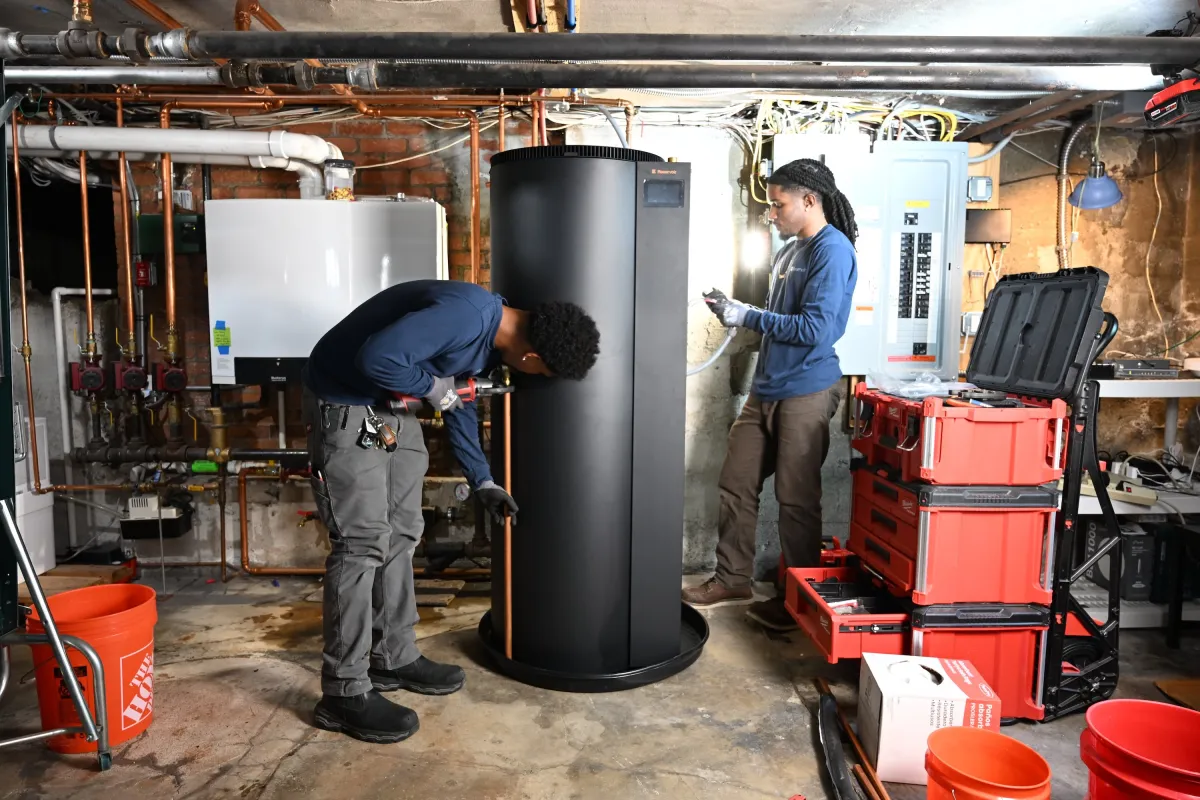
It’s hard to imagine a home appliance more forgotten — yet more consequential — than the water heater. Most people only think of water heaters when their shower runs cold, but they represent about 18% of a household’s total energy budget and are one of the main causes of residential water damage.
To Luke Winston-Almanzar, water heaters are in clear need of an upgrade. “The typical water heater is devoid of intelligence, it’s using a god-awful amount of energy, and my air fryer is smarter than it,” he told TechCrunch. “I was using more energy to heat my water than it takes to drive my electric car.”
So Winston-Almanzar, who was previously chief business officer at 3D printing startup Formlabs, co-founded Reservoir along with Gabriel Parisi-Amon and Jake Felser to make a water heater that they would want to buy.
Reservoir announced Wednesday that it has raised $8 million in a seed round led by Asymmetric Capital Partners with participation from Founder Collective and MCJ.
The funding will help the company install more of its water heaters in homes around the Boston area, it’s initial market. Reservoir has installed about 100 devices to date, and Winston-Almanzar said his company hopes to have around 1,000 installed by the end of next year. “That’s when you start talking about a megawatt-scale in terms of capacity,” he said.
Storing megawatt-hours of energy as hot water could go a long way to stabilizing the grid. Today’s water heaters tend to be dumb devices, responding only to changes in temperature in the tank. But Reservoir, by predicting when people will need hot water, can heat the tank when electricity demand is low and prices are cheap. Plus, the device’s heat pump is nearly four times more efficient than an electric water heater and five times more efficient than a natural gas version.
The startup has been able to show that it can relieve strain on the grid at the neighborhood level, Winston-Almanzar said. Eventually, Reservoir could aggregate its fleet of water heaters to participate in utility demand response programs, which pay handsomely for large users to avoid tapping the grid at certain times. Winston-Almanzar said he’s looking at ways to use those payments to keep Reservoir’s prices down.
While energy storage might get grid experts excited, it won’t sell many water heaters. Most people replace their water heaters with whatever their plumber has on hand. The Reservoir team knew they needed to do more than build another heat pump water heater. “The sustainable product need to just be the better product,” he said.
To make an appliance that customers will seek out, Reservoir has included a number of features that aren’t found in typical water heaters.
The predictive heating feature ties in with energy storage. Reservoir’s water heater will spend the first month in a home gathering information about water usage patterns to train a model. Once trained, it will run the unit’s heat pump at the most efficient and cost effective times to save money while also ensuring ample supply.
Reservoir also added an ultrasonic flow sensor to help detect plumbing leaks throughout the home, sending homeowners an alert through its app. In the Max version, Reservoir added more features, including a recirculation valve to provide instant hot water and a mixing valve that can prevent pipes from freezing in cold snaps. In the Max version, a 50-gallon tank can deliver up to 150 gallons of hot water in “party mode,” which can be set either on the device’s touchscreen or through the app.
To keep pricing simple and to speed up the sales process, Reservoir has also started its own plumbing company. Winston-Almanzar said that decision was inspired by his experience at Formlabs. “We built direct relationships [there] because, in a lot of cases, distributors weren’t embracing the new technology.”
Reservoir’s “Max” version costs $6,500, while the base “Core” version costs $5,000, installation costs included. Massachusetts residents qualify for a $1,050 rebate, bringing the price down significantly.
At $3,950, the Core model is competitive with or cheaper than existing heat pump water heaters. For comparison, the 80-gallon AO Smith that’s sitting in my basement currently costs about $3,500, and installation would add about $1,000. Traditional electric water heaters might cost less up front, at about $1,700 for an 80-gallon tank. But Winston-Almanzar said a Reservoir would save typical Boston homeowners up to $1,000 per year in energy costs. Breakeven should happen long before the Reservoir dies since the company offers a 10-year warranty.
“We don’t think it’s enough just to have great technology. We think it needs to be affordable,” Winston-Almanzar said.
Water heating is ripe for some new technology. The newest advance, heat pump water heaters, have failed to make a dent, commanding a small part of the market. If Reservoir succeeds, it might finally push them into the mainstream — and in the process take some pressure off the grid.
When you purchase through links in our articles, we may earn a small commission. This doesn’t affect our editorial independence.
>
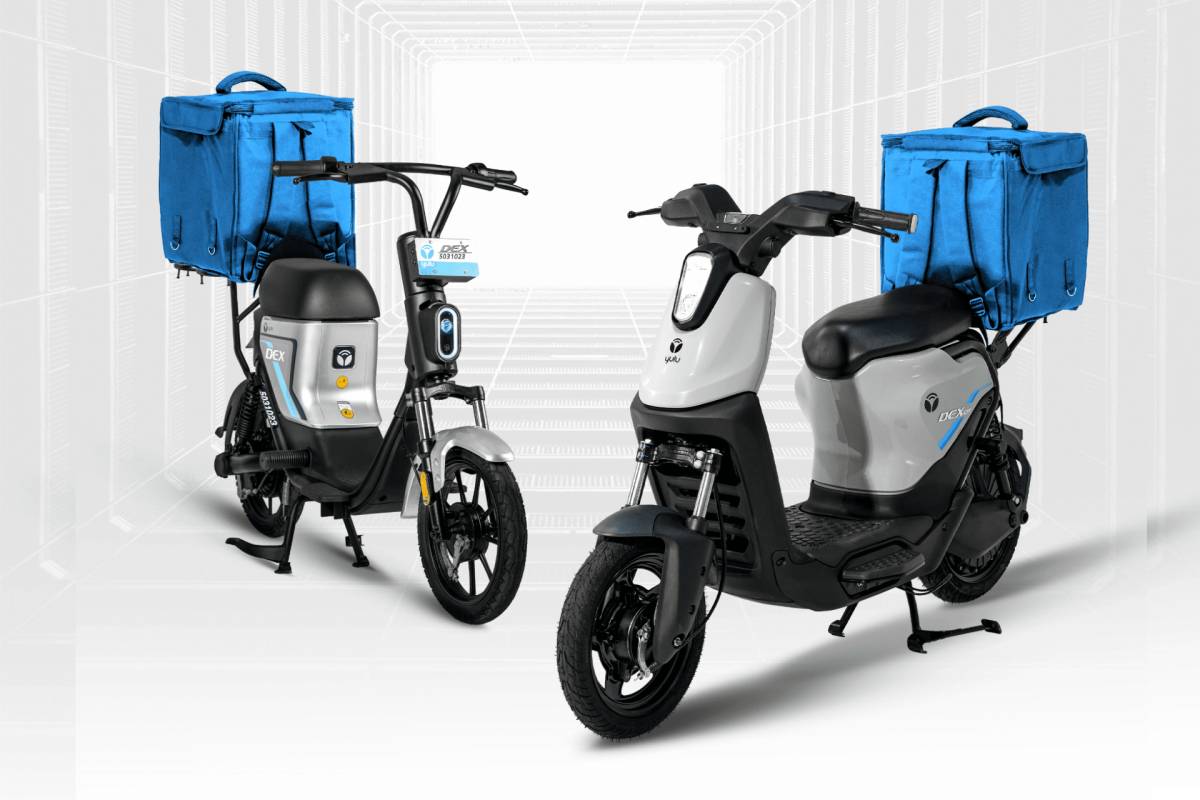
As India’s quick-commerce platforms race to deliver everything from groceries to smartphones in minutes, electric mobility startup Yulu has seized the boom, raising $93 million in fresh funding.
The Bengaluru‑based startup offers electric two‑wheelers on weekly subscription plans, so delivery drivers can jump straight into the platform, without buying their own vehicle. With around 50,000 electric vehicles in its fleet, Yulu reports that it logs about 1.6 million miles each week and powers more than 750,000 deliveries a day. The new funding will let Yulu grow that fleet to 200,000 bikes in the next two years and launch faster electric two-wheelers aimed at different logistics use cases.
The Series C round comprised $63 million in equity led by GEF Capital Partners and $30 million in debt financing. About $5.5 million of the equity component was used to buy shares from seed investors whose funds were nearing the end of their investment life, co-founder and CEO Amit Gupta said in an interview.
The deal valued Yulu at about $170 million post-money, people familiar with the matter told TechCrunch. Gupta declined to comment when asked about the valuation and did not dispute the figure.
Existing investors Bajaj Auto and Magna International did not participate in the round after waiving their pre-emptive rights, allowing GEF to acquire its target ownership stake, Gupta said. He added that the startup expects this to be its final equity fundraising before an eventual public listing, with future fleet expansion financed primarily through debt and lease financing.
The business moves toward becoming profitable before interest and taxes next year, after achieving positive EBITDA last financial year, Gupta told TechCrunch. The startup also saw its revenue growing seven-fold between fiscal 2023 and fiscal 2026, he said, without sharing specifics.
The COVID shift
Founded as a bike-sharing startup for urban commuters in 2017, Yulu found its biggest opportunity during the COVID-19 pandemic as demand for food and grocery deliveries accelerated.
Today, Gupta told TechCrunch that about 95% of Yulu’s revenue comes from renting electric bikes to gig workers on weekly subscriptions, while the rest is generated by its station‑based rental service in Bengaluru. The startup has also dropped an earlier plan to sell bikes directly to consumers.
To fuel its next growth phase, Yulu is introducing a full-sized, higher‑speed electric scooter, called Yulu Express. This is designed for longer‑haul e‑commerce deliveries, bike taxis, and express parcel services — the areas its slower fleet could not previously cover.
About a third of the planned 200,000‑vehicle fleet will be made up of this new model, Gupta said.
While Yulu’s current low‑speed fleet is built by Bajaj Auto, the new high‑speed scooter comes from a different Indian manufacturer — Gupta declined to name it.
About 500 of the new bikes are already running in Bengaluru and are being trialed in three additional cities, Gupta told TechCrunch.
Currently, Yulu operates in 12 Indian cities, running its own operations in Bengaluru, Mumbai, Delhi‑NCR, and Hyderabad, while partnering with franchisees in eight other markets. The startup, Gupta said, aims to reach roughly 20 cities within the next year, with Chennai and Pune among the key targets for expansion.
Gupta stated that Yulu partners with almost every major quick‑commerce, food‑delivery, and e‑commerce platform — including Amazon and Walmart-owned Flipkart — though its customers are the gig workers who rent the bikes, not the platforms themselves. He compared Yulu’s role to “the AWS of mobility,” supplying the infrastructure that lets delivery workers operate without the platforms taking a cut.
When you purchase through links in our articles, we may earn a small commission. This doesn’t affect our editorial independence.
>
Accel has closed a new $550 million India fund, less than two years after raising its previous India-focused vehicle, as part of a coordinated $3.5 billion global fundraising effort.
The new India fund was oversubscribed and closed within weeks, people familiar with the matter told TechCrunch. Accel still has more than 55% of its previous $650 million India fund available for investment, the people said, underlining that the latest raise came despite ample capital remaining in its earlier vehicle.
The fundraising comes as Accel bets that India’s next startup wave will be driven not only by AI, but also by consumer internet, fintech, and advanced manufacturing. The firm believes that artificial intelligence is becoming a horizontal technology that underpins each of those sectors rather than a standalone investment category.
“There is a significant amount of money available in the market for early-stage investing in the categories we have always invested in — AI, consumer, fintech, and now advanced manufacturing, and deep tech,” Shekhar Kirani, a partner at Accel, told TechCrunch. “We will continue to invest, looking for the best of the best local winners, where we can make them into global successes.”
Accel is expected to begin deploying capital from the new fund in 2027, Kirani said. Until then, the firm will continue investing from its previous India fund, he added while declining to disclose how much remains.
Accel’s renewed commitment comes as global investors debate whether India can produce globally competitive AI startups after the country largely missed the first wave of foundation model companies. Accel sees India’s opportunity specifically in building AI applications, infrastructure, and software aimed at enterprise and consumer use cases.
“The early movers have been on the LLM [large language model] side… but there is a significant opportunity in the application layer,” Prayank Swaroop, a partner at Accel, said.
Accel expects Indian startups to build AI-powered applications and enterprise software on top of existing models rather than competing with OpenAI or Anthropic.
Swaroop told TechCrunch that Indian startups are increasingly combining AI with the country’s existing engineering talent and services expertise to solve enterprise problems, particularly in sectors where human oversight remains critical.
Kirani echoed Swaroop and mentioned RapidClaims, an Accel-backed startup that automates medical coding for U.S. healthcare providers, as an example. The startup combines AI with domain expertise to deliver coding accuracy of about 95%, targeting a market that has traditionally relied on outsourced human labor in India and the Philippines.
Barath Shankar Subramanian, a partner at Accel, said the firm’s optimism is also being driven by the rapid adoption of AI among Indian consumers and businesses, creating a growing domestic market for AI-native products alongside globally focused software companies.
The trend is already visible across leading AI companies. OpenAI and Anthropic have both identified India as their largest market outside the U.S., while AI coding platform Cursor recently said India has become one of its fastest-growing developer markets and its largest market for power users.

Accel’s fundraising comes as several global venture firms are renewing their focus on India despite a broader slowdown in venture capital. Peak XV Partners, the former Sequoia Capital India business, recently raised $1.3 billion across new India and Southeast Asia-focused funds, while General Catalyst has committed to deploying $5 billion in India over the next five years. Lightspeed Venture Partners is also said to be exploring a new $300–$350 million India-focused fund.
Kirani said the renewed interest reflects a shift in the quality and ambition of Indian entrepreneurs. “Compared to several years back,” he said, “the quality of ideas and quality of founders are significantly better than what we have ever seen.”
The new India fund was one of four funds Accel raised simultaneously for the first time, alongside dedicated U.S. and Europe funds and a $1.35 billion growth vehicle. The growth fund, Accel said, can back breakout companies emerging from any of its regional funds, including India, allowing the firm to continue investing from inception through IPO and beyond.
Kirani told TechCrunch that the coordinated fundraising was driven by investor preference to evaluate Accel’s global platform in a single process rather than through separate regional fundraises.
Accel’s investment philosophy, Kirani said, remains rooted in backing founders early rather than chasing later-stage trends. Accel writes the first institutional check in roughly 80% of the companies it backs, a strategy that has helped it invest early in companies including Flipkart, Swiggy, Freshworks, and Zetwerk.
When you purchase through links in our articles, we may earn a small commission. This doesn’t affect our editorial independence.
>

Kick It Out: Chair Sanjay Bhandari to step down from role at end of 2026-27 season

A humbled SEC should do Netflix again, and embrace its status as the most interesting conference

How to watch Phillies vs. Cardinals: TV channel and streaming options for August 12
-

 movies3 months ago
Search For Canadian TV Actor Stewart McLean Now Homicide Investigation
-

 Fashion9 years ago
These ’90s fashion trends are making a comeback in 2017
-
Fashion9 years ago
According to Dior Couture, this taboo fashion accessory is back
-
Fashion9 years ago
Model Jocelyn Chew’s Instagram is the best vacation you’ve ever had
-
Fashion9 years ago
Your comprehensive guide to this fall’s biggest trends
-
Fashion9 years ago
9 Celebrities who have spoken out about being photoshopped
-
Fashion9 years ago
Emily Ratajkowski channels back-to-school style
-
Fashion9 years ago
A photo diary of the nightlife scene from LA To Ibiza