
movies
How Sarajevo’s Industry Strand Is Helping Filmmakers “Broaden” Skills

One of the crown jewels of the Sarajevo Film Festival is its industry strand CineLink Industry Days, which serves as the central hub for film professionals during the festival. SFF Festival Director Jovan Marjanović describes it as a “really well-oiled machine that creates a platform for talent at each stage of their careers.”
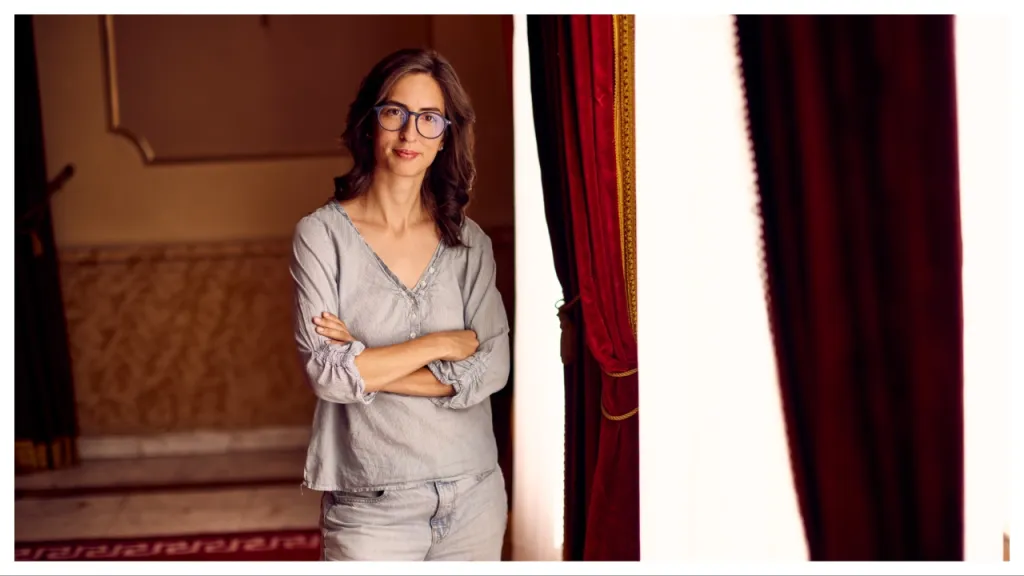
Maša Marković, Head of Industry at the Sarajevo Film Festival, is now entering her fourth year heading up the reputed event, which runs during the festival from August 14-21. On the eve of the festival, she tells Deadline what to expect from this year’s edition and how she has helped shape it into an essential launchpad for Southeast European films.
DEADLINE: What are some key highlights for you in this year’s CineLink Industry Days strand?
MARCOVIĆ: CineLink is the pinnacle of what we do throughout the year, especially in terms of talent development. We’re not just presenting projects. We have always had a curated approach with our workshops and what each project needs before it’s presented in Sarajevo. In the last two years, we’re really more focusing on what people and companies need more of and what kind of support can we give to sustain all of these changes.
We are still are very interested in the question of IP, its potential to travel and why there aren’t many IPs from the region advancing. We know that we have very good creatives, but there is this question of bridging this. We have really been exploring synergies and questions on IP, adaptation and formats.
We wanted to dig into this pool of established and emerging professionals so this year, something fun we did in April, was we gathered these established writers, directors, producers, publishers and emerging ones and asked them to write and direct microdramas together over three days. There was a lot of skepticism around it but it was also a way to really work on collaboration, with no strings attached. These kinds of things are reflected in our CineLink program as this year one of our panels is about microdramas done by public broadcasters. We feel this format is a good way to reach new audiences because you can have the best talents do something in a very short time.
We will also be doing a panel with Council of Europe on the copilot program for series, which is really about the values that TV series can actually have, not only in the streaming numbers but also by understanding historical social dimensions of certain periods and what is the value behind that. This year, with CineLink Books, we are expanding it to include two theatre plays because this is also something we feel is very rich content-wise.
Additionally, with our Co-Production Market, we often get a lot of requests from companies outside of the region that have some story or element that is relevant for them to be in the region. So, this year, we will be presenting a showcase of several projects in development that are seeking services in the region, want to shoot in the region or need some creative elements or potential co-producers. This is something we are doing for the first time because there is a big demand for it.
DEADLINE: CineLink has become an essential launchpad for projects at all stages of development or production. Tell us about how it has grown since you’ve been at the head.
MARCOVIĆ: I think most people know we appreciate their projects but it’s our relationship to the people that is essential. We nurture people for a very long time before they come back to Sarajevo to screen their own film. They either go to the Co-Production Market, the Works In Progress or Slano Film Days and this process can last up to seven years before a filmmaker comes to the festival with their film.
This year, specifically, we are working with film schools. So, we have a delegation of 70 film students across Europe, especially within the region and we have curated a program for them. We have a section in the film lineup for student films, as well as the feature and documentary strands. Our approach has always been looking for the best talent and help them at every stage of their career. This is essential and the reason people return because there is always someone they can call and get valuable feedback from.
DEADLINE: You are putting a spotlight on Switzerland and the Czech Republic this year. Can you tell us about this?
MARCOVIĆ: There are so many shifts in the industry and one of the panels we are doing is about how film funds and the policies they create need to meet the changes that are happening. The Czech Film Fund introduced a new film law that means the country will be more open towards co-production. For us, that is the region that is very close to us geographically so we would want to be one of the first places they start doing co-productions with.
With Switzerland, there are a lot of cultural and socioeconomic ties between southeast Europe and Switzerland because a lot of people emigrated there. So, you have now also second generation of the filmmakers there that have ties to our region and tell stories relating to the region. We want them here in Sarajevo so that we can broaden the connection.
DEADLINE: What are some of the biggest hurdles or demands that come with putting together such a packed program?
MARCOVIĆ: We take place during the summer holidays so we know it can sometimes be tricky to get all the professionals we want here. But we know how to make a good program and deliver and, while people sometimes do take breaks, they always come back to Sarajevo.
DEADLINE: How do you envisage growing CineLink? What does the longterm vision look like?
MARCOVIĆ: The whole film industry is such a turmoil right now so our aim is to really equip people with the skills that will enable them to continue working on great things – not just in film, but in the broader audiovisual sense. The market has consolidated, there are more mature film funds, but overall I think this region is very centered on resilience out of scarcity. This has been our modus operandi for a long time and I think it will be difficult to survive in this business if you do not have a good skill set.
>
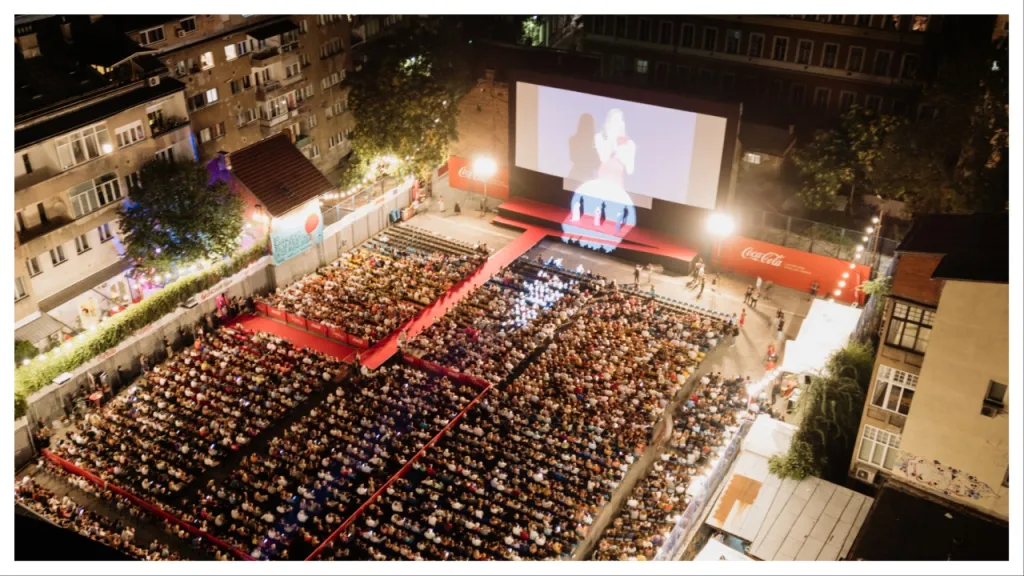
As the Sarajevo Film Festival gears up to welcome the international film community back to the Bosnian capital, its upcoming edition looks set to once again put Southeast European cinema firmly in the spotlight as it unites established filmmakers with regional talent.
The festival kicks off on Friday (August 14) with Paweł Pawlikowski’s Fatherland, which had its world premiere In Competition in Cannes earlier this year. The Polish helmer is set to personally welcome audiences at the gala screening, marking his return to Sarajevo after screening Cold War at the festival and his 1992 documentary film Serbian Epics, which screened in the early days of the festival.
“The film is particularly relevant to Sarajevo because it deals with historical fiction but also, at the same time, it tells us a lot about where we are today as a continent, geopolitically, and also personally, because it’s such a personal family story at the core,” says Festival Director Jovan Marjanović. “I think it’s really going to resonate with the people in Sarajevo.”
The festival will close with a restored version of Bosnian helmer Danis Tanović’s 2001 debut feature No Man’s Land on August 21. A total of 51 films will screen across Sarajevo’s four competition sections – narrative feature film, feature and short documentary film, narrative short film and student short film. There are 21 world premieres, six international premieres, one European premiere and 23 regional premieres.
The competition lineup has a strong number of female filmmakers in selection this year, including the world premiere of Slovenian helmer Urša Menart’s Everything That’s Wrong With You and the European premiere of Macedonian filmmaker Dina Duma’s Skateboarding Is Not For Girls.
“I feel like there’s great parity this year between female and male filmmakers with their films in competition and that’s very encouraging,” says Marjanović, adding that the festival has been working with its sponsor Uniqa Insurance Group on a female filmmakers support program, which is currently in its second year.
He adds that the competition strand is largely reflective of “the variety of regional cinema on all fronts.”
“It’s quite vibrant,” Marjanović says. “I think the topics are varied but they mostly deal with individuals not fitting in with the changing society. I feel like that’s a bit of a threat.”
He continues: “I feel our competition titles are mostly trying to decipher our societies and where they might be going and analyze them from the point of view of the individual. They deal with the past – some of them are family traumas – but there are also some forward-thinking and genre-bending perspective.”
On the international side, Marjanović says that while there has been a lot of new cinema in the ether, “it hasn’t been an exceptional year when I think about it in terms of international auteur cinema, but it has been a very stable one.”
“We’re bringing a lot of good, big filmmaking names to Sarajevo, so it’s good to have names that people recognize and are following.”
In addition to Pawlikowski, the festival is welcoming a raft of top talent including Emily Watson, who is heading up the competition jury, Woody Harrelson, Diego Luna and Asghar Farhadi, all of whom will participate in masterclasses at the festival.
“We’re obviously ambitious in that sense but celebrity is not our strategy,” he says. “Our ambition is to have people who are not only amazing at what they do, but to also create meaningful relationships with major filmmakers. I think the festival has managed to develop this over the years.”
Indeed, the starry lineup is reflective of the festival’s long game. Watson returns after 20 years to the festival – her film Breaking the Waves played at the fest’s second edition, making it the first “official” film to win an award while two-time Oscar winner Farhadi presided the jury in 2018. Pawlikowski is a repeat attendee while Harrelson’s Triangle of Sadness, which Marjanović and former Sarajevo festival director Mirsad Purivatra co-produced, opened the 2022 edition.

“The talks with Woody to arrive in Sarajevo have been going on for years and now it’s worked out,” he says.
This year, SFF is launching a new program dedicated to the legacy of the late Hungarian filmmaker Béla Tarr. The long-term initiative, dubbed the Béla Tarr in Sarajevo Tribute program, will focus on the work of the filmmaker’s former students from the Film Factory in Sarajevo, an innovative educational initiative set up by Tarr in 2013.
The lineup includes Valdimar Jóhannsson’s Lamb, which won Un Certain Regard’s Prize of Originality in Cannes, Pilar Palomero’s Motherhood, and Bianca Lucas’ Love Dog. “These filmmakers really came into the world of cinema with a bang,” says Marjanović. “It’s great to have them back together in Sarajevo and I feel that it’s a really special way to pay respect to Béla and his work by focusing on what he did and how his legacy lives on through their work nowadays.”
This year, the festival has created the Prix Cineplexx award, an audience award for the best film in its Open Air Premiere program, which showcases new works from across the former Yugoslavia. The winning film’s producer will receive a €20,000 prize, of which €15,000 goes towards services in a marketing campaign in Cineplexx cinemas and €5,000 in cash.
Marjanović points to an uptick in local productions that have become box office hits in the region, notably Croatian-Serbian co-production The Wedding, which had more than two million admissions in former Yugoslavia, and Bosnian title Testament, which took around 500,000 admissions in Bosnia. “These results complimented and reaffirmed the idea that while, at our core, we are focused on auteur cinema from this part of the world, we can also help on the commercial side of regional cinema and be a platform for distribution.”
It’s difficult to untangle the Sarajevo Film Festival from its origins, which saw it emerge from a city under siege in 1995 during the Siege of Sarajevo in the Bosnian war and Marjanović maintains its history is what makes the event so unique and resilient.
“Sarajevo is a festival that has a very clear reason to exist,” he says. “Its ethos has been built on its origins story, and the fact that it started during the Siege of Sarajevo in subhuman conditions is significant. The festival doesn’t need to show only films about war or talk about the war, but what was realized back then is that when times are like that – brutal such as war is – art becomes essential. It brings humanity back and that is what we learn from that: Culture is essential. It’s as essential as food, water and electricity because people get dignity through communication and the arts and that is something we keep in mind when we are putting a program together.”
The Sarajevo Film Festival takes place August 14-21, 2026.
>

EXCLUSIVE: ByteDance‘s new AI video generator Seedance 2.5 is successfully blocking efforts to steal Hollywood intellectual property after Seedance 2.0 prompted outrage among U.S. studios, research has revealed.
The Chinese owner of TikTok appears to have made good on its promise to improve safeguards after Seedance 2.0 produced a flurry of videos that regurgitated copyrighted material, including the wildly viral clip of Tom Cruise and Brad Pitt fighting.
Seedance 2.5 launched in late July, much to the glee of AI creators, who were impressed by the capability of Seedance 2.0. VN.ai, a tech startup that stress tests generative artificial intelligence tools for copyright infringement, has been putting Seedance 2.5 through its paces, and the company has shared its findings with Deadline.
VN.ai concluded that Seedance 2.5 blocks around 80% of prompts involving copyrighted material, which researchers said was “far more” consistent than previous ByteDance models, including Seedance 2.0 and image generator Seedream 5. VN.ai found that 100% of attempts to create videos from copyrighted images were unsuccessful on Seedance 2.5.
VN.ai said Seedance 2.5 did not block prompts. Instead, the model moderated the rendered video and refused to serve it to researchers testing the gen-AI tool. “Protection here is a byproduct of the model being good at drawing something and then recognizing it,” VN.ai said.
This suggests that Seedance 2.5 has been trained on copyrighted material, which could still be a problem for rights holders. And the model was not perfect. VN.ai was able to use Seedance 2.5 to produce a faithful video of Shark Tale‘s Oscar without using the character’s name or the title of the DreamWorks movie.
A ByteDance spokesperson said: “ByteDance launches models with AI transparency measures and guardrails designed to prevent the unauthorized use of intellectual property, which we continually work to strengthen in collaboration with creative communities as AI technologies evolve.”
It follows Seedance 2.0 provoking a full-throated backlash in Hollywood. The likes of Disney and Netflix sent ByteDance cease-and-desist letters after titles including Stranger Things and The Avengers were being ripped off. At the time, ByteDance said it had “heard the concerns.”
Deadline reported last week that MiniMax H3, another Chinese AI model, was being used to create remixed videos of The Office, Friends, and Star Wars. The company did not respond to a request for comment. In the same story, we reported that VN.ai was able to generate bootleg pictures of Elsa, Shrek, and Buzz Lightyear through ByteDance image creator Seedream 5.0.
VN.ai did this through a third-party API, meaning the safeguards may not have been as robust as on ByteDance’s own service. VN.ai also found that prompts for high-profile characters were often denied, but that by tweaking requests — such as asking for exact pixel sizes — Seedream 5.0 did then produce a recognizable rendering of Buzz Lightyear.
>
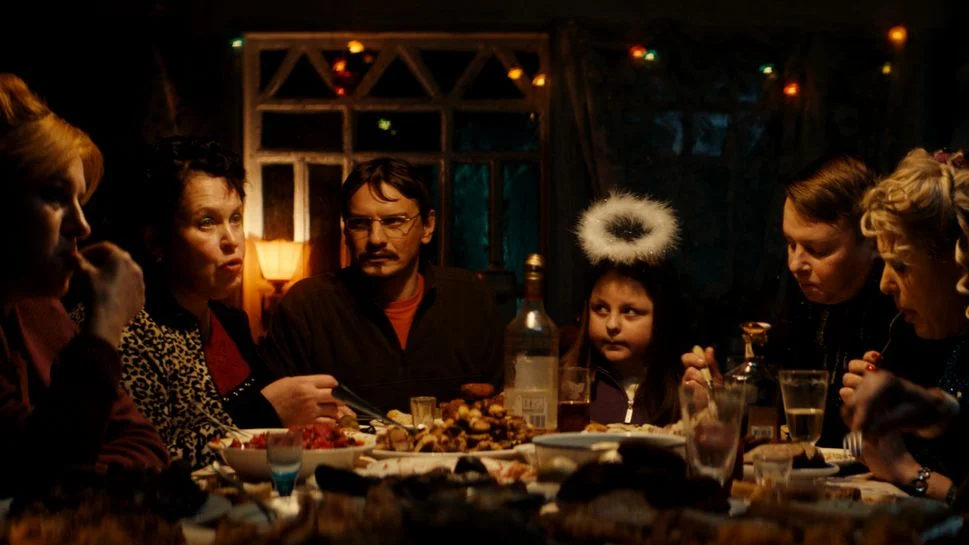
A homeless drifter from Russia with a mysterious past arrives in a remote village in central Ukraine in writer-director Natalka Vorozhbyt’s (Bad Roads) metaphorical film Demons, which world-premieres at the 79th edition of the Locarno Film Festival on Friday, Aug. 13.
The drifter’s name is Slavik, and he seems to be the embodiment of Russia. In the village, he meets Nina, who represents post-Soviet Ukraine and the country’s independence.
What kind of adventure and drama can the protagonists and viewers expect? “Nina, a strong and independent woman much older than Slavik, takes the stranger into her home,” teases a synopsis. “At first, their strange companionship resembles an unlikely love story. But as their relationship unfolds, love turns into betrayal, and the village begins to reveal its hidden rules.” Those rules are summarized this way: “A place where witches may live next door, and the dead sometimes speak with the living.”
Vorozhbyt says that Demons and the relationship at its core unfolds on several levels. One is socio-political, where the relationship “becomes a metaphor for the relationship between Russia and Ukraine,” she explains.
The cast includes Ruslana Pysanka, Aleksey Mitin, Tatiana Stepanova, Ruslan Garmash and Mykola Ponomarenko. Demons features cinematography by Volodymyr Ivanov, with editing by Milenia Fiedler and Andriy Gulyanych. Celluloid Dreams is handling international sales.
THR can now exclusively premiere the trailer for Demons. You may want to mentally prepare for borscht, a flying vehicle, violence against a TV set blood and graves – and much more.
>

A humbled SEC should do Netflix again, and embrace its status as the most interesting conference

How to watch Phillies vs. Cardinals: TV channel and streaming options for August 12

You'd be surprised, honestly
-

 movies3 months ago
Search For Canadian TV Actor Stewart McLean Now Homicide Investigation
-

 Fashion9 years ago
These ’90s fashion trends are making a comeback in 2017
-
Fashion9 years ago
According to Dior Couture, this taboo fashion accessory is back
-
Fashion9 years ago
Model Jocelyn Chew’s Instagram is the best vacation you’ve ever had
-
Fashion9 years ago
Your comprehensive guide to this fall’s biggest trends
-
Fashion9 years ago
9 Celebrities who have spoken out about being photoshopped
-
Fashion9 years ago
Emily Ratajkowski channels back-to-school style
-
Fashion9 years ago
A photo diary of the nightlife scene from LA To Ibiza