
Sports
Premier League’s ‘Big Six’ are raiding poorer clubs at record levels as wealth gap grows wider

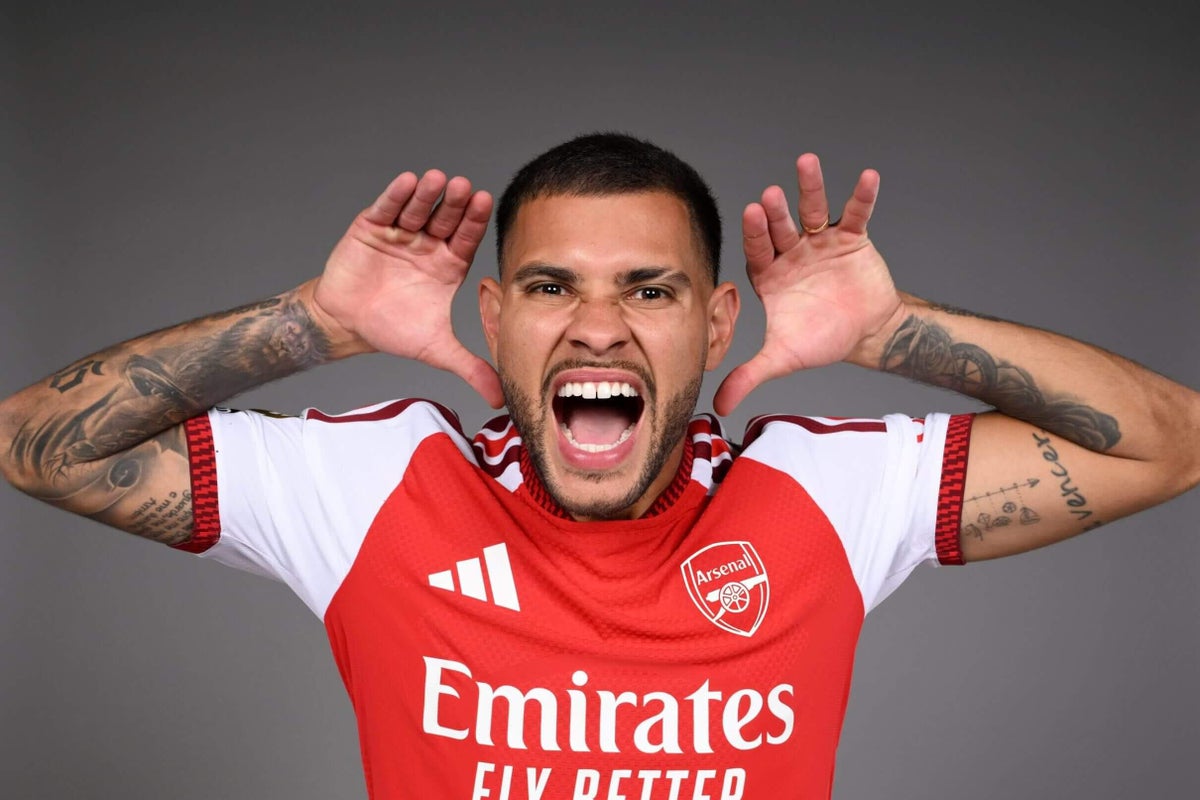
Bruno Guimaraes’ £75million move from Newcastle United to Arsenal gives more supporting evidence to several recent themes.
At 28 years old, the sizeable outlay on the Brazilian midfielder continues Arsenal’s ploy of spending big money on players who can immediately improve their first team. A year ago, their roughly £185million in fees on players aged over 24 was the most ever spent on that cohort by an English club in a single season. A first Premier League title in 22 years comprised proof of concept.
Meanwhile, Guimaraes leaving Tyneside, where he was the club’s talisman, adds him to the list of recent high-profile departures and more grounds for Newcastle’s transformation into an impressive seller. Alexander Isak, Anthony Gordon and Sandro Tonali (and head coach Eddie Howe) have all vacated St James’ Park since last September.
In the 12 years to the end of June 2025, Newcastle generated £352million from player sales. A reasonable estimate, even after sell-on clauses and solidarity payments to former clubs, has them matching that figure inside the past 12 months.
Such statistics say lots about where Arsenal and Newcastle are as clubs, but the Guimaraes deal also underscores what is fast becoming a Premier League motif: the richest teams are ever more frequently plucking the best players from the rest of the division.
Guimaraes’ transfer is the 10th instance this summer of one of the ‘Big Six’ — Arsenal, Chelsea, Liverpool, Manchester City, Manchester United and Tottenham Hotspur — acquiring players (often the best ones) from the other 14 clubs in the top tier.
He follows where Morgan Rogers, Elliot Anderson, Tonali, Maxence Lacroix, Jan Paul van Hecke, Youri Tielemans, Danny Welbeck, Marcos Senesi and Jordan Henderson have already trodden (backup goalkeepers Illan Meslier and Karl Darlow have made similar moves as free agents).
Initially, that might not seem worthy of much note.
The Welbeck and Henderson deals are not of the same ilk as the rest and, in any case, there has long been a pecking order in football, mirrored on and off the pitch. The richest clubs can buy the most talented players, making their teams better and them more attractive than previously, thereby enticing more players to follow suit; a virtuous cycle of dominance. Manchester United under Sir Alex Ferguson routinely signed the best from the rest.
Yet research carried out by The Athletic shows the trend is rapidly intensifying.
Using a methodology that takes the six highest-earning clubs in a given Premier League season (which has been those same ‘Big Six’ teams since 2009) and counting the combined number of signings from the rest of the division, excluding no-fee, backup goalkeepers, like those Meslier and Darlow deals, and intra-‘Big Six’ moves like the one which recently took Andrey Santos from Chelsea to Manchester United, we find that particular flow of transfers is at an all-time high, even as middling to lower-end Premier League teams enjoy greater wealth than ever.
Last summer, 11 players moved from a non-‘Big Six’ club to a ‘Big Six’ one, with all six of the latter getting in on the act. In January, Manchester City’s signings of Antoine Semenyo and Marc Guehi, the best players at Bournemouth and Crystal Palace respectively, took the 2025-26 tally to 13.
That was a new record and only once before has the number of moves hit double figures. That came in 2014-15, in a year where the richest opportunistically pilfered a couple of less wealthy clubs who had shown themselves highly adept at scouting and youth development. Of that season’s 10 Other 14-to-‘Big-Six’ moves, five were departures from Southampton and three involved players leaving Swansea City.
Over the past 14 months, 23 of these deals have taken place, in what amounts to a mass transfer of the best talent from the less-well-offs to the richest. Unlike 12 years ago, predation isn’t centred on a minority; 11 different Premier League clubs have lost players to the ‘Big Six’ since the beginning of last summer.
Naturally, that has conferred significant financial benefit to the selling clubs. Those 23 transfers have come at a combined cost of almost £1.2billion, which can hardly be sniffed at. Those sums allow, to an extent, sellers to reinvest in talent from elsewhere, improving as a result. Combined with more money than ever from domestic prize-money distributions, the Premier League’s middle has probably never been stronger. Repeated English wins in the finals of the Europa League and UEFA Conference League speak volumes.
Yet there’s also a growing inevitability to those clubs losing their stars to domestic rivals, an event occurring far more frequently than before and which further solidifies the hierarchical structure of English football.
Under Ferguson, it was taken as written that United would, sooner or later, obtain the brightest stars from clubs lower down the table. Between 1994 and 2006, the likes of Teddy Sheringham, Dwight Yorke, Rio Ferdinand and Wayne Rooney all moved from less-minted teams to Old Trafford. In 12 seasons, nine of those transfers occurred.
Today, United’s Mancunian rivals City have completed five of them in just over 12 months. Chelsea have done six, albeit Welbeck and Henderson aren’t the same as procuring key players around their peak years. Spurs are on four, Arsenal and Manchester United have three apiece while Liverpool bring up the rear on two but, of course, one of those was the British-record signing of Isak from Newcastle.
Chelsea have now gobbled up 17 non-‘Big Six’ players in the past decade, something which speaks to both their rampant transfer activity and a seeming preference for young players already proven in England’s top division.
Most pilfered of anyone in recent seasons are Brighton & Hove Albion, where, since the summer of 2021, 10 players have departed for a ‘Big Six’ club. Five of these — Moises Caicedo, Marc Cucurella, Joao Pedro, Robert Sanchez and now Welbeck — went to Chelsea.
Why the intensification?
One reason is obvious: the rich clubs are richer than ever.
In 2024-25, the average turnover of a ‘Big Six’ club was £635million — and this in a year where three of them didn’t play in the Champions League. The average turnover at the remaining 14 Premier League teams that season was £214m, a gap of £421m.
That gap has never been larger and, save for the two seasons hit by the pandemic, has grown every year since 2011. Since Covid-19, average revenues among the ‘Big Six’ have increased by £189million, more than three times the increase at other Premier League clubs. The elite can now offer far more, both in wages and trophy-hunting opportunities.
Compounding the issue are football’s financial rules.
Those have long allowed the richest teams to spend more, being predicated on at least some pretence of sustainability, but the shift to a squad cost ratio rule tethered to club revenues has not strengthened the bargaining position of the less wealthy.
Even as the Premier League has allowed its members to spend a higher proportion of income than the 70 per cent rule which applies to those competing in Europe, a distinction nosed on ‘protecting the competitive balance of the Premier League’, the revenue gulf is so vast that the division’s richest are still able to spend far more than anyone else. And those successful clubs from below are soon whacked with the stricter UEFA rules when they perform well and finish higher up the table.
What’s more, the averaging-out, under the Premier League’s squad cost ratio, of player profits over three years, while worthwhile from a sustainability point of view, as it discourages one-off sales to dig clubs out of a hole, means spending limits are further restrained unless teams can consistently sell players for big profits.
Where the largest earners can afford to spend heavily year-on-year, the rest are beholden to peaks and troughs. The need to sell, allied with the allure inherent at clubs who regularly compete for honours and pay their players in accordance with those aims, results in the increased flow of talent up the chain that we’re now seeing. That’s true even of those teams, heavily backed by their owners, trying to push their way into the elite; it is no coincidence that, at the time of writing, the three largest net sellers this summer are Newcastle, Aston Villa and Nottingham Forest.
The activity now seen actually serves as a further threat to competitive balance in a division where scarcely anyone stands a chance of winning the title in the first place.
The Premier League is routinely held up as world football’s best domestic league, though competition, certainly in terms of variability of champions, is scarce. La Liga is a two-horse race, with occasional Atletico Madrid interruptions; Ligue 1 and the Bundesliga are Parisian and Bavarian cakewalks with rare exceptions. Only Serie A, with four winners in seven seasons, among Europe’s top five domestic leagues can lay claim to high levels of both quality and competitiveness, and many would argue it lags some way behind the Premier League on the quality front.
What were football transfers like before the transfer window?
Tifo Football
And with each new transfer like the Guimaraes deal, competitive balance is impacted in England. Selling clubs have more money in their pockets than ever, but consistently replacing your best players is no easy feat, not least when everyone now knows you’re flush with cash. Behind Brighton, the other two most devoured by the ‘Big Six’ in the past decade are Leicester City and Wolverhampton Wanderers. They have lost six players each to the division’s richest since 2017 and, tellingly, both have been relegated in recent years and now play outside the Premier League.
An optimist may see this as a cycle, whereby there’s rotation at the top and the status quo will shift. Indeed, the team most vulnerable to the vultures now were once the ones doing most of the preying. Across six Premier League seasons in the 1990s, Newcastle pried 12 different players from poorer sides, more than anyone else in that period.
Yet there’s scant suggestion of any dislodging. The six highest-earning clubs in England have remained the same for almost two decades and continue to enjoy far greater matchday and commercial revenues than the rest. European football as a whole has been subject to significant stratification and, while the English game may have convinced itself otherwise, it is far from immune.
There’s the point, too, that the richest are so rich they can simply allow others to do the hard work, then stroll in and buy the players who have already proven they can cut it in the world’s highest quality league.
In a fair sporting world, clubs with inefficient recruitment operations would be overtaken by smarter efforts, like those showcased at Brighton. In the world we actually live in, the richer teams take their best players off them year after year, reinforcing a glass ceiling which dictates that, for most clubs, finishing sixth or seventh is about as good as it will now get. Finishing fourth is a borderline miracle. Actually winning the title is a fantasy.
All of it means the Premier League has a problem. One that is unlikely to be widely acknowledged.
>
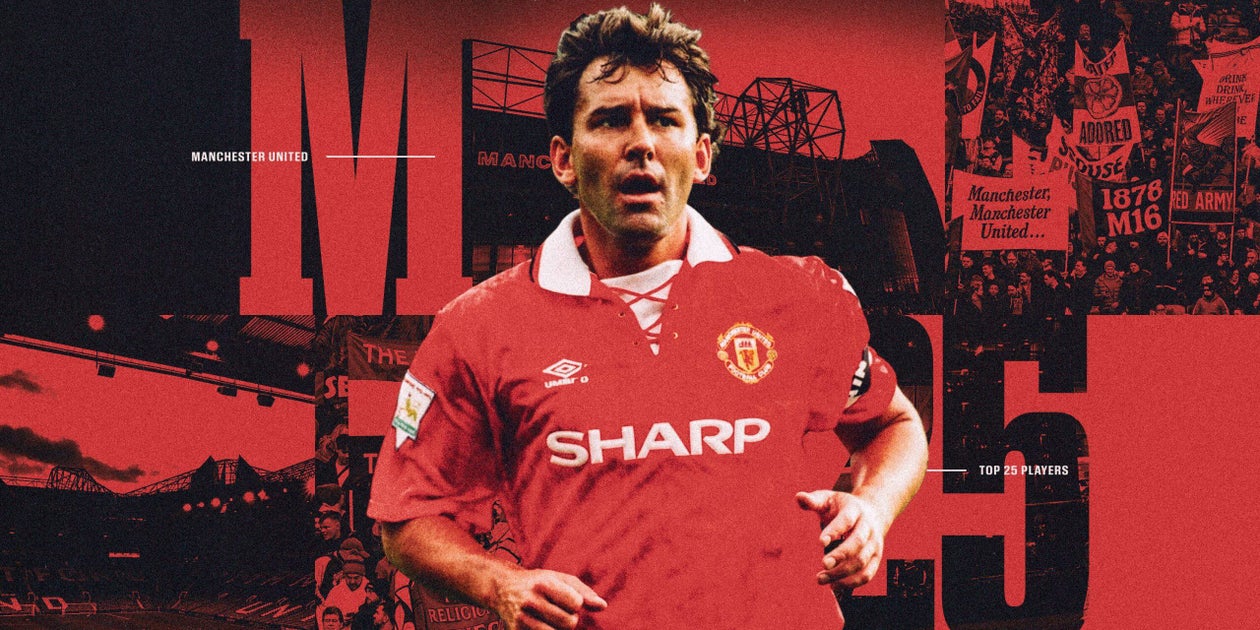
Who are the greatest players in Manchester United’s history? The Athletic gave Andy Mitten the task of compiling his top 25, and we are counting them down this summer, in reverse order.
He explains his thought process here.
Sinaloa, Mexico, May 2019. Diego Maradona is talking about playing at Old Trafford in 1984 for Barcelona in the Cup Winners’ Cup when he says: “Bryan Robson, he was my favourite English player of that generation.”
What a game. Maradona’s side led 2-0 from the first leg and what followed was probably Old Trafford’s best atmosphere in the stadium’s history.
“The pitch felt like it was shaking it was so loud,” Robson told me in 2021. “We’d got off to a great start when I headed in from a corner after 20 minutes. That got the crowd motivated and we really needed the fans. We’d planned to be aggressive and get stuck into Barcelona because they were a real class team. They had (Bernd) Schuster and Maradona, as well as Miguelli (Miguel Bernardo Bianquetti). So we said we’d go high-tempo and get wired into them. We did. When I scored our second goal, we could see their heads drop and they started complaining to each other.”
United won 3-0 and all the best teams in Europe wanted Robson, the son of a Geordie truck driver who spent most of his time away. Despite bigger riches on offer, Robson chose to stay at Old Trafford and he was the single most compelling reason for watching Manchester United in the 1980s.
Costing a record £1.5million British transfer fee when he signed from West Bromwich Albion in October 1981, ‘Robbo’ was ‘Captain Marvel’, a colossus at the heart of centre midfield for United and England, for whom he played 90 times, 65 as captain.
In total, he made 465 appearances for United between 1981 and 1994, putting him 18th all-time, between Martin Buchan and Michael Carrick. Crucially, and this sets him apart from other midfielders, he scored 99 United goals, including some of the best in the club’s history. He is United’s 24th all-time leading scorer.
Both figures would have been substantially higher had he not been constantly beset by injuries. Still, Robson played an impressive 737 club games — he had already had 245 for West Brom before his Old Trafford move and made another 27 as Middlesbrough player-manager after he moved there in 1994. The United he left were the best team in the land, the one he had joined were miles behind European champions and serial league champions Liverpool.
When United had Robson, there was always hope. He was a regular match-winner. When he didn’t play because of injuries, Liverpool won, such as in the 1983 League Cup final. A few weeks later, he played against Arsenal in the FA Cup semi-final at his favourite ground, Villa Park. United went 1-0 down but Robson equalised and they went on to win.

Bryan Robson wins a header during the 1983 FA Cup semi-final (Peter Robinson/EMPICS via Getty Images)
“I was vocal and aggressive when I wanted to be,” he said. “I felt I led by example and if lads were getting idle or ducking out of a challenge, I would hammer them, really hammer them. They didn’t sulk. It doesn’t happen the same now — they sulk.
“I would have a go at any of my team-mates. Some, like Arthur Albiston, a good full-back, had a fiery temper and would come back at me if he thought I was wrong. (Norman) Whiteside would kick his own granny. Paul McGrath, Kevin Moran… hard men, they could all take it. None of them had a go at me because I never did anything wrong! I was only trying to motivate them because I wanted to get the best out of them so that we could win together.
“In later years, lads like Mark Hughes or Steve Bruce would have a go at me if I did something wrong. I was fine with that. That team in ‘92, ‘93 and ‘94 was the best group of players I ever played with. Aggression, ability and real athletes through the whole team.”
Described by Sir Alex Ferguson as a “miracle of commitment” and that for him “winning was almost as important as breathing”, Robson had a “wonderful knack of timing his runs into the box to perfection”.
“There wasn’t a player on the field who could match his commitment and grit or his ability to read a game,” said Ferguson in his 1999 autobiography, Managing My Life. “He was the perfect captain and he ticked all the boxes. I trusted him to make on-field adjustments to playing positions; he was also someone who would speak his mind, which was something I valued. Robson remained captain until he started getting plagued by injuries.
“One player’s drive can have an enormous effect on a team — a winning drive is like a magical potion that can spread from one person to another. Bryan Robson was a foreigner to danger. He came from Chester-le-Street, County Durham, a coal-mining area in the north of England, and would plough right into situations that others would avoid. It resulted in him spending a lot of time on the injury list but also made him an invaluable leader.”
This childhood Newcastle United fan lifted the FA Cup three times with United and the European Cup Winners’ Cup in 1991.
Robson was United’s best player of the 1980s at a time when crowds were down and the sport was blighted by hooliganism. He was fearless and lifted an average side, the team’s leader and social convenor who could sink 10 pints and still be at the front in training the following morning.
Crucially, he turned up in the biggest games and thinks his best was the Cup Winners’ Cup final against Barcelona in Rotterdam, when United won only a second European trophy. He scored great goals to the last (his final one was in the 1994 FA Cup semi-final replay against Oldham Athletic).

Bryan Robson scores his second past Barcelona goalkeeper Javier Urruti at Old Trafford in 1984 (Trevor Jones/Allsport/Getty Images/Hulton Archive)
Of another semi-final versus Oldham, also at Manchester City’s Maine Road, four years earlier, Ferguson said: “Bryan hadn’t played in any league games prior to the semi-final but he was a giant on the day, at his demanding snarling best as he bullied and cajoled his team-mates to meet every challenge.”
And he did so much more. He was an unofficial agent, the unpaid conduit between talented younger players who wanted a new contract and Ferguson. He raised millions for charity around Manchester, too.
In 2024 I climbed Mount Kilimanjaro with Robson for United’s charitable foundation. Other players were asked and politely declined. Robson, despite his wife Denise asking him not to since he had already done it, agreed, aged 67.
His body, battered by decades of unflinching tackles and broken bones, was not what it was. His ankle blew up, he needed medication. Yet he went on and on and on, up and up. People half his age with serious mountain experience struggled and marvelled at him leading them to the top.
As we descended Africa’s highest peak, his ankle ballooned in size. I asked him the greatest United goal he’d ever scored to keep his mind occupied.
“It was against Liverpool, the top team in the 1985 FA Cup semi-final,” he said. “Your big players have got to turn up in the big games because they are the ones who win you semi-finals and finals.
“It was a replay at Maine Road after a 2-2 draw at Goodison. I played a one-two with Frank Stapleton. I could sense that Ronnie Whelan was catching me and thought, ‘I need to hit it before he gets a tackle in on me’. Luckily it was one of those shots which went straight into the top corner. We played superbly against Liverpool and we were going to Wembley to play Everton, the champions that season.”
Those cup wins meant so much, but they were only possible because there was only one Bryan Robson.
Catch up on the rankings
>
Sports
Fantasy Premier League: Season two of DEFCON – how to maximise your defensive contribution points
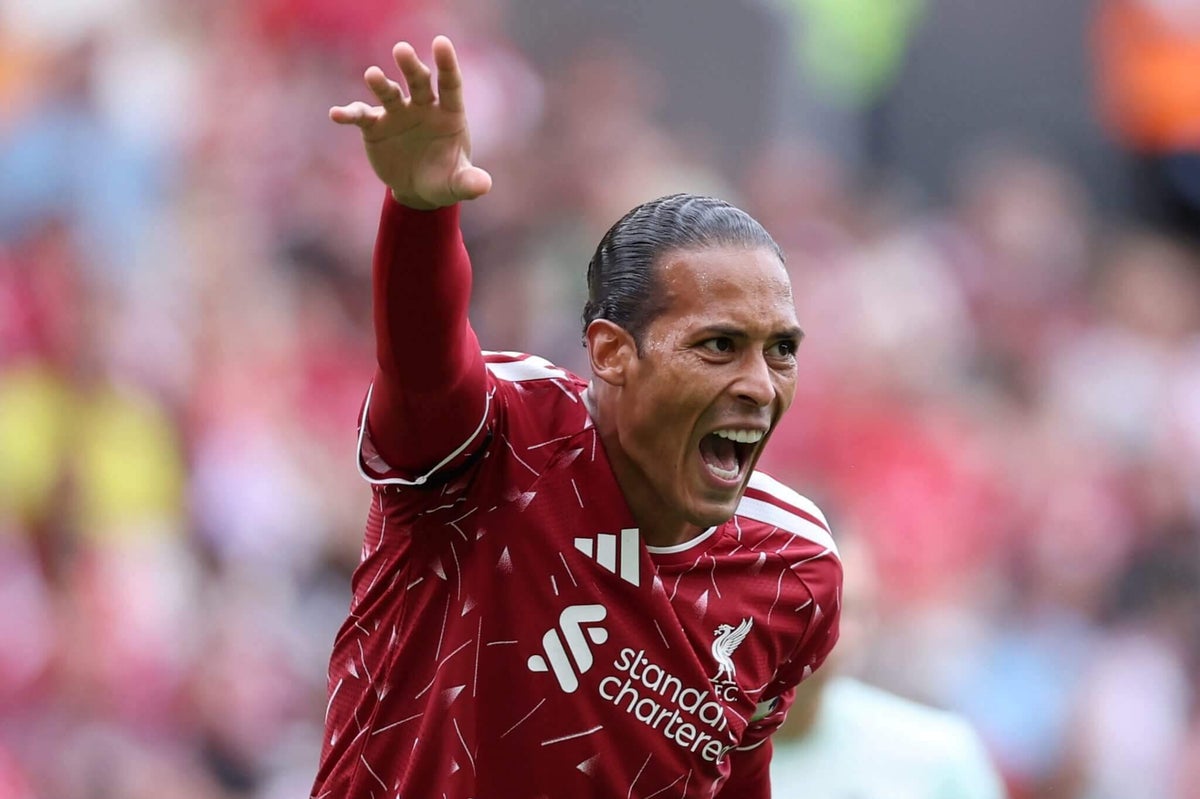
One of the biggest changes to Fantasy Premier League last season was the introduction of defensive contributions (also known as DEFCON).
After an entire season of data, managers now have a much better understanding of which players consistently benefit from the new scoring system that awards points for defensive actions and, more importantly, how to use that knowledge to gain an edge.
While goals and assists will always be the biggest source of points in FPL, defensive contributions provide another route to returns, particularly for defenders and defensive midfielders.
Here’s everything you need to know about maximising your DEFCON returns in 2026-27.
What are defensive contributions?
Defensive contributions reward players for defensive actions completed during a match.
Rather than relying purely on attacking returns or clean sheets, players can now earn additional FPL points by reaching certain defensive thresholds.
The specific actions include:
- Clearances
- Blocks
- Interceptions
- Tackles
- Recoveries (for midfielders and forwards only)
A defender needs to reach 10 DEFCONs per game to achieve an extra two points, and midfielders need to hit 12.
Why DEFCON matters
One or two extra points may not seem significant.
However, over a 38-game season, those additional returns quickly add up.
For example, a player who regularly collects DEFCON points could finish 20-50 points ahead of another with similar clean-sheet numbers.
Last season, Elliot Anderson (£6.5m) scored the most points from defensive contributions — an extra 52. This is equivalent to 10 goals for a midfielder.
Marcos Senesi (£6.0m), meanwhile, picked up the most points from this metric among defenders (50 points). The equivalent to 16 assists or eight goals for a defender.
As you can see, the difference over a season can be huge. Those small weekly gains could be the difference between winning and losing mini-leagues.
Target defenders who defend
The biggest mistake many managers made last season was underestimating the value of DEFCON points.
The top five highest-scoring defenders were centre-backs. Centre-backs who regularly face pressure tend to produce the highest number of clearances, blocks and interceptions.
Players such as Senesi, James Tarkowski (£6.0m) and Maxence Lacroix (£6.0m) frequently hit the required thresholds because they’re constantly involved defensively.
While they may not possess the attacking upside of a roving full-back, their reliable defensive contribution points help compensate for that.
When choosing between two similarly priced defenders, defensive contributions should come first in your thinking: simply because it is a lot more predictable and repeatable than attacking returns.

Everton’s James Tarkowski was a DEFCON magnet last season (Alex Livesey/Getty Images)
Don’t ignore attacking defenders
Although centre-backs often dominate defensive contributions, attacking full-backs can still provide value.
Players such as Pedro Porro (£5.5m) and Nico O’Reilly (£6.5m) combine clean-sheet potential with attacking returns.
The ideal FPL defender now offers multiple routes to points:
- Clean sheets
- Attacking returns
- Defensive contributions
Picking defenders with a mix of the above metrics is the way forward.
Defensive midfielders finally matter
Defensive midfielders have also been big beneficiaries of DEFCONs.
Historically, these players were almost impossible to justify in FPL because they rarely scored or assisted.
Now, players such as Anderson, James Garner (£6.0m) and Ethan Ampadu (£5.5m) can quietly accumulate points through their defensive work while occasionally chipping in with attacking returns.
This trio were the top three scoring midfielders for DEFCON points last season.
DEFCONs do not suddenly make every holding midfielder a great pick. However, if you’re choosing between similarly priced midfielders, someone capable of regularly earning defensive contribution points suddenly becomes much more appealing.
Team strength still comes first
DEFCON should complement your decisions, not replace them.
A defender playing for Arsenal or Manchester City remains more attractive than a defender from a struggling team.
Just as an example, Burnley’s Maxime Esteve picked up the fifth-most DEFCON points (38) among defenders but finished 62nd on the list of highest-scoring defenders.
It’s all about balance.

Elliot Anderson, now with Manchester City, earned the most DEFCON points in the top tier last season (Alex Livesey/Getty Images)
Understand player roles
Not every defender in the same team will produce similar DEFCON numbers.
Take Fulham as an example. Joachim Andersen (£5.0m) managed 40 DEFCON points, whereas his centre-back partner Calvin Bassey (£4.5m) scored just 16.
Understanding each player’s role is crucial.
Likewise, some midfielders are tasked almost exclusively with protecting the defence, making them much more likely to benefit from defensive contributions than advanced playmakers.
Always look beyond the player’s listed position. This can be hard to identify at the start of the season as players who were good for DEFCON last season may not provide the same value due to factors such as a change in management, tactics or role.
The firmer trends will be picked up as the season progresses, and it’s the FPL managers who react the quickest that will benefit.
Balance is key
The strongest FPL defences usually contain a mix of player profiles.
For example:
- One premium attacking defender like Gabriel (£8.0m) or Virgil van Dijk (£6.5m)
- One reliable DEFCON specialist, such as Tarkowski
- A few value defenders with good fixtures, secure minutes and a chance of DEFCON points.
This gives your squad multiple routes to points while reducing reliance on clean sheets alone.
Ones to watch
Alongside the established DEFCON performers, several new signings could quickly emerge as excellent FPL options this season.
The DEFCON data above was provided by FPL content creator Alex Vollo.
Mamadou Sangare (£5.5m) — Brentford
The Brentford midfielder averaged just over 14 defensive contributions per 90 for Lens last season, while also producing three goals and four assists. That combination of defensive output and attacking involvement is exactly what we are looking for. At £5.5m, he could become outstanding value.
Christian Norgaard (£5.0m) — Everton
Norgaard could be an excellent budget option if he nails down a place in Everton’s midfield. He recorded five goals and five assists for Brentford in 2024-25, showing that he can offer more than defensive points alone. His opportunities were limited at Arsenal but he achieved a DEFCON return in 50 per cent of his appearances in 2024-25. Secure minutes could make him a very appealing pick.
Tarik Muharemovic (£5.0m) — Leeds United
Muharemovic looks especially well-suited to the DEFCON system. Leeds’ new centre-back averaged an impressive 17 defensive contributions per 90 minutes for Bosnia & Herzegovina at the World Cup, having also recorded just over 11 per 90 for Sassuolo in Serie A last season.
Luka Vuskovic (£5.0m) — Brighton
Vuskovic may be the most exciting defensive option of the lot. Brighton’s new signing averaged 13 defensive contributions per 90 minutes for Hamburg last campaign.
He also scored an outstanding six goals. If he establishes himself as a starter, he has the potential to become one of the best-value defenders in FPL.
>
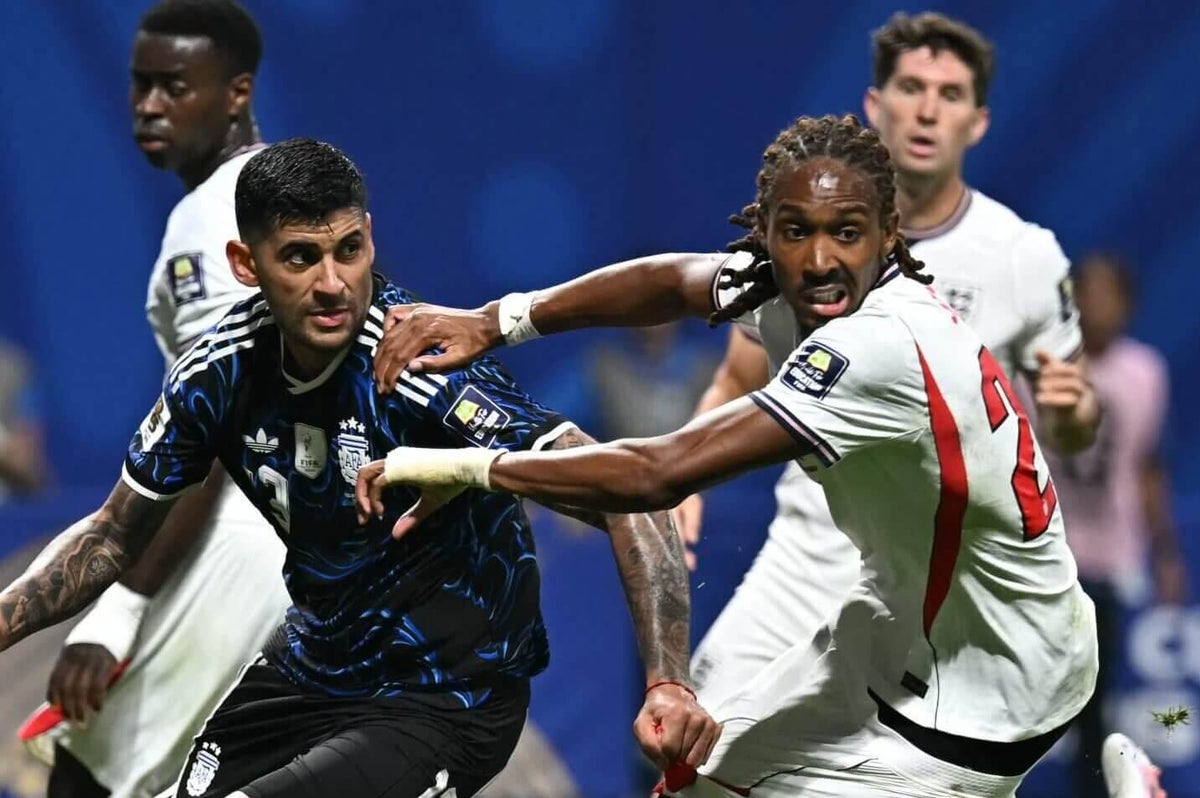
It was only four weeks ago that Djed Spence and Cristian Romero were on opposing sides in the World Cup semi-final in Atlanta, competing on behalf of their countries for the right to face Spain in the final.
Both men played well, Romero shackling Jude Bellingham for much of the evening, Spence producing a famous recovery tackle on Giuliano Simeone when England were 1-0 up.
While it was Argentina who made it through to the final — and Pedro Porro’s Spain who won the whole thing — both Spence and Romero clearly had good World Cups, helping their respective countries get to the business end of the competition. Both players flew home with different colour medals from the gold that they dreamed of, but with reputations enhanced.
But now, in the middle of August, with the new Premier League season just around the corner, both Spence and Romero find themselves in the same position. It is an unusual one for a Tottenham Hotspur first-teamer to be in as the club decides whether to sell them before the start of the new season.
There has been speculation about the duo’s futures for some time. That in itself is nothing new. But with Spurs’ first Premier League game — away at Brentford — coming up on Saturday week, it is coming up to decision time for these two players.
Inter moved into pole position to sign Spence this week, entering into talks with Spurs over a €30million deal. Inter were also in for Romero — The Athletic reported last week that they even verbally agreed the principle of a €40m fee with Tottenham — but they have now been joined in competition by Atletico Madrid. Romero has also been of interest to Arsenal.

(Gareth Copley/Getty Images)
As it stands, nothing has been agreed in either case but it has increasingly felt this week that the direction of travel has been towards a sale for both players.
If that turns out to be so, and if Spence and Romero are sold this month, then it would be one of the most significant moments of the post-Daniel Levy era. Not simply for the importance of the departing players, or what the money would allow Spurs to do, but for the strategic pivot it would imply.
We have already seen this month that Tottenham have changed their attitude to buying players. That much is clear from the fees that they spent on Mateus Fernandes and Sandro Tonali. They have also changed their attitude to salaries, as proven by the big wages to attract those players, as well as to get established ones like Porro and Micky van de Ven to re-commit to new contracts.
If Romero and Spence are sold this month, it will show that Tottenham have transformed their attitude to selling too.
The club have traditionally had a complicated relationship with selling. They were never going to be the apex predator of the football food chain. And yet while some clubs of similar size were happy to keep selling players to re-invest, Tottenham generally only sold first-team players in very specific circumstances.
If they had a top player who was sought after by a bigger, richer club than Spurs, that is to say, if Spurs had all the leverage in the negotiation, then Levy would exploit that position and sell the player for a big fee. Dimitar Berbatov to Manchester United, Luka Modric and Gareth Bale to Real Madrid, Kyle Walker to Manchester City, Harry Kane to Bayern Munich and so on.
The fees that Levy was able to extract in part justified the policy. Real Madrid paid a world record €100m (£85m) for Bale in September 2013. Four years later Walker became the joint most expensive defender of all time when he moved to City. And three years ago Spurs got a fee equivalent to the Bale fee for Kane, even though he only had one year left on his Tottenham contract.

(Denis Doyle/Getty Images)
The problem for Spurs was not the big deals. It was everything else. While they were generally happy to sell top players for top money, Levy did not want to do deals just to get players out of the door. There was a limit to how much Tottenham wanted to be seen as a ‘selling club’. There was a degree of status-anxiety here, as Spurs tried to prove to the world they would not be pushed around.
This reluctance to sell players beyond the big-ticket deals — Bale, Walker, Kane — had a profound strategic impact on Spurs. It meant that the process of refreshing Mauricio Pochettino’s team, moving on tired old players, replacing them with new ones, was so hard to do. There was no space nor money for new recruits. Staff said privately that it was like a swimming pool that needed to have the water refreshed. Without change, it would go stale.
During the course of those years, so many opportunities were missed to sell players — beyond Walker — to generate money to refresh the team. Manchester United wanted Eric Dier in 2017, the same summer that Chelsea wanted Danny Rose, and would have paid £50m for him. Jose Mourinho wanted Toby Alderweireld at Manchester United the following year. Napoli wanted Lucas Moura in the summer of 2019 after his Ajax hat-trick. Big fees could have been generated for Dele Alli or Christian Eriksen if Tottenham had played their cards right.
But in almost every case, Tottenham failed to sell at the right time. They missed the opportunity to move players on when they were at their peak and when there was a genuine market for them. It felt as if Tottenham would only sell under what you might call ‘Gareth Bale conditions’. They would never compromise to move someone on apart from that. (Kieran Trippier going to Atletico in 2019 is a rare counter-example.)
This meant that a whole generation of Spurs players — Walker and Kane aside — stayed far too long, and left for practically nothing. Rose and Lucas on free transfers, Dier on an initial loan made permanent, Dele on a performance-related move to Everton, Alderweireld for Qatar, Eriksen for Inter on a cut-price deal with only six months left on his Spurs contract, Erik Lamela in part-exchange with Bryan Gil. Hundreds of millions of pounds of potential market value was allowed to diminish to practically nothing.

(Dan Mullan/Getty Images)
Ever since Levy’s dismissal as chairman, one of the key points for improvement that the club hierarchy have spoken about has been the importance of selling players, especially in the new era of financial regulation.
There was some consternation when Spurs sold Brennan Johnson to Crystal Palace in January for £35m, but this was precisely the sort of deal that Tottenham never used to do. Johnson was not in the team, the money was on the table, and his valuation was probably likelier to go down rather than up. It made sense to do the deal. And when CEO Vinai Venkatesham spoke to the Fans Advisory Board in June, he pointed to that transfer as an example of the new approach to sales the club wants.
If Romero and Spence are sold — and nothing has happened yet — you could look at those deals as comparable to Johnson’s departure in January. There will be a lot of people who will say that Spurs should keep the players, or push for more money, rather than letting them go so easily.
But that attitude — allowing the perfect to be the enemy of the good — has been precisely Tottenham’s problem over the years. Sometimes the right answer is just to shake hands, take the money and use it to refresh the squad.
This was the part of the transfer market Spurs struggled with for so long. Maybe, depending on what happens to Spence and Romero, they have found a new approach.
>

Premier League’s ‘Big Six’ are raiding poorer clubs at record levels as wealth gap grows wider

Manchester United’s greatest players: No 4, Bryan Robson

Tank Chair Anime’s New Video Unveils More Cast & Staff, Song Artists, October 4 Debut – News
-

 movies3 months ago
Search For Canadian TV Actor Stewart McLean Now Homicide Investigation
-

 Fashion9 years ago
These ’90s fashion trends are making a comeback in 2017
-
Fashion9 years ago
According to Dior Couture, this taboo fashion accessory is back
-
Fashion9 years ago
Model Jocelyn Chew’s Instagram is the best vacation you’ve ever had
-
Fashion9 years ago
Your comprehensive guide to this fall’s biggest trends
-
Fashion9 years ago
Emily Ratajkowski channels back-to-school style
-
Fashion9 years ago
9 Celebrities who have spoken out about being photoshopped
-
Fashion9 years ago
A photo diary of the nightlife scene from LA To Ibiza