
Sports
The Field of 68 brings back college basketball’s 24-hour season-opening marathon

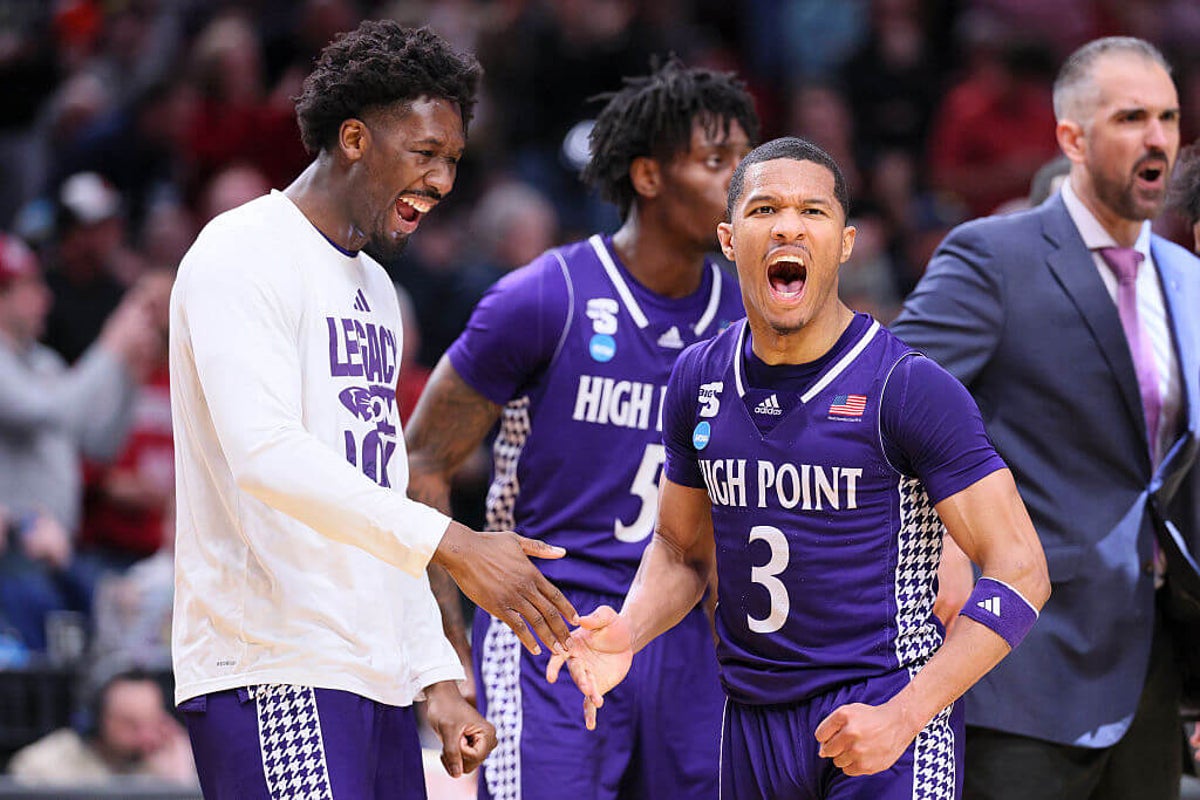
Nine years after college basketball’s overnight shift went dark, the 24-hour marathon is waking up from its slumber.
The Field of 68 Media Network will stage eight games over nearly a full day to open the men’s college basketball season on Nov. 2, resurrecting the round-the-clock format that ESPN shelved ahead of the 2017 season. The slate begins with High Point and Liberty at 12:01 a.m. ET in Rock Hill, S.C., rolls through games at 3 a.m. and 6 a.m. and doesn’t stop until Furman and Bethune-Cookman tip at 8 p.m.
For the Field of 68, which launched in the teeth of the COVID-19 pandemic and is now scheduling games during hours usually reserved for deep sleep, the improbable became the itinerary.
“Never,” co-founder Jeff Goodman told The Athletic when asked whether a 24-hour marathon had always been a goal for the company. “We didn’t think we’d ever broadcast a game.”
The digital network began primarily with podcasts hosted by former college and NBA players before gradually moving into live events. Co-founder Rob Dauster traced a turning point to December 2022, when the Field of 68 broadcast a Furman-Stephen F. Austin game as part of a tripleheader in Greenville, S.C.
“I was like, maybe this can be something,” Dauster said.
Something became three games at the Sanford Pentagon in Sioux Falls, S.D., in 2024. Three became six in 2025, split between Sioux Falls and Rock Hill, tipping off at 8 a.m.
This year, the Field of 68 secured NCAA waivers through all 16 participating schools and crossed the last frontier, pushing tipoff past midnight and into the hours college basketball had left untouched for nearly a decade.
The result bears a resemblance to a quirky tradition that once marked the onset of the college basketball season. ESPN launched its Tip-Off Marathon in 2008 with 14 games across five time zones and continued staging versions of it for nine seasons.
Goodman, who previously worked at ESPN, knew the marathon still occupied a soft spot among college basketball die-hards in the years since it was discontinued. But nostalgia was only part of the appeal — Goodman also saw an opening day with an incredibly crowded buffet of games yet a shortage of those worth rearranging the day around.
“There’s a million games at night, and all the really good teams play nobody,” Goodman said. “They don’t want to play anybody because the coaches are scared in the first game. So they just want an easy win, and I’m like, ‘It’s just so boring for the sport to come out of the gates like that.’ ”
Rather than stuffing the schedule with the biggest brands it could find, the Field of 68 went shopping for mid-majors. Eleven of the 16 teams in this year’s field won at least 20 games last season, and five reached the NCAA Tournament — highlighted by High Point, which upset fifth-seeded Wisconsin on its way to the round of 32.
The emphasis on mid-majors is intentional, Dauster said. As college basketball’s financial fault lines widen, the programs being pushed furthest toward the margins are often the ones responsible for some of March’s maddest moments.
“It brings back a lot of the smaller, unique things about college basketball that I feel like we’re losing,” Dauster told The Athletic. “The quirky, unique kind of college basketball-specific stuff is something that we really wanted to lean into with this.”
Full Field of 68 schedule (all times ET):
- 12:01 a.m.: High Point vs. Liberty (Rock Hill)
- 3 a.m.: Grambling vs. Northern Illinois (Rock Hill)
- 6 a.m.: Appalachian State vs. Merrimack (Rock Hill)
- 9 a.m.: Winthrop vs. Queens (Rock Hill)
- 11:30 a.m.: Murray State vs. Tennessee State (Sioux Falls)
- 2 p.m.: UTEP vs. Northern Kentucky (Sioux Falls)
- 5:30 p.m.: UAB vs. McNeese State (Rock Hill)
- 8 p.m.: Furman vs. Bethune-Cookman (Rock Hill)
Finding teams willing to sacrifice a night’s sleep was relatively easy. Finding teams willing to play one another proved considerably harder. Goodman said some programs would commit to the event, then cycle through — and reject — one potential opponent after another.
“Will you play them? No. Will you play them? No,” Goodman said of his conversations with coaches. “You have five options for them, and they say no to all of them.”
“I don’t envy the coaches that have to schedule 30-plus games because I had to do this with eight games — it’s brutal.”
Northern Illinois, led by first-time Division I head coach Matt Majkrzak, will open its season at 3 a.m. ET against Grambling. Dauster described the players willing to begin their seasons at that hour as “absolute sickos, and it’s awesome.”
All eight games will stream on the Field of 68’s YouTube channel and X account, with broadcast crews stationed at each site. Goodman has perhaps assigned himself the weekend’s most unforgiving job: calling all six games in Rock Hill.
His current plan? Work the midnight, 3 a.m., 6 a.m. and 9 a.m. games, retreat to the hotel next door for a possible nap, then return for the 5:30 p.m. and 8 p.m. tips. And whatever sleep cannot cover, Goodman plans to outsource to iced coffee.
“Honestly,” Dauster said, “the biggest thing that I’m worried about is Goodman falling asleep on the screen.”
>

Tottenham Hotspur are in talks with Inter Milan over deal to sell Djed Spence to the Italian side for a fee in the region of €30million (£25.6m).
A source close to the situation, granted anonymity to protect relationships, said Spence is keen on a move to the Serie A champions, who are in the market for a new right back after the sale of Denzel Dumfries to Real Madrid.
Spence is capable of playing at left or right-back but Destiny Udogie and Spain’s World Cup winner Pedro Porro are Spurs head coach Roberto De Zerbi’s first-choice options in those positions.
Andy Robertson’s arrival from Liverpool earlier this summer has given Udogie extra competition at left-back, along with 20-year-old Brazilian prospect Souza. Archie Gray prefers to play in midfield but can provide cover for Porro on the right. Spence’s gametime could be limited next season as a result, especially as Spurs are not in any European competition.
The Athletic reported earlier this summer that Everton were interested in signing the 26-year-old but Inter are now negotiating with Spurs.
Spence joined the north London side from Middlesbrough in the summer of 2022 in a deal worth up to £20m but was labelled a “club signing” and overlooked by then head coach Antonio Conte. The full-back then spent 18 months on loan with Rennes, Leeds United and Genoa, before finally making his first start for the club under Ange Postecoglou.
Spence became a valued member of the first-team squad during the 2024-25 campaign under Postecoglou and helped Spurs to win the Europa League. Postecoglou was sacked by Spurs last summer but Spence was rewarded with a new long-term contract in August 2025 and made his debut for England the following month. He remained an important player under Thomas Frank, Igor Tudor and De Zerbi.
Spence’s form over the last two years led to his inclusion in England’s squad for the World Cup where he made some crucial contributions as Thomas Tuchel’s side reached the semi-finals.
‘Fans would be torn over Spence’s departure’
Analysis by Jay Harris
Spence’s career at Spurs has never been straightforward. He joined Spurs from Middlesbrough after a fantastic season on loan at Nottingham Forest who he helped earn promotion to the Premier League.
However, he was labelled a “club signing” by Conte and for a couple of years it felt like the move would never work out as he spent time on loan in Italy, France and the second tier of English football.
Spence became a cult hero during the 2024-25 campaign after Spurs suffered an injury crisis. Postecoglou gave Spence a chance and he responded by producing excellent defensive performances and offering a threat with overlapping runs.
Spence was rewarded with a new contract at the beginning of the 2025-26 season and impressed in Spurs’ penalty shootout defeat to Paris Saint-Germain in the UEFA Super Cup. His form dropped off at times last season and there was an incident in November when he appeared to ignore and walk straight past then head coach Thomas Frank. Frank revealed a few days later that Spence had apologised.
Despite sharing game-time with Udogie and Porro over the second half of the season, Tuchel included Spence in his World Cup squad. Spence popped up with some important cameos, including in England’s semi-final defeat to Argentina when he chased after Guiliano Simeone and pulled off an incredible sliding tackle.
Spurs fans would be torn over Spence’s departure. Spence’s versatility is invaluable while the proposed fee of €30m seems cheap for somebody who started in a World Cup semi-final last month and still has years left on his contract.
>

No one has made more Premier League appearances under Enzo Maresca than the manager’s namesake in midfield, Enzo Fernandez.
Across two seasons and 54 games, the Argentine racked up over 4,500 league minutes for Chelsea with Maresca in the dugout, during which time only Bruno Fernandes and Mohamed Salah created more chances from open play.
The manager has since taken up the job at Manchester City, but according to reporting in The Athletic’s DealSheet on Tuesday, he is keen on a reunion with one of his most trusted players.
With World Cup-winning captain Rodri potentially leaving City, the club have already dug deep to bring in Elliot Anderson from Nottingham Forest for £116million ($153m). Lille midfielder Ayyoub Bouaddi, 18, is also heavily linked, while the likes of Nico Gonzalez, Tijjani Reijnders and Mateo Kovacic remain at the club. Phil Foden and Rayan Cherki take up more advanced, creative roles, while Rico Lewis and Nico O’Reilly are nominally full-backs, but can also tuck inside to provide even more cover in the centre of the pitch.
Even with expected departures, City would seem to be well-stocked.
But Maresca’s interest in reuniting with Fernandez persists for a quoted valuation of at least £120m.
So what exactly does Maresca see in his former midfielder? And how different is he to the other options that City already have?
Life after Rodri could soon become a daunting reality for City should his move to Barcelona materialise before the end of the month.
His departure after seven seasons would have seismic implications on the way that City can play; no other midfielder combines his passing quality with his instinctive sense of defensive positioning — or at least be able to come in and start performing straight away — allowing team-mates to push on without fear of being hit on the break.
Under Maresca. City’s recruitment drive looks to be aimed towards replacing the sum of Rodri’s parts. In Anderson, they have a player with athleticism, a tireless runner who made more defensive recoveries than any other player in Europe’s top five leagues last season.
Bouaddi is similarly snappy without the ball, but has potential to become a peerless tempo dictator from deep.
Fernandez would bring a more immediate aspect to the post-Rodri midfield: attacking intent, and plenty of late runs into the box.
The idea would likely be for Anderson to patrol deeper while Fernandez drifts forward, but their technical quality would allow them to rotate. Either can get forward or link play at the base of midfield while Foden or Cherki take up their preferred positions further on.
Man City interested in Enzo Fernandez
Sam Lee
Fernandez would bring a talent for timing his off-ball movements to arrive just in time to sweep home cut-backs or finish from the edge of the penalty area, an invaluable skill as City work the ball methodically towards the box.
The pizza charts below use SkillCorner data to analyse how midfielders across Europe’s top seven leagues move without the ball per 30 minutes of team possession.
Both Anderson and Fernandez rank highly when it comes to supporting the build-up, but while Anderson’s forward runs are more geared towards underlaps — attacking the space inside to take players away from advanced full-backs and wingers — Fernandez aims to crash the dangerous areas inside the box, as shown by his high cross receiver rating.
Given that both players naturally drifted more to the left last season, it would create an interesting dynamic with O’Reilly, a dangerous attacking full-back who also likes to mix up his off-ball movement to pull the opposition apart.

Digging further into SkillCorner’s data, Fernandez made 42 cross receiver runs that led to a team shot within 10 seconds. Only four players managed more in the Premier League last season, but Fernandez is the only name in the top 10 who does not play as a centre-forward.
Mapping those off-ball movements onto the pitch helps to illustrate the variety of Fernandez’s movement, making diagonal runs from both the left and the right, while also frequently starting his movements from close to the half-way line, difficult runs for defenders to track when the timing is right.
Whenever the ball is worked wide into a promising position, the 25-year-old is rarely far away.

Below against West Ham United, we see Maresca’s team set up in a shape that could be mirrored at City.
They build in a three, with one full-back (Marc Cucurella in this instance) tucked inside and another (Malo Gusto) up high and wide. City’s right-back Matheus Nunes would be suited to the Gusto role here, while O’Reilly or Josko Gvardiol would both be strong options to take Cucurella’s position and pick their moments to get forward.
Moises Caicedo is the sole receiver — which may be where we see Anderson — while attacking midfielders and wingers form a five across the attacking third, with the big striker Liam Delap up top.
Fernandez takes up that spot in the left half-space, where he most frequently receives the ball.

As the move develops with neat combination play down the opposite flank, Fernandez continues to linger before spotting his opportunity to attack in frame two.
With centre-back Jean-Clair Todibo watching the ball, he attacks his blindside and steals a march on Aaron Wan-Bissaka, in position to tap home Estevao’s simple ball across the face of goal.

Fernandez’s movement is elusive, choosing his moments to hang back, and picking up on signals from his team-mates to be aggressive and attack the space.
Here against Brighton & Hove Albion, we see the familiar build-up shape, this time with Joao Pedro playing up front.
The Brazilian drops into midfield, pulling centre-back Jan Paul van Hecke out of position, a sign for Fernandez and his midfield partner Andrey Santos to look for gaps up ahead.
Joao Pedro knocks the ball back to Caicedo, who finds a defence-splitting pass down the flanks for Reece James.
Having made his move early, Fernandez is perfectly placed to attack the blindside of makeshift defender Carlos Baleba, arriving on cue to head home the cross.

City have a similar profile in their squad in Reijnders, another box-to-box midfielder who can exploit the gaps with runs from deep.
But despite a strong start to his City career, the Dutchman has struggled to nail down a place, not quite able to slow play down and dictate tempo in quite the same way as some of his ultra-talented team mates.
Fernandez would have no issues adapting to such responsibility on the ball, with his player role dashboard below illustrating his ability to impact the game across all phases. Classified as an all-action midfielder, he moves possession forward confidently, evades pressure, and also finds time for those storming runs into the box to offer threat in the final third.

We see Fernandez’s energetic movement and versatility in the build-up to another chance against Aston Villa.
To begin with, he drops deep to support the build-up, rotating into Jorrel Hato’s spot on the left of defence and pushing the defender on. As the move progresses, he offers an overlapping run for Alejandro Garnacho out wide, before drifting inside to linger in his favourite spot between the lines.
Once again, the move develops out wide after great work from Caicedo, and Fernandez spots his opportunity to get forward, arriving just in time for the cut-back that Cole Palmer eventually overhits.

For Fernandez to join such a busy midfield would say a lot about Maresca’s faith in the likes of Reijnders, Gonzalez or Kovacic to perform in such varied roles. Fernandez himself is not always the most authoritative defender when the opposition look to counter, not as athletic or as springy as the likes of Anderson or Caicedo, but his attacking output and diverse skillset on the ball justifies his inconsistency without it.
He would not come cheap, and alongside Anderson and Bouaddi, would take City’s outlay to over £300m for three new midfielders.
But Fernandez would offer guaranteed output with those box-crashing runs, and fit seamlessly into a familiar system in a lighter shade of blue.
>
Sports
Premier League’s ‘Big Six’ are raiding poorer clubs at record levels as wealth gap grows wider
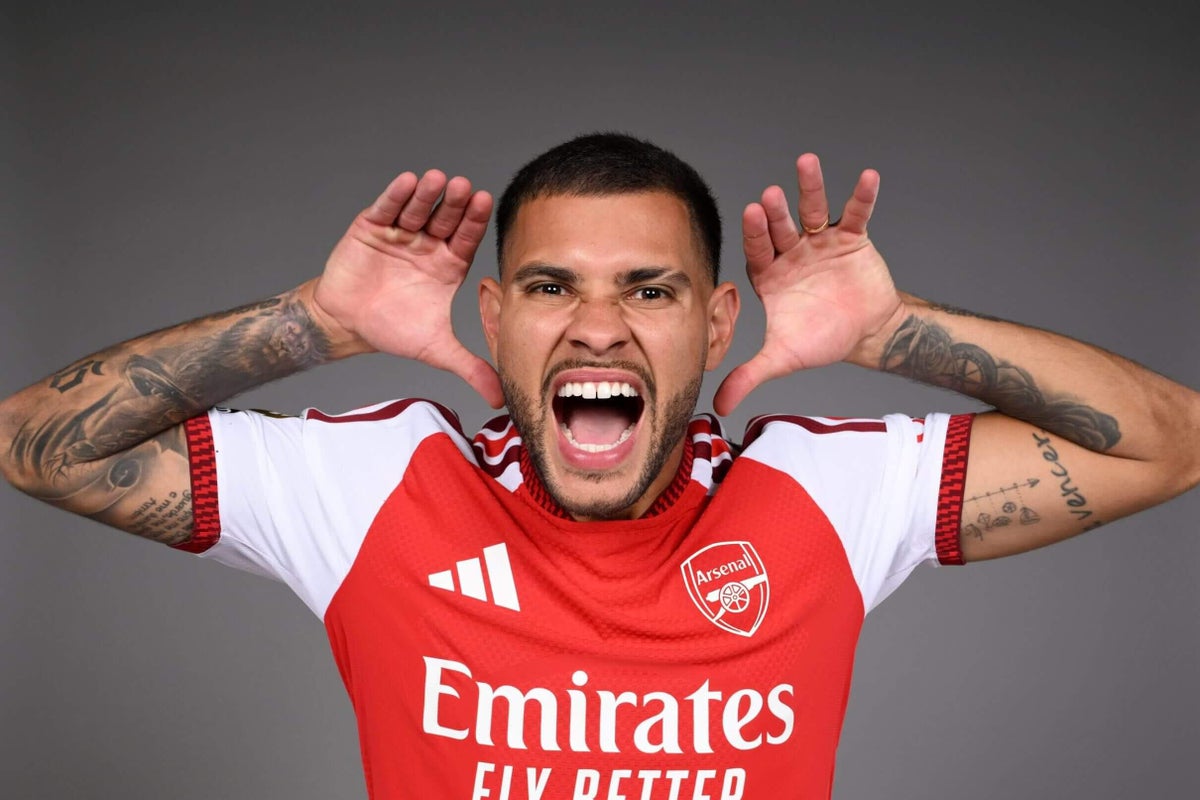
Bruno Guimaraes’ £75million move from Newcastle United to Arsenal gives more supporting evidence to several recent themes.
At 28 years old, the sizeable outlay on the Brazilian midfielder continues Arsenal’s ploy of spending big money on players who can immediately improve their first team. A year ago, their roughly £185million in fees on players aged over 24 was the most ever spent on that cohort by an English club in a single season. A first Premier League title in 22 years comprised proof of concept.
Meanwhile, Guimaraes leaving Tyneside, where he was the club’s talisman, adds him to the list of recent high-profile departures and more grounds for Newcastle’s transformation into an impressive seller. Alexander Isak, Anthony Gordon and Sandro Tonali (and head coach Eddie Howe) have all vacated St James’ Park since last September.
In the 12 years to the end of June 2025, Newcastle generated £352million from player sales. A reasonable estimate, even after sell-on clauses and solidarity payments to former clubs, has them matching that figure inside the past 12 months.
Such statistics say lots about where Arsenal and Newcastle are as clubs, but the Guimaraes deal also underscores what is fast becoming a Premier League motif: the richest teams are ever more frequently plucking the best players from the rest of the division.
Guimaraes’ transfer is the 10th instance this summer of one of the ‘Big Six’ — Arsenal, Chelsea, Liverpool, Manchester City, Manchester United and Tottenham Hotspur — acquiring players (often the best ones) from the other 14 clubs in the top tier.
He follows where Morgan Rogers, Elliot Anderson, Tonali, Maxence Lacroix, Jan Paul van Hecke, Youri Tielemans, Danny Welbeck, Marcos Senesi and Jordan Henderson have already trodden (backup goalkeepers Illan Meslier and Karl Darlow have made similar moves as free agents).
Initially, that might not seem worthy of much note.
The Welbeck and Henderson deals are not of the same ilk as the rest and, in any case, there has long been a pecking order in football, mirrored on and off the pitch. The richest clubs can buy the most talented players, making their teams better and them more attractive than previously, thereby enticing more players to follow suit; a virtuous cycle of dominance. Manchester United under Sir Alex Ferguson routinely signed the best from the rest.
Yet research carried out by The Athletic shows the trend is rapidly intensifying.
Using a methodology that takes the six highest-earning clubs in a given Premier League season (which has been those same ‘Big Six’ teams since 2009) and counting the combined number of signings from the rest of the division, excluding no-fee, backup goalkeepers, like those Meslier and Darlow deals, and intra-‘Big Six’ moves like the one which recently took Andrey Santos from Chelsea to Manchester United, we find that particular flow of transfers is at an all-time high, even as middling to lower-end Premier League teams enjoy greater wealth than ever.
Last summer, 11 players moved from a non-‘Big Six’ club to a ‘Big Six’ one, with all six of the latter getting in on the act. In January, Manchester City’s signings of Antoine Semenyo and Marc Guehi, the best players at Bournemouth and Crystal Palace respectively, took the 2025-26 tally to 13.
That was a new record and only once before has the number of moves hit double figures. That came in 2014-15, in a year where the richest opportunistically pilfered a couple of less wealthy clubs who had shown themselves highly adept at scouting and youth development. Of that season’s 10 Other 14-to-‘Big-Six’ moves, five were departures from Southampton and three involved players leaving Swansea City.
Over the past 14 months, 23 of these deals have taken place, in what amounts to a mass transfer of the best talent from the less-well-offs to the richest. Unlike 12 years ago, predation isn’t centred on a minority; 11 different Premier League clubs have lost players to the ‘Big Six’ since the beginning of last summer.
Naturally, that has conferred significant financial benefit to the selling clubs. Those 23 transfers have come at a combined cost of almost £1.2billion, which can hardly be sniffed at. Those sums allow, to an extent, sellers to reinvest in talent from elsewhere, improving as a result. Combined with more money than ever from domestic prize-money distributions, the Premier League’s middle has probably never been stronger. Repeated English wins in the finals of the Europa League and UEFA Conference League speak volumes.
Yet there’s also a growing inevitability to those clubs losing their stars to domestic rivals, an event occurring far more frequently than before and which further solidifies the hierarchical structure of English football.
Under Ferguson, it was taken as written that United would, sooner or later, obtain the brightest stars from clubs lower down the table. Between 1994 and 2006, the likes of Teddy Sheringham, Dwight Yorke, Rio Ferdinand and Wayne Rooney all moved from less-minted teams to Old Trafford. In 12 seasons, nine of those transfers occurred.
Today, United’s Mancunian rivals City have completed five of them in just over 12 months. Chelsea have done six, albeit Welbeck and Henderson aren’t the same as procuring key players around their peak years. Spurs are on four, Arsenal and Manchester United have three apiece while Liverpool bring up the rear on two but, of course, one of those was the British-record signing of Isak from Newcastle.
Chelsea have now gobbled up 17 non-‘Big Six’ players in the past decade, something which speaks to both their rampant transfer activity and a seeming preference for young players already proven in England’s top division.
Most pilfered of anyone in recent seasons are Brighton & Hove Albion, where, since the summer of 2021, 10 players have departed for a ‘Big Six’ club. Five of these — Moises Caicedo, Marc Cucurella, Joao Pedro, Robert Sanchez and now Welbeck — went to Chelsea.
Why the intensification?
One reason is obvious: the rich clubs are richer than ever.
In 2024-25, the average turnover of a ‘Big Six’ club was £635million — and this in a year where three of them didn’t play in the Champions League. The average turnover at the remaining 14 Premier League teams that season was £214m, a gap of £421m.
That gap has never been larger and, save for the two seasons hit by the pandemic, has grown every year since 2011. Since Covid-19, average revenues among the ‘Big Six’ have increased by £189million, more than three times the increase at other Premier League clubs. The elite can now offer far more, both in wages and trophy-hunting opportunities.
Compounding the issue are football’s financial rules.
Those have long allowed the richest teams to spend more, being predicated on at least some pretence of sustainability, but the shift to a squad cost ratio rule tethered to club revenues has not strengthened the bargaining position of the less wealthy.
Even as the Premier League has allowed its members to spend a higher proportion of income than the 70 per cent rule which applies to those competing in Europe, a distinction nosed on ‘protecting the competitive balance of the Premier League’, the revenue gulf is so vast that the division’s richest are still able to spend far more than anyone else. And those successful clubs from below are soon whacked with the stricter UEFA rules when they perform well and finish higher up the table.
What’s more, the averaging-out, under the Premier League’s squad cost ratio, of player profits over three years, while worthwhile from a sustainability point of view, as it discourages one-off sales to dig clubs out of a hole, means spending limits are further restrained unless teams can consistently sell players for big profits.
Where the largest earners can afford to spend heavily year-on-year, the rest are beholden to peaks and troughs. The need to sell, allied with the allure inherent at clubs who regularly compete for honours and pay their players in accordance with those aims, results in the increased flow of talent up the chain that we’re now seeing. That’s true even of those teams, heavily backed by their owners, trying to push their way into the elite; it is no coincidence that, at the time of writing, the three largest net sellers this summer are Newcastle, Aston Villa and Nottingham Forest.
The activity now seen actually serves as a further threat to competitive balance in a division where scarcely anyone stands a chance of winning the title in the first place.
The Premier League is routinely held up as world football’s best domestic league, though competition, certainly in terms of variability of champions, is scarce. La Liga is a two-horse race, with occasional Atletico Madrid interruptions; Ligue 1 and the Bundesliga are Parisian and Bavarian cakewalks with rare exceptions. Only Serie A, with four winners in seven seasons, among Europe’s top five domestic leagues can lay claim to high levels of both quality and competitiveness, and many would argue it lags some way behind the Premier League on the quality front.
What were football transfers like before the transfer window?
Tifo Football
And with each new transfer like the Guimaraes deal, competitive balance is impacted in England. Selling clubs have more money in their pockets than ever, but consistently replacing your best players is no easy feat, not least when everyone now knows you’re flush with cash. Behind Brighton, the other two most devoured by the ‘Big Six’ in the past decade are Leicester City and Wolverhampton Wanderers. They have lost six players each to the division’s richest since 2017 and, tellingly, both have been relegated in recent years and now play outside the Premier League.
An optimist may see this as a cycle, whereby there’s rotation at the top and the status quo will shift. Indeed, the team most vulnerable to the vultures now were once the ones doing most of the preying. Across six Premier League seasons in the 1990s, Newcastle pried 12 different players from poorer sides, more than anyone else in that period.
Yet there’s scant suggestion of any dislodging. The six highest-earning clubs in England have remained the same for almost two decades and continue to enjoy far greater matchday and commercial revenues than the rest. European football as a whole has been subject to significant stratification and, while the English game may have convinced itself otherwise, it is far from immune.
There’s the point, too, that the richest are so rich they can simply allow others to do the hard work, then stroll in and buy the players who have already proven they can cut it in the world’s highest quality league.
In a fair sporting world, clubs with inefficient recruitment operations would be overtaken by smarter efforts, like those showcased at Brighton. In the world we actually live in, the richer teams take their best players off them year after year, reinforcing a glass ceiling which dictates that, for most clubs, finishing sixth or seventh is about as good as it will now get. Finishing fourth is a borderline miracle. Actually winning the title is a fantasy.
All of it means the Premier League has a problem. One that is unlikely to be widely acknowledged.
>

Tottenham and Inter Milan in talks over €30m Djed Spence deal

The runs from deep that make Enzo Fernandez an enticing prospect for Manchester City

Crunchyroll Acquire Makoto Shinkai’s Next Film for Global Release
-

 movies3 months ago
Search For Canadian TV Actor Stewart McLean Now Homicide Investigation
-

 Fashion9 years ago
These ’90s fashion trends are making a comeback in 2017
-
Fashion9 years ago
According to Dior Couture, this taboo fashion accessory is back
-
Fashion9 years ago
Model Jocelyn Chew’s Instagram is the best vacation you’ve ever had
-
Fashion9 years ago
Your comprehensive guide to this fall’s biggest trends
-
Fashion9 years ago
9 Celebrities who have spoken out about being photoshopped
-
Fashion9 years ago
Emily Ratajkowski channels back-to-school style
-
Fashion9 years ago
A photo diary of the nightlife scene from LA To Ibiza