
Anime
Episode 6 – Young Ladies Don’t Play Fighting Games


©Eri Ejima/KADOKAWA/Young Ladies Don’t Play Fighting Games Partners
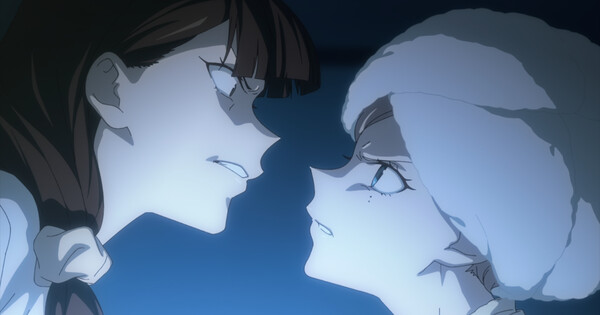
Whatever the genre of player you want to call Mio—overly optimistic and earnestly strategizing with something spiritually similar to “I just won’t get hit”—is so real. I guarantee you, everyone with any connection to the FGC knows someone like this (if they’re not this type themselves). They’re real, and even in real life—anecdotally, at least—everyone who fits this archetype I’ve met has been nothing but charming. Overly hopeful, yes, but charming. And Mio, in this regard, is no different. As the girls set out for their first major, I can’t help but love Mio’s “But I’m going to win!! We have to stick around for the whole tournament, because I’ll be playing up until the end!!” attitude. There’s something so endearing about it, and if I didn’t already love her before (and I did), I certainly do now.
As much as I find myself loving Mio this week, I have a long way to go before I can catch up to how much Aya loves her. Not since Naruto and Sasuke have I seen a more obvious rivals-to-lovers pairing as Aya and Mio. And that is, I think, a good comparison to make, because in many ways they’re like battle shonen rivals who obviously have so much more chemistry with each other than even their intended love interests, except you know, it’s actually intentional this time (because this time, they’re the love interests). Take notes, Kishimoto. The absolute level of yearning I could feel radiating from the screen when Aya was trying to fall asleep whilst looking at Mio’s empty futon—be still my beating heart!
In any case, as the girls finally actually arrive at EVO Japan and we see them take it all in and appreciate how cool it is that they get to be there, I find myself also reminded of something I’ve really only gained an appreciation for fairly recently, as I’ve gotten into the more competitive side of trading card games (Pokémon, in particular). Specifically, you can just walk into any fighting game major—well, any save for a handful of invitationals, but certainly all the largest tournaments—and even if it’s your first time playing a game, you can compete so long as you pay your entry. Anyone, at any tournament—it’s open-bracket. Meanwhile in Pokémon TCG-land, you have to get invited to participate in Worlds (the biggest tournament of the year, which is actually happening later this month), and I’ll save you a bit of a tangent and just say that it’s gotten considerably harder to do that in recent years, as they’ve changed the requirements. Regionals, meanwhile, are open in theory, but many tend to hit their limit pretty quickly these days. This has all really made me appreciate the openness of the FGC, and episodes like this one, which highlight how happy the girls feel to be there—and, by extension, that they can be there at all in spite of everything—really encapsulate why that openness is such a wonderful thing.
Suffice to say, as always, this anime brings an interesting dose of reality with it. For the first time this week, we saw other fighting games being mentioned (especially Guilty Gear, my beloved; if you’re reading this on Friday, August 14, happy birthday to its creator, Daisuke Ishiwatari!). We saw them talk about buttons, and how different players will prefer different amounts of give in their buttons. We saw a discussion of patch notes and how delicate balance can be in a fighting game—although I doubt CAPCOM would ever release such a big patch right before a tournament as major as EVO Japan (and even if they did, I question whether or not the tournament would use the update). We even saw what I’m pretty sure were meant to be legally distinct versions of certain players in the FGC (EX: AngryBird and Kakeru), and I can’t begin to imagine how they must feel seeing themselves in this way in an anime. It all brings an element of realism to this anime that I appreciate, and I think really helps to build up the setting—to say nothing of how it might get people more interested in fighting games, which is always a plus.
And you know what else is a plus? Another good rivalry. A rivalry so good that the rivals in question show up to the function wearing matching outfits, and nobody seems to be questioning it. Two Chun-Li mains, visually stuck in the 90s (complimentary), who feel compelled to fight one another in Street Fighter. Their rivalry is almost as beautiful as the fact that they both look like they’re in costumes and doing a bit, but nobody is really acting like it’s a bit—it’s being framed like they both just coincidentally like dressing like punks from the ’80s or ’90s. And that this is just normal behavior for them. Love to see it now, and I’m sure I’ll love to see more from them next week as well.
Rating:
Young Ladies Don’t Play Fighting Games is currently streaming on
Crunchyroll.
Disclosure: Kadokawa World Entertainment (KWE), a wholly owned subsidiary of Kadokawa Corporation, is the majority owner of Anime News Network, LLC. One or more of the companies mentioned in this article are part of the Kadokawa Group of Companies.
The views and opinions expressed in this article are solely those of the author(s) and do not necessarily represent the views of Anime News Network, its employees, owners, or sponsors.
>

©プロジェクトラブライブ!蓮ノ空女学院スクールアイドルクラブ
Credit research company Tokyo Shoko Research (TSR) reported on Thursday that game development company Odd Number and two related companies filed for bankruptcy in the Tokyo District Court on August 5. Odd Number had 10,320,780,000 yen (about US$64.71 million) in liabilities as of December 2024, while the two related companies are under investigation.
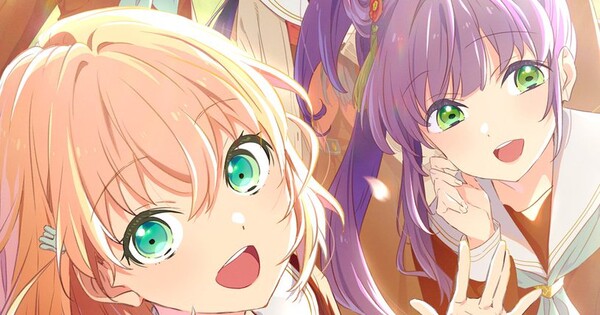
Odd Number is best known as the developer for Link! Like! Love Live!, the smartphone game app for the Love Live! Hasu no Sora Jōgakuin School Idol Club (Hasu no Sora Girls’ School Idol Club) “virtual school idol” project. The game launched in April 2023, and ended service on June 30.
The Love Live! Hasu no Sora Jōgakuin School Idol Club spinoff of the Love Live! franchise is notable among the franchise‘s spinoffs for featuring a storyline that progresses with a real-time calendar, and is accessible primarily through Odd Number’s Link! Like! Love Live! game. Characters advance their stories in the game in real-time, and have even graduated from the in-story school and exited the main story (which coincides with the “graduation” of the the real-life idols/voice actresses that portray them). The game also streamed live concerts and talk sessions, hosted an idol-training card game, and offered other forms of content that guided the real-time story of the game.
TSR noted that the game had high operating costs for Odd Number, and the game led to a 5,605,290,000 yen (about US$35.14 million) loss for the company by December 2023, which led the company to be 6,821,880,000 yen (about US$42.77 million) in debt at that point.
The company continued to operate the game amid such losses, and it eventually led to business partners getting a provisional attachment from December 2025 to March 2026 on Odd Number’s headquarters, which also served as the residence of the company’s president.
The Love Live! Hasu no Sora Jogakuin School Idol Club Bloom Garden Party 3D anime film opened in theaters in Japan on May 8. The film follows the final day before graduation of the 103rd class at the Hasu no Sora Girls’ Academy.
The project will get a television anime series that will premiere in January 2027.
A manga launched in Shueisha‘s Ultra Jump magazine in November 2023.
The Love Live! school idol franchise launched in 2010 and has since spawned the Love Live! Sunshine!!, Love Live! Nijigasaki High School Idol Club, Love Live! Superstar!! and most recently, Ikizu Live! Love Live! Bluebird project spinoffs.
Source: Tokyo Shoko Research X/Twitter account via Hachima Kikō
>
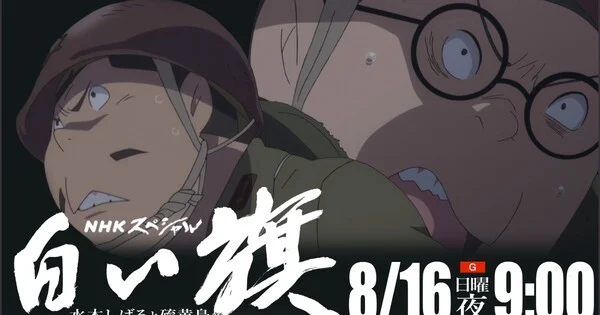
NHK announced on Friday that it will air a special anime based on Shigeru Mizuki‘s “Shiroi Hata” (White Flag) manga for its NHK Special documentary program on Sunday, August 16. The special is titled “Iwo Jima no Shiroi Hata” (The White Flag at Iwo Jima).

© NHK
Mizuki’s original manga tells the story of an Imperial Japanese Army lieutenant in World War II named Nishiōeda. After fierce and brutal fighting between American and Japanese forces at the Battle of Iwo Jima, Nishiōeda raises the white flag of surrender in order to allow the the troops under his command to live. The surrender went against the army’s orders to fight to the death, and Nishiōeda was executed for treason.
Mizuki has said in an afterword to the story that the manga is based on a story he heard about a friend of his older brother, who was an Imperial Japanese Navy officer. The story has never been verified. Mizuki first used the character in his “Futari no Chūi” (Two Lieutenants) manga story, first published in Hinomaru Bunko’s Hinomaru magazine in 1964, before reworking the story into “Shiroi Hata,” which was published in Seirindō’s Garo magazine in 1968. Mizuki used the Nishiōeda character in three different manga stories. Kodansha has compiled four of Mizuki’s World War II manga stories, including “White Flag,” into a book also titled White Flag, which the publisher released in 2010.
The NHK documentary will show the anime based on Mizuki’s original story, as well as research on both American and Japanese reports of a raised white flag and a surrender.
The Battle of Iwo Jima was fought at the tail end of the Second World War, with American forces landing in February 1945. The island saw fierce fighting for about a month, and sporadic fighting with holdout forces for months afterward. For the first time since American forces conducted amphibious landings against Japanese forces in the Pacific campaign, American casualties outnumbered Japanese casualties, despite American forces vastly outnumbering Japanese defenses. Joe Rosenthal took his iconic “Raising the Flag on Iwo Jima” photograph of six U.S. marines raising the U.S. flag to claim victory on the island’s Mount Suribachi. American forces eventually built an airfield on the island, which hosted bombers that would later go on to bomb military and civilian targets on the Japanese home islands for months before the war’s ultimate end.
Mizuki was born in Osaka in 1922, and he grew up in Tottori Prefecture. He was drafted into the Japanese Imperial Army during World War II, where he injured — and later lost — his left arm. He penned multiple manga based on his experiences in World War II, such as Onward Towards Our Noble Deaths and Watashi no Hibi.
Mizuki was famous for his manga about yōkai — Japanese supernatural creatures. His manga and research into yōkai is largely responsible for the popularity that yōkai stories have today.
Mizuki died on November 30, 2015.
Sources: NHK, Comic Natalie
>
New visual also unveiled
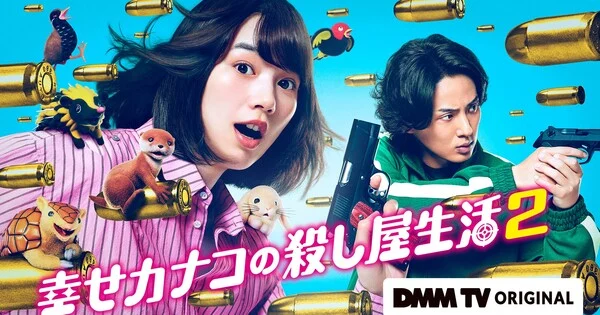
The DMM TV streaming service announced on Friday that the second season of the live-action series of Toshiya Wakabayashi‘s Happy Kanako’s Killer Life (Shiawase Kanako no Koroshiya Seikatsu) manga will debut on DMM TV on September 17. DMM TV also unveiled a new key visual for the second season.
\⚡️成分増量で業務再開!⚡️/
エナジードリンク系アクションコメディ🍹💥
『 幸せカナコの殺し屋生活2』2026年9月17日(木)より
DMM TVにて独占配信決定🔫カナコ(のん)×桜井(藤ヶ谷太輔)
最強バディのキービジュアル初解禁🎨#カナコロ #幸せカナコの殺し屋生活 pic.twitter.com/zCAPxtOjQv— DMM TV 【公式】 (@DMMTV_PR) August 14, 2026
Non and Taisuke Fujigaya reprise their roles as Kanako and Sakurai, respectively.
Tsutomu Hanabusa (live-action Tokyo Revengers) returns to direct the second season, and is also penning the scripts alongside Ruriko Matsushima and Yūsuke Aose.
The first season of the live-action series debuted on DMM TV in February 2025.

© Toshiya Wakabayashi, Seikaisha, Seven Seas Entertainment
Seven Seas Entertainment is releasing the manga in English, and it describes the story:
Nishino Kanako sure hates her job, and is only too happy to snag the first new gig that comes her way. She never expected that her interview would be at an agency for contract killers…or that she’d be really, really good at bumping people off! Kanako doesn’t have a ton of self-confidence, and adjusting to her new life as an assassin isn’t the easiest. Will she ever earn the respect of Sakurai, her prickly but kinda hot new coworker? Find out in this dangerously funny, full-color manga!
Wakabayashi launched the four-panel web manga on Twitter and his pixivFANBOX account, and Seikaisha has since serialized the manga on its Twi4 service. Seikaisha published the manga’s ninth compiled book volume on May 27. Seven Seas Entertainment released the eighth volume on July 28.
Wakabayashi’s Tsuredure Children manga chronicles a series of short school romance stories in an omnibus format. Wakabayashi launched the manga online in October 2012, and then also began serializing it with new material in Weekly Shōnen Magazine in 2015. The manga ended in July 2018. Kodansha USA Publishing released the manga digitally in English. The manga inspired a television anime that premiered in July 2017. Crunchyroll streamed the series with English subtitles as it aired, and Funimation streamed an English dub.
Sources: DMM TV‘s X/Twitter account, Comic Natalie
>

European Athletics Championship: Johnson-Thompson under way in the heptathlon

Jarell Quansah: Arsenal express interest in signing Bayer Leverkusen defender

Uber and Pony.ai plan to bring 2,000 robotaxis to Europe
-

 movies3 months ago
Search For Canadian TV Actor Stewart McLean Now Homicide Investigation
-

 Fashion9 years ago
These ’90s fashion trends are making a comeback in 2017
-
Fashion9 years ago
According to Dior Couture, this taboo fashion accessory is back
-
Fashion9 years ago
Model Jocelyn Chew’s Instagram is the best vacation you’ve ever had
-
Fashion9 years ago
Your comprehensive guide to this fall’s biggest trends
-
Fashion9 years ago
9 Celebrities who have spoken out about being photoshopped
-
Fashion9 years ago
Emily Ratajkowski channels back-to-school style
-
Fashion9 years ago
A photo diary of the nightlife scene from LA To Ibiza