
Tech
Uber and Pony.ai plan to bring 2,000 robotaxis to Europe


Chinese autonomous vehicle maker Pony AI and Uber plan to bring 2,000 robotaxis to four cities in Europe as part of an expanded partnership.
The announcement illustrates the growing ambitions of both companies to carve out market share in the nascent robotaxi industry. Uber has partnered with more than 30 autonomous vehicle companies, including Pony.ai, over the past several years. Pony.ai, meanwhile, has launched in four Chinese cities and has locked in partnerships with local transportation authorities in an effort to bring its robotaxis to European and Middle Eastern countries, including Qatar.
Uber and Pony.ai didn’t share a timeline for when these robotaxis would be deployed, or name the cities in which they’d launch, only saying that details would be revealed in phases. The companies’ now-expanded partnership does appear to have cleared up some of the terms, with Pony.ai’s “joint-deployment model” getting a clearer path to commercial scale.
This means that the Guangzhou, China-based company will supply the autonomous vehicle technology, while Uber will provide its vast ride-hailing platform. Fleet management, which would include maintenance, cleaning, and charging, can be handled by a local provider, according to the companies, and the robotaxi fleet may be owned by different partners depending on the market.
Uber and Pony.ai first partnered in May 2025 with a focus on the Middle East. Earlier this year, Uber and Pony.ai turned to Europe and announced plans to launch a commercial robotaxi service in Zagreb, Croatia with local company Verne.
>

TL;DR: The near-mint HP EliteBook 830 G8 pairs an 11th Gen Core i7, 32GB RAM, and enterprise-grade security for $389.99 (MSRP $549.99).
Consumer laptops often emphasize thin designs and flashy marketing, while business laptops are built to survive years of daily work. The near-mint HP EliteBook 830 G8 falls squarely into the second category, delivering enterprise-grade hardware for $389.99 (MSRP: $549.99).
Power through business anywhere with the HP EliteBook 830 G8
Powered by an 11th Gen Intel Core i7 processor, 32GB of DDR4 memory, and a 256GB PCIe NVMe SSD, the EliteBook is designed for professionals who regularly multitask across large spreadsheets, video meetings, development tools, browsers, and productivity applications.
Intel Iris Xe Graphics also provides enough performance for everyday creative work and multiple external displays. And it features Windows 11 Pro.
The laptop’s 13.3-inch Full HD touchscreen is housed in a lightweight 2.8-pound CNC-machined aluminum chassis, making it well suited for commuting and hybrid work. Connectivity includes Thunderbolt 4, HDMI 2.0, USB-A, Wi-Fi 6, and Bluetooth, reducing the need for adapters in most office environments.
Security is another area where business systems distinguish themselves. HP Wolf Security combines features such as HP Sure Start, HP Sure Sense, HP Sure Click, and TPM 2.0 to help protect both the system firmware and user data. These are capabilities commonly deployed across enterprise fleets rather than consumer notebooks.
This refurbished model carries a Grade A near-mint rating, meaning buyers should expect minimal to no cosmetic wear while paying substantially less than a comparable new business laptop.
For professionals, developers, remote workers, and students who prioritize reliability over trendy features, the EliteBook 830 G8 represents a practical investment. Rather than paying for the latest consumer design refresh, you’re buying hardware that many IT departments chose specifically because it was built to keep working day after day.
Get this near-mint HP EliteBook 830 G8 for just $389.99 (MSRP $549.99).
StackSocial prices subject to change.
>

More than 15 million people may now have a very personal problem: their dental, government ID, and health information could be in the hands of hackers.
DentaQuest, a major U.S. dental and vision benefits administrator, has begun notifying individuals affected by a May 2026 cyberattack that compromised sensitive personal and health information.
The company reported 15 million affected individuals to federal regulators, making the incident the largest healthcare data breach reported to the Department of Health and Human Services so far this year, according to Healthcare Dive. The total could rise, with an independent researcher cited by the HIPAA Journal estimating that the exposed data may involve more than 23.4 million people.
DentaQuest discovered the incident on May 20 and determined that unauthorized access to parts of its network occurred from May 17 through May 20. The company hired Kroll to help identify the compromised information and determine who was affected.
What the hack exposed
The compromised information varied by individual and may have included names, addresses, Social Security numbers, member identification numbers, Medicaid and Medicare numbers, and dental or vision health information. That health data could include provider names, diagnoses, treatment details and billing information, according to DentaQuest’s breach notification.
The stolen information may extend beyond those categories. Have I Been Pwned previously identified 2.6 million unique email addresses in leaked data, along with names, addresses, phone numbers, dates of birth and genders. One folder reportedly contained more than 1.7 million unique Social Security numbers.
DentaQuest has not publicly identified the attackers. However, the extortion group ShinyHunters claimed responsibility and reportedly leaked about 234 GB of data stolen from the company, according to the HIPAA Journal.
A bigger problem than the numbers
DentaQuest serves about 32 million people through its dental and vision plans, so the breach has a large potential reach. More importantly, the exposed information combines ordinary identity data with healthcare and government identifiers.
That combination can make stolen records more useful for identity theft and fraud than a simple email-and-password leak. The risk is also difficult to contain once information has been published online. DentaQuest began mailing notification letters on July 17 and is offering affected individuals 24 months of credit monitoring, fraud consultation and identity theft restoration services.
What consumers should do
People who receive a DentaQuest breach notification should take advantage of the offered monitoring services and watch their credit reports and financial accounts for suspicious activity.
The incident also shows the limits of breach response: monitoring can help detect misuse, but it cannot make leaked Social Security numbers, medical records or government identifiers disappear. DentaQuest’s investigation remains ongoing, meaning the final number of affected people and the complete scope of the exposed data have not yet been established.
Editor’s note: This article originally appeared on our sister publication, eSecurityPlanet.
>
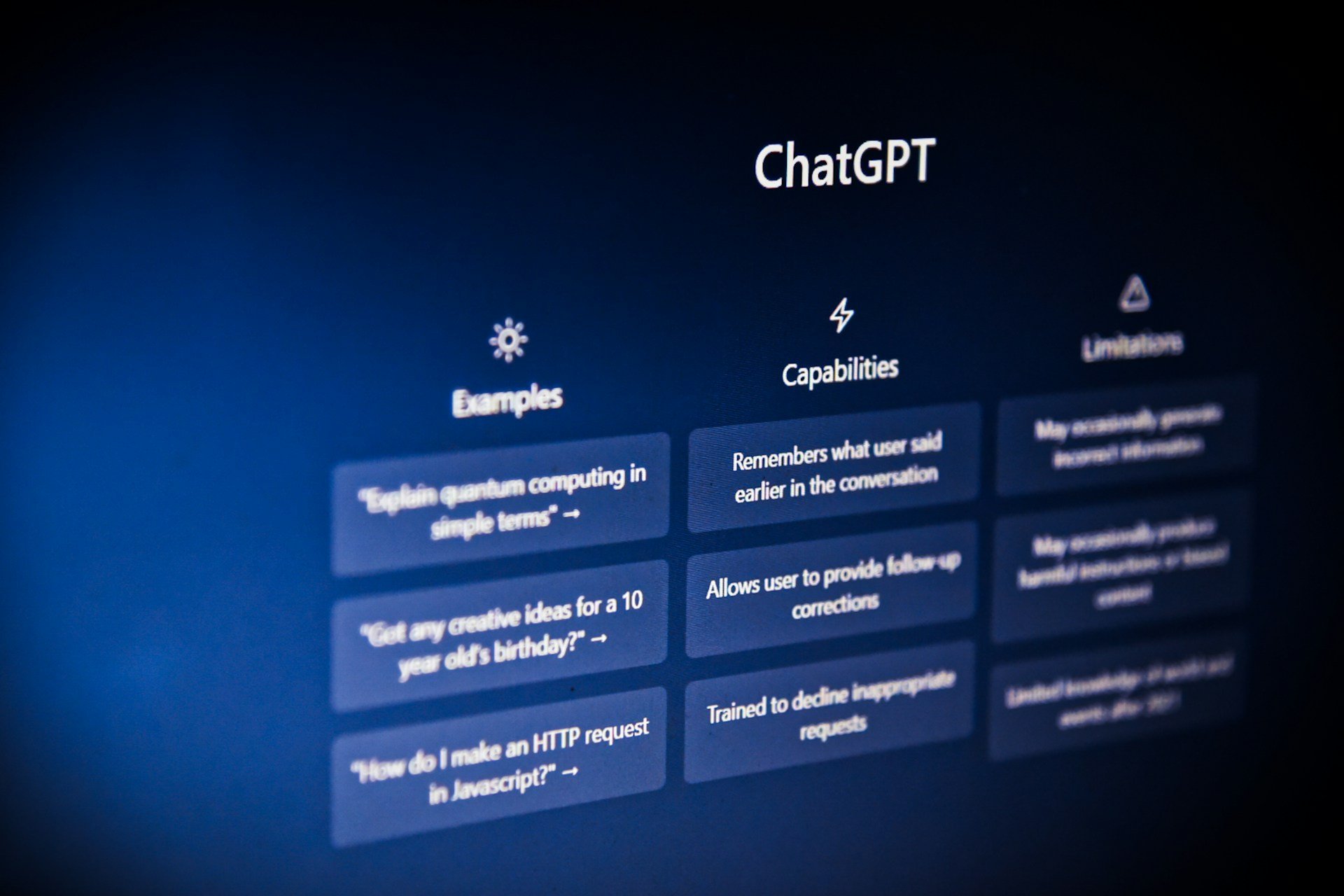
Linux users no longer need to rely solely on a browser or unofficial desktop clients to access ChatGPT.
OpenAI has released its ChatGPT desktop app for Linux in preview, combining ChatGPT, Work, and Codex in one application. The launch closes a gap in OpenAI’s desktop lineup and puts its coding agent closer to the Linux environments where many developers already work.
Which Linux distributions are supported?
According to OpenAI’s announcement, the preview supports:
- Ubuntu 24.04 LTS and 26.04 LTS
- Debian 13
- Fedora 43 and 44
- x64 and ARM64 processors
- .deb and .rpm packages
OpenAI has not officially listed Arch Linux, openSUSE, NixOS, or other distributions as supported. Community packages and workarounds may emerge, but compatibility, updates, and technical support could differ from OpenAI’s validated configurations.
Why the Linux app matters to developers
The application brings three OpenAI experiences into one interface. Chat handles questions, research, and conversations, while Work is designed for longer tasks such as analyzing information and creating documents, spreadsheets, presentations, and reports.
Codex can work with local files, repositories, terminals, and development tools, subject to the permissions available in the environment. That integration may be the most important part of the Linux launch. Developers can now use an AI coding agent alongside their projects instead of keeping it confined to a browser tab.
For IT teams, that access also requires scrutiny. An agent that can inspect files, change code, and run commands has more access than a conventional chatbot. Organizations evaluating the app should review its filesystem, network, and command-execution permissions before connecting it to sensitive repositories or production credentials.
The preview comes with caveats
Currently, the application is in preview with OpenAI yet to announce when the Linux app will reach general availability or when it might support more distributions.
Some early users have reported configuration-specific problems involving Wayland, input methods, display scaling, and synchronization between desktop and command-line Codex projects in OpenAI’s developer community. These are anecdotal reports, not confirmed product-wide defects, and some users have shared workarounds or different results.
IT teams should therefore treat the current build as evaluation software. Before a wider rollout, testing is a must against an organization’s standard Linux image, desktop environment, authentication controls, endpoint security software, and development workflows.
What Linux users should do next
Users can obtain the app through OpenAI’s official download channels and confirm if their operating system and processor are supported. Developers can begin with a noncritical repository to evaluate how Codex handles project context, terminal operations, and file changes. Organizations, on the other hand, should consider a limited pilot with restricted permissions, logging, and mandatory human review of generated code.
The Linux release removes a longstanding platform gap, but its value to technical teams will ultimately depend on compatibility and control — not merely the convenience of a native app.
Read more: As Linux users explore the new desktop app, brush up on ChatGPT’s features, costs, limitations, and tips with the complete ChatGPT cheat sheet.
>

New laws for new football season – VAR, timewasting and subs

Amy Hunt: From Cambridge University to double European sprint champion

Michael Sheen Reveals His Personal Connection to UFO Film ‘Out There’
-

 movies3 months ago
Search For Canadian TV Actor Stewart McLean Now Homicide Investigation
-

 Fashion9 years ago
These ’90s fashion trends are making a comeback in 2017
-
Fashion9 years ago
According to Dior Couture, this taboo fashion accessory is back
-
Fashion9 years ago
Model Jocelyn Chew’s Instagram is the best vacation you’ve ever had
-
Fashion9 years ago
Your comprehensive guide to this fall’s biggest trends
-
Fashion9 years ago
9 Celebrities who have spoken out about being photoshopped
-
Fashion9 years ago
Emily Ratajkowski channels back-to-school style
-
Fashion9 years ago
A photo diary of the nightlife scene from LA To Ibiza