
Jesse Eisenberg and Kristen Stewart in ‘American Ultra’ (2015)


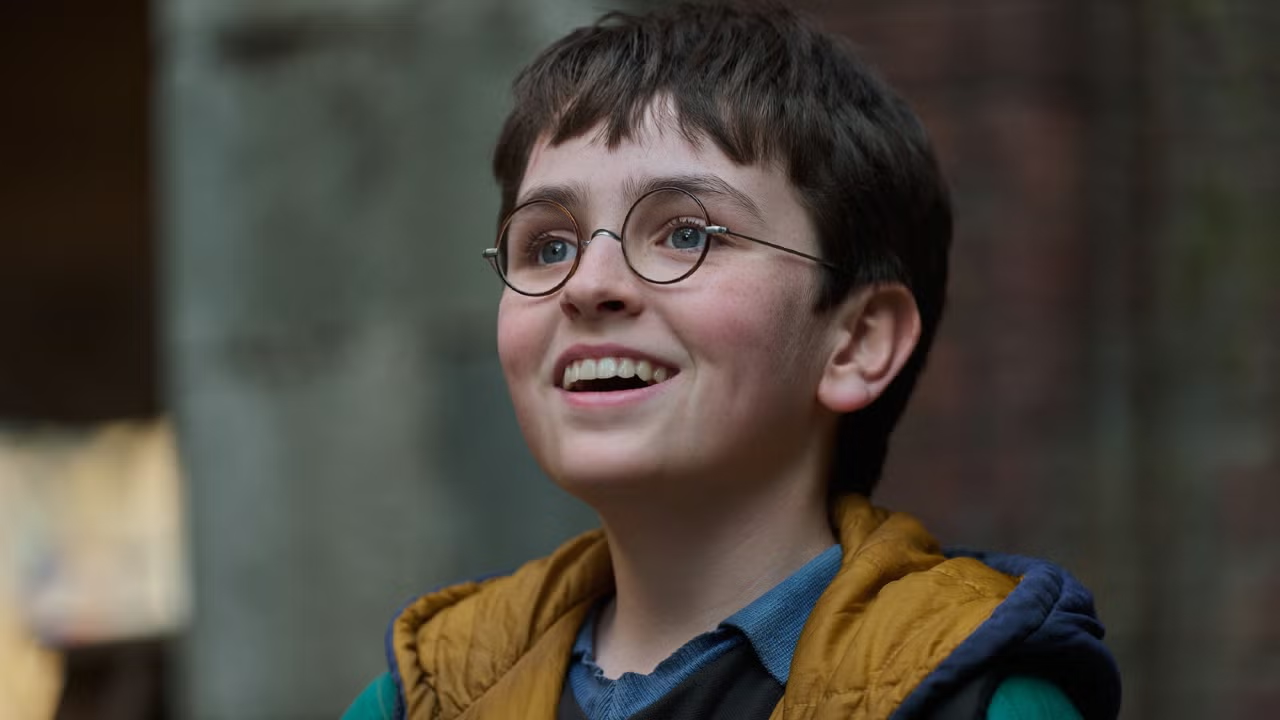
Directors Ally Pankiw and Kate Herron have both shared on social media that they declined offers to direct episodes of HBO’s forthcoming “Harry Potter” TV series over author J.K. Rowling‘s well-publicized anti-trans views.
Pankiw, whose credits include the Seasons 6 and 7 premieres of “Black Mirror,” shared a screenshot on Instagram of a text exchange between her and her agent in which she immediately turned down the opportunity to work on “Potter.”
“I have an instinct on the answer but I feel compelled to ask. ‘Harry Potter’? Hard no?” the agent wrote, to which Pankiw replied, “Absolutely f—king not! lol (But thank you for asking).”
“Of course 🙂 I assumed as much (And agree),” her agent replied. Meanwhile, in the caption of her Instagram post, Pankiw called out those who have signed on to work on the HBO series, writing, “It simply is this easy to say no to funding transphobia! (Also this was for directing, not acting … obviously lol)”
Director Kate Herron, who helmed the entire first season of Marvel’s “Loki” as well as episodes of “The Last of Us” and “Margo’s Got Money Troubles,” wrote in the comments section of Pankiw’s post that she has similarly turned down offers to direct “Potter.”
“❤️❤️❤️ Yeah thank you exactly! Respect and love to you Ally,” Herron wrote. “They’ve asked me twice and I’ve had to explain my answer is never gonna change from a no.”
“Also want to shout out the amazing @herronthatkate who also said ‘no’ … twice! And that’s actually hard!” Pankiw later wrote in a Instagram story post resharing Herron’s comment.

Pankiw and Herron’s comments come just a few days after “Superman” star Nicholas Hoult was cast as Gilderoy Lockhart, a role originally played by Kenneth Branagh, in the second season of HBO’s “Potter” adaptation. (Hoult, notably, was the one of the lead stars of “The Great,” a Hulu original series that Pankiw directed two episodes of.)
Rowling’s outspoken transgender views have proven to be a major talking point for the “Harry Potter” show ever since it was announced. As production has commenced and characters have continued to be cast, those involved in the drama have come under fire online for their willingness to work on a project that Rowling not only created but stands to profit and benefit from.
Certain “Potter” actors, such as Bel Powley, Paapa Essiedu and Nick Frost, have made it clear that they do not share Rowling’s anti-trans views. In an interview with The Telegraph published Monday, Powley said, “I strongly disagree with J.K. Rowling’s views on gender. I think that the trans community deserve safety and dignity and respect and total acceptance.”
“But I love ‘Harry Potter,’” Powley added. “I grew up with the books. I am from that first generation of readers and, again, I love magic and spookiness.”
In an interview on “The Town” podcast last May, HBO Chairman and CEO Casey Bloys said that Rowling is free to have her own opinions and reiterated that the “Harry Potter” TV show will not be secretly “infused” with her views.
“The decision to be in business with J.K. Rowling is not new for us. We’ve been in business for 25 years,” Bloys said. “It’s pretty clear that those are her personal, political views. She’s entitled to them. ‘Harry Potter’ is not secretly being infused with anything. If you want to debate her, you can go on Twitter.”
The series’ first season, titled “Harry Potter and the Philosopher’s Stone,” is slated to premiere Dec. 25 on HBO and HBO Max. The adaptation has already been renewed for a second season.

>
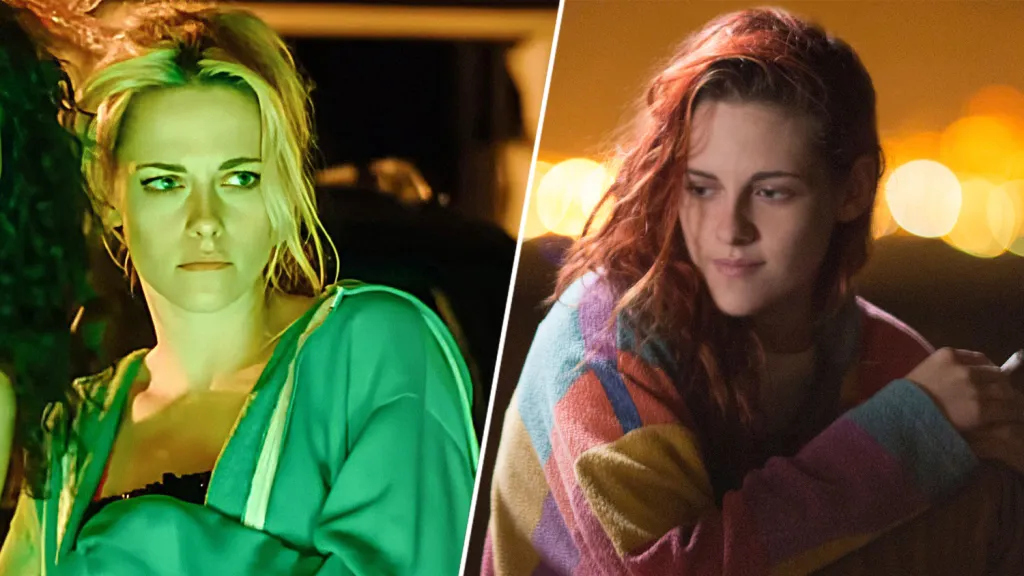
More than a decade later, Kristen Stewart is treating fans to another stoner comedy with her role in The Wrong Girls, now in theaters.
While discussing the Dylan Meyer-written/directed film, she acknowledged some similarities between one of the dual roles she plays in the movie and her character in the 2015 action comedy American Ultra, who was also a stoner.
In The Wrong Girls, Frankie (Stewart) and Molly (Alia Shawkat) are codependent stoner best friends who have to come up with a way to pay the rent in 24 hours, all while discovering a mysterious drug that allows them to read minds and communicate telepathically.
Although Stewart plays an unmotivated college dropout as Frankie, the character soon runs into her doppelganger Frances, who works at a government agency developing the psychic drug.
In the Nima Nourizadeh-helmed American Ultra, penned by Max Landis, Stewart played Phoebe, a government agent who fell in love and went into hiding with her asset Mike (Jesse Eisenberg), a test subject in another superhuman drug trial. Could Phoebe be Frances’ undercover persona?
Jesse Eisenberg and Kristen Stewart in ‘American Ultra’ (2015)
“Whoa, yeah, actually that does make sense because didn’t that storyline—she was an official lady working at a government agency,” Stewart told Deadline. “Fuck, dude, actually that’s deep as hell, right?”
Meanwhile, Meyer might already have some ideas for a sequel, noting she does “get the impulse to sort of build out the universe,” and writing the first film over 14 years, based on stories about her and her best friend. “I’ve been asked about a sequel, and there’s room in this material for that to happen. They basically get superpowers at the end of the movie,” she explained.
Noting that she doesn’t “currently” have plans for a sequel, Meyer admitted, “There’s so much left there. But I also think it’s hard to compete with the first one of anything. So far, this is just one that’s a complete story, but I could easily write for them forever. There’s no shortage of material for me in that area.”
>
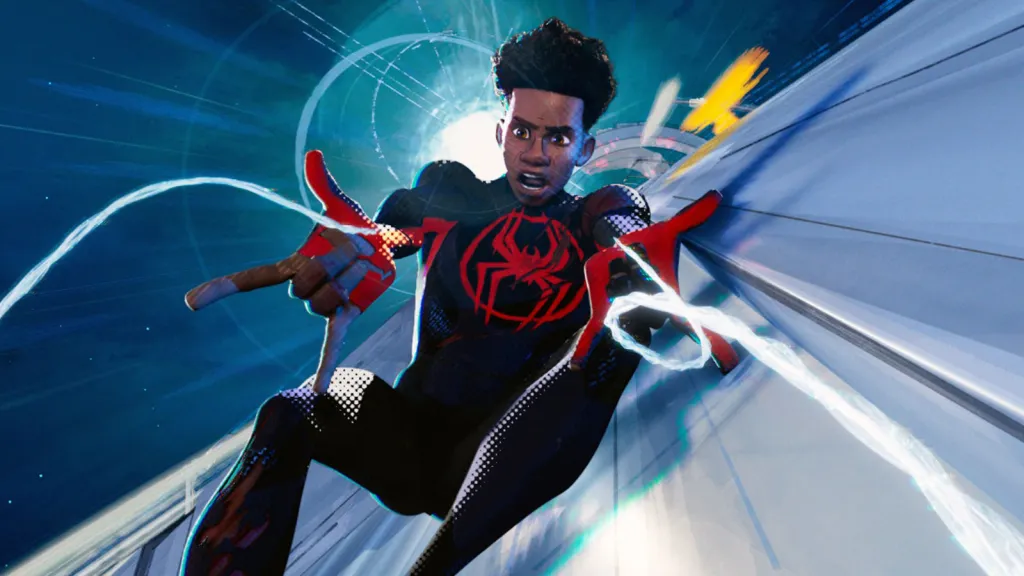
Leaked footage of Spider-Man: Beyond the Spider-Verse has made its way online and co-writer Chris Miller is putting them on blast.
A trailer for the third installment of the animated movie starring Miles Morales, which is set to hit theaters on June 18, 2027, was leaked on social media and Miller has already made his thoughts clear on the matter.
“Not a fan of unfinished, not fully rendered footage,” Miller posted on X, the microblogging platform formerly known as Twitter.
Sony Pictures and Marvel have not made a statement regarding the leak but Deadline has reached out for comment.
Earlier this year, Paramount faced a similar situation when a full version of The Legend of Aang: The Last Airbender leaked online by a fan. The fan was seemingly frustrated by Paramount’s decision not to release the film in theaters and opting for a streaming release.
The Legend of Aang: The Last Airbender was originally slated to premiere in theaters on October 10, 2025, but it was later pushed back to January 30, 2026. In December 2025, Deadline reported that the film, greenlit by the previous Paramount Animation administration, would not get a theatrical release after all. Instead, the film would stream on Paramount+ on October 9, 2026.
Following the leak, animator Julia Schoel, who worked on the film, took to X to express her thoughts, saying, “We worked on the aang movie for years with the expectation that’d we’d get to celebrate all of our hard work in theaters, just to see people unceremoniously leak the film and pass our shots around on twitter like candy.”
Paramount investigated the leak and arrested an individual in Singapore who gained illegal access to the film and if found guilty, the suspect could face up to seven years in prison, a fine of up to $50,000 or both.
>

IndieWire’s desks are arranged as part of an open-plan office, and sometimes our fine colleagues at [redacted non-entertainment PMC brand] like to talk to each other about movies. I don’t think they realize that Ben Travers, Ryan Lattanzio, IndieWire video producer Trevor Wallace, and I are in earshot. We’re exactly as quiet and nerdy and awkward as you’d expect IndieWire writers to be, and we have yet to intervene as they debate the merits of 70mm IMAX (“So what, do you just see more trees?”) or the forces of industry consolidation and changing models of distribution that funnel so many script ideas into limited series as opposed to features (“I feel like there’s only three good movies a year and I’ve already seen them”).


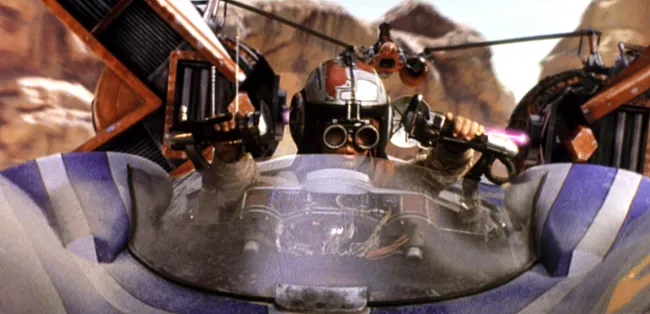
The other day, though, they were talking about the “Star Wars” prequels and one of these non-entertainment sorts said something very perceptive: that “The Phantom Menace” was worth it because the Nintendo 64 podracing game, 1999’s “Star Wars Episode I: Racer,” rules. Which is true. That game rules.
Bear with me here.
Sequels, in so many respects, have the luxury of getting to be open worlds. They are set in familiar landscapes with characters that we love, yes, but their forward trajectory is unwritten. Characters can wind up anywhere, from a different town to a different universe to prison. They have saved the world, perhaps, but it always needs saving again — if not always from the same person, as “Star Wars” itself would do well to remember. Maybe they have worked out some emotional Gordian Knot through the extraordinary circumstances of the first film, but that’s not how life works. Someone from their past can always step back in, upend that settled life, and make them late for the airport.
There’s something that comes with open worlds that bad sequels always fumble, and that can take the gas right out of ailing franchises. Because the narrative can be anything, and go anywhere, there is a tendency for character arcs to echo the previous films, if they’re present at all. For Tony Stark or John McClane to learn the same lesson about needing to let the people they love more fully into their lives. For Chris Pratt to… tame more dinosaurs, I guess? The exception that proves the rule is, perhaps, how Dom Torretto never re-learns the lesson that La Familia is what livin’ life one quarter mile at a time is all about, but he demonstrates it again and again by crashing cars at increasingly high speeds from increasingly improbable heights.
Which is all to say that too much emotional repetition, too many beats of trying to mine the same old character dynamics and too many instances of stuffing in references for the Rick Dalton Pointing Meme, and it doesn’t matter how open a world is at all. It feels stale.
Prequels have the opposite problem. Dramatic irony hangs low and menacing as a storm cloud over stories when we know where the characters are going to end up, and whether what they’re struggling with will ultimately matter. The existing plot is an enemy that must be combated head-on, and it doesn’t matter how much of a Chosen One story it is. The original will always have the high ground, Anakin. Bad prequels do the same thing as bad sequels: they try and emotionally echo what’s come before. They lean so far into the Lore™ they end up in the lava.
Put another way, if you have, say, a couple of detectives bustling around the “Titanic,” it’s kinda neat that we’re ambiently aware of the fact that there’s a finite clock for them to being able to solve a murder mystery. But if they’re being like, “I do believe we are sailing too fast!” or “Hmm, I’m not sure the steel plates of the hull wouldn’t buckle under pressure!” that also wrecks our suspension of disbelief. The more a story engages with its original, the less allows us to relate to the story and the characters on their own terms. But also it has to engage with its original, and if it’s using original characters, their emotional trajectory has also been set.
Good prequels, and they are out there, get around this in ways that sequels can learn from, too. There is a Tony Gilroy quote about how entering an established fictional universe is like jumping into a sandbox. As a fan, you are excited to play with the toys that are already in there. But as a storyteller, your job is to leave more new toys in the sandbox when you’re done than were there when you started. To appropriate a phrase, this is podracing.
More importantly, this is “Duel of the Fates.” This is the Aldhani heist in “Andor” and the Fury Road in “Furiosa.” It’s Kim Wexler and her indomitable ponytail in “Better Call Saul.” It’s Adonis Creed having 21st century traumas he needs to punch his way through, as opposed to Rocky Balboa’s very ‘70s-coded angst. It’s Joe Manganiello dancing to “I Want It That Way.” New characters, new tones, new kinds of conflicts: they can all exist within the same (fictional) historical timeline. These are how you bring new toys to the sandbox.
And the thing about cool new toys, as the little prequel montage inside of “Up” teaches us, is that if they matter to us, then the things the characters care about are going to matter, and the adventures they go on will matter, and it will make the original story matter more, too. Introducing a terrifying KGB agent or constructing the lushest cinematography around Robert De Niro is how prequels get around the problem of a closed world. But it’s also how the best sequels keep theirs open.
>


Search For Canadian TV Actor Stewart McLean Now Homicide Investigation


These ’90s fashion trends are making a comeback in 2017
According to Dior Couture, this taboo fashion accessory is back
Model Jocelyn Chew’s Instagram is the best vacation you’ve ever had
Your comprehensive guide to this fall’s biggest trends
Emily Ratajkowski channels back-to-school style
9 Celebrities who have spoken out about being photoshopped
A photo diary of the nightlife scene from LA To Ibiza