Connect with us

Sports

Why the Mets wanted Jefry Yan and how their relievers are exploiting a lost season

Published

on

NEW YORK — The New York Mets eyed Jefry Yan for years.

After Yan struck out 39.1 percent of the batters he faced in Double A in 2023, the Mets targeted him as a minor-league free agent. The lefty reliever instead opted for Japan, where the Mets continued scouting him. Then, ahead of the 2025 season, Yan signed with the Colorado Rockies, who later released him halfway through the year.

With Yan, known for his celebratory leaps, available at last, the Mets jumped at the opportunity.

At the recommendation of assistant director of player personnel Jason Stein, the Mets signed Yan to a two-year minor-league deal, an unusual contract for a healthy pitcher. New York put Yan on the development list. He spent the final months of last season working at the Mets’ complex in Port St. Lucie, Fla., never appearing in a minor-league game.

Then Yan, who turns 30 Monday, took off in 2026, pitching well enough in the minors to warrant a callup this month, immediately after the Mets’ trade deadline selloff.

“He unlocked a new gear this year, especially in recent months,” Mets senior director for player personnel Nate Horowitz said. “He kept his velocity up. He improved the sinker, both breaking balls. We saw something in him on the acquisition side, but he’s also gotten a lot better from that point.”

With closer Devin Williams on the injured list, the Mets are carrying a full bullpen’s worth of tryout relievers. Yan is one of them. There’s also Kodai Senga, Daniel Duarte, Nate Lavender, Jonathan Pintaro, Chayce McDermott, Jack Weisenburger and Dedniel Núñez. For years, the Mets have struggled to develop homegrown relievers. Some of baseball’s best teams tend to pull it off.

For the Mets, seeing just one or two relievers from their unheralded group emerge as a viable option next season would qualify as a win.

“A lot of this is kind of shots on goal,” Horowitz said, “and some are going to work out, and some of them aren’t.”

Within the Mets’ cast of relative unknowns, Yan attracts the most attention because of his must-see celebrations and can’t-miss strikeout numbers. But others warrant consideration over the season’s final six weeks.

Although Williams hopes to return before the end of the season, he said Friday he wasn’t sure when he would resume throwing. In the meantime, Senga has converted both of his save opportunities, relying more on his forkball and four-seam fastball.

Senga is averaging 97.3 mph with his fastball as a one-inning reliever, more than a full mph higher than a couple of months ago, when he was struggling as a starter. As a reliever, he is nibbling around the strike zone less often.

“The only difference that I see is a guy who is enjoying what he’s doing,” bullpen coach José Rosado said. “He feels like he can contribute to the team doing what he’s doing right now. It’s less thinking. That’s something that I could see hurting him in the past. With Kodai, he knows that it’s do or die at that moment.”

Senga is also improving his preparation. It’s an adjustment. Over his career as a starter, dating back to his time in Japan, he mostly pitched every sixth day. The Mets haven’t yet used him in back-to-back games, though manager Andy Green said they intend to. When it comes to knowing what they have in Senga as a reliever, the club remains in discovery mode.

“He’s doing awesome,” Rosado said. “The first couple of times, we needed to make a call earlier so that he could get ready. But now, I kind of like when he doesn’t have time. It’s less thinking. I could see his game face in that situation. So far, so good.”

The early results are strong for others, too. Duarte is throwing more strikes, particularly first-pitch strikes, than ever. In 18 1/3 innings, Duarte holds a 0.98 ERA. A right-hander, he has held left-handed batters to a .466 OPS. In 2023, the last time Duarte spent more than two innings in the majors over a full season, lefties had a .654 OPS against him.

The way Rosado sees it, the role changes are key for Duarte and others. In a lost season for the team, they’re not expecting to return to the minors after a bad performance or long outing — not nearly as much as they did earlier in the season, anyway. Instead of throwing the final two innings of a lopsided game, Duarte is working as a late-inning setup reliever.

The same is true for others such as Pintaro, who logged two scoreless innings Friday and stuck around for Saturday. Earlier in the season, a multi-inning outing for Pintaro, who has attracted interest from other teams over the past couple of years, would’ve meant a trip back to Triple A; the Mets would’ve needed to swap him for a fresh pitcher. It’s no longer a necessity. The situation helps the relievers throw with more freedom and confidence.

“It’s a different mentality,” Rosado said.

Identifying helpful relievers from the lower rings of free agency, through the farm system or on the waiver wire, is not easy. Núñez is an example of the challenges: He burst onto the scene in 2024, got hurt and has since struggled to reclaim his footing.

Still, having a relative unknown pop as a contributor helps the Mets rely less on free agency and avoid continuously remaking their bullpen. That’s why one or two such players go a long way. Perhaps it’s someone such as Lavender, who attacks with strikes. Or Austin Warren, who was a revelation earlier in the season before an injury for which he is on a rehab assignment. Or someone else entirely.

Perhaps it’s Yan, who Saturday covered 1 2/3 scoreless innings with three strikeouts and performed one extra jumping celebration when he mistakenly thought he had a called third strike.

No, Yan’s ritual did not come up much while the Mets were exploring a deal with him, Horowitz said, outside of communicating to top brass that it was part of his identity.

If Yan sticks around long enough to make his celebrations old news, plenty of others within the Mets might join him in jumping up with joy.

>

Continue Reading

Sports

How to watch Fire vs. Mercury: TV channel and streaming options for August 16

Published

on

A game after they scored 24 points in a 94-87 win over the Sparks, Noemie Brochant leads the Phoenix Mercury (13-22) at home against the Portland Fire (14-20) on Sunday, August 16, 2026. The matchup airs at 7 p.m. ET on ESPN and Disney+.

How to watch Portland Fire vs. Phoenix Mercury

Portland vs. Phoenix odds

  • Spread: Phoenix -4.5 (-115), Portland +4.5 (-105)
  • Favorite Moneyline: Phoenix -200
  • Underdog Moneyline: Portland +165
  • Total: 178.5
  • Total Over Odds: -105
  • Total Under Odds: -115

Injury reports

Mercury

Kelsey Plum: Out (Calf)

Fire

Sania Feagin: Out For Season (Knee),

Sarah Ashlee Barker: Out For Season (Knee)

Stats to know

  • The Mercury record 7.4 fewer points per game (83.9) than the Fire give up (91.3).
  • Portland averages just 0.7 fewer points per game (86.7) than Phoenix gives up (87.4).
  • Alyssa Thomas puts up 14.8 points, 8.2 assists and 7.4 rebounds per contest.
  • Carla Leite puts up 15.5 points, 2.3 rebounds and 6.2 assists per game, while shooting 45.0% from the field.

This watch guide was created using technology provided by Data Skrive.

Betting/odds, ticketing and streaming links in this article are provided by partners of The Athletic. Restrictions may apply. The Athletic maintains full editorial independence. Partners have no control over or input into the reporting or editing process and do not review stories before publication.

Photo: Julio Aguilar, Ethan Miller, Steph Chambers / Getty Images

Connections: Sports Edition Logo

Connections: Sports Edition Logo

Connections: Sports Edition

Spot the pattern. Connect the terms

Find the hidden link between sports terms

>

Continue Reading

Sports

Man arrested on suspicion of fraud after ‘security incident’ at European Athletics Championships

Published

on

A man was arrested on suspicion of fraud following a “security incident” at the European Athletics Championships on Saturday.

West Midland’s police confirmed the arrest of a man in his 30s at Alexander Stadium in Birmingham, England, after concerns were raised during Saturday’s evening session. He remains in custody for questioning.

At around 8.15pm (BST), the man was “found in an area of Alexander Stadium with the wrong accreditation,” police said. Authorities did not state which area of the venue the individual was located.

“We understand the concern this may have caused and can confirm there was no immediate risk to the public,” a police statement read.

As a result, the area surrounding the stadium went into lockdown, with shuttle buses for fans, media and athletes not leaving nor arriving for more than an hour, as these required searching. Long queues formed as a result — the 23,000 capacity stadium was sold out, with no public parking available — and armed police were called in as a safety measure.

At 11:03pm the first communication was made on social media, with the Birmingham2026 X account posting its apologies for “significant delays”. Not until after midnight did many athletes and coaches arrive back at their hotels, more than four hours after the man was found.

Six medal ceremonies, all scheduled for between 10pm and 11pm on Saturday night, were postponed. That included the heptathlon, in which Kate O’Connor won a historic gold for Ireland; the men’s 10,000m, won by Sweden’s Andreas Almgren in a solo run for a championships record; and the men’s and women’s 4x100m relays, which Great Britain swept.

A full statement, published at 8:03am (BST) on Sunday, as the marathon races got underway in the city centre, read: “Birmingham 2026 can confirm that transport operations have returned to normal following a police incident on Saturday (15) evening. Championship transport was suspended until the necessary security measures had been carried out whilst West Midland’s Police arrested a man in his thirties on suspicion of fraud. The safety and wellbeing of our spectators, athletes, workforce and the wider Championships family will always be our first priority.”

Sunday evening is the final session of the seven-day continental championships, which is being held in Great Britain for the first time.

>

Continue Reading

Sports

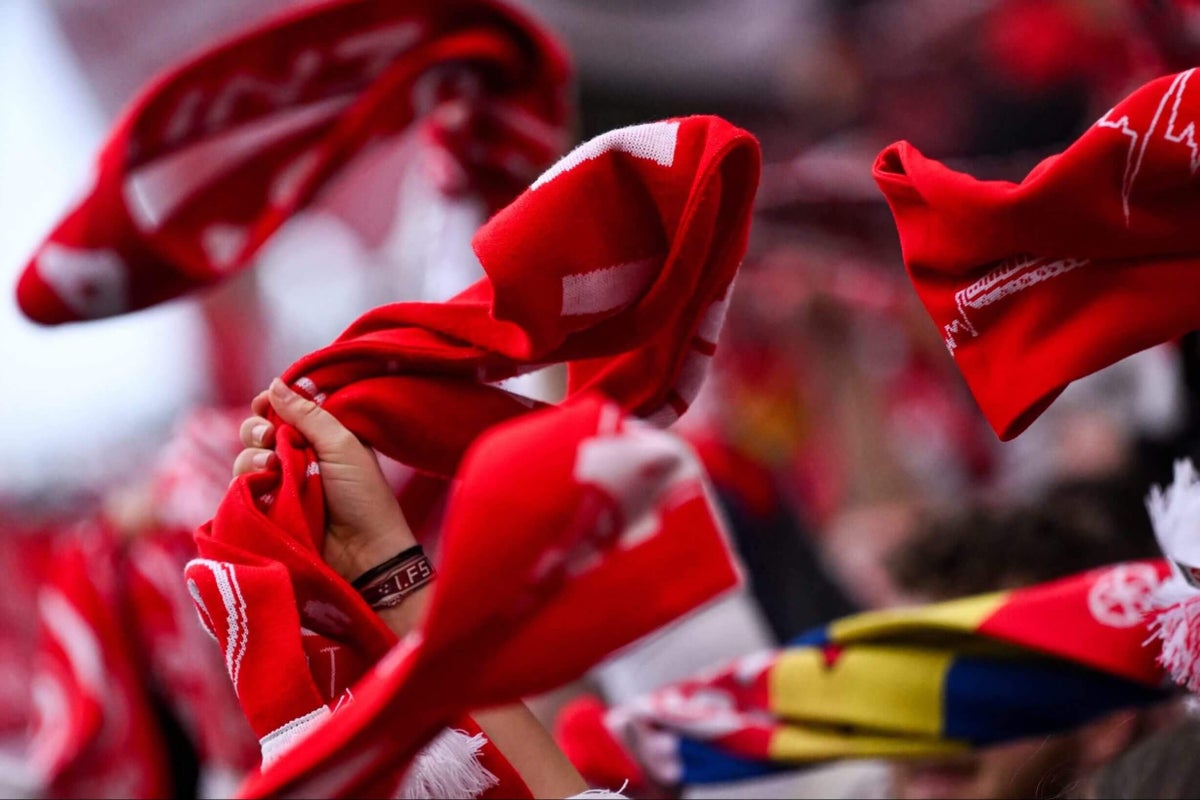
A French first. How a soccer club turned scarves into season tickets

Published

on

A second-tier French soccer club is using its own merchandise as an alternative for season ticket cards in a bid to modernise its matchday experience.

Dijon FCO, the Burgundy club who most recently competed in Ligue 1 in 2020-21, introduced an initiative this summer which saw traditional season tickets incorporated into club scarves.

On Friday, social media footage showed fans entering their first home fixture of the 2026-27 season — a 1-0 defeat to Pau FC — holding scarves in front of ticket scanner and gaining entry to the 15,500-capacity Stade Gaston Gerard.


How does it work?

Dijon said upon the introduction of the initiative that near-field communication (NFC) chips would be integrated into the scarves. NFC is a short-range wireless technology which connects devices from centimetres away, and is used for contactless payments.

“This innovation is part of the club’s desire to modernize the fan experience while strengthening the visual identity of the Dijon stands,” the club said.

The initiative was launched in collaboration with Weezevent — a ticketing and events technology company of which Dijon club president Pierre-Henri Deballon is the CEO and co-founder.

Deballon said in a social media post that the scarves would serve as a “symbol of belonging and pride for fans, a ticket to get through the security checkpoints” and “a wallet for buying drinks at the concession stands and beer walls”.

On the red, club-branded scarves, the chip sits underneath a small brown embroidered patch which shows the Dijon symbol of an owl. Supporters scan the brown patch to pass through the turnstiles.

The club said entering the stadium via scarf would be the “preferred” means of entry for fans this season as it would allow “quick and easy access”.

Upon purchasing a season ticket, Dijon supporters were sent a QR code via email, which allowed them to retrieve their assigned scarves and also pair them with an online subscriber account, which is linked to cashless payments inside the stadium.


Has it been done before?

While this is a first in France, the initiative is not unique.

Bundesliga side FC Koln trialled the scarf-based entry system in 2022 for their pre-season match against AC Milan. This system also included similar pairing features, with fans able to scan the NFC chip with their phones to access extra digital content, such as pre-match video footage.

Since then, Swiss club FC St Gallen have introduced the same initiative on a permanent basis.

Technology platform ZATAP, which led the system’s integration, said St Gallen was the “first sports club to offer its season subscription in the form of a scarf”.

The system allowed supporters to collect points and badges by attending matches and other club-related activities, and said the fan with the most points at the end of that season would be rewarded with a complimentary season ticket for the following campaign.

NFC has previously been used for similar initiatives elsewhere. In 2022, a system called ‘Jersey Pay’ allowed Mexico fans to have a chip inserted in their jerseys to make contactless payments for Corona beer in the Azteca Stadium.

In the same year, Brazilian club Atletico Mineiro also introduced NFC chips in club shirts in order to purchase and access digital content.

>

Continue Reading

Trending

Copyright © 2017 Zox News Theme. Theme by MVP Themes, powered by WordPress.