
Tech
Google Pixel 11 Discount: Eligible Buyers Could Save Up to $175

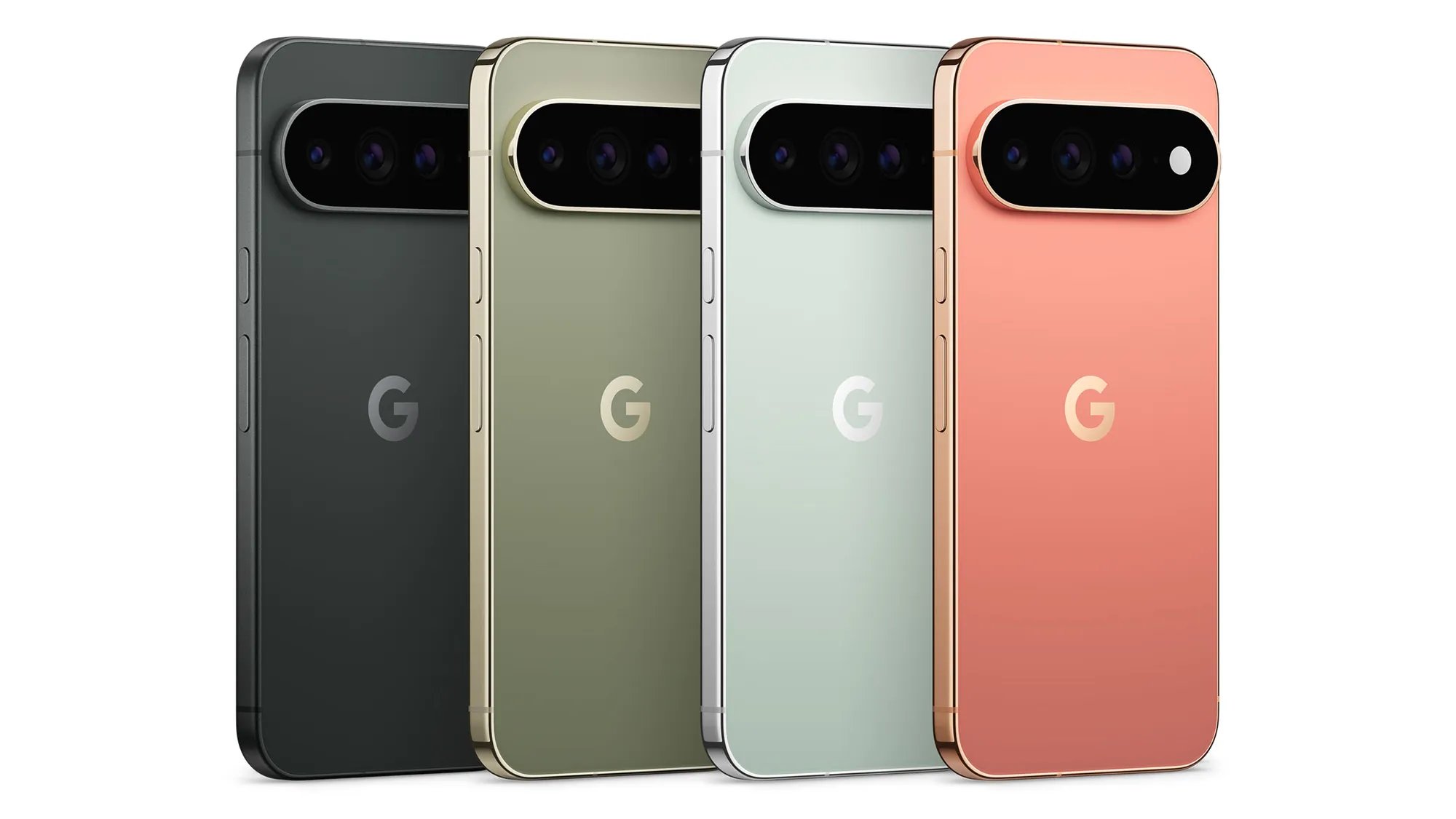
Google Pixel 11 buyers may be able to shave more than $100 off the company’s newest smartphone. But finding the discount requires digging a little deeper than Google’s usual promotions page.
Google is offering personalized Pixel 11 discounts to some members of its Play Points rewards program, according to 9to5Google. The publication spotted offers worth up to $175. However, the discounts vary by account, and there isn’t a single Pixel 11 promo code that works for everyone.
For anyone already considering an upgrade, checking Google Play before paying full price could be worth the extra minute.
How to find Google’s Pixel 11 discount
The offer appears through Google’s Play Points program. Eligible users can open the Google Play Store, select the Play Points banner, and then navigate to Perks. There, some accounts will see a “Level Perk” offering discounts on Pixel 11 devices.
According to 9to5Google, its account showed the following offers:
- Pixel 11: $125 off
- Pixel 11 Pro and Pixel 11 Pro XL: $125 off
- Pixel 11 Pro Fold: $175 off
- Pixel Watch 5: $60 off
The amount is not necessarily the same for everyone. 9to5Google reported that Droid-Life received a $150 offer, suggesting Google is varying the discount between users.
Once an eligible user selects an offer, Google’s redemption button sends them to the Google Store to complete the purchase.
Not every Play Points member will see the same deal
Eligibility and discount amounts appear to vary by account.
9to5Google noted that the promotion may require users to reach a certain Play Points level, but Google does not appear to be serving identical offers to every qualifying account. Google has not publicly detailed exactly how it determines which accounts receive each Pixel 11 discount.
In other words, the only reliable way to determine whether you’re eligible, and how much you can save, is to check the Perks section of your own Play Points account.
The US offer is limited to select participants who are at least 18 years old and have a US shipping address and a US-registered Google Pay profile. It is limited to one offer per customer and is scheduled to expire Aug. 30 at 11:59 p.m. PT, or earlier if the promotional supply runs out.
The discount also comes with another important limitation: It cannot be combined with another promotional code. However, the Play Points offer can be stacked with trade-ins and Google Store credit, according to 9to5Google. That could make the promotion particularly valuable to existing Pixel owners who already have store credit or an older device available to trade in.
The discount comes as Pixel 11 prices climb
The Play Points promotion arrives alongside higher prices across Google’s new Pixel lineup.
The Pixel 11 now starts at $899, while the Pixel 11 Pro starts at $1,099 and the Pixel 11 Pro XL at $1,299. Google’s foldable Pixel 11 Pro Fold starts at $1,899. Each phone costs $100 more than its equivalent predecessor, and all four Pixel 11 models now start with 256GB of storage.
The price increases weren’t entirely unexpected. Google previously confirmed that rising memory costs would push Pixel 11 prices higher, citing pressure from increasing RAM costs. Before Google’s August launch, leaks had also suggested that the Pixel 11 lineup could start with more storage but at a higher entry price.
TechRepublic’s earlier Pixel 11 preview also tracked what Google was expected to change across the lineup ahead of its official unveiling.
With phones now starting at $899 and going up to $1,899, an account-specific Play Points discount could take some of the sting out of Google’s higher entry prices.
Is the Pixel 11 Play Points discount worth using?
If you’re already planning to buy a Pixel 11, checking for the Play Points promotion is an easy first step.
A $125 discount represents meaningful savings, while the $175 offer 9to5Google spotted on the Pixel 11 Pro Fold could help offset the premium attached to Google’s foldable model. The ability to combine the offer with a trade-in or existing Google Store credit also gives buyers another way to bring down the final price.
But shoppers should compare their options before redeeming anything. Because the Play Points perk cannot be combined with other promo codes, another Google promotion could offer greater savings, depending on the device and account.
And don’t assume $175 is necessarily the maximum offer Google is providing to every Play Points member. The discounts appear to be personalized, so another account could receive a different amount.
Check Google Play before buying a Pixel 11
Google’s latest Pixel promotion isn’t a universal discount code circulating online. It’s an account-specific Play Points perk tucked inside the Google Play Store.
Before ordering a Pixel 11, Pixel 11 Pro, Pixel 11 Pro XL, or Pixel 11 Pro Fold, open Google Play > Play Points > Perks and check whether a Pixel 11 Level Perk appears.
9to5Google spotted savings of up to $175, but the amount available to individual buyers may differ. Eligible US customers should also keep the Aug. 30 expiration date in mind, though the offer may expire earlier if promotional supplies run out.
Considering the few seconds it takes to check, it’s worth taking a look before hitting the buy button.
In more Google news: For more on the tech giant’s expanding Pixel ecosystem, see how the Pixel Watch could soon help detect signs of insulin resistance, potentially giving users earlier insight into metabolic health.
>
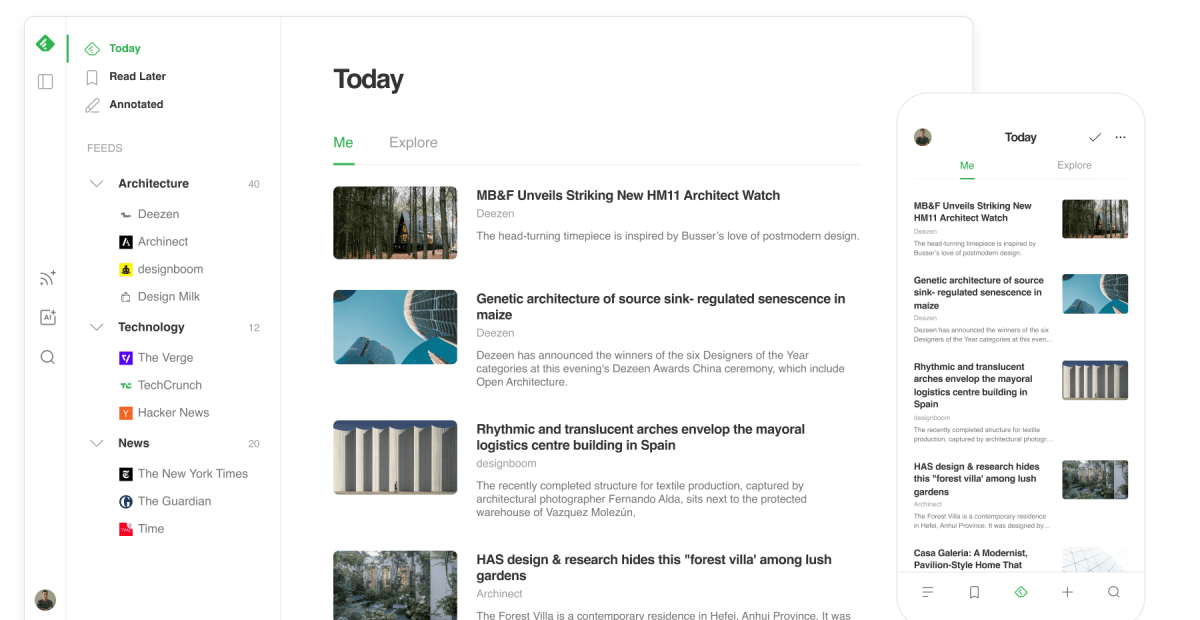
Bad news for those who get their updates through RSS feeds: Feedly, the largest standalone RSS reader worldwide, has experienced technical issues for over a week, and paying users are upset that the web app has been “unusably slow.” Some users have also reported that the company has ignored their support requests. Uh-oh.
Feedly, the heir to the market ceded by Google when it closed Google Reader in 2013, is today among the most successful RSS newsreaders globally with 15 million users, according to its website. That makes it larger than competitive products like the web-based Inoreader as well as various desktop apps like NetNewsWire, Reeder, and others.
And yet, the app is experiencing a number of ongoing issues that are affecting users and paying subscribers alike. The most critical problem is a significant slowdown on its web app, which has made browsing feeds quickly and efficiently very frustrating. Users on Reddit reported the app running “extremely” slow, making it “unusable.”
Further, users said that the company’s iOS app, including on iOS 27 beta, has not been working, and the classic version of Feedly’s mobile app (preferred by a small subset of customers) was shut down without warning weeks ago.
As most consumers now keep up with news through dedicated apps, like Apple News by browsing the web and sources like Google News, and through posts on social media, the market for RSS readers has always been relatively small. However, Feedly has been working to shift its focus to AI, offering businesses a way to track emerging threats and keep up with tailored intelligence through its app.
With the latest issues, it begs the question as of whether Feedly is still focused on its core RSS customers amid its pivot to AI, which is the product the company now advertises via its homepage.
TechCrunch reached out to Feedly for an update on these issues, given that multiple customers on Reddit said their requests for technical support had been ignored.
In response, Feedly CEO Edwin Khodabakchian reassured TechCrunch that RSS was still a focus.
“Despite the pivot to cyber threat intelligence, fixing the basic RSS functionality is still a priority because our CTI community uses the news-reading capability,” he said. “Our goal has been to maintain the Feedly News Reader as fast and streamlined as possible.”
In addition, the CEO said the company was aware of the issues with its web app, which were attributed to a bug, and said the front-end team had been testing a fix. Currently, the team believes the issue was related to using “Mark as Read” on accounts with a lot of folders, and a fix for that was released Friday. The company is still confirming whether this has resolved the problem for all users.
Khodabakchian also confirmed that the Feedly Classic app was “retired two weeks ago because it “no longer met some iOS and Android requirements,” though it had been removed from the App Store long before that. At the time, the app had only a few hundred active users, he noted. The team did not notify those existing users before its final shutdown.
In addition, Khodabakchian said he was not aware of the iOS app issues, which prevent the app from loading, but said Feedly would investigate. He also promised it would be fixed quickly, noting that the company still actively invests in its main iOS and Android app.
When you purchase through links in our articles, we may earn a small commission. This doesn’t affect our editorial independence.
>

Amazon is buying tons of rare books, cutting off their spines, and scanning them for AI training, according to 404 Media, which placed a tracking device in a rare book that ultimately arrived at an Amazon facility in Las Vegas.
The facility, known as VGT3, identifies itself with a symbol of a dinosaur holding a book in its claws. Amazon told 404 Media in a statement that it “purchases books through commercial channels to improve the products and services customers use.”
Companies like Amazon need unfathomably large amounts of text to train their LLMs, which have already ingested what they can from the internet (and, in Anthropic’s case, illegally pirated books). Rare books, especially ones that are out of print or impossible to find on the internet, offer a new source of coveted training data.
These texts are especially valuable since there’s no chance that anything published before 2022 was written by an LLM. When LLMs train on AI-generated text, they risk “model collapse,” which can occur when the quality of an LLM’s outputs degrade after ingesting too much AI-generated text.
>

Startup Groq has raised $350 million as it continues to pivot from an AI chipmaker to a neocloud company that provides powerful GPUs and AI infrastructure services.
The new capital, led by investment firm Disruptive with planned participation from Nvidia, values the company at $3.5 billion. That’s down from the $6.9 billion Groq was valued at last September, just a few months before Nvidia hired the startup’s founder and CEO, Jonathan Ross, and other top talent as part of a licensing deal.
A spokesperson for the company told TechCrunch that despite the difference in valuation, the company doesn’t see it as a down round, but rather as establishing a new valuation for the “post-Nvidia-lincensing-deal version of Groq.”
Groq was focused on building its own chips, dubbed LPUs (language processing units), to compete with Nvidia on inference — the type of compute needed to run AI workloads in real time. After it lost its star team, Groq shifted from being a pure AI chipmaker into a cloud and data center provider that operates Nvidia systems, making the remaining Groq company an Nvidia customer.
In June, Groq raised a $650 million round to kick off its pivot. The company intends to scale from 54 megawatts to more than 200 megawatts by 2027.
Today, Groq operates 13 data centers across North America, Europe, the Middle East, and Asia Pacific, serving more than 6 million developers, enterprises, and AI-native companies. Groq says the fresh funds will support “those seeking usage of medium and larger sized clusters of Nvidia accelerated computing for training and inference.”
“We are building Groq into the world’s leading AI inference cloud,” Alex Davis, Groq’s chairman and CEO of Disruptive, said in a statement. “Inference will without a doubt become the largest and most critical layer of AI infrastructure.”
While inference is in high demand as enterprises scale AI workloads, it’s an open question whether neoclouds will be a profitable enough business to provide returns on their considerable investment in the long term. CoreWeave reported strong second-quarter revenue growth and recently landed major contracts, including with Meta and Anthropic. However, investors remained concerned about the company’s high capital expenditures, heavy reliance on debt, and exposure to rapidly depreciating hardware, and its ability to turn growth into free cash flow.
Groq’s financials are still private for now, but its pivot puts the company directly inside Nvidia’s AI infrastructure ecosystem. That’s not exactly a unique relationship among neoclouds today. Nvidia supplies the GPUs powering clouds from CoreWeave, Lambda, and Nebius, while also investing billions into some of those companies as they race to build more capacity.
TechCrunch has reached out to Groq for more information.
When you purchase through links in our articles, we may earn a small commission. This doesn’t affect our editorial independence.
>

NBA disputes report detailing potential findings in Clippers’ cap circumvention probe

Google Pixel 11 Discount: Eligible Buyers Could Save Up to $175

Hayden Panettiere Deserved Better | Appreciation
-

 movies3 months ago
Search For Canadian TV Actor Stewart McLean Now Homicide Investigation
-

 Fashion9 years ago
These ’90s fashion trends are making a comeback in 2017
-
Fashion9 years ago
According to Dior Couture, this taboo fashion accessory is back
-
Fashion9 years ago
Model Jocelyn Chew’s Instagram is the best vacation you’ve ever had
-
Fashion9 years ago
Emily Ratajkowski channels back-to-school style
-
Fashion9 years ago
9 Celebrities who have spoken out about being photoshopped
-
Fashion9 years ago
Your comprehensive guide to this fall’s biggest trends
-
Fashion9 years ago
A photo diary of the nightlife scene from LA To Ibiza