
Entertainment
Paramount Requests $1.88 Billion Bond in State AG Legal Battle


Paramount has requested a $1.88 billion bond as its $110 billion merger with Warner Bros. Discovery remains stuck in legal limbo due to lawsuits from a group of 12 state attorneys general and the Writers’ Guild of America.
The bond amount, which is based on the straightforward calculation of the maximum potential ticking fee consideration and financing costs, would be used to cover damages associated with the closing delay.
Per the terms of the merger, Ellison is on the hook to pay WBD shareholders a 25 cent per share ticking fee starting Oct. 1, which translates to a payout of $7 million per day or $650 million per quarter until the deal closes. The final deadline for the deal to close is June 4, 2027.

Paramount has agreed to delay the closing until five days after the outcome of a trial, or June 1, 2027, whichever comes earliest. The antitrust trial is set to start on March 2 and end on March 19, 2027.
“We have satisfied all closing conditions under our merger agreement, having received regulatory clearances from 68 jurisdictions. These two lawsuits are the only barrier to closing this transaction,” A Paramount spokesperson told TheWrap. “Both the Clayton Act, the federal antitrust law upon which these suits are based, and other federal law expressly provide that plaintiffs are required to post a bond covering the potential harm from halting a transaction to litigate, so that if they lose, the injured party has a source of recovery for the damage caused. Here, every month of delay carries substantial and quantifiable financial consequences.”
In addition to the financing costs and ticking fee, the David Ellison-led media giant warned that there would be “no integration and no ramped-up investment in content, production, and creative talent by the combined company” for at least eight months. The spokesperson also said that employees of both companies would be harmed by the uncertainties caused by the delay.
“We remain confident that plaintiffs’ case is without merit and will defend our pro-competitive transaction in court,” Paramount’s statement concluded. “We look forward to closing this transaction and delivering its benefits to consumers and entertainment industry workers in California, the United States and around the world.”
Representatives for the state AGs and WGA did not immediately return TheWrap’s request for comment.

The latest move comes as Ellison and Paramount Chief Legal Officer Makan Delrahim have urged California Attorney General Rob Bonta to reach a settlement before the trial. They’ve also threatened to pull Paramount’s operations out of the Golden State if Bonta doesn’t come to the negotiating table by the Oct. 1 ticking fee deadline.
Bonta called the threat of a move “blackmail” and said that he is open to settlement talks, but that Paramount will have to propose structural remedies, such as divestments, rather than behavioral remedies.
In addition to Ellison’s pledge to release 30 films in theaters per year, Paramount has considered creating an editorial board to oversee CNN to ensure it remains independent under the combined company, but has not been open to an outright sale of the network. Bonta has said that neither the creation of the editorial board nor a CNN sale would be enough on their own to satisfy the states’ concerns.
A spokesperson for Bonta also told TheWrap he remains “committed” to the lawsuit despite a settlement proposal from the Directors Guild of America and International Alliance of Theatrical Stage Employees. That proposal includes conditions such as keeping operation of Paramount and WBD’s film and TV studios and their production, distribution, marketing and exhibition groups separate; keeping HBO available on third-party platforms; and commitments around content licensing, theatrical releases, U.S.-based productions and remaining based in Los Angeles.
“I think they’re eager to enter those talks and we are very happy with where we are,” Bonta said during a Politico conference last week. “We’re confident in our case. We will prepare and be ready to go to trial. And if they, in good faith and sincerely, want to talk about settlement with us, of course we will be open to any proposals they want to propose to us. But right now, we’re focused on litigation and going to trial.”
In addition to the state AGs and WGA, the Paramount-WBD merger faces a lawsuit from a Paramount shareholder. A group of consumers also filed a lawsuit seeking to block the merger, but it was dismissed.
More to come…

>
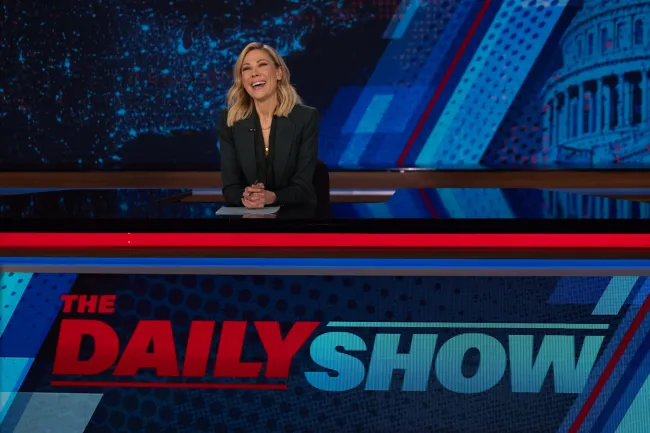

When Desi Lydic first auditioned for her job on “The Daily Show,” she created an alter ego in the tradition of what Stephen Colbert had done on the series (and later on “The Colbert Report”) when he played himself as a blowhard conservative broadcaster. “When you audition to be a correspondent, you write your own piece to give them an idea of what you might have to contribute,” Lydic told IndieWire. “In the piece I wrote for myself at the time — this was 2014 — I was a Fox News-type character, a combination of Gretchen Carlson and Megyn Kelly. I thought maybe that would be my lane, that I would play a character like that all the time on the show.”


Once Donald Trump was elected President, however, Lydic let go of the persona. “It felt a bit unsavory to embody a character like that all the time,” she said. But the character never really left her, and just before the pandemic, Lydic saw a way of resurrecting her alter ego when the “Daily Show” digital producers came up with the idea for a series of shorts called “Foxsplains.”
“We were looking for some kind of segment we could do that would satirize the media, specifically Fox News and Fox News-type platforms,” Lydic said. “Our digital team came up with this idea of doing a refillable segment called ‘Foxplains,’ where one of us would watch an inhumane amount of Fox News and then regurgitate everything that they had just learned.” The persona Lydic came up with for the segments was less Fox anchor than Fox acolyte, but the core idea was the same: to satirize Fox News not by attacking it, but by enthusiastically amplifying its tenets in a way that revealed their absurdity.
Thus was born “Desi Lydic Foxsplains,” an ongoing series of digital shorts on the “Daily Show” YouTube channel in which Lydic explains current events through the lens of conservative media. (Recent episodes have “Foxplained” Anthony Fauci’s diaries, Trump’s ballroom, and the President’s clashes with the Pope, among other topics.) The series serves as an extension and expansion of Lydic’s work on “The Daily Show,” satirizing not only the news but the way we consume it and the way it spreads — and the way the media often obfuscates and distorts rather than illuminates.
“Foxsplains” not only comments on the ways in which information is disseminated, it’s often a victim of them, as Lydic and her producers find themselves at the mercy of capricious news cycles. “We have to move really quickly because their narrative can change so frequently,” Lydic said of Fox News, adding that digital department head Ramin Hadiati has good instincts for knowing which stories are going to stick and which ones will vanish after 24 hours. “When they fixate on something, we give it a few days to see how it percolates, and then we try to write it as quickly as possible before the story goes away.”
The style of “Foxsplains,” in which Lydic seems to be sending out dispatches from an undisclosed bunker, emerged out of necessity during the pandemic. “We did the first one in the studio, with a teleprompter and lights and the whole thing,” Lydic said. “Then when the pandemic happened, we were all working from home, so the next installment of ‘Foxsplains’ was shot with an iPhone against a blank wall in my apartment.” Lydic and her producers quickly realized that the lo-fi approach gave “Foxsplains” an added dimension, one which they kept even after the pandemic ended and everyone went back to work in the studio.
“There was something about filming it that way that worked so much better,” Lydic said. “It creates this idea that there’s not just mainstream media — everybody is media now, and everyone has a hot take, and they have to regurgitate it immediately to the public before processing it.” The premise — that Lydic is watching hundreds and hundreds of hours of Fox News and then giving her take — has allowed her to let loose and have fun in a way that’s different from what she does as a correspondent on the mother ship series. “It feels really fun to embody it and not just comment from the sidelines.”
As “Foxsplains” has evolved over the course of the last several years, it has grown both sharper and broader, moving beyond mere parody of Fox News to skewer media and internet culture at large. The show and Lydic have deservedly won multiple Emmys, and are nominated again for what has easily been the funniest and most insightful season yet of the series. The show’s consistency — each three or four-minute segment is a self-contained comic jewel — is largely due to the fact that Lydic and her collaborators aren’t beholden to rigid delivery requirements.
“We don’t have a regular schedule,” Lydic said. “We certainly try to get them out as frequently as we can, but we never want to force a story that isn’t a story. We really wait until inspiration strikes, until we see something on Fox News with a take that we can embody and heighten and play with the mental gymnastics. When we see that, and when the story seems to be in the conversation for a few days, that’s when we know to strike.”
Once a story is decided on, Lydic and the producers try to get their episode finished within 24 hours. “The team will take a couple hours to write a script,” Lydic said. “We’ll run down and film it in about 30 or 45 minutes, then it’ll be edited in another 45 minutes and we try to get it out the same day. Sometimes we’ll be collecting footage and watching a particular narrative and it starts to fizzle out; there’s a whole new conversation happening, and we miss the window. So it’s all about striking when the iron’s hot and having a team of producers who dedicate their lives to punishing themselves by watching too much Fox News.”
Though Lydic herself doesn’t watch as much Fox News as her seemingly insomniac doppelgänger, she does tune in enough to have a grasp on the network’s point of view. “I’m always curious to see what they’re talking about and how they’re covering the same stories that everyone else is covering in a completely different way,” she said. “I also watch it to learn how to talk to my relatives.”
In fact, if she wants to get the perspective of a regular Fox News viewer, Lydic doesn’t have to look any further than her own father. “My dad has been a Fox News watcher for quite some time,” Lydic said, adding that while she knows she’s not necessarily changing his or anyone else’s mind, she takes comfort in the fact that viewers on all sides of the political spectrum can laugh together. “Even being a Fox News watcher, my dad watches ‘Foxsplains’ and laughs at it. I think it’s because our writers are so good at finding the comedy in even the most insane, absurd stories.”
The insanity and absurdity are what Lydic loves about taking on “Foxsplains” in addition to her “Daily Show” hosting duties. “I love sitting at the desk, but that’s much more about reacting to and processing the news along with the audience,” Lydic said. “With ‘Foxplains,’ I actually get to embody the mania. It’s like having permission to go 200 percent. Creatively, it feels cathartic in a different way. It gives me a fulfillment I wouldn’t have otherwise.”
That said, Lydic says that she would be more than happy to never have to do ‘Foxsplains’ again if it meant that conservative media outlets had decided to start reporting responsibly, prioritizing facts over fiction. “That would be my dream,” she said. “But until then, I suppose we will continue to watch Fox and company until our eyes bleed and try to find the humor along the way.”
>
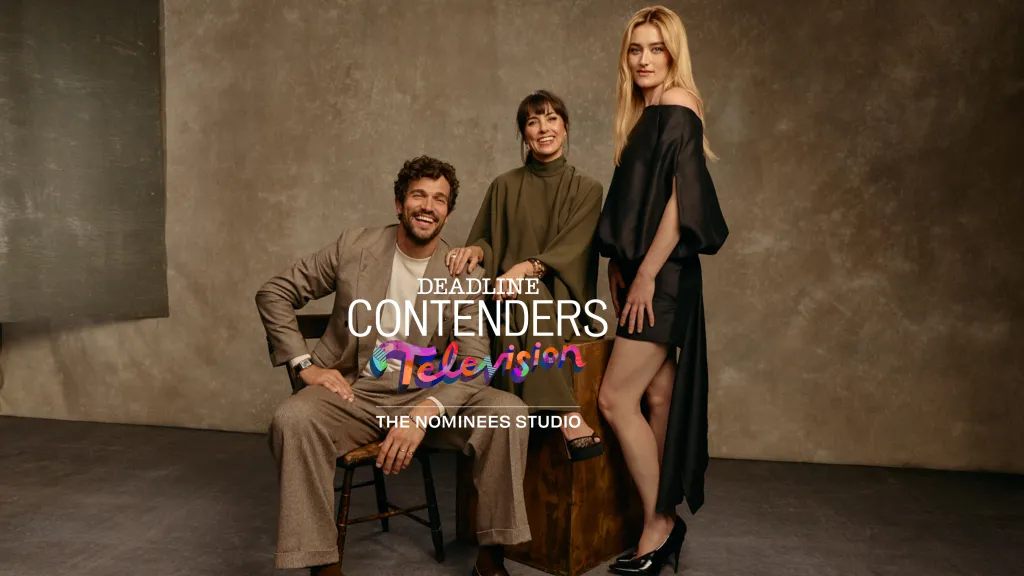
Paul Anthony Kelly knew when he took on the role of such an icon as the beloved John F. Kennedy Jr, a person America and the world has known since he was just a little boy learning to walk, that it would be no easy task. ”It’s very challenging playing a historical individual, certainly one who’s so well known and well regarded,” he said. “I think the biggest challenge was just for myself to find the humanity in it and keep it real and honest, while also navigating how people perceive him and and hold him in their hearts.”
Considering the level of success the FX limited series from Ryan Murphy under his “Love Story” umbrella has had in terms of critical acclaim, viewership and now seven Emmy nominations, he and his co-stars succeeded beyond all expectations. Kelly joined Deadline’s Contenders Television: The Nominees Studio along with co-stars Sarah Pidgeon, who plays Carolyn Bessette, and Constance Zimmer, who plays her mother Ann Marie Freeman, to talk about the series and why it has resonated.
RELATED: Contenders Television: The Nominees Studio – Deadline’s Complete Coverage
Watch the conversation here and scroll down for more photos from the event.
For Pidgeon — who is Emmy-nominated for Outstanding Lead Actress in a Limited Series, Anthology or Television Movie — Bessette was a person who had to navigate a sudden explosion of fame and curiosity while staying true to herself, and it wasn’t always easy. Pidgeon could relate to that just shooting this show.
“Well, we’re making a television show, but I think that started to sort of wake up my nervous system. You know, the awareness that someone is watching you or filming you, capturing you beyond the film camera that’s in your face for the television show,” she said. “In some ways, I think because my nervous system reacted in my head, I thought, ‘Well, this is akin to what she might have been experiencing.’ And I think that was something that I found really exciting and an important part of her story to share, because I think especially, you know, 30 years on, we can reflect on that, the advent of paparazzi culture in a very different way. But Carolyn never spoke on the record. So in a way, I was able to showcase what that experience might have been for her through me in this iteration of Carolyn, sort of setting the record straight.”

Sarah Pidgeon
Anthony Avellano for Deadline

Paul Anthony Kelly
Anthony Avellano for Deadline

Constance Zimmer
Anthony Avellano for Deadline

Sarah Pidgeon
Anthony Avellano for Deadline
Playing her mother — someone well out of the limelight of the Kennedys and a woman who would lose not only one daughter but two in the tragic 1999 crash that took their lives in a plane piloted by JFK Jr — was quite extraordinary and sensitive for Zimmer to play, especially since Ann is no longer alive. She has been nominated for Outstanding Actress in a Supporting Role for a Limited Series, Anthology or Television Movie.
“I think for me, because there wasn’t as much known about her as there was about the majority of the other people in the show, it gave me a freedom to all I had to do was look like the photo and then everything else. I could basically give her the power, give her a voice, give a voice to the voiceless,” Zimmer said. “Which is also a little bit of what happened with Carolyn, as we didn’t get to know her that way. And so I think this being based on the book and, and this being very much a little bit more of Carolyn’s point of view is the side of the story we never knew. And so I felt incredibly honored, and a lot of pressure, to make sure that whatever I did was just to make her somebody that nobody would forget.”
>
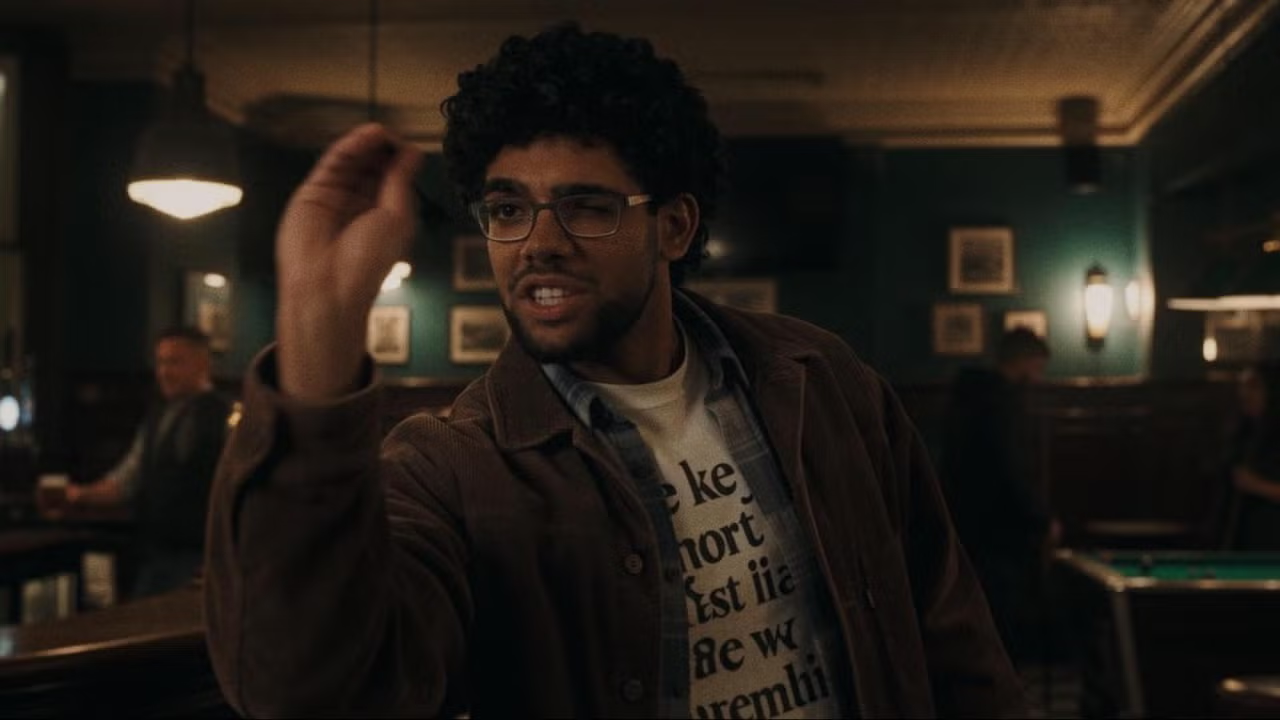
Startup Higgsfield AI caused a stir in May when it released its 95-minute AI-generated film “Hell Grind” at the Marché du Film at the Cannes Film Festival. While it was criticized for its nonsensical plot, the film impressed some audiences with its stunning technical visuals.
And now it’s letting people in on the prompts used to create the movie.
The San Francisco AI startup launched Higgsfield Academy in August, opening up the techniques used to create AI film in an effort to educate the next generation of filmmakers (and get them to use its AI platform, Cinema Studio). The company does not claim to be a film studio but instead sees its feature-length films as tools to teach the next generation of filmmakers.
The debut of this program comes amid a broader debate over AI, with studios and some creatives increasingly embracing the technology while large swaths of the Hollywood community continue to reject it on principle.
Higgsfield has benefited from the increased appetite for AI. Within the last 14 months, the startup has surpassed a $500 million annual run rate, which it claims makes it the fastest-growing generative AI company in history (although in the constantly changing world of AI, these records tend to shift quickly). Higgsfield.ai sees over 31 million monthly visits and serves over 26 million users worldwide.
The company has been teaching users how to use its technology with videos on YouTube and providing one-on-one assistance to its enterprise clients, but the newly minted Academy feature allows users to become “certified” in the technology for free.

The technique behind AI consistency
Mahi de Silva, Higgsfield’s co-founder and CEO, said the company sees the opening up of the prompts that created “Hell Grind” as a way to close the gap between the AI demos that have proliferated across the film industry and the reality of actually using the technology in production.
“One of the early criticisms of generative AI platforms is that people walked into the studios, they showed them a demo. They said, ‘Look, for a limited time, you can sign an exclusive deal with us. You have to commit $100 million to a contract, and trust us, we’re going to make it work for you,’” de Silva told TheWrap. “And I think the companies that did that have completely overpromised and underdelivered.”
Higgsfield’s approach, he said, has been informed by that skepticism. Rather than asking filmmakers to abandon the skills they have spent years honing, the company wants to incorporate them into the AI workflow.
“That gap between that great demo and how people actually get their hands dirty and get to use their platform — that’s really the motivation around this open sourcing,” de Silva said.

The company believes that a filmmaker who understands cameras, lenses, lighting and set design can apply that knowledge to generative media even if the tools themselves are new.
The Academy tool goes beyond simply video tutorials and now offers a more formal curriculum, allowing users to study the same workflows behind Higgsfield’s films.
The prompts are intentionally detailed. A single shot can require instructions around characters, environments, camera movement, lighting, action and continuity — as well as assets that have already been built within Cinema Studio. These intricacies make it so that, according to de Silva, consistency can really only be gained within their proprietary platform.
“You can cut and paste a prompt right out of our system and play it somewhere else, but you’re likely not to get the visual coherence, the visual fidelity from scene to scene,” de Silva said. “That’s part of our magic.”
Users can study how each scene was constructed and then begin changing it themselves.
The company said its platform is already used by 390 of the Fortune 500 companies and more than 170,000 corporate accounts. De Silva declined to characterize the company’s Hollywood customer base in detail, but said Higgsfield has also supported filmmakers with tasks including reshoots and visual effects.
For a company trying to establish itself in the entertainment industry, that distinction is deliberate.
“Our purpose in life is to be a tooling platform,” de Silva said. “I think it sends mixed signals to studios if they think we’re going to try to compete with them. So we’ve been very careful to be very clear. We are not in the content creation business. We’re in the tools distribution business.”
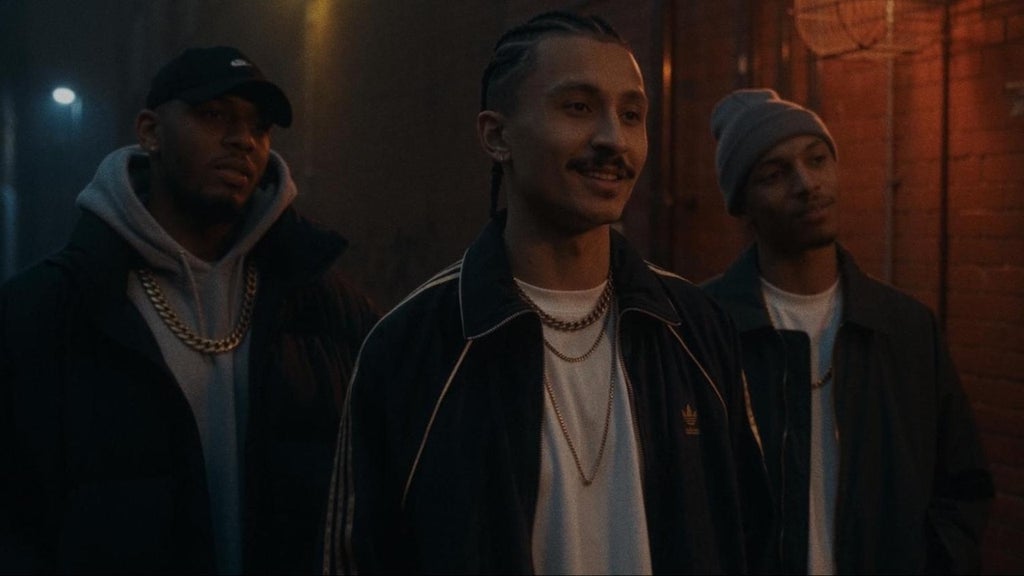
The company created two feature-length AI films, “Hell Grind” and “The Cully Hill Boys,” which featured the likenesses of two-time UFC champion Israel Adesanya, MMA veteran Quinton “Rampage” Jackson and livestream creator N3on, to give two stark examples to users attempting to make AI films of their own. The former is a sci-fi adventure film filled with visual effects, and the latter is a comedic action movie using real celebrities’ likenesses.
Teaching Hollywood to spot “AI Slop”
Higgsfield’s content lead and YouTube host Adil Alimzhanov has effectively become the public face of the platform, appearing throughout Higgsfield’s website and educational materials. His role is less that of a traditional AI evangelist and more of a translator between the technology and the people learning to use it.
One of the first things he wants new users to learn is how to recognize when an AI-generated image or video looks askew.
“With a lot of models, when you generate images, you get that AI slop look,” Alimzhanov told TheWrap. “The plastic look, where the skin is too smooth, the lighting is too perfect, and then the uncanny valley effect, where everything is too symmetrical, too perfect.”
Higgsfield attempts to bake some of that naturalistic look into its generation process, so the users can skip the slop step. Even a relatively simple prompt, such as a “girl standing in a park,” can produce a shot with a more deliberate camera angle, film grain, skin texture and lighting rather than requiring the user to specify every cinematic attribute from scratch, Alimzhanov said.

But the AI educator argued that users still need to develop their own visual literacy.
“First you need to learn how to identify slop,” he said. “We just show you a ton of visuals, and you have to identify what’s wrong in the image or the video.”
The reason, he said, is that audiences may not consciously identify a specific flaw, but they can still sense that something is off — and that can pull them out of a story.
That emphasis on taste and visual judgment could prove to be as important to Hollywood as it implements the technology itself. The industry already has no shortage of AI tools capable of generating images and video, but the harder question is how filmmakers can use those tools without losing the visual storytelling, continuity and intentionality that audiences expect from professionally produced entertainment.
For Higgsfield and its global filmmaking partners, they want to work in tandem with creatives rather than replace the existing production process.
Higgsfield is betting that the fastest way to get there is not to tell Hollywood that AI will replace its existing production process, but to teach filmmakers how to incorporate it into the one they already have.
“We firmly believe that machines are not going to be a substitute for humans. The machines are good at taking very complex tasks and simplifying them, but art doesn’t exist without a storyteller,” de Silva said. “We see this as really a celebration of creators and talent, and giving them access to realizing their creative talent at a tiny fraction of what it used to cost.”

>

How to watch Padres vs. Mets: TV channel and streaming options for August 17

IEEE Presidents’ Scholarship Honors Teen Innovators

Buss family intends to sell remaining shares in Lakers: Sources
-

 movies3 months ago
Search For Canadian TV Actor Stewart McLean Now Homicide Investigation
-

 Fashion9 years ago
These ’90s fashion trends are making a comeback in 2017
-
Fashion9 years ago
According to Dior Couture, this taboo fashion accessory is back
-
Fashion9 years ago
Model Jocelyn Chew’s Instagram is the best vacation you’ve ever had
-
Fashion9 years ago
Emily Ratajkowski channels back-to-school style
-
Fashion9 years ago
9 Celebrities who have spoken out about being photoshopped
-
Fashion9 years ago
Your comprehensive guide to this fall’s biggest trends
-
Fashion9 years ago
A photo diary of the nightlife scene from LA To Ibiza