
Tech
Spotify’s new Playlist Notes let users and editors explain their song picks

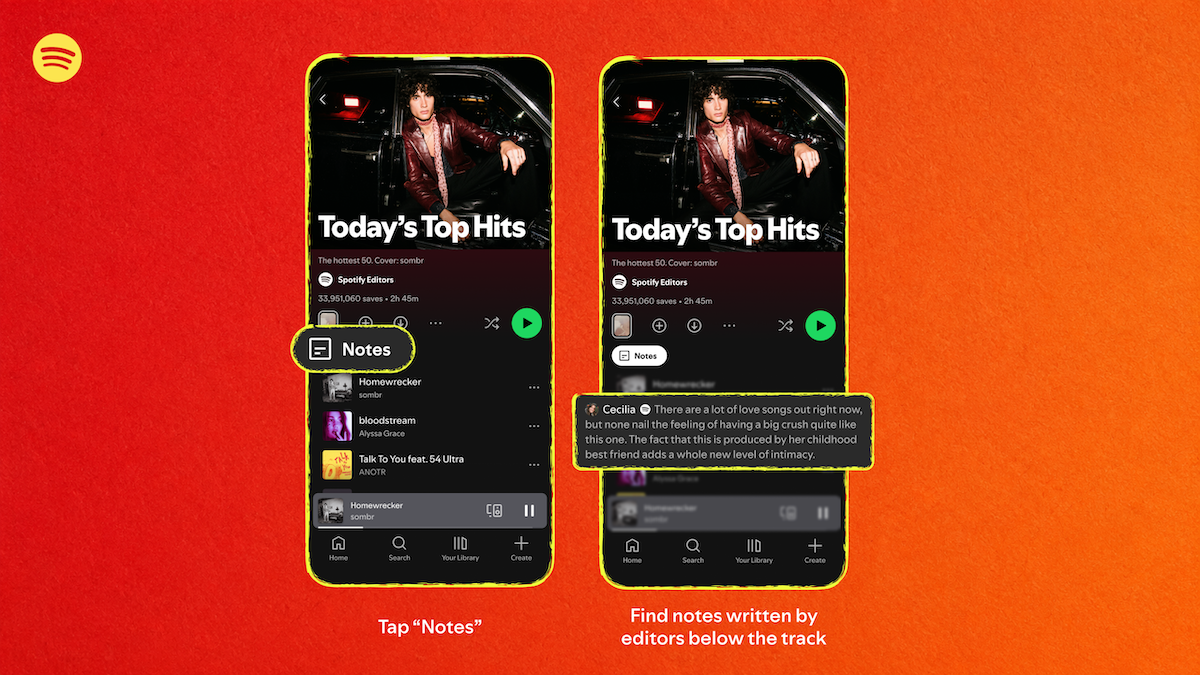
Spotify announced Monday the launch of “Playlist Notes,” a new feature that lets listeners add their thoughts to the playlists they make. The feature builds on “User Notes,” which the streaming giant debuted last month, allowing people to add personal notes to individual tracks.
With Playlist Notes, users can add context to songs, podcast episodes, and audiobooks in their playlists. Maybe a song reminds you of someone, brings back a specific memory, or is simply a track you think everyone should hear.
To add a note, go to the mobile app, then open a playlist that you either own or collaborate on, tap the three dots next to a track, podcast episode, or audiobook, choose “add note,” and save it. Anyone who can view the playlist can see the note.
Spotify is also bringing the idea to its own editorial playlists. Now, Spotify’s editors can add notes explaining why they picked certain songs. To start, listeners will see the feature on some of Spotify’s biggest playlists, including Today’s Top Hits, RapCaviar, Hot Country, All New Pop, and Fresh Finds Hip-Hop.
There’s a new profile feature for those editors, too. Editor Profiles show an editor’s top tracks and albums, along with the playlists they work on. It gives listeners a bit more insight into the people behind Spotify’s curated recommendations.
User-created notes are rolling out on iOS and Android devices in more than 100 markets. Editor notes and profiles are rolling out to free and premium users ages 16 and older in the U.S., Canada, the U.K., Ireland, Australia, and New Zealand.
While it’s arguably a small feature, it fits into Spotify’s bigger push to make the app feel more social and personal, giving users a chance to explain the stories and reasoning behind their favorite music.
It also gives Spotify another way to stand out from rivals Apple Music and YouTube Music. The company recently reported its Q2 earnings, touting that it surpassed 300 million subscribers for the first time. It also reached 777 million monthly active users.
When you purchase through links in our articles, we may earn a small commission. This doesn’t affect our editorial independence.
>

Anthropic and OpenAI are moving toward the public markets with trillion-dollar expectations. Anthropic investors are modeling an IPO valuation of $2 trillion or more, while OpenAI’s eventual listing could value it at up to $1 trillion.
Their latest private valuation benchmarks are $965 billion and $852 billion.
Open-weight models do not need to beat the strongest proprietary systems to complicate those expectations. If cheaper models absorb enough routine work or force broader price cuts, they can pressure revenue per task and gross margins.
For enterprise buyers, that could also push frontier labs to monetize premium agents and workflows more aggressively.
Cheap models can pressure revenue without winning the frontier
Vercel’s July AI Gateway Production Index found open-weight models handled 29% of gateway tokens in June, up from 11% in April, while accounting for under 4% of spend. Anthropic still captured 61% of spending on 32% of tokens and at least 72% across high-stakes use cases such as coding agents and back-office agents.
Low-cost models are already taking meaningful production volume, but frontier providers still capture most of the dollars. The valuation risk rises if open-weight systems move into higher-value work or customers demand similar price reductions for premium workloads.
OpenAI has already cut prices. On July 30, it cut GPT-5.6 Luna prices by 80% and Terra prices by 20%, describing the reductions as efficiency gains passed on to customers. Lower prices can expand usage, but they also increase the volume and premium revenue needed to preserve growth.
Premium AI has to carry the valuation
Anthropic said its May funding round valued the company at $965 billion and pushed annualized revenue above $47 billion. Its investors are now modeling an October IPO at $2 trillion or more, although senior executives have not set a target.
OpenAI, valued at $852 billion in an employee tender, is now more likely to list next year and could seek up to $1 trillion, the Financial Times reported. Anthropic filed confidential IPO paperwork on June 1, and OpenAI followed on June 8.
The same Financial Times report put OpenAI’s annualized revenue at about $40 billion this month, while Anthropic’s investor materials have projected its first quarterly operating profit. The labs therefore need to defend not just growth, but the margins behind it.
Anthropic’s reported pursuit of a $6 billion Decart acquisition points to one defense: making AI infrastructure more efficient. Products such as Claude Code provide another by tying customer spending to higher-value workflows rather than raw model access.
For investors and enterprise customers, the useful signals are gross margin after inference costs, revenue per completed task, retention, and the share of revenue coming from agentic products. If those metrics hold while open-weight volume rises, frontier labs can absorb cheaper competition.
If premium workloads move down-market or broad price cuts outpace efficiency gains, trillion-dollar valuation assumptions become harder to defend.
Also read: OpenAI and Anthropic are cutting AI costs as open-weight models gain ground, increasing pressure on the economics behind frontier AI.
>
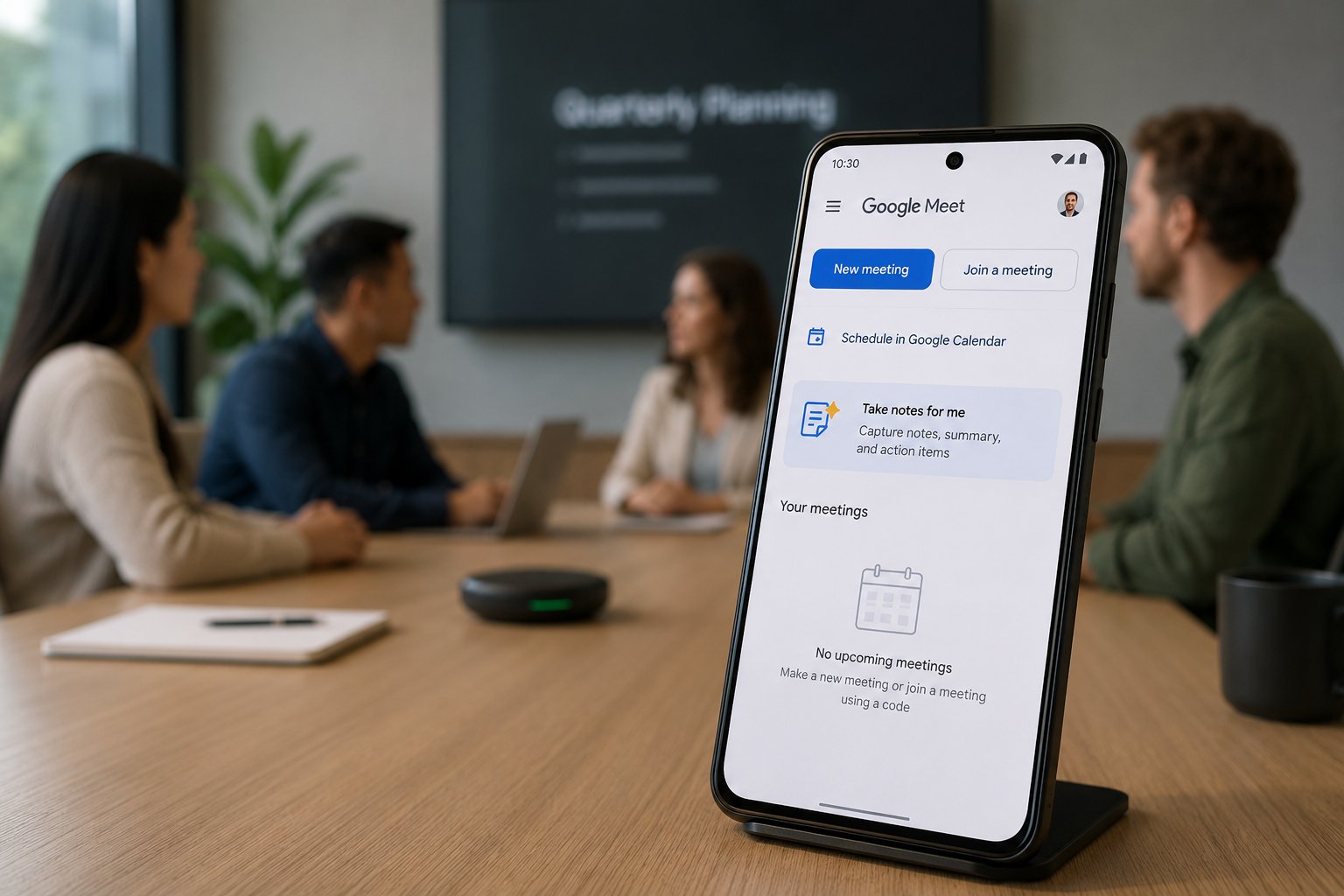
Google Meet’s Gemini-powered “Take notes for me” is expanding beyond video calls to capture in-person conversations. Users with access can start notes from the Meet home screen on mobile or desktop, and Google says the feature can also document conversations hosted on Zoom or Teams.
Gemini turns the conversation into a Google Doc with a summary and action items. Access depends on an eligible Google Workspace edition or Google AI plan and administrator settings.
How to take in-person meeting notes with Google Meet
Google announced the expansion at Cloud Next 2026, alongside broader Workspace AI upgrades. Once the feature is available on your account, the process is straightforward:
- Open Google Meet. Launch Meet on a supported mobile device or desktop and stay on the home screen. You do not need to start or join a video call.
- Select “Take notes for me.” Choose “Start taking notes” to begin capturing the in-person conversation. Place the device where it can clearly hear participants so Gemini can document the discussion accurately.
- Pause or stop capture when needed. Google’s current instructions say “Pause” pauses both transcription and note-taking. Selecting “Stop” ends the session after confirmation.
- Open the generated notes. After the session, Gemini creates a Google Doc containing the meeting notes and action items. The document is emailed to the person who started the session and saved in that user’s Drive.
If a remote participant needs to join, the session can transition into a normal video call. Google also says the same note-taking workflow can run while a meeting is hosted on Zoom or Teams.
The feature supports English, French, German, Italian, Japanese, Korean, Portuguese, and Spanish, but only one language at a time.
Teams that regularly switch languages should not assume the generated notes will capture the full discussion accurately. Google also says generated documents follow the organization’s Meet retention policy.
What admins should check before using it in a room
Google now lets Workspace admins require explicit participant consent before note-taking, recording, or transcription begins on supported devices. The setting is off by default and can be applied at the domain, organizational-unit, or group level.
A physical-room participant who never joins from a device may not see an on-screen consent prompt. Organizations should therefore establish a room-level notice and consent process before capture begins and confirm any applicable workplace, privacy, or recording requirements with legal or compliance teams.
Admins can also set the default audience for generated notes to internal guests, all invited guests, or hosts and co-hosts, and can prevent hosts from overriding that choice. Before broad deployment, verify those sharing settings and the organization’s retention policy with a test meeting.
Google warns that AI-generated meeting summaries can be incomplete or inaccurate. Run a pilot in both a quiet room and a noisier space, compare the notes with what was actually said, and confirm who receives the document afterward.
Review generated notes before using them for sensitive, legal, or personnel decisions.
Also read: Google says Gemini has surpassed 1 billion monthly active users, making it the company’s 14th product to reach that milestone.
>
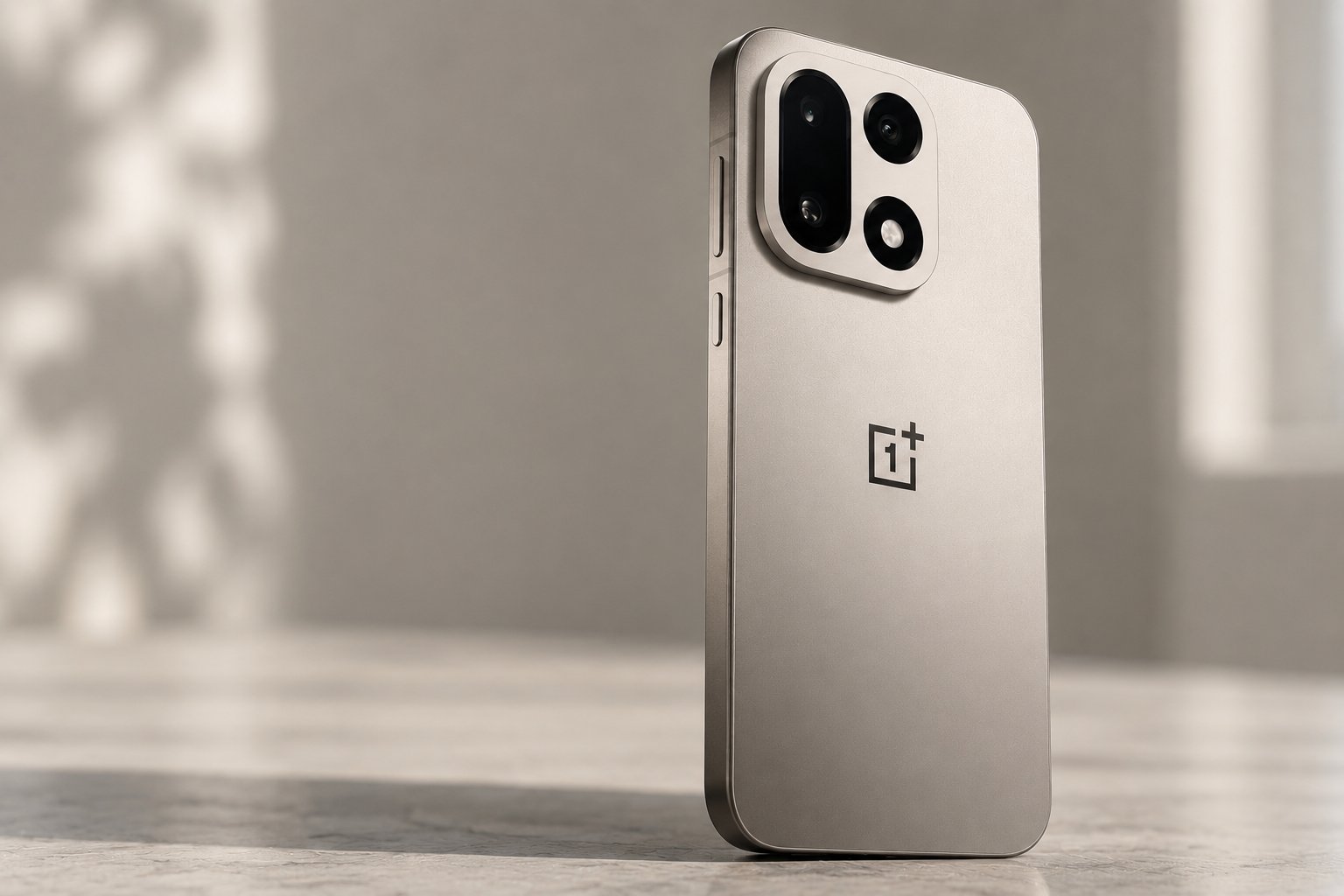
Leaks suggest the OnePlus 16 is getting a major battery upgrade, with capacity reportedly jumping to around 9,000mAh.
A battery that size would be roughly 23% larger than the OnePlus 15’s 7,300mAh pack. The rumored phone is also expected to feature a 200MP main camera, a 185Hz BOE display, Qualcomm’s Snapdragon 8 Elite Gen 6 Pro chip, and LPDDR6 RAM. Most details remain unconfirmed, and reports suggest the flagship may initially stay in China.
OnePlus 16 could pack a much larger battery
Notebookcheck reported that the OnePlus 16 is expected to feature a battery of around 9,000mAh, alongside Qualcomm’s Snapdragon 8 Elite Gen 6 Pro processor and LPDDR6 RAM.
That would be a big jump from the OnePlus 15’s 7,300mAh battery. Gadgets 360 noted that the current model supports 120W wired and 50W wireless charging.
The reports do not give charging speeds for the OnePlus 16, so the larger battery tells us little about how quickly it will recharge. Actual battery life will also depend on the display, processor, and software tuning.
A 200MP camera and 185Hz display are also tipped
Notebookcheck also listed a 200MP main camera among the OnePlus 16’s expected specifications, up from the 50MP main camera used on the OnePlus 15.
The report does not support earlier claims of a 200MP telephoto camera, so the sensor’s exact role should not be treated as confirmed until OnePlus provides official details.
OnePlus has provided more support for the 185Hz display claim. Notebookcheck reported that OnePlus China president Li Jie confirmed the refresh rate, while tipster Digital Chat Station said OnePlus and BOE jointly developed a new X4 light-emitting material for the panel.
According to Android Headlines, the X4 material is claimed to use less power, last longer, and outperform Samsung’s M-series display material in internal testing. No independent testing has confirmed those claims yet.
Gadgets 360 also said that the display could have slimmer bezels on all four sides while retaining a flat design.
The OnePlus 16 may stay in China
Notebookcheck said that the OnePlus 16 has received SRRC certification in China under model number PYB110, another sign that the phone may be getting closer to launch. Pricing is expected to start at around $815 for a 12GB RAM and 256GB storage configuration.
Whether it will launch outside China is another question. Notebookcheck and Android Headlines both suggested the flagship could remain focused on the Chinese market.
OnePlus has yet to confirm most of these specs. If the leaks hold up, the OnePlus 16 would push battery capacity, display speed, and camera resolution well beyond its predecessor.
For more on what OnePlus already offers, check out our OnePlus 15 cheat sheet, which covers its features, OxygenOS, pricing, and more.
>
LIV Golf finally admits Team Championship is canceled

Can Open-Weight AI Pressure OpenAI and Anthropic Valuations?

Higgsfield Academy Teaches How to Make AI Movies for Free
-

 movies3 months ago
Search For Canadian TV Actor Stewart McLean Now Homicide Investigation
-

 Fashion9 years ago
These ’90s fashion trends are making a comeback in 2017
-
Fashion9 years ago
According to Dior Couture, this taboo fashion accessory is back
-
Fashion9 years ago
Model Jocelyn Chew’s Instagram is the best vacation you’ve ever had
-
Fashion9 years ago
Emily Ratajkowski channels back-to-school style
-
Fashion9 years ago
9 Celebrities who have spoken out about being photoshopped
-
Fashion9 years ago
Your comprehensive guide to this fall’s biggest trends
-
Fashion9 years ago
A photo diary of the nightlife scene from LA To Ibiza