
Tech
Save up to $300 on your TechCrunch Disrupt 2026 pass until August 21


The lowest prices for TechCrunch Disrupt 2026 end this Friday, August 21 at 11:59 p.m. PT. Once that window closes, your chance to save up to $300 on your pass, or get an even larger discount on group pricing, will come to an end.
If you’ve been circling around Disrupt, then now’s the best time to lock in your pass and start getting ready to join the rest of the startup community gathering in San Francisco from October 13-15 at Moscone West!
If Disrupt has been on your radar, now is the time to lock in your pass before Friday’s deadline.
TechCrunch Disrupt: Where the startup ecosystem moves forward
Each year, TechCrunch Disrupt brings together more than 10,000 founders, investors, and startup community members, driving innovation forward. And for our event this year, you’ll find a keen focus on building and developing in the AI era across all of our stages of programming. If you want to be on the cutting edge running into 2027, this is the event for you.
And you don’t have to be a founder to get value out of Disrupt. Whether you’re raising capital, scouting investments, hiring talent, launching a startup, or building strategic partnerships, Disrupt puts you in the middle of the conversations shaping what’s next and can help you make the connections that propel your next year of growth.
Here’s just a glimpse of what you gain by attending:
- Actionable insights from founders, operators, and VCs actively building and investing in today’s market. Our agenda features a wide range of topics, curated to focus on insights that lead to action.
- Direct access to investors looking for their next portfolio company and founders seeking the right partners. Plus, you can get AI-powered networking opportunities through our app or take deeper dives through our many Side Events.
- Early visibility into emerging technologies and startups before they break into the mainstream through our Exhibit Hall.
- High-value connections that lead to funding, partnerships, customers, and career opportunities. Disrupt is about growth, both for startups and yourself!
What’s new at TechCrunch Disrupt 2026
Keeping that focus on building companies in the AI era in mind, we have a great slate of new stages and programming to inspire and educate:
- Real World AI Stage: AI is moving beyond the screen and into the physical world. Explore how robotics, autonomous systems, manufacturing, healthcare, and defense are turning AI breakthroughs into real-world products and businesses.
- Smart Money Stage: Follow the money. From fintech to stablecoins to payments, embedded finance, and AI-driven financial services, this stage explores how technology is reshaping the movement of capital.
- Smart Systems Stage: Every AI breakthrough depends on the infrastructure behind it. Discover the innovations in chips, compute, energy, networking, and data centers that will determine the next generation of technology companies.
Our Disrupt, AI, and Builders Stages are also returning this year, and we have excellent speakers joining us across them all:
You can explore the rest of our extensive speaker lineup right here!
Don’t miss out on the best TechCrunch Disrupt’s prices!
This is your last chance to save before rates increase, so lock in your pass before Friday, August 21 at 11:59 p.m. PT to get the best prices, whether you’re a student looking to get their introduction to the community or an established investor in search of an untapped opportunity.
When you purchase through links in our articles, we may earn a small commission. This doesn’t affect our editorial independence.
>

Johor has an incoming data center pipeline of 8,542 MW, but its colocation vacancy rate is just 0.7%, according to Knight Frank’s Data Centre Atlas 2026. The figures capture the tension in Malaysia’s expanding data center market: substantial future capacity is being announced while immediately available space remains tight.
Johor offers proximity to Singapore and a growing infrastructure base, but pipeline capacity is not the same as capacity ready for deployment. Enterprises evaluating Malaysia for colocation, cloud connectivity, AI infrastructure, or regional workloads need to examine delivery schedules, power access, and individual operators rather than relying on headline megawatt totals.
Johor’s pipeline outpaces available capacity
Johor’s 0.7% vacancy rate compares with 4.9% in Singapore, 20.5% in Jakarta, and 23.3% in Bangkok, according to the Data Centre Atlas 2026. Knight Frank puts Johor’s live IT capacity at 1,110 MW, behind Tokyo’s 1,473 MW and Singapore’s 1,118 MW.
Malaysia’s broader buildout remains substantial. The country approved RM34.6 billion (about US$8.5 billion) in data center and cloud-computing investments across 33 projects in the first quarter of 2026.
Microsoft’s Malaysia West cloud region in Greater Kuala Lumpur became generally available on May 28, 2025. The company later detailed its upcoming Johor Bahru region on Nov. 4, 2025 but has not announced an opening date.
Competition for regional AI workloads is also growing. In nearby Indonesia, Firmus Technologies is planning a 360 MW Nvidia-powered AI data center in Batam, another planned infrastructure cluster near Singapore.
Grid and water constraints shape expansion
Power delivery is becoming a larger constraint as development accelerates. As of December 2024, 38 Malaysian data center projects had Electricity Supply Agreements totaling 5.9 GW of maximum demand, compared with 405 MW of actual load utilization at the time.
Wood Mackenzie reported in June 2026 that transmission and distribution infrastructure was emerging as the primary constraint on Johor’s growth even though near-term generation remained sufficient. The firm estimates data centers could account for about 40% of the state’s electricity demand by 2035.
AI infrastructure demand is also broadening beyond accelerators. Recent growth in Intel’s data center business illustrates how spending is spreading across processors, foundry capacity, networking, and other supporting infrastructure as AI deployments expand.
Water use varies with cooling technology. AMRO estimates that a 100 MW facility using water-intensive cooling can consume about 4.2 million liters per day, increasing the importance of cooling design and local resource availability.
Malaysia has also tightened its approach to new projects. In February 2026, Prime Minister Anwar Ibrahim said approvals for non-AI data centers had already been limited for roughly one to two years because of electricity and water demands, while AI and advanced-technology projects continued to receive priority.
Johor’s 8,542 MW pipeline therefore represents potential future supply, not capacity buyers can procure today. Enterprises should verify committed power, delivery dates, cooling design, carrier connectivity, and the network architecture required for dense AI clusters before choosing a site.
Read more: As water becomes a bigger infrastructure constraint, Google’s push to replenish freshwater used by its data centers shows how major operators are beginning to address resource use alongside compute expansion.
>
About 16 percent of the global population—more than 1 billion people—live with some form of disability, according to the World Health Organization. Many of the disabilities affect independence and mobility.
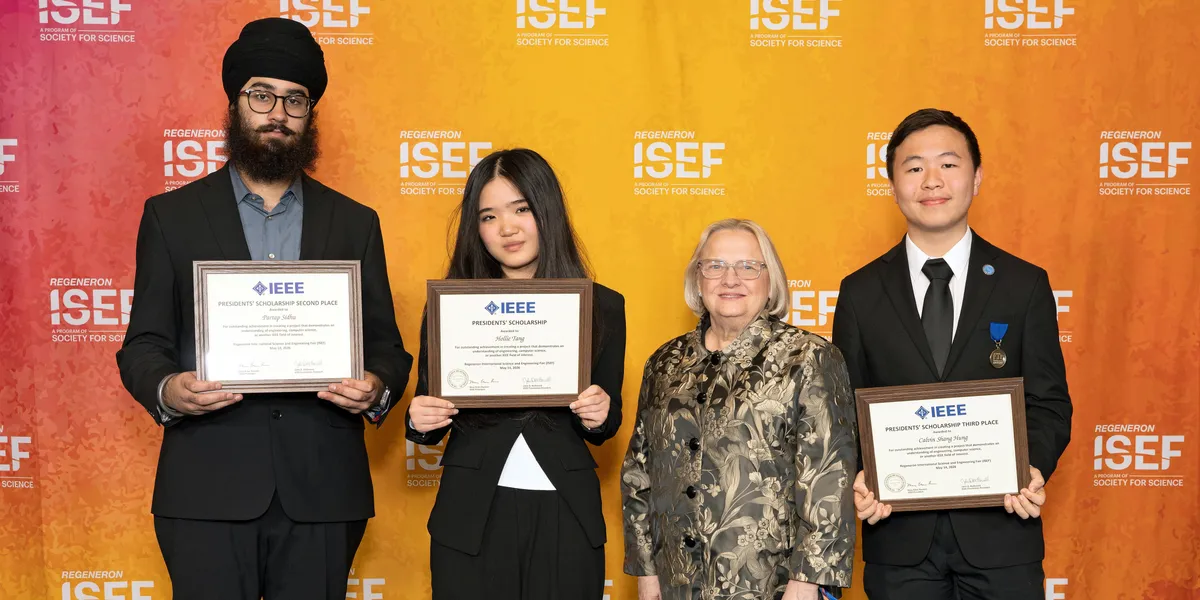
Three high school students working on inventions to help people with disabilities restore movement, translate thoughts, and navigate rough terrain had their work showcased at Regeneron’s International Science and Engineering Fair (ISEF), held in May in Phoenix. Their projects earned them this year’s IEEE Presidents’ Scholarship awards.
IEEE President Mary Ellen Randall presented the awards at a ceremony held during the fair. They also received an IEEE President’s coin, which students said was a highlight of their experience.
Hollie Tang won this year’s IEEE Presidents’ Scholarship of US $10,000 for her wheelchair navigation system. The award is payable over four years of undergraduate university study and includes a complimentary IEEE student membership.
Partap Sidhum, the second-place winner, received a $600 scholarship for his mind-controlled lower-limb exoskeleton. Third-place winner Calvin Shang Hung received a $400 scholarship for his rough-terrain robot. Sidhum and Hung also got complimentary IEEE student memberships.
Established by the IEEE Foundation and administered by IEEE Educational Activities, the Presidents’ Scholarship recognizes high school students who demonstrate an exceptional grasp of electrical engineering, computer science, or another IEEE field of interest.
Controlling movements with a tongue
 Holly Tang won the 2026 IEEE Presidents’ Scholarship of US $10,000 for her Tonguage project, which is a noninvasive, computer-vision-based human-machine interface.Lynn Bowlby
Tang, a sophomore at Wilson High School in Hacienda Heights, Calif., secured the top prize for her Tonguage project: a noninvasive, computer-vision-based human-machine interface. Using tongue movements and a standard camera, the interface lets users control a computer and other digital tools as well as assistive technologies including wheelchairs. The tongue pad, one of the system’s core features, allows the user’s tongue to function as a directional cursor, while eye blinks serve as mouse clicks.
Tonguage translates the person’s tongue and eye motions into actionable commands in several ways, such as the tongue’s position inside the mouth and continuous movement patterns. The system’s multimodality combines input from the tongue with other facial cues.
The system includes a face-tracking feature for error prevention that verifies commands are coming from the intended user, disregarding anyone else who moves into the camera’s frame.
That is a critical safety measure for a wheelchair-navigation application, Tang says.
Accessibility was central to Tang’s mission. She built the system to run on relatively affordable, readily available laptop cameras rather than more costly specialized hardware.
“Mobility conditions don’t discriminate,” she says. “They can affect anyone of any income, gender, and socioeconomic status.”
Tang initially imagined Tonguage as a simple substitute for a keyboard and mouse. The more research she did, though, the more she realized that it could offer autonomy through applications such as wheelchair navigation, robotic arm control, and gaming, she says.
“We’re so focused on trying to give people autonomy over just basic human tasks that we often leave out things like gaming,” she says. “They deserve the freedom to play games and enjoy entertainment as well.”
Tang, who plans to pursue biomedical engineering, says a visit to a rehabilitation center solidified her purpose.
“Including empathy in your technological solution is so important,” she says. “Empathy is hard to teach in a classroom, but it can be learned through experience, and through actually meeting people whose lives your work might change.”
Mind-controlled exoskeleton
Sidhu, a junior at Bethpage High School, in New York, took second place for NeuroGait, a mind-controlled, lower-limb exoskeleton. He says he was inspired by his volunteer work at a community center that lacked elevators. He saw individuals with mobility issues struggle to navigate the three flights of stairs.
NeuroGait operates by reading the Bereitschaftspotential (BP), a faint electrical pattern that emerges one to two seconds before a person consciously initiates movement. Using a custom electroencephalogram (EEG) headset and a convolutional neural network (CNN), the system classifies intended movements and sends commands to a 3D-printed exoskeleton. Rather than rigid motors, the suit relies on pneumatic artificial muscles that Sidhu designed to mimic human anatomy.
“The pneumatic artificial muscle in itself is so compliant that it’s able to adjust to the limitations of the human body,” he says.
The technical specifications are striking: The CNN achieves a 99.9 percent accuracy in detecting a person’s intended movement, while the full system—from the brain’s signal to physical movement—operates at 95.2 percent accuracy, according to the results from 500 trials Sidhu conducted.
Perhaps most impressively, Sidhu built the entire system for about $276, less than 1 percent of the $40,000 to $100,000 price tag of commercial exoskeletons, according to a 2025 revenue report from Roots Analysis.
He says he hopes to bring NeuroGait to the community center where the idea for the project began.
He attributes his success to staying current with research from institutions and organizations such as Boston Dynamics and MIT.
“To be successful in research,” he says, “you have to know what’s being done right now.”
A spider-inspired robot
Hung, a sophomore at El Cerrito High School, in California, took third place for Math Into Motion: Robotic Hexapod for Hazardous Environments. The six-legged robot is designed to traverse terrain too unstable for humans or conventional robotic systems.
With only weeks before the science fair deadline for entries and no prior electrical engineering experience, Hung began with an idea inspired by his interest in spaceflight: an insectlike robot. He had spent years watching rovers such as Curiosity and Perseverance struggle on uneven surfaces, leading him to hypothesize that a hexapod design would be better for rugged ground.
As the project progressed, the humanitarian applications for his robot became clearer, he says. Watching news reports of the earthquake that struck Türkiye in 2023, as well as conflicts around the globe, Hung adapted his robot for use in disasters. The hexapod’s stable tripod walking gait, in which three legs stay grounded while the other three move, makes it well suited for navigating in collapsed buildings to locate survivors or to carry sensitive supplies such as insulin in conflict zones.
The current version moves using three mathematical techniques. Inverse kinematics converts a target leg position into the motor angles needed to reach it. Linear interpolation breaks each movement into a series of smaller steps for smoother motion. And Euclidean transformations translate the robot’s travel direction into instructions that each leg can follow, regardless of the way a leg happens to be facing.
Hung taught himself how to design a printed circuit board. He also taught himself 3D modeling, coding, and soldering. Figuring out the complicated mathematical transformations to coordinate legs facing different directions proved to be the toughest hurdle, he says.
After seven months of development and trial and error, a critical circuit board failure in his third version nearly ended the project, he says.
“There was a really strong moment of ‘Should I just give up?’” he recalls.
He simplified the design and rebuilt it from the ground up.
“I just decided to double down,” he says. The fourth version of the robot was the first that successfully walked across his living room floor.
He advises aspiring engineers that “if you find the right project and it truly becomes your passion, designing it almost starts to feel like fun, and that’s what carries you through.”
As the three young innovators demonstrate, the future of engineering goes far beyond technical ingenuity. Much is rooted in empathy and a commitment to human welfare.
Through initiatives such as the IEEE Presidents’ Scholarship, the IEEE Foundation showcases and nurtures bright minds poised to shape the next era of assistive technology and robotics.
For Tang, Sidhu, and Hung, the ISEF stage is just the beginning. They can look forward to impactful careers dedicated to advancing technology for the benefit of humanity.
From Your Site Articles
Related Articles Around the Web
>

Anthropic and OpenAI are moving toward the public markets with trillion-dollar expectations. Anthropic investors are modeling an IPO valuation of $2 trillion or more, while OpenAI’s eventual listing could value it at up to $1 trillion.
Their latest private valuation benchmarks are $965 billion and $852 billion.
Open-weight models do not need to beat the strongest proprietary systems to complicate those expectations. If cheaper models absorb enough routine work or force broader price cuts, they can pressure revenue per task and gross margins.
For enterprise buyers, that could also push frontier labs to monetize premium agents and workflows more aggressively.
Cheap models can pressure revenue without winning the frontier
Vercel’s July AI Gateway Production Index found open-weight models handled 29% of gateway tokens in June, up from 11% in April, while accounting for under 4% of spend. Anthropic still captured 61% of spending on 32% of tokens and at least 72% across high-stakes use cases such as coding agents and back-office agents.
Low-cost models are already taking meaningful production volume, but frontier providers still capture most of the dollars. The valuation risk rises if open-weight systems move into higher-value work or customers demand similar price reductions for premium workloads.
OpenAI has already cut prices. On July 30, it cut GPT-5.6 Luna prices by 80% and Terra prices by 20%, describing the reductions as efficiency gains passed on to customers. Lower prices can expand usage, but they also increase the volume and premium revenue needed to preserve growth.
Premium AI has to carry the valuation
Anthropic said its May funding round valued the company at $965 billion and pushed annualized revenue above $47 billion. Its investors are now modeling an October IPO at $2 trillion or more, although senior executives have not set a target.
OpenAI, valued at $852 billion in an employee tender, is now more likely to list next year and could seek up to $1 trillion, the Financial Times reported. Anthropic filed confidential IPO paperwork on June 1, and OpenAI followed on June 8.
The same Financial Times report put OpenAI’s annualized revenue at about $40 billion this month, while Anthropic’s investor materials have projected its first quarterly operating profit. The labs therefore need to defend not just growth, but the margins behind it.
Anthropic’s reported pursuit of a $6 billion Decart acquisition points to one defense: making AI infrastructure more efficient. Products such as Claude Code provide another by tying customer spending to higher-value workflows rather than raw model access.
For investors and enterprise customers, the useful signals are gross margin after inference costs, revenue per completed task, retention, and the share of revenue coming from agentic products. If those metrics hold while open-weight volume rises, frontier labs can absorb cheaper competition.
If premium workloads move down-market or broad price cuts outpace efficiency gains, trillion-dollar valuation assumptions become harder to defend.
Also read: OpenAI and Anthropic are cutting AI costs as open-weight models gain ground, increasing pressure on the economics behind frontier AI.
>

Malaysia Data Center Growth Surges as Johor Capacity Tightens

How to watch Padres vs. Mets: TV channel and streaming options for August 17

IEEE Presidents’ Scholarship Honors Teen Innovators
-

 movies3 months ago
Search For Canadian TV Actor Stewart McLean Now Homicide Investigation
-

 Fashion9 years ago
These ’90s fashion trends are making a comeback in 2017
-
Fashion9 years ago
According to Dior Couture, this taboo fashion accessory is back
-
Fashion9 years ago
Model Jocelyn Chew’s Instagram is the best vacation you’ve ever had
-
Fashion9 years ago
Emily Ratajkowski channels back-to-school style
-
Fashion9 years ago
9 Celebrities who have spoken out about being photoshopped
-
Fashion9 years ago
Your comprehensive guide to this fall’s biggest trends
-
Fashion9 years ago
A photo diary of the nightlife scene from LA To Ibiza