
Tech
Wispr raises $280M at $2B valuation as it looks beyond dictation

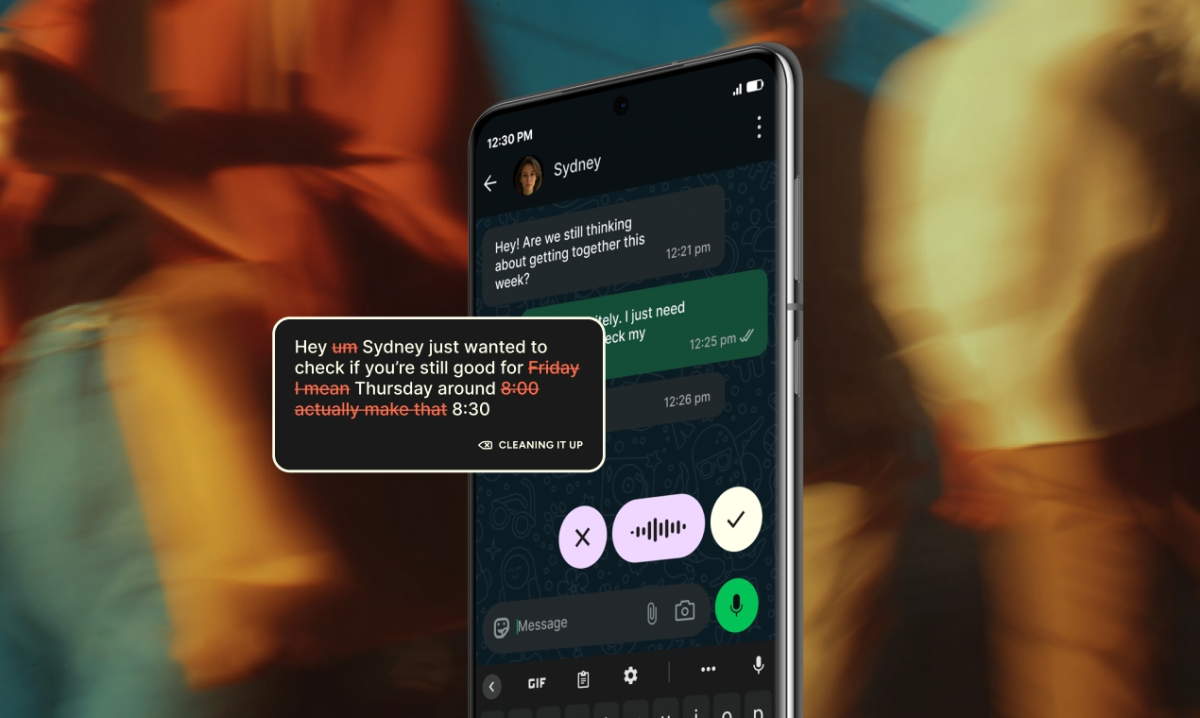
Wispr, a startup known for its AI dictation tool, raised $280 million in Series B funding, led by Menlo Ventures, at a $2 billion valuation, the company announced on Monday. The funds will allow Wispr to increase its footprint as it ventures into new areas, such as meetings, with its newly released note-taker tool.
With this latest round, the company has raised $361 million to date. Its last round was less than 10 months ago.
The new capital comes at a time when there is increased competition in the dictation space from apps like Willow, Monolouge, Aqua, and Superwhisper, among others. In addition, several developers are creating free or lower-priced tools for prosumers.
Existing investors, including Notable Capital, NEA, Neo Ventures, 8VC, and MVP Ventures, doubled down in the latest round. The company also gained new investors such as Acrew, Forerunner, Goodwater, Peak XV, Together Fund, and PLUS Capital.
Alongside the funding news, Wispr announced it’s launching a new model to improve the quality of speech understanding. For the last few weeks, several users have complained about a quality dip in Wispr Flow’s dictation output. The company said its new model, called Canto, will reduce error rates from 30% to less than 10%.
Since last November, Wispr has released its dictation app on Android and has scaled its go-to-market teams in regions like India and the U.K.
It’s also partnering with hardware makers, like the Oasis ring, to let customers dictate on their devices without speaking loudly. Separately, with its meeting notetaker, it’s taking on others in the space like Granola, Fireflies, and Read AI. While Wispr’s notetaker can display summaries and action items, there is scope for it to integrate with other tools and make updates or create documents or email drafts.
Last month, the startup announced Wispr Interface Labs under Ariya Rastrow, who was one of the people to work on Amazon Alexa in its early days. With this lab, Wispr aims to explore new interfaces for human-computer interaction.
When you purchase through links in our articles, we may earn a small commission. This doesn’t affect our editorial independence.
>
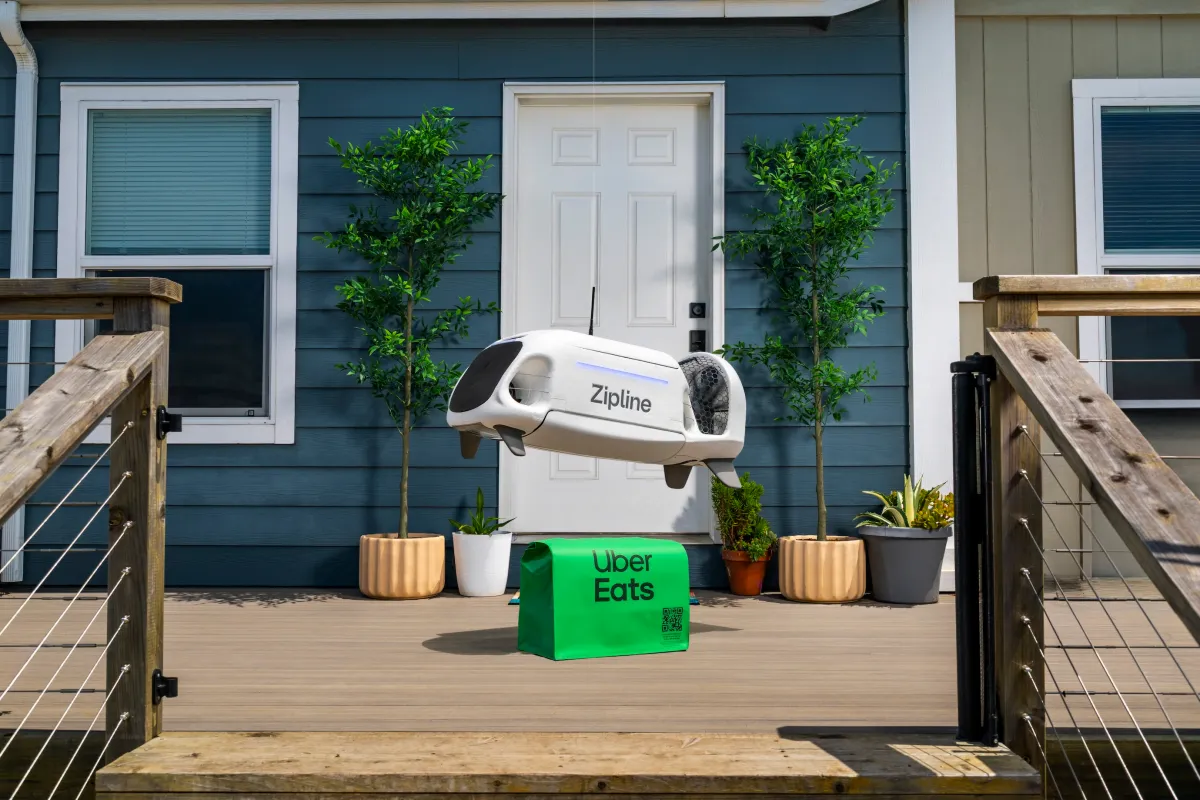
Uber is investing in, and partnering with, drone delivery company Zipline with the goal of making one million deliveries per day using the startup’s drones by the end of 2029.
Zipline drones will make the first deliveries on the Uber Eats platform by the end of this year, the companies said on Monday. These deliveries will start in Zipline’s existing markets, and the companies want to expand into “dozens of U.S. cities.”
The companies didn’t disclose the investment amount.
Uber has been taking on multiple drone delivery partners as it looks for ways to keep growing Uber Eats. The ride-hail giant is replicating the early business model it’s adopted for robotaxis and other services built around autonomous vehicles, which is to essentially bring as many companies on to its platform as possible.
This approach has helped Uber stay at the forefront of these new technologies despite selling off its own programs like the aerial ride-sharing service, Uber Elevate, and Uber Autonomous Technologies Group, which was working on autonomous vehicles. Investments have been a huge part of the strategy, with Uber committing more than $10 billion to dozens of autonomous vehicle providers.
The strategy is not a panacea, though. Uber recently clashed with one of its highest-profile partners so far, Waymo, and the companies are now expected to walk away from each other when their contracts expire in 2028. Uber and Waymo are also on different sides of a growing fight over autonomous vehicle regulation.
The ride-hail giant had tested the waters of drone delivery when it still had its Elevate division. The company dipped back into the idea late last year when it announced a partnership with Israeli startup Flytrex, which also came with a minor investment.
Uber thinks Zipline’s drones can fulfill orders on Uber Eats within five to ten minutes. “Truly quick commerce is proving to be an even bigger market than the original food market was,” Uber CEO Dara Khosrowshahi told the Wall Street Journal in an interview. “We think this can be an enormous tailwind for the next leg of growth for Eats.”
Zipline, based in San Francisco, recently closed an extended Series H funding round of $800 million, pushing its valuation to $7.6 billion.
“Every great transportation revolution has changed where people live, how businesses operate, and how economies grow,” Zipline co-founder Keller Cliffton said in a statement. “Together with Uber, we’re taking the next step toward building a world where getting what you need is as fast and effortless as sending a text, no matter where you are.”
When you purchase through links in our articles, we may earn a small commission. This doesn’t affect our editorial independence.
>
Tech
Crypto hardware wallet owners face fresh security risks after recent spate of personal data thefts

Data breaches at two shipping companies has put cryptocurrency owners with physical hardware wallets at greater risk of having their funds stolen, highlighting weaknesses in the broader tech ecosystem relied on by the crypto industry.
In recent weeks, makers of hardware crypto wallets Trezor and SafePal reported that collectively thousands of their customers had their personal data and shipping information stolen during separate data breaches at their shipping partners. The crypto wallet makers provided their customers’ names, home addresses, email addresses, and phone numbers to the shipping companies for mailing out their hardware wallets.
The hacks did not affect the security of the wallets, a hardware device that stays offline that makes it far more difficult for hackers to compromise from over the internet. Instead the hackers targeted the broader supply chain of tech companies to obtain personal information about where high-net worth crypto holders live.
By stealing the names and home addresses of hardware wallet customers, the hacks expose crypto owners to physical attacks that rely on physically obtaining the seed phrase stored on the wallet by force or violence.
Known as wrench attacks (referring to the use of weapons), these kinds of real-world attacks are on the rise as criminals increasingly seek out crypto belonging to high-net individuals. Blockchain security company CertiK confirmed dozens of reported wrench attacks during 2025, up by 75% on the previous year, with robbers stealing upwards of $40 million. Crypto forensics giant Chainalysis puts this year’s figures at closer to $30 million so far, with gangs using kidnapping and home invasions to demand a person’s crypto seed phrase.
With knowledge of a person’s seed phrase, the attackers can irreversibly take control of the person’s crypto on the public blockchain.
Both Trezor and SafePal also warned customers to stay vigilant against phishing attacks, which rely on sending targeted messages to a person’s phone number or email address in an attempt to steal their crypto.
In a separate attack on a hardware wallet earlier this month, hackers stole more than $130 million in cryptocurrency directly off the blockchain by guessing the passwords set by Coinkite’s Coldcard hardware wallet.
The hackers, who have not yet been identified, were able to predict the seed phrases that Coldcard wallets would generate offline for their customers. Even though the wallets and seed phrases never touched the internet, the hackers were able to generate customer wallet passwords on the fly and pluck their funds directly off of the blockchain.
One victim said in a post on X that they had done “everything right,” but that “none of it mattered… all because the hardware that created the seed phrase originally had one line in their code from 2021 that had a vulnerability.”
When you purchase through links in our articles, we may earn a small commission. This doesn’t affect our editorial independence.
>
Stripe has finalized a deal to acquire OpenRouter, according to a new report in Bloomberg.
OpenRouter helps customers to select different AI models to perform different tasks, depending on their specific needs and budget. The company announced in May that it had raised a $113 million Series B, at a reported $1.3 billion valuation. (Investors include Sequoia, Andreessen Horowitz, Menlo Ventures, and Alphabet’s Capital G.)
At the time, OpenRouter CEO Alex Atallah described the company as the equivalent of Stripe for AI, because it provides customers with a single access point for different systems and prevents lock-in. The startup also claimed to have 8 million global users and to provide access to more than 400 models.
The Wall Street Journal reported last month that Stripe and OpenRouter were in acquisition talks. Now, Bloomberg said those discussions have led to a deal price of more than $7 billion.
A Stripe spokesperson told TechCrunch that the company does not comment on rumors or speculation.
>

Yaxel Lendeborg cried on the bus before his first Summer League game. Now he’s ready for the Warriors

Uber adds Zipline drones to its Eats delivery network

What This Weekend’s D23 Says About the Walt Disney Company
-

 movies3 months ago
Search For Canadian TV Actor Stewart McLean Now Homicide Investigation
-

 Fashion9 years ago
These ’90s fashion trends are making a comeback in 2017
-
Fashion9 years ago
According to Dior Couture, this taboo fashion accessory is back
-
Fashion9 years ago
Model Jocelyn Chew’s Instagram is the best vacation you’ve ever had
-
Fashion9 years ago
Emily Ratajkowski channels back-to-school style
-
Fashion9 years ago
9 Celebrities who have spoken out about being photoshopped
-
Fashion9 years ago
Your comprehensive guide to this fall’s biggest trends
-
Fashion9 years ago
A photo diary of the nightlife scene from LA To Ibiza