
Entertainment
ABC Files First Amendment Lawsuit Against FCC Over ‘Retaliatory Campaign’


ABC has filed a First Amendment lawsuit against the FCC, claiming the Trump administration has “waged a retaliatory campaign” against the network.
“Acting through the Federal Communications Commission, the Administration has waged a retaliatory campaign against ABC for a single reason: it disapproves of what ABC broadcasts,” the lawsuit claims, per multiple media reports.
The Tuesday morning filing in federal U.S. District Court states that Disney’s network has “no alternative means to eliminate these ongoing and immediate threats other than total capitulation to the Administration’s demands” and that “over time, those attacks have escalated into express demands that ABC be stripped of its broadcast licenses because of its speech.”
More to come…
The post ABC Files First Amendment Lawsuit Against FCC Over ‘Retaliatory Campaign’ appeared first on TheWrap.
>
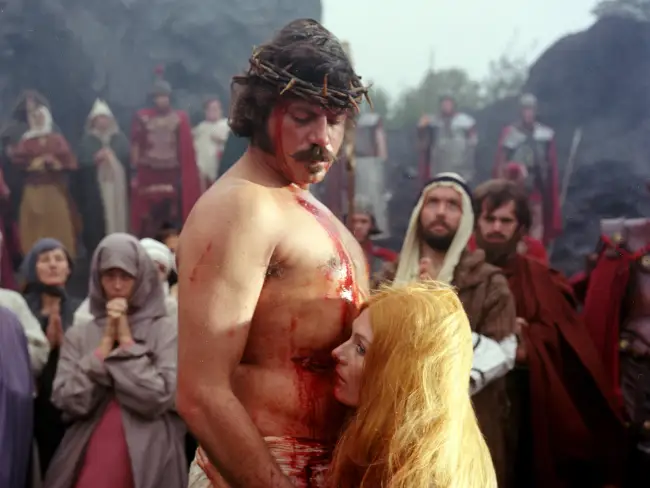
It was by far the hottest and hardest ticket at this year’s Cannes Film Festival.
Film fanatics did everything they could to elbow into the premiere of the highly anticipated, decades-in-the-making, director’s cut of Ken Russell’s “The Devils.” After all, the historical psychological horror-drama has become infamous, nearly a thing of myth among cinephiles, ever since its sexual and violent imagery of repressed nuns (who believe they’ve been possessed by satan) led to the film being censored in 1971.
Based on Aldous Huxley’s 1951 book “The Devils of Loudun,” and the hard-to-believe real-life story of a Roman Catholic priest, Urbain Grandier, being burned to death in 1634 after he was accused of seducing an entire convent of Ursuline nuns by making a pact with the devil, the film’s premise is certainly fantastical. But Russell, who converted to Catholicism as an adult, was not interested in the supernatural. He saw the story as a fever dream stirred up by the corruption and weaponization of religion, in what he described as “my most, indeed my only, political film.”


“He thought it was a film about brainwashing,” said English film critic Mark Kermode, who played a key role in the film’s restoration, when he introduced the film at Cannes. “He thought it was a film about the corruption of religion and the unholy marriage of church and state, which is an even more important subject now than it was when Ken very prophetically made it in 1971.”
From the start, scandal surrounded the film — United Artists dropped it after reading the provocative script, before Warner Brothers picked it up. Russell’s imagery and the way it builds toward a sexual, violent frenzy, are intended to provoke the audience and show how hysteria can be inflamed by those in power. Ultimately, “The Devils” was deemed too intense for modern audiences in 1971.
Looking back at the scandal surrounding “The Devils,” journalist Maron Durand wrote: “From over-the-top set designs by Derek Jarman, to orgy scenes, to blasphemy and torture, it had everything needed to cause outrage. And that it did: the film’s release caused a scandal. If the British Board of Film Censors (British Board of Film Classification) sought the least damage possible, some scenes — particularly the famous orgy scene with the nuns in the church — had to be cut, and the film was forced to be released with an X rating in England and in the U.S.”

The most notable change was the removal of an extended sequence in the middle of the film, which featured a very public display of the alleged demonic possession, climaxing with hysterical nuns tearing down and ravaging a giant crucifix.
Explained Kermode, “Even the X-rated British cut [which had been less heavily edited than the U.S. R-rated version] had a huge hole in the middle of it because there was a key sequence that Ken said was some of his finest work that had not been able to be shown.” For director Paul Joyce’s 2002 documentary about the film, “Hell on Earth: The Desecration and Resurrection of ‘The Devils,’” Russell and Kermode decided to hunt for the scenes and footage that were removed from his original cut, and, according to Kermode, “after a very, very long search and a lot of flukes and strange coincidences, we found the sequences.”
That found footage was first featured in the documentary, and afterward, Russell and his longtime editor Michael Bradsell cut that central sequence back into “The Devils,” along with adding back some footage to the film’s ending, which, according to Kermode, “was very important for [Russell] in terms of the tragedy of the story.” In 2004, Bradsell and Russell’s newly restored Director’s Cut existed only on a digibeta tape, and Kermode arranged for that low-quality version to screen at the National Film Theater in London.
“It got a standing ovation,” recalled Kermode of the single 2004 screening of the digibeta. “And Ken said, ‘This is the version of the film that I want people to see.’”
When introducing the film at Cannes, Elize Tribble Russell, the director’s widow, reminded the audience that Russell was a dancer before becoming a filmmaker. She recalled, after the digibeta version screened in 2004, her late husband said, “‘Now I have my rhythm back.’” She went on to explain, “ For him, the film was as much about the music as the content, and not literally music, but the music that lived inside of him as a ballet dancer.”

Following the scandal surrounding the film’s 1971 release, Warners kept the censored version of “The Devils” largely out of circulation. Still, the film gained a cult-like following, and its status was elevated through the years by a generation of filmmakers who revered it. Cannes head Thierry Frémaux told audiences that in the days following the announcement of the restoration’s Cannes premiere he had personally heard from Guillermo del Toro (who fought for years to get the film restored), Alfonso Cuarón, Cannes Jury President Park Chan-wook, and Peter Jackson (who was at the premiere) about wanting to see the film, “because for them, Ken Russell, and especially this movie, have a special importance in their life.”
For the better part of two decades, Warner Brothers stood in the way of Russell’s 2004 director’s cut from being restored and released, but that changed in 2025 when the studio announced the creation of Clockwork, its new independent film distribution and production arm. Clockwork president Christian Parkes and head of marketing Spencer Collantes made “The Devils” restoration a top priority, which, in addition to winning cinema lovers’ admiration for an important piece of film preservation, was also a brilliant stroke of marketing for the new company looking to make its mark with boundary pushing, bold director-driven films, not unlike its namesake, Stanley Kubrick’s “A Clockwork Orange”— yet another 1971 film from Warners that became embroiled in controversy for its portrayal of sex and violence.
On October 16 in the U.S. (October 30 in the U.K.), Clockwork will theatrically release the director’s cut of “The Devils” that premiered at Cannes. It will be the first time audiences can see Russell’s intended version, and it is a 4K restoration assembled from the film’s original camera negative that showcases Russell’s hallucinatory imagery like it has never been seen or heard before.
You can watch the trailer for the restoration here.
>
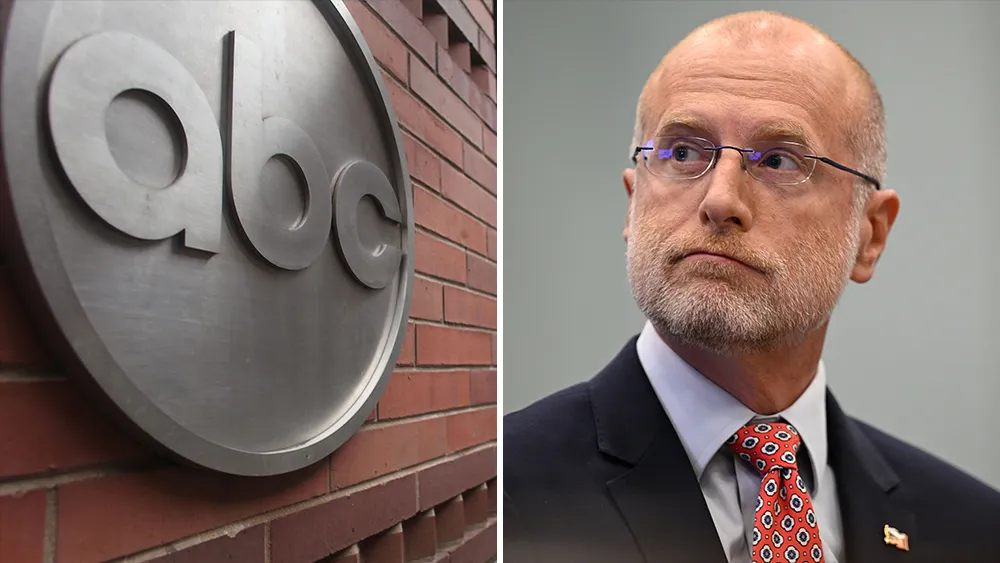
ABC filed an unprecedented lawsuit against the FCC on Tuesday, claiming that its investigations are part of a “retaliatory campaign” to curb the network’s free speech.
The lawsuit, filed in federal court in Washington, D.C., also seeks to halt a proceeding in which the agency and its chairman, Brendan Carr, demanded that it put its eight stations up for early license renewal. That followed Donald Trump‘s attacks on the network, including its late night host, Jimmy Kimmel.
“Acting through the Federal Communications Commission, the Administration has waged a retaliatory
campaign against ABC for a single reason: it disapproves of what ABC broadcasts,” the lawsuit stated.
More to come.
>

EXCLUSIVE: Cast members including iconic Colombian star Margarita Rosa de Francisco came on board Part Two of Netflix’s 100 Years Of Solitude, and with the finale of the epic adaptation about to launch, several of the stars who appear in the series-closing episode spoke exclusively to Deadline. We are also first with the trailer for the finale.
De Francisco, famous in Latin America for her role in long running series Café Con Aroma de Mujer, appears in Part Two, as do Estefanía Piñeres, Emmanuel Restrepo and Sebastián Osorio.
The Netflix adaptation of the classic novel by Gabriel García Márquez has been split into two parts. The eight-episode Part Two is streaming now, with a special final instalment dropping separately, as we revealed earlier in the year.
“It’s very intimidating to play a character in such a relevant and important work, and one that so many critics have said outright was impossible to film,” said de Francisco, who plays Fernanda del Carpio. “What we had to do is find ourselves in the work so that we can be faithful to it, and we had to trust the [series] writers.”
Season 2 scribes are: José Rivera, Natalia Santa, Camila Brugés and María Camila Arias.
Osorio has been in shows including the telenovela Pasión de Gavilanes and stars as Aureliano Babilonia. He agreed it was both exciting and intimidating to land a role in an adaptation of such a seminal novel.
Piñeres, whose credits include the movie Malta and the Netflix miniseries Delirium, plays Amaranta Úrsula in the series. “These characters take on a quality that is almost mythological,” she said. “They’re in this kind of demigod space where you have to meet them as a character. It was really important that I trusted the writers.”
She told Deadline about a pinch-me moment when she stepped onto the set for 100 Years Of Solitude.
“I walked in and saw all of the actors that had been playing the Buendías, who were there as they were going to appear as ghosts… it was just such a surreal moment. I was like, ‘I’m walking into the Buendía house, and I’m seeing all of the Buendías together.’”
The production has given the Colombian TV industry a creative and financial boost, employing a massive cast and crew as well as local artisans who worked to recreate the mythical town of Macondo.
“So many things had to align for this particular production to be able to get off the ground… we had 1500 people working,” said Colombian actor Restrepo, who starred in Netflix’s romantic drama Eva Lasting and plays José Arcadio in 100 Years Of Solitude. “I’ve never seen anything like it, and I hope I will again.”
Laura Mora and Carlos Moreno directed seven of the eight episodes in Part Two, with Alex García López (The Witcher) helming the final episode. Bogotá -based Dynamo is the production company. The closing episode starts streaming on August 26. Check out the trailer.
>

Hockey World Cup: Ireland women’s hopes alive after win over New Zealand

Oracle AI Database@AWS Expands to 22 Regions

ABC Files First Amendment Lawsuit Against FCC Over ‘Retaliatory Campaign’
-

 movies3 months ago
Search For Canadian TV Actor Stewart McLean Now Homicide Investigation
-

 Fashion9 years ago
These ’90s fashion trends are making a comeback in 2017
-
Fashion9 years ago
According to Dior Couture, this taboo fashion accessory is back
-
Fashion9 years ago
Model Jocelyn Chew’s Instagram is the best vacation you’ve ever had
-
Fashion9 years ago
Emily Ratajkowski channels back-to-school style
-
Fashion9 years ago
9 Celebrities who have spoken out about being photoshopped
-
Fashion9 years ago
Your comprehensive guide to this fall’s biggest trends
-
Fashion9 years ago
A photo diary of the nightlife scene from LA To Ibiza