
Tech
FBI Pegasus Records Expose a Blind Spot in US Spyware Oversight

Federal court records show the FBI went beyond simply testing commercial spyware as it considered how the technology could be used in criminal investigations. Those records now expose a gap in a new US court reporting system that will count hacking-based wiretaps but not every stage of government interest in or use of device-hacking tools.
Beginning with 2028 activity, the federal judiciary plans to separately track court-authorized interceptions that use spyware or hacking techniques, with the first figures expected in 2029. The FBI’s NSO Group records show why those statistics will still be incomplete: agencies can evaluate tools, draft potential-use guidelines, and identify investigative applications before a case ever reaches a reported wiretap.
FBI records show how far the Pegasus review went
The Administrative Office of the US Courts plans to add a separate spyware/hacking category to its annual report, according to reporting on the judiciary’s decision. The category is intended to identify hacking techniques authorized for real-time communications interception.
A 2023 federal court record details how FBI and Justice Department personnel considered technology from Israel’s NSO Group, maker of Pegasus. Officials discussed whether and how the technology could support criminal investigations, and a May 2021 document proposed guidelines for possible use while referencing specific criminal matters where personnel believed the tool might apply.
The records do not establish that Pegasus was used in an FBI investigation. They show the Bureau issued a July 22, 2021, notice directing personnel to cease efforts involving the technology, while congressional testimony described the NSO license as an evaluation of the technology and its security implications.
Commercial spyware remains an active security concern. In June 2026, Meta said WhatsApp disrupted NSO-linked targeting attempts after a permanent injunction barred NSO from targeting WhatsApp and its users; Meta said it found no evidence that the fewer than 10 identified targets were successfully compromised.
The new wiretap count won’t capture every hack
Sen. Ron Wyden pressed the FBI for broader figures in December 2022. He sought annual figures for Network Investigative Technique operations, including how many were court-authorized and how many people, devices, and accounts were remotely searched.
Remote searches are not necessarily wiretaps. Hacking used to intercept communications as they occur can fall under the wiretap framework, while accessing information already stored on a compromised device can be treated as a search under different legal authority; the judiciary’s annual Wiretap Report also excludes interceptions regulated by the Foreign Intelligence Surveillance Act.
That gap has practical consequences for endpoint security. Google’s 2026 Android protections expanded Intrusion Logging for spyware investigations, giving researchers encrypted forensic records that can help identify suspicious installations, server connections, and attempts to tamper with device logs.
Mobile exploit chains also show why the device itself remains a high-value target. A June review of Apple’s 2026 security threats detailed targeted exploits and an iPhone attack framework capable of exposing messages, passwords, photos, emails, and other data after compromise.
The court figures due in 2029 should establish a baseline for hacking-based live interception beginning with 2028 activity. The FBI’s Pegasus records show the limit of that number: government interest in powerful hacking capabilities can begin long before a tool appears in a wiretap tally — and may never appear there at all.
Read more: The reporting system has important boundaries around what gets counted; here is what the new spyware records will disclose when the first figures arrive.
>
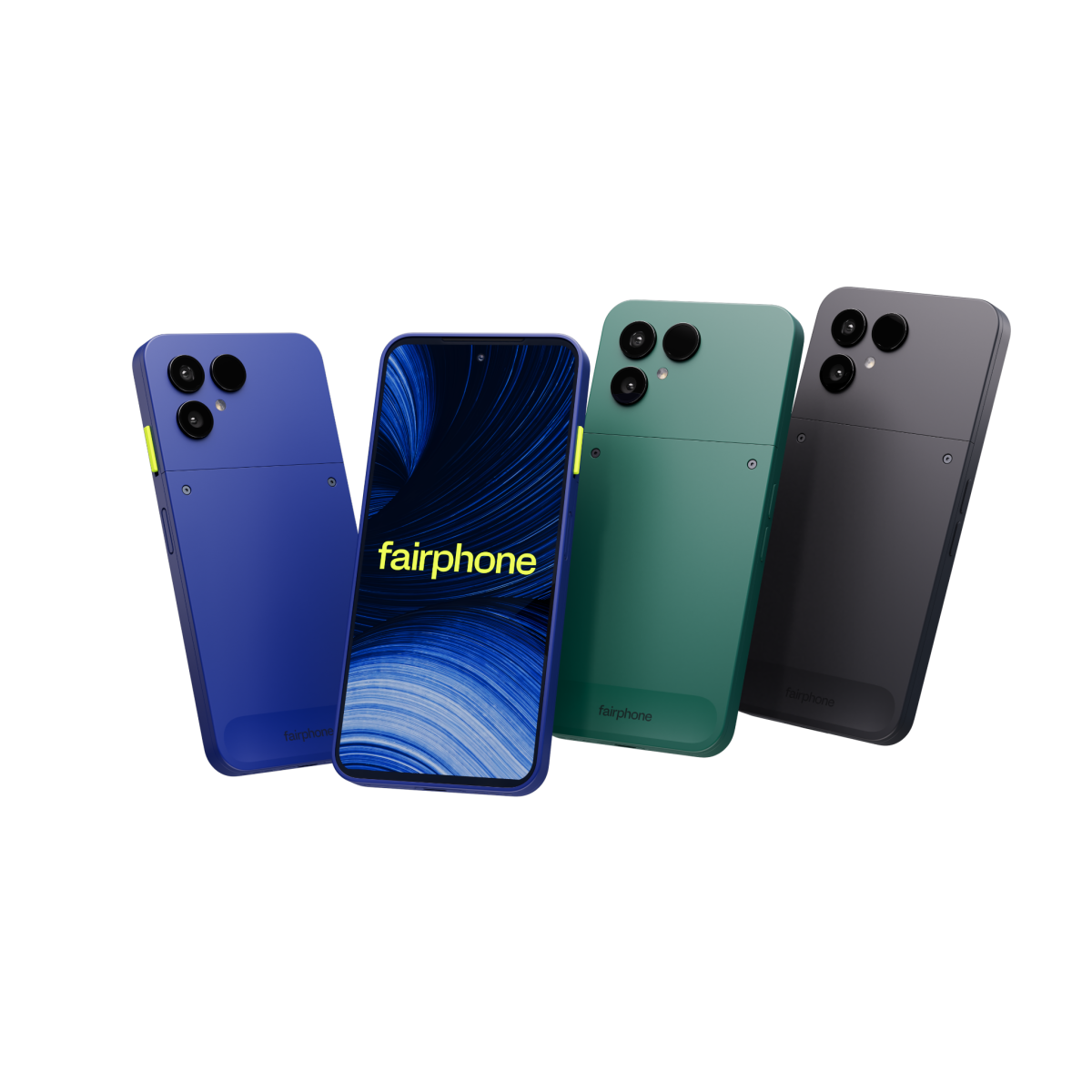
Fairphone, the Dutch company known for its sustainable and repair-friendly phones, on Tuesday said its latest smartphone, Fairphone (Gen 6+), is now available in the U.S, starting at $649.
The company previously had a partnership with French open-source operating system maker e/OS to sell a “de-Googled” version of its previous smartphones in the States, but this is the first time people in the U.S. can buy the company’s phones directly without any modifications. The company said the Fairphone 6+ will support T-Mobile and AT&T at launch.
The Fairpone 6+ is strictly a midrange Android offering, but given the increasing prices of consumer gadgets amid the ongoing component shortages, a repairable device that can be made to last for years may prove a good proposition.

“We’re delivering a device built from the ground up to be opened, repaired, and kept alive for many years,” Fairphone CEO Raymond van Eck said.
The Fairphone 6+ runs on Qualcomm’s mid-range Snapdragon 7s Gen 4 processor, and has 12GB of RAM. The phone has a 4,415 maAh battery with support for 30W fast-charging. It features a 6.31 LTPO OLED display with an adaptive refresh rate of up to 120Hz.
As for photography, the phone’s main camera has a 50-megapixel Sony sensor with an f/1.88 aperture, and the secondary camera has a 13-megapixel ultrawide sensor with an f/2.2 aperture. The selfie camera on the front is a 32-megapixel sensor with an f/2.0 aperture.
Personally, I would have preferred a telephoto camera instead of an ultrawide for a two-camera setup. On paper, these cameras look like they would be good enough to take photos in the daylight, but in low light, expect the performance to dwindle.
The Fairphone’s main selling point, however, are its 12 replaceable parts, which include important components like the battery, cameras, USB-C port, and the display, which can be swapped out using a single screwdriver. The company offers five years of warranty and software support until 2033.
Fairphone claims it also focuses on keeping its manufacturing process sustainable. The company said it was able to reduce the carbon footprint to 30 kg of CO2e for each of the Fairphone 6+ it manufactured.
The Fairphone 6+ is available in Forest Green, Horizon Black, and Cobalt Blue colorways. The company is also selling accessories, like a finger loop, lanyard and card holder, which users can install by removing the back cover.
When you purchase through links in our articles, we may earn a small commission. This doesn’t affect our editorial independence.
>

Reach Capital announced Tuesday the close of a $265 million Fund V. The thesis of the 11-year-old, San Francisco firm is to back founders building AI applications that can “expand human potential,” Tony Wan, head of platform at Reach Capital, told TechCrunch. In practice, he added, that means looking at founders building across three areas: learning, health, and work.
“We believe AI should serve human flourishing, not replace it,” Wan said. The firm’s previous investments include Replit, ClassDojo, and Coral Care.
The new fund will write checks of $1 million to $10 million, spanning pre-seed through Series A, into roughly 50 companies over the next three years. So far, no companies have been backed through Fund V.
Limited partners include Capricorn Investment Group, the Los Angeles Fire and Police Pensions, the LEGO Foundation, and College Board. Speaking to TechCrunch, general partner Jomayra Herrera said fundraising went smoothly and that the team was able to raise the new fund in less than six months.
“The vast majority of our LPs doubled down, and we brought on a few new marquee LPs,” Herrera said. “We attribute this to LP interest in sector-focused boutique funds that focus on conviction-based investments.”
Reach Capital’s new fund is noteworthy given the barbell shape the broader fundraising market has taken in recent years, with capital flowing overwhelmingly to giant, brand-name funds on one end and to sharply focused specialists on the other, with generalist firms in the middle struggling to get LPs’ attention.
Analysis by PitchBook and the National Venture Capital Association found that established firms captured more than 90% of the roughly $62 billion raised across U.S. VC funds through May of this year, leaving a smaller pool of first-time and mid-sized managers to compete for whatever’s left. Reach’s thesis, with over a decade of edtech and impact-investing, fits the mold of the kind of specialist fund LPs have remained open to funding.
The outfit previously raised $215 million for Fund IV in 2023 and $165 million for Fund III in 2021.
One of its most recent exits came in June, when Superhuman — the productivity platform now owned by Grammarly — acquired GPTZero, the AI-detection startup co-founded by Princeton graduate Edward Tian. Terms weren’t disclosed, but GPTZero had grown to more than 19 million registered users and $30 million in annual recurring revenue on just $13.5 million raised, and Reach was one of several investors in the company, alongside Uncork Capital, Footwork, and Jack Altman’s Alt Capital.
When you purchase through links in our articles, we may earn a small commission. This doesn’t affect our editorial independence.
>

Swedish electric and autonomous trucking company Einride said Tuesday it plans to buy 500 Tesla Semis and make the electric big rigs available to Amazon and other customers. The Tesla Semis will be added in phases to Einride’s fleet over the next 24 months, starting in September, according to the company.
Einride will manage the Tesla Semis through its Saga AI software, a fleet management platform designed to give customers all the benefits of using electric trucks to carry freight without the financial and logistical burden that comes with owning them.
Einride CEO Roozbeh Charli said this “deployment is yet another proof point that we can execute at the scale our customers demand.”
And scale is what this deal promises, if Tesla can deliver. Tesla revealed a concept of the Semi in 2017 and five years later, after numerous delays due to the Covid pandemic and global supply chain shortages, the company delivered the first batch to customers like PepsiCo.
Volume production of the Tesla Semi was delayed even further. It wasn’t until April 2026 that the first Semi rolled off its high-volume production line at its factory in Nevada. Despite that recent milestone, Tesla has pulled back on promises to reach “volume production” in 2026. Tesla said in its second-quarter shareholder letter and earning scall that it’s trying to increase battery production, specifically around the company’s 4680 cell, in order to start building the Tesla Semi (and its Cybercab) at scale.
Einride, which went public in June, operates a fleet of about 200 of its own heavy-duty electric trucks for companies such as Heineken and PepsiCo. It has also developed autonomous pod-like trucks, which are noticeable for their cab-less design. The Saga AI software pulls it altogether, determining how those vehicles are used, routed, and charged.
The deal with Tesla is outsized in its potential for Einride. It will triple the size of Einride’s fleet while sweetening the company’s sales pitch for its Saga AI software. Einride said the Tesla Semis will be available to customers across North America and extend its electric freight network to key corridors in California, Georgia, New Jersey and Texas. Einride is using a third party to finance the purchase of the Tesla Semis.
And it could help Einride convert about $800 million in “potential long-term annual recurring revenue under joint business plans with shippers” into actual revenue, according to the company.
The company, which was founded a decade ago, spent years developing the various components of its business from its software and electric trucks to the self-driving system in its cabless trucks. Einride is now pushing to scale its business, an effort that has accelerated in 2026.
Einride struck a deal with Amazon to add 75 of its electric heavy duty trucks to the e-commerce giant’s Relay freight network and provide charging infrastructure across five locations in the United States. Einride also acquired EV charging company Flipturn, a deal that allows it to offer customers the full package of services, including electric trucks and the charging software needed to run them more efficiently and reliably.
When you purchase through links in our articles, we may earn a small commission. This doesn’t affect our editorial independence.
>

Episode 7 – Iron Wok Jan!
Chelsea to rebrand under-19 and under-21 teams as 'Cobham Next Gen'

FBI Pegasus Records Expose a Blind Spot in US Spyware Oversight
-

 movies3 months ago
Search For Canadian TV Actor Stewart McLean Now Homicide Investigation
-

 Fashion9 years ago
These ’90s fashion trends are making a comeback in 2017
-
Fashion9 years ago
According to Dior Couture, this taboo fashion accessory is back
-
Fashion9 years ago
Model Jocelyn Chew’s Instagram is the best vacation you’ve ever had
-
Fashion9 years ago
Emily Ratajkowski channels back-to-school style
-
Fashion9 years ago
9 Celebrities who have spoken out about being photoshopped
-
Fashion9 years ago
Your comprehensive guide to this fall’s biggest trends
-
Fashion9 years ago
A photo diary of the nightlife scene from LA To Ibiza