
Anime
Cells at Work! Gets Kabuki Stage Play in April 2027 – News


A new official X/Twitter account opened last Friday to announce that Akane Shimizu‘s Cells at Work! (Hataraku Saibō) manga is getting a kabuki stage play adaptation at the Shinbashi Enbujō in Tokyo in April 2027. The account lists that it is a “scramble kabuki” play, a new style that casts a mix of traditional kabuki actors and other actors.

© 清水茜/講談社
Kensuke Yokouchi is directing and writing the play.
Ainosuke Kataoka, who played Pneumococcus in the series’ live-action film, stars as White Blood Cell in the play. The cast also includes Kazutarō Nakamura, Ryoga Ishikawa, Mandy Sekiguchi, and Ichikawa Chusha.
Shimizu launched the original Cells at Work! manga in the March 2015 issue of Kodansha‘s Monthly Shonen Sirius magazine, and ended it in January 2021. Kodansha USA Publishing is releasing the manga in English.
The first television anime of the original manga premiered in July 2018. The second season premiered in January 2021, alongside the anime of the Cells at Work! Code Black spinoff manga.
The live-action film adaptation opened in Japan in December 2024 and ranked at #1. The film sold a total of 612,000 tickets and earned a total of 844,768,310 yen (about US$5.74 million) in its first three days. Netflix began exclusively streaming the film in June 2025.
Kodansha USA Publishing is also releasing the following spinoff manga in English: Cells at Work: Bacteria!, Cells at Work!: Neo Bacteria!, Cells at Work! White Brigade, Cells at Work! Baby, Cells NOT at Work!, Cells at Work! Code Black, Cells at Work and Friends!, Cells at Work! Lady, and Cells at Work: Platelets!.
Several other spinoffs exist such as Kae Hashimoto‘s Hataraku Saibō Illegal (Cells at Work! Illegal), Yū Maeda‘s Hataraku Saibō Muscle (Cells at Work! Muscle), Choko Aozora and Meku Kaire‘s Hataraku Saibō Neko (Cells at Work! Cat), and Koma Warita and Ryō Kuji‘s Hataraku Saibō Okusuri (Cells at Work! Medicine).
Sources: Cells at Work! kabuki play’s X/Twitter account, Comic Natalie
>
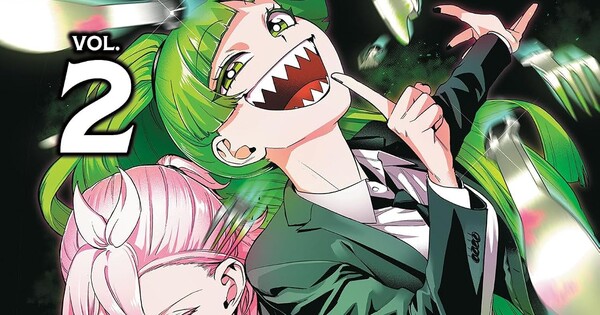
Welcome to Demon School! Iruma-kun: IruMafia Edition has certainly taken some dark turns for a series that started as “what if everyone wore suits?” Not that the suits aren’t still impressive – seriously, Azz looks good – but with these three volumes, the series really comes into its own. While there are still elements that are perhaps more fun if you’re already familiar with and a fan of Osamu Nishi‘s original, such as Balam as a back alley doctor, this has come into its own.
Largely that happens because of the expansion of the cast. These volumes bring us Asmodeus, Clara, Ameri, Balam, Robin, and a few other familiar faces, all with at least tenuous links to their original selves. Clara is the closest to the ram-horned demon girl we know and love; in Irumafia, she’s a circus performer, which suits her very well. But her backstory is grim: her family was their own circus group, but they were separated and sold off. Clara was bought and forced to perform night after night, living in a cage when she’s not on stage. She’s desperate to find her family, and has made herself little beanbags with their faces to keep her company. It’s horrifically tragic, and while Iruma can free her and vows to find the rest of the Valac clan (thus kicking off a black market auction and human trafficking plotline in volume four), this darkening of Clara’s backstory is intense.
It’s also par for the course for most of the characters. Asmodeus, who primarily goes by “Alice” in this series, possibly to differentiate from his normal self, has an equally difficult situation involving police corruption. By volume four, he has to do some major self-interrogation about what “justice” actually means and whether it matters who dispenses it and how. In an afterward, Nishi comments that she’s pretty sure original Azz would be horrified by his Irumafia character, and that’s probably true, but it also makes it clear that this is not just a reimagining of the original series. This is its own story, replete with violence, tragedy, and random use of Italian words.
That’s not a bad thing, for the record. Once you leave your regular Iruma-kun expectations at the door, there’s a lot to enjoy here. The plots are fast-paced, and even when they’re serious, like in the power struggle for control of the slums between Ameri’s street gang and the Babel Famiglia, there’s fun to be had. In this particular case, which occurs in volume three, Ameri’s gang (made up of the student council members from the original series) challenges Iruma, Alice, and Clara to a game of capture-the-flag-paintball. This is as madcap as you might expect while still adhering to the violence present in the rest of the story. Iruma’s solution to not wanting to actually shoot anyone (although he does carry a gun on the regular) is both ingenious and very recognizably Iruma…even if not everyone appreciates his approach.
Ameri is another highlight. The new story and setting allow her to be as badass as she possibly can, and it’s a good look on her. (So is her street punk aesthetic.) Her status as Iruma’s childhood friend who believes Sullivan kidnapped him gives her more leeway to express her feelings than she typically gives herself in the main series, and she’s also clearly the smartest woman in the room, even if her emotions sometimes run away with her. She and Clara form a surprisingly good team when things go down in volume four and serve as foils to Opera and Alice, who are either mad or very, very conflicted. The character dynamics are a highlight of this spinoff, and it is interesting to see how they play out – Kalego, for example, gets to be more overtly concerned with Iruma’s well-being, even if he’s still a grumpy fussbudget about it.
And of course there are the suits. hiroja isn’t as good at drawing the female characters, especially around the hips, but overall this looks very good, and not just in terms of Hot Alice. The art is very dynamic, which is particularly important for Clara, who’s always in motion, and the backgrounds are detailed with a firm sense of place. The settings are gritty but look like places where people actually live, except Sullivan’s huge, immaculate house – and that’s almost certainly on purpose.
Irumafia truly comes into its own with these volumes. New/old characters allow the plot to veer off into its own directions separate from the original, and although dark and filled with gun violence, it’s a story worth reading. Don’t go into this expecting more of what you’re used to, but for a very different take on some old friends, it’s a very interesting series.
>
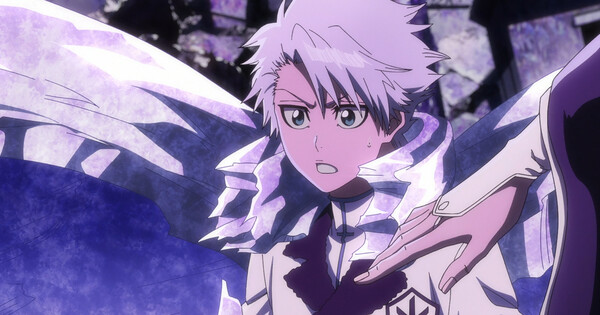

© 久保帯人/集英社・テレビ東京・dentsu・ぴえろ
When I was 12, all I wanted from my battle shonen anime was cool, hype moments. As I got older, I wanted more: A good story, characters I could root for, and if the whole thing had layers of metaphor to peel through to get to the messaging, all the better. But now, in my 30s, while the latter will make a battle shonen anime better to me every time, I’ve landed right back at, “If it at least has cool, hype moments, that means it’s doing its job, and that’s fine.” And while it’s not to say Bleach has nothing going on in the story and character departments, it’s very obvious where Thousand-Year Blood War is by far the most concerned: If I’ve said it once, I’ve said it a thousand times, and it’s spectacle. And episodes like this one really epitomize that.
This feels like the kind of episode that would’ve altered a generation’s brain chemistry if it had come out 20 years sooner. Imagine going back to the 2000s and telling Bleach fans that they were eventually going to be in for a fight involving Kenpachi, Byakuya, and Hitsugaya. Excellent idea on paper, but in practice? It could be a lot better—and certainly the three of them could synergize far, far better—but I’m not mad at the results. I wish Byakuya were doing more, but any time we get to see any of these three powerhouses fight is a treat. And new powers for Kenpachi and Hitsugaya? Yes, please.
Speaking of which, dear Haruhi. When I say, “If this episode had come out 20 years earlier it would’ve changed brain chemistries,” I’m also referring very much to grown-up Hitsugaya, who’s voiced in Japanese by Yūki Kaji (very curious if they’ll cast someone else in the dub, and if so, who it will be). I’ve never been the biggest Hitsugaya fan out there, but I’m no Hitsu-hater, either. And certainly I’ve been into Bleach long enough to know that especially once upon a time, this was a character with a veritable army of fans. The fujoshi, the fan artists—everyone would’ve had a field day with grown-up Hitsugaya if he were around during the height of Bleach‘s popularity. And rightfully so, to be clear; that his power does that to him very obviously feels arbitrary, and like it’s something Kubo added for fan service. And especially this late in the game, sure. Nothing wrong with that, and again, it really feeds into the spectacle of it all that this series has been all about.
You may have already guessed it, but to me, Kenpachi was the star of the episode. Always the unkillable badass, obviously he still has more tricks up his sleeve—although this one seems to have a bit more to it than his others do. It’s not even entirely clear whether or not Kenpachi himself seems fully aware of what he’s doing, though I lean toward believing that he has no idea what precise manner of thing is happening to him. I’m sure next week, or sometime otherwise soon, we’re in for a more detailed explanation. But in the meantime, I’m happy to sit back and enjoy the ride. Even just within Thousand-Year Blood War, Kenpachi has had some A+ fights, and this one, if it continues at its current pace, might join its ranks.
Again, I only wish Byakuya would do more. So far he’s just been sitting on the sidelines, doing little more than pretty minimal support such as encouraging Rukia and Renji to go help Ichigo. He’s not doing anything, but especially considering how much we know he’s capable of, one can’t help but want to scream, “JUST DO SOMETHING” at him every time he’s on screen.
In the midst of all this, we only barely got to see any of the developing fight between Ichigo and Yhwach. But that didn’t make me scream any less when the old music kicked in with Ichigo going Hollow-mode. Is the pacing for this fight very obviously being impeded by the series weirdly insisting on only drip-feeding it to us thus far? Yes. Is it frustrating? To a certain extent, also yes. And yet, I can’t deny that it gets me hype every time. Still, I’m definitely looking forward to after the series wraps up, and people edit the pieces of the fight together into one continuous fight, rather than the fragments we’ve been given.
Rating:
Bleach: Thousand-Year Blood War – The Calamity is currently streaming on
Hulu and Disney+.
The views and opinions expressed in this article are solely those of the author(s) and do not necessarily represent the views of Anime News Network, its employees, owners, or sponsors.
>
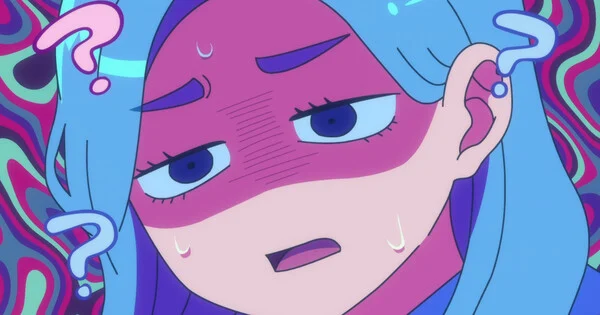

© Kocha Agasawa/SHUEISHA, You and I Are Polar Opposites Committee
It seems as though I might have spoken a little too soon about where we’re at with Azuma and Taira. With how last week’s episode ended, it seemed like Azuma had more or less come to terms with having feelings for Taira, but it’s not quite that simple. She is aware that what she’s starting to feel for him might be more than friendship, but she’s pretty deep in denial about her new crush, and most of the time we spend with her revolves around forcing herself to acknowledge it.
This does make a good deal of sense. Besides Azuma lacking any other close guy friends that could help in distinguishing if what she’s feeling is love, pretty much every other guy she’s gotten close to has done so with the intention of initiating a relationship, and she keeps allowing herself to slip into them for the sake of going with the flow. Being the one to have to make the first move is a new experience for her, and learning that makes it a lot easier to get behind the choice of her being the first one to realize there’s more going on between them. That choice also allows her to provide some high-quality silly faces this week, and considering that Azuma can sometimes be as overly self-serious as Taira is, seeing her spend half her screentime fretting over Taira acting as aloof as always without fully comprehending why is some of the funniest material she’s ever gotten. This reaches its peak when Taira is seemingly unfazed by the two of them being in separate classrooms for the new year, but Azuma perks up pretty quickly when it turns out that’s only because Taira’s been under the assumption that they’ll just keep hanging out when they walk home together. Azuma might be trying to convince herself there’s nothing there, but the happy skip she does home is pretty clearly that of a girl in love, and even this isn’t quite the direction I thought the show was going to go in with these two; if the jokes we get out of it can stay this strong, I’m more than happy to get behind it.
All that’s just the last third of the episode, and the first two provide much-needed downtime with our two official couples. Between them, it’s somehow Yamada and Nishi’s section that ends up being the fluffiest, but since we haven’t seen them do much as a couple up to now, it’s a good opportunity to see them on an actual date. Most of that aquarium date just revolves around Yamada trying to get himself used to saying Nishi’s first name while Nishi keeps worrying about how much fun Yamada’s having, and even though those hang-ups quickly work themselves out, it’s adorable to see just how out of sync they can be in wanting to make the other happy.
None of those anxieties are enough to keep them from having a good time, which is a bit more than can be said for Tani and Miyu this week. Their relationship is still going pretty strong, but with them becoming third-years and facing all the pressures of college entrance exams, they’re understandably worried about the possibility that it’ll force them to spend less time together. It’s not exactly the heaviest bit of relationship drama we could have gotten. Still, these are pretty realistic fears for the two of them to have at this point in their lives; it’s still nice to see the show dwell on them for a bit, and since Tani isn’t very outwardly emotional, the fact that he ends up mulling over this even more than Miyu does really indicates just how much this relationship means to him. It makes me wish we’d get moments between these two like this a little more often, but the fact that their dynamic remains largely uncomplicated is its biggest appeal, so it’s probably for the best that the show mostly keeps them where they are. At any rate, with how understandably Taira and Azuma focused the show has been recently, having an episode where all three pairings have something to do was a good little breather, and while I imagine that’s going to get a little rarer as we head into the home stretch, seeing them all used so well was a nice little refresher of just how many tones this series can juggle.
Rating:
You and I Are Polar Opposites Season 2 is currently streaming on
Crunchyroll.
The views and opinions expressed in this article are solely those of the author(s) and do not necessarily represent the views of Anime News Network, its employees, owners, or sponsors.
>

Fantastic Fest 2026 Lineup: ‘Resident Evil,’ ‘Carrie,’ and More

CAA Hires Sophie Crowther To Expand UK-Based Creators Team

How to watch White Sox vs. Cubs: TV channel and streaming options for August 18
-

 movies3 months ago
Search For Canadian TV Actor Stewart McLean Now Homicide Investigation
-

 Fashion9 years ago
These ’90s fashion trends are making a comeback in 2017
-
Fashion9 years ago
According to Dior Couture, this taboo fashion accessory is back
-
Fashion9 years ago
Model Jocelyn Chew’s Instagram is the best vacation you’ve ever had
-
Fashion9 years ago
Emily Ratajkowski channels back-to-school style
-
Fashion9 years ago
9 Celebrities who have spoken out about being photoshopped
-
Fashion9 years ago
Your comprehensive guide to this fall’s biggest trends
-
Fashion9 years ago
A photo diary of the nightlife scene from LA To Ibiza