
Sports
England v Pakistan: A huge challenge, but Joe Root can finish captaincy story

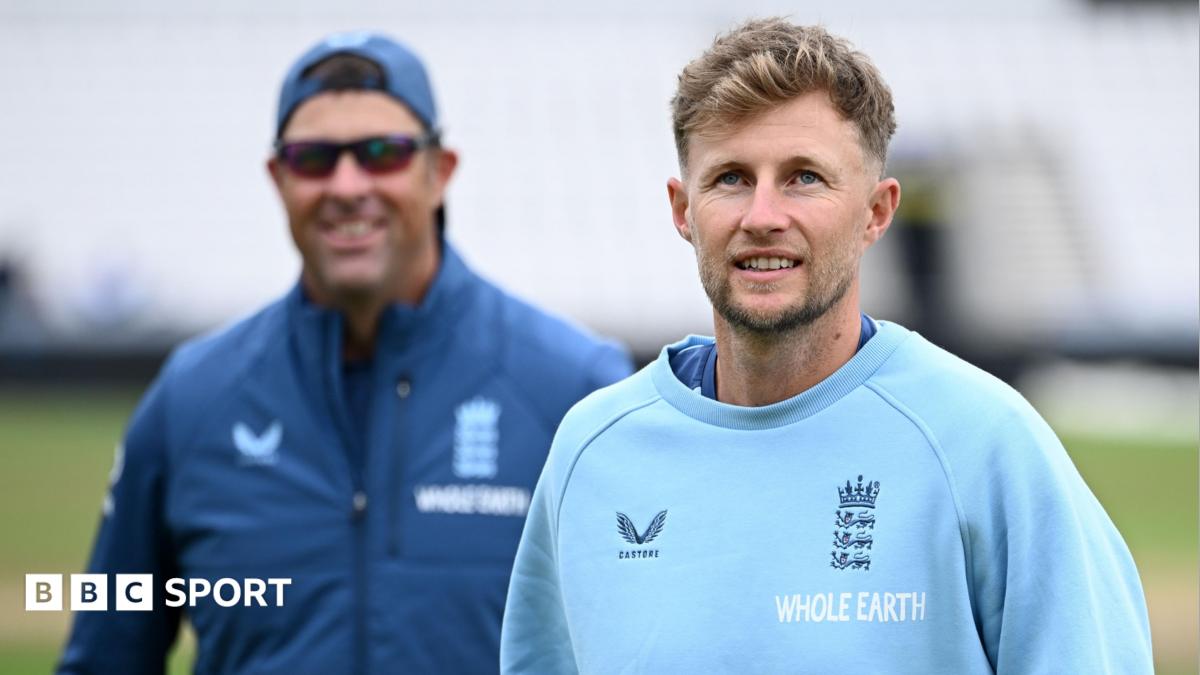
Covid destroyed Root’s team, and there are other reasons why Root might also feel he didn’t get a fair shake first time around. His tenure as captain coincided with a prioritisation of white-ball cricket and, when he stood in for Stokes against New Zealand in June, he admitted to some envy at not getting the chance to work alongside McCullum.
Not that everything went against Root. One could argue that, given the players at his disposal, he should have had a better record as captain.
Peak Stokes, England’s two greatest bowlers in James Anderson and Stuart Broad, plus the luxury of further all-rounders Chris Woakes and Moeen Ali. Root did not get to lead the best version of Alastair Cook, but the late-career Sir Chef would improve the current England team.
Root may feel he is better placed to captain England now, yet he is taking over if not a worse, then certainly a much more inexperienced team. Perhaps he will find this group easier to mould in his image. In his first Test as captain, in 2017, Root was the third-youngest player in the XI. In 2026, at the age of 35, he is comfortably the oldest.
For plenty of supporters the main worry will be the possibility of a detrimental effect the captaincy could have on Root’s batting, and it is true that his average with the armband – 46.7 – is some way off his stellar career mark of 53.3.
That discrepancy is mainly because of a poor run in the middle of his first stint as skipper. Root averaged 37 in 2019, the year before things started going wrong for England during Covid.
In 2021, mid-pandemic and with the team falling apart, Root racked up 1,708 runs – the most by any England batter in a calendar year. He later explained that batting, being in the middle, was the only time he got any peace.
Root remains England’s best player. Since the beginning of the Bazball era, he has scored almost 1,000 more Test runs than any other batter in the world. In the same period, he has moved second on the all-time list of run-scorers, with Sachin Tendulkar now in his sights.
Catchin’ Sachin is the sub-plot to Root’s second stint as captain, and he is adamant he can juggle the jobs of leadership and run-scoring.
His job as a leader will be to mould a group of players whose education in Test cricket was hampered by the informal approach of Stokes and McCullum. That point about Stokes not leaving the England squad in a better place than he found it? Root’s team have questions about an opener and wicketkeeper, a makeshift number three, no obvious all-round option and are without a world-class spinner.
England start as favourites against a Pakistan team that has not won a series in this country in 30 years and will be without their own captain in Leeds, the injured Babar Azam.
Pakistan have, however, played more Tests in July and August than England – a 1-1 draw against West Indies. In seamer Mohammad Abbas and spinner Sajid Khan, they have bowlers who have caused England trouble in the past. If the tourists can get enough runs, it will be a competitive series.
After this, it gets very difficult for England. The winter includes trips to South Africa and Bangladesh, and a one-off pink-ball shootout against Australia.
Speaking of the Aussies, they will surely be better than they showed in defeat by Bangladesh when they arrive for the Ashes next summer. After that, England go to India in early 2028. It all adds up to a devilishly difficult first 18 months of Root’s second tenure.
For all his runs, records, and milestones, perhaps rebuilding this England team in the face of the tasks ahead represents one of the greatest challenges of his storied career.
On top of that, Root has acknowledged the work his team have to do to rebuild their reputation with the public after a string of off-field misdemeanours. “Be good role models and good human beings,” he has said to his players.
They should look no further than their captain for an example, for Root is one of the best.
>
Sports
WAFCON showed no shortage of young talent. When signing players, clubs must ‘handle with care’

There’s something about a summer soccer tournament that feels like a love affair.
The 2026 Women’s Africa Cup of Nations was not perfect. It is still far too difficult to access the tournament outside Africa, and the overall quality and depth of its broadcast and commentary pale in comparison to those of its counterparts in Europe, North America and South America.
But there was still plenty to tug at the heartstrings at this WAFCON, beginning (or, rather, ending) with the final — a meeting between the lowest-ranked team in the tournament and one that didn’t even technically qualify. That seldom happens in modern football, where moments of wonder feel endangered by domineering datasets, bloated schedules, and injuries.
Cameroon scratched their names into history books on Sunday as just the fourth team to win WAFCON with their emphatic 3-0 victory over tournament debutants Malawi. Both teams, along with Morocco and Algeria, have earned automatic qualification to the 2027 Women’s World Cup by reaching the WAFCON semifinals.

Cameroon is just the fourth nation to lift the WAFCON trophy since 1998. (CAF)
This year’s WAFCON was heady with drama as unsuspecting protagonists humbled giants, fighting not only for Africa’s biggest prize but also for a ticket to Brazil. Along the way, as is often the case in an international tournament, stars were born. Cameroon’s Marie Ngah Manga, Malawi’s Faith Chinzimu, Morocco’s Sakina Ouzraoui and Algeria’s Inès Khiri will soon shine on an even bigger stage.
African footballers are well aware of the platform big tournaments like WAFCON provide: A standout performance can lead to recruitment to play professionally at bigger clubs abroad and support their families.
Temwa and Tabitha Chaŵinga of Malawi and Aïssata Traore of Mali embrace the responsibility of uplifting their younger national teammates toward the opportunities they’ve had. The desire to discover the “next Temwa” is understandable, even irresistible, but too often that mindset flattens a club’s perception of an African player to their detriment. And what about standout players from teams that didn’t qualify for the World Cup but left their mark nonetheless, such as 18-year-old N’Sira Safi Ouédraogo (Nordsjælland) and 24-year-old Inès Konan (Strasbourg) of Ivory Coast?
This tournament proves there is no shortage of talent in Africa and that it’s not just concentrated in traditional footballing nations such as Nigeria, South Africa, and Morocco. The places these young, budding African stars take their careers next could say a lot about where the future of women’s football lies.
In this week’s “Three Words,” a weekly column that takes key players, teams and moments in global women’s soccer and boils them down to three words, we get into why clubs looking to sign the stars of WAFCON must be prepared to handle them with the utmost care to ensure their sustainability.
Handle with care
As with most things involving Africa, there is a grave disparity between the breadth of talent and the scope of opportunity that limits the clubs available to African players who aren’t already playing in European leagues.
The Football Association (FA) in England is among the starkest examples of this. The federation admits international players to its leagues based on a government endorsement body (GBE) point system that takes into account the FIFA world ranking of the player’s national team, and the number of minutes a player has registered with their national team and in other top club competitions.

Cameroon’s national women’s football team won their first WAFCON, defeating Malawi 3-0 in the final. (Daniel Beloumou Olomo / AFP via Getty Images)
This scoring rubric is skewed, often devaluing African and Asian competitions while elevating European, North American and South American ones. Nigeria (36th) is the only African national team in the top 40 of FIFA’s world ranking.
That category is essentially the cutoff for easily earning the required number of points (24) for visa eligibility — and even then, the Women’s Super League was represented by only two players at WAFCON (both from Nigeria: Chiamaka Nnadozie of Brighton & Hove Albion and defender Rofiat Imuran of the London City Lionesses). Operators within women’s football in England have criticized the GBE system for this high threshold, arguing it discourages clubs from signing the exact kind of under-the-radar talent that inevitably emerges every WAFCON.
Compare this to France, which has found ways to continue benefiting from its colonial history across Africa and the Caribbean, even in football.
The Cotonou Agreement allows French leagues to recruit African players from former colonies without sacrificing international roster spots, paving the way for more open recruitment channels. This explains why a large subset of WAFCON players from francophone countries such as Algeria (ranked 74th in the world), Senegal (79th), and Mali (84th) play for French clubs. There’s also a higher likelihood of player retention due to the absence of a language barrier and access to a diasporic community to ease a player’s cultural transition between Abidjan or Algiers and Paris or Montpellier.
The National Women’s Soccer League doesn’t impose restrictions on overseas players beyond the number of spots each team is allotted, but that doesn’t necessarily mean clubs are equipped with the resources or cultural knowledge needed to nurture and retain African players.
Results have been mixed over the past few seasons.

Kansas City Current forward Temwa Chaŵinga and Orlando Pride striker Barbra Banda have starred in the NWSL. (Dustin Markland / NWSL via Getty Images)
Temwa Chaŵinga and Barba Banda have taken the NWSL by storm in their first years in the league, with Chaŵinga being a two-time and reigning Golden Boot and MVP winner with the Kansas City Current, and Banda earning 2024 NWSL Championship MVP honors with the Orlando Pride and currently leading this year’s Golden Boot race.
Those kinds of accolades from players hailing from relatively small African countries would naturally inspire an interest in bringing more players of their ilk into the league, but that hasn’t always worked out.
The Current recently signed two other African players — Kenyan midfielder Mwanalima Jereko of Kenya and Flora Marta Lacho of Angola — who have since been loaned to HB Køge in Denmark, a club that, like the Current, is owned by Angie and Chris Long. (Jereko signed a permanent contract with the Danish club last November and also featured in this WAFCON with Kenya.)
Ghanaian midfielder Stella Nyamekye had a standout performance at the 2025 WAFCON, generating even more excitement about the possibilities that awaited her with Gotham FC, who signed the then-19-year-old in December 2024.
The club instead sent Nyamekye on two separate loan spells to Fort Lauderdale United in the USL Super League before transferring her to Brann in Norway in March. Nyamekye’s Ghana teammate Princess Marfo experienced a similar back-and-forth when she left Nordsjælland and signed for Bay FC’s expansion year in January 2024, and returned to the Norwegian club two years later after making just nine NWSL appearances with Bay.
Marfo recently signed with PSV in the Netherlands, and Ghana, ranked 60th in the world, are still fighting for World Cup qualification. They, along with South Africa (ranked 57th), will compete in the FIFA inter-confederation playoffs later this year. Bay still has Zambian striker Rachael Kundananji on its roster, but has also lost Nigerian striker Asisat Oshoala since signing her from Barcelona in 2024.
And then there is the Washington Spirit. Including its new signings, the D.C. club boasted by far the most representation at WAFCON, with six players representing three countries: Rosemonde Kouassi of Ivory Coast, Deborah Abiodun and Gift Monday of Nigeria, Mélissa Bethi of Algeria, Alimata Bélem of Burkina Faso and newly crowned African champion Monique Ngock of Cameroon.

Monique Ngock won the 2026 WAFCON final with Cameroon and will next join the Washington Spirit in the NWSL. (Buda Mendes / FIFA via Getty Images)
Except for Abiodun, whom the Spirit signed from the University of Pittsburgh, all other players came from European clubs. Their paths have been different — Abiodun was loaned to Dallas Trinity in the USL Super League, and Bélem will remain on loan to Eibar in Spain until the end of the year — but the club has set a high standard in how it recruits and retains African players from different regions of the continent. Spirit’s president of soccer operations, Haley Carter, oversaw many of the aforementioned players’ signings as well as Banda’s with the Pride when she was the team’s general manager in 2024.
It is no longer sufficient to consider women’s football in Africa as an emerging market.
The 2023 World Cup was a warning shot when Nigeria, South Africa, and Morocco all made history by reaching the knockout stage for the first time. If this WAFCON offers any indication, occurrences like that will soon become the norm in global tournaments.
African players will continue to climb up the Ballon d’Or nomination list until they are impossible to overlook. The question has never been about whether talent exists on the continent, but whether the systems that control the growth of the women’s game are willing to create space for it to truly thrive.
>
The Athletic has launched a Cricket WhatsApp Channel. Click here to join.
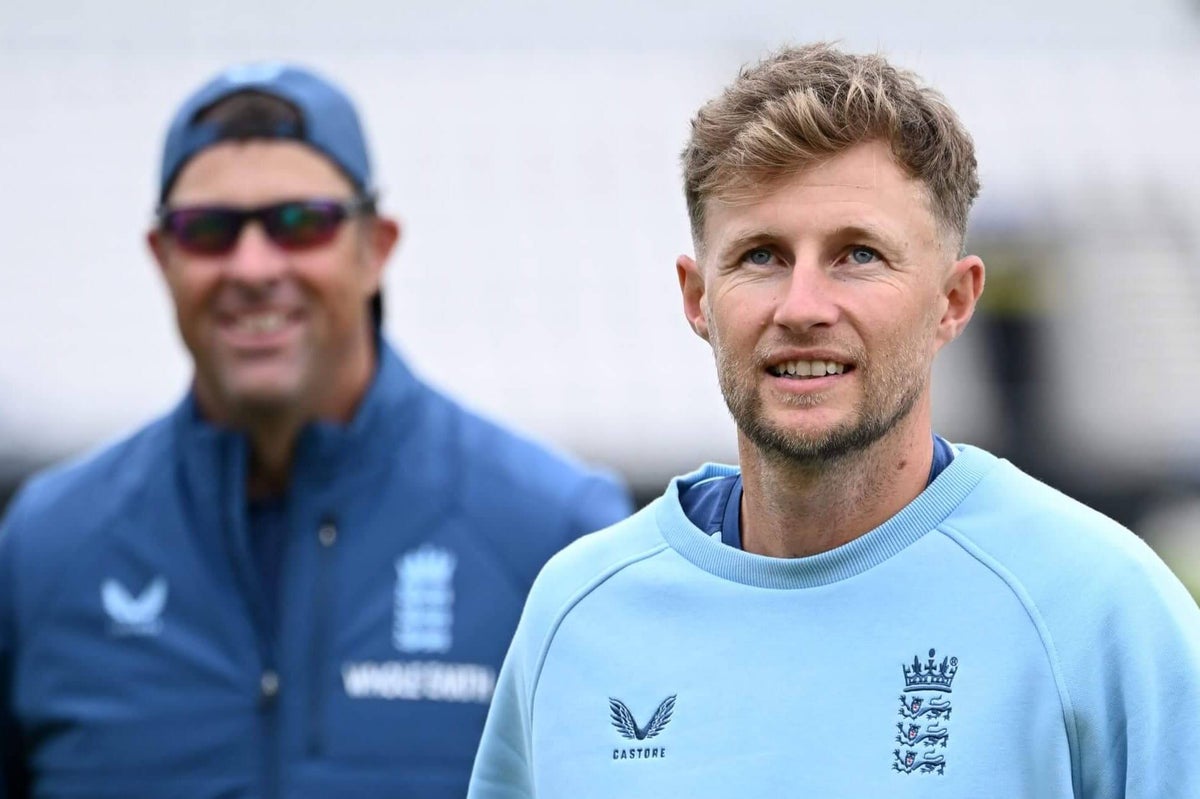
So, do England have a new captain or will it be the same Joe Root? The one who won more Tests than any man to have led England in his first spell in charge, but also lost more than anyone else?
Will England’s greatest Test batter be a more imaginative, proactive captain when he leads his side out against Pakistan on Wednesday, or the same uninspiring leader who won one of his last 17 Tests in charge before Ben Stokes took over in 2022, charged with revitalising the side?
These are the questions hanging over Root and England at Headingley as they start all over again six weeks after Stokes’ own stint as captain came to as surreal and bonkers an end as anything their traditionally mercurial opponents Pakistan can ever have mustered.
Few captains have been handed a second chance to do things differently, as Root has now by England in the absence of any feasible alternative candidate — other than a white-ball captain in Harry Brook just too busy and perhaps too immature to do the job yet.
The issue now is whether Root can grasp that opportunity and arrest the decline of an England side who saw Stokes retire mid-match in the last Test against New Zealand, then sacked their coach, Brendon McCullum, on the back of seven defeats in their last 10 Tests. In that context, they cannot afford to slip up against Pakistan.

Joe Root is starting his second stint as England captain (Gareth Copley/Getty Images)
The good news for England is that Root does look genuinely enthused and energised by his return to a job he suggested was bad for his health towards the end of his first spell in charge. He does not appear to be reluctantly stepping in now simply out of a sense of duty.
“The landscape’s very different and I’m a very different player and person than when I first took over as captain,” Root told reporters at his home ground on Tuesday. “I’m in a very fortunate and unique position where I’ve got 60-odd games to look back on as captain, and there are things I might want to change and do slightly differently.
“I’ve had time to step away, play in a different environment with a different coach and captain, and see the game through a different lens. Now I can think about the best way to take this team forward.
“In many ways I feel as ready as any England captain there’s ever been, and to have that amount of experience is invaluable. It’s a completely different set of circumstances now and I’m very much looking forward to it.”
It is worth remembering the difficult hand Root was dealt when he took over from Alastair Cook early in 2017. He has talked about the unique challenges presented by being in charge of England during the Covid-19 pandemic, but that was only half the story.
Root would never say anything negative about his good friend Stokes, but there is no question the former captain’s arrest in Bristol — he was subsequently found not guilty of affray — and resultant absence from the Ashes in Australia in 2017-18 cast a long shadow over England and their then fledgling captain.
Then Root faced the unprecedented situation of England prioritising white-ball cricket in the build-up to the 2019 World Cup, a tournament won by a team overseen by Eoin Morgan, while the Test side had to settle for second best. By the time Covid had left Root’s captaincy all but broken, it was no real surprise he refused even to attempt chasing a target of 273 runs in 73 overs set by New Zealand at Lord’s in 2021.
He jumped a year later just before he was pushed.
Root was again dealt a bad hand when he had to step in for the second Test against New Zealand at the Oval earlier this summer after another drinking incident involving Stokes led to him becoming the first England captain effectively suspended for a match.
Even so, there were slightly worrying signs that Root still does not have the instinctive feel for leadership that came so naturally to Stokes. Not least when he gave Jofra Archer a demanding eight-over spell on the first evening and then ignored his spearhead the next morning when England were desperate for wickets.
Root may have been acting on medical advice with Archer playing his first red-ball game after returning from the Indian Premier League (IPL), but it did conjure memories of the captain’s mishandling of his most explosive fast bowler when he burst onto the scene in 2019, not least when Archer bowled 42 overs in an innings against New Zealand in Mount Maunganui that winter.
Archer has been quietly having a very impressive summer for England. He was named their player of the series against New Zealand and then thrived in the white-ball matches against India. How Root handles him now will be integral to England’s chances in three Tests they really should win against a Pakistan side without a series victory in England in 30 years.

Joe Root will have to deal differently with Jofra Archer this time round (Glyn Kirk/AFP via Getty Images)
Pakistan’s status as firm underdogs was increased with the news that captain Babar Azam has failed to recover from the finger injury suffered in the Caribbean earlier this year and exacerbated in their warm-up game at Beckenham last week.
In the absence of the biggest star in Pakistan cricket, the T20 captain Salman Agha will take over. At least coach Sarfaraz Ahmed said at Headingley on Tuesday that there was no break to Babar’s finger and he is hopeful of being fit for the second Test at Lord’s next week.
Pakistan have arrived in England on the back of a credible 1-1 draw against West Indies and England cannot underestimate an attack led by the highly experienced figure of Mohammed Abbas, who has almost 1,000 first-class wickets to his name.
Abbas is a far cry from the great Pakistan fast bowlers like Imran Khan, Wasim Akram, Waqar Younis and Shoaib Akhtar, but he operates in the late 70mph mark that, with the keeper standing up, has proved such a problem in recent times for England. Not least for Root who, with Tom Blundell invariably hovering just behind him, averaged just 28 in the 2-1 defeat by New Zealand. He must now prove that the captaincy will not be a further hindrance to his batting.

Mohammad Abbas will pose a threat to England’s batters (Gareth Copley/Getty Images)
Root, who averages 46 as captain as opposed to 53 without it, needs a further 1,808 runs to overtake Sachin Tendulkar and become the most prolific run scorer in Test history.
“I have 160 Test matches’ worth of experience and an understanding of my game,” Root added at Headingley. “The first year of my last tenure as captain was probably the best I’ve ever batted and I found a really good way of combining the captaincy with my batting then. I look at the game very differently now and I’ve no concerns over that being an issue.”
Root, who said he has been speaking to new coach-in-waiting Stephen Fleming “almost every day” in the build-up to this series, plans to field at mid-off rather than in the slips where he will be able to communicate with an attack led by Archer.
Whether Josh Tongue and Gus Atkinson join him despite playing in the final of the Hundred only on Sunday remains to be seen with England deciding to wait until the toss on Wednesday before naming their side. It is almost as if they are heading back to the pre-central contract days when they had no real control over their players — at least for the three and a half weeks in August when the Hundred holds sway.
But Root cannot have asked for better opponents for his second coming and it would be a huge surprise if England do not win this series comfortably.
Then perhaps they can start planning in earnest for one last crack at the Ashes next year for their born-again captain.
>

Last month, Chelsea were fined £10m and given a suspended ban from registering new players for two transfer windows for breaching rules relating to payments to agents between 2009 and 2022.
However, the club have had a six-point deduction, which was suspended until 30 June 2027, “set aside” on appeal.
Chelsea admitted making £47m in secret payments to unregistered agents and third-parties over transfers between 2011 and 2018.
Owners Todd Boehly and Clearlake Capital self-reported 74 breaches of Football Association rules when they purchased the club in 2022.
The punishment received some criticism for being too lenient, particularly when Everton and Nottingham Forest both received points deductions in 2024 for PSR.
“In the situation with Chelsea, obviously it’s historic. It’s very different to PSR cases,” Masters said.
“In the case of Chelsea, the new owners came forward with all the information, and we decided to enter a sanction agreement.
“That sanction agreement was was overseen by a commission as well, and part of the role of the commission is to assure that that sanction is not unduly lenient.
“I think the key difference is, given the evidence base and given the lack of witnesses, none of the people involved with these payments are still at the club, we not able to interview them, the evidence base isn’t complete.
“The alternative to entering the sanction agreement was to go down a contested commission route. I’m not sure we’d have been able to bring all of the charges that the club ultimately admitted to, or be successful in getting them, so I don’t think there was an easy choice for the board to make.
“We took a decision that the sanction agreement was the best thing for the league, and we’re fully aware that not everyone agrees that that was the right course of action, and we just have to accept that.”
>

FCC Slams ABC for ‘Ongoing Disinformation Campaign’ Amid Lawsuit

Ken Kao’s Waypoint Strikes First-Look With Watch This Ready

England v Pakistan: A huge challenge, but Joe Root can finish captaincy story
-

 movies3 months ago
Search For Canadian TV Actor Stewart McLean Now Homicide Investigation
-

 Fashion9 years ago
These ’90s fashion trends are making a comeback in 2017
-
Fashion9 years ago
According to Dior Couture, this taboo fashion accessory is back
-
Fashion9 years ago
Model Jocelyn Chew’s Instagram is the best vacation you’ve ever had
-
Fashion9 years ago
Emily Ratajkowski channels back-to-school style
-
Fashion9 years ago
9 Celebrities who have spoken out about being photoshopped
-
Fashion9 years ago
Your comprehensive guide to this fall’s biggest trends
-
Fashion9 years ago
A photo diary of the nightlife scene from LA To Ibiza