
Tech
Perplexity’s free AI offer left it with millions more users in India

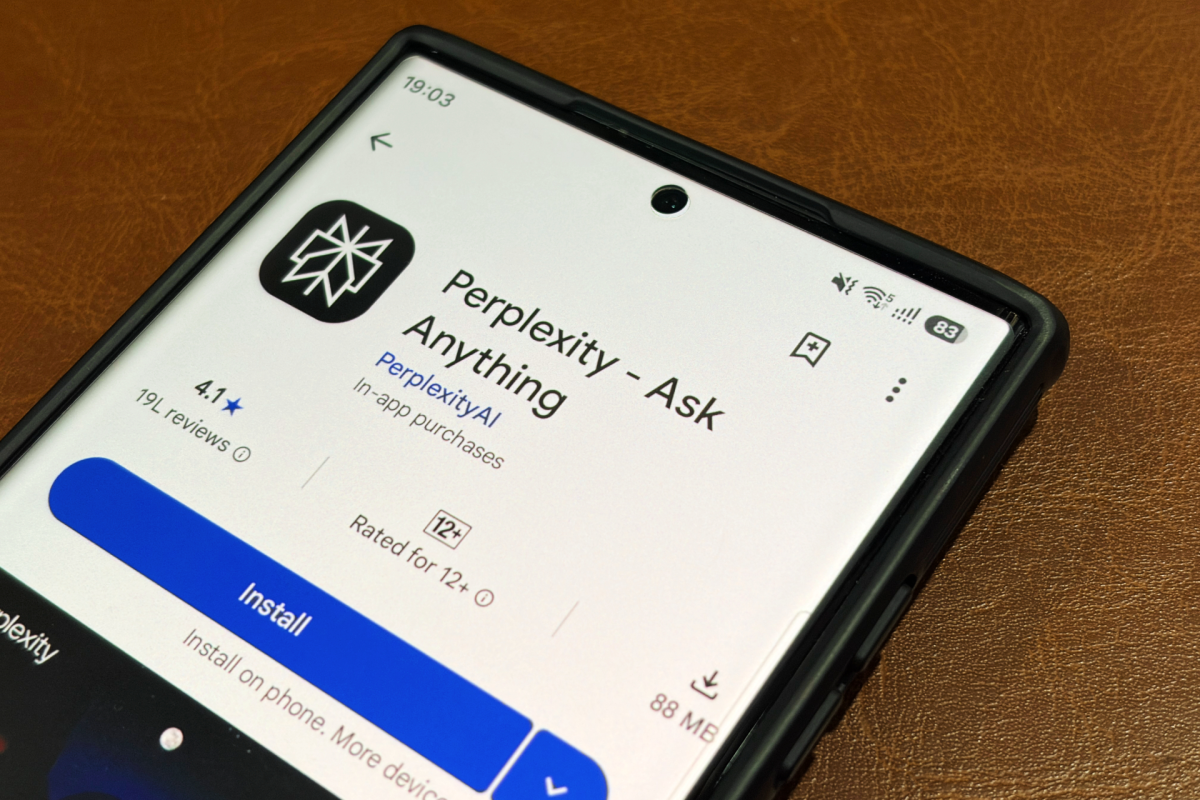
Perplexity spent the past year running one of the biggest AI growth experiments, giving its premium service away to customers of Indian telecom giant Airtel. Now, as the earliest of those free subscriptions expire, the results are starting to emerge, offering an early test of whether bundling paid AI services can create lasting users and revenue after the giveaway ends.
In July 2025, Perplexity partnered with Airtel, India’s second biggest telecom operator, to offer a free 12-month Perplexity Pro subscription, normally worth about $200, to the Indian carrier’s 360 million customers. New redemptions ended on January 16. However, because subscribers retained Pro for a year from activation, the earliest users began reaching the end of their free access last month and had to opt out of auto-renewal if they did not want to be charged.
Perplexity’s AI giveaway had an immediate impact, as it saw 5.9 million app downloads in India in July 2025, according to data Sensor Tower shared with TechCrunch. That was up 625% from the previous month and more downloads in a single month than the 5.4 million Perplexity had accumulated during the entire first half of the year.
This momentum was not limited to the launch month of the Perplexity offer but persisted well beyond it. Perplexity recorded 56 million downloads during the seven months that the offer was available to new users, more than nine times the preceding seven-month period, Sensor Tower estimated. Monthly active users more than doubled to 8.9 million in July and eventually peaked at 22 million in October.

India has long been a massive market for downloads for global technology companies, thanks to its vast population, more than a billion internet subscribers, and relatively low mobile data costs. The country is the world’s second-largest smartphone market after China — with over 700 million users — and has similarly emerged as a major source of users for generative AI services. That scale has, however, proved considerably harder to translate into revenue.
Specifically for AI companies willing to subsidize access in pursuit of scale, India’s market dynamics have made it an attractive testing ground. Anthropic, Google, OpenAI, and others have increasingly chased Indian consumers with India-specific, lower-cost plans, free access, and distribution partnerships, aiming to eventually translate them into paying customers.
However, once the window to claim the free Airtel subscription closed in January, Perplexity’s downloads fell sharply. Sensor Tower estimates Perplexity was downloaded 3.3 million times in India between February and July, down more than 90% from the preceding six months.
What came after the download boom?
The users Perplexity had acquired did not disappear quite so quickly. Monthly active users, which peaked at about 22 million in October, stood at nearly 14 million in July — down 37% from that high but still more than five times the about 2.6 million monthly users Perplexity averaged in the first half of 2025, per Sensor Tower.
“While the time-sensitive nature of this promotion would naturally lead to a decline in adoption after the offer period, ongoing usage has remained resilient,” Abe Yousef, senior insights analyst at Sensor Tower, told TechCrunch. Perplexity, he added, has “significantly more users” in India than it did in the six months before the promotion.

More strikingly, Perplexity’s drop in downloads has not been accompanied by a decline in spending. Sensor Tower estimates that Perplexity’s in-app purchase and subscription revenue in India between February and mid-August rose about 60% from the period when the Airtel offer was available to new users, despite downloads declined.
That trend has continued even as the earliest Airtel subscribers have started losing their free Perplexity Pro access. From around July 18 through August 12, Perplexity’s average daily in-app purchase revenue in India, per Sensor Tower, was 9% higher than during the preceding 30 days and 27% above the average for the first half of 2026.
The increase gives us an early indication that some users may be willing to pay after getting accustomed to the premium service for free. But of course, it does not confirm that Airtel users themselves are deliberately converting into paying subscribers.
The free subscriptions were set to auto-renew, requiring users who did not want to continue to cancel their service before the renewal date to avoid being charged. This makes it possible that some of the increase reflects users who did not cancel in time rather than those who actively chose to pay. Sensor Tower cannot distinguish between those scenarios or separate former Airtel subscribers from other paying customers.
Appfigures, another app intelligence firm, also found that the Airtel deal dramatically changed Perplexity’s trajectory in India. The data Appfigures shared with TechCrunch indicates the initial growth was specific to Perplexity rather than simply reflecting growing appetite for AI apps overall.
“I compared Perplexity’s downloads to ChatGPT and Claude to ensure it wasn’t more appetite for AI, and it wasn’t,” Appfigures co-founder and CEO Ariel Michaeli told TechCrunch.
In the week before the Airtel offer launched, Perplexity averaged about 11,200 downloads a day in India, per Appfigures. That jumped twentyfold to nearly 223,000 a day during the first week of the offer’s launch and continued climbing, hitting an average of about 305,000 a day between mid-September and mid-October. To compare, downloads of OpenAI’s ChatGPT and Anthropic’s Claude remained broadly stable.
Appfigures also sees signals that Perplexity emerged from the giveaway with a bigger business in India, even though the promotional download boom disappeared. Perplexity’s monthly net mobile revenue in the country, per Appfigures, grew from about $34,000 in January 2025 to $70,000 in December and reached $156,000 in July 2026. The AI company generated an estimated $878,000 in India in the first seven months of 2026, up 16% from all of 2025.
Michaeli cautioned against attributing all of that growth to Airtel users becoming paying customers. The enormous visibility generated by the promotion, he noted, may also have attracted paying users who were never part of the giveaway.
Perplexity’s experiment has since become part of a much broader wager by AI companies in India. In August 2025, OpenAI made its lower-priced ChatGPT Go plan free for a year in the country. Google also followed Perplexity with a deal to offer its AI Pro subscription free for 18 months to eligible Reliance Jio users.
That makes Perplexity an early test of whether the strategy can work. Its Airtel deal began months before the similar moves by OpenAI and Google. This also means that Perplexity users are among the first large cohort in India to reach the point where free premium AI turns into a product they may have to pay for.
India has already emerged as the world’s largest market for generative AI app downloads but remains difficult to monetize. AI companies have been willing to trade near-term revenue for users in this price-conscious market, striving to eventually turn that scale and habit into paying customers.
That said, the data cannot yet show how many of Perplexity’s newly acquired users will willingly pay once their free year runs out. That test will play out over the coming months as later cohorts of Airtel users reach their renewal dates.
Perplexity did not respond to a request for comment.
When you purchase through links in our articles, we may earn a small commission. This doesn’t affect our editorial independence.
>
America wants more robots built at home. The problem is that many of the parts U.S. startups need to build them still come from overseas.
The Federal Communications Commission has added certain foreign-made advanced robotic devices to its Covered List as Washington raises national-security concerns around connected robotics. The move could create new hurdles for U.S. startups that rely on foreign components for prototyping and production.
That creates an uncomfortable trade-off: policies designed to strengthen America’s robotics industry could make it harder for some of its youngest robotics companies to compete.
The restrictions came with requirements, though, with Rest of World noting that a robot must be assembled in the U.S. with at least 65% of its components made in the U.S.
That’s exactly where the catch is, as 65% can be especially difficult for startups operating with limited capital and supplier options. At the moment, China is likely to be among the countries most affected, given its dominant role in robotics manufacturing and the broader pattern of U.S. technology restrictions targeting Chinese suppliers.
Why startups could feel the impact most
The same policy that could give U.S. robotics companies more protection from foreign competition may also raise the cost of getting a new robotics company off the ground.
Startups typically have less capital, fewer supplier relationships, and less manufacturing flexibility than established companies. Replacing foreign components can therefore mean higher costs, longer lead times, hardware redesigns, and slower prototyping.
Rest of World founders raised similar concerns.
Elizabeth Williams, founder of cosmetics-robotics startup Gemma, said it would have been impossible to prototype her company’s robots in the U.S. at the same pace. At the same time, Michael Perry of Persona AI argued that Washington needs to “provide the carrot as well as the stick” by building the domestic suppliers startups are being asked to use.
That concern echoes the argument made by nearly 200 U.S. startups that recently opposed broad restrictions on Chinese open-weight AI models.
Their case was not that Chinese technology should remain unrestricted, but that smaller companies often need access to affordable, capable tools because they cannot match the resources of the largest U.S. technology companies. Cutting off those options too early could raise costs and concentrate more power among better-funded firms.
An unintended opportunity
Rest of World cited several ways the U.S. could ease the pressure on startups while still reducing its reliance on Chinese robotics.
Per Kyle Chan, a fellow at the Brookings Institution, a more gradual use of tariffs would give American manufacturers time to catch up rather than immediately cutting off foreign supply.
There is also a case for investing more in the companies that make the parts themselves. More U.S. R&D, manufacturing incentives and demand could help create suppliers for motors, actuators, sensors and other components that startups currently struggle to source domestically.
And that may be the more interesting consequence for startups. If Washington succeeds in pushing robotics production to the U.S., it could create an entirely new market for startups that do not build robots at all but instead supply the components American robotics companies need to build them.
Other News: Apple reportedly developed a China-specific AI model with Alibaba’s help as it prepares to bring Apple Intelligence to the country.
>

Google has released Android 17 QPR2 Beta 3 for eligible Pixel devices, with the update bringing a broader set of changes than the previous beta.
The biggest visible addition is a new Quick Settings layout editor. Users can rearrange key sections of the panel, including the brightness slider, Quick Settings tiles and media controls. That means people can move frequently used controls to positions that better fit how they use their phones.
Google is also expanding Android’s theming options. Users can fine-tune the system color with a slider and choose from four styles: Neutral, Soft, Bright and Bold. The update adds more blur effects to the lock screen, including the notification area, shortcuts and fingerprint interface. Foldable users also get improvements to windowed apps, including an app handle for moving between windowed and full-screen modes.
Google targets call-forwarding scams
The most consequential change may be the security update around call forwarding.
Google says Android 17 now analyzes call-forwarding USSD codes, including codes such as 21, when apps attempt to run them through the TelephonyManager.sendUssdRequest() API. Standard apps will no longer be able to execute these call-forwarding codes in the background using only the CALL_PHONE permission. Blocked attempts will return a USSD_ERROR_NOT_ALLOWED callback.
Android will also show an operating system-level confirmation when users manually enter call-forwarding codes through the system dialer. Google says the change is intended to counter social-engineering scams that trick people into activating call forwarding. Other USSD functions, including mobile-money transfers and account checks, are not affected.
More Google coverage
Cellular security gets a bigger upgrade
Android Authority identified broader additions to Android’s Mobile Network Security feature. The beta includes a timestamped SIM security timeline that records modem-detected events, including when a cellular network accesses device identifiers such as the IMEI or IMSI. Users with multiple active SIMs can filter the events by SIM.
The update also exposes encryption cipher information for cellular connections. Strings found in the beta suggest Google is preparing warnings for threats including downgrade, denial-of-service, jamming and location-tracking attacks, although features discovered in an APK teardown may change or never reach a public release.
QPR2 Beta 3 suggests Google is using its quarterly releases for more than cosmetic experimentation. The combination of deeper customization and protections against telecom fraud points toward an Android experience that gives users more control while quietly putting tighter limits on risky background behavior.
The beta is available to enrolled users with a Pixel 6a or newer supported Pixel device. Google is distributing build CP41.260731.005.A2 to the Pixel 6a, Pixel 7 series, Pixel 7a, Pixel Fold and Pixel Tablet, while newer eligible models receive build CP41.260731.005.B1.
Read more: Google’s call-forwarding protections are part of a wider security push targeting Android scams, theft, spyware and malicious apps.
>
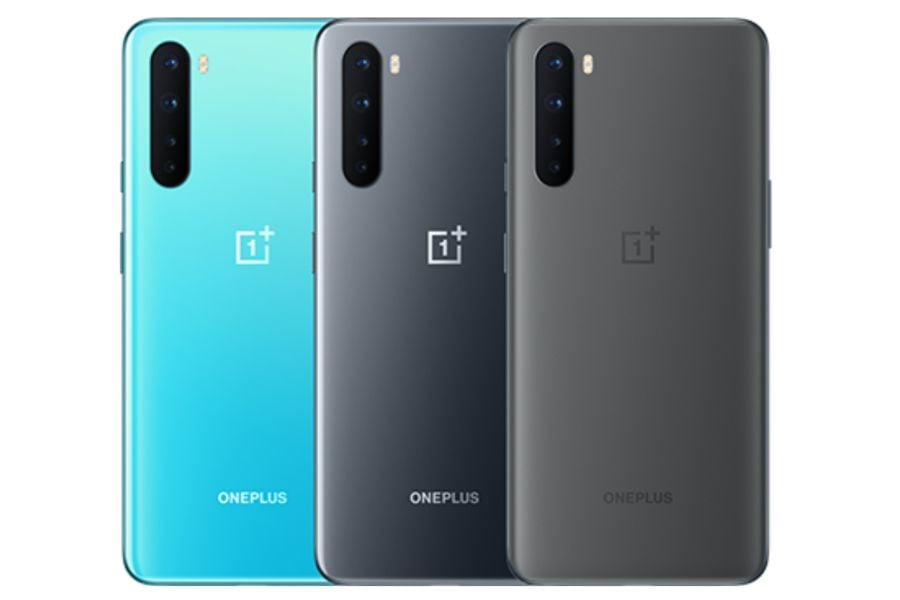
OnePlus shoppers in India just got another reason to check the price tag twice.
Prices have reportedly risen by ₹1,000 to ₹4,000, or roughly $10 to $42, across five models: the Nord 6, Nord CE6, Nord CE6 Lite, N6, and N6x. Several of the phones are still relatively new, meaning buyers are facing higher prices only weeks or months after launch.
Increases of roughly 4% to 13% can put a phone against an entirely different set of rivals. Various OnePlus models have now crossed into that territory.
Updated prices move several models into new brackets
| OnePlus N6x | 4GB + 64GB | ₹19,999 | ₹20,999 | ₹1,000 |
| OnePlus N6x | 4GB + 128GB | ₹20,999 | ₹22,999 | ₹2,000 |
| OnePlus N6 | 4GB + 128GB | ₹22,999 | ₹24,999 | ₹2,000 |
| OnePlus N6 | 6GB + 128GB | ₹24,999 | ₹26,999 | ₹2,000 |
| OnePlus Nord CE6 Lite | 8GB + 128GB | ₹27,999 | ₹30,999 | ₹3,000 |
| OnePlus Nord CE6 Lite | 8GB + 256GB | ₹30,999 | ₹34,999 | ₹4,000 |
| OnePlus Nord CE6 | 8GB + 128GB | ₹35,999 | ₹37,999 | ₹2,000 |
| OnePlus Nord CE6 | 8GB + 256GB | ₹39,999 | ₹41,999 | ₹2,000 |
| OnePlus Nord 6 | 8GB + 256GB | ₹44,999 | ₹46,999 | ₹2,000 |
| OnePlus Nord 6 | 12GB + 256GB | ₹50,999 | ₹52,999 | ₹2,000 |
| Source: 91mobiles | ||||
For scale, ₹20,000 is roughly $210, while the largest ₹4,000 increase is about $42.
Nord CE6 Lite takes the biggest hit, with its 8GB and 256GB version rising ₹4,000. Its 8GB and 128GB model now sits above ₹30,000. The Nord CE6 8GB and 256GB version, on the other hand, moves past ₹40,000.
OnePlus just launched the N6x on July 31 with a ₹18,999 starting price and compared it with phones in India’s ₹15,000 to ₹20,000 segment. Latest reporting uses ₹19,999 as the previous price for that configuration and ₹20,999 as the revised price, making the entry model ₹2,000 more than its launch price.
Nord 6 has reached further across several increases, with its ₹38,999 and ₹41,999 launch configurations now reported at ₹46,999 and ₹52,999.
Checkout totals may be lower for eligible shoppers. OnePlus lists instant bank discounts across the affected phones during August, depending on the model and payment method.
Memory costs are squeezing cheaper phones
RAM has become considerably more expensive for phone manufacturers. TrendForce estimated that contract prices for LPDDR4X mobile memory jumped at least 70% to 75% quarter over quarter in the second quarter of 2026, while LPDDR5X jumped by an estimated 78% to 83%.
AI server demand is tightening supply as memory producers devote more capacity to higher-end products. Similar conditions are contributing to higher smartphone prices and putting cheaper Android phones under added cost pressure.
Manufacturers can also respond by offering less memory in lower-priced devices. TrendForce says entry-level smartphones are settling around 4GB of RAM, while 8GB is becoming common in mid-range models. Similar RAM and storage constraints are influencing Android hardware decisions across 2026.
OnePlus has not linked the latest price hikes directly to memory costs, though both are happening amid a steep rise in mobile DRAM prices.
Mobility must-reads
Buyers should compare the phones all over again
Rebuild your shortlist if an affected phone now crosses the amount you planned to spend. Compare the N6x at ₹20,999 with other strong options around ₹21,000, and apply the same test to the Nord CE6 Lite above ₹30,000 and the Nord CE6 above ₹40,000.
Paying more does not add RAM, storage, battery capacity, or performance to the phone you were already considering.
Use the checkout price you can actually claim when comparing models. An instant bank discount can narrow the difference, but an advertised offer should not influence your decision if your card or payment method is not eligible. Waiting for a sale can be worth considering if your current phone still works and the new price no longer fits your budget.
If you need a replacement now, compare the entire price band instead of staying within OnePlus. Continued memory constraints across smartphones also mean waiting does not guarantee that future phones at the same price will offer more RAM or storage.
More News: OnePlus 16 leaks suggest a huge 9,000mAh battery alongside a 200MP camera, 185Hz display, and new Snapdragon chip.
>

Kevin Bacon, Kyra Sedgwick’s ‘Family Movie’ Gets Spring Release

Texans WR Jayden Higgins out for season with torn ACL: Source

The FCC’s Restriction on Foreign Robots Creates Difficult Situation for America’s Startups
-

 movies3 months ago
Search For Canadian TV Actor Stewart McLean Now Homicide Investigation
-

 Fashion9 years ago
These ’90s fashion trends are making a comeback in 2017
-
Fashion9 years ago
According to Dior Couture, this taboo fashion accessory is back
-
Fashion9 years ago
Model Jocelyn Chew’s Instagram is the best vacation you’ve ever had
-
Fashion9 years ago
Emily Ratajkowski channels back-to-school style
-
Fashion9 years ago
9 Celebrities who have spoken out about being photoshopped
-
Fashion9 years ago
Your comprehensive guide to this fall’s biggest trends
-
Fashion9 years ago
A photo diary of the nightlife scene from LA To Ibiza