
Tech
Android 17 QPR2 Beta 3 Adds New Scam Protections


Google has released Android 17 QPR2 Beta 3 for eligible Pixel devices, with the update bringing a broader set of changes than the previous beta.
The biggest visible addition is a new Quick Settings layout editor. Users can rearrange key sections of the panel, including the brightness slider, Quick Settings tiles and media controls. That means people can move frequently used controls to positions that better fit how they use their phones.
Google is also expanding Android’s theming options. Users can fine-tune the system color with a slider and choose from four styles: Neutral, Soft, Bright and Bold. The update adds more blur effects to the lock screen, including the notification area, shortcuts and fingerprint interface. Foldable users also get improvements to windowed apps, including an app handle for moving between windowed and full-screen modes.
Google targets call-forwarding scams
The most consequential change may be the security update around call forwarding.
Google says Android 17 now analyzes call-forwarding USSD codes, including codes such as 21, when apps attempt to run them through the TelephonyManager.sendUssdRequest() API. Standard apps will no longer be able to execute these call-forwarding codes in the background using only the CALL_PHONE permission. Blocked attempts will return a USSD_ERROR_NOT_ALLOWED callback.
Android will also show an operating system-level confirmation when users manually enter call-forwarding codes through the system dialer. Google says the change is intended to counter social-engineering scams that trick people into activating call forwarding. Other USSD functions, including mobile-money transfers and account checks, are not affected.
More Google coverage
Cellular security gets a bigger upgrade
Android Authority identified broader additions to Android’s Mobile Network Security feature. The beta includes a timestamped SIM security timeline that records modem-detected events, including when a cellular network accesses device identifiers such as the IMEI or IMSI. Users with multiple active SIMs can filter the events by SIM.
The update also exposes encryption cipher information for cellular connections. Strings found in the beta suggest Google is preparing warnings for threats including downgrade, denial-of-service, jamming and location-tracking attacks, although features discovered in an APK teardown may change or never reach a public release.
QPR2 Beta 3 suggests Google is using its quarterly releases for more than cosmetic experimentation. The combination of deeper customization and protections against telecom fraud points toward an Android experience that gives users more control while quietly putting tighter limits on risky background behavior.
The beta is available to enrolled users with a Pixel 6a or newer supported Pixel device. Google is distributing build CP41.260731.005.A2 to the Pixel 6a, Pixel 7 series, Pixel 7a, Pixel Fold and Pixel Tablet, while newer eligible models receive build CP41.260731.005.B1.
Read more: Google’s call-forwarding protections are part of a wider security push targeting Android scams, theft, spyware and malicious apps.
>

OnePlus shoppers in India just got another reason to check the price tag twice.
Prices have reportedly risen by ₹1,000 to ₹4,000, or roughly $10 to $42, across five models: the Nord 6, Nord CE6, Nord CE6 Lite, N6, and N6x. Several of the phones are still relatively new, meaning buyers are facing higher prices only weeks or months after launch.
Increases of roughly 4% to 13% can put a phone against an entirely different set of rivals. Various OnePlus models have now crossed into that territory.
Updated prices move several models into new brackets
| OnePlus N6x | 4GB + 64GB | ₹19,999 | ₹20,999 | ₹1,000 |
| OnePlus N6x | 4GB + 128GB | ₹20,999 | ₹22,999 | ₹2,000 |
| OnePlus N6 | 4GB + 128GB | ₹22,999 | ₹24,999 | ₹2,000 |
| OnePlus N6 | 6GB + 128GB | ₹24,999 | ₹26,999 | ₹2,000 |
| OnePlus Nord CE6 Lite | 8GB + 128GB | ₹27,999 | ₹30,999 | ₹3,000 |
| OnePlus Nord CE6 Lite | 8GB + 256GB | ₹30,999 | ₹34,999 | ₹4,000 |
| OnePlus Nord CE6 | 8GB + 128GB | ₹35,999 | ₹37,999 | ₹2,000 |
| OnePlus Nord CE6 | 8GB + 256GB | ₹39,999 | ₹41,999 | ₹2,000 |
| OnePlus Nord 6 | 8GB + 256GB | ₹44,999 | ₹46,999 | ₹2,000 |
| OnePlus Nord 6 | 12GB + 256GB | ₹50,999 | ₹52,999 | ₹2,000 |
| Source: 91mobiles | ||||
For scale, ₹20,000 is roughly $210, while the largest ₹4,000 increase is about $42.
Nord CE6 Lite takes the biggest hit, with its 8GB and 256GB version rising ₹4,000. Its 8GB and 128GB model now sits above ₹30,000. The Nord CE6 8GB and 256GB version, on the other hand, moves past ₹40,000.
OnePlus just launched the N6x on July 31 with a ₹18,999 starting price and compared it with phones in India’s ₹15,000 to ₹20,000 segment. Latest reporting uses ₹19,999 as the previous price for that configuration and ₹20,999 as the revised price, making the entry model ₹2,000 more than its launch price.
Nord 6 has reached further across several increases, with its ₹38,999 and ₹41,999 launch configurations now reported at ₹46,999 and ₹52,999.
Checkout totals may be lower for eligible shoppers. OnePlus lists instant bank discounts across the affected phones during August, depending on the model and payment method.
Memory costs are squeezing cheaper phones
RAM has become considerably more expensive for phone manufacturers. TrendForce estimated that contract prices for LPDDR4X mobile memory jumped at least 70% to 75% quarter over quarter in the second quarter of 2026, while LPDDR5X jumped by an estimated 78% to 83%.
AI server demand is tightening supply as memory producers devote more capacity to higher-end products. Similar conditions are contributing to higher smartphone prices and putting cheaper Android phones under added cost pressure.
Manufacturers can also respond by offering less memory in lower-priced devices. TrendForce says entry-level smartphones are settling around 4GB of RAM, while 8GB is becoming common in mid-range models. Similar RAM and storage constraints are influencing Android hardware decisions across 2026.
OnePlus has not linked the latest price hikes directly to memory costs, though both are happening amid a steep rise in mobile DRAM prices.
Mobility must-reads
Buyers should compare the phones all over again
Rebuild your shortlist if an affected phone now crosses the amount you planned to spend. Compare the N6x at ₹20,999 with other strong options around ₹21,000, and apply the same test to the Nord CE6 Lite above ₹30,000 and the Nord CE6 above ₹40,000.
Paying more does not add RAM, storage, battery capacity, or performance to the phone you were already considering.
Use the checkout price you can actually claim when comparing models. An instant bank discount can narrow the difference, but an advertised offer should not influence your decision if your card or payment method is not eligible. Waiting for a sale can be worth considering if your current phone still works and the new price no longer fits your budget.
If you need a replacement now, compare the entire price band instead of staying within OnePlus. Continued memory constraints across smartphones also mean waiting does not guarantee that future phones at the same price will offer more RAM or storage.
More News: OnePlus 16 leaks suggest a huge 9,000mAh battery alongside a 200MP camera, 185Hz display, and new Snapdragon chip.
>
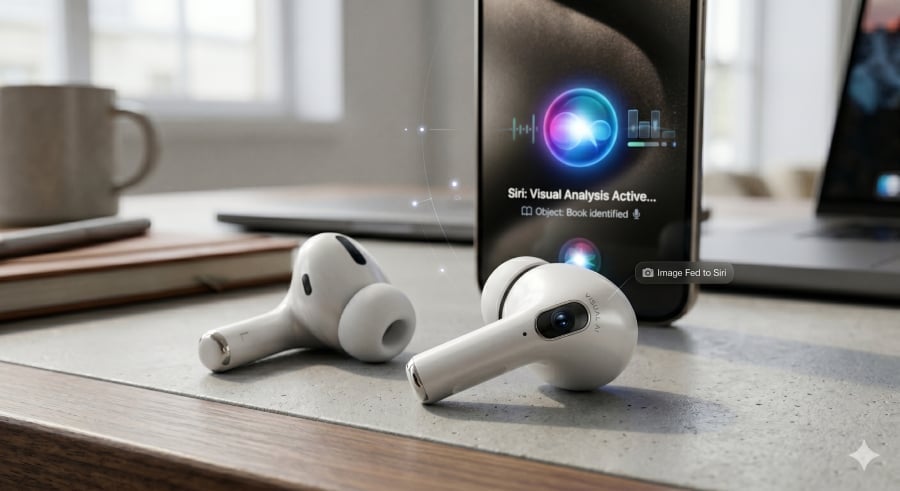
Apple just spoiled its own surprise, leaking a working demo of camera-equipped AirPods inside a routine software update weeks before its September iPhone event.
An instructional video found inside the macOS Tahoe 26.7 release candidate appears to show Apple’s unannounced, camera-equipped earbuds, MacRumors reported. The slip comes just weeks ahead of Apple’s annual autumn launch keynote, giving the public its first concrete look at how the company intends to merge wearable hardware with computer vision.
The discovered system video showcases a user holding up a physical book in view of the earbuds. In the clip, a voiceover explains: “With Visual Intelligence, your world becomes savable. See something you like? Just ask me to save it for later.”
The cameras reportedly are intended to provide visual context to Siri rather than capture conventional photos or videos. The leaked demonstration shows Visual Intelligence identifying and saving information about an object, although Apple has not explained when the cameras activate or how the resulting data would be processed.
The leaked code also includes troubleshooting alerts for physical obstructions. If a wearer’s hair blocks the sensor’s line of sight, the system prompts: “To get the most accurate information about things in your environment, make sure AirPods are not covered,” MacRumors reported.
Roadmap and potential launch
Internal references tie the demo to codename B790, a project first tipped by Bloomberg reporter Mark Gurman. While Bloomberg previously reported that testing suffered delays linked to Siri’s upgraded AI infrastructure, Gurman noted the device could debut as early as September alongside the iPhone 18 Pro lineup and Apple’s rumored foldable iPhone Ultra.
Apple may market the premium hardware as “AirPods Ultra,” pricing it above the standard $249 AirPods Pro tier, though a separate camera-equipped variant (B798) remains in development for 2027. The same macOS software release contained a massive footprint of unreleased hardware codenames, spanning an M6 MacBook Pro, an OLED iPad mini, an updated Home Hub, and second-generation Vision hardware.
The ambient computing pivot
Transforming audio wearables into ambient optical sensors represents a subtle yet massive strategic shift away from screen-bound computing. By moving the visual ingestion pipeline from a phone in your hand to your ears, Apple is sidestepping the social stigma and bulky form factors that have long stalled smart glasses and AR headsets.
This approach tests a new tier of invisible computing: gathering ambient visual data passively throughout the day without forcing wearers to mount a full optical frame or display to their face.
Must-read Apple coverage
The hurdles ahead
Despite the hands-free utility, consumer hurdles remain steep. Unlike smart glasses that align naturally with eye gaze, earbud-mounted cameras sit on the side of the head, forcing awkward head tilts or object repositioning to capture subjects cleanly.
Privacy also poses an immediate social friction point. Equipping an omnipresent, virtually invisible wearable with optical sensors turns everyday earbuds into passive surveillance tools. While reports note Apple may include active-use indicator lights, convincing wary bystanders and privacy-focused consumers to accept always-worn body cameras remains the product’s ultimate test.
Read more: Apple’s camera-equipped AirPods had already reportedly reached late-stage testing, with Siri readiness and privacy concerns emerging as potential obstacles to launch.
>

The lowest prices for TechCrunch Disrupt 2026 end in just a few days, this Friday, August 21 at 11:59 p.m. PT. Once that window closes, your chance to save up to $300 on your pass, or get an even larger discount on group pricing, will come to an end.
If you’ve been circling around Disrupt, then now’s the best time to lock in your pass and start getting ready to join the rest of the startup community gathering in San Francisco from October 13-15 at Moscone West!
If Disrupt has been on your radar, now is the time to lock in your pass before Friday’s deadline.
TechCrunch Disrupt: Where the startup ecosystem moves forward
Each year, TechCrunch Disrupt brings together more than 10,000 founders, investors, and startup community members, driving innovation forward. And for our event this year, you’ll find a keen focus on building and developing in the AI era across all of our stages of programming. If you want to be on the cutting edge running into 2027, this is the event for you.
And you don’t have to be a founder to get value out of Disrupt. Whether you’re raising capital, scouting investments, hiring talent, launching a startup, or building strategic partnerships, Disrupt puts you in the middle of the conversations shaping what’s next and can help you make the connections that propel your next year of growth.
Here’s just a glimpse of what you gain by attending:
- Actionable insights from founders, operators, and VCs actively building and investing in today’s market. Our agenda features a wide range of topics, curated to focus on insights that lead to action.
- Direct access to investors looking for their next portfolio company and founders seeking the right partners. Plus, you can get AI-powered networking opportunities through our app or take deeper dives through our many Side Events.
- Early visibility into emerging technologies and startups before they break into the mainstream through our Exhibit Hall.
- High-value connections that lead to funding, partnerships, customers, and career opportunities. Disrupt is about growth, both for startups and yourself!
What’s new at TechCrunch Disrupt 2026
Keeping that focus on building companies in the AI era in mind, we have a great slate of new stages and programming to inspire and educate:
- Real World AI Stage: AI is moving beyond the screen and into the physical world. Explore how robotics, autonomous systems, manufacturing, healthcare, and defense are turning AI breakthroughs into real-world products and businesses.
- Smart Money Stage: Follow the money. From fintech to stablecoins to payments, embedded finance, and AI-driven financial services, this stage explores how technology is reshaping the movement of capital.
- Smart Systems Stage: Every AI breakthrough depends on the infrastructure behind it. Discover the innovations in chips, compute, energy, networking, and data centers that will determine the next generation of technology companies.
Our Disrupt, AI, and Builders Stages are also returning this year, and we have excellent speakers joining us across them all:
You can explore the rest of our extensive speaker lineup right here!
Don’t miss out on the best TechCrunch Disrupt’s prices!
This is your last chance to save before rates increase, so lock in your pass before Friday, August 21 at 11:59 p.m. PT to get the best prices, whether you’re a student looking to get their introduction to the community or an established investor in search of an untapped opportunity.
When you purchase through links in our articles, we may earn a small commission. This doesn’t affect our editorial independence.
>

Jorge Polanco’s disappointing first season with Mets to end with surgery

Android 17 QPR2 Beta 3 Adds New Scam Protections

‘Outer Banks’ Prequel in the Works as Netflix Original Ends
-

 movies3 months ago
Search For Canadian TV Actor Stewart McLean Now Homicide Investigation
-

 Fashion9 years ago
These ’90s fashion trends are making a comeback in 2017
-
Fashion9 years ago
According to Dior Couture, this taboo fashion accessory is back
-
Fashion9 years ago
Model Jocelyn Chew’s Instagram is the best vacation you’ve ever had
-
Fashion9 years ago
Emily Ratajkowski channels back-to-school style
-
Fashion9 years ago
9 Celebrities who have spoken out about being photoshopped
-
Fashion9 years ago
Your comprehensive guide to this fall’s biggest trends
-
Fashion9 years ago
A photo diary of the nightlife scene from LA To Ibiza