
Tech
The FCC’s Restriction on Foreign Robots Creates Difficult Situation for America’s Startups

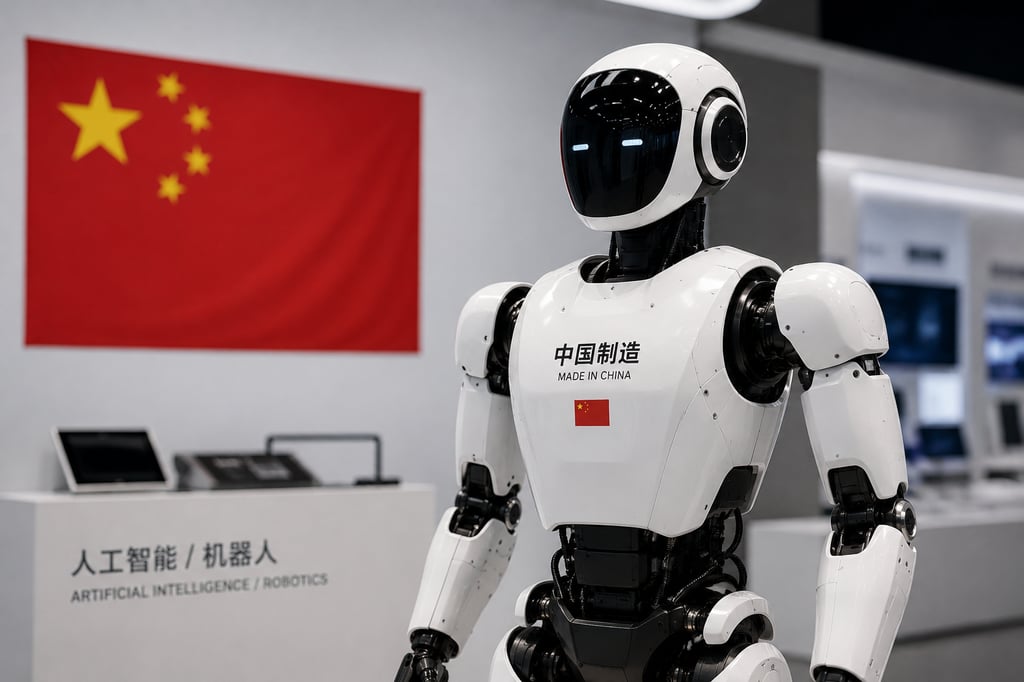
America wants more robots built at home. The problem is that many of the parts U.S. startups need to build them still come from overseas.
The Federal Communications Commission has added certain foreign-made advanced robotic devices to its Covered List as Washington raises national-security concerns around connected robotics. The move could create new hurdles for U.S. startups that rely on foreign components for prototyping and production.
That creates an uncomfortable trade-off: policies designed to strengthen America’s robotics industry could make it harder for some of its youngest robotics companies to compete.
The restrictions came with requirements, though, with Rest of World noting that a robot must be assembled in the U.S. with at least 65% of its components made in the U.S.
That’s exactly where the catch is, as 65% can be especially difficult for startups operating with limited capital and supplier options. At the moment, China is likely to be among the countries most affected, given its dominant role in robotics manufacturing and the broader pattern of U.S. technology restrictions targeting Chinese suppliers.
Why startups could feel the impact most
The same policy that could give U.S. robotics companies more protection from foreign competition may also raise the cost of getting a new robotics company off the ground.
Startups typically have less capital, fewer supplier relationships, and less manufacturing flexibility than established companies. Replacing foreign components can therefore mean higher costs, longer lead times, hardware redesigns, and slower prototyping.
Rest of World founders raised similar concerns.
Elizabeth Williams, founder of cosmetics-robotics startup Gemma, said it would have been impossible to prototype her company’s robots in the U.S. at the same pace. At the same time, Michael Perry of Persona AI argued that Washington needs to “provide the carrot as well as the stick” by building the domestic suppliers startups are being asked to use.
That concern echoes the argument made by nearly 200 U.S. startups that recently opposed broad restrictions on Chinese open-weight AI models.
Their case was not that Chinese technology should remain unrestricted, but that smaller companies often need access to affordable, capable tools because they cannot match the resources of the largest U.S. technology companies. Cutting off those options too early could raise costs and concentrate more power among better-funded firms.
An unintended opportunity
Rest of World cited several ways the U.S. could ease the pressure on startups while still reducing its reliance on Chinese robotics.
Per Kyle Chan, a fellow at the Brookings Institution, a more gradual use of tariffs would give American manufacturers time to catch up rather than immediately cutting off foreign supply.
There is also a case for investing more in the companies that make the parts themselves. More U.S. R&D, manufacturing incentives and demand could help create suppliers for motors, actuators, sensors and other components that startups currently struggle to source domestically.
And that may be the more interesting consequence for startups. If Washington succeeds in pushing robotics production to the U.S., it could create an entirely new market for startups that do not build robots at all but instead supply the components American robotics companies need to build them.
Other News: Apple reportedly developed a China-specific AI model with Alibaba’s help as it prepares to bring Apple Intelligence to the country.
>
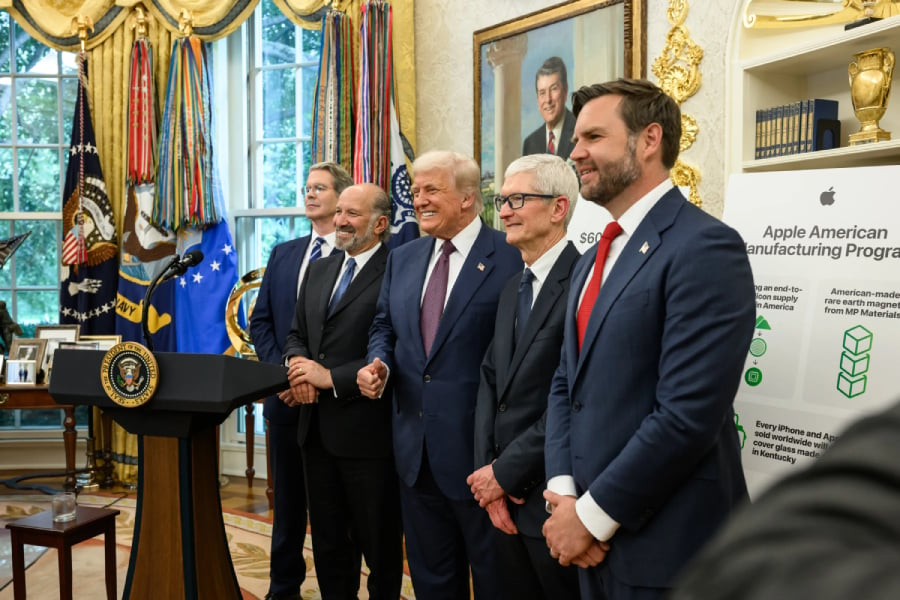
Apple is caught between a memory shortage squeezing its costs and a U.S. government pushing it away from cheaper Chinese supply.
U.S. Commerce Secretary Howard Lutnick has told Apple directly that the Trump administration opposes the company buying memory chips from Chinese manufacturers as Apple searches for ways to deal with a global supply crunch.
According to The Wall Street Journal, Lutnick said there have to be “other solutions to the memory issue, but it’s not great American companies using Chinese memory.” When asked whether he had delivered that message to Apple, he replied, “plainly.”
The AI boom has data centers gobbling up memory chips faster than manufacturers can make them, and prices have spiked as a result. Apple and other electronics makers have been raising prices to cope. Looking for relief, Apple has been testing memory from two Chinese firms, CXMT and Yangtze Memory Technologies (YMTC), as a possible fix.
Apple hasn’t confirmed the testing outright. COO Sabih Khan, according to the Journal, said that given the size of the shortage, “we have to look at all options.” He also noted that unlike most iPhone parts, “there isn’t a lot of customization” for memory — meaning Apple could plausibly use off-the-shelf Chinese chips without tripping export-control rules that only kick in when sharing custom design specs.
Pressure from US chipmakers
The issue has also become a battleground for American semiconductor interests.
Idaho-based Micron Technology has urged the Trump administration to block Apple from using Chinese memory, arguing that doing so could hurt U.S. semiconductor production and undermine efforts to bring manufacturing back to America, the Journal reported.
Senators from New York, Indiana and Idaho also wrote to Apple CEO Tim Cook in late July, urging the company not to work with Chinese memory manufacturers.
YMTC is on the Commerce Department’s Entity List, while the Pentagon has designated both YMTC and CXMT as Chinese military companies. Those designations raise national security concerns but do not, by themselves, prohibit Apple from buying commercially available memory.
The dispute creates a tricky choice for Apple. Chinese memory could give the company another source during a severe shortage, potentially helping control component costs. But relying on Chinese suppliers could increase regulatory and geopolitical risks while clashing with Washington’s push to expand U.S. semiconductor manufacturing.
Apple has already made domestic manufacturing commitments, including spending tens of billions of dollars on U.S.-made chips for iPhones and adding Mac Mini production in Texas. The administration has also secured an arrangement for Intel to make some Apple chips and an Apple commitment to manufacture iPhone and Apple Watch cover glass in the U.S.
Still, most of Apple’s supply chain remains concentrated in Asia, while the company continues expanding iPhone assembly in India.
Must-read Apple coverage
The bigger supply-chain problem
The immediate problem is that reshoring cannot quickly solve a global memory shortage. Semiconductor capacity takes time to build, leaving companies like Apple to balance price, supply availability, and geopolitical risk in the meantime.
Chinese suppliers could give Apple more flexibility and potentially lower component costs, but using them would deepen tensions with Washington and U.S. chipmakers. Sticking with non-Chinese suppliers may reduce political risk while leaving Apple with fewer sourcing options during a constrained market.
Lutnick said the administration will keep pressing Apple to move more manufacturing to the U.S., but political pressure is not the same as a legal ban. For now, Apple’s memory decision sits in that gray area: Washington may not be able to simply forbid the purchases under existing rules, but it can make choosing Chinese suppliers increasingly difficult.
More News: The White House is pushing for safety reviews of OpenAI models as policymakers weigh how to manage the risks of widely available systems.
>

Meta says Incognito Chat gives people a more private way to use Meta AI on WhatsApp and the standalone Meta AI app. Conversations are processed in a secure environment that Meta says it cannot access, are not saved, and disappear by default when the session ends.
That makes Incognito Chat a better fit for sensitive personal questions than a normal AI chat. But it does not settle every privacy or compliance question.
The feature relies on Meta’s server-side Private Processing system, and the transparency mechanism meant to help outsiders verify that system has faced scrutiny.
Meta launched Incognito Chat on May 13 and said it would roll out over the following months. As of August 19, Meta’s public launch page still describes it as rolling out over the coming months, so availability may still vary.
Private Processing uses trusted execution environments, or TEEs, to isolate AI requests while they are processed. Meta says requests are encrypted between the device and the selected TEE, third-party routing helps hide the requester’s IP address, and the system does not retain access to messages after a session ends.
Closing the app or locking the phone ends an Incognito session and removes its context. Meta says the conversations are not saved, and messages disappear by default.
Those protections sit alongside other WhatsApp privacy features, including Strict Account Settings, but Incognito Chat is specifically designed to shield AI prompts and responses from Meta while they are processed.
Meta also says Private Processing should be independently verifiable through Cloudflare-hosted transparency logs. Security firm Secorizon reported in May that 30 of 40 namespaces it examined remained at their initial epoch and 10 were uninitialized.
That questions whether the external verification layer was working as intended at the time; it does not show that Meta could read Incognito Chat content.
What Incognito Chat does not protect and what to verify
Private processing does not control what happens after information reaches the device. Users can still copy, screenshot, or preserve AI output. Questions about WhatsApp data stored locally on devices illustrate why server-side privacy is only one part of protecting sensitive information.
Meta’s public Incognito Chat announcement does not separately state a model-training policy for these conversations or describe enterprise controls such as audit logging, DLP integration, and legal holds. Businesses handling regulated or confidential information should get those answers in writing before changing existing AI-use policies.
For individuals, Incognito Chat is most useful when avoiding a stored AI conversation is valuable. Organizations should confirm availability, retention and metadata handling, training terms, and administrative controls before approving sensitive use.
Meta is continuing to expand AI features inside WhatsApp, so Incognito Chat is best treated as one privacy control rather than a blanket guarantee for every business use case.
Also read: WhatsApp is testing usernames that let people chat without sharing phone numbers, adding another privacy option to the platform.
>
Nvidia will invest $1.5 billion in SB Energy, which will build and operate a major Ohio data center for OpenAI.
The investment would further bind Nvidia to OpenAI, with the chipmaker already providing more than $100 billion in credit support for the AI lab on the Ohio data center. It would also be another deal in which Nvidia invests in a company that is expected to buy more of its chips in the near future to outfit the facility.
SB Energy, which is majority owned by Stargate partner SoftBank, is responsible for building the Ohio data center and sourcing the power generation needed to keep it online. It is reportedly looking to secure up to 10 gigawatts of power, mostly from natural gas, to run the facility.
The data center is expected to provide up to eight gigawatts of compute capacity when fully operational, with the total cost of the project estimated at roughly $500 billion at today’s prices. This would make it the largest data center to which OpenAI has exclusive access, with SB Energy set to lease the facility to OpenAI for 20 years.
The Ohio campus will add to OpenAI’s other infrastructure projects with Oracle, SoftBank, and Nvidia, although much of that planned capacity has yet to come online. OpenAI has previously withdrawn from some planned data center projects as it reassesses parts of its infrastructure expansion.
How Nvidia benefits from the AI buildout
Nvidia has been one of OpenAI’s most prominent backers, investing $30 billion in the startup while supplying many of its most powerful GPUs. The company’s surging data center revenue and profit, which helped push net profit to $120 billion last year, has given it the financial firepower to sign major deals with developers and raise huge amounts of debt for further investments.
Even with increased competition, the chipmaker remains by far the most popular supplier of GPUs for data centers, with a market share of more than 85 percent for AI chips. Efforts by hyperscalers and AI labs to build custom chips, often AI accelerators, still frequently see those chips deployed alongside Nvidia GPUs in server racks rather than replacing them entirely. We saw this most recently with SpaceX’s decision to go “all-in” on Nvidia hardware and build its infrastructure around the company’s chips.
No slowdown even with an IPO on the horizon
Even though OpenAI has terminated some Stargate projects in Europe, it has accelerated its expansion in the United States, adding hundreds of billions of dollars in new commitments. It now has $1.4 trillion committed to infrastructure tied to about 30 gigawatts of total compute capacity.
While some of that spending may eventually be scaled back or restructured, it remains an enormous commitment for a company with a $40 billion revenue run rate and little prospect of becoming profitable over the next few years.
Add to that its plans to go public within the next 12 months, and the situation becomes even trickier for OpenAI to manage. As things stand, rival Anthropic is more likely to go public first, which could give OpenAI a better idea of how public markets will value an AI lab with enormous infrastructure costs.
OpenAI and Anthropic remain the two leading AI labs in terms of sophistication and usage, but that may not be enough to convince investors, particularly as interest in Chinese AI models continues to grow. Both labs have reduced the cost of using their models in response to open-weight alternatives gaining favor among cost-conscious companies in the US and Europe.
For Nvidia, the continued buildout of infrastructure creates another opportunity to sell hardware, making its growing financial ties to the AI market increasingly central to its future.
Read more: Nvidia’s $25 billion bond sale shows how the chipmaker is expanding its financing capacity as it invests more heavily in AI companies and infrastructure.
>

Washington Warns Apple Against Buying Chinese Memory Chips

‘Morning Joe’ Torches Mike Johnson’s Mixed Messaging

Marissa Jo Cerar Developing ‘Drowning In Paper Flowers’ Novel For TV
-

 movies3 months ago
Search For Canadian TV Actor Stewart McLean Now Homicide Investigation
-

 Fashion9 years ago
These ’90s fashion trends are making a comeback in 2017
-
Fashion9 years ago
According to Dior Couture, this taboo fashion accessory is back
-
Fashion9 years ago
Model Jocelyn Chew’s Instagram is the best vacation you’ve ever had
-
Fashion9 years ago
Emily Ratajkowski channels back-to-school style
-
Fashion9 years ago
9 Celebrities who have spoken out about being photoshopped
-
Fashion9 years ago
Your comprehensive guide to this fall’s biggest trends
-
Fashion9 years ago
A photo diary of the nightlife scene from LA To Ibiza