
Sally Field as Tova and Lewis Pullman as Cameron in ‘Remarkably Bright Creatures’
Courtesy of Netflix


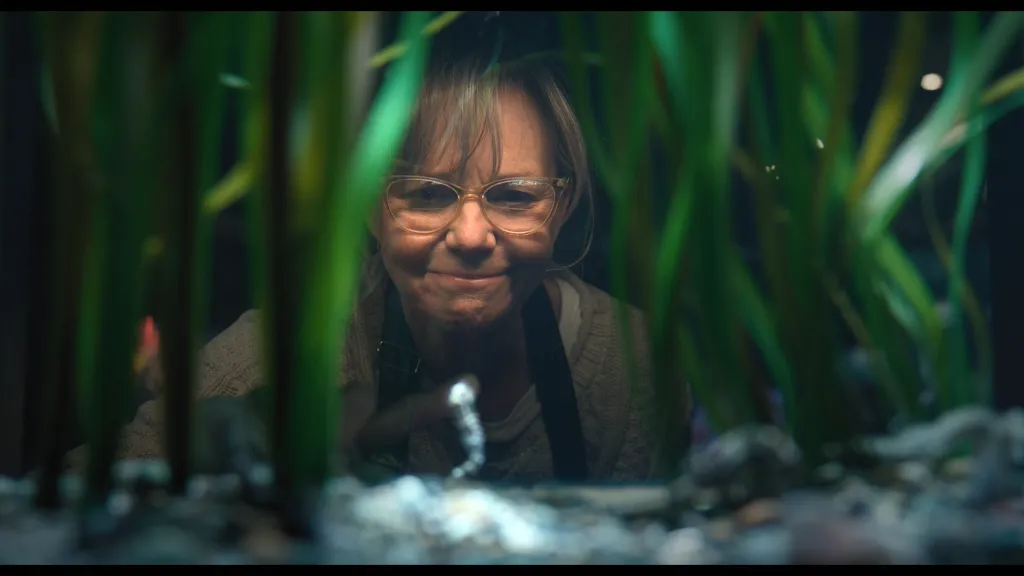
Until recently, an octopus was not the most obvious choice to co-star with Sally Field.
Looking at her career thus far, one might immediately think of her alongside Julia Roberts and Shirley MacLaine in Steel Magnolias, or those Oscar-winning turns opposite Beau Bridges in Norma Rae and with John Malkovich, Danny Glover and Ed Harris in Places in the Heart. But lately, the buzz surrounding Field is all about her Emmy-nominated role sharing the screen with a cephalopod in the Netflix film .
Adapted from Shelby Van Pelt’s bestselling novel, Remarkably Bright Creatures stars Field as Tova Sullivan, a 70-year-old widow meticulously dedicated to her cleaning job at the Sowell Bay aquarium. Under cover of night, she chats to the aquarium’s occupants, including a recalcitrant octopus named Marcellus (voiced by Alfred Molina). Then, when Cameron, a down-on-his-luck musician played by Lewis Pullman, lands a job at the aquarium, he and Tova come together to share a mystery that changes both of their lives.
A lot of what’s in the film between Cameron and Tova, between Lewis and me, is improvised. It’s just us just talking to each other.
Sally Field
When I meet Field on Zoom, inevitably we chat about the Oscar-winning 2020 Netflix documentary My Octopus Teacher, in which a scientist documented his daily dives and observations with one of the highly-intelligent sea creatures. It turns out Field was well-versed on the subject before she’d laid eyes on Remarkably Bright Creatures. “I loved [My Octopus Teacher],” she says. “I thought it was wonderful. And certainly, an homage to the importance and brilliance of sea creatures. All of them, sharks and all of them, they need to be protected and looked after, and we need them. We need this form of life on Earth, and it’s all being challenged all over the place. I had also read before that a book, for whatever reason, a long time before that, a nonfiction book called The Soul of an Octopus.”
Sally Field as Tova and Lewis Pullman as Cameron in ‘Remarkably Bright Creatures’
Courtesy of Netflix
Coincidentally, Field’s son Peter Craig, in search of a producing project, had got hold of the galleys of Van Pelt’s then-unpublished book. A novelist himself and a screenwriter known for co-writing The Hunger Games: Mockingjay, The Town, The Batman and Top Gun: Maverick, for which he was Oscar-nominated, Craig brought the galleys to Field. She was sold.
Field says she instantly knew Pullman had to play Cameron. “Second 1, the minute he walked in the room. I mean, he’s tall and very available, very kind of awkwardly available. Here I am. And I had read with some other actors, but over Zoom because they were in other places.” She was able to meet with Pullman in person and says, “whether I’d been on a Zoom or face-to-face, it would’ve been Lewis. It just instantly was Lewis.”
It’s always been hard to find roles that I’ve wanted to do, roles for women, and certainly now roles for older women. It’s incredibly difficult.
Sally Field
Marcellus was entirely CG-generated for the film and Field is matter of fact about the task involved in portraying a complex relationship with, well, thin air. “I’ve been a professional actor for 62 years, and even before that, I was on stage in high school, in middle school. I have been acting and trying to figure out this craft of acting my entire life. So, imagination is a huge part of what acting is. Acting in the way I was taught is a form of self-hypnosis.”
Between Field and Pullman emerged a kind of ongoing improvisation. In an earlier interview, Pullman had told me that Field set the bar for how immersive that imagined relationship would be. Feeling as though her performance almost manifested Marcellus for him he described the process with Field as inventive and spontaneous. “We jumped right into the scene where Marcellus, the octopus, is on the loose in the aquarium,” he recalled, “and we can’t find him, and we were like in a game of like imaginary chicken. She was like, ‘Oh my god, it’s going out the door!’ And then I was like, ‘It is going out the door, and down the hallway,’ and the camera operator followed us out there.”
Says Field, “We began to improvise and play with it and just play with each other. And a lot of what’s in the film between Cameron and Tova, between Lewis and me, is improvised. It’s just us just talking to each other.”
Sally Field as Tova with Marcellus in ‘Remarkably Bright Creatures’
Netflix
I tell Field I’ve been listening to her audio narration of her memoir In Pieces in which she describes a home life much influenced by her mother, the actress Margaret Field and her grandmother, Joy Morlan. Did her grandmother, who comes across as stoic and pragmatic in many ways, influence her portrayal of the similarly-minded Tova?
She shakes her head a little and says, “All actors, they are the lives that they have lived. They are the people that raised them. They are the experiences they’ve had. And the task is to find a way to weave the real existence of the actor with the existence of this fictional character, to weave them together so that some of my experiences are her experiences, and to make them all somehow blend together. So, I don’t know how much of my grandmother is there, but I know that a lot of me is still resonating with Joy, my grandmother, and my mother in a huge way. But I can’t say I was ever thinking about them or visualizing them. I mean, I didn’t use that as one of my tools.”
L-R: Lewis Pullman as Cameron and Sally Field as Tova in ‘Remarkably Bright Creatures’
Courtesy of Netflix
Field’s mother Margaret was plucked from relative normalcy by a talent scout, to sign an acting contract with Paramount Pictures, and Field muses on how that trajectory impacted her own dreams. “Her passion, her education and her passion for a craft was instilled in me. It was part of our language with each other. From the time I got on a stage when I was 13 in the seventh grade, it became a place for us to have a secret dialogue that was just about acting. It was just about this monologue, this improvisation, whatever task I was supposed to be doing to deliver to class. So certainly, her life affected me a lot. I had somehow felt since my young career was taking off, that somehow the ball had been passed to me, and I was somehow going to carry it onto the goalpost or wherever you take that ball, I was supposed to take it.”
At the age of 13 Field took to the stage in junior high, most notably performing scenes from Romeo and Juliet. Then, at 18, she landed her first screen role as the lead in Gidget, a TV series about a quintessential California surfer girl. Two years later, she signed on to the show The Flying Nun— a role she’d felt reluctant to take, since she was looking for a more fulfilling artistic challenge. Fortunately, around that time, she got involved with Lee Strasberg’s The Actor’s Studio, and found herself among the likes of Ellen Burstyn, Ron Rifkin, Jack Nicholson, Bruce Dern and Richard Dreyfuss.
Julia Roberts, Tom Skerritt, Sally Field and Dylan McDermott in ‘Steel Magnolias’
TriStar/courtesy Everett Collection
She recalls Dern as being “incredibly supportive.” “I was doing The Flying Nun at the time. I was not exactly everyone’s pick as far as being an actor was concerned,” she says. “Many times, Bruce Dern was a moderator, and you’d sit and watch the scene, then you oversee the conversations afterward and he was very supportive. I met him years ago, but I ran into him again and thanked him for his attention. It was attention that he gave during those conversations, attention to detail and focus. And it was hugely important to me.”
Ultimately, Nicholson put in a word for her with casting director Dianne Crittenden and director Bob Rafelson, and Field landed a first film role in Stay Hungry, starring Jeff Bridges.
Anger and energy is fuel, but it takes a lot of time and effort to understand it, and to have a conversation with it, and to not let it own you, but to understand it’s incredibly important as fuel.
Sally Field
Now, this Emmy nomination for Remarkably Bright Creatures marks her fourth — she won for her last three — along with an Oscar nomination for Lincoln, to go with her two wins, two Golden Globe Awards, a Tony nomination for The Glass Menagerie, and she received the Screen Actors Guild Life Achievement Award in 2023.
This is not to suggest that it all just fell into her lap after that first film break.
“It has always been very hard for me,” she says. “Somebody said to me the other day, ‘Well, you haven’t done anything since four years ago when I did 80 for Brady with my girlfriends [Jane Fonda, Lily Tomlin, Rita Moreno and Sally Kirkland].’ And I go, ‘Well, four years ago, and now, it’s always been hard to find roles that I’ve wanted to do, roles for women, and certainly now roles for older women.’ It’s incredibly difficult.”
Interestingly, she says that something that’s driven her is anger.
“I guess that because as a child, I was so little, I was always the runt, the tiny one,” she says. “And I have abuse in my family. And I think what happened is I just got f*king pissed off, and my anger still bubbles inside me. And it took me a long time to be able to easily let it out. But when I would get pushed too far, some part of me would just rise up and take care of me. And I had no say as to what it did, this part of me. I just wouldn’t be dominated. I won’t be conquered… Something that came from my childhood, probably because I had a mother who was supportive, but too weak to take care of herself. And so, I think I was the one that was just going to do it. I was just going to take care of everybody and get out of my way. But it took a long time to not hide that part. That part of me frightened me and I didn’t let it out easily, until it would just come roaring out whether I wanted it to or not.”
The cast of ‘Brothers & Sisters’ in 2007 from L to R: Matthew Rhys, Sally Field, Dave Annable, Patricia Wettig, Sarah Jane Morris, John Pyper-Ferguson, Ken Olin and Roxy Olin.
Toby Canham/Getty Images
As with her Remarkably Bright Creatures character Tova, whose spiky perfectionism is driven by pain, or even for Marcellus himself, whose frustration pushes him to persevere, Field has found her anger to be a tool of sorts.
“I say that easy is overrated, but anger is underrated,” she says. “Anger has to be understood and appreciated and owned and used. And anger that’s squashed and you don’t really understand where it comes from, then it comes out all weird places and can hurt people and do terrible, destructive things. But anger and energy is fuel, but it takes a lot of time and effort to understand it, and to have a conversation with it, and to not let it own you, but to understand it’s incredibly important as fuel. Good, positive, productive fuel. So, it doesn’t eat you up and it also doesn’t eat your neighbor up.”
For now, while she considers what to do next, she says been enjoying watching the success of fellow Emmy nominee Matthew Rhys who played her on-screen son in the 2006 ABC series Brothers & Sisters for five seasons. “I’ve stayed friends with him wherever he is all over the globe. And yes, I’ve watched everything he’s done, everything. I wrote to him after I saw the first three episodes of Widow’s Bay. I mean, he’s just dazzlingly good in it. And the show is so wonderful. It’s my very favorite.”
When I see Rhys a few days later, I relay this story to him.
“Ah, still the matriarch,” he says. “She’s gold. Just iconic.”
>
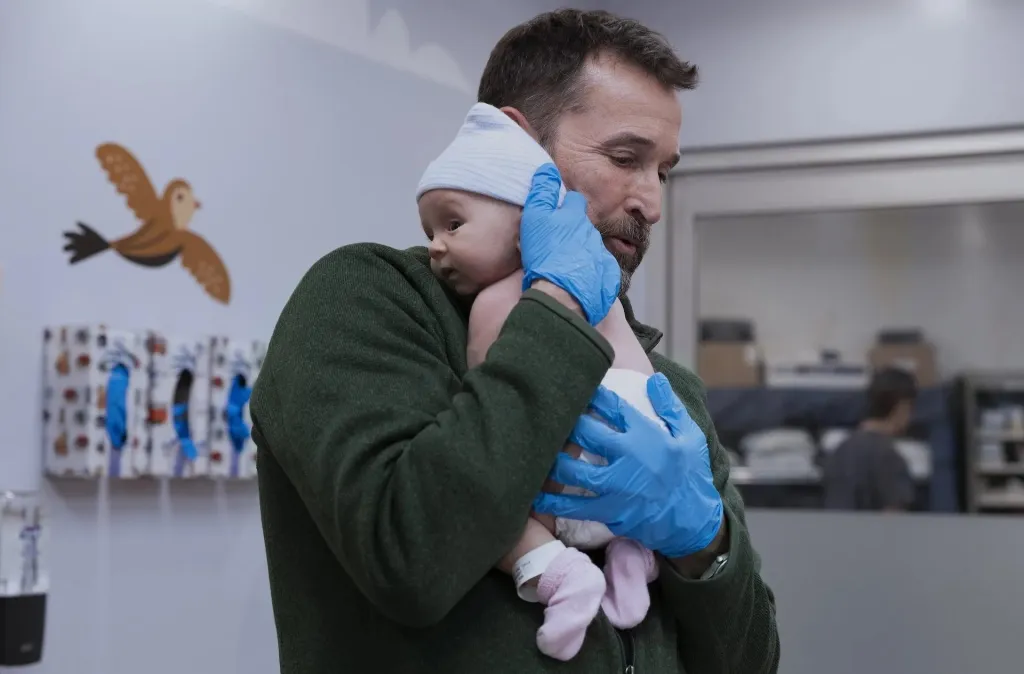
From creator R. Scott Gemmill, The Pitt highlights the challenges U.S. frontline healthcare professionals face through the lens of the fictional Pittsburgh Trauma Medical Center’s emergency department. In a real-time, hour-by-hour format, audiences see the medical cases and the personal turmoil (and occasional life-saving joys) that physicians and nurses must navigate as they reckon with an overabundance of patients and a lack of resources.
For production designer Nina Ruscio, creating that world meant building an emergency department capable of sustaining the series’ relentless pace without ever feeling repetitive. The Season 2 expansion completes more of the 360-degree set, giving the camera and performers even more room to move through the hospital’s maze-like environment. But much of Ruscio’s most meticulous work is designed to go unnoticed, from embedding lighting into the set itself to camera-testing every material and paint color. Even seemingly small details, like an owl carved into the hospital’s columns, carry deeper meaning. Here, Ruscio takes Deadline inside the design of The Pitt, from its pediatric and waiting rooms to the painstaking details that make the emergency department feel lived-in and real.
DEADLINE: What has changed between The Pitt Season 1 and Season 2? How do you make the environment more dynamic when an emergency room is just an emergency room?
NINA RUSCIO: We actually made a big addition to the second stage. Essentially, the set is on two different stages. On the first stage, we went fire lane to fire lane and completed every single inch of that thing. There’s not a single spot on that stage that’s not well used for full-on immersive scenery.
But on the second stage, we drew a line in the sand in the first season because we wanted to preserve a big batch of that stage for other purposes. But at the beginning of Season 2, we gave that up. We wanted to make the set on the second stage—the triage and the waiting room—as immersive and 360-degree photographic as possible.
The triage area on The Pitt
DEADLINE: Are there any areas of the hospital that you’d love to explore onscreen that viewers haven’t seen yet?
RUSCIO: Well, there are. That’s a twofold answer that I’m going to give you. What’s very impressive to me is that we are now working towards 45 episodes of this show. As someone was saying to me the other day, it’s 45 hours of television in an environment that was essentially designed as a pilot. And that it has sustained this much storytelling is very satisfying for everybody because it was a daunting task to be asked to do something without written words, and for it to have had all the life that it’s had. And people are not at the doldrums level of it yet. I’m very proud of how the set has sustained people’s interest. And it was intentionally designed to confuse you at the beginning, so you couldn’t take it all in and fully understand the geography as a viewer.
If you look at all the curves in the floor and ceiling, keep your eye going as if you can continue around, so you never really know where the beginning and the end of something is. So if you’re wondering what parts of the hospital we’d want to explore, we’re so dominantly the emergency department that the need in the story would have to be born out of a need in the story to tell of another department in the hospital, which would be a little counterintuitive for this show because there’s so many stories to tell about the emergency department.
Owl design on The Pitt
HBO
DEADLINE: Any Easter eggs you’d like to point out for the fans that they might not notice?
RUSCIO: There’s an owl carved into the columns. They are as if they’re painted terracotta tile, essentially. And I love this owl detail. Owls are a symbol of the transition between life and death and wisdom and knowledge. They are also fierce and scary. For me, it represents metaphorically what happens here every day. The stakes are very high. You’re dealing with this intersection of where life might meet death and death might meet life. And all of that is the subtextual intensity of working in this environment because the stakes are really high. And that it’s a symbol of knowledge. I love that. And that maybe no one’s ever seen it. Maybe people have been watching this show for a while, and they’ve never seen it. But for me, these little gestures that point to what this place is all about, I love.
And the other thing that I love, that people have embraced, is this idea that these columns are in this physical space that are part of the original history of the 100-year-old hospital and that they haven’t plastered over them because this is the idea that the show is in a pit, that you’re in the basement of this hospital, and that this hospital emergency department is the foundational support for all the rest of the hospital that we don’t get to see.
DEADLINE: Was there a set piece that looks deceptively simple but is actually incredibly difficult to put together?
RUSCIO: Because the environment is 360 degrees, everything has to be capable of being looked at in detail, whether it’s the foreground, the mid-ground or the background, and all of it has to be accurate. But because we’ve made this very brave choice, and it’s borne itself out as satisfying, to light the environment primarily and exclusively with the practicals that are in the set – we don’t use traditional lighting. We don’t use ground-based lighting, and there’s not a lot of grip equipment. But we do not light from the ground because, as a director or as an actor, you can walk from one end of this set without any equipment in your way, as if it is a real emergency department. After all, all of the lighting is embedded there.
But the functions of what happens on a normal set, where there have to be bounce boards to light back up people’s faces, and all that stuff, that’s all designed into the set as well. So all of these flooring materials and all of these counter materials are calibrated and specifically chosen to function as grip equipment for uplighting. All of the top lighting is being reflected up, and that’s why the lighting is so full, because all of this stuff has factored in as functional elements of the craft that we normally would see as equipment that is not supposed to be seen. We needed to include all of that into the design because we couldn’t have that physical stuff in the space.
So it looks deceptively simple. But every single one of these materials was camera-tested. Every single paint color was camera-tested. The levels of sheen and saturation in a beautiful dark-ish palette of the wardrobe make people pop out because they’re the most important part of the story.
Dr. Robby (Noah Wyle) in the Pedeatric “Peds” room in The Pitt
HBO
DEADLINE: I love the pediatric room. What conversations were had about the creation of that?
RUSCIO: Peds was born out of my very first meeting because I met with John [Wells] and Noah [Wyle] and Scott [Gemmill] and Michael Hissrich when they talked to me about doing the project. They approached me to design an emergency department before they wrote anything. And that’s an extremely flattering and unique position to be in because I needed to cover any possibility that they might come up with. In speaking with them, we tossed around a lot of ideas, and whether it was an institutional design, it still has the essence of what should be an emotional reflection of the people that are in it.
And so my conversation with Noah centered on the idea of a space where there would be a discordance between what the physical space looked like and what was happening emotionally in that room. He had this idea of a single animal, and I suggested it could be a menagerie of animals. And this space, this ironic room of cartoon animals and colors, would be the place of such extreme trauma. And that juxtaposition holds true to a lot of life. A lot of really bad things happen in a lot of really powerful, beautiful places. And then these places hold emotional psychotraumatic weight, ultimately, always, no matter when you step into them. So that was born out of that.
DEADLINE: The waiting room next to Peds also has color, not as much color, of course, but it matches that elaborate staircase in the back where we sometimes see characters taking a moment of respite.
RUSCIO: This waiting room is the idea that the emergency department has a completely historical space that hasn’t been renovated in a hundred years; that was a big important part of the story to tell. And then there’s all kinds of layers of time in these furnishings. Maybe they got these chairs when they first got there, and then they got all jacked up, so they covered them with plastic. Then they tried to get more chairs from the same manufacturer, but they didn’t make them. All of these are brand-new, custom-made, and aged to tell these stories. But all of these subtle internal details help make the space look real and invisible because that’s what it would be if you had a hundred people in here every hour of every day. It would be a really pretty, physically traumatized space and beat to shit.
The Pitt waiting room
HBO
DEADLINE: Does anyone still get lost on set?
RUSCIO: People do still get lost, but really part of that is solved by our OSHA compliance. So all the emergency signs and exit signs are real. If you go to them, they will take you out, and you will be safe. But also, if you keep walking and walking in a circle, you’re going to get back to where you came from. It’s both practical and real.
>

Beth Behrs (The Neighborhood, 2 Broke Girls) has joined the cast of ABC‘s Shifting Gears for the upcoming third season. She will guest star as Dr. Johnson, a beautiful emergency room doctor who treats Riley (Kat Dennings) for a back injury.
Behrs will reunite with Dennings on Shifting Gears, her 2 Broke Girls co-star, and executive producer Michelle Nader.
Shifting Gears follows Matt (Tim Allen), the stubborn, widowed owner of a classic car restoration shop. When his estranged daughter, Riley, and her kids move into his house, the real restoration begins.
The cast also includes Seann William Scott as Gabriel, Daryl Chill Mitchell as Stitch, Maxwell Simkins as Carter, and Barrett Margolis as Georgia.
Season 3 will premiere in 2027.
Allen executive produces alongside showrunner Michelle Nader, Bob Daily, Jim Patterson, Marty Adelstein, Becky Clements, Richard Baker, Rick Messina, and John Amodeo. Kat Dennings is a producer. The ABC series is produced by 20th Television.
Behrs was most recently seen starring as Gemma in the CBS hit comedy The Neighborhood, which recently concluded its 8-season run in May. As previously noted, she portrayed Caroline Channing in the CBS series 2 Broke Girls created by Michael Patrick King and Whitney Cummings. On the film side, she voiced a cartoon character in the Chinese animated film Boonie Bears: The Big Shrink. She also lent her voice to the Walt Disney Pixar animated film Monsters University. She is repped by CAA, Anonymous Content, and Hirsch Wallerstein Hayum Matlof and Fishman.
>
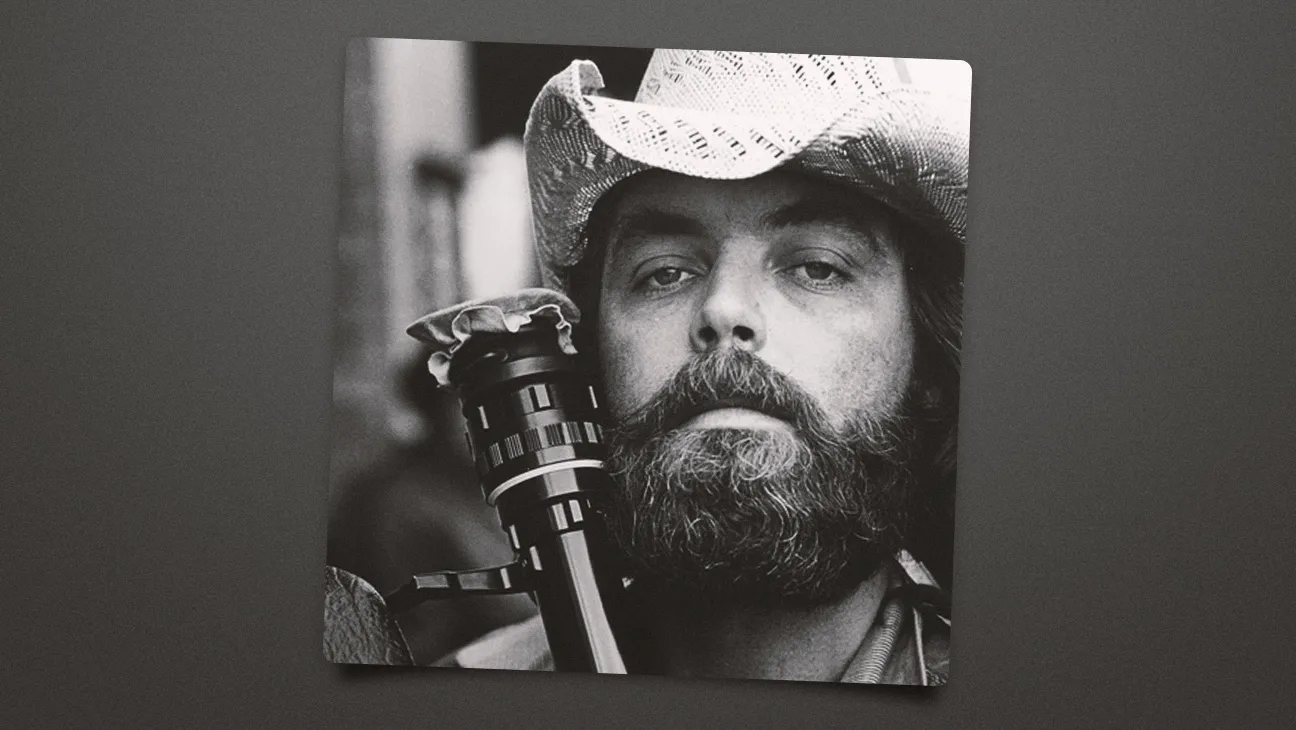
Paul M. Pollard, a veteran camera operator with credits including Bound for Glory, Heaven’s Gate, Northern Exposure and The Larry Sanders Show, has died. He was 84.
Pollard died Aug. 1 of heart issues at Southern California Hospital (formerly Brotman Medical Center) in Culver City, his daughter, Georgia Pollard, told The Hollywood Reporter.
The son of a special effects man at 20th Century Fox, Pollard also shot Bud Greenspan’s 16 Days of Glory (1985), the definitive documentary about the 1984 Los Angeles Olympics, and the 1986 TV special Ozzy Osbourne: The Ultimate Ozzy, which captures the singer live in concert.
As a camera technician, Pollard worked for famed cinematographer Haskell Wexler on Bound for Glory (1976), the biopic of Woody Guthrie that was directed by Hal Ashby. Wexler won an Oscar for his work, which included a pioneering 2-minute, 15-second Steadicam shot that trailed and then led David Carradine as the folk singer through a crowd of migrant workers.
He teamed with Wexler again on Richard Pryor: Live on the Sunset Strip (1982).
Pollard surely kept busy as an operator for cinematographer Vilmos Zsigmond on Heaven’s Gate (1980), the famously over-budget frontier epic that was filmed mainly at a studio-constructed town in Glacier National Park in Montana. Director Michael Cimino ordered up more than 1.3 million feet of film — nearly 220 hours — for that.

Paul M. Pollard operated a camera from on high in Los Angeles.
Courtesy Georgia Pollard
The youngest of three kids, Paul Michael Pollard was born in Los Angeles on April 11, 1942. His father was A. Paul Pollard, who was head of construction at Fox and handled effects on such landmark films as The Manchurian Candidate (1962), The Great Escape (1963), Dirty Harry (1971) and The Outlaw Jose Wales (1976). His mom, Irene, was a homemaker.
Pollard attended Culver High School and lived with an aunt and uncle in Montana while working on a cattle ranch, then helped out his dad on movie sets.
He was a greensman on Lewis Milestone’s remake of Mutiny on the Bounty (1962) and as a cable man on the auto racing drama Winning (1969), then graduated to assistant camera on True Grit (1969), They Call Me Mr. Tibbs! (1970) and Martin Scorsese’s Boxcar Bertha (1972).
Pollard’s big-screen credits also included Luis Valdez’s Zoot Suit (1981), John Landis’ Into the Night (1985), Roger Spottiswoode’s Air America (1990), Mick Jackson’s L.A. Story (1991), Gillies MacKinnon’s A Simple Twist of Fate (1994) and Jon Avnet’s The War (1994).
And for TV, he worked on In the Heat of the Night, Northern Exposure, Space: Above and Beyond, If Not for You and The Larry Sanders Show and served as director of photography on the 1997 Fox series 413 Hope St.
Pollard was once involved in a helicopter crash while filming in France, his daughter noted.
Survivors also include his son, Justin; grandchildren Aurelia and Juliet; sister JoAnn; and nephews Greg, Chris, and Jeff.
He was married and divorced four times; two of his wives were script supervisor Kathleen Newport and first camera assistant Tama Takahashi.
>


Search For Canadian TV Actor Stewart McLean Now Homicide Investigation


These ’90s fashion trends are making a comeback in 2017
According to Dior Couture, this taboo fashion accessory is back
Model Jocelyn Chew’s Instagram is the best vacation you’ve ever had
Emily Ratajkowski channels back-to-school style
9 Celebrities who have spoken out about being photoshopped
Your comprehensive guide to this fall’s biggest trends
A photo diary of the nightlife scene from LA To Ibiza