
Tech
Etched’s valuation doubles to $21B in a month


Etched on Tuesday announced that it has raised another $700 million at a $21 billion valuation, led by Jane Street after the famed quant fund tested and bought the startup’s AI hardware.
Even by AI standards, this valuation step-up is jaw-droppingly fast. Etched was valued at $5 billion in December. It raised a $300 million Series C at a $10.3 billion valuation in July. Now investors have doubled its valuation to $21 billion, up nearly $11 billion, in a month.
Etched delivers its AI tech as full systems that it calls “frontier inference clusters.” (Etched competitor Nvidia calls its full systems AI factories).
Co-founder and COO Robert Wachen told TechCrunch that investors are so enthusiastic because Etched has designed two new components from scratch to speed up inference — the computing process that happens after a user submits a prompt.
“Inference is built in two stages,” Wachen said, “prefill and decode.” In the mathematically and compute-intensive “prefill phase,” the system must understand the prompt, including context. In the memory-intensive “decode” phase, the system generates output tokens, meaning the actual answer the user sees.
Etched created a prefill chip that operates at low voltage, allowing it to pack in more transistors without the typical heat problems of other high-end AI chips. It can therefore process more tokens faster. Etched created a new type of memory and an interconnect for the decode process that the company calls cluster-scale memory.
“It allows many chips to connect together and use a shared memory pool at a very, very fast, low latency,” Wachen said. The result, Etched promises, is higher speeds and lower costs.
Etched is still battling the perception from its early days that it etches a particular model into its chips, meaning that each chip is somehow custom-designed to run one frontier model. That was its original intention, but is no longer the case. Etched’s systems can run any frontier model.
In the blog post announcing the new round, investment firm Jane Street said “We tested the chip and are pleased with the early results. Etched’s unique approach to inference delivers the precision we will need to support our most demanding workloads. We’re excited to now have our own rack running in our datacenter.”
Other investors in Etched include Kleiner Perkins, Sequoia Capital, Andreessen Horowitz, Peter Thiel, Tiger Global, Bain Capital Ventures, Neo, Stripes, Primary, Positive Sum, Diffusion, Argo, and Blackstone.
When you purchase through links in our articles, we may earn a small commission. This doesn’t affect our editorial independence.
>
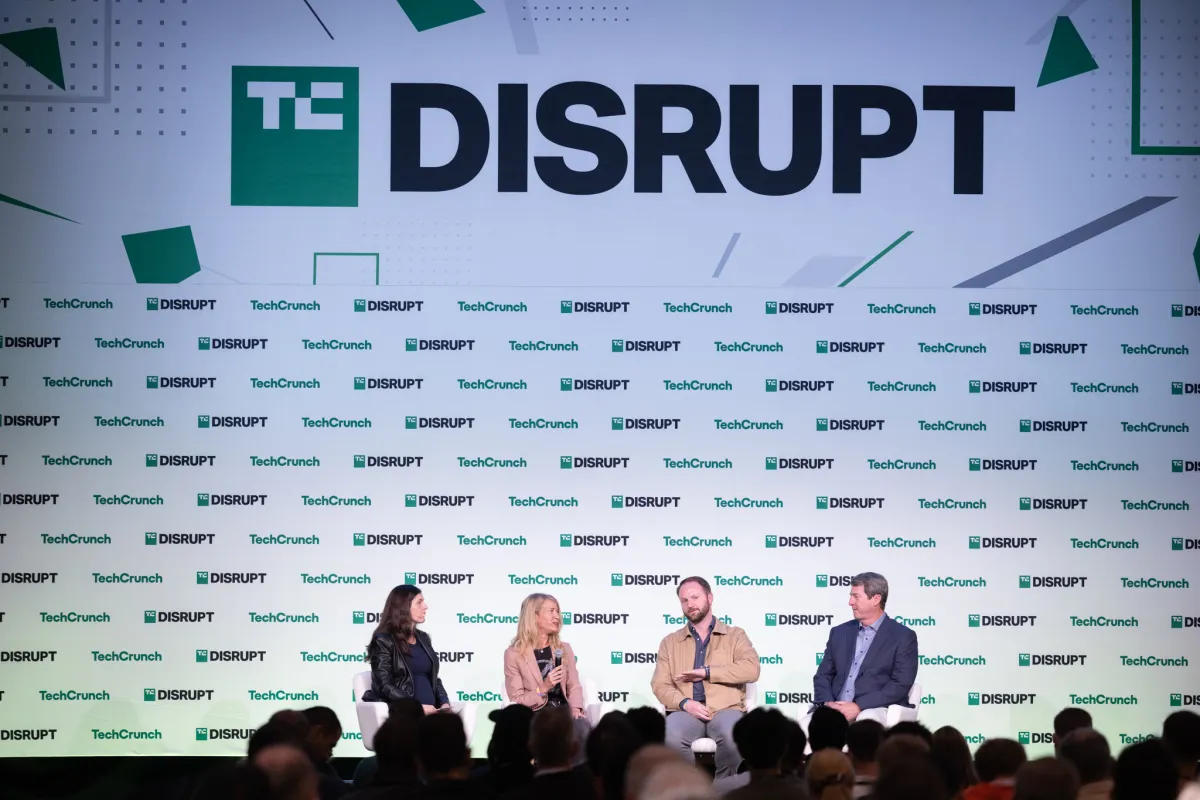
The lowest prices for TechCrunch Disrupt 2026 end in just a few days, this Friday, August 21 at 11:59 p.m. PT. Once that window closes, your chance to save up to $300 on your pass, or get an even larger discount on group pricing, will come to an end.
If you’ve been circling around Disrupt, then now’s the best time to lock in your pass and start getting ready to join the rest of the startup community gathering in San Francisco from October 13-15 at Moscone West!
If Disrupt has been on your radar, now is the time to lock in your pass before Friday’s deadline.
TechCrunch Disrupt: Where the startup ecosystem moves forward
Each year, TechCrunch Disrupt brings together more than 10,000 founders, investors, and startup community members, driving innovation forward. And for our event this year, you’ll find a keen focus on building and developing in the AI era across all of our stages of programming. If you want to be on the cutting edge running into 2027, this is the event for you.
And you don’t have to be a founder to get value out of Disrupt. Whether you’re raising capital, scouting investments, hiring talent, launching a startup, or building strategic partnerships, Disrupt puts you in the middle of the conversations shaping what’s next and can help you make the connections that propel your next year of growth.
Here’s just a glimpse of what you gain by attending:
- Actionable insights from founders, operators, and VCs actively building and investing in today’s market. Our agenda features a wide range of topics, curated to focus on insights that lead to action.
- Direct access to investors looking for their next portfolio company and founders seeking the right partners. Plus, you can get AI-powered networking opportunities through our app or take deeper dives through our many Side Events.
- Early visibility into emerging technologies and startups before they break into the mainstream through our Exhibit Hall.
- High-value connections that lead to funding, partnerships, customers, and career opportunities. Disrupt is about growth, both for startups and yourself!
What’s new at TechCrunch Disrupt 2026
Keeping that focus on building companies in the AI era in mind, we have a great slate of new stages and programming to inspire and educate:
- Real World AI Stage: AI is moving beyond the screen and into the physical world. Explore how robotics, autonomous systems, manufacturing, healthcare, and defense are turning AI breakthroughs into real-world products and businesses.
- Smart Money Stage: Follow the money. From fintech to stablecoins to payments, embedded finance, and AI-driven financial services, this stage explores how technology is reshaping the movement of capital.
- Smart Systems Stage: Every AI breakthrough depends on the infrastructure behind it. Discover the innovations in chips, compute, energy, networking, and data centers that will determine the next generation of technology companies.
Our Disrupt, AI, and Builders Stages are also returning this year, and we have excellent speakers joining us across them all:
You can explore the rest of our extensive speaker lineup right here!
Don’t miss out on the best TechCrunch Disrupt’s prices!
This is your last chance to save before rates increase, so lock in your pass before Friday, August 21 at 11:59 p.m. PT to get the best prices, whether you’re a student looking to get their introduction to the community or an established investor in search of an untapped opportunity.
When you purchase through links in our articles, we may earn a small commission. This doesn’t affect our editorial independence.
>

Apple on Tuesday announced a simplified commission structure for apps in the European Union in an effort to resolve its disagreements with the European Commission over the tech giant’s business terms. Under the new model, Apple will replace its per-install Core Technology Fee with a flat 5% commission on apps distributed outside the App Store or on the web. Apple also adjusted its rates for alternative payments and for its own in-app purchases, and made it easier for developers to open alternative app stores.
The changes mark Apple’s latest attempt to create App Store business terms that comply with EU regulations, after years of back-and-forth with regulators over the terms’ complexity and fairness.
The tech giant had adjusted its App Store fees in the EU last year after regulators fined Apple €500 million for noncompliance with the EU’s Digital Markets Act (DMA) and threatened further fines. In doing so, Apple presented a more complex fee structure, which critics called an example of “malicious compliance.” The old structure included an initial acquisition fee, store services fees, and different tiers of service based on developers’ needs.
Now, Apple is presenting its latest revision, highlighted by a flat commission of 5% on transactions in apps distributed outside the App Store, either through alternative app marketplaces or the web.
Meanwhile, the new terms set Apple’s in-app purchase fees at 26%, compared with 30% under its traditional terms. Most developers will still qualify for the discounted 15% fee, however, through special programs such as the App Store Small Business Program, Mini Apps Partner Program, and Video Partner Program, and for apps with auto-renewing subscriptions after their first year, Apple said.
In addition, apps using alternative payment processing will pay a 20% commission unless they’re in one of the special programs, in which case the rate will drop to 10%.
Apple also noted that developers will be locked into their chosen payment options for 12 months, whether they use Apple’s in-app purchases, external payments, or a combination of the two.
The company also carves out exceptions for developers allowed to use external links inside their apps, barring such links from apps in the Kids category for safety purposes. Users under 18 years old will also need parental approval before making purchases outside the App Store.
Notably, the new rules loosen the requirements for developers to operate an alternative app store, permitting marketplaces that meet certain financial stability bars.
Previously, Apple required developers to either prove they had significant financial backing or show that they had been in Apple’s Developer Program for at least two years and had an app with more than 1 million first annual installs in the EU in the previous calendar year. Now, the requirement to be a large iOS developer has been scrapped, and Apple has added other ways to demonstrate financial backing, including public company status, financial audits, qualifying VC funding, and more.
When you purchase through links in our articles, we may earn a small commission. This doesn’t affect our editorial independence.
>

Comcast has rolled out a new motion sensing technology to its latest home routers, allowing homeowners to receive notifications about activity detected inside their house while they are away.
The free feature, called Wi-Fi Motion, turns newer Xfinity gateways into motion sensors by detecting interruptions to the Wi-Fi signal of the wireless network, and sends a notification through the Xfinity app.
As first reported by The Verge, the new Wi-Fi Motion feature works for advanced Xfinity gateways XB7 and newer models and is opt-in, which means users can choose whether to switch on the feature in the Xfinity app. As quoted by the publication, customers can use this feature for “motion detection in their home and for a basic level of security.”
There is a privacy trade-off. By enabling the feature, Comcast says it may disclose information generated from a customer’s use of Wi-Fi Motion to outside parties under a broad array of reasons — and Comcast also says it doesn’t have to tell you.
“Comcast may disclose information generated by your Wi-Fi Motion to third parties without further notice to you in connection with any law enforcement investigation or proceeding, any dispute to which Comcast is a party, or pursuant to a court order or subpoena,” reads an Xfinity support page.
That’s something to consider before you switch on the feature, particularly if you’re privacy conscious.
>

Film Academy Announces Leaders of Committees and Affinity Groups

Gianni Infantino: Fifa’s Kevin Lamour sacking ‘deeply troubling’ – Uefa executive Laura McAllister

Vault Entertainment Ups Preslee Krout To Talent Manager
-

 movies3 months ago
Search For Canadian TV Actor Stewart McLean Now Homicide Investigation
-

 Fashion9 years ago
These ’90s fashion trends are making a comeback in 2017
-
Fashion9 years ago
According to Dior Couture, this taboo fashion accessory is back
-
Fashion9 years ago
Model Jocelyn Chew’s Instagram is the best vacation you’ve ever had
-
Fashion9 years ago
Emily Ratajkowski channels back-to-school style
-
Fashion9 years ago
9 Celebrities who have spoken out about being photoshopped
-
Fashion9 years ago
Your comprehensive guide to this fall’s biggest trends
-
Fashion9 years ago
A photo diary of the nightlife scene from LA To Ibiza