
AFI


With “Camp Rock 3” now streaming on Disney+, it’s clear that the streamer is leaning in on the nostalgia of classic DCOMs. Undoubtedly, more are on the way.
Now, for many millennials, that’s more of a threat than anything. We’re protective of these DCOMs, and most probably could, and should, remain untouched. There are so many new creatives and original ideas that deserve a shot. But, if we look at things objectively, there are actually quite a few DCOMS that are rife with possibility, and maybe even deserving of some new love in 2026.
So, protest or not, here are five DCOMs that deserve a revival.
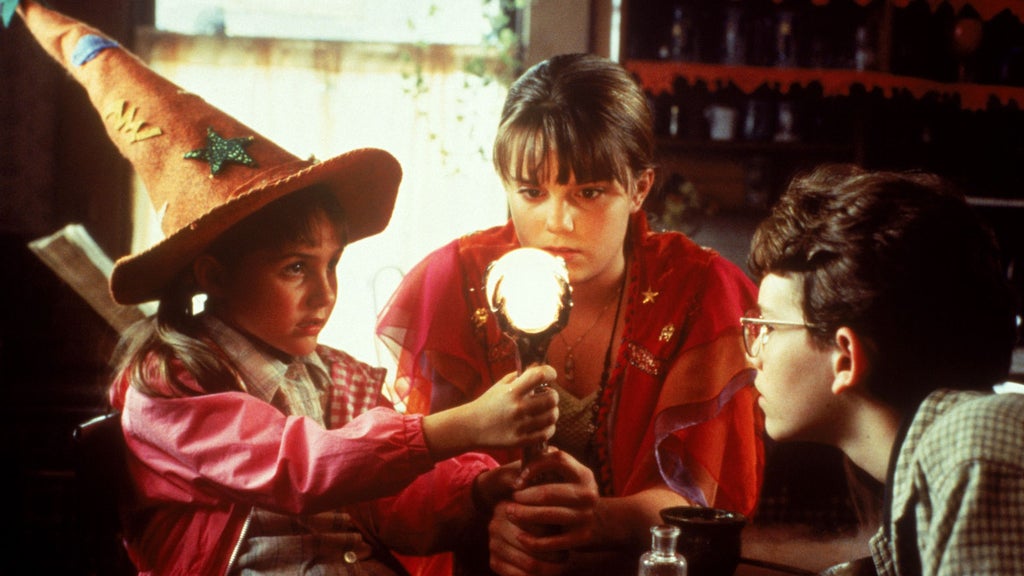
Obviously, the core condition on this one would be that Kimberly J. Brown must return as Marnie, and that’s that. All due respect to Sara Paxton, who simply took an exciting job that was offered to her, but the People’s Princess Marnie will always be Brown.
As a secondary condition, Emily Roeske would have to return as Sophie, should she be interested. I have long maintained that Sophie was the true hero of “Halloweentown,” and as an adult, we and she deserve to see that acknowledged. Where would “Halloweentown” even be today if she hadn’t remembered her grandmother’s spell or sensed the bad man that was Kalabar?
Of course, it’s hard to imagine a “Halloweentown” movie without Debbie Reynolds too, as Grandma Aggie was one of her finest roles in her later career. But we all know she’d have taught her grandkids well, and her legacy would undoubtedly be honored.
But really, just one more here, Disney. We certainly aren’t saying it deserves another trilogy.

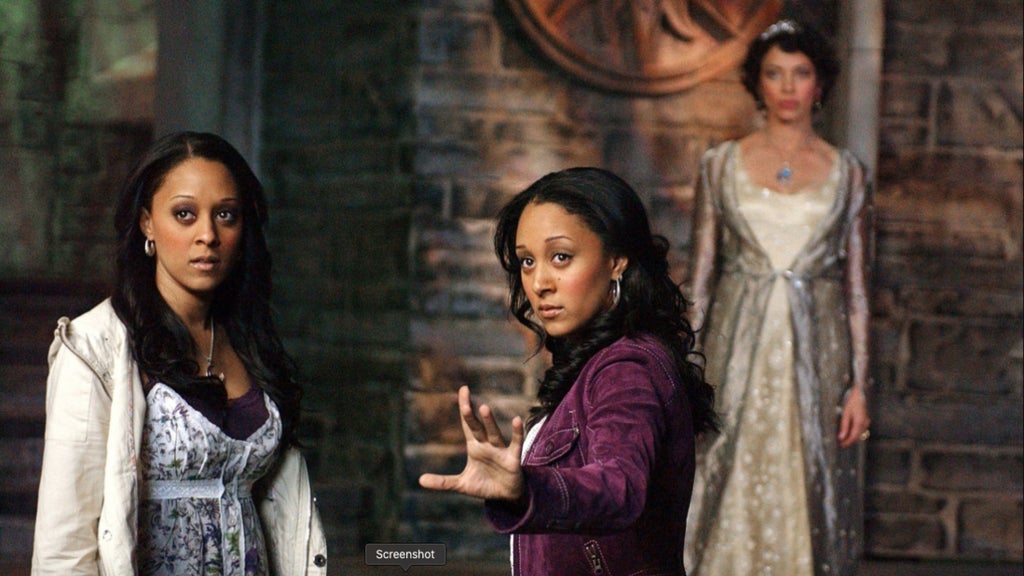
Speaking of spooky season, where are we on a third “Twitches” movie, hm?
These movies starred Tia and Tamera Mowry as twin witches — twitches, get it? — who were separated at birth for their own safety. When they reunite on their 21st birthday and discover their powers, things get intense. Together, they must save their family and their true homeland.
Both Tia and Tamera Mowry have said over the years that they’d be down for it, but that the script would really have to be just right, because the first two movies are too sacred. And to be clear, I agree on this one. But “Twitches” is certainly ripe with possibility, and it’s been almost 20 years since the first sequel released, so it’s not like it would feel too soon.
Our condition on this one? Get Aly & AJ to record another song for the film, pretty please.

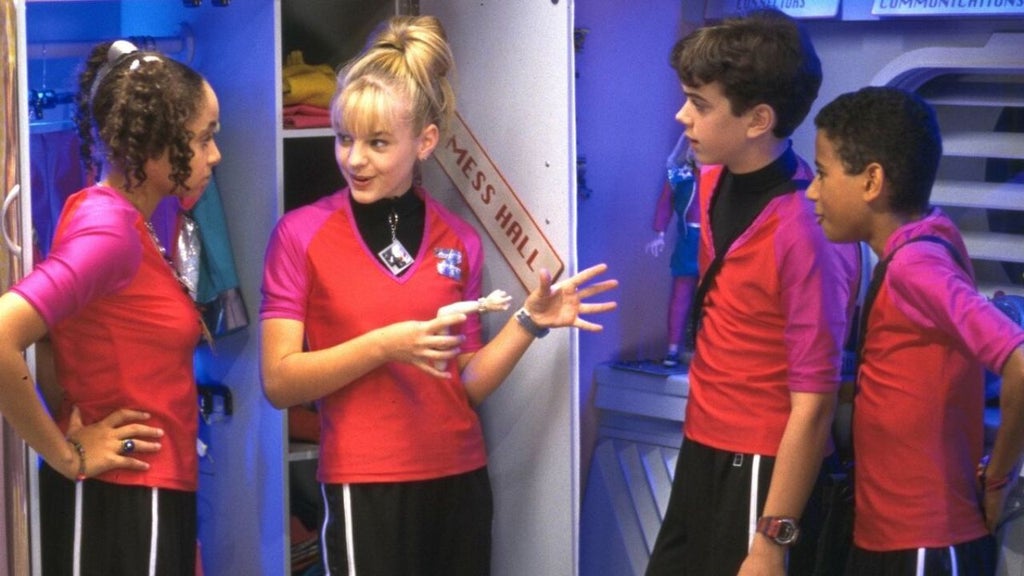
Admittedly, we might be a bit early on this one, considering that the future “Zenon” predicted hasn’t actually come to pass yet. (Among the many things in their potential future: a President Chelsea Clinton in 2049).
This movie starred Kirsten Storms as Zenon, a young teenager living on a space station orbiting Earth with her parents. She tends to get into a lot of shenanigans though, and when she goes one too far, she gets grounded — literally. Sent to Earth to live with her aunt, Zenon is devastated. That devastation turns to fear and desperation, when she learns that the billionaire funding the space station is intentionally sabotaging it to collect insurance money.
This movie was so good, it got two sequels, both of which are pretty fun. Why not give us a fourth, with an updated idea of the future? It may be bleaker, but it’s nothing a new banger from Proto Zoa can’t fix.

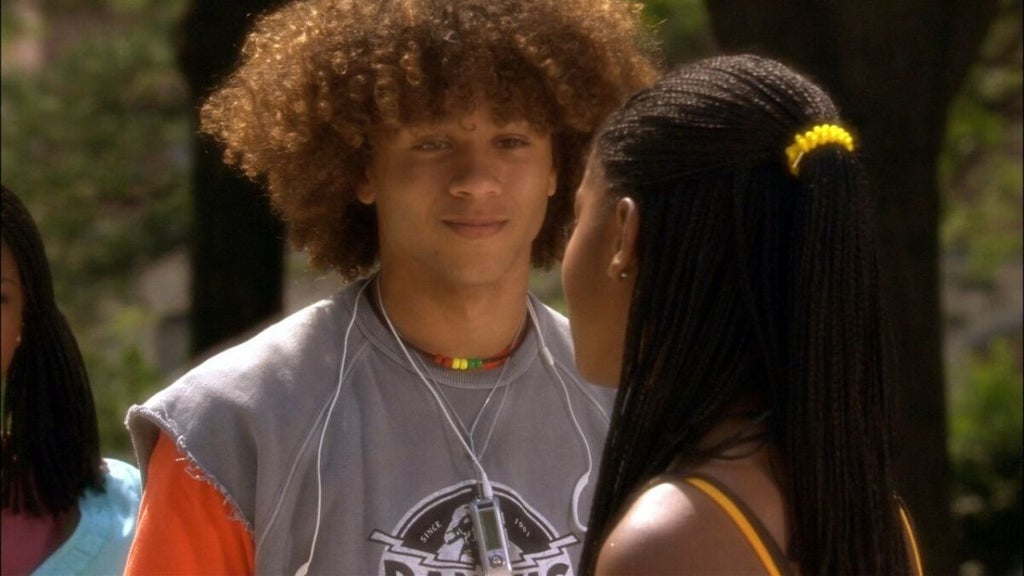
If there’s one thing that Disney Channel did successfully with its original movies, it’s highlight somewhat obscure sports. From “Motocrossed” to “Alley Cats Strike” and more, we saw a whole bunch of very cool kids making these activities look very cool.
That very much rings true for “Jump In!” too. Here, Corbin Bleu starred as a boxer who became a competitive double dutch stepper, alongside Keke Palmer and her friends. What followed was a legitimately good story about toxic masculinity, and how you should pursue things you really love.
Given his Broadway career, we know Bleu still has the moves to pull off some kind of revival, and Palmer is still an unmatchable talent. Let’s see what they can do with the ropes again! (Or, you know, some other sport they like).
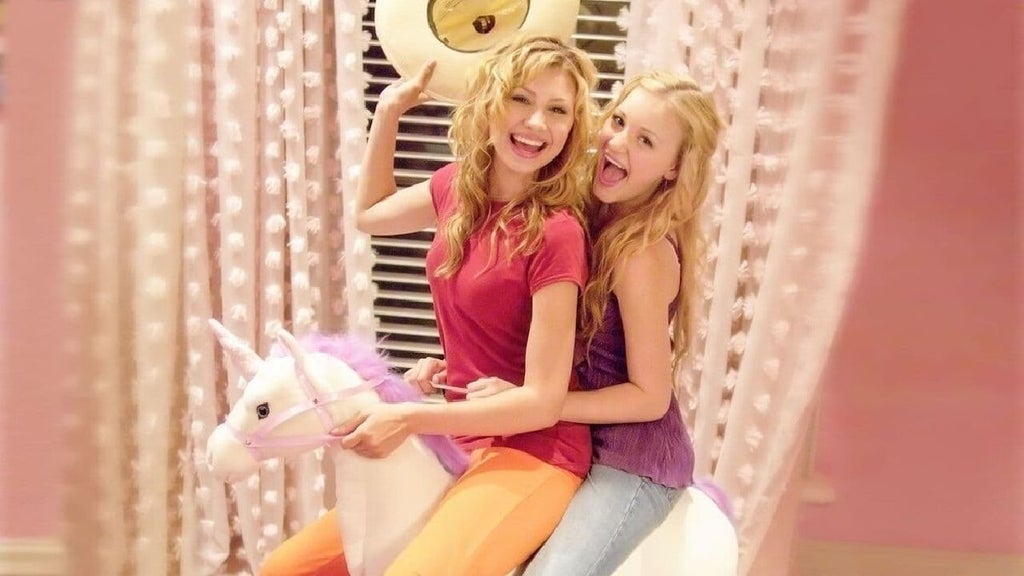
Even in 2006, there was something incredibly satisfying about seeing two spoiled rich girls learn the value of a dollar and some hard work. Imagine doing this again in 2026.
Alyson and AJ Michalka starred in this movie, as the daughters of a Dairy Factory owner. They’re painfully unaware of the world around them, and deeply entitled, so their father sends them to work. Along the way, they learn that someone’s been stealing money from the dairy, and its now at risk of shutting down. Naturally, the girls change their ways and come together to help.
In an era of influencers, “Cow Belles” would be especially easy to update, and given the right talent, could be fun to see an updated version of.

>
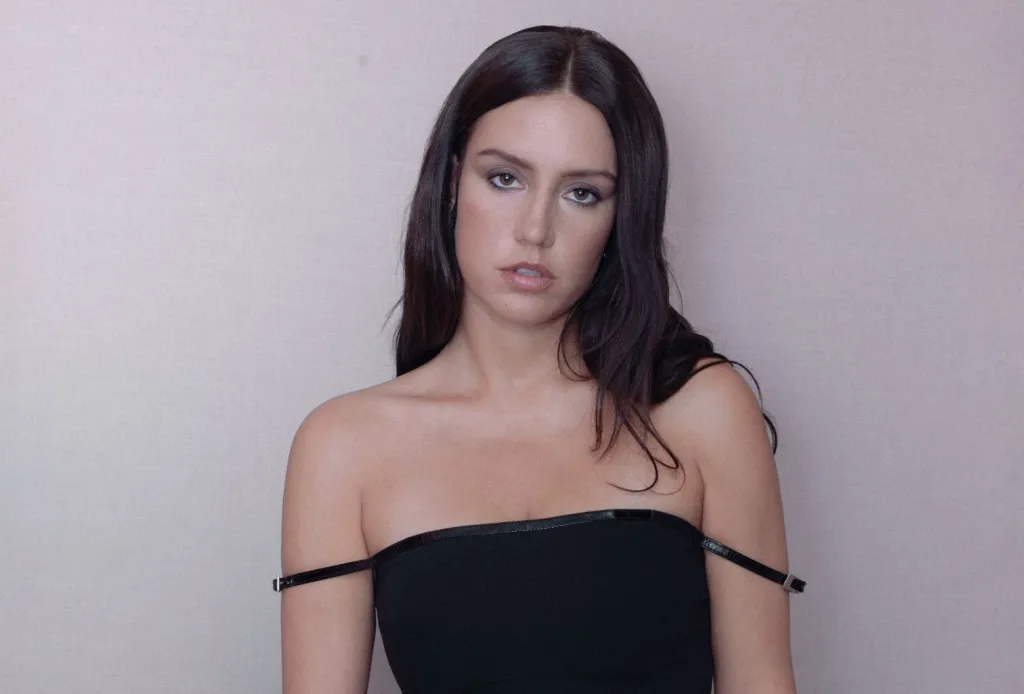
EXCLUSIVE: Adèle Exarchopoulos (Blue Is the Warmest Color) has landed a lead role opposite Zoë Kravitz in Apple‘s mystery movie from My Old Ass helmer Megan Park, sources tell Deadline.
No word yet on Exarchopoulos’ part. Reps for Apple declined to comment. This will mark the decorated French actress’s first American studio lead role.
Park’s new film is untitled; its logline is being kept under wraps. Park is directing from her own script and exec producing, with Apple Studios and LuckyChap to produce in association with FilmNation. Tom Ackerley and Bronte Payne are overseeing for LuckyChap.
Exarchopoulos broke out with her lead role opposite Léa Seydoux in the romantic drama Blue Is the Warmest Color from Abdellatif Kechiche. In the film’s 2013 premiere at Cannes, she became the youngest-ever winner of the Palme d’Or, sharing the honor with Kechiche and Seydoux.
Exarchopoulos’ upcoming slate includes a pair of French films: Jeanne Herry’s Garance (Another Day), out in France on September 23, and Christophe Honoré’s Orange-Flavoured Wedding (Mariage au goût d’orange), which releases there on December 9.
A two-time César Award winner who voiced the role of Ennui in Pixar’s Inside Out 2, she is repped by UTA, Adequat in France, and Nour Abdelnour et Compagnie.
>
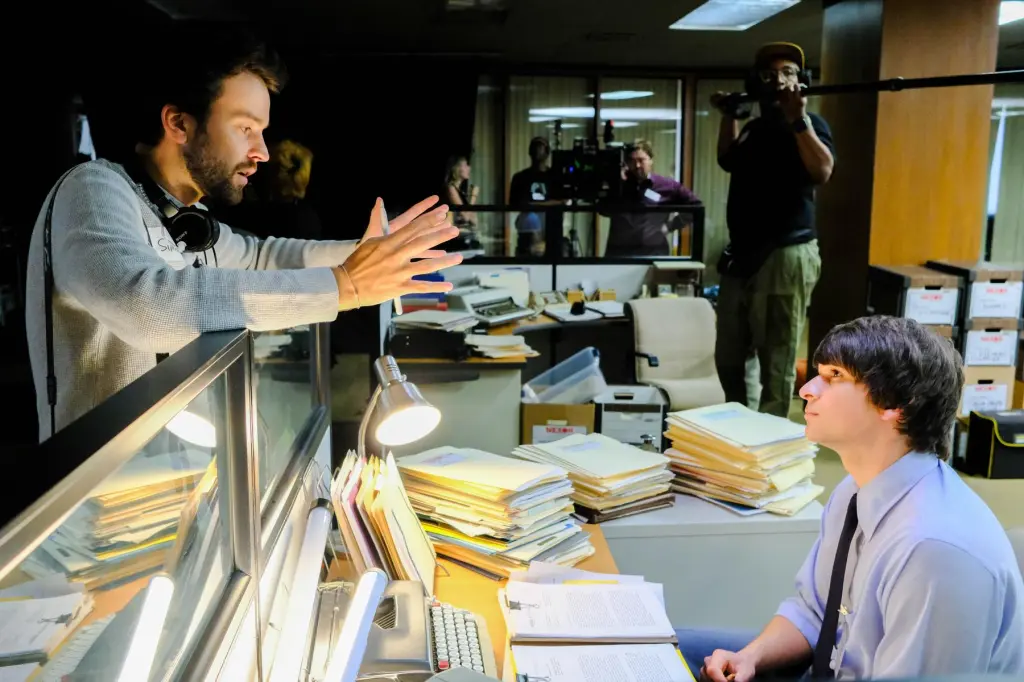
In Simon Schneider’s Degree of Certainty, knowing the truth and acting on it are two very different things.
Set in 1982, the 16-minute short follows Jackson Miller (Trace Guzmán), a young risk analyst at a major U.S. oil company facing mounting pressure as plunging oil prices cost the corporation millions. Looking for a way to prove his value, Jackson instead discovers troubling research from the company’s own climate scientists projecting a rapid rise in global temperatures. The findings present both the company and Jackson with a choice: confront what the science warns them about, or protect the business built around the very industry contributing to the problem.
Inspired by true events, Schneider’s AFI thesis film, screening at HollyShorts 2026, uses that conflict to examine how corporate self-interest, individual ambition, and moral compromise can collide, and how decisions made behind closed doors decades ago continue to resonate amid today’s climate crisis.
Here, Schneider discusses the history behind the film, recreating the 1980s on a student budget and the morality plaguing the climate crisis conversation.
DEADLINE: First, I want to ask, since this is your AFI thesis film. How did you end up at AFI?
SIMON SCHNEIDER: I’m from Germany. I grew up there. I’m the son of a psychologist and a judge, and I was brought up in East Germany. That background taught me at a young age that change and the fight for an equal, more just system are not only possible but necessary. That’s why I’ve always been drawn to political and sociopolitical storytelling. So, I studied filmmaking in Cologne for my bachelor’s degree. My thesis film there won a bigger award in Germany, and I used it as my application film for American film schools because it had always been a dream of mine to study in the U.S. I applied to AFI and got in, which was a dream come true. I studied there starting in 2023, and I just graduated with my thesis film, and I finished it in December last year. That’s how the German ended up in Hollywood.
DEADLINE: Where did the idea for this short come from?
SCHNEIDER: In my work, I’m always drawn to understanding how the world we live in works on a systematic level and how it ended up this way. I’m fascinated by trying to put my mind in the rooms where decisions are being made and seeing how powerful people make decisions. When I first read about this story, I was aware that the big oil corporations were involved in climate-change denial. But what was very new and fascinating to me was that they were actually major drivers of climate science in the first place.
Besides NASA, these were institutions in the 1970s that funded climate science very heavily, mainly to discover oil, which was interesting and ironic. The more I researched, the more I found a tale that I tried to put into those 16 minutes. It’s a story that spans three or four decades, and it’s ongoing. You have an institution that is fully based on science; they’re science companies, in the end, with very innovative products, and then they turn against their own scientists and their own research because it becomes threatening to their own interests.
That was very fascinating to me because it’s not only a big explanation for why we ended up in the position we’re in, but it’s also a tale about what happens every day and what I think we feel every day: how an institution turns against its own values. When we look back at pivotal moments in history, we can make predictions or decisions about how we should act in the future. That fascinated me, even though it’s such a huge story and it’s rare to tackle something like that in a student film.
DEADLINE: What were some of your inspirations for the short?
SCHNEIDER: The conspiracy political thriller is its own genre. We watched a lot of films from that era. All the President’s Men was a big one because it shows the process of uncovering something big. Margin Call was very influential for the way it dealt with the financial crisis, and Spotlight was another. We felt those films tell stories about groups of people trying to uncover something systematically, or about how a system deals with an issue, rather than focusing purely at the individual level. We were curious about films that show how systems play against each other, like journalism versus corporations. That was an interesting angle for us, and those movies were the most influential ones.
DEADLINE: Outside of the political wheelings and dealings, I was really impressed by the costumes, make-up and hair. Discuss the collaboration with your craft teams.
SCHNEIDER: For us, it was super important to try to be as period-accurate as possible while being on a student budget. As you can imagine, that’s always a challenge. I was blessed with a great team. Coleen Chan, our costume designer, did a fantastic job, as did Jessica Burnam, our production designer, and Brandy Marlin, our head makeup artist. We all looked very closely at references from the 1980s, especially those big corporations at the time, particularly oil corporations that were on the brink of becoming what they are today while also trying to be very cutting-edge for their time. That was exactly the period we were trying to nail. We did hair and makeup tests to make sure everything looked as period-accurate as possible.
For the costumes, we were also blessed to be shooting in Los Angeles, where you have a lot of options for vintage clothes that are actually from that time and have the right fabrics. The same goes for the prop houses we used in LA. You can actually find props from the period. A lot of the work was about building this world convincingly, seeing what the locations we secured offered, and figuring out how we could add to them to build it.
DEADLINE: The topic of this film is so relevant for today. What was particularly challenging about weaving this story together?
SCHNEIDER: Besides the budget, the first challenge was the writing. How do you tell climate stories? One reason we don’t see as many climate stories is because it’s particularly difficult. The climate crisis happens invisibly, and we have to find a way to make it visible in a movie while keeping it gripping and engaging. That was the biggest challenge at the writing level: fitting the complexity and the entertainment into 16 minutes of a short film. In the end, it’s people talking in a room, so how do you make that cinematic?
The second challenge, also in the writing, was figuring out how to balance everything we found in our research. All of this is based on true events. There are publicly accessible research reports where you can read about these things happening within these companies. How do you bring that into a fictional setting that is concise but truthful? At a production level, it was about conveying that world convincingly and finding an emotional angle for the audience in a story like this. Those were the things I was trying to find the right angle into as a writer-director.
Degree of Certainty
AFI
DEADLINE: Something that really struck me was the turn the lead makes by the end of the short. Throughout the film, the corporation constantly looks for ways to justify not making changes. What do you want people to take away from that ending?
SCHNEIDER: My goal was to tell a story about a young man who, I think, a lot of young people will face this, and every person will face this at some point in their career: How far do I go in order to act upon my values, and how much do I go against them to make money or to be a part of a prestigious company?
That’s the pivotal moment he’s facing, which I found relatable as a young man in the early stage of my career as well. He knows what they’re doing is wrong, but then he decides to stay at the company. We see he’s becoming part of the propaganda machine that’s starting to kick off. But isn’t this a weird place? On the one hand, he tries to make change and tries to lead the company into a better path. On the other hand, he’s just being used by the corporation.
That’s what the ending tells us. It’s not an uplifting ending. You don’t leave the movie feeling hopeful about change. That’s something I would love to explore more in a feature-film version that I’m currently working on with my producer, Maxwell Kagan, to go more into what happens after that and what the fight could look like in an engaging way.
For the short, it’s about understanding and recognizing that these were decisions made, and that we, as people, have a chance to make decisions ourselves. We are in control of our own decisions. If we don’t want those decisions to be made, we have to make different choices. It’s more about how not to do it and how not to end up in the position we’re in.
DEADLINE: There’s something very realistic about that ending. In a lot of climate stories, there’s almost an expectation that the takeaway is, “Everyone go recycle.” But this feels more complicated and grounded in reality.
SCHNEIDER: I think it’s even true on the corporate side. Those corporations had huge research programs in renewable energy at that time. The pitch the character makes in the middle of the film, in the boardroom, that they should transition to the frontier of this new technology was something they actually could have done.
But as we hear from the CEO, and as the arguments change throughout the short, he makes the same decision: “I’m not the energy minister. I’m not the health minister. My job is to make this company prosperous. They’re in this oil crisis that we’re weirdly facing now as well. I tried to show a system where everyone isn’t necessarily evil. They’re just doing their jobs. And by doing their jobs well, we end up in the circumstances that we live in.
DEADLINE: Is this your first time out on the Oscar-qualifying film circuit? I know you have HollyShorts coming.
SCHNEIDER: Yeah, we just hit up a festival in Rhode Island. Now HollyShorts. We’ll also be screening at the Climate Film Festival in New York in September. I’m very excited because that’s where the crowd is for this film.
We also got into Bengaluru, the Oscar-qualifying festival in India, and Aesthetica, the BAFTA-qualifying festival in the U.K. Those are some of the new things that are happening. I was on a festival circuit in Germany before, but not in the U.S. and not as international as it is right now. It just started, so I’m very excited about it.
DEADLINE: What are you working on next?
SCHNEIDER: My debut feature, Unter Mietern, has just received full production funding in Germany with production scheduled for Fall 2027. I’m developing that along with a feature adaptation of Degree of Certainty with Maxwell Kagan producing.
>
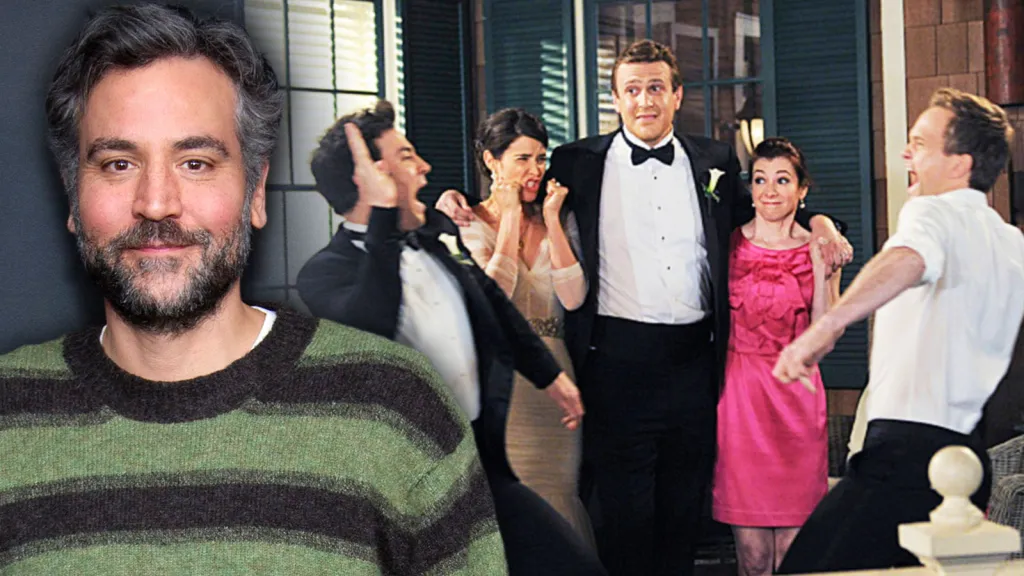
Josh Radnor is opening up about where he stands with the rest of the cast of How I Met Your Mother, 12 years after the series completed a nine-season run.
The CBS sitcom followed Radnor’s Ted Mosby and his group of friends in New York City as he recounts to his children the events that led to him meeting their mother.
Despite the ensemble cast portraying a close-knit friendship group on camera, it seems the former co-stars have not been in touch much off camera.
“No,” Radnor said on the Half the Picture podcast when asked if he was still close with his HIMYM co-stars. “Not even a little bit.”
He added, “I don’t mean that in any dramatic way. It’s just… We had Neil [Patrick Harris] on the podcast, and he and I had a really interesting conversation about some of the tension we had on set that was fascinating and kind of healing.”
Radnor is referring to a How I Met Your Mother rewatch podcast he co-hosts alongside series co-creator Craig Thomas. Harris was a guest on one episode earlier this year.
The actor also noted that he and Jason Segel “send each other texts every once in a while when something reminds us of something funny on set,” adding, “But I haven’t seen him in a really long time.”
In reference to Cobie Smulders, Radnor said that she’s been on the podcast several times and he’s “seen her mostly on Zoom.”
Radnor said that the last time he saw his co-star Alyson Hannigan was at his wedding at the beginning of 2024.
“I have love for all these people,” he said. “It’s like college where you have this very intense time together, and you think you’re going to be — you can’t imagine not seeing each other every day because you’ve seen each other every day for so long. And then it just disperses, and you just go out and live your life.”
“I think that there’s a yearning, especially when a show is so centered around friendship — people really want to believe that me and Neil and Jason are hitting bars in New York City together. They really want to believe that,” Radnor continued. “I think it’s a little more like family than friends in that you don’t get to choose your family. We were cast. We didn’t choose each other. And family dynamics come out to play when you’re in an environment like that for so long. But you also have love that is quite deep and rich and probably everlasting, but it’s not an active love. Acting is like love affairs that you have, and then you move on.”
Watch Radnor’s full interview in the video below.
>


Search For Canadian TV Actor Stewart McLean Now Homicide Investigation


These ’90s fashion trends are making a comeback in 2017
According to Dior Couture, this taboo fashion accessory is back
Model Jocelyn Chew’s Instagram is the best vacation you’ve ever had
Emily Ratajkowski channels back-to-school style
9 Celebrities who have spoken out about being photoshopped
Your comprehensive guide to this fall’s biggest trends
A photo diary of the nightlife scene from LA To Ibiza