
Hayden Panettiere and Emma Roberts in Scream 4.
Courtesy of Everett Collection


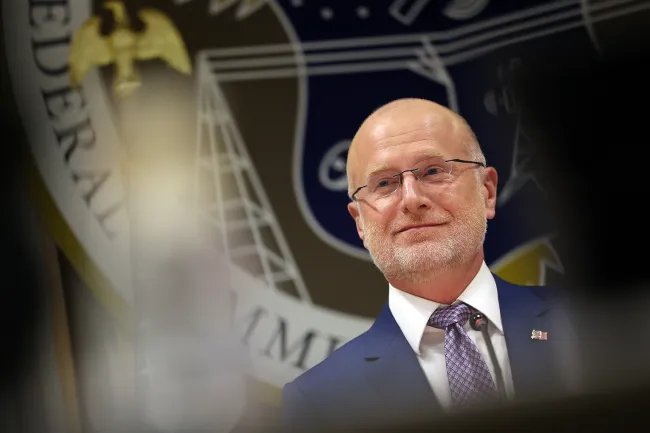
You know things are rosy in Hollywood when one of the biggest legacy studios is suing the federal government. On Tuesday, Disney and ABC filed a lawsuit against the FCC, the Federal Communications Commission, accusing it of violating its right to free speech through the agency’s aggressive regulatory moves.
ABC’s lawsuit plainly says that the FCC is trying to suppress its speech and is leading a “retaliatory campaign” for the simple reason that “it disapproves of what ABC broadcasts.” FCC Chairman Brendan Carr in recent months has pushed for ABC’s broadcast licenses with its eight affiliate stations it owns to be put up for early renewal, at the earliest two and a half years before their expiration. If the FCC were to successfully strip ABC’s licenses in those eight markets, it would force those local stations off the air. ABC’s lawsuit seeks to stop that.


“With the threat of non-renewal or revocation of its Stations’ broadcast licenses on the line, ABC cannot ignore the consequences of any decision that might anger the Administration or the FCC Chairman,” the lawsuit reads, adding later, “The consequences of the Administration’s campaign against free speech reach well beyond ABC. If the Administration gets its way, the message to every media company in the country will be unmistakable: tell only the stories the Administration deems favorable, or face the coercive machinery of the federal government. In such a world, the press could in no way be described as free.”
It sounds like the start of a long campaign over the right to free speech and defending the free press and entertainment industry from being bullied by the Trump administration. Disney’s lawsuit invokes language that makes the stakes seem much higher than one company. But Ray Seilie, an attorney with Kinsella Holley Iser Kump Steinsapir (KHIKS), believes it to actually be a low risk move for Disney. If it wins, it can get the FCC off its back and would look like a heroic of free speech. But if it loses, it’s only on the hook for the FCC to play its process out, try and take more adverse action (like revoking its license altogether), at which point Disney could then potentially take the FCC to court again.
“What Disney’s arguing here to try to get around is that the license renewal demand is actually a sham, that the FCC doesn’t have a good faith belief that ABC’s licenses should be revoked for whatever reason the FCC is allowed to revoke them,” Seilie told IndieWire. “Therefore the court should step in now and not allow the Trump administration to use the burden and cost of a license renewal process to punish broadcasters who the Trump administration perceives to be expressing themselves in a way that they don’t like.”
All this started with the outrage last year over Jimmy Kimmel’s monologue joke concerning the Charlie Kirk assassination, a move that got Kimmel taken off the air by Disney after some affiliate stations said they would pre-empt his show and refuse to air it. But President Trump has also taken issue with “The View,” and most recently, he railed against ABC’s decision to not air one of his primetime addresses on July 16, leading him to call for ABC’s licenses to be revoked.
The FCC is saying its review is based on an investigation into Disney’s DEI policies, but the lawsuit points out that any adjudication the FCC brings against it would be “a charade,” one that would either drag out endlessly with costly litigation and more potential threats constantly hanging over its head, or it would force Disney off the air entirely.
Much like when Trump said in his first term that his immigration and national security push was actually just a Muslim ban, or countless other times in which Trump has blurted out his real intentions, Trump’s words have effectively shown the FCC’s cards and made any legal action harder. But Seilie explains that the reason Disney and ABC likely filed this lawsuit now is because the FCC is now taking concrete action against them, something Disney can actually challenge in the courts. When the Kimmel drama initially happened, there was public outrage and a lot of big talk from Carr (remarks like “we can do this the easy way or the hard way” that were widely criticized), but looking to review licenses, something it has the authority to do, looks a lot more like retaliation.
In response to the suit, an FCC spokesperson told IndieWire, “All broadcasters have a legal obligation to operate in the public interest — even Disney. The FCC has been examining claims that Disney engaged in illegal DEI discrimination for over a year. Disney is obviously very concerned about the FCC’s proceeding, as evidenced by their ongoing campaign of disinformation as well as their decision to ask a court to stop the FCC from further pursuing matters. The FCC will continue to follow the facts and law wherever they lead.”
On the other side of the coin though, FCC Commissioner Anna M. Gomez, the Democrat commissioner with the FCC, applauded Disney for taking a stand against the administration’s censorship threats.
“For months, the FCC has waged a campaign of censorship and control against Disney’s ABC stations, using the threat of broadcast license revocations to punish a company for speech this administration doesn’t like. I have long called on companies to push back against this kind of government intimidation, and I’m glad Disney has shown courage and stepped up. This should be a welcome sign for every broadcaster who has felt the weight of this overreaching government pressure in silence,” she said. “I am hopeful that this will mark the beginning of the end of this administration’s disregard for the Constitution and the law, and that the coming months will bring the costly legal defeat this agency has been asking for since it started down this path. It is time this administration understands that the Constitution does not bend to political convenience, and that the First Amendment protects the news and commentary Americans see on their screens even when those in power wish it didn’t.”
There’s a long history of broadcasters suing the FCC for perceived speech issues, and in many cases, the FCC usually wins. The history dates all the way back to George Carlin’s “Seven Dirty Words” routine up through more recent fines levied by the FCC over expletives said on air inadvertently.
Disney, though, in the first lines of its lawsuit maybe has a sense of where this is headed and who its ultimate audience will be. The suit referenced a 9-0 decision from the Supreme Court in favor of the NRA, one that essentially said the states couldn’t use their clout to put market pressure on a group like the NRA for its speech. You might think that Disney wouldn’t want this to go to a lengthy and costly trial, but Seilie believes if we see temporary restraining orders and preliminary injunctions filed in the coming days, Disney absolutely wants some kind of judicial decision to prevent any future threats from the Trump administration and to get ahead of the burden of prepping its renewal applications.
“They’re saying the precedent’s already been set. You’re not allowed to do this, and they’re hoping that they are on the right side of this legal issue,” Seilie said.
>
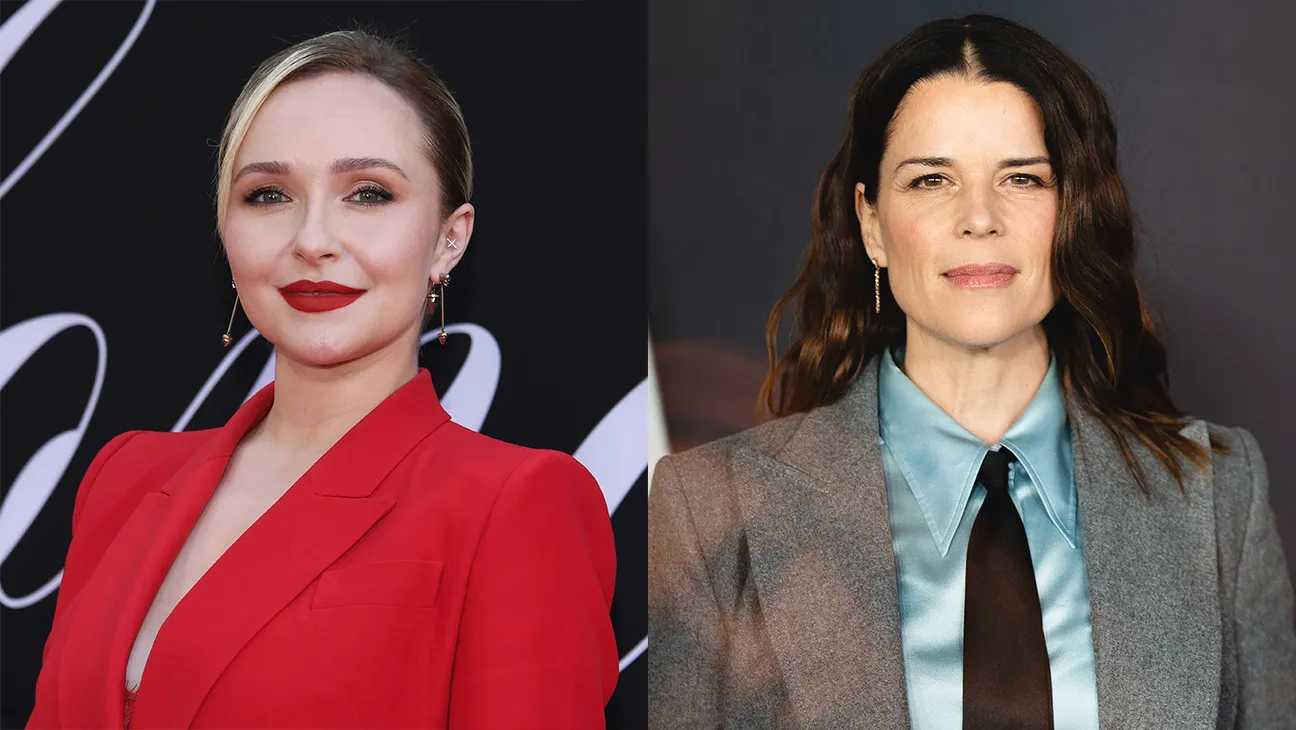
Horror fans everywhere are mourning the loss of Hayden Panettiere — including her own Scream co-stars.
In a statement shared with The Hollywood Reporter, franchise star and final girl Neve Campbell remembered Panettiere, writing, “I found Hayden to be really kind and funny and brought a magnetic energy to set. She was a true talent which shows in the decades she worked in such a short life. Her family and loved ones are in my prayers.”
Panettiere died Sunday at age 36, after she was found unresponsive and in cardiac arrest inside an apartment in Greenville, South Carolina. Officials were reportedly heard discussing an “overdose” and “cardiac arrest” around the time of her death, though an official cause of death has not yet been revealed.
While Panettiere began her career as a child and teen actress, appearing in Remember the Titans, Ice Princess, I Love You, Beth Cooper, Heroes and Nashville, she became a beloved figure among horror fans as Kirby Reed in 2011’s Scream 4.
Panettiere originated the role of Kirby, a horror-obsessed high school student who became a fan favorite. The film, which was the final installment of the franchise directed by Wes Craven, also starred Campbell, Courteney Cox and David Arquette, alongside Emma Roberts, Mary McDonnell, Rory Culkin, Nico Tortorella and Alison Brie.
Nancy Nayor, a casting director on Scream 4, recalled Panettiere’s casting in an interview with THR on Monday.
“When her name came up, she seemed like a really terrific contender for the role of Kirby and a great contrast to Emma Roberts,” Nayor said. “They were just visually and energetically very different, and we thought they would be great together.”
“I remember thinking she felt very happy. She was very excited to be in the mix and to get the role,” she continued. “The world is losing a very talented actress and beautiful soul who has shared and been revealing about her struggles along the way. One hopes that there’s a happy ending, but it doesn’t always turn out that way in real life.”
Hayden Panettiere and Emma Roberts in Scream 4.
Courtesy of Everett Collection
Nayor also reflected on the response to Panettiere’s return as Kirby in the sixth installment of the franchise.
“It made me happy that she had been so successful in Scream 4 and that fans were wanting to see more,” she said.
Following news of Panettiere’s death, several of her Scream co-stars shared tributes on social media.
Roberts, who played Kirby’s friend and fellow Scream 4 survivor Jill Roberts, shared throwback photos on Instagram, writing, “Rest in peace my sweet friend. You are so loved and you will be forever missed.”
Arquette wrote, “I love you Hayden.”
McDonnell wrote on Instagram, “Hayden you are a stunning, powerful, extraordinary soul. I loved working with you and seeing you recently and I was so proud of your determination and your resilience. This is a devastating loss. My heart and my prayers to your family and especially your beautiful Kaya. Your exceptional talent and heart will live in her. So deeply sad at this loss but heartfelt hope in the peace you so deserve now beautiful woman Hayden.”
Tortorella shared, “I keep trying to write something, but there are too few words for you. I love you. I miss you. And I’m sorry. I hope you and Jan are somewhere bigger than all of this.”
Panettiere had previously called the role “one of my favorite characters to ever play,” describing Kirby as “brave and fierce and edgy.”
Fans ultimately got to see Panettiere reprise the role more than a decade later in 2023’s Scream VI, where Kirby returned as an FBI agent. Her survival had been teased in 2022’s Scream, when she briefly appeared on a computer screen during an interview about the Woodsboro murders, confirming that she had survived the events of Scream 4.
Scream VI was the only film in the franchise that Campbell did not appear in, following a pay dispute. The film instead continued the revamped franchise introduced with 2022’s Scream, led by Melissa Barrera and Jenna Ortega.
Barrera, who was fired from the franchise after the sixth installment due to her comments on the Israel-Hamas war, also paid tribute to Panettiere, writing in an Instagram Story alongside a broken heart emoji, “Rest in peace sweet Hayden.”
From left: Dermot Mulroney, Jenna Ortega, Jack Champion, Hayden Panettiere, Jasmin Savoy Brown, Melissa Barrera and Mason Gooding in Scream VI.
>
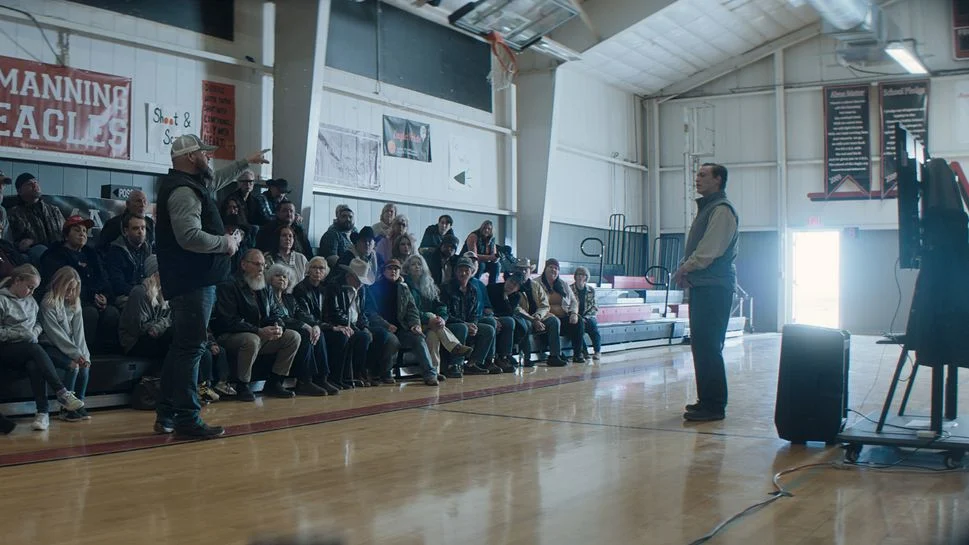
Caleb Landry Jones plays young, newly ordained pastor torn between the congregation he inherits in a small Texas town and an unhoused community desperately in need of help in Down the Arm of God, a powerful indie drama that’s clearly on the side of the angels.
With assistance from producer Luc Besson among others, Austrian-born director Peter Brunner, making his second feature with Jones after To the Night, elicits sincere, persuasive performances from his varied cast, including a fair few non-professionals with direct knowledge of homelessness. Peter Flinckenberg’s lively lensing and engagement with the distinctive light conditions of the location add an entrancing glow to the proceedings.
Down the Arm of God
The Bottom Line
Preaches to the converted.
Venue: Locarno Film Festival
Cast: Caleb Landry Jones, India Marie Cross, Nick Stahl, Mena Suvari, John Jones, Whoopie Campfield, Dene Valentine, Amanda Davis, Atlas Fulton, Fable Fulton, Glenamzye Norment, Mike Johnson, Bobbie Lo Fruge, Crystal Salazar, Cassandra Fuentes, Kip Billups, Rhonda Bennett
Director: Peter Brunner
Screenwriter: Peter Brunner, Caleb Landry Jones
1 hour 46 minutes
While all that weighs in the film’s favor, on the debit side Brunner and Jones make it pretty clear where their sympathies lie, which makes the film feel a bit manipulative and ploddingly polemical. Admittedly, viewers on the festival circuit, like those in Locarno where this debuted, and folks who might catch it on streamers or in niche distribution are unlikely to be very bothered about the film’s lack of impartiality. But arguably the script by Jones and director Brunner might have been a skoosh more impactful if the small-minded townsfolk, clearly coded as bigoted MAGA types, weren’t quite so hateful with only a few exceptions.
As the story starts, Landry Jones, himself a native Texan, is Nick, a fresh-faced minister from Dallas originally just settling into the small community near the Panhandle that he’s been assigned to shepherd. His flock consists mainly of white families whom we see mostly in their Sunday best, so it’s not easy to judge the economic realities that underpin this community, nor is the film very specific about what denomination exactly this is supposed to be. Suffice to say, that there’s no obvious dancing with snakes or speaking in tongues that suggest Pentecostalism, or choice of readings that would mark the congregation as, say, Episcopalian — although the choice of songs (like Sunday school banger “I Got the Joy Joy Joy”) Nick likes to play on the guitar lean low church.
This lack of specificity is also a bit of a flaw, because it suggests the filmmakers aren’t very interested in the theological forces and powers that be that shape what turns out to be a self-centered, possibly racist worldview. That narrow-mindedness is immediately apparent when Nick asks his congregation to help the group of unhoused people, a little over a dozen souls or so, who live in a makeshift camp on the edge of town. Most of them react fearfully and clearly want nothing to do with them, especially a classically WASP-ish blond-haired, clean-cut nuclear family led by Chris (Nick Stahl) and Anna (Mena Suvari), parents to pre-adolescent youngsters Elijah (Atlas Fulton) and Faye (Fable Fulton). Anna practically clutches her pearls when asked to help the homeless.
That said, some folks, like the local nurse (Amanda Davis), agree to come out to the encampment and treat the residents, many of whom are physically disabled, suffer from mental disorders or are war veterans probably still in the throes of PTSD. Young Raven (India Marie Cross, a real find making her feature debut here) emerges as a de facto leader of the unhoused, passionate about protecting her friends but able to see reason when Nick argues, for example, that they should come stay inside somewhere when a harsh winter storm damages their encampment.
Naturally, the townsfolk fly into a rage at the mere suggestion that the unhoused should be put up in their community hall or school gymnasium, afeard as they are that their children will be in danger. Especially fierce in his objections is John (John Jones), a veteran himself of the Afghan war who lost his legs to a landmine. When confronted with fellow soldiers among the homeless community, John simply refuses to believe them when they say they too served in the military, or berates them for not taking up the benefits they might deserve. Angry words soon turn into protests and outright violence, with the gun violence that seems as inevitable as a winter storm on the horizon.
As Childish Gambino says, this is America, and at its best moments the script captures the way this nation’s irreconcilable differences play out in arguments with people interrupting and talking over one another, all sides refusing to listen. The climax is as needlessly tragic as one might expect, although Brunner rather rushes through the aftermath in a way that risks seeming implausible.
But at least there is a tiny sliver of hope in the very last scene, which features Jones’ real father in a silent but moving cameo role. Further balm is provided by the lovely, country-folk songs by Rhonda Bennett that she both plays onscreen here as one of the unhoused people and that are heard over the end credits.
>
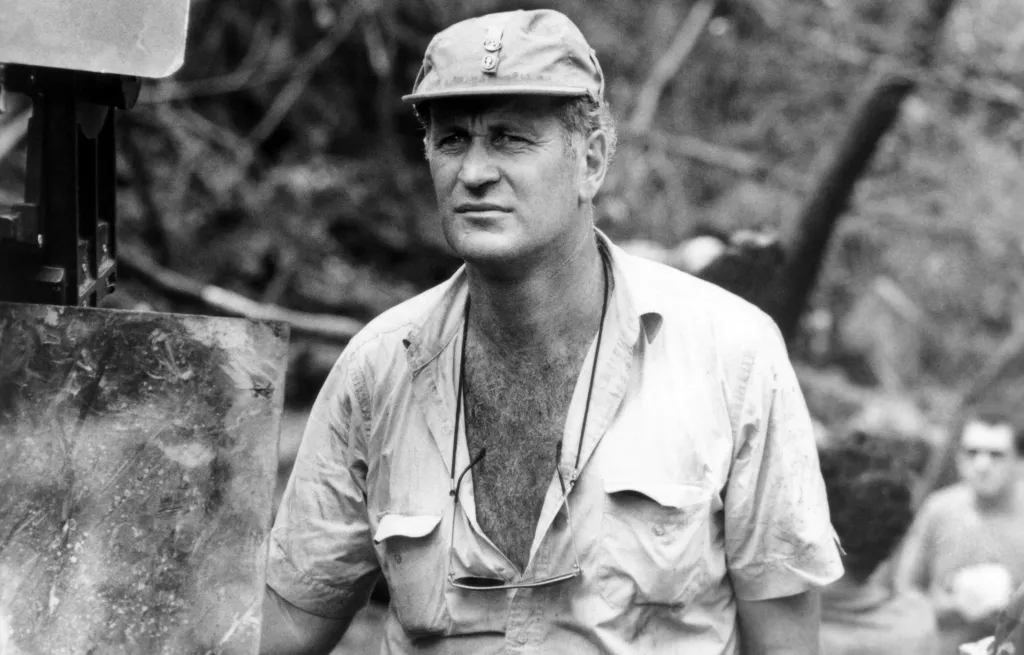
British filmmaker John Irvin, known for action movies including Hamburger Hill and Raw Deal and the BAFTA-winning TV series Tinker Tailor Soldier Spy, has died. He was 86.
According to Irvin’s producers, the filmmaker died peacefully at the UK home of his sister-in-law on August 11, surrounded by his family.
Irvin made more than 30 features in a career that spanned TV, documentaries and independent film.
Irvin was known for his versatility and breadth of career. In a 2021 interview with Roel Haanen, it was written: “Not many filmmakers directed both Fred Astaire and Patrick Swayze. Or followed up a tender, thoughtful film written by Harold Pinter with an Arnold Schwarzenegger action flick. But John did …”
Born to parents Charles and Elsie Winifred Irvin (neé Bending) his father Charles was a mechanical engineer who during the war joined the Royal Engineers and was deployed to the Middle East where he was involved in the construction of the Iran/Iraq Pipeline transporting oil from the Middle East. John Charles Greenway Irvin and his twin brother, David, were born in Wallasey Cheshire, on the 7th May 1940. Both boys went to Durham School, a renowned chorister school where John featured prominently in the choir. He was also a keen boxer and rowed competitively for Durham College
Irvin opted not to go to university; for a short while he taught Latin in a preparatory school to fund his enrollment into the London Film School. Irvin began his career working for British Movietone News. He directed his first film Gala Day (1963), a documentary financed by the British Film Institute, which was bought by the BBC. Within the same year his documentary short Inheritance (1963) was released. It was a film about the aftermath of the Algerian War, narrated by the legendary Richard Burton. It would win Irvin his first BAFTA, presented to him by Audrey Hepburn. The filmmaker would go on to be nominated for BAFTAs in three decades: the ’60s, ’70s and ’80s.
Throughout the sixties, Irvin made a number of acclaimed documentaries for his own company Mithras Films. He also worked during this time for the BBC and ITV where his work included several short films starring the young actors Edward Fox and Sir Anthony Hopkins. Irvin gave Hopkins his first TV role in The Peasants Revolt (1969), culminating in the same year was his omnibus film Beautiful, Beautiful (1969) an acclaimed documentary that highlighted photojournalists and the work of the war photographers who defined visual reporting in the 1960s. It featured Sir Don McCullin, Larry Burrows, Bruce Davidson and Eugene Smith, and was shot primarily in Vietnam, Northern Ireland and various conflict zones.
At the start of the seventies, Irvin began a prolific career in TV drama. He directed the acclaimed TV dramas The Nearly Man and Hard Times starring Timothy West for Granada TV. Then followed the critically acclaimed John Le Carre TV adaptation Tinker, Tailor, Soldier, Spy (1979) for the BBC. Sir Alec Guinness, Sir Ian Richardson, Sir Patrick Stewart, Beryl Reid O.B.E and Michael Jayston starred. The series scored multiple BAFTA wins and was Emmy-nominated in the U.S.
Guinness wrote in later years about Irvin that he “admired a director with balls behind the camera!”
For the next thirty years Irvin worked closely with Hollywood and various studios. First up of note was The Dogs of War (1980), an adaptation of the Fredrick Forsyth bestselling book starring Christopher Walken and Tom Berenger. Irvin followed this with the horror film Ghost Story (1981) starring Fred Astaire, Melvyn Douglas, Douglas Fairbanks Jr. and John Houseman. The film was the third-highest grossing horror film of its year, taking $24M at the box office.
Next, Irvin made the biographical film Champions (1984) starring Sir John Hurt, Turtle Diary (1985) was adapted for the screen by Harold Pinter and starred Sir Ben Kingsley, Dame Glenda Jackson and Sir Michael Gambon. Then Raw Deal (1986) starred Arnold Schwarzenegger. The well-received Hamburger Hill followed in 1987 starring Don Cheadle, Dylan McDermott, Michael Boatman, Steven Weber and Courtney B. Vance – a film about one of the bloodiest battles of the Vietnam War. Paramount picked the film up for release stateside.
Irvin then made the crime thriller Next of Kin (1989) starring Patrick Swayze and Liam Neeson. Eminent Domain (1991) starred Donald Sutherland and Anne Archer. Next, Robin Hood(1991) starred Patrick Bergin and Uma Thurman. Widows Peak (1993), starring Mia Farrow, Dame Joan Plowright, Natasha Richardson, Jim Broadbent and Adrian Dunbar. Then, A Month By The Lake (1994) starring Dame Vanessa Redgrave, Edward Fox and Uma Thurman. In 1997 Irvin directed City Of Industry, a neo-noir crime thriller starring Harvey Keitel, Stephen Dorff and Timothy Hutton.
When Trumpets Fade (1998), with Ron Eldard, was commissioned by HBO as a forerunner to the same network’s Band Of Brothers.
It was at this time that Irvin, a longtime client of Independent Talent Group, made the move to making indie pictures in Europe. These include Shiner (2000) starring Sir Michael Caine, The Boys And Girl From County Clare (2003) starring Andrea Corr and Colm Meaney, followed by The Moon And The Stars (2006) starring Alfred Molina, Catherine McCormack and Sir Jonathan Pryce, and The Garden Of Eden (2008) with Jack Huston, Mena Suvari, Richard E Grant, Carmen Maura and Matthew Modine.
Irvin divided the last twenty years of his life between London and the Sussex countryside where he co-founded with his producer Claire Evans their own production company DearHeart. They began research in 2008 for Mandela’s’ Gun. Developed and researched by John and Claire, it was six years in the making and shot in seven countries. In 2016, producer Vaughn Mullady joined them. In early 2017 a festival cut of Mandela’s Gun was requested by the speaker of the U.K. Houses of Parliament to be screened in honor of President Nelson Mandela in the Speakers State Rooms where Mandela had been in residence.
At the time of Irvin’s death, he was working with new material and completing a final edit of Mandela’s Gun. He was also directing a feature documentary Water From An Ancient Well about his friend, the late and great South African musician Abdullah Ibrahim.
In 1970, Irvin married Sophie (neé Litchfield) who tragically died of cancer in 1991. Together John and Sophie had three children; Emilie, Luke, and Amy Irvin (who survive him) and two grandchildren, Finn and Isla Irvin, all of whom surrounded him in his final weeks and months of his life, rewatching movies with him while Irvin still found time to dictate work to his producers.
>


Search For Canadian TV Actor Stewart McLean Now Homicide Investigation


These ’90s fashion trends are making a comeback in 2017
According to Dior Couture, this taboo fashion accessory is back
Model Jocelyn Chew’s Instagram is the best vacation you’ve ever had
Emily Ratajkowski channels back-to-school style
9 Celebrities who have spoken out about being photoshopped
Your comprehensive guide to this fall’s biggest trends
A photo diary of the nightlife scene from LA To Ibiza