
Tech
Google Reportedly Plans to Move All Pixel Production Out of China in 2027


China could soon disappear from Google’s Pixel manufacturing map. The company reportedly plans to move production of all Pixel phones, smartwatches, and wireless earbuds out of China starting in 2027.
Nikkei Asia reported that Google has told suppliers to prepare for the shift, with Vietnam and India expected to take on the work. Google has not publicly confirmed the plan, which would expand both countries’ roles in its years-long effort to reduce Pixel manufacturing dependence on China.
Vietnam lays the groundwork for Google’s China exit
Google has spent years expanding Pixel production outside China. Nikkei reported that the company plans to move all Pixel device production out of the country starting in 2027.
The technical groundwork accelerated in January 2026, when Nikkei reported plans to shift new product introduction work for flagship Pixel phones to Vietnam while development of the lower-cost A-series remained in China at the time. New product introduction, or NPI, includes the process development, verification, and refinement required before mass production.
Google has already mass-produced high-end Pixel phones in Vietnam, according to the January reporting. The latest report says successful development and production there, including investments in testing equipment and tooling, increased Google’s confidence that it could move additional manufacturing out of China.
Vietnam is also taking on more advanced electronics work. Samsung Display reportedly began producing foldable OLED panels in Vietnam for Apple this year, adding to the country’s role in higher-value electronics manufacturing.
Google’s relatively small Pixel volumes could make the transition easier. Nikkei reported that the company shipped about 12 million Pixel phones in 2025 and asked suppliers to prepare for an 8% to 10% increase in 2026. The report also noted that Google does not officially sell Pixel phones in China.
India’s Pixel manufacturing role is already growing
Google announced plans in October 2023 to manufacture Pixel phones in India, starting with the Pixel 8 and working with international and domestic manufacturers.
By August 2024, Google had confirmed Made-in-India Pixel 8 production was underway. India has since become increasingly important to global electronics manufacturing, with suppliers such as Tata Electronics expanding their role in device production despite operational risks highlighted by a major supplier data breach in June.
The latest reporting does not specify how Google would divide Pixel phones, watches, and earbuds between India and Vietnam. Moving final device manufacturing out of China also would not eliminate every China-linked dependency, because components and materials can still flow through regional supply chains exposed to concentration around critical hardware inputs.
For hardware procurement and supply-chain teams, the shift could reduce geographic concentration in Google’s manufacturing network without eliminating upstream exposure to China. It also reflects the growing ability of India and Vietnam to handle more strategically important electronics production rather than basic assembly alone.
Google’s confirmation is the key missing piece. Until the company details its 2027 timetable and country-by-country production plans, the move out of Chinese Pixel manufacturing remains a reported strategy rather than a confirmed schedule.
Read more: Google’s manufacturing push comes as its hardware ambitions expand with the new Pixel 11 lineup and deeper Gemini integration, raising the stakes for the supply chain behind its flagship devices.
>
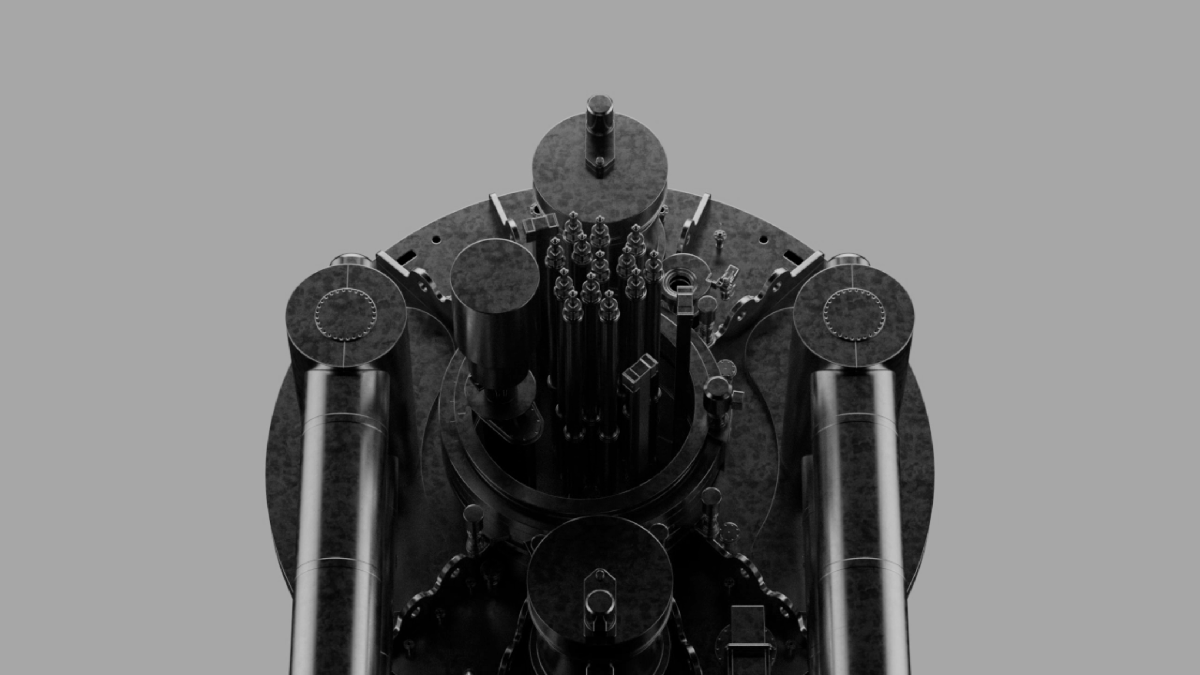
Nuclear power startups have been pitching themselves as the antidote to what ails AI data centers: power that’s always available. Bill Gates-founded TerraPower is one of the latest to throw its hat that into that ring, with Bloomberg reporting that the startup plans to announce its first data center project this year.
TerraPower did not say who the customer will be, though in January, it announced that Meta had agreed to buy eight of its Natrium power plants. The data center project, expected to break ground in 2027, would be the company’s second power plant, with its first already under construction in Wyoming.
Not every nuclear reactor is suited to data center duty, but TerraPower possesses one key advantage — energy storage — that promises to give it an edge over competitors. And it’s all thanks to renewable power sources like wind and solar.
Nuclear reactors, TerraPower’s included, work best when they’re running at full tilt. Of all the different types of power plants, nuclear reactors have the highest capacity factor — 92.5% of the time, they generate at maximum power in the U.S. But in a way, they need to be. Existing reactors are slow to ramp up and down, capable of increasing or decreasing only about 5% of their total rated output per minute, according to the National Laboratory of the Rockies.
New small modular reactors (SMRs), which many startups are pursuing, can react faster, about 10% of their rated output per minute, per NRL. But running at reduced capacity isn’t ideal — it’s hard to make money when you’re not generating electrons.
That’s true of any power plant, but it’s especially true of nuclear, which has the highest capital expenditures of any generating technology. Startups are hoping that mass manufacturing of SMRs will bring capex down, but that has yet to be proven. And if it does work, it could take a decade or more to reap the benefits. Every startup acknowledges that its early power plants will be expensive, so it makes sense to operate it them at peak capacity as often as possible.
For data centers, especially those that rely on behind-the-meter power, that poses a challenge. Their loads, especially when training AI or responding to prompts, can sink and soar quickly as GPUs respond to the tasks. The swings are so demanding that natural gas turbines have been breaking under the stress. To smooth the curve, they need to use large banks of batteries, which increase costs further.
TerraPower designed its 345-megawatt molten salt-cooled reactor to work around those challenges. One of the key considerations was ensuring the reactor could complement intermittent sources of electricity like wind and solar — the power plant needed to ramp up and down quickly. While TerraPower had renewable power, not data centers, in mind when it sketched its plans, the two are similarly intermittent, just on different sides of the equation.
To ramp quickly, TerraPower doesn’t increase or decrease the power output of its reactor. Rather, it keeps on splitting atoms, and the extra heat gets stored in a giant vat of molten sodium. When power demand spikes, the power plant can tap that reservoir to generate more steam to spin the turbines. The expensive equipment keeps working even when demand is low, allowing the company to amortize its investment over more operational hours.
The approach takes the best of nuclear power — high capacity factor — and pairs it with an energy storage technology that allows TerraPower to play nicely on a renewable-heavy grid or when connected to an data center. It’s a flexible approach that could give the startup an advantage in the race to power AI.
When you purchase through links in our articles, we may earn a small commission. This doesn’t affect our editorial independence.
>
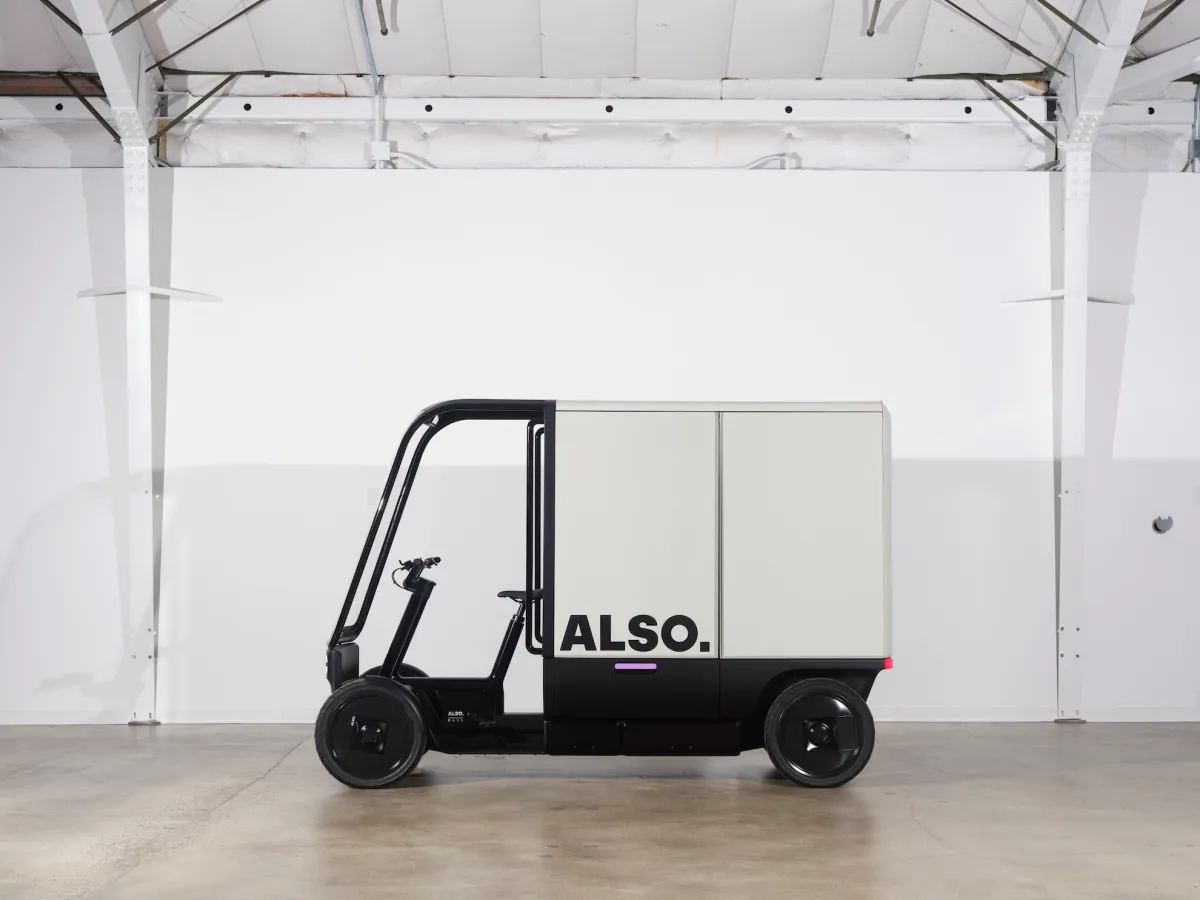
Also has raised another $150 million as the micromobility startup that spun out of Rivian last year expands its business beyond pedal-assist electric bikes and commercial cargo quads to autonomous delivery vehicles.
The Series D round was led by Prysm Capital and included existing backers Eclipse, Greenoaks, and MVP Ventures. Also has raised $455 million since its founding less than two years ago.
The new capital will be used to “accelerate the development” of the company’s autonomous driving technology and the “simultaneous progression of multiple autonomous form factors,” according to the company. These future vehicles will use the same electric architecture developed for its consumer electric pedal-assist bike and commercial electric delivery quad.
Prysm Capital co-founder and managing partner Jay Park said the firm is backing Also for the same reason it was an early investor in Rivian.
“We backed Rivian early because we saw the potential behind wonderfully designed, vertically integrated electric trucks, vans and SUVs,” Park said, adding that Also us applying that same approach to smaller form factor vehicles.
The fresh funding comes a few months since Also raised $200 million in a round led by Greenoaks, with participation from Prysm Capital and a strategic investment from DoorDash. As part of that funding round, DoorDash struck a multi-year commercial agreement to develop and deploy autonomous delivery vehicles.
While Also is increasingly focused on autonomous vehicle tech, that’s not where it started. Also began as a skunkworks project within Rivian, a pursuit driven by founder and CEO RJ Scaringe’s interest in micromobility. That team, which pulled in people from Apple, Google, Specialized, Tesla, evolved into a startup, which spun out of Rivian in 2025 armed with the name Also and $150 million in funding.
While Also is independent, Rivian is still very much tied to it. Rivian holds a minority stake, and Scaringe serves on its board. Also has previously said it will leverage the automaker’s tech, retail presence, and economies of scale as it grows.
Last October, Also revealed its first products, a $4,500 two-wheeler called the TM-B and two quad vehicles as well, one of which will be supplied to Amazon.
Also has struggled to get its ebike into customers’ hands and its launch edition was delayed for months. The company said the Launch edition is now beginning to ship to customers and has opened up the pre-order and configuration access to its performance and standard models. The company said initial deliveries of these other models will begin in fall.
When you purchase through links in our articles, we may earn a small commission. This doesn’t affect our editorial independence.
>
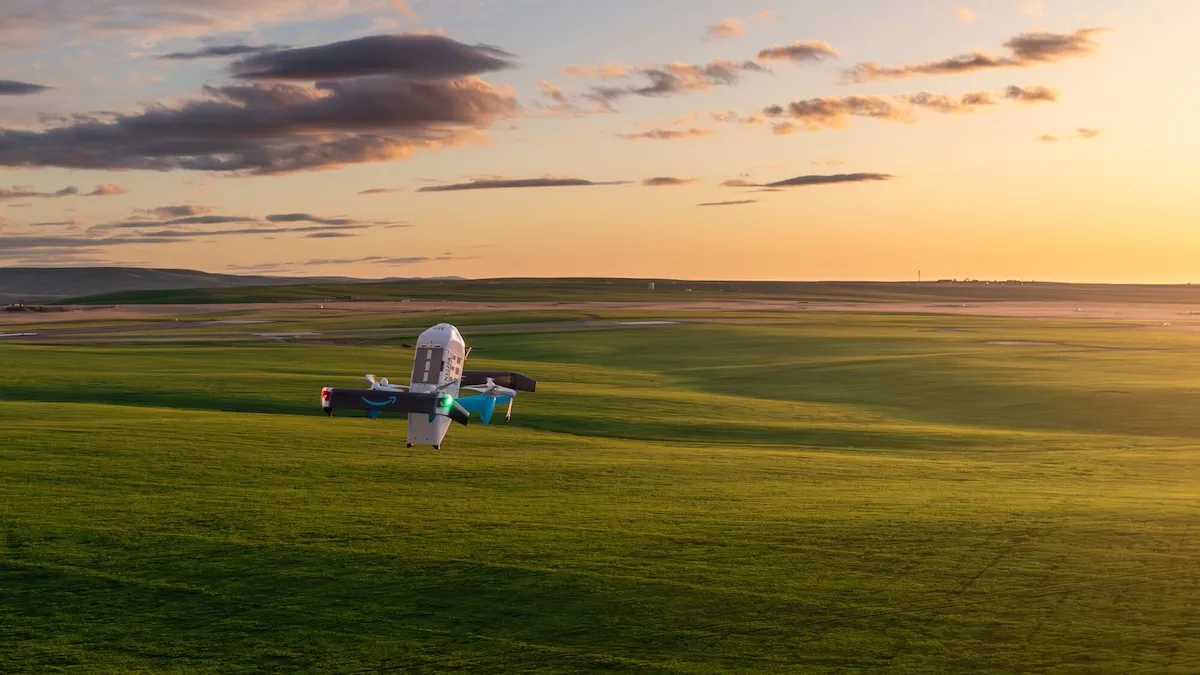
Amazon announced Wednesday a major expansion of Amazon Prime Air, its drone delivery service, with plans to reach nearly 500 U.S. cities by the end of 2026. This marks a significant milestone as it expands the service’s footprint by roughly six times its current reach.
Prime Air will soon launch in 11 locations: Tolleson, Arizona; Ruskin, Florida; Kansas City, Kansas; Papillion, Nebraska; Baton Rouge, Louisiana; Hazel Park and Pontiac, Michigan; and Richmond, San Antonio, Richardson, and Waco, Texas.
The return to Tolleson is particularly notable given a drone accident that occurred there last year. In October 2025, two drones collided with the boom of a crane. Amazon’s drones have also previously drawn scrutiny following incidents involving clipping an internet cable, and crashing into a garden and an apartment building.
This is likely why Amazon reiterated its focus on safety as part of the announcement. The company highlighted Prime Air’s “industry-leading Detect-and-Avoid system,” which is designed to continuously monitor the airspace and surroundings of each drone. The drones also rely on onboard cameras and sensors for navigation, obstacle detection, and delivery. Plus, Amazon said the drones are designed to operate in real-world conditions, including light rain and a range of temperatures.
Additionally, Prime Air operates under Federal Aviation Administration Part 135 certification, the same regulatory framework used by commercial air carriers.
“Customers already turn to Amazon for fast Same- and Next-Day Delivery, and Prime Air provides them an even speedier option when they need it, with deliveries in as fast as 30 minutes,” David Carbon, vice president of Amazon Prime Air, said in a statement, adding that the service has “already delivered hundreds of thousands of packages to customers by drone this year.”
The service currently operates across seven states, including Arizona, Florida, Kansas, Louisiana, Michigan, Nebraska, and Texas. Amazon says launches in Georgia, Ohio, Illinois, Idaho, and New York are also coming soon.
Prime members receive free ultrafast drone delivery on eligible orders of $50 or more. For Prime members placing eligible orders under $50, the delivery fee is $2.99. Non-Prime customers pay a $4.99 delivery fee. Nearly all items 5 pounds or less can be delivered by drone.
Amazon’s push comes as other major companies continue building their own drone delivery networks. Walmart and Google parent Alphabet’s Wing have been expanding a competing drone delivery operation, which the companies have described as the largest drone delivery network in the U.S. In June, the companies added seven new markets, including Phoenix, Philadelphia, and the Bay Area.
When you purchase through links in our articles, we may earn a small commission. This doesn’t affect our editorial independence.
>

What next for Mark Walter, the Los Angeles Dodgers and the Lakers?

Google Reportedly Plans to Move All Pixel Production Out of China in 2027

Dutch Kids TV Classic ‘De Fabeltjeskrant’ Gets International Revival
-

 movies3 months ago
Search For Canadian TV Actor Stewart McLean Now Homicide Investigation
-

 Fashion9 years ago
These ’90s fashion trends are making a comeback in 2017
-
Fashion9 years ago
According to Dior Couture, this taboo fashion accessory is back
-
Fashion9 years ago
Model Jocelyn Chew’s Instagram is the best vacation you’ve ever had
-
Fashion9 years ago
Emily Ratajkowski channels back-to-school style
-
Fashion9 years ago
9 Celebrities who have spoken out about being photoshopped
-
Fashion9 years ago
Your comprehensive guide to this fall’s biggest trends
-
Fashion9 years ago
A photo diary of the nightlife scene from LA To Ibiza