
Sports
How Hull City play: Direct and robust, but can they outrun their worrying underlying numbers?


With the Premier League getting underway later this week, The Athletic is tactically profiling the three promoted sides. We started with Coventry City, followed up with Ipswich Town, and today it’s play-off winners Hull City under the microscope.
Once again, Hull City head into a season battling the odds.
With pundits, fans, and computer simulations filling out their Premier League predictions, there is an overwhelming consensus that the Tigers will be relegated, with most expecting them to finish bottom.
The fact that they are even listed on the ballot is a testament to their remarkable turnaround under head coach Sergej Jakirovic, who inherited a club in turmoil when he took charge last summer. Hull had narrowly avoided relegation to League One, surviving on goal difference on the final day, and were serving a transfer embargo that limited them to free transfers and loan dealings.
Against this testing backdrop, Jakirovic guided Hull to an incredible promotion, defeating Middlesbrough 1-0 in May’s play-off final after finishing sixth in the regular campaign.
Here, The Athletic examines Jakirovic’s tactical approach as Hull brace themselves for the rigours of Premier League football for the first time since 2016-17.

Sergej Jakirovic’s pragmatism has helped Hull return to the top flight (George Wood/Getty Images)
A direct, robust style
Under Jakirovic, Hull typically line up in a 4-2-3-1 formation. They used the system 35 times last season, but more important than formation was their approach: Jakirovic shifted Hull away from a sometimes sterile possession game towards a more direct, aggressive style. The graphic below fleshes that out, with Hull averaging just 2.6 passes per sequence while recording a ‘direct speed’ (how fast the ball moved straight upfield) of 1.53 metres per second, the eighth-highest in the league.

This more robust approach may not be Jakirovic’s preferred vision for how football should be played, but he is not a dogmatic idealist. Instead, he tailors his approach to the players at his disposal. “My football philosophy is to adapt as soon as possible to the team, to develop them,” he said at his unveiling. “I like attacking football, but we need such a profile of players.”
Jakirovic’s style is a natural fit for the squad, particularly after Hull signed centre-forward Oli McBurnie on a free transfer last summer, arguably the division’s signing of the season.
McBurnie is something of a throwback; a physical target man who relishes gritty duels and aerial battles. Watch how often he starts a game by barrelling into a full-back with the ball nowhere in sight. Hull completed 24.8 long balls per game last season, the third-highest in the league, with the majority aimed towards McBurnie.
Along with providing a regular supply of goals — McBurnie scored 17 times in the regular season, the second-most in the division, behind Swansea City’s Zan Vipotnik (23 goals) — he gives Hull an effective, if fairly blunt, creative outlet, also laying on eight assists. Even when he does not win the initial header, his physical presence creates loose balls, so Jakirovic instructs his quicker, more diminutive attackers such as Joe Gelhardt and Mohamed Belloumi to swarm around him and pounce on those second balls.

Ollie McBurnie’s physicality is one of Hull’s main weapons (Ben Stansall/AFP via Getty Images)
Second balls and counterattacks
Hull’s prowess at mopping up second balls is not limited to McBurnie or advanced areas. It is a hallmark of their harrying, bustling approach across the pitch, with Jakirovic frequently stressing their importance in press conferences. Pouncing on loose balls while opponents are disorganised gives Hull the perfect platform to counter, an area in which they excelled last season. They scored 12 goals from Opta-defined ‘fast breaks’ (counter-attacks), second only to Preston North End, with Jakirovic calling his side the “best in transition in the league” after the play-off final.
Once Hull break, they often look to hit the wings immediately, with no Championship side completing more switches of play than their 111 last season. Many are directed towards Ryan Giles, their attack-minded left-back, who regularly pushes forward on the overlap and provided eight league assists last season (illustrated below).

“The plan was if we take the ball in the midfield area, immediately we switch the side or we play forward,” Jakirovic said after Hull’s 4-2 win over Derby County in February.
Defensive vulnerabilities
Promoted sides are almost always forced to play with less of the ball, so Hull’s low-possession, counter-attacking style should, in theory, be better suited to the step up than a more expansive approach. But despite SkillCorner data showing that Hull spent a greater share of time in a ‘low block’ than any other Championship side last season, they were leaky at the back, conceding 66 goals, more than any promoted side in the past 15 seasons.
And the underlying numbers suggest it could have been a lot worse. Hull’s expected goals conceded stood at 82.5 last season, better only than bottom-placed Sheffield Wednesday. On average, Hull’s opponents scored 0.34 fewer goals than expected per game, with no side across Europe’s top five leagues benefiting more from wasteful opposition finishing. Premier League opponents are unlikely to be so forgiving.

It is little surprise, then, that Hull have prioritised defensive reinforcements this window. Senegalese centre-back Nobel Mendy has arrived from Rayo Vallecano for a club-record fee (undisclosed, but higher than £20m), while 18-year-old Australian ball-playing defender Lucas Herrington joined from Colorado Rapids for $23million (£17m). They also brought in Konstantinos Tzolakis from Olympiacos, the standout goalkeeper in the Greek Super League last season.

Can goalkeeper Konstantinos Tzolakis help shore up Hull’s defence? (Dimitris Kapantais/SOOC/AFP via Getty Images)
Part of Hull’s defensive frailties stemmed from their inconsistent press, which often lacked full commitment, leaving large gaps for opponents to exploit. In the play-offs, Jakirovic tightened things up with a back five, doubling down on Hull’s counter-attacking strengths and picking his moments to press higher up the pitch. This pragmatic approach could serve Hull well, particularly in the opening weeks as they adjust to the intensity and attacking quality of the Premier League.
Ultimately, irrespective of the tactical approach they adopt, Hull face a huge challenge to survive. The graphic below shows each squad’s market value, as estimated by German website Transfermarkt, with Hull cast far adrift.

Even with recent additions, the quality of Hull’s squad remains far below the Premier League standard. But Jakirovic has forged a side that embraces the underdog role, one that produces its best football when its back is against the wall. They’ll need to.
>

When David Jackson woke up in hospital and saw he was still wearing his rugby boots, he knew something terrible had happened. He just didn’t know what.
He turned to the familiar face sitting next to his bed and asked what had happened.
But the answer — that he had had a seizure on the pitch after clashing heads with a teammate in training, which had also led to a bleed on the brain — was not the first time he had heard the devastating news. Nottingham Rugby Club’s physio, who was at his bedside, had already told him many times.
His short memory had gone.
Doctors told him if he decided to play on the next blow to his head could kill him.
At 31, during a 12-year professional career, he had racked up 316 senior appearances for the club he joined aged six, scoring 971 points, including 102 tries – the fifth highest in Nottingham’s history. Rugby was his life. But he had played his last game. He plunged into despair.
Newly married, both he and his wife Catherine had to come to terms with a life now changed, one where everyday tasks were difficult. He would break down in tears at a supermarket because choosing which yoghurt to buy was overwhelming, hanging the washing became exhausting. “We went through a very dark time for a very long time,” he tells The Athletic.
The couple needed help to understand what was happening inside Jackson’s brain, but they didn’t know where to turn.
Thirteen years after his accident, Catherine is still by his side and Jackson, now a strength and conditioning coach, wants to help those who have suffered similar brain trauma, to let them know there is help out there and raise £1 million ($1.35m) for two charities, Headway UK and Head for Change, that offer such support.
Which brings us to Bristol, a city in the west of England where Jackson is in the process of breaking a world record.
Here, in a sleepy suburb just outside the city along the banks of the River Avon, Jackson is in the process of running his 81st consecutive ultramarathon, surpassing the men’s record which stood at 80. But this isn’t where he stops — the challenge he has set himself is 100 ultramarathons in 100 consecutive days.

Jackson is consuming about 7,000 calories a day. (Harvey Gibson)
The unusually hot British summer has made the challenge even more demanding, resulting in Jackson soaking his clothes in cold water every morning to keep cool. Since he started running in May, the UK has experienced five heatwaves and record-breaking temperatures during a summer that is on course to be the hottest on record. Last week, on day 76 and amid the fifth heatwave, was his toughest yet, he posted on Instagram. It was the first time during the challenge, he wrote, that he “didn’t really have the energy to finish the day.” But he carried on and made it through.
There has also been the enormous amount of calories to consume daily, too — 7,000 a day split into seven small meals cooked by his wife in the campervan he is travelling across the country in.
Breakfast is typically overnight oats with nut butters and nut seeds consumed 30 minutes before he starts running at 7 a.m. At every 10km, he will then take a food break, and at the end of each day he’ll drink a protein shake and eat a meat stew. During the first few weeks he had lost 10 percent of his body weight. His toenails are still intact, however. For now.
“Obviously, I am putting my body under a lot of stress so I have to eat nutrient-rich food to help me recover and avoid inflammation,” he says.
Pausing 28km into his world-record run in Bristol, Jackson explains the symptoms he experienced after his head injury: “The supermarket was an example of autonomic nervous system dysregulation, symptoms of a brain injury. My brain was inflamed and you can’t make decisions. You struggle to function.
“Fatigue is a really bad one. Your brain’s trying to shut itself down almost, to try to recover, so you can’t do normal things like choose a yogurt or answer a question, or watch TV. You can’t read a book or have the light on, it hurts your eyes. Catherine took me back to hospital because my symptoms were getting worse but they said there was nothing they could do.”
In recent years, the long-term impact of brain injuries in professional sports, especially rugby union, soccer and football, has been put under the spotlight but Jackson says his motivation is beyond sport.
Originally, Jackson’s plan was to run two marathons a day for 100 days, but that challenge became logistically impossible so instead he has been running 50km a day at 25 locations across Wales, Scotland and England around a 10km circuit at each venue.
A few months into his challenge, he has grown an impressive beard, a homage to Forrest Gump, a character in the the eponymous Oscar-winning movie who set off running across the U.S. and attracted a group of devoted runners who followed him on his spur-of-the-moment feat.
Jackson has had company along the way, too. So far, over 700 people have joined him at various points, including former rugby teammates and opponents.
“The thing that’s made this special is the people that have come and run with us,” he says. “Some are old teammates I’ve not seen for 20-odd years. England international George Martin ran his first ever 10km with us.
“Others are complete strangers who have travelled three hours to reach us just to come and run 10km because it resonates for them.
“Of those 700, I am not sure we have had anyone with a brain injury from sport but certainly brain injuries from car accidents, from falling off a horse, from falling off a roof, from lots of different activities.
“Every day 500 people in the UK go to hospital having suffered a brain injury. It is about ensuring they know there is support and how to access it afterwards.”

Jackson is running to raise money for two charities, Headway UK and Head for Change. (Harvey Gibson)
By the end of his 81st day Jackson had run over 4,000km. When he finishes his challenge, he will have run 8,450 km, the distance from London to Los Angeles.
He has been running for approximately seven hours per day and doing so in a loop, partly to allow people to join him but also to help with the mental stress.
“When you know exactly where you’re going, where there is a hill, what’s around the corner, it’s more of a safety signalling for your nervous system, so it’s less stressful,” he explains.
“It could be deemed as boring, but you’re not gonna quit because of boredom. You’re gonna quit because of getting injured or getting ill, so the boredom is comforting, actually.
“Catherine and I said at the start the two things that could stop me are getting injured or getting ill.
“I did pick up an injury on day 14 — a tendon issue in my leg — and that was very tough, but Catherine just told me as long as I can still put one foot in front of another I had to keep going, and I managed to walk for a few days to get through it.”
Later that day, after another 22km, Jackson and his entourage of runners emerge at Bristol Bears Rugby Club. The world record has been broken, though it is still awaiting verification. He celebrates in front of the cameras by pouring a cold can of Guinness over his head before enjoying a shower and a burger and chips cooked by the club’s chef.
For the next 18 mornings, he will emerge from his campervan, which has been driven around the country by Catherine, to do it all over again.
“People ask why, if the record was 80 ultramarathons, am I doing 100,” he says. “But isn’t 100 a nice round number?
“My body will recover once these 100 days are over, but some people don’t recover from a brain injury and they need daily support.”
>
>
Sports
Rory McIlroy warns of ‘tough road back’ for LIV Golf stars eyeing PGA Tour return and questions the value they offer | Golf News
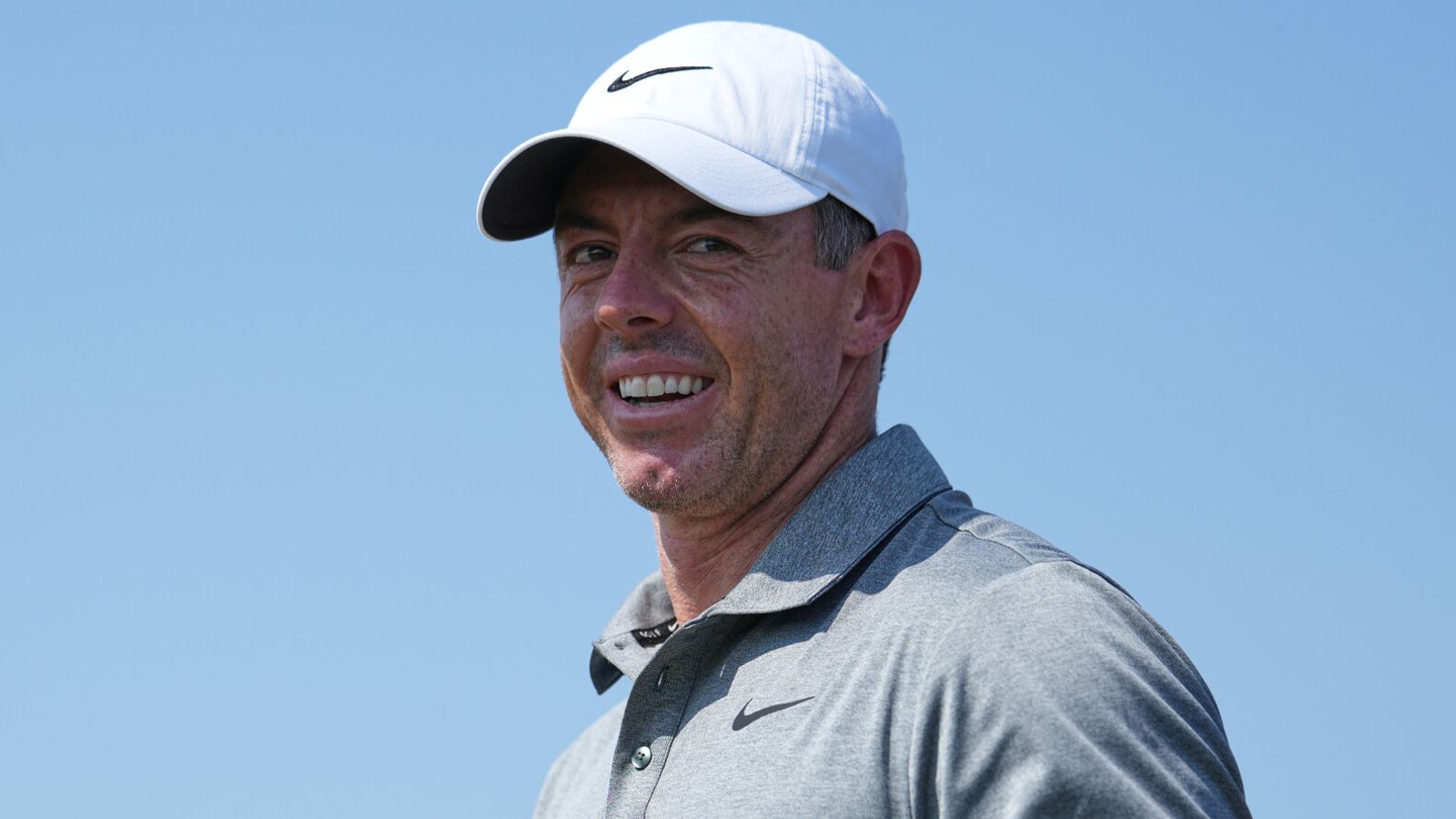
Rory McIlroy has warned that it could be a ‘tough road back’ for LIV Golf players wanting to return to the PGA Tour and has questioned the value they would offer.
The LIV Golf League faces an uncertain future, with Saudi Arabia’s Public Investment Fund (PIF) confirming earlier this year it would not fund the circuit beyond 2026 and the season-ending Team Championship in Michigan cancelled.
LIV Golf chief executive Scott O’Neil has previously outlined the circuit is ‘building the next chapter’ and has an unnamed lead investor to try and keep the league running, although many players are understood to be weighing up their options.
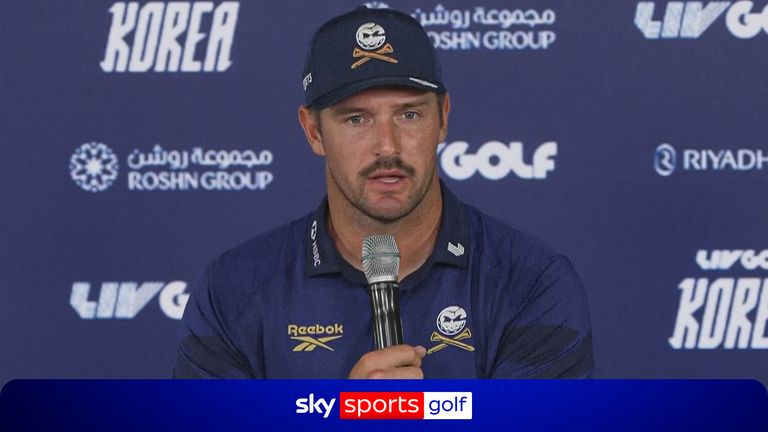
Bryson DeChambeau said in May that LIV Golf players were left ‘surprised’ by the Saudi Public Investment Fund’s decision to withdraw funding from the organisation
Brooks Koepka was allowed back via the returning member program in February and Patrick Reed is eligible to feature from September, while Jon Rahm and Bryson DeChambeau are among the high-profile players linked with PGA Tour returns.
When asked whether LIV Golf players should be allowed to return to the PGA Tour, McIlroy said ahead of the BMW Championship: “I would argue have they brought value to LIV? I think the PGA Tour’s in a really good spot.”
McIlroy added: “Eventually they will [be welcomed back]. I’m not part of these discussions but I’m pretty sure they’re not going to be welcomed back straight away.
“If they were offered this returning member program back in February, the one that Brooks [Koepka] took, then yeah, maybe, but that has come and gone.
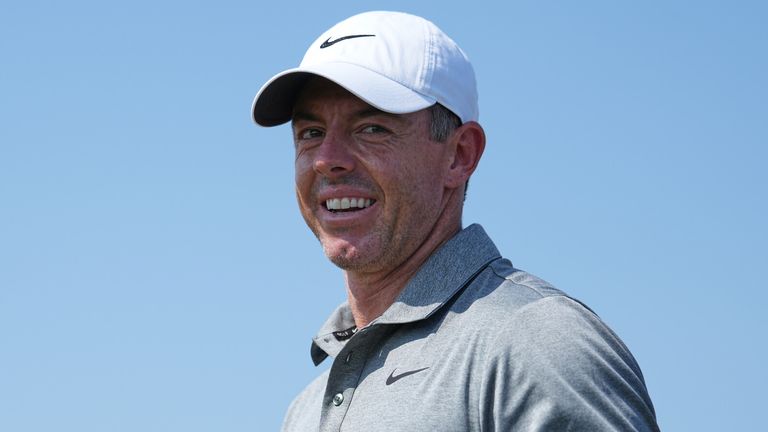
Rory McIlroy had his say on the possibility of LIV Golf members returning to the PGA Tour ahead of the BMW Championship
“I think it was said at the time that the deal that they might get going forward, if they do decide to come back, isn’t going to be as good as the one that Brooks got. I would say it’s going to be a tough road back.”
LIV Golf remain hopeful their 2027 schedule can feature five marquee Team Championships across five continents, with five team Signature Events positioned around majors, although McIlroy believes the PGA Tour remains the circuit for the world’s best to play.
“I think I feel like I’ve kept my position consistent that LIV has never been a good thing for the game,” McIlroy explained. “Whatever 2.0 looks like, if it even happens, they say they’re trying to be more collaborative and all that.
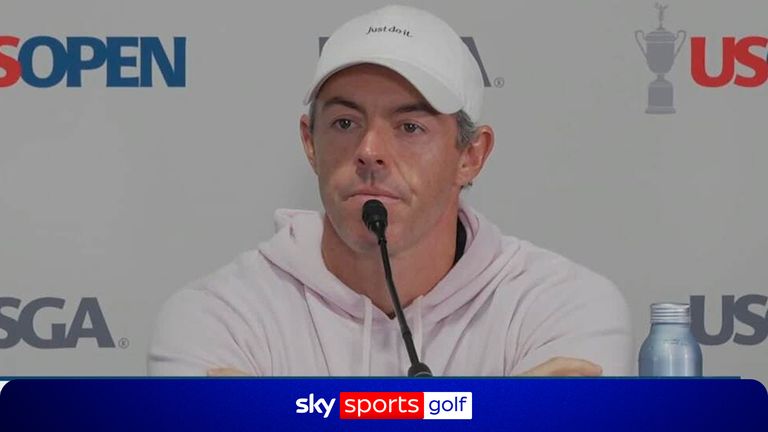
Rory McIlroy spoke at the US Open about the running of the PGA Tour before LIV came along and shared his concerns over future schedules
“This [PGA Tour] is the best platform for the top professional golfers in the world. Were there some things at the start of LIV that the PGA Tour could have done better? Sure.
“You think back to the start with say, Phil [Mickelson] unhappy with some stuff or whatever it was. Surely that just warranted a conversation instead of blowing the entire professional game up and doing something else?
“I don’t take any personal satisfaction of people losing jobs – that doesn’t seem right. I’ve always felt like this is the best place to play professional golf. I’m pretty sure if the PGA Tour were handed $6bn it would have done a better job with it.”

PGA Tour CEO Brian Rolapp discussed big potential changes to the PGA Tour from 2028, including promotion and relegation
‘Some LIV players would offer PGA Tour value’
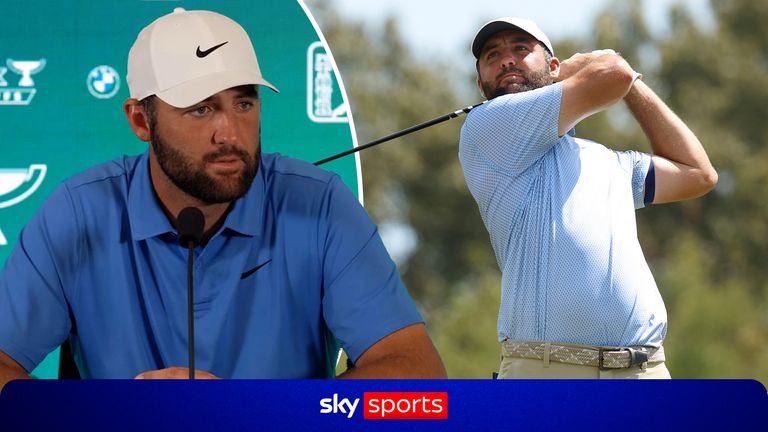
Scottie Scheffler gives his thoughts on the future of LIV Golf and their players potentially integrating back onto the PGA Tour
Tyrrell Hatton and Joaquin Niemann are among the others to have won on LIV Golf this season, although Scottie Scheffler expects to see any players wishing to return penalised before reappearing on the DP World Tour.
“When we talk about the best players [in the world], LIV has a few players that are really good,” Scheffler explained. “I think the depth that we have on our tour is bit unmatched.
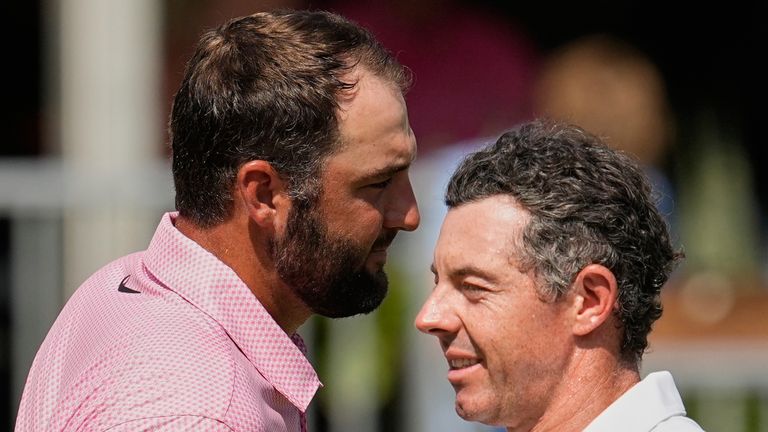
Scottie Scheffler joined McIlroy in questioning whether players could immediately return to the PGA Tour
“I think when you look at the higher levels of LIV Golf there’s definitely some players that would provide a lot of value to the [PGA] Tour and guys that I love competing against.
“I think going forward there obviously has to be some sort of penalties. What those are, I’ll let [Brian] Rolapp [PGA Tour CEO] and all those guys figure it out. Whatever happens with LIV, whether those guys want to leave, you’ve got to ask them.
“I think, for me, being able to compete against the best players in the world [is what he wants]. There’s certainly some guys on that tour [LIV Golf] that can compete out here. I look forward to the chance to compete with them more often.”
Live coverage of the BMW Championship begins on Thursday from 3pm on Sky Sports+ and 5.30pm on Sky Sports Golf. Not got Sky? Latest Sky Sports deals or stream with no contract on NOW.
>

How Hull City play: Direct and robust, but can they outrun their worrying underlying numbers?

Naomi Watts to Receive Zurich Fest Golden Eye Award

Metallica Praises Ado’s Summer Sonic Performance of ‘Enter Sandman’ – Interest
-

 movies3 months ago
Search For Canadian TV Actor Stewart McLean Now Homicide Investigation
-

 Fashion9 years ago
These ’90s fashion trends are making a comeback in 2017
-
Fashion9 years ago
According to Dior Couture, this taboo fashion accessory is back
-
Fashion9 years ago
Model Jocelyn Chew’s Instagram is the best vacation you’ve ever had
-
Fashion9 years ago
Emily Ratajkowski channels back-to-school style
-
Fashion9 years ago
9 Celebrities who have spoken out about being photoshopped
-
Fashion9 years ago
Your comprehensive guide to this fall’s biggest trends
-
Fashion9 years ago
A photo diary of the nightlife scene from LA To Ibiza