
Cho Yeo-jeong.


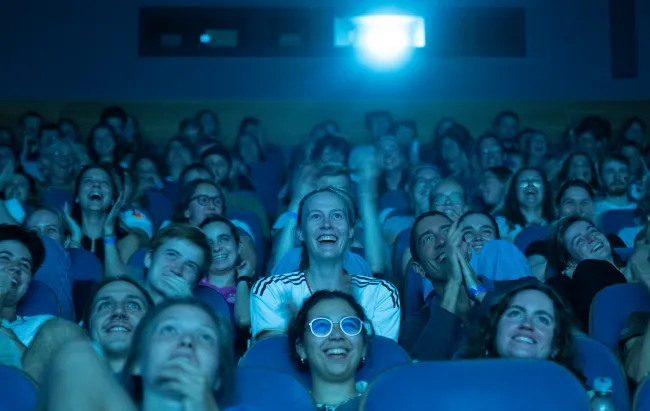
In 2019 after Disney closed its acquisition of 20th Century Fox, independent movie theater owners found themselves caught off guard when classic movies they had been accustomed to playing were suddenly unavailable to them. Titles like “Home Alone,” “Alien,” “Fight Club,” and more Fox films became locked in the fabled “Disney Vault,” only licensed to dedicated repertory cinemas, and sometimes not even to them. These movies that filled in the gaps among first-run new releases and provided indie exhibitors with small, but needed revenue had dried up.
The fear among smaller theater owners now is that history will repeat itself.
America’s three largest theater chains, AMC, Regal, and Cinemark, have all come out in strong support of the merger between Paramount and Warner Bros. Discovery. They want to see a steady stream of movies available to them, they want a guarantee those movies will play exclusively in theaters for at least 45 days, and Paramount CEO David Ellison has been willing to put his promises to them in writing. And they also don’t want to see a prolonged legal battle interrupting any of the gains the box office has made.


Their collective endorsement put Cinema United, the exhibitor trade group that represents the big guys and the little guys, in a tough spot. In a letter from Aug. 18, Cinema United called on Ellison and California Attorney General Rob Bonta to reach a settlement, with some important caveats to a deal. The group wants to ensure that the promised 30 theatrical releases a year are marketed properly and promoted in theaters of all sizes, it wants guarantees that rental terms aren’t increased for smaller theaters who won’t have the negotiating power to push back on a merged company, that safeguards are in place for small theaters that want to make choices best for their theaters, and that the libraries of both companies are still accessible.
“There are differences between big circuits to the smallest, and we’re all providing the same product for our guests, but how we get from here to there, it’s different for the independents. We have more challenges financially than the big guys. We have to be a little sharper in how we operate,” one independent theater owner who was a signatory to the Cinema United letter told IndieWire. “Commitment to the 30 films is certainly a starting point, but there’s a lot of questions that need to be worked out. How widely will they be released, how will they be marketed, and will independent theaters have reasonable access to these films?”
For the smallest of theaters, even ones with just a single screen, exhibitors can be stuck in a position where they need to hold a movie for multiple weeks, generally with “clean screens” that only show that one film across all the showtimes. If it’s “The Odyssey,” the theater might do great Weekend 1, less well in Weekend 2, and even lose money in Weekend 3 because they’re generally only seeing their most loyal customers once in that span. If a movie flops, it can really hurt an indie theater’s bottom line, more so than a national circuit that can spread risk across hundreds of venues, and terms are often set uniformly for massive multiplexes down to single-screen venues.
Holds on films is a problem not exclusive to a Paramount-WB merger, but it’s still a concern that indies have when considering potential market control if one major provider could be going away.
“[We’re] not looking for special treatment but fair terms and enough flexibility to operate in their theaters and communities,” the theater owner added. “They need the ability to evaluate and license films based on their market, their screen count, and their audience, which an indie owner knows intensely.”
The theater owner worried this merger would be a repeat of Disney-Fox when it came to the particular issue of repertory titles. Such movies fill the gaps in release calendars and create differentiated programming that can help an indie exhibitor better connect with their community. Disney had and still has a unique licensing policy, withholding older titles that it believes could compete with its new ones, a policy Paramount historically hasn’t necessarily shared.
But if that were to change, such as if Paramount decided it wanted to use the Warner Bros. library to better support its streaming brands at the expense of putting those movies into theaters, that could pose challenges with yet another studio’s library locked away from theaters. An exhibition expert said that such views on library titles tend to be “short-sighted,” and for many theaters, repertory releases are great resources because the “small guys can’t always get the movies they want.” The expert added that he wasn’t surprised the major chains endorsed a settlement, but even for them, “the devil is in the details.”
Documentary filmmakers in a recent IndieWire piece raised a similar concern over Paramount presumably taking over CNN. Would a new CNN under Ellison and Bari Weiss be less willing to license archival footage to documentary filmmakers? Would HBO Documentaries be less willing to take on such films?
Paramount did not respond to a request for comment on this piece.

Cory Jacobson, the owner of the mid-range chain Phoenix Theaters with 10 locations across multiple states, still has his concerns, but he in a recent guest post for THR recently came out in support of the merger and is more concerned about the aftermath of a lengthy legal battle or even no merger. As a primarily first-run chain, he told IndieWire the repertory titles are a fairly minor part of his business, and he’s focused on having a steady stream of new movies and seeing a long-term commitment to theatrical.
One area in which Jacobson would like to see change is for Paramount’s 30-film/45-day window commitment to grow from three years to five. Some movies can’t even be developed in a three-year span. Meanwhile, he has leases on buildings that last as long as 25 years. A more stable commitment to a business plan for at a minimum five years would put him at ease.
He’d also like to see added tiers for different movies based on their performance, all as a means of giving indie theaters a little more flexibility. That’s another popular talking point among many exhibitors that has little to do with the specifics of the Paramount-WBD merger, but it’s part of the conversation that can happen now.
“If the studio releases a picture and it underperforms, do we really begrudge anybody for wanting to move up the release date on streaming? Probably not nearly as much. But on the backside, all these middle-sized films, maybe sometimes things need a little time to just sit in the theater and build an audience,” Jacobson said. “I think that discussion has started. I think it still needs some improvement on the part of Paramount and Skydance to say, ‘Here’s a better plan.’ And if there are things that you’re already going to do because they’re in your financial interests as a studio already, then why not just ensconce those things that you’re already knowing you’re going to do in a definitive plan that everyone can live with?”
Truth be told though, not all theater owners are even at Phoenix Theaters’ level or in a position to make any requests.
“Unfortunately we don’t drive the bus,” one West Coast-based mid-size theater owner said. “I think there’s always going to be a challenge for people that have less than more for people to negotiate their position … that’s just the way the free economy works.”
He shares the majors’ concerns that a lengthy legal battle could create a supply chain issue with movies being delayed while at the same time wondering if Ellison is the person to deliver on the 30-movies promise. He argues that theater owners are consistently making a lot of investment in their own theaters to help the studios make more money, and what a settlement would ensure is that same commitment coming from Paramount.
“This is an opportunity so we don’t have to take them at their word,” the theater owner said.
>
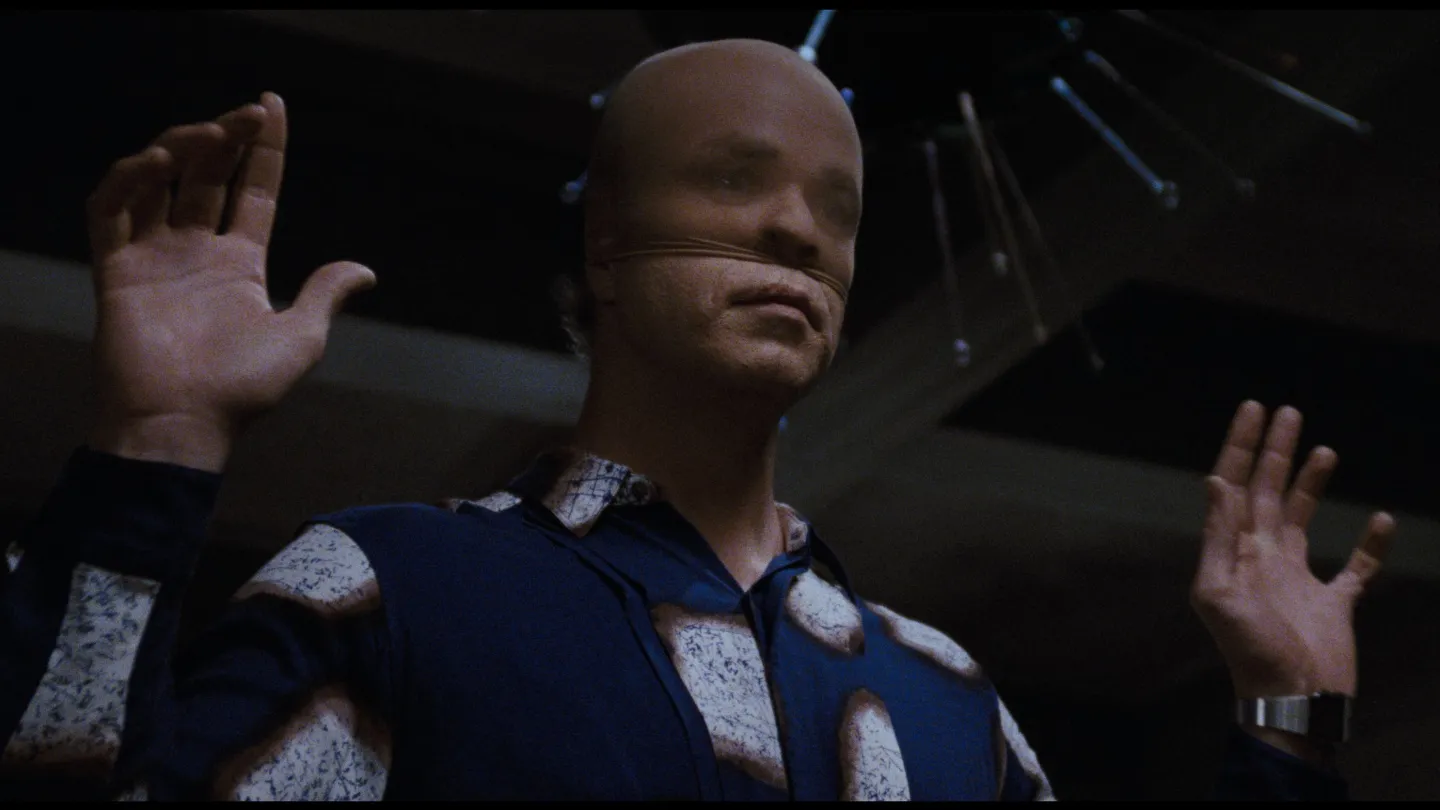
Canal Plus’ StudioCanal on Thursday unveiled the global launch of catalogue label StudioCanal Classics to further bolster “its ambitious editorial strategy across the StudioCanal catalogue, which is one of the most prestigious film libraries in the world.”
It boasts more than 18,000 titles, making it “the largest library outside the U.S., spanning 100 years of film history,” StudioCanal highlighted. “Over the past seven years, StudioCanal has invested close to 25 million euros ($29 million) into the 4K restoration of nearly 1,000 classic feature films. StudioCanal’s restoration strategy gives both longtime cinephiles and the Letterboxd generation the opportunity to experience classics as they were meant to be seen – on the big screen.”
StudioCanal also noted that its territory footprint spans the U.K., France, Germany, Italy, Benelux, Poland, Australia and New Zealand, with the company also distributing via partners in Scandinavia and South Africa.
“StudioCanal continues to unlock the full value of its world-class catalogue through a dynamic and diversified exploitation strategy,” the studio explained. “An ambitious slate of prestige restorations brings iconic films to new audiences and is regularly showcased at leading international festivals, including Cannes Classics and Il Cinema Ritrovato. Supported by a dedicated international library sales team, every title benefits from tailored distribution and commercial opportunities across all media and markets.”
Among the theatrical releases from StudioCanal Classics has been Michael Mann’s Manhunter to mark the 40th anniversary with the release of a 4k restoration, Michael Mann’s Manhunter: The Final Cut. Developed in partnership with StudioCanal, the new restoration opened in U.S. cinemas on July 24. Following its debut at The Academy Museum of Motion Pictures in the U.S. last month. The restoration opens in U.K. cinemas on Sept. 25 September.
Similarly, to mark the 35th anniversary of James Cameron’s landmark sci-fi action classic, Terminator 2: Judgment Day will return to the big screen in 2D, 3D, 4DX and D-BOX, opening in theaters worldwide beginning on Thursday, Aug. 27.
Other StudioCanal Classics titles include the likes of Apocalypse Now, Basic Instinct, Paddington, Rambo, The Graduate and The Third Man.
>
The bellwether Meta lawsuit over the damage done to kids by the social media giant was over before it really got going.
Last Tuesday marked the start of a trial that was compared to the lawsuit that the tobacco industry faced in the 1990s. After being accused of knowingly developing features designed to addict children to social media, 29 state attorneys general from California, Colorado, Kentucky and New Jersey sued Instagram and Facebook’s parent company Meta in a case that was estimated to potentially cost the company up to $1.4 trillion in damages.
But on Wednesday morning, Meta settled with a bipartisan group of 52 attorneys general across U.S. states, territories and the District of Columbia for approximately $18 billion. The company also agreed to implement several measures designed to limit social media usage for children and teenagers, changes it called for competitors YouTube and TikTok to also adopt in an open letter.
Those changes for underage Meta users include:
Regardless of what YouTube and TikTok decide, Meta will pay out $12.7 billion (or 70% of the settlement amount) over the course of 10 years. But the remaining $5.3 billion (30%) will only be released if both YouTube and TikTok agree to implement several of the same changes Meta is introducing and if the companies pay a combined $5.3 billion. As part of the settlement, Meta denies any wrongdoing.
No one is surprised that Meta settled this lawsuit, especially considering the massive amount of damages that were potentially on the line. But this case is raising the same question for parents, lawyers, tech investors, journalists and everyday users alike: Is a new and safer era of social media on the horizon? Or has a tech giant once again thrown money at the problem amidst mounting global outrage and lawsuits related to how addictive these platforms are for children?
The experts who spoke to TheWrap ranged from skeptical to cautiously optimistic the settlement will lead to the kind of change that would make these platforms safer for children. Indeed, some called for additional action from the government — a step taken by the likes of Australia, the U.K. and France.

“There have been enough signs and clues that really make it incumbent on lawmakers to act. Parents, of course, are responsible for feeding their kids healthy meals, but nobody expects me to be able to keep the baby formula supply safe and the entire food supply safe. It has to be a systems-level solution,” Julie Scelfo, founder and executive director of Mothers Against Media Addiction (MAMA), told TheWrap. “We’re grateful that this settlement includes design changes for Meta, but we don’t think this is enough. We think it’s just the beginning.”
What’s notable about this settlement is how it puts some of the onus on other social media networks to follow suit. TikTok settled with the Department of Justice to the tune of $400 million last Friday, and last year, YouTube’s owner Google agreed to a $30 million settlement over a child safety and privacy lawsuit. Those settlements don’t even include the more than 3,000 social media addiction lawsuits that have been filed against Meta, TikTok and Google in the U.S. alone.
“I feel like [this settlement is] much more of a wake-up call for the other platforms,” Ben Moore, U.S. managing director of social media platform BeReal, told TheWrap. Unlike other social media sites, BeReal doesn’t offer an infinite scroll nor does it let strangers follow users.
But exactly how big of a wake-up call this may be remains to be seen. Some of the features Meta announced it would be implementing, such as new parental supervision controls and data collection minimization, seem as though they fall in line with typical COPPA (Children’s Online Privacy Protection Act) requirements. Others, like time limits and limited use at night, have already been implemented in other countries.

Then there’s the haunting question looming over all of these trials. Is it possible to force any of these tech behemoths to take penalties seriously?
“When you have a company that’s as large as a country, is there an amount of money? What is that number?” Charlie Germano, council and senior technologist for privacy initiatives at BBB National Programs, told TheWrap. “We haven’t seen it yet, so these [settlement] numbers keep going up. At some point, there has to be a number that drives change. I don’t know what that number is.”
Given its size, some are skeptical that this move will result in any tangible changes.
“This is a big win for Meta, which hands over some cash flow but doesn’t have to change its business model and can say that it is doing more to protect children,” Avi Greengart, an analyst at Techsponetial, told TheWrap. “The content and self-reinforcing algorithms are untouched by default, so if you believe that is where the problems really lie, then this settlement merely reduces exposure.”
A Meta spokesperson said the agreement resolves the company’s most significant legal exposure, and said other cases that involve claims like personal injury still have a long road ahead.
One of the odder details of Meta’s settlement is YouTube and TikTok’s involvement. In order for Meta to pay out the full $18 billion, YouTube and TikTok must agree to implement a one-hour daily limit, “Night Mode” — an offering that supposedly blocks teenagers from using these platforms at night as Meta has vowed to do — and age assurance measures. What exactly those measures entail remains unclear.
Additionally, both YouTube and TikTok will each have to pay half of an amount totaling $5.3 billion, which amounts to 30% of the settlement fee Meta is withholding. If the courts approve this settlement, then and only then will Meta pay the states the full $18 billion amount.
“Meta would not want to be in a position where it is bound by terms more onerous than what its competitors may also have to abide by,” Joshua Wurtzel, partner at Schlam Stone & Dolan LLP, told TheWrap. “This deal structure solves Meta’s unilateral-disarmament problem — it will not tighten teen safety alone while its competitors capture the attention it gives up — while also giving Meta some flexibility.”
Or put more bluntly:
“You have to give it to Meta that they are dragging everybody else with them,” Carolina Milanesi, analyst at Creative Strategies, told TheWrap. “Talk about ‘the good of the kids’ and it drives a need for everybody to follow the same rules.”
The open letter has also left a sour taste in some people’s mouths about Meta’s actual priorities — “For meaningful progress to happen, we urge our peers to join us,” the letter ended.
“At the end of the day, all they really care about is market share. There really is no concern about society,” Scelfo said.
At the moment, it’s unclear how likely TikTok and YouTube are to adopt the measures outlined in Meta’s open letter. But, due to COPPA regulations and the growing tsunami of child safety cases against social media companies, it’s likely they will follow suit.

“Hopefully, it will create some sort of precedent that YouTube and TikTok will also somehow follow the steps of what Meta will decide to do,” Moore said.
“If I were TikTok and Google, I would recognize that public sentiment is firmly on the side of protecting kids,” Scelfo said. “It is a widely bipartisan issue, and, at the end of the day, they are going to have to choose which side of history they’re on. The battle lines became a little clearer with this proposed settlement.”
Representatives for YouTube and TikTok did not respond to requests for comment on this story.
The settlement also includes the stipulation that an independent auditor will test Meta’s compliance to the agreed upon settlement measures and report its findings to the states annually for five years. That element was praised by Scelfo and the members of MAMA. A similar system was put in place earlier this year as part of South Carolina’s Age-Appropriate Code Design Act, which requires that websites, applications or online services that could reasonably be accessed by a minor must be designed in a way that doesn’t harm underaged users.
That means creating designs that don’t encourage compulsive usage or include intrusions into reasonable privacy expectations, just to name a few of the parameters. However, exactly what will be addressed in this report is unclear.
“The settlement calls for the auditor to create a final report, but that is not public. The executive summary that has intellectual property and trade secrets redacted will be public,” Germano said.
How much this settlement may financially impact Meta and its tech giant peers remains a question.
Though $18 billion is a large number, Meta reported $201 billion in revenue for 2025. Also, that $18 billion — if Meta has to pay it in full — would amount to about $1.8 billion a year over the course of a decade. That’s already about how much Meta is currently paying in legal fees. During the company’s second quarter earnings, it reported spending $2 billion in legal challenges.
That’s just a drop in the bucket of the company’s larger finances. During an earnings call for the same quarter, the company announced it was increasing its 2026 capital expenditure guidance by $10 billion to as much as $145 billion to realize its AI ambitions.
But imagine for a second the best case scenario: these fees do have an impact on social media platforms, and those platforms decide to make meaningful changes to create a safe digital space for children and teenagers. What proof is there that strategies such as time limits and nighttime blackouts work?

Australia implemented one of the most intense social media strategies late last year, banning the platforms from users 16 years old and younger. But, as of last month, TikTok usage among teenagers aged 13 to 15 years old only dropped by one percent compared to a period of time before the ban was put in place, according to a report by parental-control tool company Qustodio. There are also privacy concerns, which always arise when it comes to discussion about stricter age restrictions. Those age assurance models, whether they require users to upload an ID or rely on an AI scan, can feel invasive to many.
“Giving kids and their parents more choices and control is beneficial. But we also see the potential for significant risks to everyone’s privacy and free expression rights online, especially in the ways this settlement will subject all users to invasive age assurance and limit all kids’ access to content and services regardless of their individual needs,” Kate Ruane, director for the Center of Democracy and Technology’s Free Expression Project, told TheWrap. “We will continue to review the settlement and will be monitoring its implementation closely.”
“It’s going to be really interesting to see how [Meta] implements those remedies … and see if it’s just noise or if they actually respect the new product specs that the court has been asking them to implement,” Moore said.
This settlement is also far from over. In addition to the fact that the proposal has to be accepted by the courts, there are several loose strings that could impact the future of this particular case. For one, Meta’s requirement that YouTube and TikTok implement age assurance measures is a headache waiting to happen.
“I can see a scenario where one of their competitors’ age assurance mechanisms are different, and they fight about it,” Germano said. “I don’t think this settlement has seen its last day in court.”
This settlement also requires state attorneys general to review the report from the independent auditor and enforce a punishment on Meta if the company doesn’t hold up its end of the bargain. If that happens, it could come down to a question of manpower. There are only so many attorneys general in any state, and not all of them can be used to monitor Meta and other tech giants with nearly endless pockets.
But on a less depressing note, this case may help speed up the timeline for future related lawsuits, whether they involve other social media platforms, the proposed U.S. law Kids Online Safety Act (KOSA) or AI usage.

“The Meta settlement will absolutely set precedent for future lawsuits. The current protections are a solid foundation but other things are still unclear, such as AI use for video image creation,” Maribel Lopez, an analyst at Lopez Research, told TheWrap.
Also, as the addictive endless scroll becomes more of a liability for platforms like Facebook and Instagram, these companies may redesign their algorithms and platforms to focus more on authenticity and audience connection. “Platforms are going to rethink the whole playbook now that they can no longer optimize for time spent. Everything is going to be around the quality of the engagement,” Moore said.
Regardless of what’s ahead for our digital futures, Meta’s settlement means there’s no going back.
“It certainly set a precedent that social media companies are not untouchable,” Milanesi said.
As an ironic coda to the Meta news, Sony Pictures not-so-coincidentally dropped a new trailer for the upcoming film “The Social Reckoning” on Wednesday, which dramatizes the 2021 “Facebook Files” leak that revealed the company was aware of the harmful affects its platform and algorithm were having on society, but forged ahead anyway.
One of the fallouts from that leak? Facebook halted development on an app it was designing just for kids.

>
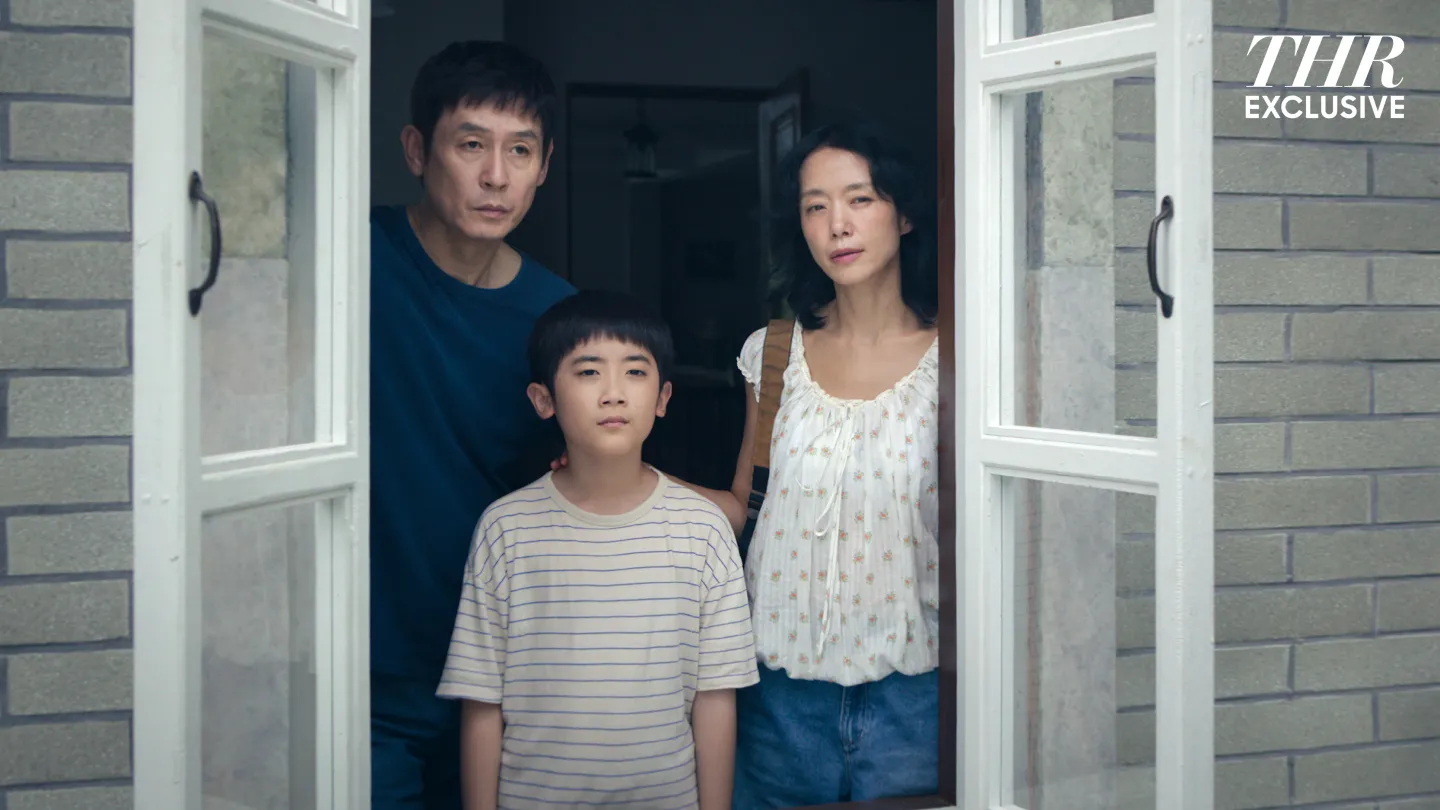
Lee Chang-dong takes his time. The lauded Korean filmmaker, approaching the 30th anniversary of his 1997 debut feature Green Fish, returns this fall with Possible Love, his first movie in eight years — the same gap between his previous two projects, 2010’s Poetry and 2018’s Burning. In his work, the wait proves not only worth it, but necessary — with character dynamics so richly, exactingly executed and the kind of narrative depth that can only come out of extensive marination. The stories sneak up on you. Like the man behind them, they’re in no rush and better for it.
Possible Love had been gestating for a decade. When Lee had the initial idea, he felt obsessed by it yet could not make the leap to actually bringing it to the screen. So far, so typical as far his methods go. But this subject posed a unique challenge to the director, one rooted in his own relationship to filmmaking — and once he figured it out, he made something unlike anything else in his oeuvre.
Cho Yeo-jeong.
The spark of Possible Love came out of a scandal of mass layoffs and their aftermath in Korea — specifically, violent state suppression of public protest. Lee saw the events foreshadowing a dark future for his country and maybe the world — changes in technology and wealth leaving workers behind. He wrote a screenplay, preemptively attaching two iconic Korean actors with whom he’s previously collaborated: Secret Sunshine’s Jeon Do-yeon and Peppermint Candy’s Sul Kyung-gu. They would reunite for this grand modern tragedy.
And then, Lee stopped. “I ended up shelving the project. I started to doubt what kind of meaning this held for me — to be showing the lives of these laborers through a dramatic film,” he says. “When it comes to the lives of people that suffer, I always ask myself: Am I worthy of telling this story? Do I deserve to tell this story? And how do I go about it so that I tell it in the right way?” The answer required him to look inward, to tell it as only he authentically could: Through the camera.
Jeon Do-yeon.
“When it comes to the pain and hurt, I believe that it has to be observed in a way that is adjacent to me as a filmmaker, for audiences to figure it out for themselves and to accept it,” Lee says. “If not, I cannot be candid.”
In this final version, co-written with Oh Jung-mi, Possible Love follows the recently laid off and traumatized Ho-seok (Sul) and his wife, the relentlessly hopeful Mi-ok (Jeon), as they encounter a filmmaker named Ye-ji (Parasite’s Cho Yeo-jeong) interested in depicting their plight for a documentary. Ye-ji embeds herself deeper and deeper into their lives, leading her and her wealthy businessman husband, Sang-woo (Zo In-sung), to develop a tenuous bond with them. (The film is not a remake of, or drawn from, Krzysztof Kieślowski’s Dekalog: Nine, as had been previously speculated. But Lee, generally inspired by the work of the Polish legend, sees them in conversation, with thematic overlap.)
Lee has expanded upon his earlier, unrealized portrait of a couple in crisis to craft a thorny study of two couples — one affected by brutal downsizing, the other leading a lavish lifestyle with seemingly everything at their disposal. It evolves into a sweeping and provocative examination of contemporary resentments, yearnings and, yes, possibilities. The movie world premieres at the Venice Film Festival next month and will be released by Netflix in U.S. theaters on October 23 before streaming November 6. It’s also been selected by as South Korea’s official submission for the best international feature Oscar.
Jeon with Sul Kyung-gu and Cho.
Netflix offered to sign on immediately after reading the script, according to Lee, and guaranteed the director artistic autonomy. “Netflix really had trust in the virtue of the screenplay as well as in myself as a filmmaker, and throughout the entire process of production and all of the steps of creating this film, I was given a near perfect amount of creative freedom,” Lee says. “This was my first time working with Netflix, but I will say that across my filmmaking career, this was the film that I felt most comfortable and most at ease with — which came as a surprise to me.”
The all-star Korean cast shares that sentiment. Here, they had the space to operate at the top of their game, and dug deep. “I have been an actor for quite a long time, and there comes a certain point in your career where you realize there are fewer projects that daunt you,” says Jeon. “Every time we were faced with a difficulty or challenge, Kyung-gu and I would look at each other and say, ‘Don’t you just love it? How often do we get these kinds of challenges nowadays? And how long will it be until we find ourselves on a production like this again?’”
Cho, Jeon and Sul.
***
Lee calls Mi-ok the heart of the movie. With her husband, Ho-seok, more reluctant to participate in interviews, she tells Ye-ji — and in turn, the audience — the story of their family, of scraping by in the aftermath of a seismic job loss. In Jeon’s radiant portrayal, however, she refuses to be defined by her struggles. “She strives to survive, and she is someone who will go to all ends to protect self-dignity,” Lee says. “She is someone who will constantly fight for her own freedom.”
“She carries an immense, very intense sense of anxiety in her,” Jeon adds. “I looked at it in the sense that it’s almost like she is constantly holding onto a ticking time bomb. We all have our own ticking time bombs, and that could lead to many different forms of expression. For Mi-ok, it’s all about hope. She wants to hold onto that hope.”
The film weaves a fascinating exploration of wealth and inequality through her vulnerability. She and Ho-seok get to know Ye-ji and Sang-woo, the disparity between their means made stark for the viewer. Mi-ok is drawn to what they have — not even materially, necessarily, but in the ease and openness they present. What is it even possible for her to want, when she looks in Sang-woo’s eyes or listens to Ye-ji’s tales of making art? It’s an intimate way for Lee to ask difficult questions — and wend his way toward an emotionally explosive climax, in a bravura single-setting final act.
Lee Chang-dong.
“I believe that our lives have exceeded that of discussing or exploring the issue of class — and I say that because we now live in a world where the gap is so extreme, so vast that it’s difficult to even call it class really,” Lee says. “The amount of wealth Sang-woo represents is something that we cannot even dare to fathom.”
When Lee returned to this project after initially shelving it, the state of labor had further deteriorated from where he started. “We are now facing a moment in time where labor itself may no longer exist,” he says. In Possible Love, the director works out how to talk about this, and what to say about such overwhelming inequality, through Ye-ji’s own arc as the movie’s storyteller. “Her attitude and her desires as a documentary filmmaker — in many ways, what we see in her is close to me,” the director says.
Yet the film’s firmest punch is packed in the despair and dignity of Sul’s performance, as a man coming to terms with how much he’s lost. The actor’s work is often silent, difficult to read, burning as slowly as a Lee Chang-dong script — which is to say, when it all clicks, watch out. “There’s guilt, there’s shame, there’s the sense of loss where you have completely lost this space where you were validated — the emotions that I had to embody as this character were very layered and complex,” Sul says. “To have those emotions explode, that was [something] that I was constantly worried about, concerned with throughout the overall process.”
Jeon with Zo In-sung.
Both Jeon and Sul describe Lee as a formative presence in their acting careers. For Jeon, there is a clear before-and-after with 2007’s Secret Sunshine, for which her wrenching turn won the Cannes Film Festival’s best-actress prize. “[Lee] allowed me to take a different path in my art,” she says. “After Secret Sunshine, I no longer approached my performances to satisfy the director or anybody else watching. I started asking myself: ‘Is this real? Is this what I really feel?’”
Sul has now worked with Lee six times — but Possible Love brought him right back to their first collaboration, and one of his first movies ever. “I’ve made many films since Peppermint Candy — I’m one of the more experienced actors in the industry in Korea,” he says. “But when we started shooting Possible Love, I found myself immediately transported to that first film of mine. I got to feel like I was a rookie again. I was back in those shoes. As actors working with Director Lee, it’s a huge challenge. However, when you see yourself on screen compared to your other projects, it’s so rewarding.”
Lee tells his actors not to worry about memorization, to “just talk,” to find the truth in every moment. He didn’t run many takes on Possible Love, though; he watched and learned as the characters came alive before him. It’s the way he’s been making movies for decades — with these very stars.
That history flows through every frame of Possible Love. “You could almost say that I created the characters with them,” Lee says. “We have this saying in Korean that roughly translates to: We shared the same heart. There were no words needed.” Only the camera. In Possible Love, that proved more true than ever.
Stay tuned for more exclusive features on this fall’s biggest festival-bound films.
>


Search For Canadian TV Actor Stewart McLean Now Homicide Investigation


These ’90s fashion trends are making a comeback in 2017
According to Dior Couture, this taboo fashion accessory is back
Model Jocelyn Chew’s Instagram is the best vacation you’ve ever had
Emily Ratajkowski channels back-to-school style
9 Celebrities who have spoken out about being photoshopped
Your comprehensive guide to this fall’s biggest trends


Rurouni Kenshin: Hokkaido Arc Manga Takes 1-Issue Break – News