
Anime
Webtoon-Based Live-Action Series White Scandal Confirms Main Cast – News


Kang Song, So-hyun Kim star in series following 3rd-generation conglomerate heir who wants to avoid becoming successor to his family

© Ghost Studio
Entertainment company Ghost Studio announced on Tuesday that Kang Song and So-hyun Kim will reunite for the live-action series White Scandal, based on the webtoon/web novel of the same name.
The series follows Yi-hyeok Dan, a third-generation conglomerate heir and top actor who wants to avoid becoming the successor to his family, and Eunseol Ji, a former child star whose career fell apart following an incident. The two begin a fake relationship to deceive those around them, eventually confronting the painful secrets and wounds from their shared past.
Song will play Yi-hyeok Dan, who was born as the illegitimate son of a rich family and has spent his life trying to escape his grandfather’s expectations. Kim will portray Eunseol Ji, who now works as a manager while holding on to her dream of becoming an actress.
The work marks Song and Kim’s first reunion since the 2021 Netflix series Love Alarm. White Scandal is scheduled to begin filming soon.
The story of the webtoon reads:
Fifteen years ago, Eunseol was accused of attempting to murder her co-star, Yi-hyeok. Her career ended and she hasn’t known peace since, all because her mother made her take the fall for her brother so he could keep acting. In present time, Yi-hyeok is trying to find a way to displease his grandfather in order to change his inheritance and decides to approach Eunseol with an offer for a fake relationship. All they have to do is be convincing… so convincing that even they may start believing it.
Chae Ah Moon wrote the original story, and 1HO wrote the webtoon’s story. DENZZI and GETMEAN drew the webtoon. Tapas has been serializing the webtoon in English on since 2025, and the series ended serialization in April earlier this year.
Source: News 1 (Ah-reum Chang)
>
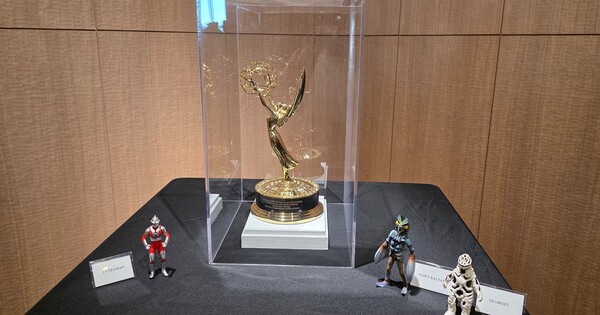

As an anime fan, you’ve probably heard of Ultraman at least once. His cross-armed Ultra Beam became a symbol of justice for Japanese children everywhere, many of whom grew up to shape the anime industry. Hideaki Anno, the creator of Neon Genesis Evangelion, submitted his own fan-film in university and essentially made TV original anime viable with his take on a darker Ultraman. I myself got into the franchise formally with Shinji Higuchi‘s Shin Ultraman, a feature-length reimagining of the original series written by Anno. But who came up with the original idea, and what made him so influential? While making the live-action adaptation of Look Back, director Hirokazu Kore-eda was tasked with finding out in an upcoming documentary by Tsuburaya shown at Japan House LA: The Origin of Ultraman.
 |
 |
Koreeda was admittedly an odd choice to head this project. He’s never done tokusatsu before, and he’s only recently dabbled with sci-fi in his recent feature, Sheep in the Box. His bread and butter has been humanistic stories exploring found family (Shoplifters), poverty (Nobody Knows), and memories (After Life). That’s why I’m personally excited for his version of Look Back, which creator Tatsuki Fujimoto has praised for being “able to bring out the atmosphere that the original had while giving it a real sense of authenticity.” But it turns out Ultraman might have instilled those values in the first place. As a kid of the 60s, he was there from the beginning, and it shaped much of his childhood. What really struck him was how the series tackled complex issues in a way kids could understand. The creators would describe this as sneaking vegetables into chocolate.
His favorite kaiju, Gomora, was actually a peaceful creature forcibly dragged out of its natural habitat to be displayed as a trophy for the Japan World Exposition. When they break free out of anger, and Ultraman has to fight, he couldn’t help feeling sorry for the kaiju. This story brought to light the Expo’s contradictory mission of representing human progress while actively polluting the earth. He would continue to follow the franchise as it got more morally complex, with his favorite entry being Ultraseven. One episode where Atlanteans get mistaken as aliens depicts humans as the invaders instead, leading to a pretty bitter victory.

Koreeda wasn’t the only one who rated Ultraseven highly: Shannon Tindle and John Aoshima (Co-Directors of Ultraman: Rising) based their protagonist Kenji Sato on Dan Moroboshi. Whereas previous Ultramen were inherently selfless, Dan had to let go of his selfishness to grasp his power. This character arc being more similar to American superhero origins made it easier to pitch in their own film, but even they didn’t expect to be offered an official entry in the franchise. While the two directors grew up watching Ultraman Tiga, they tried to write a story that was inspired of it without coming off as a rip-off. But Netflix recognized they were fans when reading their script, as they were already producing a CG Ultraman anime. With a pre-established relationship with Tsuburaya, they suggested instead making an official Ultraman film. The result was an American-Produced entry that won the franchise an Emmy.
Plenty of other famous names show up in this documentary. Hideaki Anno famously cast himself as Ultraman in his student film, and his Studio Khara incorporates his transformation sound in their logo. Unlike animation where he accepts that it’s all drawings, the way tokusatsu would create fantastical worlds physically always enamored him. This is something that also fascinated Drive director Nicolas Winding Refn. The skintight costumes, makeshift props, and pyrotechnics over miniature sets gave it a stagey appeal reminiscent of a glam rock concert. Hideo Kojima, the creator of Metal Gear Solid, links its creation to the space race and anti-war military otaku. To him, a giant astronaut that shoots lasers scratched the same itch that planes and tanks did to his parents’ generation.
But the one that gushed most was someone Koreeda talked to in person: Pacific Rim Director Guillermo del Toro. Being the one that formally introduced the term Kaiju into Hollywood, he had a lot to say regarding its role as TV’s first Kaiju franchise. What makes Kaiju fascinating as movie monsters is their depiction as forces of nature. Godzilla was famously an allegory for the atomic bomb, but the destruction caused by many kaiju was quite familiar to a country prone to natural disasters like Japan. He explains there’s something divine to a Kaiju’s towering presence. When something that large is right at your doorstep, all your daily concerns go away. So which visionaries made Kaiju the face of natural disasters, and who conceived of our alien protector? We have 3 names to thank: Eiji Tsuburaya, Tetsuo Kinjo, and Tohl Narita.
Much like Osamu Tezuka is to manga, Eiji Tsuburaya is considered the “Father of Tokusatsu”. An early adopter of film compositing and miniatures, he made a name for himself in the 50s and early 60s as the special effects director for TOHO‘s Kaiju films, including the first 3 Godzilla films. Monster movies were already a staple in Hollywood after King Kong, but they often relied on time-consuming stop motion animation. While personally a fan of the original King Kong, he knew a film industry like Japan would take years to get the same result. So instead he pioneered suitmation, where actors in rubber suits would walk on miniature sets. Rubber Dinosaur Suits had been used in early sci-fi films (One Million B.C.), but they were considered a cost-cutting measure for how goofy they looked. By filming from lower angles at a higher framerate and compositing real crowds running on sets similar to the miniatures, what was once considered a cheap effect suddenly became more convincing than any monster movie before.
For over a decade, more and more Japanese audiences would come to see what new Kaiju film was out in theaters. But even when the first Godzilla came out, TV had already become a staple of their media diet. By the 1960s, Japan became the first country to develop an HDTV system. Tsuburaya knew that if he could bring his kaiju spectacle to kids at home, it could change Japan’s entertainment industry forever. His first attempt at this was Ultra Q, a sci-fi anthology similar to The Twilight Zone. While initially committing to more supernatural stories, executives at Tokyo Broadcasting System sensed the potential to embrace a monster-of-the-week approach. The resulting series brought monsters from the movies to the silver screen. There was a new kaiju every week that children memorized and pretended to be at the playground. There was just one question: can we make the heroes just as marketable as the monsters?
This is where writer Tetsuo Kinjo comes in, pitching the idea that would later become Ultraman. It started from a more practical concern: how many times can regular folks come across monsters before it gets silly? Rather than regular people meeting monsters week to week, he suggested a disaster response team proactively seeking out kaiju threats: the SSSP (Science Special Search Party). Also since the Space Race was all the rage during the 60s, their protector would come from across the stars. An alien as tall as the kaiju would fuse with a human host, learning about humanity as one of them. The result was a more marketable Kaiju series to kids. Godzilla might fight a meaner kaiju if needed, but Ultraman was unequivocally the hero. Kids didn’t just wait for the new monsters, but also the towering defender and the cool adults by his side. So who do they have to thank for how he looked?
Enter the last member of our trio: Tohl Narita. He conceived Ultraman‘s design as a deity from outer space. His shining silver color scheme was reminiscent of astronauts: a symbol of hope during the space race. But his minimalist features feel beyond human. Kairi notes that his father found the human nose and ear to be visually unappealing, so he used a single vertical line to symbolize both. Meanwhile, his half-formed smile was inspired by both Greek and Buddhist statues: a stoic smile that emphasizes composure over enthusiasm. Part of this was also based on how Miyamoto Musashi smiled in the face of danger, but the layer of restraint in his permanent smile combined with his overall size channels the aura of religious monuments.
In contrast, Narita’s philosophy when creating kaiju was that they had to be presented as something natural rather than mutated. Children could tell when an animal looks too big or when it seems to be living in pain. So he laid out three design rules: “Don’t simply make existing animals bigger. If combining animals with humans, they mustn’t deform. And lastly, don’t make kaiju look unpleasant with blood or injuries.” The idea was to make creatures that were threatening, but also majestic. As his son, Kairi Narita, says in the documentary, “Children must be shown something real.”
The combined work of these three creatives and dozens of crew members that followed led to a franchise that’s lasted 6 decades. Hiroko Sakurai, the actress for SSSP’s sole female officer Akiko, recounted how Hajime Tsuburaya, Eiji’s eldest son, comforted her for missing out on a date for a night of shooting by saying they’ll still be celebrated 30 years from now. 60 years later, she still works at Tsuburaya Productions. That kind of enduring love isn’t created in a lab, but earned over generations. The results speak for themselves, as that love is visible in other mediums like anime. From DAN DA DAN and 20th Century Boys to Gintama and School Rumble, they all in some way repay the love they felt growing up with Ultraman through parody or basing part of their lore on it. And with Ultraman: Rising winning an Emmy, hopefully it continues to inspire future generations.
>
Figures based on David, Lucy, Rebecca, Adam Smasher ship between March-May 2027
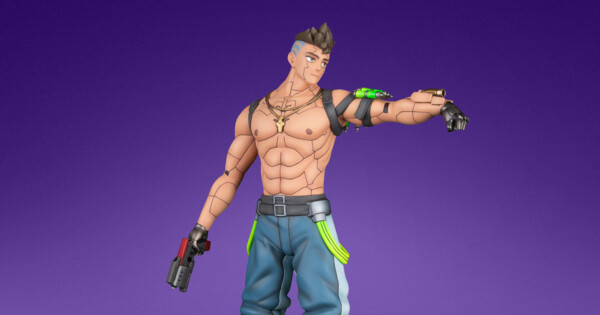
Dark Horse unveiled on Thursday new PVC figures of David, Lucy, Rebecca, and Adam Smasher from Cyberpunk: Edgerunners, the anime series by Studio Trigger based on CD PROJEKT RED‘s Cyberpunk 2077 game.


The figures are slated for release between March-May 2027. Pre-orders are available on the Dark Horse Direct website. Adam Smasher will retail for US$79.99 while the other three figures will cost US$69.99 each.

© 2024 CD PROJEKT S.A.
The anime debuted on Netflix in September 2022. The game is itself based on Mike Pondsmith‘s Cyberpunk tabletop RPG game series.
Aniplex of America will release the series on a complete Blu-ray Disc set in North America on October 28. Anime Limited and Plaion Pictures will release the series on home video in Europe, and Sugoi Co will release the series on home video in Australia and New Zealand.
A prequel manga titled Cyberpunk: Edgerunners Madness from artist Asano (BNA: Brand New Animal manga) and writer Bartosz Sztybor (CD PROJEKT RED) launched on the Comic Alive+ website in December 2024, and is getting a release in seven languages aside from Japanese. Dark Horse is releasing the series in English in print.
The Cyberpunk: Edgerunners 2 sequel anime will debut on October 20 on Netflix. The first episode had a premiere screening at Anime Expo on July 3.
CD Projekt released the “open-world, action-adventure story” for PlayStation 4, Xbox One, and PC in November 2020. The game launched with Nintendo Switch 2 in June 2025.
Source: Email correspondence
>
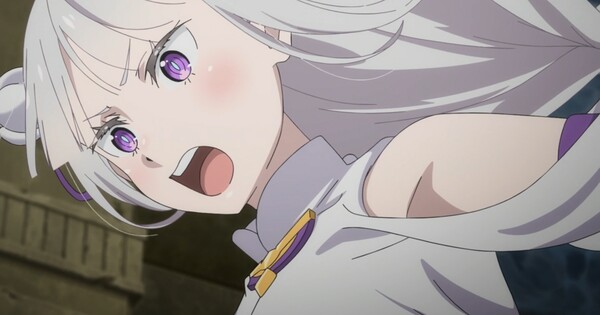

© 長月達平・株式会社KADOKAWA刊/Re:ゼロから始める異世界生活4製作委員会
Each arc of Re:Zero follows a basic pattern. Subaru faces a seemingly insurmountable challenge. Then, over the course of several loops, he manages to overcome it. But one thing Subaru hasn’t seemed to realize is that many of the roadblocks he faces feel artificial—to the point that his entire adventure so far seems to have been planned by an outside force.
In the case of this arc, we have Flugel’s tower. Everything about it seems designed so that only a person who can time loop (not to mention one who knows Earth astronomy) could hope to complete it. The Sanctuary, the whale, and Petelgeuse’s attack are similar. Too much goes wrong all at once for anyone to overcome it by dumb luck alone. Whoever is pulling the strings is likely someone who can see the future in some form or fashion—and is using the butterfly effect to push events in just the right way so that there is only one possible route for survival: the happy ending.
That said, this mysterious puppet master probably isn’t Satella, however. (She’s been sealed for 400 years, after all, and seeing the future has never been one of her mentioned powers.) That said, she is certainly involved. Even if she’s not the one setting up the challenges, she is the one providing the means to overcome them. She granted Subaru Return by Death, and it’s likely that she is the one deciding the save points as well. Moreover, she serves as a fail-safe of sorts. When things go too far off the rails for a happy ending to occur, she often shows up in person—seemingly to put an end to the doomed timeline herself by killing Subaru (as we see in this very episode).
But more important than the who is the why—and that is much easier to answer. Each dead end requires Subaru (and/or his companions) to grow as a person to attain victory. Often, it is a psychological thing like “starting from zero,” coming to terms with his inferiority complex towards his parents, or embracing the role of a hero. Other times, it is more physical, like learning the rules of Return by Death or, in this case, his newly awakened powers.
While Subaru in his current state doesn’t realize it, he is a Sin Archbishop two times over. What he is likely encountering this episode are the powers he took from Regulus upon his death. While Regulus’ form of the Authority of Greed resulted in him being able to stop his own personal time (and thus be all but invincible) and put his heart in the body of a companion, Subaru’s version seems to let him be aware of the location of his companions. Of course, there is likely far more to it than that, and only by learning the ins-and-outs of his new skill will he be able to overcome this challenge (and many more to come).
Other than that, this episode is one revelation after another. We learn that Shaula is the giant scorpion (likely rampaging because someone broke a tower rule) and that Roy tried to eat Reid—though it looks like he got eaten instead. All this makes for an increasingly chaotic mess—and I can’t wait to see how Subaru and friends fight through it.
Rating:
Re:ZERO -Starting Life in Another World- is currently streaming on
Crunchyroll.
Disclosure: Kadokawa World Entertainment (KWE), a wholly owned subsidiary of Kadokawa Corporation, is the majority owner of Anime News Network, LLC. One or more of the companies mentioned in this article are part of the Kadokawa Group of Companies.
The views and opinions expressed in this article are solely those of the author(s) and do not necessarily represent the views of Anime News Network, its employees, owners, or sponsors.
>

Webtoon-Based Live-Action Series White Scandal Confirms Main Cast – News

Five sleepers to target right now in dynasty league fantasy football

AMC Endorsed the Paramount-WB Merger, But Indies Still Need Convincing
-

 movies3 months ago
Search For Canadian TV Actor Stewart McLean Now Homicide Investigation
-

 Fashion9 years ago
These ’90s fashion trends are making a comeback in 2017
-
Fashion9 years ago
According to Dior Couture, this taboo fashion accessory is back
-
Fashion9 years ago
Model Jocelyn Chew’s Instagram is the best vacation you’ve ever had
-
Fashion9 years ago
Emily Ratajkowski channels back-to-school style
-
Fashion9 years ago
9 Celebrities who have spoken out about being photoshopped
-
Fashion9 years ago
Your comprehensive guide to this fall’s biggest trends
-

 Anime3 months ago
Rurouni Kenshin: Hokkaido Arc Manga Takes 1-Issue Break – News