
Sports
NHL contract grades: Cale Makar hits $20 million, and who can fault the Avalanche?

The contract
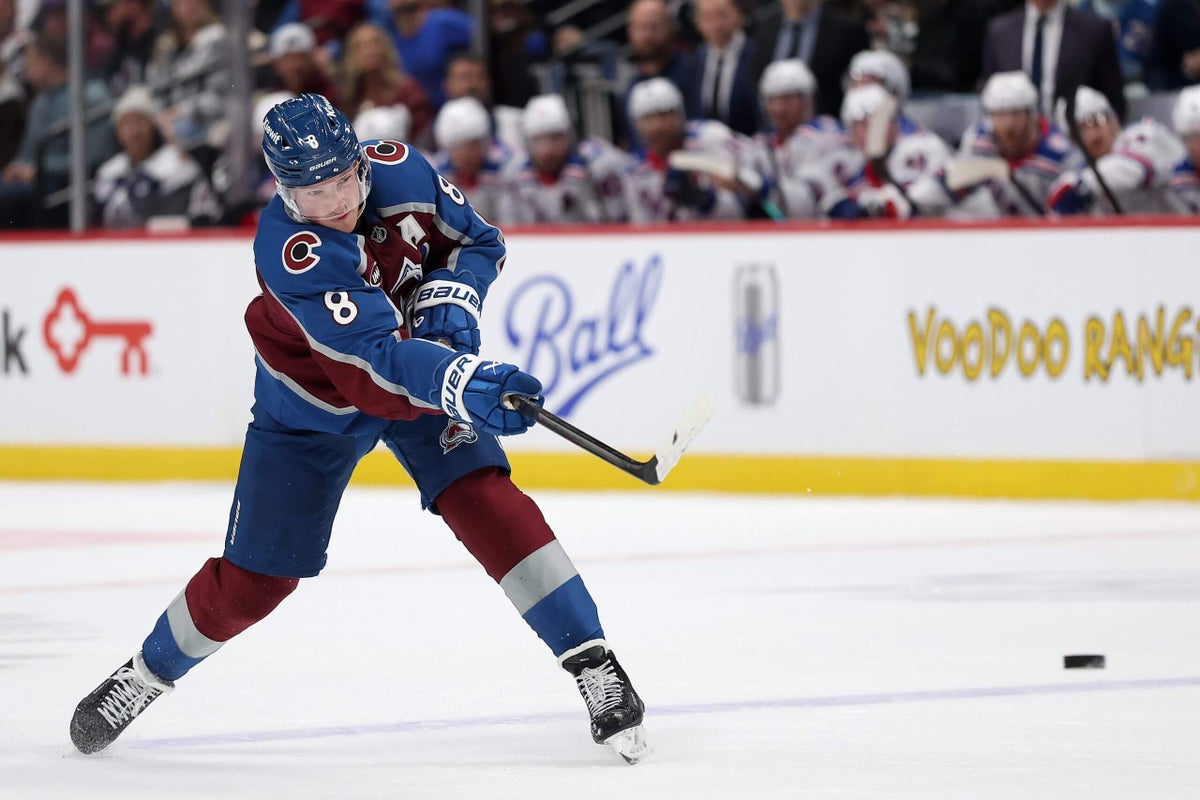
The Colorado Avalanche signed defenseman Cale Makar to an eight-year extension with an $20.4 million AAV.
Sean Gentille: Maybe you saw this coming when Bowen Byram, a No. 3 defenseman with some degree of untapped potential, signed with the Chicago Blackhawks for six years and $75 million.
Maybe it was when Leo Carlsson, a 21-year-old center talented enough to show up on Hart Trophy ballots in the very near future, guaranteed that he’d be paid $18 million by either the Philadelphia Flyers or Anaheim Ducks.
Maybe it was when Makar, via the Avalanche’s official X account, looked into a camera and said the words “nine years.”
At some point over the last few months, though, it should’ve become quite clear: Makar was destined to sign the largest contract in the history of the National Hockey League, and on Friday, that destiny was fulfilled.
We’ll cut to the chase here — it would be impossible for any team, at any time, to sign Makar and not come out on top. At 27 years old, he’s got a puncher’s chance of finishing his career as the best player of his generation and as one of the few best defensemen of all time. You do not negotiate with guys like that. You ask them how much money they’d like, and you thank them for the privilege of payment. Makar, for the record, was technically allowed to sign for $20.8 million a year. Hopefully the Avs can use that $400,000 on something nice.
Think of it this way: We live in a world where a defenseman such as Byram — a flawed, unproven player whose value is more theoretical than not — is an OK bet at $12 million annually. Where does that put Makar? How much more could a team reasonably pay someone who, even after a down season, remains the consensus top defenseman in the league? Credit to Quinn Hughes for continuing to significantly closing the gap, but the gap still exists, owing to Makar’s ability to tilt the ice in all three zones and influence play with and without the puck. Watch his highlights, crack into his advanced stats, ask an NHL person and the answer won’t change. Makar isn’t just special — he’s the best. And now, he’s paid accordingly.
Contract grade: A
James Mirtle: The list of plausible options to become the NHL’s first $20 million player was always very short, and Makar’s name was pinned near the top for good reason.
Only 27 years old, he’s already won the Norris twice, the Conn Smythe once, plus the Stanley Cup and a Calder. He’s also one of the only defensemen in NHL history to be a finalist for the Norris six consecutive years, including, notably, Bobby Orr and Nick Lidstrom.
The cap hit obviously comes with some sticker shock, given the highest-paid defenseman in the NHL last year (Erik Karlsson) made just 56 percent of Makar’s new cap hit — a full $8.9 million less. That unprecedented jump only makes sense with the context that the NHL’s cap could be as high as $160 million by 2031-32, which would drop Makar’s deal to less than 13 percent of the ceiling by the midway point of the deal. That would make his pay the equivalent to roughly $12 million against last season’s cap, and he’ll still be just 31 years old when that season starts.
It’s also a deal that was signed with the understanding that star-player pay is clearly on the rise, with the best players about to take a bigger piece of the pie given the scarcity of available talent and how aggressive teams are getting with top stars. (See: Macklin Celebrini’s new $18.8 million deal after just two seasons in the league.)
The risk here? The cap doesn’t skyrocket quite that fast and the Avs get boxed in by paying Makar a massive share of their cashflow as he declines. But what was the alternative? Let the best defenseman in the league and a future Hall of Famer walk in his prime? Try to make a trade under duress and pick up the pieces with a giant hole in your roster?
Maybe Colorado didn’t pull out a ton of surplus value here the way, say, Montreal has with Lane Hutson, but what they did do was ensure Makar is on the ice for nearly half of the game every night for nearly a decade going forward. That alone should keep them in contention for at least the next five years in a league that’s so parity-filled that that’s harder than ever to do.
And it’s hard to argue with that.
Contract grade: B
>
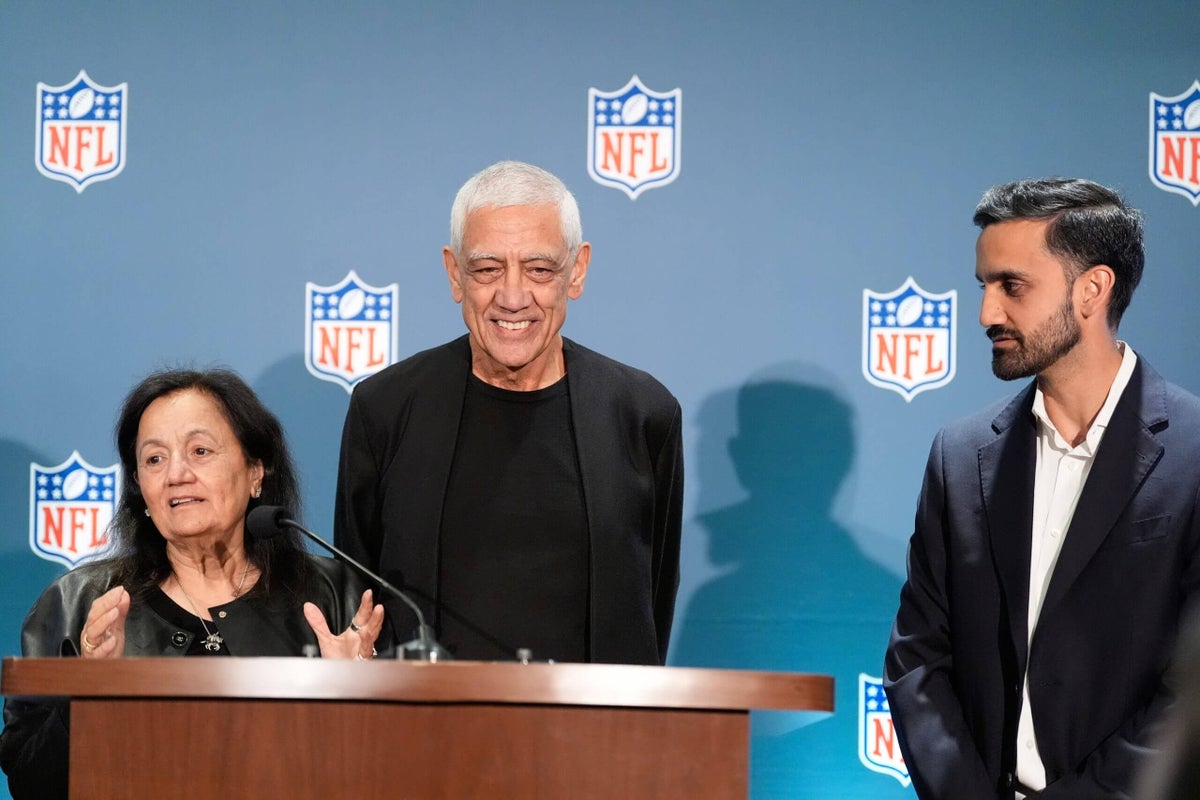
New Seattle Seahawks owner Vinod Khosla took to social media on Friday to defend his Pittsburgh Steelers fandom that dates back 50 years.
On Wednesday, NFL owners voted unanimously to approve the sale of the Seattle Seahawks to Vinod and Neeru Khosla. During the introductory news conference, Vinod Khosla said he has been, and still is, a fan of the Steelers since arriving in the U.S. in 1976, in the middle of the franchise’s dynasty.
On Friday, Khosla provided a lengthy response to a post on X from Barstool Sports criticizing his comments about rooting for Pittsburgh.
“Reporters will make every molehill into a mountain just to get column inches to write or video minutes,” Khosla said. “What’s wrong with admitting my 1976-78 period in Pittsburgh (CMU) got me excited about the NFL? I still watch their games doesn’t mean I won’t unconditionally ALWAYS as owner, want the @Seahawks to win and have every edge up, EVERY TIME over every other team!!!! Zero questions!!!
“At the other end is a set of teams I always want to lose every advantage. But happy to have the sports writer getting more column inches and fill their pages. You are welcome. Apologies in advance for my very transparent style.”
What did we learn at the NFL special league meetings?
Jonathan Jones and Johnny Sweet
On July 11, the Seahawks announced the Paul G. Allen estate had reached an agreement with the Khoslas to sell the franchise for an NFL-record $9.612 billion. Allen’s sister, Jody Allen, had operated the team since Paul died in 2018. The Allens were famously elusive during their tenures running the team, rarely making public comments.
Vinod was born in India and immigrated to the U.S. to continue his education, attending Carnegie Mellon in Pittsburgh. He is considered one of Silicon Valley’s most influential innovators and venture capitalists.
Neeru Khosla will be the controlling owner of the Seahawks. Their son, Neal, is expected to have a major role in the team.
Vinod’s comments come on the heels of the first significant move under the Khosla family’s ownership. On Thursday, Pro Bowl defensive tackle Leonard Williams signed a contract extension that runs through 2029.
Shortly after the Khosla family was approved as owners, Vinod said the family is committed to keeping the Seahawks Super Bowl contenders.
“Our approach is generally going to be long-term focused,” he said. “That’s our inclination always. So keep winning, take a long-term approach, and learn a lot.”
>
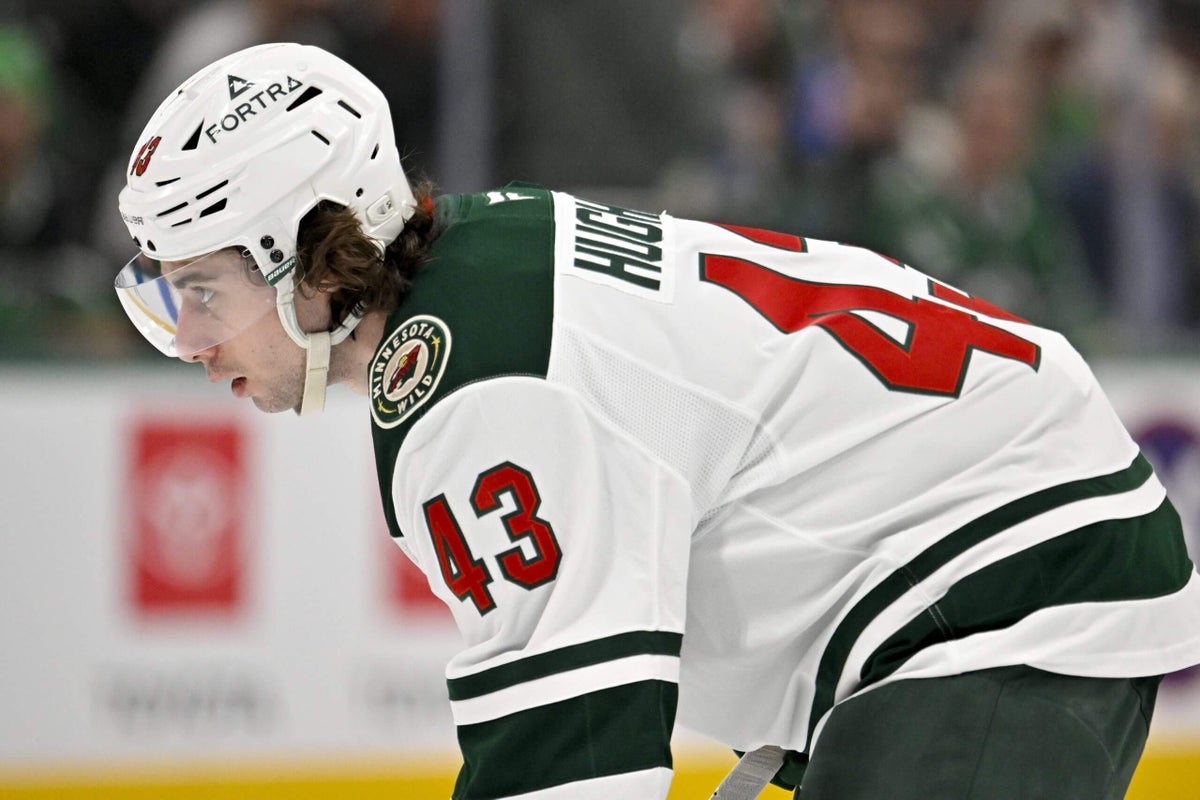
ST. PAUL, Minn. — On Friday, Cale Makar set a new market for superstar defensemen. Now we’ll see if doing so kick-starts the Minnesota Wild’s negotiations with Quinn Hughes, with training camp less than three weeks away and the start of the season in less than five.
At least now, there’s a legitimate comparable contract.
Makar, a two-time Norris Trophy winner and a former Calder Trophy and Conn Smythe Trophy winner, became the NHL’s first $20 million man, signing an eight-year, $163.2 million extension that will kick in July 1, 2027. That’s a $20.4 million average annual value. The max Makar could have received is 20 percent of the $104 million 2026-27 cap, or $20.8 million annually, so he came within a hair of that.
Hughes, who also has won a Norris Trophy, is entering the final year of his contract and would become a free agent July 1 if he doesn’t extend before then. If he signs before July 1, he would max out at a $20.8 million AAV. If he waited until after July 1 to sign with another team, he’d be allowed to max out at 20 percent of the 2027-28 cap, which is expected to be $113.5 million. That’d be a $22.7 million AAV.
However, the max term he could sign for on another team after July 1 would be six years. He would be allowed to sign an eight-year deal, like Makar, if he re-signs before Sept. 15. If the extension came after, the max term would be seven years under the new CBA.
Of course, term may not be the issue, because Hughes seems to want a shorter deal, as most of today’s stars have been signing.
In fact, earlier this summer, when Wild owner Craig Leipold appeared on Minnesota Public Radio, he said that the team would “want to go as long as we could” but that Hughes “would probably want it to be a little shorter — maybe three years.”
“Hopefully we’ll end up at five,” Leipold said.
Why sports leagues finally embraced Las Vegas
Tifo Sports
The Wild have been in talks with Hughes and his agent, Pat Brisson, throughout the summer and remain confident that they can get an extension done before the start of the season. They’ve gone over different concepts of what a deal might look like, from term to average annual value to contract structure.
Hughes, who has been training in Michigan and Florida over the past month, is expected to return to Minnesota on Sept. 10 after representing the Wild at the NHL/NHLPA Player Media Tour in Las Vegas with teammate Matt Boldy.
The changing landscape in NHL salaries over the past year is part of what’s made negotiations like Hughes’ increasingly complicated, and Makar’s is the new standard.
Makar’s $20.4 million AAV surpasses the Chicago Blackhawks’ Bowen Byram ($12.5 million AAV for six years) as the largest AAV signed by a defenseman. Byram’s extension is also set for 2027-28.
Theoretically, by this comp, Hughes’ AAV should be less than Makar’s $20.4 million if he signs for three to five years. But, like last September when the Wild felt pressure to give Kirill Kaprizov the then-largest contract in NHL history (eight years, $136 million, $17 million AAV), there is immense pressure to re-sign Hughes.
The Wild couldn’t afford to let Kaprizov walk. Similarly, they took the risk of trading the equivalent of four first-round picks (Marco Rossi, Zeev Buium, Liam Öhgren and a 2026 first-rounder) for Hughes without the guarantee of an extension, so there is incredible pressure to ensure they re-up Hughes after giving up such a large package.
President of hockey operations and general manager Bill Guerin has said that the franchise is in “win now” mode more than ever before and that it needs to take advantage of this window.
Kaprizov’s eye-popping $17 million AAV deal set a new bar, both league-wide and with the Wild. The Wild structured Kaprizov’s deal to give him $128 million of his $136 million in annual July 1 signing bonuses. Hughes could very well want a large chunk in signing bonuses, too, which would be quite a financial commitment for Leipold.
Makar received $127.6 million in signing bonuses.
According to The Athletic’s Dom Luszczyszyn earlier this summer, Hughes’ market value on an eight-year deal was $17.8 million. It went down to $17.7 million on a five-year deal and $17.5 million on a three-year deal.
He has Makar at $21.6 million.
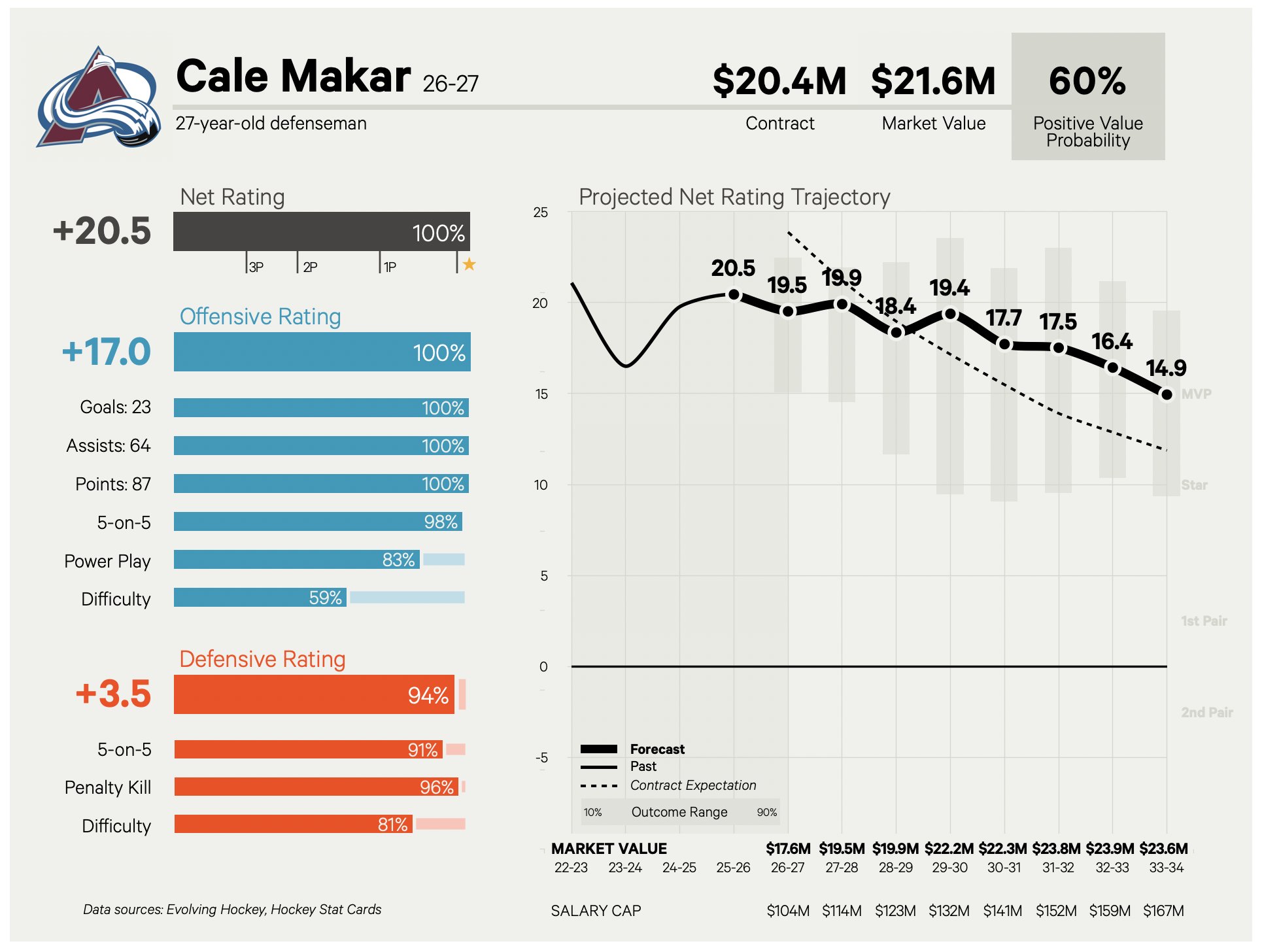
But Hughes’ market value could be irrelevant for three reasons: 1) The internal pressure to re-sign him; 2) The fact Makar created this new bar, and Hughes is the only defenseman in the same tier; and 3) Kaprizov signed for 16.3 percent of the cap, which would already be $18.5 million in relation to the 2027-28 $113.5 million cap ceiling.
After Kaprizov’s blockbuster deal last fall, this summer’s offer sheet by the Philadelphia Flyers for young Anaheim Ducks star Leo Carlsson (which Anaheim matched at an $18 million AAV) continued to push the envelope. Macklin Celebrini, already one of the game’s top players at 20 years old, then signed a five-year deal with a then-league-record $18.8 million AAV.
Hughes will earn $8.25 million this season and carry a cap hit of $7.85 million.
Like Makar, Hughes is among the game’s best players overall — “in the top group of stars” regardless of position, analyst and former GM Craig Button told The Athletic — and they will both be paid like it on their next deals, one way or another.
>
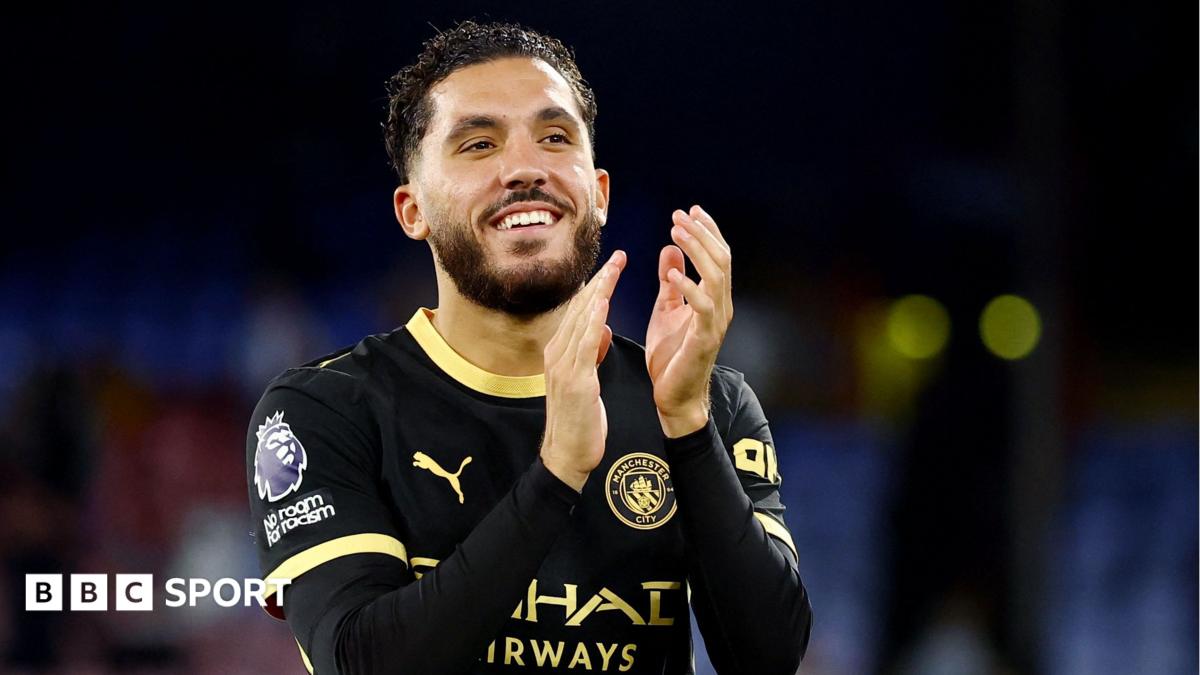
Rayan Cherki refuses to hide his emotions, an open book for all to see and hear in times of joy and disappointment.
Moments after Manchester City had put down their first heavyweight marker of the post-Pep Guardiola era by brushing aside Crystal Palace, he was asked live on TV how much he enjoyed the game. Rather than providing the usual textbook answer, he instead gave a colourfully uncomplimentary – and unprintable – description of his own first-half performance.
Erling Haaland, standing alongside Cherki as he waited to hand over the player-of-the-match award, could only laugh at the France attacker’s sweary honesty.
Indeed, the 23-year-old also refuses to hide his talent, making a nonsense of his self-criticism by unveiling a Selhurst Park masterclass with two brilliant second-half goals in the 4-1 victory.
Cherki made his impact under Guardiola last season, although there was always a feeling the mercurial signing from Lyon for a bargain £30m could produce more. He made 33 Premier League appearances – but 14 of those were as a substitute.
And there is a sense that he already has something to prove under new boss Enzo Maresca amid City’s vast attacking resources, coming off the bench to assist the two late goals that gave them victory against Bournemouth on the opening weekend.
Cherki was seen in animated conversation with Maresca after the final whistle, but his reward was a start at Selhurst Park and he delivered the sort of irresistible performance he, as well as City, needed.
>

New Seahawks owner Vinod Khosla defends Steelers fandom amid criticism

Coyote vs. Acme: Will Forte Celebrates Film’s Long-Awaited Release

Will Cale Makar’s record-breaking extension kick-start Wild-Quinn Hughes negotiations?
-

 movies3 months ago
Search For Canadian TV Actor Stewart McLean Now Homicide Investigation
-

 Fashion9 years ago
These ’90s fashion trends are making a comeback in 2017
-
Fashion9 years ago
According to Dior Couture, this taboo fashion accessory is back
-
Fashion9 years ago
Model Jocelyn Chew’s Instagram is the best vacation you’ve ever had
-
Fashion9 years ago
Emily Ratajkowski channels back-to-school style
-
Fashion9 years ago
9 Celebrities who have spoken out about being photoshopped
-
Fashion9 years ago
Your comprehensive guide to this fall’s biggest trends
-

 Anime3 months ago
Rurouni Kenshin: Hokkaido Arc Manga Takes 1-Issue Break – News