
Sports
At U.S. Open, Carlos Alcaraz says ‘intrusive thoughts’ were part of comeback from wrist injury

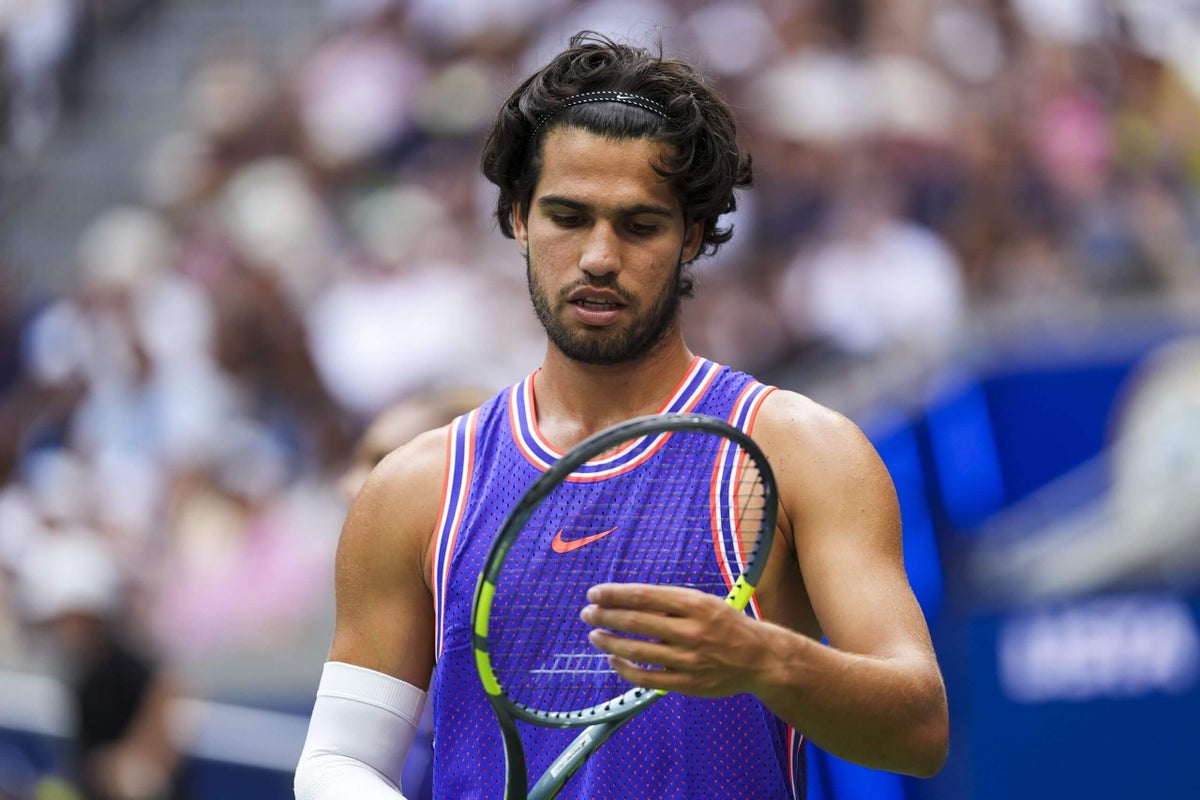
Carlos Alcaraz has said that “intrusive thoughts” were the most difficult part of his four-month injury layoff as he prepares to return to singles at the U.S. Open.
The defending champion said in a news conference Friday that the first month of his recovery from a right wrist injury had been especially difficult, because he could not use his right arm.
The 23-year-old has not played a singles match since suffering the injury at the Barcelona Open in April, which forced him to miss the French Open and Wimbledon. He returned to competition alongside American Serena Williams in the U.S. Open mixed doubles this week and will face Roman Safiullin in the first round of the men’s singles.
“Once I started to practice a little bit, that I didn’t know when I’m gonna start, that thoughts are really difficult to deal with, because I don’t know if I’m gonna be ready for Cincinnati, for the U.S. Open, or I’m gonna miss the whole American swing,” Alcaraz said.
“So I would say that intrusive thoughts were the most difficult things to deal with.”
Carlos Alcaraz confirms U.S. Open return
Ava Wallace and Lauren Morales-Jones
Alcaraz has made no technical changes to his game during his recovery, saying that changing his technique or movement would have prevented him from returning as the same player.
“That injury helped me to know that it’s all in my head,” he said. “I gotta trust my team, I gotta trust my people that tell me it’s gonna be fine.”
Alcaraz prepared for his return with intense practice sessions to test how his wrist responded, including a week training with Denmark’s Holger Rune in Alcaraz’s native Murcia.
“I just tried to do everything perfect on and off the court, to feel ready — really long practices, really intense practices, just to see how my wrist is going to react during the practices and after those really long days.”
Italian world No. 1 Jannik Sinner will miss the U.S. Open with a right knee injury, and Alcaraz said the number of players dealing with physical problems reflected the demands of the tennis calendar.
“I’m seeing a lot of players having problems with their bodies and everything, with injuries,” Alcaraz said. “I think that means how tight everything is on the calendar for the year.”
Alcaraz and Sinner have not played each other since Sinner won their Monte-Carlo final in April, shortly before Alcaraz began his four-month absence. Sinner’s injury means the pair will again be kept apart in New York.
“It’s kind of weird,” Alcaraz said. “We are not gonna see each other for, like, six months now, seven months.”
>
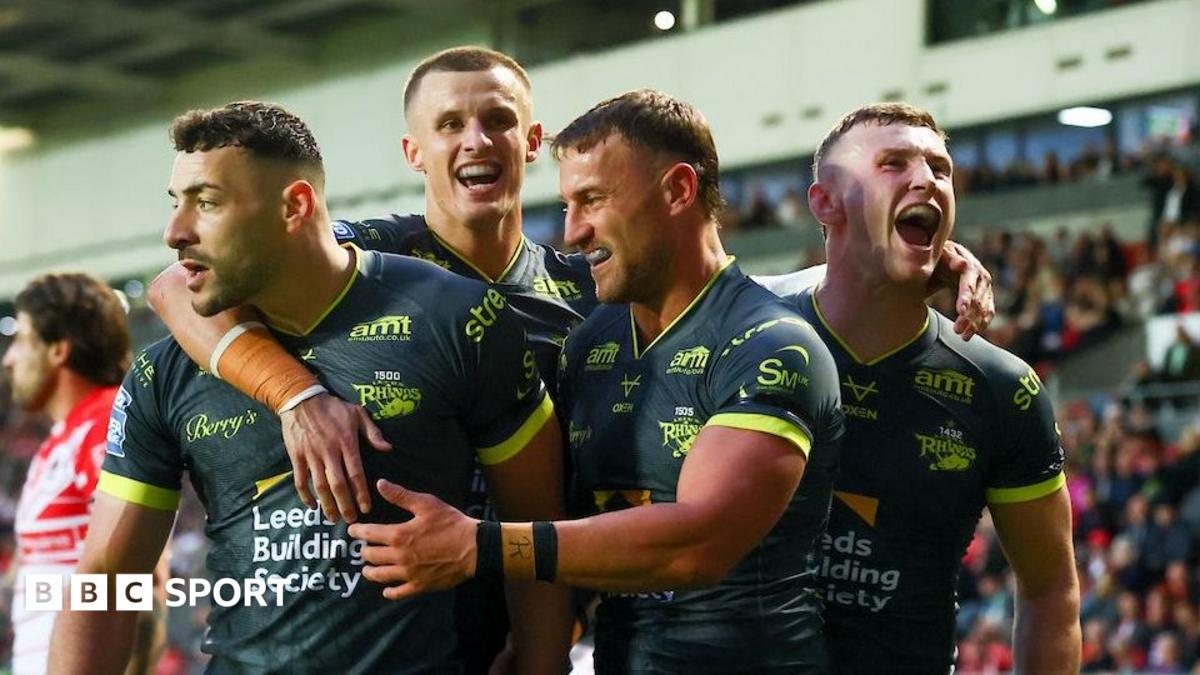
Tom Holroyd had a try disallowed a minute after half-time, unable to ground the ball before knocking on under pressure from Saints full-back Sailor.
Leeds did get their fourth try soon after though when Jack Bird’s beautiful backhanded offload freed up Ryan Hall to dot down his 357th career try.
Saints were on the board when Jack Welsby’s line break saw him race clear of Leeds’ midfield and full-back Lachie Miller for the match’s second excellent individual try.
But that proved to be just brief respite as Handley got on the scoresheet, latching on to a grubber kick from Connor, and another grubber from Connor found his half-back partner Croft, via the upright, for his 28th Super League try of the season.
Connor missed a late kick late on, striking the post, but his kicking game continues to impress with Leeds looking strong going into the upcoming play-offs.
Saints, meanwhile, will have to beat Leigh and Hull KR in their final two matches if they are to avoid missing out on the Super League play-offs for the first time.
St Helens: Sailor; Douglas, MacDonald, Welsby, Cross; Robertson, Lomax; Suluka-Fifita, Shorrocks, Klemmer, Davies, Wright, Host.
Interchanges: Walmsley, Humphreys, Keeley, Evans.
Sin-bin: Suluka-Fifita (15 mins)
Leeds: Miller; Hall, Bird, Handley, Newman; Croft, Connor; Oledzki, O’Connor, Jenkins, Watkins, Hankinson, Cassell.
Interchanges: Holroyd, Smith, Levi, Lodge.
Referee: Marcus Griffiths.
>
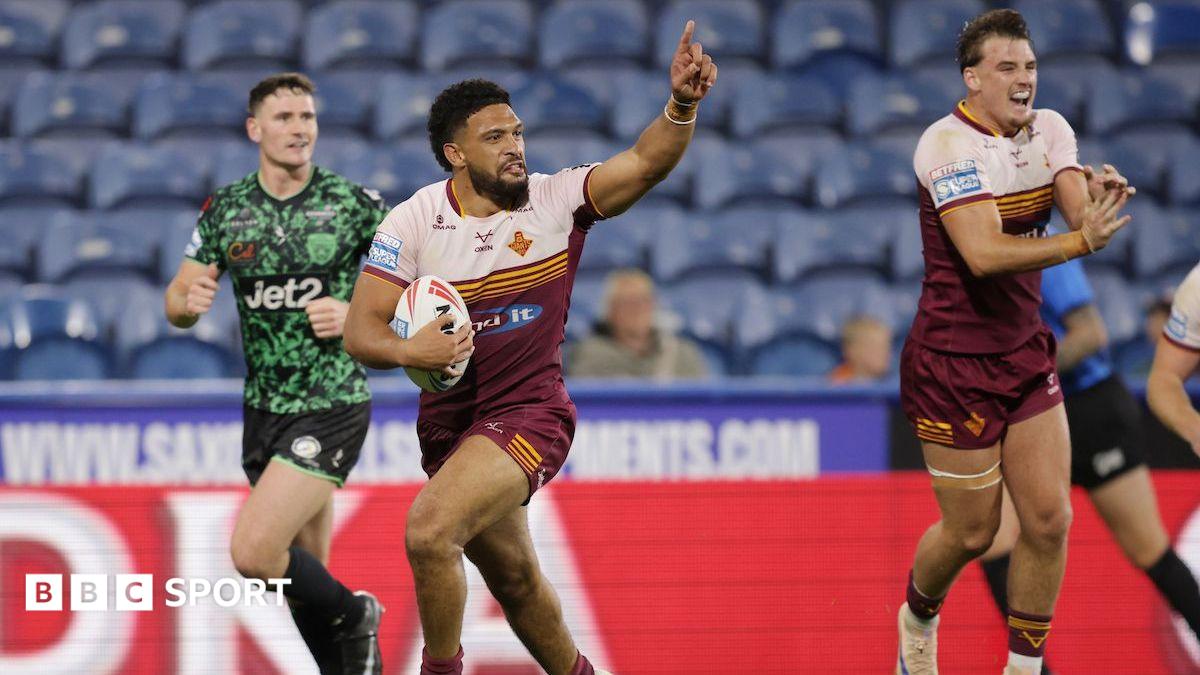
Leading 14-6 at the start of the second half, Zac Woolford broke from dummy half and found Evalds to score Huddersfield’s third try.
Needing a response, Leigh released Josh Charnley up the right wing and sent Hanley over on his 100th Super League appearance.
But Huddersfield forced a goal-line drop-out that was taken short, Giants claimed the kick and they drove towards the line before Woolford grubbered in-goal for Geyer to dot down.
Leigh kept themselves alive again as they reclaimed the restart, were immediately in behind the defence and sent Mulhern over from the next play.
But they soon knocked on to give Huddersfield field position and Geyer found a gap to slide in for his second try to seal the game.
Huddersfield: Evalds; Milne, Jagger, Halsall, Zenon; Lolohea, Clune; Powell, Woolford, King, Hewitt, Cozza, Rushton
Interchanges: Rogers, Flanagan, Billington, Geyer
Leigh: O’Brien; Senior, Badrock, Hanley, Charnley; Cook, Lam; Ofahengaue, Horne, Mulhern, Hughes, Trout, Liu
Interchanges: Brogan, Ashworth, Alick-Wiencke, Ipape
Referee: Tara Jones
>
Prime Tire Newsletter | This is The Athletic’s F1 newsletter. Sign up here to receive Prime Tire directly in your inbox twice a week during the season and weekly in the offseason.
Welcome back to Prime Tire, where today we’re wondering whether, now that we have a newsletter hotline open, you’ll indulge us with an all-mailbag edition?
Ah, too late. I’ve already done it.
I’m Patrick, and our dear readers’ questions will be answered shortly. But first …
All hail La Monumental
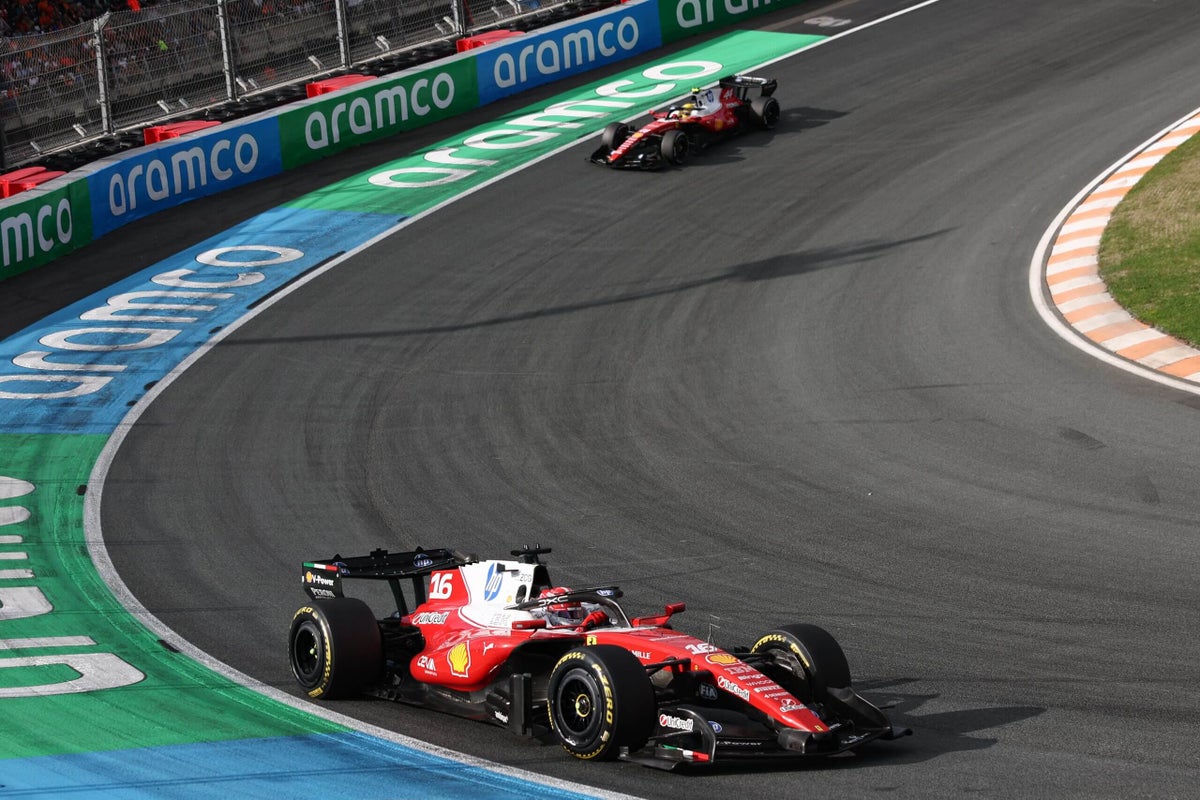
Hard to believe the new and improved Spanish Grand Prix is mere weeks away, but yep, that’s a thing. Formula 3 did some test laps this week at the Madring in Madrid and shared some footage of Turn 12, the long right-hander with steep banking we can’t wait to see in F1 action. It’s called “La Monumental,” which is Spanish for “This Is Awesome To Drive On.” I think …

If you already miss Zandvoort’s curved corners, this should whet your appetite. For more on the track and how it’s coming together, read Luke’s summer dispatch from Madrid.
And now, on to your questions …
Prime Tire Mailbag
Let’s start with F1’s salary cap. Remember: These questions are anonymous, so you all felt comfortable asking anything! (Questions were edited lightly for brevity.)
Here we go:
Cost cap, delta and drivers’ preferred tracks
How does F1’s “salary cap” work? How is it possible that Mercedes has run out of money when McLaren hasn’t, when McLaren has had the same reliability issues and brought more upgrades?
So, F1’s cost cap isn’t a salary cap like the Big Four leagues (NFL, NBA, NHL, MLB). The cost cap is what it says on the tin: It’s a spending limit. Crucially, the driver salaries don’t count. Neither do the three highest-paid staff, marketing or hospitality costs. The cost cap really is all about the car and the people around it — design, development, aero, race ops and most staff pay.
For 2026, it’s $215 million per team for 24 races or fewer, plus $1.8 million per extra race. Engine manufacturers have a separate $190 million cap, but that’s a mailbag for another day.
And, Mercedes hasn’t run out of money, it just chose to spread spending evenly and hasn’t reached its next allocated window. The next big package is due in Malaysia. McLaren front-loaded instead, and have had more upgrades in a shorter period of time than Mercedes.
Red Bull already took a 10-place penalty weeks ago for an engine upgrade. Do driver salaries count towards that, or is it only for car development/improvements?
Red Bull’s grid penalty is a completely different rulebook, though the mix-up is understandable. The cost cap lives in F1’s financial regulations. Grid penalties for new engines come from the sporting regulations, which limit how many of each engine component a driver can use in a season.
What does “delta” mean? And what are the drivers looking at on their little screens?
In F1, delta just means “difference.” It’s usually the gap in lap time between what a driver is currently doing and some reference time (their fastest lap, a teammate’s lap or a target set by the team).
On their steering wheel display, drivers see a running number like +0.312 or -0.045, updating in real time as they drive. Positive means slower than the reference, negative means faster. It’s most visible during qualifying (racing against your own best lap) and under safety car/VSC conditions, where teams give drivers a minimum delta time they must not go faster than, to avoid overtaking under caution.
Which 2 or 3 tracks do most drivers think are the most fun to race on — those which provide multiple overtaking spots, really test their skills and are just plain fun?
Ah, worth noting that “fun to drive” and “good for overtaking” aren’t always the same tracks! Drivers like Zandvoort, but the Dutch GP will never be accused of being a barnburner of a race.
For pure driving, Suzuka (Japanese GP) is close to unanimous. The opening Esses are famously flowy and leave no room for error, and drivers describe getting them right as the best feeling.
Spa (Belgian GP) is second on almost every list, for Eau Rouge and Raidillon, the elevation and the sheer scale of the place.
Silverstone (British GP) rounds it out, specifically the Maggotts-Becketts-Chapel complex that really pulls some g-forces.
Note that all three of these tracks aren’t as fun for drivers this year because of the battery-recharging thing, which we’ll get into next.
More Mailbag: Driving, deleted laps and team colors
Can you explain — in terms a third grader might understand — how the battery system and recharging work in an F1 car, and how this affects race strategy?

Sure! Picture the F1 car with two halves of a single engine.
- The gas half of the engine burns fuel like a normal car.
- The battery part is like a giant remote-controlled car motor giving an extra push. In 2026, it’s almost as powerful as the gas engine.
Ever seen an old-timey movie or cartoon where the guy/scientist rides a stationary bike so fast that a lightbulb comes on? Same concept, really. Energy gets converted into electricity. When the driver brakes hard, that braking energy gets turned into electricity and refills the battery.
The battery is small and drains fast, so it’s built for short powerful bursts rather than lasting a long time. It’s like a video game energy bar: Drivers must save boost for the right moment (overtaking/defending) instead of using it all at once, or they’ll be stuck with no power exactly when they need it most on the next straight.
And drivers have to think corner by corner, as they drive, of where they’re going to brake harder and harvest energy rather than go as fast as possible everywhere, all the time.
During races, I’ve heard commentators mention a lap has been “deleted” either during or after the race, I expect due to exceeding the track limits. This makes sense during qualification, but why is it done during the grand prix, and what effect does it have?
Yeah. It seems a little pointless!
In the race, getting a lap time deleted does almost nothing to your afternoon. It doesn’t remove a lap from your count and it doesn’t change your position. Its only direct effect is on the timing record, which used to matter when the race’s fastest lap delivered a point. That rule is gone now, so the whole thing is a bit of a vestigial organ.
That said, the tally matters, as repeat offenses accumulate. Too many, and you get shown the black-and-white flag as a formal warning, and further infringements after that bring a time penalty. So the deletion itself is bookkeeping.
How did each team choose its colors? Some are obvious because it’s the manufacturer’s colors, but then you have orange for McLaren?
For decades, cars were painted by nationality rather than sponsor. British green, Italian red, French blue, German white and later silver. Super boring. Ferrari’s red is the last survivor of that system.
In the late 1960s, that all changed when tobacco money arrived and teams discovered that a livery could be sold. From that point on, a car’s color told you who was paying rather than where it was from.
McLaren’s papaya, oddly, arrived around the same moment for different reasons. Bruce McLaren’s business partner, Teddy Mayer, reckoned orange would read well on black-and-white TV and loom large in a rival’s mirrors.
And then McLaren went away from it for a while. A travesty. I know many of you like the 2007 Lewis Hamilton-era livery, and you’re wrong. I’m sorry.
A quick rundown of the 2026 grid:
- Ferrari: Italian red. The dinosaur livery.
- McLaren: Papaya for the TVs.
- Mercedes: Silver and black, for … Mercedes.
- Red Bull: Ever seen a Red Bull can?
- Racing Bulls: Red Bull colors but … different. Because they’re *technically* different.
- Aston Martin: British racing green. Also … well, Aston Martin’s color.
- Alpine: French blue, but pink for their sponsor, BWT.
- Haas: Black, white and red, like Haas’ other motorsports teams.
- Audi: Titanium silver for Germany’s silver car tradition, with red accents for Audi’s racing past.
- Cadillac: Black and white, straight from GM’s luxury branding.
- Williams: A relic of the 1994 Rothmans sponsorship — the cigarette brand’s colors were blue, white and gold. Williams won titles in this car, so the blue stuck (it helps that their partners through the years like BMW and Martini have also been blue).
Lightning Round
What are they holding in front of the driver’s face in the garage? A screen or a fan. Sometimes both! The screen usually displays data or lap times for drivers as they decompress between times on track.
What’s an “out lap”? The lap leaving the pits before a timed run. Drivers use it to build tire and brake temperature, which is why they weave and appear to be going slowly for no reason.
What are “setup changes”? Wing angles, ride height, suspension stiffness, anti-roll bars, differential settings, brake balance, tire pressures. You name it. Lots of little mechanical adjustments, made with tools in the garage between sessions. These are different than the changes drivers can make with their steering wheel to the brake balance and such.
Outside the Points
📫 If you simply can’t get enough mailbag, our regular post-race mailbag is up on the site right now. The big question: Is McLaren the team to beat now?
🏎️ Franco Colapinto has re-signed with Alpine for the 2027 season. This driver’s market, huh? Sure is exciting!
🇲🇨 Hey, remember Pierre Gasly’s Monaco penalty appeals? From months ago? We have an update on that. Sort of. (It might take a few weeks more …)
⚽ And, finally, Luke has a fun story about how Haas’ team principal, who is from Japan, became a die-hard fan of the Premier League’s Coventry City.
📫 Love Prime Tire? Check out The Athletic’s other newsletters.
>

‘Avengers Endgame: Encore’ Trailer Rerelease Sets Viewership Record

At U.S. Open, Carlos Alcaraz says ‘intrusive thoughts’ were part of comeback from wrist injury

Super League: St Helens 6-34 Leeds Rhinos – Rhinos go back top
-

 movies3 months ago
Search For Canadian TV Actor Stewart McLean Now Homicide Investigation
-

 Fashion9 years ago
These ’90s fashion trends are making a comeback in 2017
-
Fashion9 years ago
According to Dior Couture, this taboo fashion accessory is back
-
Fashion9 years ago
Model Jocelyn Chew’s Instagram is the best vacation you’ve ever had
-
Fashion9 years ago
Emily Ratajkowski channels back-to-school style
-
Fashion9 years ago
9 Celebrities who have spoken out about being photoshopped
-
Fashion9 years ago
Your comprehensive guide to this fall’s biggest trends
-

 Anime3 months ago
Rurouni Kenshin: Hokkaido Arc Manga Takes 1-Issue Break – News