
Sports
Behind the scenes as Leeds’ Elland Road rebuild ramps up

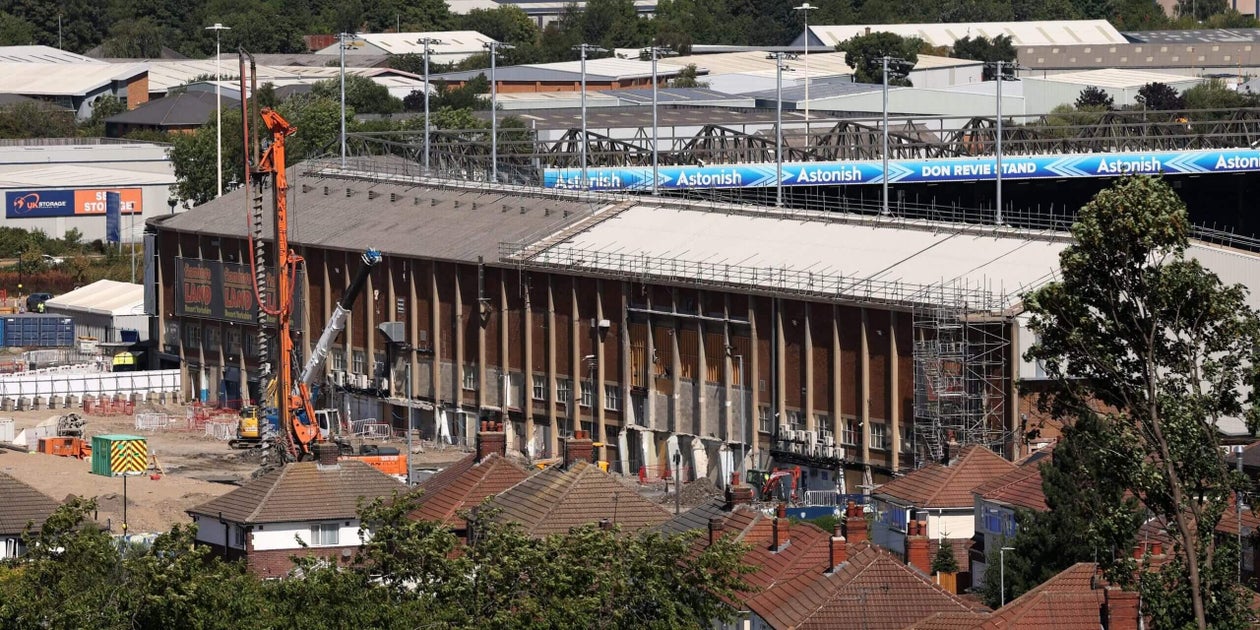
When Leeds United were drawn to play away at Nottingham Forest in this week’s Carabao Cup tie, eyes were rolled in the fanbase. It would be another away match in a cup competition and straight back to the club they faced three days earlier in the Premier League.
Around Elland Road, however, there were sighs of relief.
Leeds had already asked the Premier League for an away game on the opening weekend but a home draw on Tuesday night could have made their lives harder. A summer-long fight has been on to make Elland Road ready for fans to return and every extra day to prepare has been a blessing.
On May 17, hours after full time in the final home game of last season, the builders moved in. The redevelopment of the John Charles Stand, which will take its capacity from around 8,000 to more than 17,500 seats, was underway, and the clock has been ticking. The overall capacity will rise to 53,000 on completion of the planned works.

Elland Road has been a hive of activity since the final game of last season. This is behind the West Stand (Rise)
The club committed, as part of those plans, to keep the stand open while works went on. This weekend, supporters will return to their seats and find a different setting from the one they remember.
It is four days before kick-off with Brentford when The Athletic is given a tour of what has changed. Tony Armstrong, stadium development director, is clear on what the mission statement has been.
“We’ve got to make sure the construction site is completely safe and prevent trespass onto the site by not just fans, but the general public,” he says. “It’s also about trying to provide the same level of comfort and hospitality that the fans are used to getting. What we didn’t want to do was make it any worse.”
From afar, and by watching the drone footage independent YouTube channels have been publishing, supporters will have seen the two-storey hospitality marquee erected behind the Don Revie Stand, but that is only the tip of the iceberg.
The dugouts were not a part of the wider redevelopment plans, but the opportunity to transform them has been taken. They now meet Premier League standards and, crucially, no spectator seats have been lost.

The home and away dugouts have been revamped (Rise)
The Bremner Suite has been bulldozed and cleared from the site, but the suites that remain inside the stand have been repurposed to ensure hospitality is preserved for matchgoers. The Jack Charlton Suite, which served as the players’ lounge, has been turned into the away dressing room.
Visiting teams were based in two shipping containers stacked on top of one another at the back of the stand. The removal of the Bremner Suite and the old away dressing rooms has made space for a new corridor, which is central to making this all work.

The new away dressing room (Rise)
Between the stand and the construction site, there is a 10-metre-wide zone that stretches the length of the stand. This asphalt path is how home and away fans will safely enter and exit the stadium.
As work continues behind the hoardings, the corridor will eventually become a tunnel, most likely next season, as a new structure rises to connect with the existing stand. This corridor connects hospitality with the two-storey marquee to the north of the ground, away fans with the 25-coach park created on Fullerton Park and the players with their dressing rooms.
The extra week allowed by the Premier League and Carabao Cup draw has been priceless for Keith Whitmore, director at Rise, the property development firm running this project.
“When you’re working at a pace we’ve been working at, days make a difference,” he tells The Athletic. “To get an extra five, seven days, it’s like, ‘Thank god for that’, because stuff goes wrong.
“People don’t turn up, things don’t turn up, and that’s the construction industry as a whole. No matter how well you plan something, we’ve sat down and planned this thing to the nth degree, stuff happens.”

Ten metres of tarmac will separate the West Stand and the construction site (Rise)
Lessons of the past have been taken into account on this project. Old and slow turnstiles have been replaced with high-speed alternatives in the John Charles Stand, while The Athletic spies a power generator the size of a shipping container on its walk around.
It is there as a backup generator, should any aspect of the electrics fail during the build. It could run the whole stadium if necessary and, helpfully, will ensure there is no repeat of the power failure in October 2022, when a Premier League match with Arsenal was delayed for 40 minutes because a momentary power cut crippled the VAR system referees need.
Problems, inevitably, emerged when the demolition got underway in May. When the Bremner Suite, which is best described as a permanent annexe attached to the original stand, was destroyed, thousands of wires from decades of use were left exposed.
“Technology has been put in that stand since the 1950s, 1960s,” said Armstrong. “It’s been put in over time. We’re in a digital world now, where it’s a lot easier to capture things.
“It’s really trying to work out what everything drives. Is it redundant? Is it needed? Are we going to pull something out that stops the floodlights from working?”

How the West Stand looked in February (Robbie Jay Barratt – AMA/Getty Images)
There was one hiccup that damaged the stadium’s Hawk-Eye system. This is what is used for the goal-line technology in games, and a new fibre was needed to repair it.
Club history has been uncovered as the work unfolded, of course. Bases used for old floodlights were discovered, while one supporter reached out after spotting a section of concrete painted blue from the historic Elland Road frontage in a photo from the development.
That piece has been salvaged, while the club sought permission from the families of Christopher Loftus and Kevin Speight to demolish old changing rooms on Fullerton Park, which carried a mural tribute to the supporters who were stabbed to death in Istanbul before Leeds played Galatasaray in April 2000.
Arguably the most impressive aspect of this push to get ready for Sunday lies inside the hospitality marquee. This is a temporary structure, but neither feels like nor looks like it.
The Bremner, Hunter and Radebe suites have been moved into this building, which preserves, if not improves on, the quality and comfort of what came before inside the stadium. Armstrong acknowledges the building is so robust that it may well be repurposed for something else in the future.
“The club were very clear they wanted the West Stand (John Charles Stand) to remain with fans,” said Armstrong. “There wasn’t a day when they said you can take the whole thing down and start from new, because that would probably have been faster. It wasn’t the right thing for the team, it wasn’t the right thing for the fans.”
Whitmore said: “The brief was: don’t lose seats and, most importantly, don’t lose the atmosphere. It does have a special atmosphere. You go to some of the big, new, flash stadiums, it doesn’t feel so (special).”

The view from behind the West Stand at the start of August (George Wood/Getty Images)
Whitmore says a key aspect in this push for the finish line has been the passion and commitment of Leeds fans in the workforce. This is more than just another building project for them.
“The team have come together, phenomenally, on it,” he said. “A lot of thought, a lot of experience, a lot of time has gone into it, just to get that look and feel and make it something special.
“When you went in the old President’s Suite, it felt that way. That was the desire here. The guys who have worked on it have a history with the club, which is great.
“Most of them are fans. From a gate man through to the electricians, to the plumbers, to the bricklayers. There’s a whole group of them.”
Armstrong concedes supporters may not see anything new in the sky until the end of the season, but that does not mean work is not continuing at pace.
“The independent drone people, when they’re taking their pictures and giving their comments, a lot of the comments I saw, particularly early on, were, ‘nothing’s happening’, ‘it’s going slow’,” he said.
“Just because it’s not tarmac and paint finishes, there’s an awful lot of work to be done in the ground and when you’re in the ground, you don’t see a lot from the air.”
>
Sports
Florian Wirtz is a lightning rod for criticism. He’s also a product of his environment at Liverpool

New season, same story. Florian Wirtz’s performances for Liverpool are being criticised.
There’s no question that Wirtz has failed to live up to his billing since moving from Bayer Leverkusen last summer for £116million ($157m). It’s also inarguable that he bears responsibility for the deficiencies of his first season. Moving to the Premier League from the Bundesliga is a challenge, but it’s one he accepted with an understanding of what it might involve.
And yet there’s a disingenuous aspect to the coverage. It often identifies Wirtz as the underperforming player within an otherwise healthy side. Clearly, that is not the case. Compared with Jurgen Klopp’s magnificent team and the one that won the Premier League in Arne Slot’s first season in charge, Liverpool have been clunky and vulnerable over the past 13 months, playing without identity, fluidity or confidence.
How many players in world football would succeed under the same conditions? Goalscorers sometimes can because their existence — they take chances and miss chances — tends to be simpler and more binary, albeit more pressurised. But there are few players who could be dropped into the interior of a side and then be expected to perform independently of the mood or chemistry.
Rhythm matters, too.
Memories of Wirtz in Germany are all quite similar. The 23-year-old would flow with the ball, moving forward at every opportunity, with so much of his game depending upon instinct, quick decisions and understanding with his team-mates. There was a lightness to his touches, whereas now he plays slower, more deliberately, and without nearly the same certainty in what he’s doing.
During the 2-2 draw with Newcastle United last weekend, there was an instructive passage of play in the second half. Wirtz received the ball just across the halfway line, moved into space, and tried to push Cody Gakpo infield, towards the penalty box. Gakpo did not anticipate the ball and, rather than running into a shooting position, he was slow to react. The ball was intercepted, and the move ended.
Assigning blame for that move’s failure is not important. Did Gakpo need to get on his team-mate’s wavelength or should Wirtz have played the ball to feet, as the Dutchman seems to prefer? Neither matters as much as the realisation that Liverpool’s football, especially around Wirtz, too often tends to be disjointed in precisely that way. Someone tries something. It does not quite work.
It’s not Wirtz’s fault, nor is it Gakpo’s — it’s an example of a mismatched combination in which neither player is getting what they need. And that’s the context required to assess this situation.

Wirtz and Liverpool were largely unconvincing in their opening-day draw at Newcastle (George Wood/Getty Images)
Before his big-money move to Anfield, Wirtz’s conditions at Leverkusen were perfect. He played in front of a two-man midfield that included Granit Xhaka and provided a reliable source of line-cutting possession. On either side of him, he had a wing-back tandem — comprising Alejandro Grimaldo and Jeremie Frimpong — that posed individual threats but also moved and positioned itself in a way that either created space for him or passing avenues he could exploit.
Further forward, Alonso’s Leverkusen often used their centre-forward as a pivot rather than a line-leader. Whether it was Victor Boniface or Patrik Schick, the player used in that role would regularly play deeper, outside of the penalty box in open play, moving in a way that either displaced defenders or provided Wirtz with a combination to use.
The point is not that Liverpool should play like Leverkusen. It is not to say, either, that Andoni Iraola should be tuning his new side specifically around the needs of one player. Does that even work in modern football? Instead, it’s to recognise that Wirtz was a product of his environment in Leverkusen in the same way that he is now at Liverpool, albeit with a contrasting outcome.
It’s also ludicrous to have a hardened position on his future in England, one competitive game into Iraola’s tenure, especially when the Premier League is full of examples of how players respond to changing circumstances for better and for worse.

Wirtz made his name at Bayer Leverkusen, where he won the Bundesliga (Pau Barrena/Getty Images)
Even just at Liverpool alone, consider the careers of Andy Robertson and Jordan Henderson, who succeeded because of their harmony with the team and a particular era. Or the transfers of Darwin Nunez or Naby Keita, who ultimately did not.
Premier League teams have always depended on combinations as much as individuals. Fernando Torres and Steven Gerrard. The Roberto Firmino, Mohamed Salah and Sadio Mane trio, which was so ludicrously well-balanced and so suited the way Klopp wanted to play.
Going further afield, look at the difference in Ousmane Dembele’s career over the past few years. He went from being a spare part at Barcelona to a Ballon d’Or winner within three years at Paris Saint-Germain. Or consider the spike in Harry Kane’s Bayern Munich performances following Luis Diaz’s move to the Bundesliga last summer.
The talent of the individual player is never enough; it always has to be captured properly.
Bradley Barcola will likely join Liverpool in the coming days, providing another shift in the chemistry. It will benefit some of his new team-mates and disadvantage others. But until Iraola has constructed a team out of all these parts, existing or otherwise, it’s impossible to know who can play where and with what kind of effect.
And that still includes Wirtz, however much he may have cost.
>
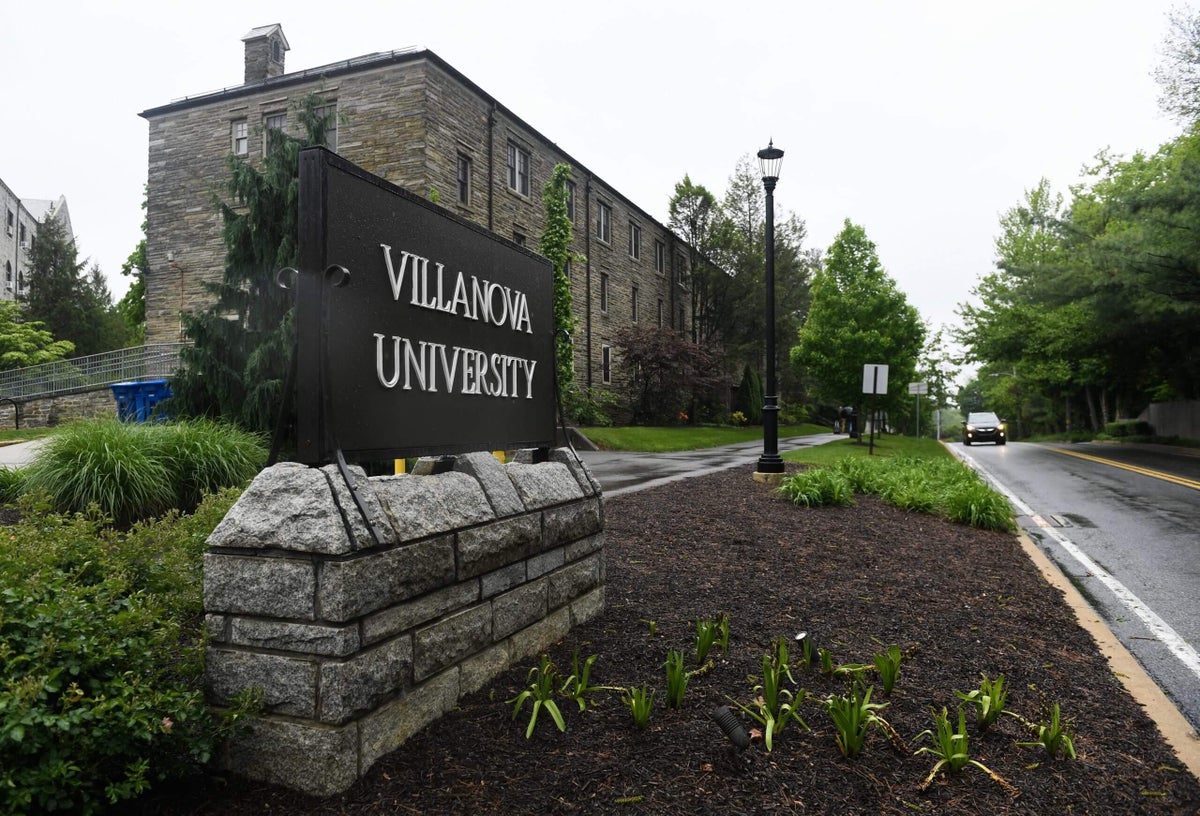
With just 55 seconds left on Friday night, Villanova held a 10-point lead at home over William & Mary. Ranked No. 7 in the FCS and playing an unranked opponent, the expected outcome was a 1-0 start to the season for the Wildcats.
Most 55 seconds, however, don’t get so interesting.
Instead, a perilous stretch included 13 unanswered points from the Tribe and a 35-32 William & Mary upset.
ESPN play-by-play announcer Allen Bernstein summed it up eloquently as a wave of white, green and gold crashed in delirium onto the field.
“William & Mary stuns Villanova on the road,” Bernstein said on the broadcast. “A top-10 win for the tribe. An absolute thriller here at Villanova Stadium.”
William and Mary was down double digits to No. 7 Villanova with under a minute left to play.
Then this happened 🤯 pic.twitter.com/8BPsrbzrLj
— SportsCenter (@SportsCenter) August 29, 2026
William & Mary’s rally started when junior kicker Max Lipinski knocked through a 40-yard field goal to cut Villanova’s lead to 32-25 with 53 seconds remaining. The ensuing onside kick took a precarious bounce and was recovered by William & Mary all the way down on the Wildcats’ 39.
With 22 seconds left, junior quarterback Winston Watkins uncorked a 37-yard touchdown pass to sophomore receiver Kai Austin, who had somehow found his way past a defense whose only prerogative was to stop said deep ball and see out the game. Tie game at 32.
“How does he get behind the defensive back?” analyst Dave Clawson asked.
Usually, the ensuing scenario would involve a knee or two and a game heading to overtime.
Instead, the Wildcats, who entered as 11.5 point favorites, wanted it all back.
When Villanova’s sixth-year quarterback Pat McQuaide woke up Friday morning, he wasn’t eligible to suit up that night.
On Aug. 1, Cuyahoga County Common Pleas Court Judge Timothy McCormick issued a preliminary injunction overturning the NCAA’s denial of the quarterback’s extra year of eligibility. On Aug. 4, however, according to the Philadelphia Inquirer, the Patriot League notified Villanova that he remained ineligible and that playing him would violate conference-specific rules. The ensuing appeal was denied.
Just hours before kickoff Friday night, McCormick granted a separate preliminary injunction against the Patriot League, and McQuaide was allowed to play. He repaid the effort by going 17-for-30 for 270 yards and a touchdown. But he also threw three interceptions, the last of which was consequential.
With just under 10 seconds left, and from his own 35, McQuaide threw a pick to William & Mary freshman defensive back Cade Ellis, who returned the ball to the Wildcats’ 28 before being tackled with five seconds remaining.
Just 50 game seconds removed from a double-digit Wildcat lead, the Tribe sat one 45-yard Lipinski field goal away from winning in an improbably rapid comeback against a highly ranked opponent.
Moments later, it was William & Mary that started the 2025 season 1-0.
>
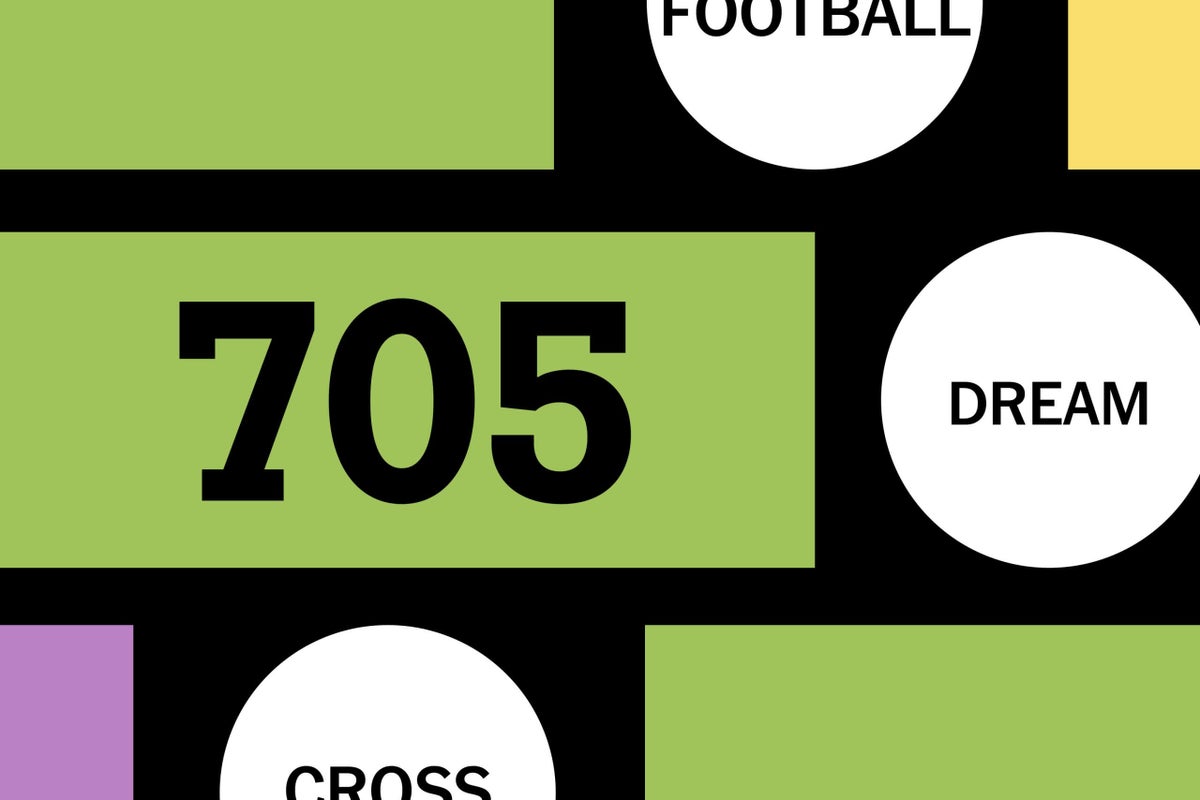
Need help with today’s Connections: Sports Edition puzzle? You’ve come to the right place.
Welcome to Connections: Sports Edition Coach — a spot to gather clues and discuss (and share) scores.
A quick public service announcement before we continue: The bottom of this article includes the answers — and hints — for the four categories. So if you want to solve the board hint-free, we recommend you play before continuing.
You can access today’s game here. And when you’re done, try out our limited-edition Connections: Soccer Edition for an extra challenge.
Today’s difficulty
Game No. 705’s difficulty: 3.5 out of 5
Connections: Sports Edition hints for Aug. 29, 2026

Scroll below for one answer in each of the four categories.
.
.
.
.
.
.
.
.
.
.
.
.
.
.
.
.
.
.
.
.
Yellow: CROSS
Green: DREAM
Blue: FOX
Purple: FOOTBALL
Connections: Sports Edition answers for Aug. 29, 2026
Scroll below for the full answers to each of the four categories.
.
.
.
.
.
.
.
.
.
.
.
.
.
.
.
.
.
.
.
.
Yellow
Boxing terms: CROSS, HOOK, JAB, UPPERCUT
Green
Nicknames of Hall of Fame centers, with “the”: ADMIRAL, BIG ARISTOTLE, BIG DIPPER, DREAM
Blue
White Sox in the Hall of Fame: FISK, FOX, MIÑOSO, THOMAS
Purple
American _____: FOOTBALL, LEAGUE, NINJA WARRIOR, PHAROAH
What is Connections: Sports Edition?
Connections: Sports Edition is The Athletic’s first-ever game, a daily puzzle designed for players to find connections between 16 words on the game board.
The game’s objective is to group words or objects into four groups of four based on commonalities within each group as quickly as possible. Find the groups without making four mistakes. Each puzzle has exactly one solution, so watch out for words or items that seem to belong to multiple categories!
Category examples:
Sports ____ : Fan, Car, Bar, Radio
U.S. Summer Olympians: Biles, Phelps, Ledecky, Lyles
Each category group is assigned a color, revealed as you solve, ranging from straightforward (yellow) to medium (green) to challenging (blue) to tricky (purple).
Who creates the puzzles for Connections: Sports Edition?
That’s me! My name is Mark Cooper, and I create Connections: Sports Edition and work as a managing editor for college sports here at The Athletic. I was previously The Athletic’s managing editor for breaking news.
The next puzzle will be available at midnight in your time zone. Thanks for playing — and share your scores in the comments!
>

Behind the scenes as Leeds’ Elland Road rebuild ramps up

Florian Wirtz is a lightning rod for criticism. He’s also a product of his environment at Liverpool

‘Absolute thriller’: William & Mary opens FCS season with 13-point rally in final minute
-

 movies3 months ago
Search For Canadian TV Actor Stewart McLean Now Homicide Investigation
-

 Fashion9 years ago
These ’90s fashion trends are making a comeback in 2017
-
Fashion9 years ago
According to Dior Couture, this taboo fashion accessory is back
-
Fashion9 years ago
Model Jocelyn Chew’s Instagram is the best vacation you’ve ever had
-
Fashion9 years ago
Emily Ratajkowski channels back-to-school style
-
Fashion9 years ago
9 Celebrities who have spoken out about being photoshopped
-
Fashion9 years ago
Your comprehensive guide to this fall’s biggest trends
-

 Anime3 months ago
Rurouni Kenshin: Hokkaido Arc Manga Takes 1-Issue Break – News