
Tech
Liux’s Big microcar bets on sustainability to take on Chinese rivals

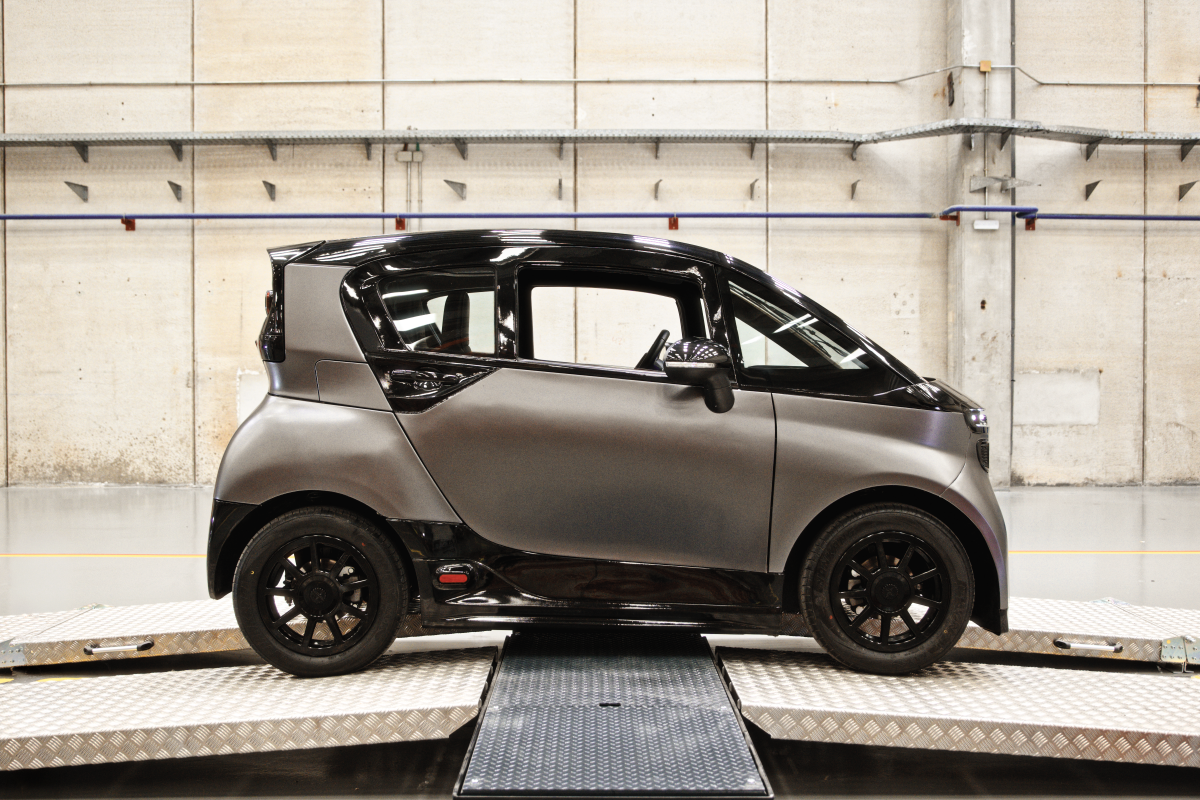
Cars in European cities are smaller than ever. But as Europe’s appetite for microcars has grown, the cute Italian ‘yoghurt pots’ have largely given way to small Chinese EVs. Even Smart, the the iconic ultracompact car brand, has moved manufacturing to China.
Spanish startup Liux thinks it can compete in a crowded market with a tiny electric car built around sustainability.
Following the tracks of the Microlino out of Switzerland, Liux is trying to carve out a place in the market with its upcoming microcar, the Liux Big. The “Big” name is a joke. It is small enough to park at a right angle to the curb; but the name also reflects the oversized ambitions of a team that rarely takes the expected route.
“The idea of a European car does not exist,” Liux co-founder Antonio Espinosa de los Monteros told TechCrunch. Coming from the CEO of a startup whose cars are already making headlines for being “made in Spain,” it was a surprising take — and one that reveals a lot about the company’s priorities.
It is true that Liux opened Spain’s first new car plant in more than 30 years. But as we sat down in its elegant showroom, Espinosa and his co-founder David Sancho said they had concluded that a fully sovereign supply chain is unattainable. Instead, Liux is trying to navigate that reality while keeping sustainability as its north star.

Liux’s batteries are not made in Europe, but they are rechargeable at home, including with power generated from solar panels. The car is also meant to be easy to maintain and avoid the faster obsolescence cycles of modern cars. Perhaps most notably, its fiber body is made from a novel linen-based biocomposite designed so the material can later be extracted and recycled.
“One thing that’s very clear for David and me is that recycling isn’t just a lab concept. You can recycle almost anything in a lab. What makes something recyclable has to do with how it’s built,” Espinosa said. “When you build something, you have to try to preserve the integrity of the material and the components so that a second life is possible.”
“Real circularity” is where Espinosa comes from; he previously cofounded Auara, a Spanish B Corp selling natural mineral water in bottles that are both recycled and recyclable. But after a larger player acquired this successful brand, he embarked on a new chapter with Sancho as his co-driver.
When it comes to cars, Sancho is in the driver’s seat, with low emissions on the radar. His specialty is engineering electric vehicles that can rival gas-powered ones. Before Liux, his most impressive feat was the Bóreas, a hybrid supercar unveiled at the 24 Hours of Le Mans in 2017. But after a fallout with his former partners, he and Espinosa teamed up to found Liux.
Liux’s first prototype, the Animal, combined their expertise: The fully electric five-seater was made almost entirely from recycled or plant-based materials. And yet, the two co-founders decided to pivot soon after unveiling the SUV to the world in 2022. It was then that they determined that their odds of completing homologation would be much higher with a smaller car.
Fast forward to 2026, and Liux has secured Europe-wide homologation for the Liux Big, which it expects to start selling in the first half of next year. In the meantime, the company has grown to 65 employees and is getting ready to ramp up production across three facilities in Spain.
These include the plant that TechCrunch visited in Azuqueca de Henares, about a one-hour drive from central Madrid.
Liux’s Azuqueca factory is small because it follows Toyota’s “lean management” principles and performs only the last steps of the process, said its head of production Beatriz Belda González, a Spanish-born engineer who previously worked for BMW in Munich. But don’t let its size fool you: Liux says its production capacity could reach 20,000 cars a year by 2030.

It is still too early to gauge demand, but more than 7,500 people have joined the waiting list for a Liux Big. Joining doesn’t require a fee, but the list has helped the startup learn more about its prospective buyers. The most represented profile is a 55- to 60-year-old city dweller, and Liux is now assuming that the Liux Big will often be a household’s second car.
This may dampen hopes that microcars could challenge traditional car ownership, but Liux has to pick its battles, Espinosa said. Rather than trying to guess where the market is going, or how fast, the startup is keeping the door open to partnerships with companies that manage B2B fleets and others that could help make its cars autonomous.
For Espinosa, the Liux Big could already make a difference by offering a more sustainable option that is also affordable. The startup hasn’t confirmed its final price tag, but said it will be below €18,000 — about $21,000 — before potential EV subsidies. This puts it at the higher end of the price range for microcars, but Liux hopes it will punch above its weight — literally.
According to Liux’s head of R&D, Celso Fernández Llorens, weight and size limitations are a huge constraint in this category. In his view, most microcars are fairly similar, despite the fact that European authorities differentiate ultralight L6e four-wheelers from slightly heavier L7e ones. Liux, however worked around these constraints to make the most of its L7e homologation.

Thanks to a litany of decisions large and small, the startup managed to fit a 260-liter trunk into the car. But most of its efforts were geared toward making sure users feel like they are driving a car, rather than a two-wheeler. That’s also closely tied to safety, Sancho said: you don’t want a car that’s only lightweight because its frame can’t withstand a crash, or that will topple on the first turn.
With this in mind, and despite the fact that its category doesn’t even require crash tests, Liux has been testing and showcasing the Liux Big’s ability to slalom, brake, and perform other maneuvers. The startup demonstrated some of those capabilities to TechCrunch during a short ride and test drive in its upcoming off-road version.
For now, its main model will have two versions: 15 kWh and 20 kWh. A cargo version is also planned, and with Sancho on the team, the temptation to build a supercar is never far away. In a LinkedIn post, the company noted that it doesn’t intend to be “a one-car brand.”
First, though, Liux will use the €16 million it has secured so far (about $18.5 million, including European funding) to bring the Liux Big’s urban version to market through partnerships with car dealerships across Europe.
The showroom where we met is also a preview of Liux’s future sales experience, head of brand Ana Terrado Leyva said. She pointed to textile screens, 3D models showcasing the Liux Big’s three color options — two more than the Ford T — and a linoleum floor as a nod to linen. These aesthetic choices, she said, are another way Liux hopes to stand out from its Chinese competitors.
Maybe the idea of a European car does exist.
When you purchase through links in our articles, we may earn a small commission. This doesn’t affect our editorial independence.
>
In July and August, Washington tightened restrictions on foreign-made advanced robotic systems and imposed steep tariffs on imported drones and their components, both moves citing national-security concerns. The drone tariffs take effect in September, with additional component tariffs following in 2027.
These moves are part of a broader U.S. effort to restrict foreign technology in strategically important industries. The FCC’s Covered List, established in 2021, initially targeted telecommunications and surveillance equipment from companies including Huawei, ZTE and Hikvision before expanding to foreign-made drones and, most recently, to advanced robotic devices.
The latest move comes as Chinese manufacturers have built commanding positions in both drones and humanoid robots, often competing at prices U.S. and European rivals struggle to match.
Taken together, the restrictions are raising a bigger question for the global robotics industry: If Chinese drones and humanoids are increasingly shut out of the U.S., where does the competition move next?
The restrictions may protect parts of the American market, but they don’t directly address China’s global manufacturing scale and cost advantages.
Industry analysts and executives who spoke with TechCrunch said the result may be less a clean U.S.-China split than a more fragmented global market, with Chinese companies expanding elsewhere while U.S. and allied manufacturers compete in markets where security requirements matter more.
The Scale Gap
The U.S. and Chinese robotics industries remain deeply connected, but the two countries enter the competition with very different advantages. Unlike semiconductors, robotics does not hinge on a single technology that one country can easily control, said Ankur Saxena, an investment director at TDK Ventures.
China dominates global humanoid robot manufacturing, with global shipments hitting 22,000 units in the first half of this year — the vast majority from Chinese manufacturers — according to a report by Counterpoint. U.S. companies, by contrast, are operating at a far smaller scale, said Soumen Mandal, a principal analyst at Counterpoint Research.
The world’s five largest humanoid robot makers by shipments — AgiBot, Unitree, Galbot, UBTECH and Leju Robotics — were all Chinese and together accounted for 86% of global shipments in the first half of 2026, according to Counterpoint.
That advantage could compound. Lower prices allow Chinese manufacturers to put more robots into use, generating real-world data that can improve their technology. Higher production volumes, in turn, can drive costs down further, Saxena said.
Mandal said Chinese humanoid makers are also pushing costs down by bringing more of the technology stack in-house and drawing on China’s existing manufacturing base. Unitree, for example, is developing more components internally, while automakers such as XPeng can draw on their experience in chips and vehicle manufacturing as they move into robotics.
“The United States leads in frontier AI, software and semiconductor innovation,” Saxena told TechCrunch. “China leads in manufacturing scale, supply-chain depth and cost.”
That manufacturing edge has let Chinese companies cut humanoid prices faster than most U.S. competitors can match.
“You cannot sanction your way around a cost curve. You can only out-build it, and America has yet to begin making the decade-long investment that will require,” Saxena said.
Where Does China Go Next?
The answer may increasingly be outside the U.S. Even if Chinese robotics companies lose access to the American market, they still have a large domestic market and room to expand elsewhere, particularly in regions where demand for affordable automation is growing, Saxena said.
Chinese robotics companies are already targeting price-sensitive markets with severe labor shortages across Europe, Southeast Asia, Latin America and the Middle East, said Mandal.
Mandal expects humanoid makers to follow a path similar to Chinese electric-vehicle companies: build scale at home, expand into overseas markets, and eventually establish local production. Countries facing labor shortages and demographic decline could become early markets for humanoids, particularly in manufacturing, where robots can take on repetitive work.
The drone market offers an early glimpse of what that more fragmented robotics landscape could look like. The industry is increasingly splitting into two ecosystems: a U.S.-led market built around American-made, NDAA-compliant systems, and a China-led market focused on low-cost, high-volume production, said Bentzion Levinson, founder and CEO of Virginia-based drone maker Heven AeroTech.
Levinson said Western manufacturers are unlikely to beat Chinese companies in the low-end consumer drone market, where cost remains a major advantage. Instead, U.S. and allied companies could increasingly compete in long-range autonomous systems for defense and critical infrastructure, where security requirements carry more weight.
Levinson sees the next competitive frontier shifting from the drones themselves to the technology that powers them and the equipment they carry. “The next battleground is over who owns the next-gen energy and payload architecture,” he said, pointing to battery constraints in particular. As drones become more capable, he added, battery limitations could make power systems an increasingly important point of competition.
Agility Robotics welcomed the FCC’s decision in July, saying it could address security concerns around foreign-made advanced robots before they become deeply embedded in the U.S. market, as has happened in the drone industry. The company pointed to its Digit humanoid, which is designed and assembled in the U.S., while also calling for continued access to the tools and technologies needed to advance robotics research.
A More Regional Robotics Market
“The alternative to China isn’t a purely domestic U.S. supply chain; it’s a diversified allied one,” Saxena said.
That could create opportunities elsewhere in Asia. Japan has decades of experience in industrial robotics and precision manufacturing, South Korea brings strengths in electronics, batteries and automobiles, and Taiwan is a major player in semiconductors. But none can simply replace China, Saxena said, given how deeply Chinese components remain embedded across the global robotics industry.
Asian manufacturers could emerge as a middle ground between lower-cost Chinese robots and more expensive U.S. offerings, Mandal said. South Korea’s Hyundai, which owns Boston Dynamics, and Japan’s Toyota are among the automakers investing in robotics, drawing on their expertise in vehicles, manufacturing and autonomous systems as they move into humanoid robots.
Yang Fang of Beagle Technology, a California-based agtech startup that uses AI and robotics software to turn conventional farm equipment into autonomous machines, told TechCrunch that robotics is likely to become more regional as companies design machines for the labor needs, working conditions and customers in their home markets. Chinese robotics companies, for example, may focus on products suited to China and nearby markets, while U.S. companies are more likely to build for industries across North America, he said.
The result may not be two neatly separated U.S.- and China-led robotics industries. Instead, the restrictions could accelerate the emergence of regional markets: Chinese companies competing on cost and scale across much of the world, U.S. and allied manufacturers gaining ground where security requirements matter most, and manufacturers in Japan, Taiwan and South Korea trying to carve out space between the two.
When you purchase through links in our articles, we may earn a small commission. This doesn’t affect our editorial independence.
>
Tech
Grindr wants to be the everything app for gay men; investors are still deciding whether it can pull it off
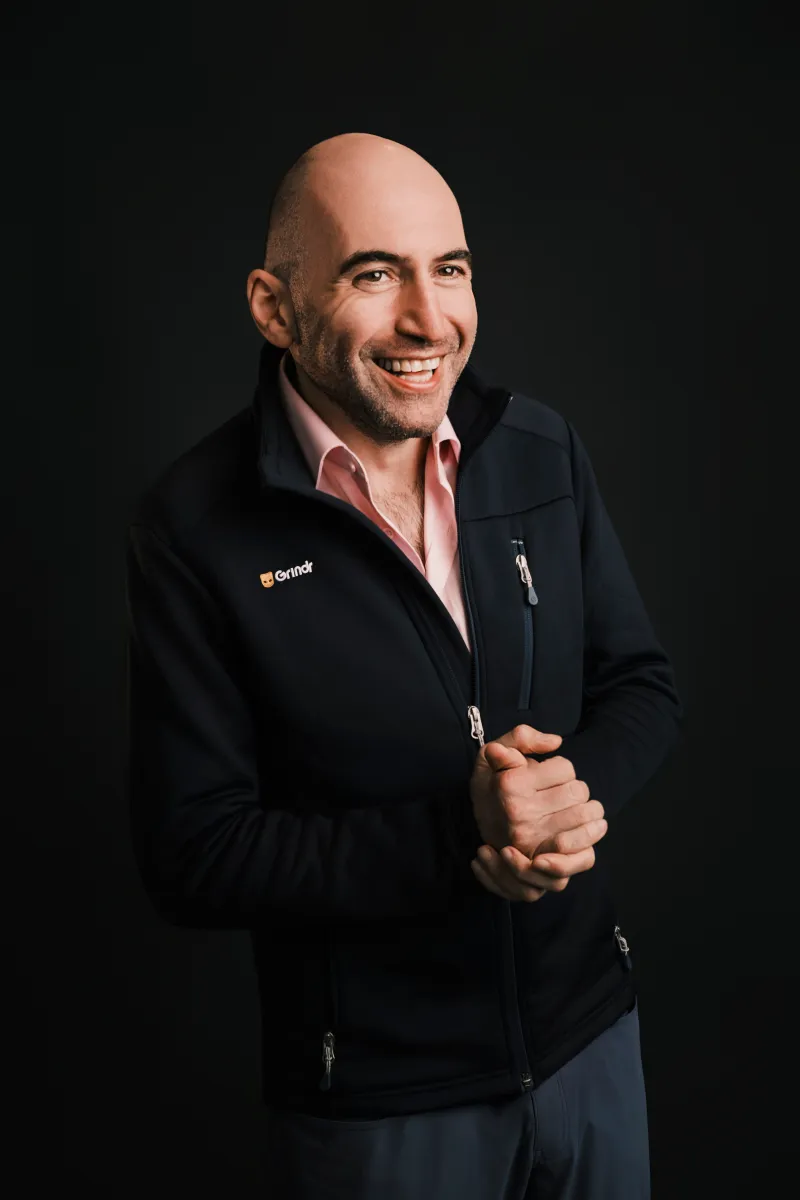
When George Arison took over Grindr in 2022, he inherited a company that had been bounced from Chinese ownership to a forced divestiture to a private-equity rescue — a business that was printing money but also had no real product or business strategy. Four years, a SPAC listing, and a controversial return-to-office mandate later, Grindr has become convincing as a growth story. Revenue is on pace to roughly triple, from $195 million in 2022 to a guided $540 million-plus this year, with adjusted EBITDA margins holding above 40%.
That growth has come almost entirely from getting existing customers to pay more versus dramatically growing its user base. In the second quarter of this year, it had 1.4 million paying users, or 9% of its user base, but average revenue per user has risen considerably since 2022, and Arison is very focused on where the next leg of growth comes from. Part of that plan includes turning Grindr into a “gayborhood in your pocket” — a platform that handles not just dating and hookups but healthcare (from ED medication to HIV prevention to, eventually, connecting users with gay doctors) and travel (helping users find community wherever they land). It’s the same “everything app” instinct driving much of consumer tech right now.
But that’s not the only thing Arison is throwing against the wall; later this year, Grindr is rolling out a subscription that it’s betting the market will support, a far pricier “EDGE” tier that has already raised hackles from some on the internet (“literally who’s paying for this,” and “we need 2012 grindr back”).
Arison, who previously founded and ran Shift Technologies, the online used-car marketplace he also took public via a SPAC, in 2020, is also aggressively seeking out press to argue that institutional investors continue discounting Grindr’s stock simply because it’s a gay dating app. In a Zoom call with TechCrunch on Thursday, he cited an investor who once showed him a financial model with a literal “Grindr discount” line item, knocking 25% off a fair-value estimate.
Not everyone thinks the discount is justified. Morgan Stanley, Goldman Sachs, and Raymond James have all raised their price targets on the stock this year, and Morgan Stanley upgraded it to “overweight” in July, citing the EDGE tier and Grindr’s telehealth push — part of a run-up that’s seen the stock climb roughly a third over the past six months. Still, that discount isn’t Arison’s imagination — the stock trades at roughly 11 times 2027 EBITDA, about a 35% discount to peers — even if it’s not clear why.
Arison — amiable, with a hint of his native Georgia still in his voice — was game to talk about all of it in a Q&A that has been edited for clarity and length.
You came in to run Grindr in 2022 when it was pretty adrift. What was the first thing you wanted to prioritize?
Three things, really. First, company building. A lot of people had been hired during the peak-COVID era when expectations for in-office productivity were low, and average output was maybe three to four hours of real work a day. We brought people back to the office two days a week in the summer of 2023 — a decision that got a lot of press and a lot of anger. We went down to about 70 employees as a result. Today only around 25 people who were here before I arrived still work at Grindr, and we run lean: 175 U.S. employees plus a team in Colombia, doing $540 million in guided revenue this year.
Second was driving revenue growth by shipping product people would actually pay for — that’s how pay conversion went from under 6% to over 9%, and ARPU nearly doubled. Third was setting a long-term vision: the “gayborhood in your pocket” idea, and everything else — healthcare, travel — that flows from it.
You’ve said Grindr’s engineering culture is underrated. How small is the team actually running this?
About 94 or 95 people across all technical roles. A large-tech-company CEO once told me AI would let me do with far fewer people what I thought I’d need 300 to 350 for — he was right. We’re doing roughly 350 people’s worth of work with about 100. Something like 80% of our code is now AI-written, and we’ve seen a 2.5x increase in engineering productivity over the past year.
Grindr tested an AI-powered premium tier, EDGE, at a price that in Canada worked out to roughly $350–375 a month in U.S. dollars — a number that got mocked online as more expensive than just dating someone. What actually happened there?
We haven’t released EDGE — we’re testing it, and some people have access as part of that test. It sits above our existing XTRA ($23.99) and Unlimited ($44.99) tiers. We’re not selling AI itself; we’re selling features derived from it — using what we know about a user’s behavior and intent, with consent, to make much better matches than a sparse profile ever could. Retention on these features so far is higher than anything we’ve had before.
The pricing people quoted was one test point among several — we ran a range to understand elasticity, not a final price. EDGE goes live toward the end of this year or early next, and we’ll know where it lands by then. We think of it like a Tesla Model X or S: a premium flagship now, with the underlying capability rolling down to the broader product over time.
On the matching itself — you’ve described using AI to suggest partners outside someone’s home city, because gay-dating pools even in places like San Francisco are small. What evidence do you have that those long-distance matches lead anywhere?
Even in San Francisco, where the share of the gay population is higher than almost anywhere else in the country, you’re talking about maybe 50,000 to 60,000 gay people total. That’s not a big pool to be fishing in if you’re trying to find a partner, and it’s a big reason dating is so hard for gay men generally. So yes — what if AI could break down the geographic constraint entirely, and surface someone in St. Louis who actually matches what you want, based on real behavior rather than what people say in a profile?
As for whether it leads anywhere real: we don’t track people’s relationships after the fact — that’s going too far. What we do know is that Grindr is where most gay men say they meet each other for relationships, and that younger cohorts want something different than older ones did: about 50% of gay men under 35 say they want a long-term monogamous relationship, and 25% say they want children — numbers that would have been unthinkable for my own generation. When you ask people why they’re not in a relationship, the answer is usually that they have a hard time finding a partner. I can’t promise this solves that. But it’s worth trying something new, because what’s been done so far clearly hasn’t solved it.
There are so many ways to expand your addressable market beyond the dating app itself. The healthcare stuff is really interesting — can you tell us more about what you’re doing there, and whether you’re building these products yourselves or acting as the interface to outside providers?
We started with cash-pay products through a line we call Woodwork — ED medications, GLP-1s, peptides, and so on — because cash-pay was the simplest place to get going, and we just launched an AI bot that handles the whole transaction inside the app rather than sending people out to Woodwork.com. The second bucket is HIV prevention and treatment: we’ve committed to giving 10 million people direct access to information on where to get PrEP, both in the U.S., where we already offer that in our in-app health center, and internationally.
The third bucket — actual clinical care, like connecting people to a gay doctor through telehealth — is very much long-term. That’s not something we’re building today, but I do think there’s a world, a decade out, where healthcare is a bigger revenue stream for Grindr than what we do today.
Right now, though, non-subscription revenue — ads and everything else, including healthcare — is a small fraction of the business.
Subscriptions are about 83% of revenue today, down from around 86% in 2022, even though subscription revenue itself has grown enormously — that tells you how much bigger the base is overall. The newer businesses are genuinely small right now. What I want is a company that, 10 years from now, has a strong subscription business, a strong advertising business, a real healthcare business, and a real travel business alongside it. Today those last two are early.
You’ve said investors still apply what one called a “Grindr discount” to the stock because of what the company is. But the stock is up sharply over the past six months, Morgan Stanley just upgraded it, and it trades at a premium multiple to Match Group. Isn’t the market telling you the discount is gone?
I hope we’re being treated as a growth company at this point — we’ve grown revenue more than 25% for 16 straight quarters as CEO, so there’s reason to expect that. The stigma conversation is a real one; we’ve had a consulting firm decline to work with us over reputational concerns, and a bank refuse our money during the Silicon Valley Bank crisis, even as other major banks like Goldman and Morgan Stanley have been strong partners. I think a lot of that is really about Grindr being a gay dating product rather than dating being controversial per se — nobody says that about Tinder, which literally has a “free tonight” button on its homepage. But I’d agree the market’s read on us has clearly improved.
When you purchase through links in our articles, we may earn a small commission. This doesn’t affect our editorial independence.
>

Elon Musk says he’s found a way to solve one of AI’s biggest bottlenecks by making a hard-to-manufacture turbine part himself.
On Saturday, Musk confirmed what a secret foundry SpaceX has been building in Bastrop, Texas, is for — an apparent response to a story that was already closing in on the details. Earlier in the day, The Information published a report citing job listings that explicitly mention a “blades and vanes foundry,” plus findings from Corey Trinetti, a due diligence specialist who authors detailed reviews of AI infrastructure sites in his newsletter and who’d reported that SpaceX had bought roughly 830 acres near its existing Starlink factory in Bastrop between March and June.
“SpaceX and Tesla are each building 100GW/year of solar production capacity as fast as possible,” Musk wrote on X on Saturday, “but natural gas will still be needed to supplement and bootstrap solar for several years. The limiting factor for nat gas turbine production is casting the blades & vanes. By doing in-house casting at SpaceX, we can accelerate nat gas turbines coming online by up to 18 months, which is a profound game-changer.”
The “why” of all this goes back to one of the biggest challenges facing the AI industry right now. GPU shortages are still an issue — Nvidia’s newest Blackwell chips are still running lead times of several months, for example — but a second constraint has emerged alongside it, which is the physical power grid. The International Energy Agency projects global data center electricity use will roughly double by 2030, and gas turbine maker GE Vernova says it’s essentially sold out of production capacity through 2030 due largely to AI infrastructure demand.
That shortage is why building private gas-fired plants next to data centers, instead of waiting on the grid, has become a ubiquitous strategy for so-called hyperscalers, including Amazon, Google, Meta, OpenAI, and Microsoft. After years of prioritizing wind and solar, they’re all now betting on natural gas to get data centers online faster.
As for the casting bottleneck specifically, according to The Information, the blades inside a gas turbine’s hottest section run at temperatures around 3,000 to 3,600 degrees Fahrenheit, which is roughly 800 degrees hotter than the melting point of the very metal alloy they’re made from. That’s only possible because of the blades’ internal cooling channels and thermal-barrier coatings, plus the specific way each blade is cast. Just four companies worldwide have mastered the casting process well enough to produce them at industrial scale, and all of them are tapped out right now.
What makes the whole thing especially difficult is that each blade has to be cast as a single, unbroken crystal, grown slowly inside a vacuum furnace, without the microscopic seams that let ordinary cast metal crack under stress. It’s a tricky process even for the smaller blades used in jet engines; the blades in power-plant turbines are considerably larger, which makes producing them at that scale and without defects even harder.
If SpaceX pulls this off — and it’s easier said than done, of course — it would mean a Musk-controlled entity holds a manufacturing capability that every other AI infrastructure builder currently depends on a tiny oligopoly for, giving SpaceXAI an edge that’s difficult for any well-funded but non-manufacturing competitor to copy quickly.
But it would also mean more gas turbines coming on fast, and turbines in the ground are already drawing federal lawsuits and peer-reviewed health research over the pollution they emit.
In Memphis, where SpaceXAI has run gas turbines to power its Colossus data centers since 2024, the NAACP has repeatedly accused the company of operating turbines without the permits or pollution controls required by federal law. The organization’s concern is that turbines like these emit smog-forming compounds and hazardous chemicals like formaldehyde, pollutants linked to asthma, respiratory disease, and certain cancers. (The site sits near neighborhoods that already face heavy industrial pollution, and University of Memphis researchers said that in their own admittedly limited analysis, air pollution grew “slightly worse” because of the data center.)
But Memphis just happens to be the most visible case. The same fight is playing out anywhere gas turbines have become the default fix for data center power shortages. In Virginia’s “Data Center Alley,” a study commissioned by the Piedmont Environmental Council, using the EPA’s own COBRA health-impact model, found that emissions from a single facility’s eight full-time gas turbines could reach more than 2.5 million people across multiple counties — with the heaviest impact landing on already-marginalized communities — and cause an estimated 3.4 to 6.5 additional premature deaths a year, translating to $53 million to $99 million in annual health-related damages.
The list, and complaints, go on.
When you purchase through links in our articles, we may earn a small commission. This doesn’t affect our editorial independence.
>

Leeds found solutions against Brentford, but further reinforcements will be welcome

Everton’s Harrison Armstrong U-turn shows fan power is alive in a Premier League dominated by U.S. owners

US Open 2026: Novak Djokovic breaks down in tears during difficult loss to Mariano Navone in New York
-

 movies3 months ago
Search For Canadian TV Actor Stewart McLean Now Homicide Investigation
-

 Fashion9 years ago
These ’90s fashion trends are making a comeback in 2017
-
Fashion9 years ago
According to Dior Couture, this taboo fashion accessory is back
-
Fashion9 years ago
Model Jocelyn Chew’s Instagram is the best vacation you’ve ever had
-
Fashion9 years ago
Emily Ratajkowski channels back-to-school style
-
Fashion9 years ago
9 Celebrities who have spoken out about being photoshopped
-

 Anime3 months ago
Rurouni Kenshin: Hokkaido Arc Manga Takes 1-Issue Break – News
-
Fashion9 years ago
Your comprehensive guide to this fall’s biggest trends