
Tech
TechCrunch Mobility: The hidden human cost of robotaxis

Welcome back to TechCrunch Mobility, your hub for the future of transportation and now, more than ever, the role AI is playing in it. To get this in your inbox, sign up here for free — just click TechCrunch Mobility!
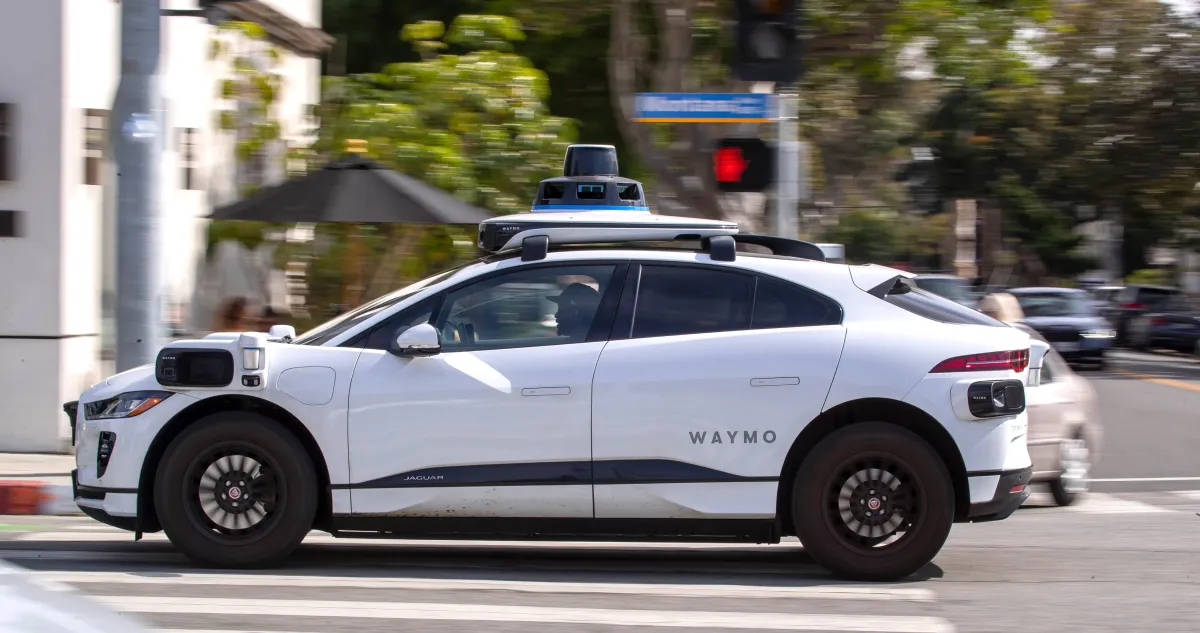
Proponents of autonomous vehicle technology have long argued that robotaxis and other self-driving vehicles will reduce crash incidents and make roads safer. And there is some evidence of that. But that doesn’t mean there hasn’t been a cost to those who are working (or have worked) for the companies developing that tech.
Sean O’Kane, senior reporter, special projects, dug into data submitted to the Occupational Safety and Health Administration and found that test drivers for Waymo and Zoox sustained more than two dozen injuries in 2024 and 2025 from hard braking or other sudden movements made by the autonomous vehicles. In some cases, these workers were sidelined for months after sustaining injuries like whiplash when the AVs stopped abruptly, and hard.
Check out his full story, which includes interviews with former and current workers.
There is one important item to consider. You might ask yourself, well what about the other AV developers? Surely, this isn’t a problem isolated to Waymo and Zoox? And you’re probably right. It’s likely that test drivers for other AV developers are also getting injured, but the companies they work for may be exempt from OSHA’s reporting requirements.
Got a tip for us on this story or others? Email Kirsten Korosec at kirsten.korosec@techcrunch.com or my Signal at kkorosec.07, Sean O’Kane at sean.okane@techcrunch.com.
Deals!

I’ve been writing about Gatik, the autonomous vehicle startup known for its self-driving box trucks, since 2019 when it came out of “stealth.” At the time, I wasn’t sure if the startup would survive. The hype cycle was already chewing up and spitting out AV startups and no one seemed close to commercializing their tech.
Gatik has not only survived, but it has also crossed over from R&D lab to commercial operator, albeit at a small-scale compared with traditional human-driven delivery companies. (The company’s box trucks are driverless and deliver freight from distribution centers to retails stores like Walmart.) And now, with $200 million in fresh funding, it’s pushing to scale. The round was led by Qatar Investment Authority and Koch Disruptive Technologies, with participation from Millennium Management, ARK Invest, and Intact Private Capital.
This is Gatik’s largest funding to date. But I might argue that its multiyear commercial agreement with PepsiCo, which was signed in June and is part of $600 million in contracted revenue, is the bigger deal here.
Other deals that got my attention …
Airbound, an Indian startup building autonomous drones, raised $37 million in a Series A round led by Greenoaks with participation from DoorDash, Lachy Groom, Lightspeed, and Humba Ventures.
Mubadala Capital, the alternative asset management arm of Mubadala Investment Company, agreed to acquire a majority equity interest in Arrive Logistics, a truckload brokerage based in Austin.
Regent Craft, a Rhode Island electric startup developing and manufacturing electric seagliders, raised $120 million in a Series B round co-led by Mare Liberum and AE Ventures. (The seaglider is a class of vehicle called a wing-in-ground effect vehicle, or WIG.) Regent also secured about $120 million debt capital provided by Erebor Bank, which was launched by Anduril Industries founder Palmer Luckey. One note about Regent, a company I have followed for a while: The startup, which recently completed its 255,000-square-foot seaglider factory, is clearly pushing deeper into the defense sector, probably because there is money and partnerships to be had.
Vista Global Holding, a private aviation group based in UAE, is considering a European IPO that could raise more than a $1 billion, Bloomberg reported.
Notable reads and other tidbits

According to a recent YouGov survey, more Americans oppose police license plate cameras than support them. Do you? Shoot me an email and share your opinion.
Any, an electric two-wheeler startup out of Belgium, is placing a bet on cargo space.
General Motors is facing increased scrutiny from U.S. safety regulators after hundreds of incidents, more than 20 crashes or fires, and at least six injuries involving brake problems in its EVs.
Ford has hired Dave Carroll as president of the company’s energy business. Carroll, who previously worked at ENGIE North America, will succeed long-time executive Lisa Drake.
Rivian CFO Claire McDonough is resigning from her position and will leave at the end of October. Her tenure at Rivian came during a tough, and exciting (ahem IPO), period for the company. And her departure comes at another critical moment for Rivian as it takes on some of its biggest projects to date, including the robotaxi deal with Uber and scaling production and sales of its R2 SUV.
Uber is launching a new live video streaming feature that will allow parents to keep track of their children during rides.
Waymo shared 10 lessons it has learned after its vehicles had driven more than 200 million autonomous miles. The first lesson — that multimodal sensors are indispensable — received the most attention because it is in direct opposition to Tesla’s camera-only approach. But there were other lessons that got my attention, including Waymo’s promotion of vision language models (an area that is starting to get a lot of attention).
Meanwhile, Waymo is making more inroads overseas. The company announced that it plans to launch in Munich, Germany.
One more thing …
One important clarification on what I wrote about last week. You might recall that Waymo shared information about its custom silicon chip — specifically a 5 nm ASIC chip that is designed to handle the massive influx of raw data before it reaches the core “brain” of the self-driving system. Waymo stated in its blog post:
“While these ASICs alone deliver over 1,000 TOPS of ML performance dedicated to front-end processing and ML models, we optimize across the full stack to maximize achieved performance, especially in the low-batch regimes we often operate.”
That line led me, and others, to believe that its one chip can deliver 1,000 TOPs (trillions of operations per second) of computing performance. I compared it to Nvidia’s Drive AGX Thor automotive processor, noting it was about the same performance.
But alas, one eagle-eyed reader reached out with some questions, which prompted me to turn to Waymo for official answers. A Waymo spokesperson told me, “It’s for the system, not a single chip.”
That’s an important distinction.
When you purchase through links in our articles, we may earn a small commission. This doesn’t affect our editorial independence.
>
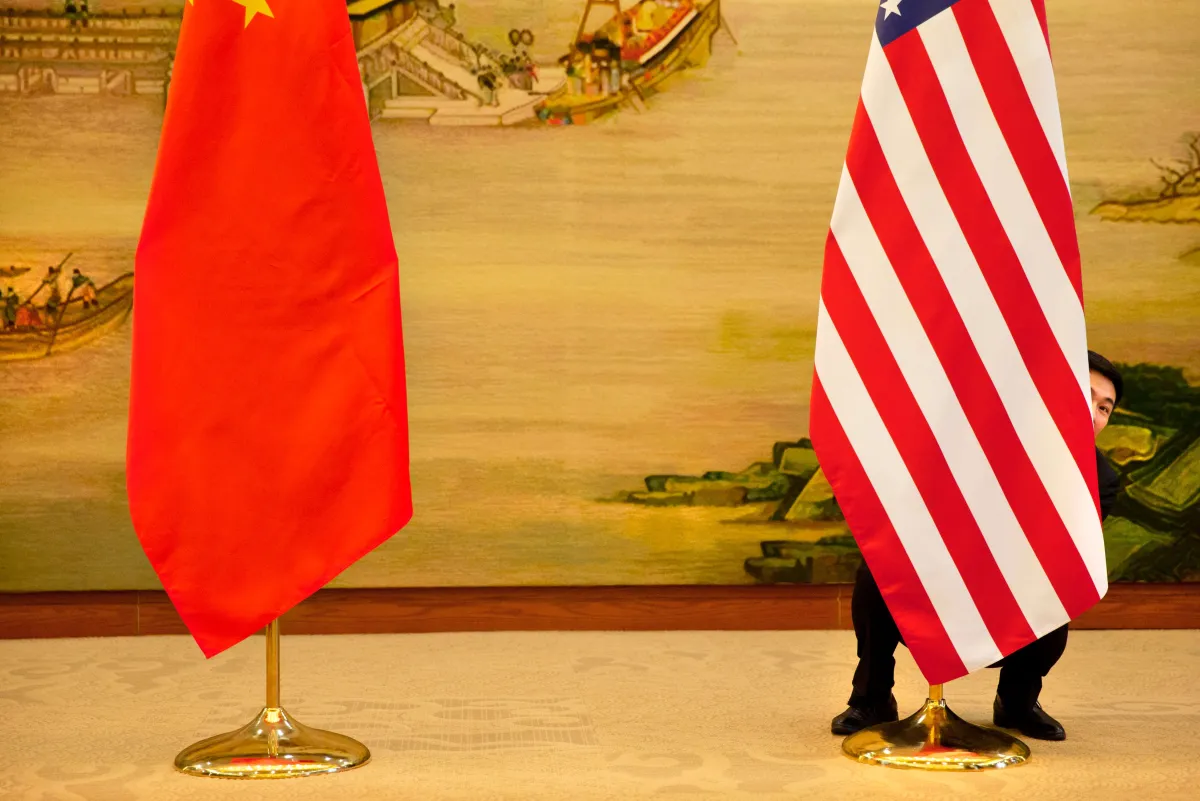
In July and August, Washington tightened restrictions on foreign-made advanced robotic systems and imposed steep tariffs on imported drones and their components, both moves citing national-security concerns. The drone tariffs take effect in September, with additional component tariffs following in 2027.
These moves are part of a broader U.S. effort to restrict foreign technology in strategically important industries. The FCC’s Covered List, established in 2021, initially targeted telecommunications and surveillance equipment from companies including Huawei, ZTE and Hikvision before expanding to foreign-made drones and, most recently, to advanced robotic devices.
The latest move comes as Chinese manufacturers have built commanding positions in both drones and humanoid robots, often competing at prices U.S. and European rivals struggle to match.
Taken together, the restrictions are raising a bigger question for the global robotics industry: If Chinese drones and humanoids are increasingly shut out of the U.S., where does the competition move next?
The restrictions may protect parts of the American market, but they don’t directly address China’s global manufacturing scale and cost advantages.
Industry analysts and executives who spoke with TechCrunch said the result may be less a clean U.S.-China split than a more fragmented global market, with Chinese companies expanding elsewhere while U.S. and allied manufacturers compete in markets where security requirements matter more.
The Scale Gap
The U.S. and Chinese robotics industries remain deeply connected, but the two countries enter the competition with very different advantages. Unlike semiconductors, robotics does not hinge on a single technology that one country can easily control, said Ankur Saxena, an investment director at TDK Ventures.
China dominates global humanoid robot manufacturing, with global shipments hitting 22,000 units in the first half of this year — the vast majority from Chinese manufacturers — according to a report by Counterpoint. U.S. companies, by contrast, are operating at a far smaller scale, said Soumen Mandal, a principal analyst at Counterpoint Research.
The world’s five largest humanoid robot makers by shipments — AgiBot, Unitree, Galbot, UBTECH and Leju Robotics — were all Chinese and together accounted for 86% of global shipments in the first half of 2026, according to Counterpoint.
That advantage could compound. Lower prices allow Chinese manufacturers to put more robots into use, generating real-world data that can improve their technology. Higher production volumes, in turn, can drive costs down further, Saxena said.
Mandal said Chinese humanoid makers are also pushing costs down by bringing more of the technology stack in-house and drawing on China’s existing manufacturing base. Unitree, for example, is developing more components internally, while automakers such as XPeng can draw on their experience in chips and vehicle manufacturing as they move into robotics.
“The United States leads in frontier AI, software and semiconductor innovation,” Saxena told TechCrunch. “China leads in manufacturing scale, supply-chain depth and cost.”
That manufacturing edge has let Chinese companies cut humanoid prices faster than most U.S. competitors can match.
“You cannot sanction your way around a cost curve. You can only out-build it, and America has yet to begin making the decade-long investment that will require,” Saxena said.
Where Does China Go Next?
The answer may increasingly be outside the U.S. Even if Chinese robotics companies lose access to the American market, they still have a large domestic market and room to expand elsewhere, particularly in regions where demand for affordable automation is growing, Saxena said.
Chinese robotics companies are already targeting price-sensitive markets with severe labor shortages across Europe, Southeast Asia, Latin America and the Middle East, said Mandal.
Mandal expects humanoid makers to follow a path similar to Chinese electric-vehicle companies: build scale at home, expand into overseas markets, and eventually establish local production. Countries facing labor shortages and demographic decline could become early markets for humanoids, particularly in manufacturing, where robots can take on repetitive work.
The drone market offers an early glimpse of what that more fragmented robotics landscape could look like. The industry is increasingly splitting into two ecosystems: a U.S.-led market built around American-made, NDAA-compliant systems, and a China-led market focused on low-cost, high-volume production, said Bentzion Levinson, founder and CEO of Virginia-based drone maker Heven AeroTech.
Levinson said Western manufacturers are unlikely to beat Chinese companies in the low-end consumer drone market, where cost remains a major advantage. Instead, U.S. and allied companies could increasingly compete in long-range autonomous systems for defense and critical infrastructure, where security requirements carry more weight.
Levinson sees the next competitive frontier shifting from the drones themselves to the technology that powers them and the equipment they carry. “The next battleground is over who owns the next-gen energy and payload architecture,” he said, pointing to battery constraints in particular. As drones become more capable, he added, battery limitations could make power systems an increasingly important point of competition.
Agility Robotics welcomed the FCC’s decision in July, saying it could address security concerns around foreign-made advanced robots before they become deeply embedded in the U.S. market, as has happened in the drone industry. The company pointed to its Digit humanoid, which is designed and assembled in the U.S., while also calling for continued access to the tools and technologies needed to advance robotics research.
A More Regional Robotics Market
“The alternative to China isn’t a purely domestic U.S. supply chain; it’s a diversified allied one,” Saxena said.
That could create opportunities elsewhere in Asia. Japan has decades of experience in industrial robotics and precision manufacturing, South Korea brings strengths in electronics, batteries and automobiles, and Taiwan is a major player in semiconductors. But none can simply replace China, Saxena said, given how deeply Chinese components remain embedded across the global robotics industry.
Asian manufacturers could emerge as a middle ground between lower-cost Chinese robots and more expensive U.S. offerings, Mandal said. South Korea’s Hyundai, which owns Boston Dynamics, and Japan’s Toyota are among the automakers investing in robotics, drawing on their expertise in vehicles, manufacturing and autonomous systems as they move into humanoid robots.
Yang Fang of Beagle Technology, a California-based agtech startup that uses AI and robotics software to turn conventional farm equipment into autonomous machines, told TechCrunch that robotics is likely to become more regional as companies design machines for the labor needs, working conditions and customers in their home markets. Chinese robotics companies, for example, may focus on products suited to China and nearby markets, while U.S. companies are more likely to build for industries across North America, he said.
The result may not be two neatly separated U.S.- and China-led robotics industries. Instead, the restrictions could accelerate the emergence of regional markets: Chinese companies competing on cost and scale across much of the world, U.S. and allied manufacturers gaining ground where security requirements matter most, and manufacturers in Japan, Taiwan and South Korea trying to carve out space between the two.
When you purchase through links in our articles, we may earn a small commission. This doesn’t affect our editorial independence.
>
Tech
Grindr wants to be the everything app for gay men; investors are still deciding whether it can pull it off
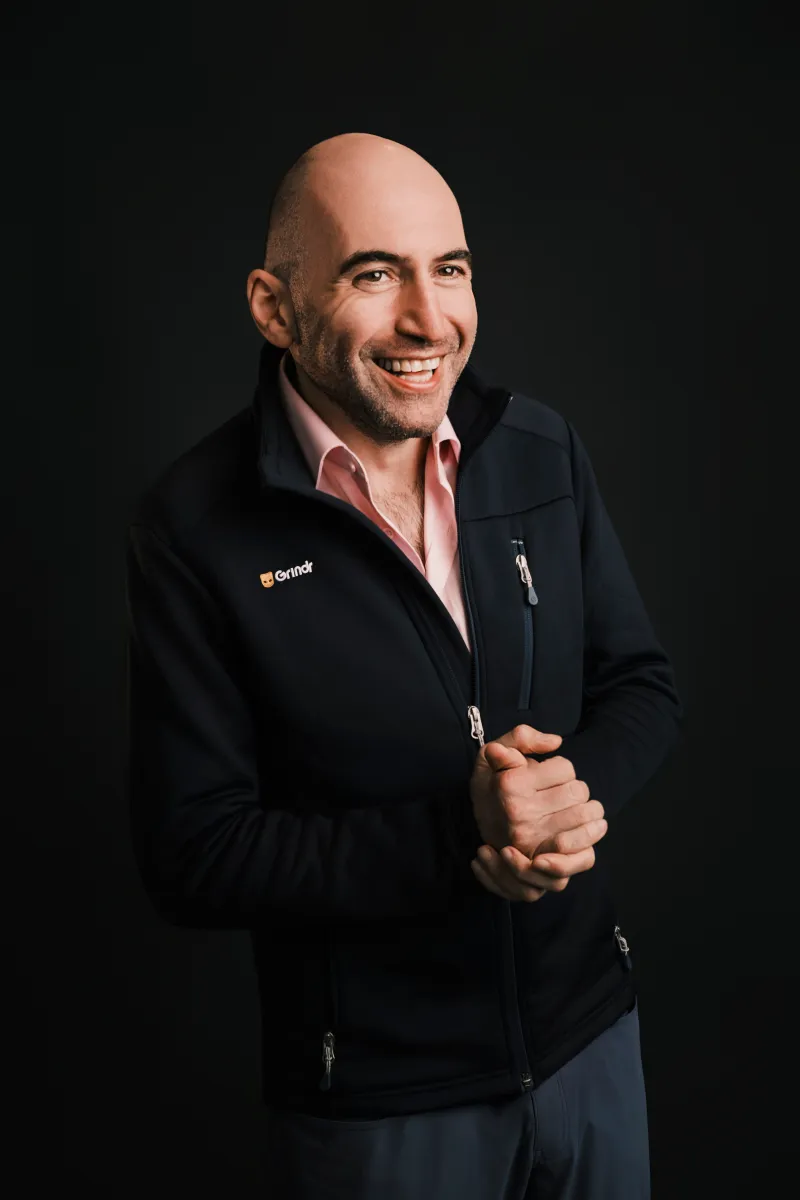
When George Arison took over Grindr in 2022, he inherited a company that had been bounced from Chinese ownership to a forced divestiture to a private-equity rescue — a business that was printing money but also had no real product or business strategy. Four years, a SPAC listing, and a controversial return-to-office mandate later, Grindr has become convincing as a growth story. Revenue is on pace to roughly triple, from $195 million in 2022 to a guided $540 million-plus this year, with adjusted EBITDA margins holding above 40%.
That growth has come almost entirely from getting existing customers to pay more versus dramatically growing its user base. In the second quarter of this year, it had 1.4 million paying users, or 9% of its user base, but average revenue per user has risen considerably since 2022, and Arison is very focused on where the next leg of growth comes from. Part of that plan includes turning Grindr into a “gayborhood in your pocket” — a platform that handles not just dating and hookups but healthcare (from ED medication to HIV prevention to, eventually, connecting users with gay doctors) and travel (helping users find community wherever they land). It’s the same “everything app” instinct driving much of consumer tech right now.
But that’s not the only thing Arison is throwing against the wall; later this year, Grindr is rolling out a subscription that it’s betting the market will support, a far pricier “EDGE” tier that has already raised hackles from some on the internet (“literally who’s paying for this,” and “we need 2012 grindr back”).
Arison, who previously founded and ran Shift Technologies, the online used-car marketplace he also took public via a SPAC, in 2020, is also aggressively seeking out press to argue that institutional investors continue discounting Grindr’s stock simply because it’s a gay dating app. In a Zoom call with TechCrunch on Thursday, he cited an investor who once showed him a financial model with a literal “Grindr discount” line item, knocking 25% off a fair-value estimate.
Not everyone thinks the discount is justified. Morgan Stanley, Goldman Sachs, and Raymond James have all raised their price targets on the stock this year, and Morgan Stanley upgraded it to “overweight” in July, citing the EDGE tier and Grindr’s telehealth push — part of a run-up that’s seen the stock climb roughly a third over the past six months. Still, that discount isn’t Arison’s imagination — the stock trades at roughly 11 times 2027 EBITDA, about a 35% discount to peers — even if it’s not clear why.
Arison — amiable, with a hint of his native Georgia still in his voice — was game to talk about all of it in a Q&A that has been edited for clarity and length.
You came in to run Grindr in 2022 when it was pretty adrift. What was the first thing you wanted to prioritize?
Three things, really. First, company building. A lot of people had been hired during the peak-COVID era when expectations for in-office productivity were low, and average output was maybe three to four hours of real work a day. We brought people back to the office two days a week in the summer of 2023 — a decision that got a lot of press and a lot of anger. We went down to about 70 employees as a result. Today only around 25 people who were here before I arrived still work at Grindr, and we run lean: 175 U.S. employees plus a team in Colombia, doing $540 million in guided revenue this year.
Second was driving revenue growth by shipping product people would actually pay for — that’s how pay conversion went from under 6% to over 9%, and ARPU nearly doubled. Third was setting a long-term vision: the “gayborhood in your pocket” idea, and everything else — healthcare, travel — that flows from it.
You’ve said Grindr’s engineering culture is underrated. How small is the team actually running this?
About 94 or 95 people across all technical roles. A large-tech-company CEO once told me AI would let me do with far fewer people what I thought I’d need 300 to 350 for — he was right. We’re doing roughly 350 people’s worth of work with about 100. Something like 80% of our code is now AI-written, and we’ve seen a 2.5x increase in engineering productivity over the past year.
Grindr tested an AI-powered premium tier, EDGE, at a price that in Canada worked out to roughly $350–375 a month in U.S. dollars — a number that got mocked online as more expensive than just dating someone. What actually happened there?
We haven’t released EDGE — we’re testing it, and some people have access as part of that test. It sits above our existing XTRA ($23.99) and Unlimited ($44.99) tiers. We’re not selling AI itself; we’re selling features derived from it — using what we know about a user’s behavior and intent, with consent, to make much better matches than a sparse profile ever could. Retention on these features so far is higher than anything we’ve had before.
The pricing people quoted was one test point among several — we ran a range to understand elasticity, not a final price. EDGE goes live toward the end of this year or early next, and we’ll know where it lands by then. We think of it like a Tesla Model X or S: a premium flagship now, with the underlying capability rolling down to the broader product over time.
On the matching itself — you’ve described using AI to suggest partners outside someone’s home city, because gay-dating pools even in places like San Francisco are small. What evidence do you have that those long-distance matches lead anywhere?
Even in San Francisco, where the share of the gay population is higher than almost anywhere else in the country, you’re talking about maybe 50,000 to 60,000 gay people total. That’s not a big pool to be fishing in if you’re trying to find a partner, and it’s a big reason dating is so hard for gay men generally. So yes — what if AI could break down the geographic constraint entirely, and surface someone in St. Louis who actually matches what you want, based on real behavior rather than what people say in a profile?
As for whether it leads anywhere real: we don’t track people’s relationships after the fact — that’s going too far. What we do know is that Grindr is where most gay men say they meet each other for relationships, and that younger cohorts want something different than older ones did: about 50% of gay men under 35 say they want a long-term monogamous relationship, and 25% say they want children — numbers that would have been unthinkable for my own generation. When you ask people why they’re not in a relationship, the answer is usually that they have a hard time finding a partner. I can’t promise this solves that. But it’s worth trying something new, because what’s been done so far clearly hasn’t solved it.
There are so many ways to expand your addressable market beyond the dating app itself. The healthcare stuff is really interesting — can you tell us more about what you’re doing there, and whether you’re building these products yourselves or acting as the interface to outside providers?
We started with cash-pay products through a line we call Woodwork — ED medications, GLP-1s, peptides, and so on — because cash-pay was the simplest place to get going, and we just launched an AI bot that handles the whole transaction inside the app rather than sending people out to Woodwork.com. The second bucket is HIV prevention and treatment: we’ve committed to giving 10 million people direct access to information on where to get PrEP, both in the U.S., where we already offer that in our in-app health center, and internationally.
The third bucket — actual clinical care, like connecting people to a gay doctor through telehealth — is very much long-term. That’s not something we’re building today, but I do think there’s a world, a decade out, where healthcare is a bigger revenue stream for Grindr than what we do today.
Right now, though, non-subscription revenue — ads and everything else, including healthcare — is a small fraction of the business.
Subscriptions are about 83% of revenue today, down from around 86% in 2022, even though subscription revenue itself has grown enormously — that tells you how much bigger the base is overall. The newer businesses are genuinely small right now. What I want is a company that, 10 years from now, has a strong subscription business, a strong advertising business, a real healthcare business, and a real travel business alongside it. Today those last two are early.
You’ve said investors still apply what one called a “Grindr discount” to the stock because of what the company is. But the stock is up sharply over the past six months, Morgan Stanley just upgraded it, and it trades at a premium multiple to Match Group. Isn’t the market telling you the discount is gone?
I hope we’re being treated as a growth company at this point — we’ve grown revenue more than 25% for 16 straight quarters as CEO, so there’s reason to expect that. The stigma conversation is a real one; we’ve had a consulting firm decline to work with us over reputational concerns, and a bank refuse our money during the Silicon Valley Bank crisis, even as other major banks like Goldman and Morgan Stanley have been strong partners. I think a lot of that is really about Grindr being a gay dating product rather than dating being controversial per se — nobody says that about Tinder, which literally has a “free tonight” button on its homepage. But I’d agree the market’s read on us has clearly improved.
When you purchase through links in our articles, we may earn a small commission. This doesn’t affect our editorial independence.
>
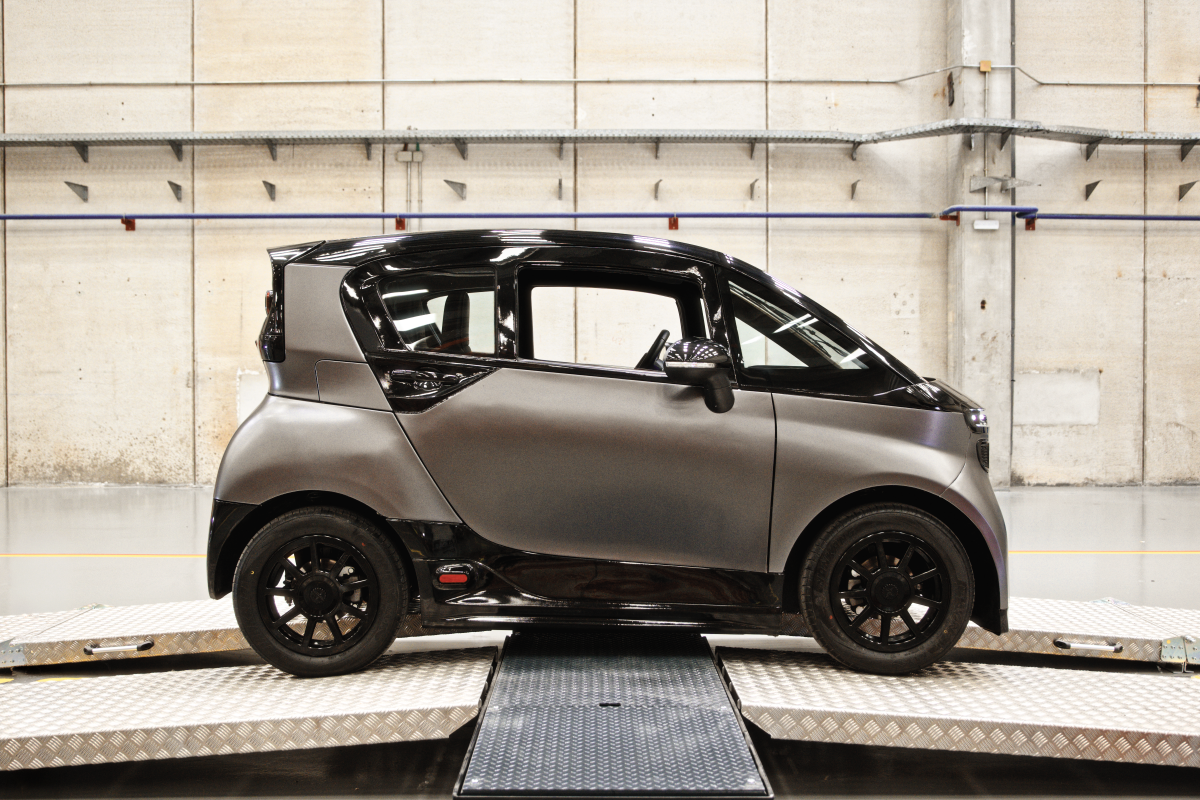
Cars in European cities are smaller than ever. But as Europe’s appetite for microcars has grown, the cute Italian ‘yoghurt pots’ have largely given way to small Chinese EVs. Even Smart, the the iconic ultracompact car brand, has moved manufacturing to China.
Spanish startup Liux thinks it can compete in a crowded market with a tiny electric car built around sustainability.
Following the tracks of the Microlino out of Switzerland, Liux is trying to carve out a place in the market with its upcoming microcar, the Liux Big. The “Big” name is a joke. It is small enough to park at a right angle to the curb; but the name also reflects the oversized ambitions of a team that rarely takes the expected route.
“The idea of a European car does not exist,” Liux co-founder Antonio Espinosa de los Monteros told TechCrunch. Coming from the CEO of a startup whose cars are already making headlines for being “made in Spain,” it was a surprising take — and one that reveals a lot about the company’s priorities.
It is true that Liux opened Spain’s first new car plant in more than 30 years. But as we sat down in its elegant showroom, Espinosa and his co-founder David Sancho said they had concluded that a fully sovereign supply chain is unattainable. Instead, Liux is trying to navigate that reality while keeping sustainability as its north star.

Liux’s batteries are not made in Europe, but they are rechargeable at home, including with power generated from solar panels. The car is also meant to be easy to maintain and avoid the faster obsolescence cycles of modern cars. Perhaps most notably, its fiber body is made from a novel linen-based biocomposite designed so the material can later be extracted and recycled.
“One thing that’s very clear for David and me is that recycling isn’t just a lab concept. You can recycle almost anything in a lab. What makes something recyclable has to do with how it’s built,” Espinosa said. “When you build something, you have to try to preserve the integrity of the material and the components so that a second life is possible.”
“Real circularity” is where Espinosa comes from; he previously cofounded Auara, a Spanish B Corp selling natural mineral water in bottles that are both recycled and recyclable. But after a larger player acquired this successful brand, he embarked on a new chapter with Sancho as his co-driver.
When it comes to cars, Sancho is in the driver’s seat, with low emissions on the radar. His specialty is engineering electric vehicles that can rival gas-powered ones. Before Liux, his most impressive feat was the Bóreas, a hybrid supercar unveiled at the 24 Hours of Le Mans in 2017. But after a fallout with his former partners, he and Espinosa teamed up to found Liux.
Liux’s first prototype, the Animal, combined their expertise: The fully electric five-seater was made almost entirely from recycled or plant-based materials. And yet, the two co-founders decided to pivot soon after unveiling the SUV to the world in 2022. It was then that they determined that their odds of completing homologation would be much higher with a smaller car.
Fast forward to 2026, and Liux has secured Europe-wide homologation for the Liux Big, which it expects to start selling in the first half of next year. In the meantime, the company has grown to 65 employees and is getting ready to ramp up production across three facilities in Spain.
These include the plant that TechCrunch visited in Azuqueca de Henares, about a one-hour drive from central Madrid.
Liux’s Azuqueca factory is small because it follows Toyota’s “lean management” principles and performs only the last steps of the process, said its head of production Beatriz Belda González, a Spanish-born engineer who previously worked for BMW in Munich. But don’t let its size fool you: Liux says its production capacity could reach 20,000 cars a year by 2030.

It is still too early to gauge demand, but more than 7,500 people have joined the waiting list for a Liux Big. Joining doesn’t require a fee, but the list has helped the startup learn more about its prospective buyers. The most represented profile is a 55- to 60-year-old city dweller, and Liux is now assuming that the Liux Big will often be a household’s second car.
This may dampen hopes that microcars could challenge traditional car ownership, but Liux has to pick its battles, Espinosa said. Rather than trying to guess where the market is going, or how fast, the startup is keeping the door open to partnerships with companies that manage B2B fleets and others that could help make its cars autonomous.
For Espinosa, the Liux Big could already make a difference by offering a more sustainable option that is also affordable. The startup hasn’t confirmed its final price tag, but said it will be below €18,000 — about $21,000 — before potential EV subsidies. This puts it at the higher end of the price range for microcars, but Liux hopes it will punch above its weight — literally.
According to Liux’s head of R&D, Celso Fernández Llorens, weight and size limitations are a huge constraint in this category. In his view, most microcars are fairly similar, despite the fact that European authorities differentiate ultralight L6e four-wheelers from slightly heavier L7e ones. Liux, however worked around these constraints to make the most of its L7e homologation.

Thanks to a litany of decisions large and small, the startup managed to fit a 260-liter trunk into the car. But most of its efforts were geared toward making sure users feel like they are driving a car, rather than a two-wheeler. That’s also closely tied to safety, Sancho said: you don’t want a car that’s only lightweight because its frame can’t withstand a crash, or that will topple on the first turn.
With this in mind, and despite the fact that its category doesn’t even require crash tests, Liux has been testing and showcasing the Liux Big’s ability to slalom, brake, and perform other maneuvers. The startup demonstrated some of those capabilities to TechCrunch during a short ride and test drive in its upcoming off-road version.
For now, its main model will have two versions: 15 kWh and 20 kWh. A cargo version is also planned, and with Sancho on the team, the temptation to build a supercar is never far away. In a LinkedIn post, the company noted that it doesn’t intend to be “a one-car brand.”
First, though, Liux will use the €16 million it has secured so far (about $18.5 million, including European funding) to bring the Liux Big’s urban version to market through partnerships with car dealerships across Europe.
The showroom where we met is also a preview of Liux’s future sales experience, head of brand Ana Terrado Leyva said. She pointed to textile screens, 3D models showcasing the Liux Big’s three color options — two more than the Ford T — and a linoleum floor as a nod to linen. These aesthetic choices, she said, are another way Liux hopes to stand out from its Chinese competitors.
Maybe the idea of a European car does exist.
When you purchase through links in our articles, we may earn a small commission. This doesn’t affect our editorial independence.
>

Jonathan Agnew: Ollie Robinson has Australia to thank for tactic behind success

Our League: The sights and sounds of ‘new’ Leeds, ‘the most passionate club in the whole country’

The reintegration of Marcus Rashford at Man United: Old Trafford welcomed his return, but what does future hold?
-

 movies3 months ago
Search For Canadian TV Actor Stewart McLean Now Homicide Investigation
-

 Fashion9 years ago
These ’90s fashion trends are making a comeback in 2017
-
Fashion9 years ago
According to Dior Couture, this taboo fashion accessory is back
-
Fashion9 years ago
Model Jocelyn Chew’s Instagram is the best vacation you’ve ever had
-
Fashion9 years ago
Emily Ratajkowski channels back-to-school style
-
Fashion9 years ago
9 Celebrities who have spoken out about being photoshopped
-

 Anime3 months ago
Rurouni Kenshin: Hokkaido Arc Manga Takes 1-Issue Break – News
-
Fashion9 years ago
Your comprehensive guide to this fall’s biggest trends