
movies
FCC Chairman Accuses James Talarico Of Running A “Hoax” With Kimmel

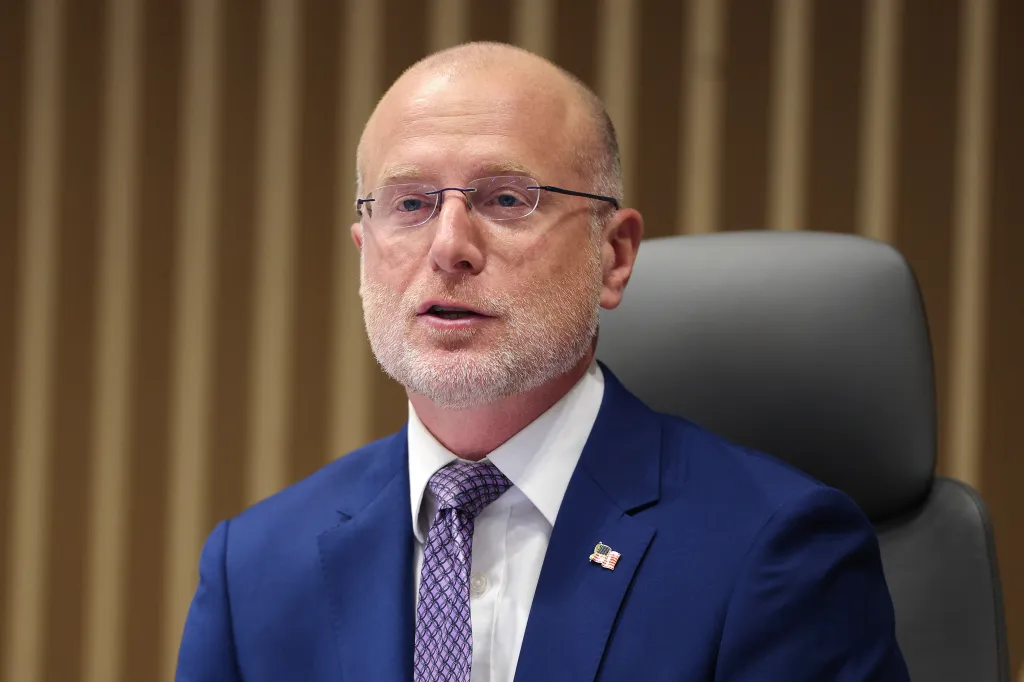
As Jimmy Kimmel‘s interview with James Talarico nears 7 million views on YouTube, FCC Chairman Brendan Carr weighed in on Saturday evening, accusing the candidate of orchestrating a “hoax” to drive up “clicks and donations.”
Earlier this week, Kimmel told viewers that he would be sitting down with an interview with Talarico for his late night show, but that it would be posted to YouTube and not broadcast because of the FCC’s crackdown on its equal time rule.
In a post on X, Carr wrote of the Democratic candidate for U.S. Senate in Texas, “He’s just running the same hoax he did a few months ago on Colbert for the purpose of getting clicks and donations—he’s banking on people not understanding the statute or operating as partisan lemmings.”
He also posted a meme of Talarico riding on a bicycle on Kimmel’s back before Kimmel puts a stick in the spokes and it crashes to the ground.
A Talarico campaign spokesperson did not immediately respond to a request for comment. The Kimmel interview had drawn 6.8 million views as of Saturday evening.
In February, Stephen Colbert posted an interview with Talarico to YouTube, telling viewers that he was warned by network executives about featuring the candidate on the broadcast. That interview generated 9.6 million views on YouTube, well over the average audience for his late-night broadcast.
In an interview this week, Talarico characterized the Kimmel incident as government censorship and a form of “cancel culture.” He also posted the interview to X, calling it “the interview Trump’s FCC doesn’t want you to see.”
For decades, daytime and late-night TV talk shows have operated on the assumption that they were exempt from the FCC’s equal time rule, which requires broadcasters who feature candidates to provide comparable time to their rivals, if it is requested. News coverage and news interviews have been exempt from the requirements, and it does not apply to cable or streaming.
But in January, the FCC under Carr, appointed by Donald Trump, issued guidance to broadcasters that TV talk shows may not be exempt, a move that critics saw as a regulatory effort to crack down on daytime and late-night hosts the president does not like.
Until now, Carr had yet to weigh in on Kimmel’s latest salvo, which the late night host called an effort by the FCC to “make our editorial decisions for us, which of course we cannot accept.”
Carr, though, has denied that the FCC’s stricter enforcement of the equal time rule is an attempt to censor guests.
On X, Carr posted, “The Equal Time statute does not prohibit anyone from interviewing anyone on broadcast tv. It is about more speech, not less. Congress wanted to ensure that voters would decide elections, not media gatekeepers picking winners and losers by providing preferential airtime to some candidates and not others. Indeed, when the statute applies, it simply requires broadcast stations to offer comparable time and placement. And comparable does not necessarily mean an interview by the same person on the same program either.”
Carr’s comments were in response to a post from Universtiy of Texas Democrats, who noted the appearance of Sen. Ted Cruz (D-TX) on ESPN’s College GameDay.
The FCC chairman noted that the equal time rule would not apply to Cruz’s appearance because it was on a cable network and because the regulation covers legal qualified candidates, or contenders who are in the midst of an election campaign. Cruz is not up for reelection this year; Talarico’s Republican rival is Ken Paxton.
ABC is challenging the FCC’s enforcement of the rule when it comes to The View, pointing out that the agency affirmed its exemption from the regulation in a 2002 letter. The network also has sued the FCC on First Amendment grounds. It claims that the agency’s order that its eight owned stations submit to licenses renewals ealr is a form of regulatory retaliation due to the Trump administration’s dislike of its news coverage and other content including The View and Kimmel.
In his post, Carr again defended the FCC’s regulatory efforts as within the bounds of the agency’s authority.
He wrote, “In exchange for that free and exclusive right to use spectrum, broadcasters made a deal with the American people. They agreed to operate, not in their own narrow interests, but in the public interest. There are various rules and policies that they must follow. This sets them apart from newspapers and cable shows and podcasts. But some broadcasters want to break their deal with the American people. They want to keep their free access to billions of dollars worth of spectrum, of course. They are less eager these days to abide by their public interest obligations.”
ABC’s legal team has argued that the FCC is engaging in selective enforcement, as its January guidance did not target conservative talk radio, and said that offering equal time would be unworkable for shows like The View. Kimmel said this week that he would love to interview Paxton, but that there were about 10 candidates in total on the ballot that the network’s Texas stations may be obligated to provide time.
>
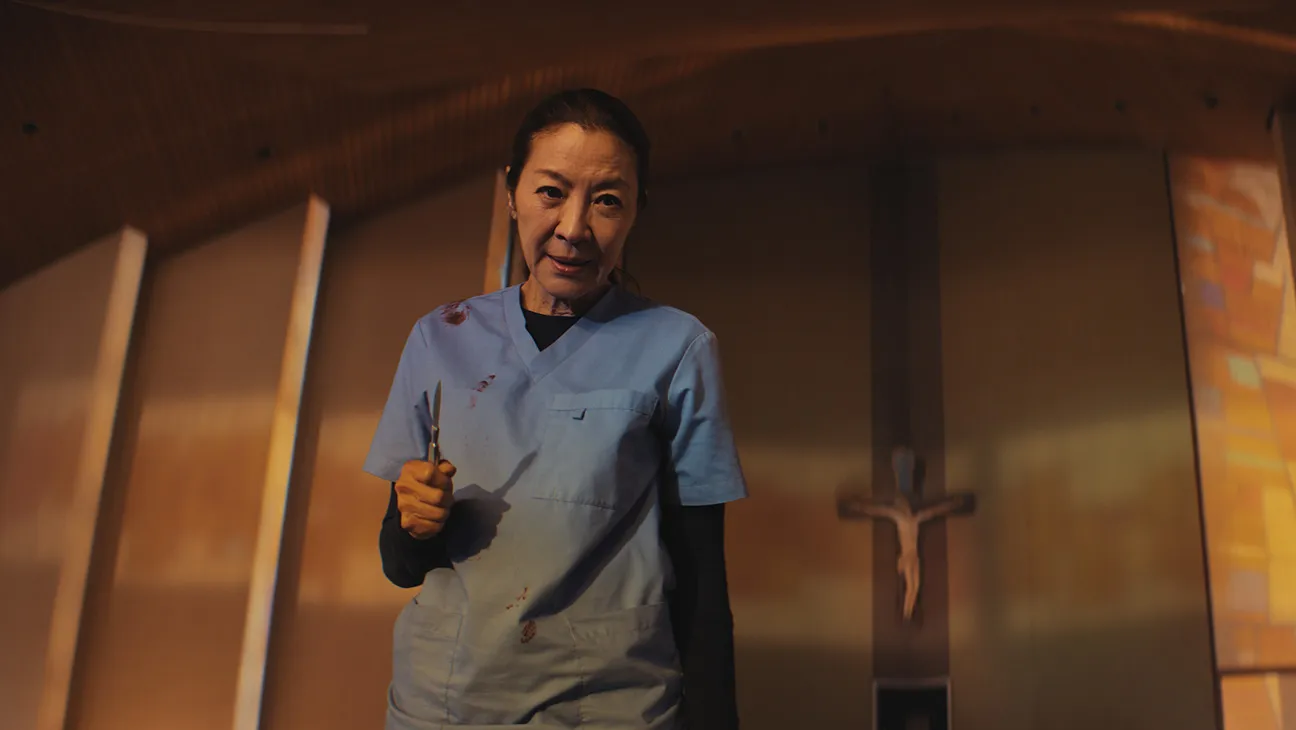
Roshan Sethi has a résumé that could make the most accomplished among us feel like underachievers. His three previous features include the thoroughly charming 2024 rom-com A Nice Indian Boy. Two months ago his novel, The Simp, a funny Hollywood satire, was published. He was the co-creator of the Fox series The Resident. And as if that’s not enough, for a couple of months a year he still works as a radiation oncologist at a Boston hospital.
He puts all those experiences to good use in The Surgeon, a genre-bending swirl that is part The Pitt (but gorier), part tense crime thriller, part action movie and part midnight movie, all infused with witty touches. It is wildly entertaining.
The Surgeon
The Bottom Line
Ready for cult-classic status.
Venue: Toronto International Film Festival (Centrepiece)
Cast: Michelle Yeoh, Martin Freeman, Laurie Davidson, Yuri Kolokolnikov, Joseph Mydell
Director and writer: Roshan Sethi
1 hour 32 minutes
As clever as Sethi’s screenplay is, the film’s greatest asset is Michelle Yeoh as Eliza Lim, a recently retired surgeon who is kidnapped by criminals and forced at gunpoint to operate on one of their colleagues. No one else could have brought the same serene presence, quiet intelligence and flair for action, a combination that is ideally suited to the character. Sethi’s film is perfectly in sync with Yeoh’s strengths.
The film swiftly establishes Dr. Lim’s character in a few brief scenes that chart her single-minded dedication to her job and the boring, empty retirement she has reluctantly entered. The Surgeon isn’t a character study, but we instantly know who that character is.
Out of nowhere, it seems — but actually for reasons revealed much later — she is abducted and finds herself in an abandoned hospital, surrounded by men with guns. An operating room is ready for her, and the patient’s face is covered. The operating scenes are not for the squeamish, but it’s worth covering your eyes to get to the real action. Lim realizes the kidnappers have no reason to keep her alive after the surgery, so she has to outwit them using her mind, medical knowledge and a few hidden scalpels.
Sethi often holds the camera on Yeoh’s face, expressive even at its most passive. Lim speaks softly as she proves the thugs are no match for her. “You can stop pointing that gun at me,” she tells one of her minders after the surgery. “I’m an old woman, half your age, half your weight. There’s nothing I can do to you.” Part of the fun of watching is that we can guess that line is a ruse, but we don’t know what she’s planning.
Yeoh, of course, started out in martial arts films, but that is not the kind of action displayed here. Lim knows just where on the body to attack her kidnappers and goes for their most vulnerable spots with swift jabs and great precision. As in the best action films, we never lose sight of how the hero’s personality drives it. “You’ll never shoot a gun again,” she calmly tells one of her captors after severing some cartilage in his wrists. “That’s not snot, that’s your brain fluid dripping out,” she says to another after ramming an instrument up his nose. One of the weirdest, wittiest touches is that whenever she attacks, we see the body beneath the skin, viewing the bones she’s breaking or tendons she’s cutting as if a medical textbook had come to life.
Sethi loads the film with noir tropes, including a ticking clock that counts down how much time the patient has to live after Lim threatens to kill him. What has she got to lose? But even at its most noirish, visually the film is filled with light and color. A major action scene takes place in the former hospital’s chapel, full of bright stained glass. And she lives in a spacious, light-filled house with a large garden, which we see before and after the kidnapping. The Surgeon is taut and suspenseful, but never claustrophobic. The editing smoothly keeps the momentum going and the genre touches blend easily.
Martin Freeman enters the film fairly late in a supporting role as the crime boss who masterminded the scheme. As always, he is expert at looking meek while sounding deadly. And Joseph Mydell adds a welcome, sweet touch as a man who brings warmth and emotion to Lim’s life.
With a nod to genre conventions, the final shot leaves room for a sequel. But wherever Sethi’s varied career takes him, he has already established himself as one of the most exciting filmmakers around.
>
Roshan Sethi has a résumé that could make the most accomplished among us feel like underachievers. His three previous features include the thoroughly charming 2024 rom-com A Nice Indian Boy. Two months ago his novel, The Simp, a funny Hollywood satire, was published. He was the co-creator of the Fox series The Resident. And as if that’s not enough, for a couple of months a year he still works as a radiation oncologist at a Boston hospital.
He puts all those experiences to good use in The Surgeon, a genre-bending swirl that is part The Pitt (but gorier), part tense crime thriller, part action movie and part midnight movie, all infused with witty touches. It is wildly entertaining.
The Surgeon
The Bottom Line
Ready for cult-classic status.
Venue: Toronto International Film Festival (Centrepiece)
Cast: Michelle Yeoh, Martin Freeman, Laurie Davidson, Yuri Kolokolnikov, Joseph Mydell
Director and writer: Roshan Sethi
1 hour 32 minutes
As clever as Sethi’s screenplay is, the film’s greatest asset is Michelle Yeoh as Eliza Lim, a recently retired surgeon who is kidnapped by criminals and forced at gunpoint to operate on one of their colleagues. No one else could have brought the same serene presence, quiet intelligence and flair for action, a combination that is ideally suited to the character. Sethi’s film is perfectly in sync with Yeoh’s strengths.
The film swiftly establishes Dr. Lim’s character in a few brief scenes that chart her single-minded dedication to her job and the boring, empty retirement she has reluctantly entered. The Surgeon isn’t a character study, but we instantly know who that character is.
Out of nowhere, it seems — but actually for reasons revealed much later — she is abducted and finds herself in an abandoned hospital, surrounded by men with guns. An operating room is ready for her, and the patient’s face is covered. The operating scenes are not for the squeamish, but it’s worth covering your eyes to get to the real action. Lim realizes the kidnappers have no reason to keep her alive after the surgery, so she has to outwit them using her mind, medical knowledge and a few hidden scalpels.
Sethi often holds the camera on Yeoh’s face, expressive even at its most passive. Lim speaks softly as she proves the thugs are no match for her. “You can stop pointing that gun at me,” she tells one of her minders after the surgery. “I’m an old woman, half your age, half your weight. There’s nothing I can do to you.” Part of the fun of watching is that we can guess that line is a ruse, but we don’t know what she’s planning.
Yeoh, of course, started out in martial arts films, but that is not the kind of action displayed here. Lim knows just where on the body to attack her kidnappers and goes for their most vulnerable spots with swift jabs and great precision. As in the best action films, we never lose sight of how the hero’s personality drives it. “You’ll never shoot a gun again,” she calmly tells one of her captors after severing some cartilage in his wrists. “That’s not snot, that’s your brain fluid dripping out,” she says to another after ramming an instrument up his nose. One of the weirdest, wittiest touches is that whenever she attacks, we see the body beneath the skin, viewing the bones she’s breaking or tendons she’s cutting as if a medical textbook had come to life.
Sethi loads the film with noir tropes, including a ticking clock that counts down how much time the patient has to live after Lim threatens to kill him. What has she got to lose? But even at its most noirish, visually the film is filled with light and color. A major action scene takes place in the former hospital’s chapel, full of bright stained glass. And she lives in a spacious, light-filled house with a large garden, which we see before and after the kidnapping. The Surgeon is taut and suspenseful, but never claustrophobic. The editing smoothly keeps the momentum going and the genre touches blend easily.
Martin Freeman enters the film fairly late in a supporting role as the crime boss who masterminded the scheme. As always, he is expert at looking meek while sounding deadly. And Joseph Mydell adds a welcome, sweet touch as a man who brings warmth and emotion to Lim’s life.
With a nod to genre conventions, the final shot leaves room for a sequel. But wherever Sethi’s varied career takes him, he has already established himself as one of the most exciting filmmakers around.
>
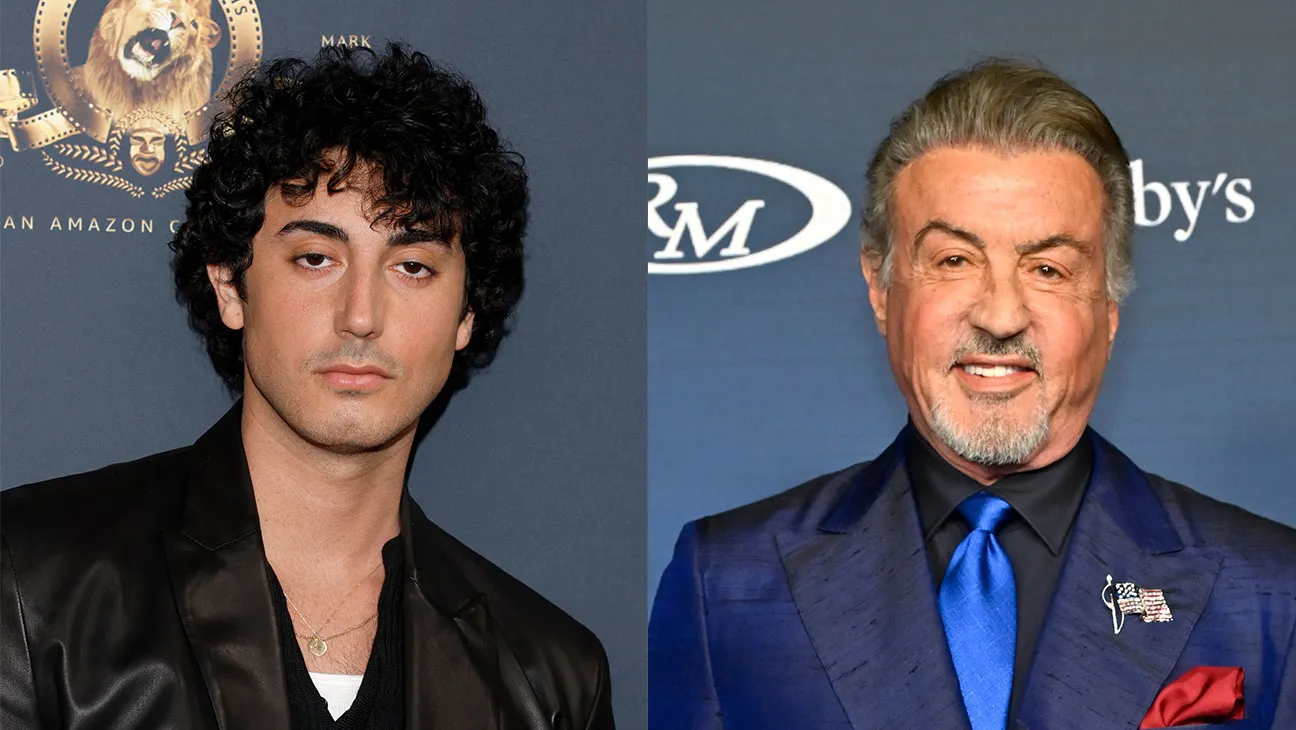
Anthony Ippolito, who stars as a young Sylvester Stallone in I Play Rocky, opened up about speaking with the action star in preparation for the biopic.
The Purple Hearts actor told The Hollywood Reporter at the Toronto International Film Festival on Saturday that talking with Stallone about his life, early career, and the development of Rocky was an “overwhelming” experience. Ippolito plays Stallone in Peter Farrelly’s I Play Rocky, which follows the tumultuous production of the 1976 boxing film that won three Oscars, including best picture.
“ I got to speak to Stallone prior to making the movie. It was a lot to take in because I’d spent over a year, by that point, studying him,” Ippolito said at THR‘s Studio at 1 Hotel during TIFF, presented by sponsor Canada Goose. “It was very overwhelming and daunting. There’s a lot going on in my head, but I was really just trying to listen as much as possible and hear his perspective. Obviously, Rocky’s an underdog story and he’s an underdog in the movie, but Stallone in a lot of ways was an underdog in his actual life.”
Ippolito revealed that he and Stallone chatted about Stallone’s early childhood and many of the difficulties he had to overcome, including paralysis of the lower left side of his face after doctors accidentally severed a nerve during childbirth. The complication gave Stallone his signature voice and look, which became famous when Rocky hit theaters in the ‘70s.
“Since he was born, he had this facial paralysis that kind of made everything difficult,” Ippolito shared. “[The paralysis] obviously made trying to become an actor really difficult. And so, hearing his firsthand account of what that is like; he really just endured a lot and went through a lot. It’s a miracle that this film came to be and that people still celebrate it 50 years later.”
Filmmaker Farrelly expanded on the challenges Stallone faced bringing Rocky to the big screen, adding that the studio at the time put up roadblocks in hopes that they could recast and find another actor to play Rocky Balboa. Stallone wrote the screenplay for the film and insisted he played the lead character.
Distributed by United Artists and later MGM, Rocky became one of the most financially successful sports film franchises of all time, grossing over $1.7 billion globally.
“ I think a lot of people know bits of [the story], but I didn’t know the big picture,” Farrelly said. “All the twists and turns; there are millions. … There’s so many things, like the way the studio — not only were they fighting him, but then once he got on board, they were — I don’t want to say they were sabotaging him — but they were making it hard for him so that if he got behind schedule, they could replace him with somebody else.”
Ultimately, Stallone’s opinion of I Play Rocky is one the cast and crew care most about, Farrelly said. The Rambo star has seen the movie and given his seal of approval, the director added.
“[Stallone] loved it. It’s such a relief. I was afraid because he watched it alone, for one thing, and this plays really well with a crowd,” Farrelly said. “I was nervous — him sitting there alone — and for many other reasons. There’s a lot of stuff in there, especially the beginning when he’s down and out. It’s rough to watch.”
I Play Rocky will open nationwide in theaters Nov. 20 following a limited release on Nov. 13.
>

FCC Chairman Accuses James Talarico Of Running A “Hoax” With Kimmel

How to watch Mets vs. Yankees: TV channel and streaming options for September 12

‘The Surgeon’ Review: Michelle Yeoh in Deliriously Fun Genre-Bender
-

 movies4 months ago
Search For Canadian TV Actor Stewart McLean Now Homicide Investigation
-

 Fashion9 years ago
These ’90s fashion trends are making a comeback in 2017
-
Fashion9 years ago
According to Dior Couture, this taboo fashion accessory is back
-
Fashion9 years ago
Model Jocelyn Chew’s Instagram is the best vacation you’ve ever had
-
Fashion9 years ago
Emily Ratajkowski channels back-to-school style
-
Fashion9 years ago
9 Celebrities who have spoken out about being photoshopped
-

 Anime3 months ago
Rurouni Kenshin: Hokkaido Arc Manga Takes 1-Issue Break – News
-

 Anime2 months ago
HIDIVE to Stream English Dubs for The World Is Dancing, The Forsaken Saintess and Her Foodie Roadtrip in Another World, The Dangers in My Heart: The Movie Anime – News