
Kirsten Dunst‘s Claudia, Brad Pitt’s Louis and Tom Cruise’s Lestat in Neil Jordan’s Interview with the Vampire
Courtesy of Warner Bros.


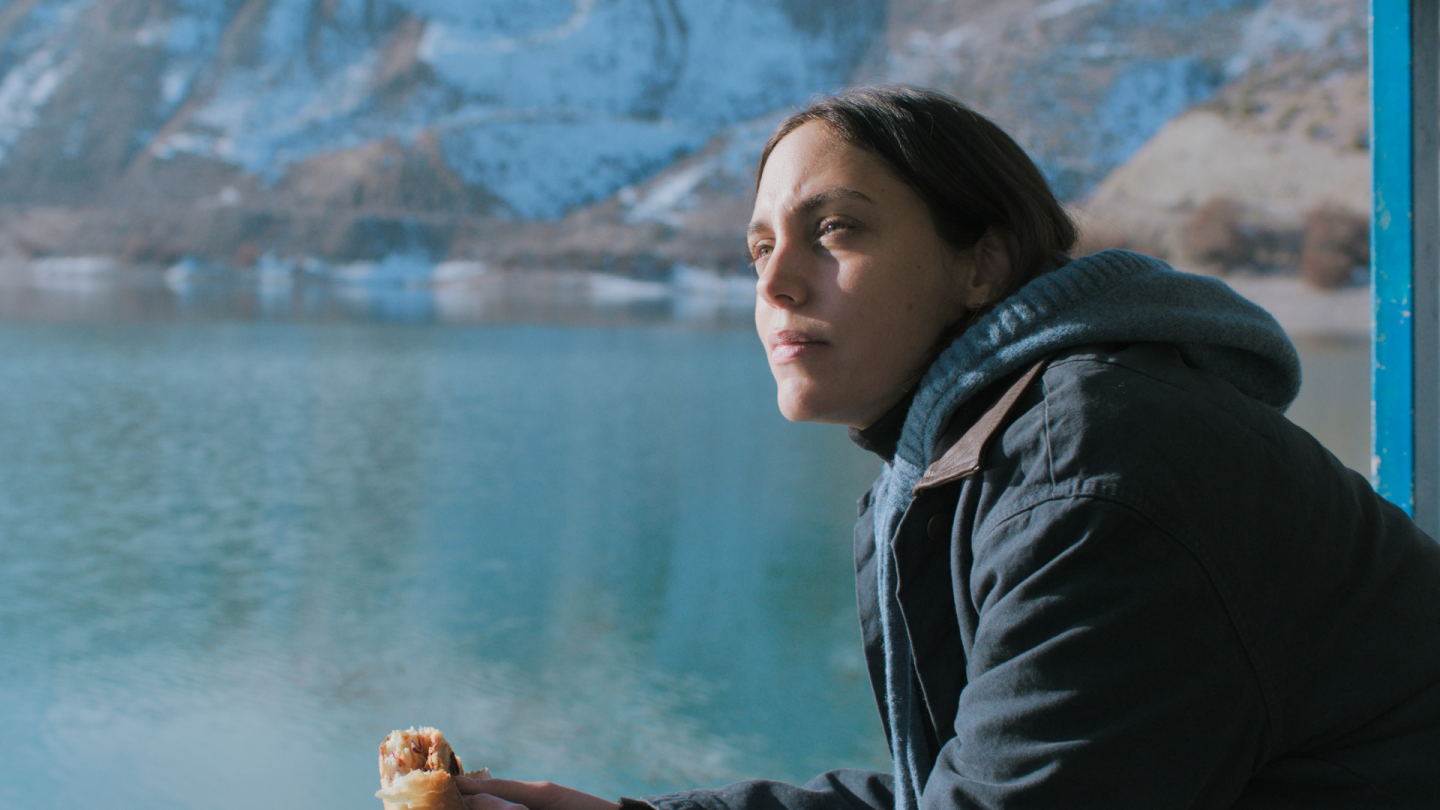
The poetry of real life, and the poetry you jot down in notebooks or recite in your head, come clashing together in subtly powerful ways in What Remains (Artakalan), the latest feature from veteran Turkish filmmaker Yesim Ustaoglu (Clair Obscur).
Following a bohemian couple from Istanbul who hit a wall both creatively and personally, this slow-burn drama takes a little too much time to get the ball rolling but evolves into an honest portrait of artists finding their way out of the darkness. After premiering in competition at San Sebastian, it will continue its festival tour and likely book theaters around Europe, although it may be too minimalist for wide exposure.
What Remains
The Bottom Line
A quiet drama with deep feelings.
Venues: San Sebastián Film Festival (Official Selection)
Cast: Oyku Karayel, Metin Akdulger, Ali Kayra Kul, Ilyas Salman
Director-screenwriter: Yesim Ustaoglu
2 hours 6 minutes
Told with a delicate but assured hand, the story begins with couple Elif (Okyu Karayel) and Mehmet (Metin Akdulger) raising their son, Selim (Ali Kayra Kul), in a comfy Istanbul flat filled with books, records, paintings, handmade toys and other signs of a rich intellectual life. And yet that life seems to have come to a halt for Elif, a respected poet who’s been stuck in a rut for a long time. Mehmet, meanwhile, looks like he’s having fun recording avant-garde tracks at night with his jam band, although he winds up getting laid off from his day job as a music teacher, leaving him without a steady income.
The couple is thus in the midst of an early midlife crisis when we first meet them, and things only seem to get worse as the days drag by. The early scenes in What Remains can be a bit trying, perhaps because they’re attempting to faithfully capture what it’s like to hit a dead end, which often happens to artists like Elif and Mehmet once they’ve settled down and tried to build a family, balancing their creative ambitions with the necessity of making a living. Things finally come to a head during one long, difficult scene in which the two see no other solution than to separate, even if they still seem to love each other.
The film then picks up both narratively and spiritually after Elif decides to hop in her car and hit the road toward parts unknown. She leaves Selim in the care of Mehmet, who continues on with the daily grind until he gets a call that his father, Mustafa (Ilyas Salman), is dying back in their hometown.
What started off as a story of two people reaching an impasse soon opens up into a road movie in which they both make journeys to their origins, staying apart while reconnecting with who they once were. In Mehmet’s case, this means confronting his father about a long-buried family tragedy, while for Elif it entails traveling to the remote cliffside village in central Turkey where her grandparents lived many years ago.
Ustaoglu makes the latter’s trip the centerpiece of a movie that slowly but surely reveals how such voyages can be a healing process for people disconnected from themselves and one another, especially when they’re trying to scrape by in a metropolis like Istanbul. For a poet like Elif, this means experiencing the great outdoors and the quiet beauties of her family’s native home, where things still seem to function like they did a hundred years ago.
Cinematographer Kiril Prodanov captures that beauty in graceful widescreen vistas, framing Elif against the snow-filled landscapes and soft natural light. Despite being a film centered around a poet and a musician, What Remain is less about the words they speak than the images that surround them, whether it’s the purity of the mountains to which Elif retreats or the decrepit apartment that brings back to life Mehmet’s memories as he takes care of his father during his final days. Sound also plays a part in that story, with Mehmet recording his father’s dying breaths for one of his experimental pieces.
Both Karayel and Akdulger are strong in roles that require them to portray deep turmoil without much dialogue or overt drama. This can make the movie frustrating for those seeking something more explosive, because the conflicts in What Remains mostly happen on the inside. And yet, it’s by going outside — out of the apartment, the city and the usual routine — that these two characters start healing themselves, finding a way to keep on living and working, moving ahead instead of staying in place.
>
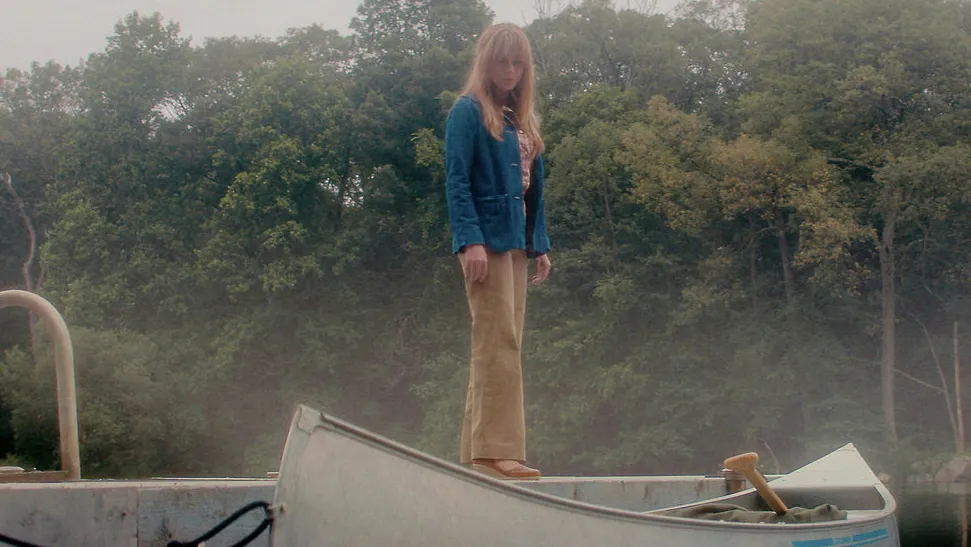
As the first Crystal Lake trailer debuted last week, longtime fans of Jason Voorhees ran wild with online speculation about how the Peacock show approaches his story.
Series creator Brad Caleb Kane recently assured Deadline that although the Friday the 13th prequel does “give certain explanations” about the masked killer, the series is much more “grounded in reality” than fans are giving him credit.
“Listen, it’s hard for me to look at the theories that are bandied about, like, ‘There’s a strange yellow door. Are they making Jason a government super soldier? Is that the route they’re going down?’” he said. “And I just want to tell people that my wife said, ‘Don’t engage yet. Just let them have their theories and do their thing.’ But I don’t want people watching, thinking that we’re doing some sort of Stranger Things, Eleven, government super soldier. It’s not that, it’s its own thing.”
Kane continued, “It’s grounded in more reality. It’s grounded in things that were going on in the 60s and 70s that sort of intersect with the theme of mistrusting our institutions. I don’t want to say too much more because I don’t want to get into spoiler territory, but I didn’t want people to think that we’re doing Stranger Things. This exists in the world of Friday the 13th, it’s grounded.”
Following last week’s trailer, which teased a yellow door in what looks like a top-secret facility, Kane took to social media to poke fun at the speculation. “Everybody chill!” read a meme of Arnold Schwarzenegger’s Mr. Freeze that he shared on Instagram.
Streaming Oct. 15 on Peacock, Crystal Lake stars Linda Cardellini as Pam Voorhees, who struggles to grieve after her son Jason drowned the summer before. As two strangers begin digging into her mysterious past, Pam goes to murderous lengths to keep her secrets buried.
>

Peter Byrne, the singer and songwriter for the band Naked Eyes who scored 1980s hits with “Always Something There to Remind Me” and “Promises, Promises,” died peacefully in Los Angeles, California, on Monday, September 14, after a brief illness. He was 74.
His death was announced on the band’s official website.
One of the most popular, if fleeting, British New Wave bands of MTV’s golden era, Naked Eyes was founded in 1982 by Byrne and keyboardist Rob Fisher, who had been college friends in their native Bath, England, and had performed together in a band called Neon from 1979 to 1982. (That band also included Curt Smith and Roland Orzabal, who would go on to form Tears for Fears.)
Within two years Naked Eyes had scored four Top 40 hits on Billboard’s Hot 100. The highest charting was “Always Something There to Remind Me” which peaked at #8 during the summer of 1983. A cover of the 1963 song written by Burt Bacharach and Hal David for Dionne Warwick, the Byrne-Fisher demo of “Always Something There to Remind Me” was strong enough to convince EMI Records to sign the duo that would become Naked Eyes.
The band had three subsequent top 40 hits, the most successful of which was “Promises, Promises,” written by Byrne and Fisher and not to be confused with the Bacharach-David song of the same title that was a hit for Warwick. Both songs were included on the band’s debut 1983 album Burning Bridges, as was a third, less successful single “When the Lights Go Out.”
The band’s second album, 1984’s Fuel For The Fire, featured a modest hit “(What) In the Name of Love,” but failed to match the success of the debut album, prompting Naked Eyes to disband (the group never toured). Fisher died in 1999 at the age of 42 following cancer surgery.
Born June 9, 1952, in Bath, Byrne continued writing, recording and touring following Fisher’s death, releasing the solo album The Real Illusion in 2001 under Pete Byrne, followed by two albums under the Naked Eyes name: Fumbling with the Covers in 2007 and Disguise the Limit in 2021. A remaster of the original Naked Eyes self-titled album was release in 2025.
In 2008 Byrne’s Naked Eyes too, part in the U.S. “Regeneration” tour with Belinda Carlisle, ABC and the Human League, and in 2024 joined a similarly ’80s themed tour of the U.S. and Canada with Wang Chung, Men Without Hats and The Motels.
Outside of Naked Eyes, Byrne’s work included providing backing vocals on Stevie Wonder’s 1985 hit “Part-Time Lover,” as well as songwriting for film and television. He wrote the song “I Am The Cute One” in 1993 for the Olsen Twins.
Byrne is survived by his siblings Eileen, Sandy, Carol and Steve; children Merlin, Dylan, and Chloe; and ex-wife Elena. A private service will be held for the family.
Listen to “Promises, Promises” and “Always Something There To Remind Me” below:
>

Interview with the Vampire filmmaker Neil Jordan pulled off a dream casting coup with Tom Cruise and Brad Pitt.
But much to Jordan’s chagrin, Cruise immediately found himself at the center of a casting-related nightmare. It wouldn’t be the last time he faced scrutiny over playing an iconic literary character, but his go-round nearly two decades later as Jack Reacher came with one notable distinction.
Jack Reacher series author Lee Child endorsed Cruise’s casting at the time, despite the actor not matching the physical description of his massive ex-Army investigator. It wasn’t until 14 years later, amid the success of Reacher, the hit Amazon Prime series starring 6-foot-3, 240-pound Alan Ritchson, that Child ultimately conceded that readers were right to protest the 2012 and 2016 movies’ lack of fidelity to the title character’s imposing presence.
In the case of Interview with the Vampire, the call came from inside the house. Novelist and screenwriter Anne Rice led the charge against Cruise’s casting as Lestat de Lioncourt, a French theater actor in the 1700s who becomes an immortal vampire. Rice had been tied to the book’s development since the late ’70s, and over the years, she’d envisioned a bevy of names to play the tall, blonde bloodsucker, including Rutger Hauer, Julian Sands, Daniel Day-Lewis, John Malkovich, Tom Hanks and several others.
While Rice later went to great lengths to apologize to Cruise after seeing his performance, even commissioning a two-page spread in various outlets to heap praise on him, Jordan says the circumstances created an unwanted dynamic on set.
“It was a pain in the ass for me as a director, for him as an actor and for the entire production, when the whole world was saying, ‘Oh, you’re wrong,’” Jordan tells The Hollywood Reporter in support of Interview with the Vampire’s new 4K Blu-ray release. “The opposition that Anne Rice took to his casting was an absolute distraction. It wasn’t a welcome thing at all.”
As one would expect, Cruise was fueled by the naysayers.
“When everyone told him he was not the right choice for the part, he liked the challenge of proving them wrong,” Jordan says. “He was just beginning to explore the non-Tom Cruise aspects of himself, and there are a lot of sides to Tom that he has yet to explore, let me put it that way.”
Rice even suggested Cruise and Pitt swapping roles, something Pitt may have been open to in retrospect. Nobody complained when Pitt received the part of Louis de Pointe du Lac, a wealthy plantation owner in the late 18th century whom Lestat would eventually sire after Louis is consumed by grief over the death of his wife and child. But the strain of playing a vampire during a nocturnal production and its unusual makeup process drove Pitt to the brink of asking producer David Geffen how much it would cost for him to vacate the role mid-shoot. (The answer was $40 million.)
“It’s all my fault. We had intense discussions about it. We shot six months at night in New Orleans, Paris and New York. He found it very oppressive in a way that Louis himself found it oppressive,” Jordan shares. “The combination of the part and Brad’s unease about shooting constantly at night — and me hanging him upside down and painting the veins on his face and putting haptic lenses in his eyes — maybe all that got to him a little bit.”
Bear in mind, Pitt was on the verge of superstardom at the time. He was coming off Thelma & Louise, as well as A River Runs Through It. He’d also just filmed Legends of the Fall, which, along with Interview, were destined to cement his movie star status by the end of 1994. Jordan theorizes that his dissatisfaction with playing the submissive Louis opposite the dominant Lestat may have influenced the choices he’d make from there.
“When we later see Brad Pitt in Fight Club, Se7en and the Quentin Tarantino movies, he’s much more muscular, aggressive and all-American,” Jordan says. “So maybe that’s the direction he wanted to go in, but at the time, he was between directions in a way.”
Across its theatrical and home video releases, the sumptuous vampire drama would go on to gross over four times its $50 million to $60 million production budget. Warners soon contracted Jordan to write a sequel, The Vampire Lestat, based on Rice’s second installment in her The Vampire Chronicles series. However, Cruise’s then-lack of interest in sequels — and in reprising the role — has kept that script in a drawer ever since.
In 2022, AMC began adapting The Vampire Chronicles as a TV series, starting with two seasons devoted to Interview with the Vampire. The third season evolved into The Vampire Lestat, exploring Lestat’s time as a rock star in a modern context alongside his origin story in the 18th century. Jordan says his sequel would have focused more on the latter.
“I wasn’t as interested in Lestat as a David Lee Roth, Iggy Pop kind of rock star with leather pants and a muscular torso. It seemed a little bit cornball to me,” Jordan reveals. “The bulk of the script that I wrote was about Lestat’s story in the 18th century, how he was turned into a vampire against his knowledge and against his will. I would’ve loved to have done that. I would’ve opened it on the Golden Gate Bridge [like the end of Interview with the Vampire].”
Below, in a conversation with THR, Jordan also discusses remaining faithful to Rice’s Interview with the Vampire despite reworking what he considered to be a “limp” ending.
***
It’s always interesting to revisit movies many years later. We process them differently with time and distance, and I imagine filmmakers have a particularly unique version of that experience. What struck you most when you opened Interview with the Vampire back up for the new 4K release?
When I watched it again, I really was just glad I was allowed to make it. I like the movie, and it still seems like the kind of movie that studios don’t normally make.
Following The Crying Game, you probably had multiple doors you could’ve gone through at the time. Do you remember the circumstances that led you through this one?
I was being asked to do very many things by different people. I wasn’t going to direct another Indiana Jones, although I suppose now I’d be doing a Marvel movie, wouldn’t I?
The jump from indies to franchises is often how it goes now.
I wouldn’t have done that. I’m Irish. I liked the vampire thing. I liked the challenge of turning a vampire movie into a huge historical epic, all at night. The visual challenges of it really excited me, and I liked Anne Rice’s book and the script she had written. A decade earlier, I had made a movie called The Company of Wolves with [novelist-screenwriter] Angela Carter, and it was a fantasy — a fairy tale gone dark, wrong and weird. Before she died in 1992, she wanted to make a movie that she was going to call Vampirella. So I saw The Interview with the Vampire as a companion piece to what myself and Angela had done all those years before. That was it, basically. It was a weird thing, but it was cool and lovely.
Kirsten Dunst‘s Claudia, Brad Pitt’s Louis and Tom Cruise’s Lestat in Neil Jordan’s Interview with the Vampire
Courtesy of Warner Bros.
Casting Tom Cruise and Brad Pitt was the coup of all casting coups, especially since Cruise’s character is absent for a 40-minute stretch in the second hour. Considering he was, and is, the biggest movie star in the world, did Cruise voice any concern at the time?
No, he didn’t. Not at all. He just liked the challenge of playing a flamboyant monster. When everyone told him he was not the right choice for the part, he liked the challenge of proving them wrong. It’s a great part, and he’s a great actor. He was just beginning to explore the non-Tom Cruise aspects of himself, and there are a lot of sides to Tom that he has yet to explore, let me put it that way.
The backlash to his casting included the aforementioned author and screenwriter Anne Rice, so he used that as bulletin board material?
It was a pain in the ass for me as a director, for him as an actor and for the entire production, when the whole world was saying, “Oh, you’re wrong, you’re wrong, you’re wrong.” You don’t want the challenge of having to prove yourself right. You want the challenge of making the character work and the movie work. So the opposition that Anne Rice took to his casting, and stuff like that, was an absolute distraction. It wasn’t a welcome thing at all. But I don’t think it was a contributing factor to what he did with the part. I think he did what he thought was interesting.
I mentioned the 40-minute stretch in which Lestat does not appear, but there are rumors of deleted scenes where he teamed up with the Théâtre des Vampires to get revenge against Louis and Claudia. Did you actually shoot any material with Cruise for that Paris section?
Yeah, I did. I shot one little scene, but it wasn’t very good. It wasn’t very interesting. I don’t know why. But when we met him again in New Orleans, it was fucking great. We’ve included deleted scenes on the [4K Blu-ray].
Yes, I watched them. I wondered if Lestat’s Paris scene would be among them, but now I know why you didn’t include it.
It didn’t make sense, really. The character would not have been that weak [in the Paris scene]. It was more interesting to find him in that abandoned house in New Orleans. There was something ghoulish and denatured about him in some strange way. That was much more interesting than seeing him with a bunch of strange … The fact of the matter is, the Theater of Vampires displayed itself best in the scenes in the theater itself. This coven of vampires living in these crypts was only interesting when you began to chop them with a scythe like Brad Pitt eventually did.
Of all the deleted scenes, is Louis’ confession the one you regret not including the most?
I cannot work out why that’s not in the finished movie. I’m sorry about that. I just can’t work it out. It’s been 30 years. I had long discussions with the editor about it. We were trying to track down our very first cut, and we couldn’t find it in the Warners vaults. But we did find these deleted scenes, some of which are interesting. So that’s why I’ve included them.
Neil Jordan and Brad Pitt on the set of Interview with the Vampire
Courtesy of Warner Bros.
Brad, in hindsight, talks about how miserable he was shooting nights in the makeup and being hung upside down to drain the blood from his face.
It’s all my fault. All of that.
So it’s not retroactive exaggeration?
No, I sensed it at the time. We had intense discussions about it. You’ve got to face it. We shot six months at night in New Orleans, Paris and New York. Then we got some respite on the Pinewood set we used. But the problem is that the character suffers. Interview with the Vampire is Louis’ account of how he was turned into this thing by somebody who jumped him in the middle of the night. And he has spent the rest of his life trying to understand what this thing is. So that’s the part that Brad played, and he found it very oppressive in a way that Louis himself found it oppressive. So the combination of the part and Brad’s unease about shooting constantly at night — and me hanging him upside down and painting the veins on his face and putting haptic lenses in his eyes — maybe all that got to him a little bit.
He’d done Thelma & Louise, Legends of the Fall and A River Runs Through It. He was on the cusp of defining what kind of actor he wanted to be. When we later see Brad Pitt in Fight Club, Se7en and the Quentin Tarantino movies, he’s much more muscular, aggressive and all-American. So maybe that’s the direction he wanted to go in, but at the time, he was between directions in a way. He was still quite a young actor, but a great actor.
Kirsten Dunst’s character, Claudia, really tells it like it is, and from my interaction with her, Kirsten herself is also a straight shooter. Was she direct and forthright even as an 11-year-old kid?
She was a kid, but the minute I met her and tested her, I knew she’d be acting for the rest of her life. I didn’t feel the normal trepidation one has when casting a kid. I said to her mother at the time, “You do realize she’ll be acting for the rest of her life?” And her mother said, “Yes, she knows that.” So we cast a kid who was not only a superb actor, but she also played one of the most interesting parts in the whole story. Claudia is a child who is never able to grow up, and there’s something fairy tale-ish and ghoulish about it. There’s something of a porcelain doll about it. Of all the dilemmas that all the characters faced, it was the most interesting dilemma.
Kirsten Dunst as Claudia in Interview with the Vampire
Courtesy of Warner Bros.
Nowadays, so many movies set themselves up for sequels, but in the ’90s, it was a rare occurrence. And to me, the ending in the Mustang always felt like it was setting up another movie. Were you actually thinking about a potential The Vampire Lestat movie when you shot it?
No, I just wanted to bring the character back in. I thought the ending of the book was kind of limp. [Christian Slater’s] Molloy says, “I want to be what you are.” And Louis says, “You’ve not listened to anything I’ve said, have you?” Then he vanishes, and Molloy runs down the street without knowing what he’s done. I just thought it was a bit limp. So I wrote this fun ending to bring Lestat back into the picture because I enjoyed the Lestat that Tom Cruise gave birth to in the earlier sections of the film. It was great to see him back again.
There was a conversation with [producer] David Geffen. He’d bought the rights to the whole string of [The Vampire Chronicles books]. After we made the movie, Warners asked me to write a script for the second book, The Vampire Lestat, which I did. But I wasn’t as interested in Lestat as a David Lee Roth, Iggy Pop kind of rock star with leather pants and a muscular torso. It seemed a little bit cornball to me, but I did write a script.
The bulk of the script that I wrote was about Lestat’s story in the 18th century, how he was turned into a vampire against his knowledge and against his will. He was an actor in the Commedia dell’arte troupe, and it was fascinating to me. His mother gets sick, and he turns her into a vampire. It was kind of cool. I would’ve loved to have done that. If I had done that, I would’ve opened it on the Golden Gate Bridge [like the end of Interview with the Vampire].
[Writer’s Note: At that point, Cruise not only didn’t make sequels to his own movies, but he also declined the chance to reprise Lestat, effectively ending the short-lived follow-up idea.]
Christian Slater’s Daniel Molloy interviews Brad Pitt’s Louis in Interview with the Vampire
Courtesy of Warner Bros.
There’s been a lot of debate this year about creative license in adaptations. The Odyssey in particular received so much guff for its changes, but a movie adaptation is not meant to be a 1:1 translation. So how did you approach that tug of war between the source material and doing what’s best for the movie?
Well, there was no tug of war at all, really. When I was given the project, it had been hanging around for years. I just heard that Anne Rice spoke to Tom Hanks about playing Lestat at one point [n ’93], and there was an earlier version of it where she apparently wanted to change the character of Louis to a woman and have Cher play that role.
[Writer’s Note: Rice’s novel was optioned upon its release in 1976, but the project stalled in development, which she believed was largely due to its homoerotic themes. As a last-ditch effort to get the film greenlit in the ’80s, she gender-swapped the role and heterosexualized the Louis-Lestat relationship. Geffen then approached her in 1992 for a more faithful adaptation.]
The novel was beautiful, and I could feel the atmosphere of it. I could touch it almost. But a lot of stuff had been taken out of the existing script. So when Geffen and Warners asked me to do it, I said, “I’d love to do it, but will you let me do my own pass on the script?” And they did. So I went back to Anne’s book and reintroduced a lot of elements from the book.
One of the main changes that Anne had introduced in the script was Louis lamenting not the death of his brother, but the death of his wife, when the story opens. It’s not a huge change, really, but I do think the movie is as accurate to the book as a movie can probably be without turning it into a version of James Joyce’s Ulysses. I tried to reproduce exactly the feeling I had when I returned to that novel, so I think it’s pretty accurate.
The metaphor of two men, sexuality and blood is intact. The fact is that it’s a gay family with a child at the center of it. The child is created to keep this family together. It’s all there, really. The most dynamic aspect of the book was this family. There’s Lestat, the dominant; Louis, the passive; and Claudia, the kid. That was it. So I thought I’d make a movie about the story of this family, and it’s as accurate to the book as I could make it. I can see how you could take that material and go anywhere with it, but I regarded my job to reflect the novel itself.
***
Interview with the Vampire is now available on 4K Blu-ray.
>


Search For Canadian TV Actor Stewart McLean Now Homicide Investigation


These ’90s fashion trends are making a comeback in 2017
According to Dior Couture, this taboo fashion accessory is back
Model Jocelyn Chew’s Instagram is the best vacation you’ve ever had
Emily Ratajkowski channels back-to-school style
9 Celebrities who have spoken out about being photoshopped


Rurouni Kenshin: Hokkaido Arc Manga Takes 1-Issue Break – News


HIDIVE to Stream English Dubs for The World Is Dancing, The Forsaken Saintess and Her Foodie Roadtrip in Another World, The Dangers in My Heart: The Movie Anime – News