
Tech
Everything new coming to Meta’s AI agent Muse


Meta’s personal AI agent Muse is only a few weeks old, and the social networking giant isn’t wasting any time building out what may be its biggest bet on consumer AI to date.
CEO Mark Zuckerberg kicked off the company’s annual Connect event in Menlo Park on Wednesday with a keynote that made one thing clear: Meta is going all-in on Muse.
The Muse agent (the physical avatar is named Jolly, according to Zuckerberg) is designed to handle everyday tasks by connecting to users’ apps and services, including email and calendars. At Connect, Zuckerberg introduced a slew of new capabilities and integrations to make Muse more useful and more deeply woven into users’ daily lives. Muse will be everywhere, if the user chooses, including on their Meta AI glasses.
Muse, which launched in early September, interacts across a user’s devices and digital accounts. The agent is powered by Muse Spark, Meta’s multimodal AI model built for agentic work. Meta has touted it as a more accessible agent than those offered by competitors — an AI helper that, from the jump, allows users to automate the busy work in their lives.
“The centerpiece of our vision for what we’re building is Muse,” Zuckerberg said as he kicked off a keynote donning khakis and a black T-shirt with the words “Building is My love Language” emblazoned across the front. “In the coming years, I expect that Muse is going to grow into the personal superintelligence that billions of people around the world are going to use to accomplish their goals and improve their lives.”
Zuckerberg also believes that Muse will make money for its users — and of course, eventually for Meta.
“We’re standing behind this by making Muse free for a huge number of tokens, with the expectation that over time we will profit by taking a small fee from transactions,” he said.
Here are the new features and capabilities that got our attention …
Muse gets its own digital avatar

One of the more fun announcements made Wednesday is that Muse users will soon have the ability to conjure a distinct digital avatar for their particular agent and then video chat with it in real time. A new AI model, Muse Realtime Avatar, has been developed to power the particular feature, the company says.
The idea is that Meta’s previously faceless AI software will be given a face, body, and voice, making them significantly more personable. There’s certainly a hint of Metaverse-ishness to this feature, which was demoed on stage at Connect. Users will be able to have live conversations with this avatar, giving it tasks and asking it questions.
Muse will also be integrated with Meta’s smart glasses line, the company announced. This means that users will be able to communicate with their agent merely by speaking to their glasses. The agent activates via a wake word, the company said, adding that it will be able to guide users through a personalized workout, log meals, book an appointment, and help them buy products they see.
Meta said Muse will work in the background and check back in when it’s done.
It’s not clear exactly when this feature will become available, although Meta says that it should launch sometime in “the coming months.”
Soon, you’ll be able to let Muse run your Mac

Meta says it is bringing Muse computer work to Mac. The company had previously talked about Muse coming to Mac, and spent more time on Wednesday providing a few new details. This means that users will be able to delegate tasks to the agent, and — much like other popular AI agents from OpenAI and Anthropic — Muse will be able to operate any app on a user’s desktop.
“You can have it help you run your small business, or just get work done for you,” Meta’s chief AI officer Alexandr Wang said Wednesday during the keynote. “You can walk away from your computer and it keeps working for you on all the jobs you lined up.”
Muse will get its own email address
Since Muse will always be working in the background, it will naturally need its own email address. Meta’s Wang announced it is developing that feature and will make it available “soon,” without providing a more precise timeline.
Users will also be able to add Muse to an email thread or forward emails from the agent to handle on their behalf.
Meta has locked in partnerships with companies like Stripe and Shopify, illustrating that the company sees Muse as an important tool for shopping.
Muse can access the entire Shopify product catalog agentically and use Lync and now Shop Pay to buy almost anything on the internet, according to Wang, who noted that Meta has also added more support for payments with PayPal.
The company also announced a string of new partnerships with retailers, including Best Buy, Gap, Sephora, Walmart, and Wayfair. Muse will be able to connect with these retail apps as well as with Expedia and soon, Instacart. Other connectors include GitHub, Granola, and Notion.
Wang noted that the company wants Muse to connect with small business too. Meta recently opened its platform to allow developers to build their own “connectors.” The company received more than 1,500 applications in less than week, he said, adding “I think this could be a generational opportunity to start building for a new platform as it takes off, and the response so far has been really great.”
When you purchase through links in our articles, we may earn a small commission. This doesn’t affect our editorial independence.
>
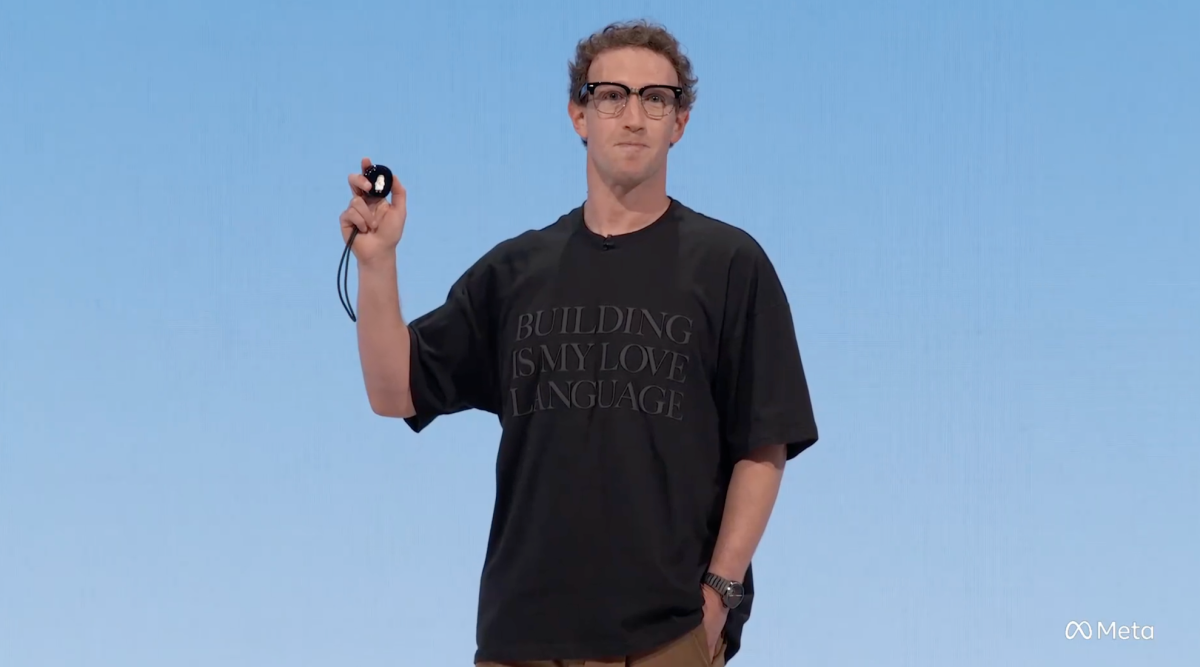
The AI amulet has become a bit of a cliché in the tech industry — devices like Friend have turned the idea of physical AI into little more than an exercise in eye-rolling for many consumers.
But that hasn’t stopped Meta from jumping into the arena with its own AI wearable, called Muse Charm, which is designed to give consumers another way to stay connected to its recently launched, and already popular, personal AI agent, Muse.
The device, which CEO Mark Zuckerberg revealed in a “one more thing” moment during the company’s annual Connect event, isn’t ready to ship just yet. Zuckerberg said his team had to “finalize laying out the components” and promised the devices would be “ready to ship in time for the holidays in December.”
The Muse agent, which is now embodied by a cute digital avatar known within the company as Jolly, lives inside the palm-sized totem that users can carry in their pockets or attach to a keychain. The device comes with a tiny screen that displays the avatar representing the agent. Users can talk to the device, which can then presumably carry out tasks on their behalf.
“We packed the whole Muse experience, including the whole real-time voice and avatar stack, into something that fits on a keychain and is always available to talk to,” Zuckerberg said during Wednesday’s keynote. “You just go ahead and tap here in the fingerprint sensor in the corner, and you can start talking without having to unlock a phone or open an app.”
Zuckerberg added: “So if you’re not wearing glasses, this is going to be by far the fastest way to talk to your Muse and to show what’s going on around you.”
Appropriate for what it offers, the gadget has a quasi-Tamagotchi feel to it — a lightweight, personality-filled device designed to keep users always connected to Meta’s software. It also feels like a relatviely low-stakes way for the social media giant to experiment with AI wearables while also offering yet another way to distribute its AI agent to the masses.
When you purchase through links in our articles, we may earn a small commission. This doesn’t affect our editorial independence.
>
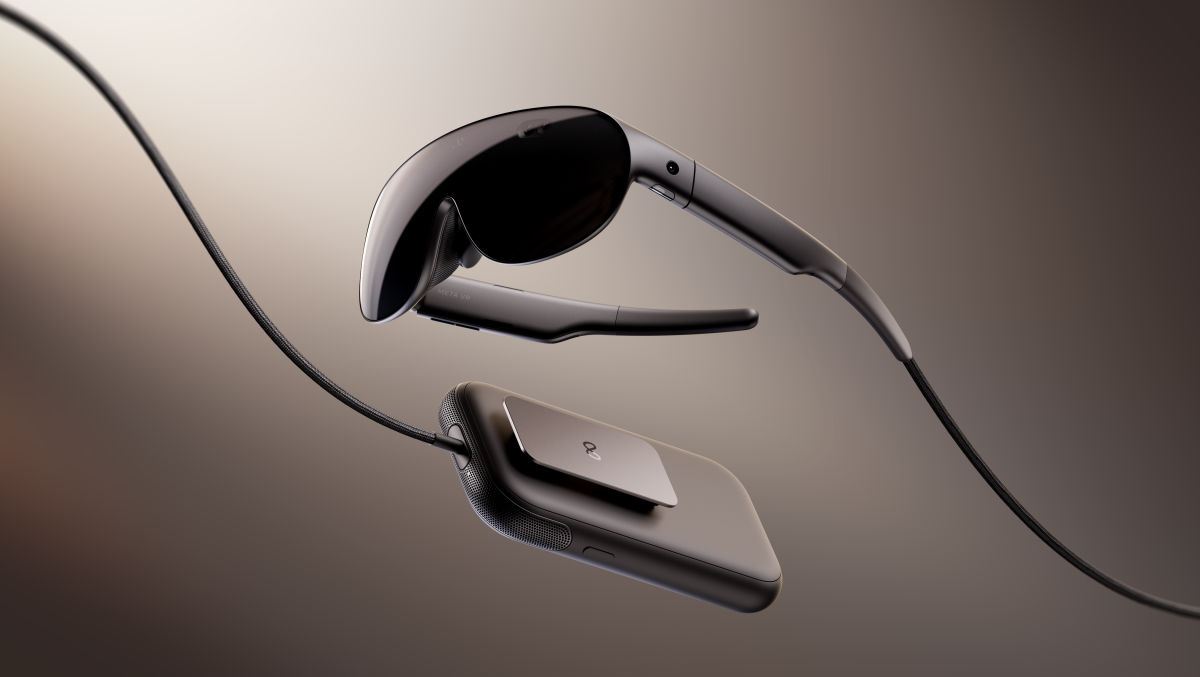
Meta is renewing its quest to make virtual reality a thing. At Connect on Wednesday, the company announced Meta VR Glasses, its newest entry into the VR market. These glasses actually seem quite promising given their substantially lighter form factor and a host of new entertainment integrations — including (allegedly) IMAX compatibility.
The company says that the glasses are five times lighter than the Meta Quest 3 — and they look much more like normal glasses than the bulky headsets that Meta previously released. Made of magnesium alloy, the glasses are powered by Qualcomm’s Snapdragon Reality Elite processor. They are powered by a computing puck, which also acts as their battery. Presumably, a user can just slip the puck into their pocket, which allows the glasses to be used on the go.
The glasses are largely entertainment-focused and come with micro-OLED panels built into the lenses, which provide a 5K Infinite Display with 37 pixels per degree, as well as Dolby Vision and support for Dolby Atmos audio. Users will be able to download and watch movies.
Perhaps one of the more unique features of the glasses, however, is that Meta is pitching them as a great way to enjoy IMAX-captured films.
Indeed, the company calls the glasses the “first IMAX Enhanced certified VR device ever.” What does that mean? Meta maintains that their glasses will be one of the only ways to experience the expanded aspect ratio that defines the distinct high-resolution viewing experience.
The glasses are also compatible with 3D experiences — and even movies that integrate a user’s physical space is integrated into their viewing experience. Meta says that it has teamed up with Disney and that, in November, Disney+ users will be able to stream specific movies — including certain Marvel movies — in 3D.
Meta says that users will be able to watch specific movies and have their surroundings “transformed with immersive environments, dynamic effects, stunning 3D visuals, and spatial audio” — essentially converting the movie into a VR gaming-type experience.
The glasses will also come with Meta AI — its automated virtual assistant — built in, which means that users will be able to talk to the glasses and automate various tasks via voice command. For instance, Meta says you’ll be able to start a movie just by asking your glasses to do so. Other ways to issue commands include hand gestures.
Meta says the glasses will be available next spring with a starting price of $1299.99.
When you purchase through links in our articles, we may earn a small commission. This doesn’t affect our editorial independence.
>
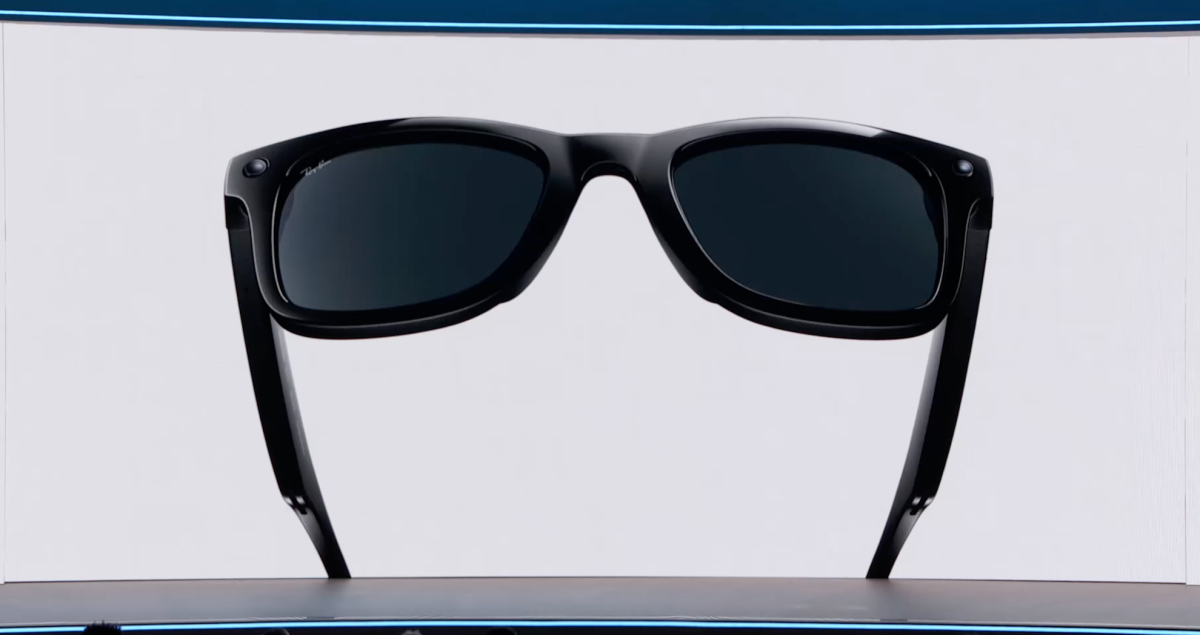
Confirming earlier reports, Meta announced its first pair of camera-free AI glasses, the clunkily named Ray-Ban Meta Audio, at its Connect 2026 conference on Wednesday. Designed to combat criticism around the more malicious use cases for AI glasses, which saw them nicknamed “pervert glasses” by some, the new devices will be audio-only, offering the ability to listen to music and podcasts, take calls, translate speech, and communicate with Meta’s AI assistant, Muse.
The glasses are designed by Meta’s partner in its AI hardware efforts, EssilorLuxottica, and will start at $349.
While Meta today offers a range of AI glasses in a variety of styles, colors, and capabilities, the audio-only glasses could help the brand recover from some of the reputational damage after critics pointed out how people, often men, were using AI glasses to record videos without subjects’ consent. Meta attempted to mitigate this issue with an update that would disable the camera if the LED light that indicated the glasses were recording was ever tampered with. However, the creepiness factor remained.
This latest device could prove to be more popular for that reason, while also providing an answer to something like Apple’s Siri-powered AirPods.
“Once you get used to high quality audio, it’s just a thing that you want all the time, right?” Meta CEO Mark Zuckerberg said during a keynote Wednesday, adding that the company after working on the idea realized it could design a whole new category of glasses around audio glasses.

Because they don’t have to house cameras, the glasses are slimmer than Meta’s other models and weigh only 43 grams. They also have adjustable temple tips, swappable nose pads, overextension hinges, and battery life of up to 12 hours on a single charge, Meta claims. With the included charging case, that battery life extends to up to 48 hours.
They’ll also come in a variety of colors and options — 23 color and lens combinations in total — and in two new styles, a retro-inspired “Clubmaster” Ray-Ban style and “Burbank,” described as more of a “classic, timeless, rectangle shape.” Like other Meta glasses, you can order them with your optical prescription as well, if needed.
The glasses will be available for preorder on October 13, the company noted.
Alongside the glasses, Meta announced its next-generation AI glasses (the ones with cameras), the Ray-Ban Meta (Gen 3). In addition to the Ray-Ban Meta Wayfarer, there will also be two new styles, the Aviator and Zena — the latter offering more of a cat-eye frame shape. These will have a 12 MP camera that supports 3K Ultra HD video, a six-mic array, and up to nine hours of battery life.
The glasses Meta launched with EssilorLuxottica will also see an expanded lineup of styles and colors as well as a new partnership with singer Lisa, which follows the company’s earlier brand partnership with Kylie Jenner. The glasses will also be roll out to more countries globally, Meta said.
All of Meta’s AI glasses will, of course, feature access to its newer personal AI assistant, Muse.
The company also teased other coming updates, including support for Dolby Atmos Capture, a feature that picks the best photo from multiple frames, an option to choose landscape or portrait modes, hearing enhancements for those with hearing loss, more detailed responses, different audio modes, customizable controls, and something called “private processing” that Meta claims will prevent the company from seeing your data.
When you purchase through links in our articles, we may earn a small commission. This doesn’t affect our editorial independence.
>

‘Dynamic Duo’ Finds Its Robin in Mason Thames, Adds Lee Pace, Steve Buscemi

Lewis Hamilton: Ferrari driver sets sights on George Russell in F1 championship amid defence of team’s season | F1 News

F1 drivers split over whether Monaco Sprint ‘makes sense’ after 2027 calendar announcement | F1 News
-

 movies4 months ago
Search For Canadian TV Actor Stewart McLean Now Homicide Investigation
-

 Fashion9 years ago
These ’90s fashion trends are making a comeback in 2017
-
Fashion9 years ago
According to Dior Couture, this taboo fashion accessory is back
-
Fashion9 years ago
Model Jocelyn Chew’s Instagram is the best vacation you’ve ever had
-
Fashion9 years ago
Emily Ratajkowski channels back-to-school style
-
Fashion9 years ago
9 Celebrities who have spoken out about being photoshopped
-

 Anime4 months ago
Rurouni Kenshin: Hokkaido Arc Manga Takes 1-Issue Break – News
-

 Anime3 months ago
HIDIVE to Stream English Dubs for The World Is Dancing, The Forsaken Saintess and Her Foodie Roadtrip in Another World, The Dangers in My Heart: The Movie Anime – News