
Entertainment
Cambridge Abandons Full Investigation Into Hiring of Late Professor Jason Arday


>
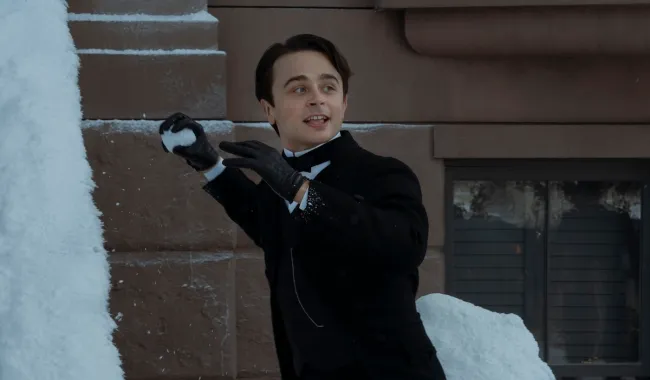
Train Daddy and Opera Mommy Go Caroling
“Voices of The Gilded Age: The Christmas Album” puts the HBO series’ cast of Broadway stars to proper use, with Audra McDonald, Carrie Coon, Christine Baranski, Kelli O’Hara, Morgan Spector, and more performing a slew of holiday classics and two new songs.
>
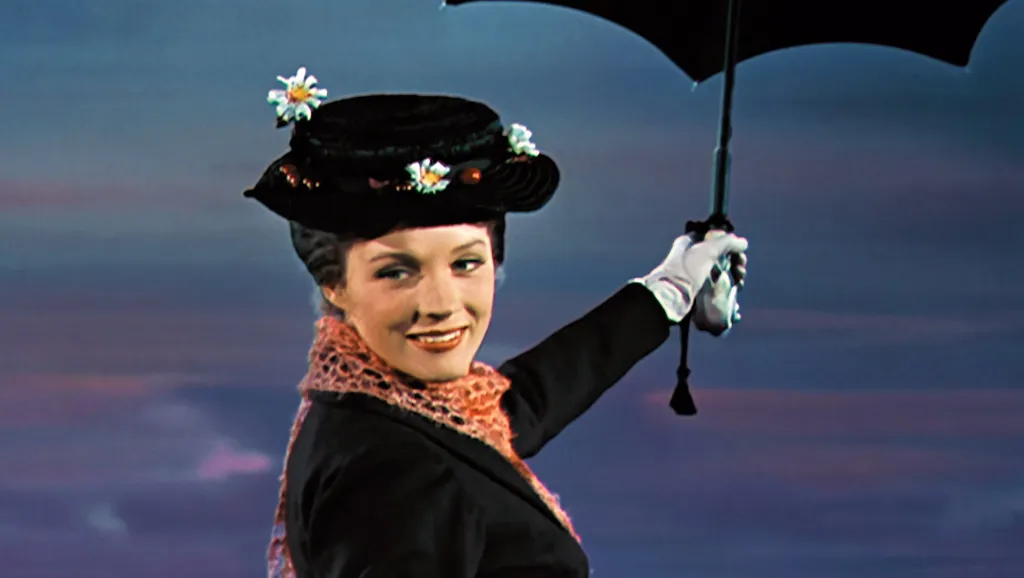
EXCLUSIVE: Here’s a fun one. We can reveal that a Mary Poppins TV series is in the works.
Rather than retelling the Disney film Mary Poppins starring Julie Andrews and Dick Van Dyke from the 1960s, we understand the live action TV adaptation plans to go back to P. L. Travers’ original eight Mary Poppins books and open up the larger, stranger world she created.
The Mary Poppins of the novels is often noted for being more mysterious, mercurial and dangerous than her film incarnation, and the adventures in the books are magical, surreal and sometimes frightening.
The series is being developed and produced by Tom Winchester for Pure Fiction Television, the indie backed by Slow Horses and Heartstopper outfit See-Saw Films and UK talent agency Hamilton Hodell.
Winchester is developing the series on behalf of the trustees of the P.L Travers estate from whom he has optioned the rights. We hear that very early-stage conversations are taking place with Disney, and that Winchester is approaching top level showrunners. As we understand it, the project doesn’t need Disney’s buy-in from a rights perspective, but there’s hope the studio might want to join the project given their history with the IP. Nothing has been agreed to that effect so far. Things are still at pitch stage.
Mary Poppins is a rich IP – Travers’ successful books were most famously adapted by Disney into the Oscar winning musical with Andrews and Van Dyke. But Travers openly critcised Disney’s vision for the 1964 film and their fallout was the basis for the film Saving Mr. Banks starring Emma Thompson and Tom Hanks. Disney’s 2018 sequel, Mary Poppins Returns, starred Emily Blunt and Lin-Manuel Miranda and was directed by Rob Marshall who produced the musical fantasy comedy film alongside John DeLuca and Marc Platt.
Winchester isn’t a stranger to adapting legacy IP. He was a producer on the first season of FX’s Emmy-winning series Shōgun, based on the novel by James Clavell. He is also developing Barry Eisler’s 18 popular John Rain assassin books into a series for Apple TV.
Pure Fiction and Disney declined to comment.
Editor’s note: The Dish is a regular column for Deadline journos to plant their flag in deals, hires and firings and industry developments before they’re fully baked. The column is inspired by Mike Fleming Jr’s longtime trade column of the same name.
>

For more than a century, the American motion picture industry has been an enduring part of our shared experience. Movies bring audiences across the country the unique magic of sitting with their neighbors to see extraordinary stories told on the big screen at their local cinema.
This summer’s strong box office demonstrates once again that Americans still love going to the movies. But that success masks one important truth facing theatrical exhibition today: Over the past six years, studio consolidation, a global pandemic, and multiple labor strikes have all contributed to a long-term erosion of available capital to reinvest in our businesses. For nearly all theater owners, years of lost and disrupted revenue mean that even as audiences are returning, the capital needed for major improvements has not. Thankfully, a bipartisan bill, the Supporting Cinema Renewal, Enhancement, and Enriching Neighborhoods (SCREEN) Act (H.R. 9938), is waiting in the wings. This legislation will have a direct economic impact in all 50 states, and we urge Congress to act.


We are four small business owners who represent this vital piece of the American film industry’s success, and as Congress considers how to restore and strengthen American film, it must ensure movie theaters are part of the solution. We own and operate independent theaters in Northern California, Nashville, rural Montana and Idaho, and America’s oldest drive-in theater in Orefield, Pennsylvania. We are not part of Hollywood, although we’re vital to bringing films to audiences. We are proud Main Street enterprises.
Movie theaters like ours are the economic and cultural cornerstones of communities across this great nation — in all 50 states, in cities and towns, big and small. In some parts of this great country, it is not uncommon for people to drive 50-plus miles to see a movie at our theaters, making it both a gathering place and a driver of economic activity far beyond the doors of the theater. Success at the local theater means additional revenue for surrounding local businesses — shops, restaurants, bars, coffee shops – that benefit from the foot traffic of the local cinema.
Despite the challenges our industry has faced, theater owners across the country — from the world’s largest theater circuits to the family-owned single-screen theaters like ours — are making long-term bets on ourselves and the magic of movies on the big screen. We are reinvesting in our theaters to ensure they remain first-class show houses that movie fans will want to visit again and again. These investments include the industry’s latest advancements in screens, projection, and sound; modern seating; and enhanced concession, dining, and gathering spaces – the kinds of improvements that keep audiences coming back. But there is much more work to be done.
That is why we are grateful to a bipartisan group of leaders in the U.S. House of Representatives who have introduced legislation that will help more movie theater owners make those investments and more movie fans enjoy them. Sponsored by Representatives Claudia Tenney (R-NY), Mike Carey (R-OH), David Kustoff (R-TN), and Tom Suozzi (D-NY), the SCREEN Act is focused and targeted legislation that provides a tax credit for movie theater reinvestment and sunsets after five years. It applies to the modernization and improvement of existing theaters that are five years or older, helping theater owners put private capital to work and securing the future of theaters across the country.
The SCREEN Act does not ask Washington to build or operate movie theaters. Instead, it gives theater owners the help they need to invest their own capital in modernizing existing businesses and strengthening the commercial areas around them. It is exactly the kind of public-private partnership that can have a direct and positive impact in communities of all sizes.
And its impact extends beyond the theaters themselves. When we renovate our theaters, a significant amount of that reinvestment goes to the local contractors who do the work. It goes to suppliers and vendors—typically small or mid-sized companies. And it supports the surrounding businesses that benefit from vibrant, modern centers of community activity and entertainment. For every dollar spent on a movie ticket, an additional $1.50 is spent at surrounding businesses. Simply put, the SCREEN Act will result in more money being spent in Main Street America.
The SCREEN Act also complements recent calls for a production tax credit aimed at keeping more film production in the United States. Modern theaters, serving more communities and driving higher box office, create greater return for the studios, who can reinvest in more home-grown production.
We are proud of the part we have played and will continue to play in the American motion picture industry’s story. The SCREEN Act recognizes that movie theaters matter not only to the future of American entertainment, but to the economic and cultural life of communities across the United States. Congress should pass it and help Main Street theaters write the industry’s next great chapter.
Becky Dupuis is CEO of Polson Theatres, Inc., Polson, Montana (7 locations, 20 screens); Paul Gunsky is president, CineLux Theatres, San Jose, California (8 locations, 62 screens); Lauren McChesney is co-owner, Shankweiler’s Drive-in, Orefield, Pennsylvania (1 location, 1 screen); Stephanie Silverman is executive director, The Belcourt Theatre, Nashville, TN (1 location, 3 screens). All are members of the Executive Board of Cinema United, a trade association representing the global exhibition industry.
>
LeBron signed with 76ers as 'final little piece' to help Joel Embiid win a title

‘The Gilded Age’ Christmas Album Is the Musical Episode Fans Demanded

Politics Home | Trade Unions Call On Burnham To End “Military Collaboration” With Saudi Arabia
-

 movies4 months ago
Search For Canadian TV Actor Stewart McLean Now Homicide Investigation
-

 Fashion9 years ago
These ’90s fashion trends are making a comeback in 2017
-
Fashion9 years ago
According to Dior Couture, this taboo fashion accessory is back
-
Fashion9 years ago
Model Jocelyn Chew’s Instagram is the best vacation you’ve ever had
-
Fashion9 years ago
Emily Ratajkowski channels back-to-school style
-
Fashion9 years ago
9 Celebrities who have spoken out about being photoshopped
-

 Anime4 months ago
Rurouni Kenshin: Hokkaido Arc Manga Takes 1-Issue Break – News
-

 Anime3 months ago
HIDIVE to Stream English Dubs for The World Is Dancing, The Forsaken Saintess and Her Foodie Roadtrip in Another World, The Dangers in My Heart: The Movie Anime – News