
Tech
Last 24 hours to save up to $200 on Disrupt 2026


This is the last 24 hours to save up to $200 on your TechCrunch Disrupt 2026 ticket before prices increase. As our countdown ends, the next reason is all about what can happen when you compress months of research, conversations, and decision-making into three days at San Francisco’s Moscone West on October 13-15.
Register before the clock strikes midnight to secure savings of up to $200. Plus, save an additional 50% when you purchase a second pass of the same type.

Reason No. 5: Momentum.
Building a company, finding your next investment, entering a new market or making a big technology decision takes time. Progress rarely comes from one conversation or one piece of information. It comes from putting enough of the right things together to make the next move clearer. TechCrunch Disrupt brings 10,000+ founders, investors, and operators together in one place. Three days. Hundreds of conversations. One opportunity to move things forward faster.
Gain a year’s worth of connections and insights in three days
Think about everything that can sit on a to-do list for weeks. Research the market. Understand what competitors are building. Find potential investors. Compare technologies. Meet prospective partners. Talk to potential clients. Hear how other founders are approaching the same challenges. Work out which trends are worth paying attention to and which aren’t.
At Disrupt, many of those things can happen side by side. You can move from one of the 250+ sessions on the market where you’re entering a conversation with someone already operating in it. See a new breakthrough on one of the six industry stages, then meet the company building it. Hear how an investor is thinking about a category, then use that insight in your next fundraising conversation. Each interaction can build on the last.

Grab your pass to stay ahead of the tech ecosystem and secure your savings. Savings of up to $200 vanish when today ends.
Leave Disrupt further ahead than you arrived
TechCrunch Disrupt isn’t about trying to solve everything in three days. It’s about creating enough movement that Monday looks different. A meeting becomes a follow-up. A question becomes a decision. A company moves onto your radar. An idea becomes something worth testing. A conversation starts turning into an opportunity. And once things start moving, the next step tends to come faster.
So, arrive with something you want to push forward. A company. A fundraise. A product. An investment thesis. A partnership. A decision. Then use three days to see how much further you can take it.
24 hours left to save up to $200 on your pass
Current TechCrunch Disrupt 2026 ticket savings end when the clock strikes midnight. Register now to save up to $200 on your ticket and get a second ticket of the same type at 50% off. Groups of four or more can save up to 30%.
One day left. Reason No. 5: Build momentum. Leave further ahead than you arrived.

When you purchase through links in our articles, we may earn a small commission. This doesn’t affect our editorial independence.
>

AI needs increasingly powerful chips. But designing those chips is itself a slow, complex process. What happens when AI starts doing some of that work, too?
That’s the idea behind Ricursive Intelligence. The startup is developing AI that can design chips, learn from the process, and improve the next design — potentially accelerating development of the hardware that powers increasingly capable AI.
Today, designing a chip can take two to three years. Recursive wants to reduce that cycle to a matter of weeks.
At TechCrunch Disrupt 2026, Ricursive Intelligence co-founders Anna Goldie and Azalia Mirhoseini will take the Disrupt Stage for “When AI Starts Designing Its Own Hardware.” They’ll discuss closing the loop between AI and chip development, building self-improving systems, and tackling one of the biggest bottlenecks in the race toward more powerful intelligence.

Want to hear from the researchers working to change how AI hardware gets built? Today is the last day to save up to $200 on your Disrupt pass. Secure your ticket by 11:59 p.m. PT — and get a second pass for 50% off select ticket types.
What happens when AI designs the chips that power it?
Goldie and Mirhoseini have already shown that AI can play a significant role in chip design. Before founding Ricursive Intelligence, the pair co-led AlphaChip at Google, an AI system that could generate chip layouts in hours rather than the much longer process required of human designers. Their work helped design multiple generations of Google’s Tensor Processing Units.
Ricursive Intelligence is taking that concept further, building AI tools to automate and accelerate chip design. Its system is intended to learn across different chips, so the experience of designing one can improve how it approaches the next.
That creates a potentially powerful loop: AI helps design better hardware, better hardware supports more powerful AI, and those systems can then help develop what comes next.
What could that feedback loop mean for the next generation of AI? Secure your Disrupt pass with up to $200 in savings and hear directly from the founders working to build it.
From AlphaChip to a $4 billion startup
Goldie and Mirhoseini also co-founded Google’s ML for Systems team. Both were early employees at Anthropic and senior staff research scientists at Google DeepMind.
Goldie, Ricursive’s founder and CEO, holds a Ph.D. in computer science from Stanford and was named one of MIT Technology Review’s 35 Innovators Under 35. Mirhoseini, founder and CTO, is an assistant professor of computer science at Stanford and founder of its Scaling Intelligence Lab.
They launched Ricursive in late 2025, and investors moved quickly. Within four months, the company had raised $335 million at a $4 billion valuation, including a $300 million Series A. Nvidia is among its investors.
Ricursive wants AI to automate more of the complex chip-design process, from component placement through design verification, and learn across designs as it goes. By accelerating chip design, Goldie and Mirhoseini believe they can open the door to new chip architecture and ultimately more capable and efficient AI.
See where AI and hardware development could be heading next. Register for Disrupt to hear Goldie and Mirhoseini discuss the technology, bottlenecks, and self-improving systems behind Ricursive’s approach.
How fast can the AI-hardware loop move?
AI models have advanced rapidly, but the hardware underneath them operates on a different development cycle. Ricursive is betting that AI can help narrow that gap.
At Disrupt, Goldie and Mirhoseini bring the perspective of researchers who helped prove AI could design real-world chips and are now building a company around taking that idea further. For founders, investors, and technology leaders, it’s a chance to understand why the speed of chip development could play a major role in what AI can do next.
Their session is one of 200+ sessions across six industry stages, roundtables, and breakouts at Disrupt, October 13–15 at Moscone West in San Francisco. More than 10,000 founders, investors, operators, and tech leaders are expected, along with 250+ speakers and 300+ exhibiting startups. Beyond the agenda, matchmaking, dealmaking, and networking create opportunities to connect with the founders, investors, and builders shaping what comes next.
Today is the last day to save up to $200 on your Disrupt pass. Secure your ticket before midnight PT — and get a second pass for 50% off select ticket types. Hear Goldie and Mirhoseini on the Disrupt Stage to learn what happens when AI starts helping design the hardware that powers it.

When you purchase through links in our articles, we may earn a small commission. This doesn’t affect our editorial independence.
>
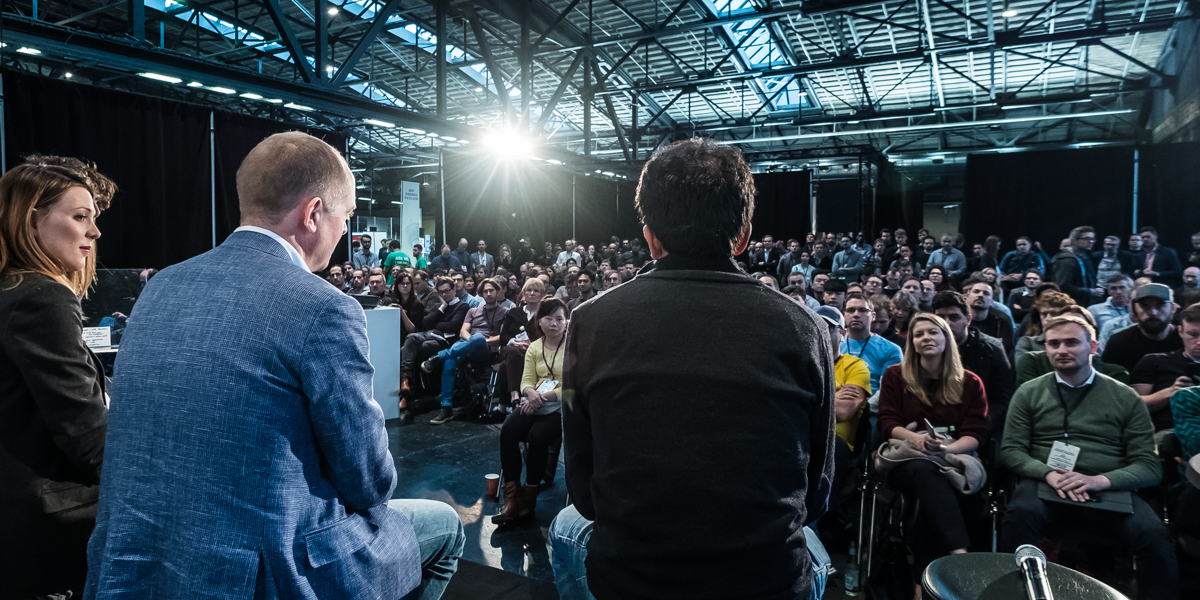
If you’ve been laid off, you can get a TechCrunch Disrupt 2026 Expo+ Pass for just $75. The offer is limited to the first 100 qualifying people, or until Disrupt doors open on October 13 at 8 a.m. PT. Once all 100 passes are claimed, the offer is no longer available.
Join 10,000+ founders, investors, operators, and tech leaders at San Francisco’s Moscone West on October 13-15, and put yourself back in the room where new opportunities are taking shape. Meet companies and people who could help open your next door, build your network, discover new career paths, and get a closer look at what’s happening across the startup and tech ecosystem.
Don’t let a layoff keep you on the sidelines. Come to Disrupt, meet new people, explore new opportunities, and take your next step. Grab your Layoff Expo+ Pass before all 100 are claimed, or by the time Disrupt kicks off on October 13.
Your next job opportunity could be one conversation away at Disrupt
When you’re in between jobs, networking can feel like another job. Disrupt gives you three full days to make meaningful connections in one place.

Meet companies and discover opportunities
At the center of Disrupt is the Expo Hall, where all 10,000+ attendees converge — founders, investors, tech leaders, innovators, and builders. Explore 300+ exhibiting startups, connect directly with founders and tech leaders, learn about new companies, and put yourself in the room for your next career opportunity.
Build your network
You don’t have to wait until Disrupt to grow your network. Start networking as soon as you buy your ticket and download the TechCrunch Events app. Use the app’s AI-powered matchmaking to discover relevant people and make connections based on your interests and goals. Then take those connections offline through 1:1 meetings, conversations in the Expo Hall, and events throughout Disrupt.

Learn what’s next in the startup ecosystem
Get practical insights through breakout sessions and get your questions answered directly by the tech leaders shaping the startup and technology landscape. Take what you learn back to your job search, your next interview, or your next career move.
Get out of the job-search loop
Disrupt isn’t just about finding an open role. It’s a chance to meet people you wouldn’t encounter through a job board, learn about companies before you apply, and put yourself in conversations that can lead somewhere unexpected.

What your $75 Layoff Expo+ Pass includes
Your Expo+ Pass gives you access to:
- Expo Hall — Explore potential career opportunities as you meet startups, companies, and innovators at the heart of Disrupt, where 10,000+ tech leaders converge to discover 300+ exhibiting startups.
- Breakout Sessions — Learn from industry experts and gain practical insights through panel sessions, with an opportunity for Q&A.
- AI-powered matchmaking and ad hoc meetings — Use the TechCrunch Events app to discover relevant people and connect with them through 1:1 meetings. Or strike up a random conversation with anyone at the venue.
Learn more and secure your pass before they’re all claimed.
Looking for more at Disrupt?
The Expo+ Pass is designed to help you get into the heart of Disrupt, but it does not include access to industry Stages and roundtable sessions.
Want the full conference experience? Explore our other ticket options for access to additional Disrupt programming and experiences.

When you purchase through links in our articles, we may earn a small commission. This doesn’t affect our editorial independence.
>
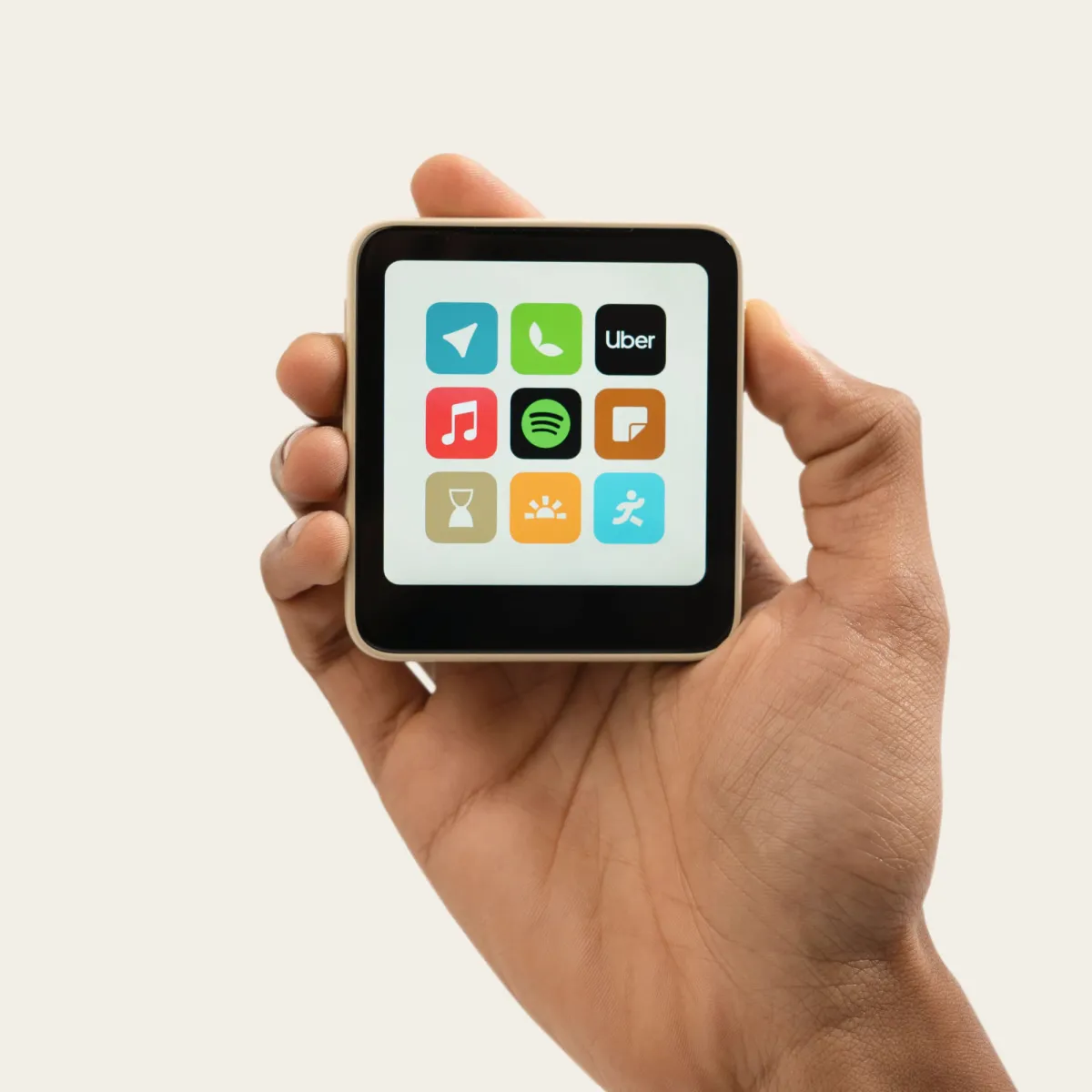
I held my breath as I walked into the concert venue and showed the bouncer a ticket barcode on a three-inch, square screen.
“If it doesn’t go through, I can try something else,” I said quickly, worried that the barcode wouldn’t work. But just as Meadow founder Shreyas Narlanka promised me, the code I scanned onto the startup’s minimalist phone earlier that day worked fine.
“Cool phone,” the bouncer said, ushering me inside.
I’d done it. With Meadow’s barebones smartphone, I had called an Uber, streamed Apple Music during the ride, and entered the show. Not once did I need to touch my iPhone, which I only brought with me as a backup in case the ticket scan didn’t work.
“With so many dumb phones, the Brick, and everything, the messaging is like, ‘Slow down, focus on your work’ or whatever,” Narlanka says, explaining why his company chose to build a minimal phone. “But the reason we’re different is because we’re all about getting outside and unplugging and having a sick social life.”

Go online, and you’ll see a growing mass of content and comments from people across the world feeling suffocated by being constantly connected via their smartphones and social media feeds. That’s resulting in a new device category that promises a reprieve. Some of these devices, like the Light Phone, require users to completely give up their smartphone and switch to a simpler device. Others, like the Wisephone, offer a modern touchscreen device with a minimal UI and a few apps. Still others are embracing more tactile form factors, like the Commodore Callback, which is a flip-phone with a touchscreen.
Meadow, meanwhile, is taking the middle road, intending to simply supplement your existing device. It runs Android, and so supports apps like Maps, Strava, Uber, Apple Music and Spotify. It also has native apps for utilities like the camera, voice memos, notes, camera, text, calling, location sharing, and ticket scanning. It also supports Bluetooth, and you can connect 3.5mm headphones to it using a USB-C-to-3.5mm adapter.
“I knew there were going to be times where I needed my phone,” Narlanka said. “I didn’t want a full replacement.”
You can’t make calls and send texts with your usual phone number, though — you’ll have to set up a new plan through a subscription plan with Meadow, which gives you a separate number to use while you’re on the go.
Narlanka recommends his customers take advantage the iPhone’s “driving” focus feature, which by default tells your top contacts that you’re on the road — instead, he says, you can customize the text to say you’re out with the Meadow. This way, you might miss the latest chatter in your group chats, but if anyone needs to contact you urgently, they’ll still be able to reach you.
“We’re not Luddites that are going to be like, ‘Streaming’s bad, and this is bad,’” he said. “It’s just we don’t want social media, browsing and that kind of stuff.”
This sentiment has become an increasingly common one. People talk about reducing their screen time as something that’s universally assumed to be good for you, like eating vegetables or flossing. Even ADÉLA, the artist whose concert I attended, used her manager’s phone to publish a celebration post after her debut album hit number four on the Billboard charts.
“I have deleted social media because i want to stay sane!” the 22-year-old pop star wrote on Instagram.

Her fans don’t feel the same way — I saw several people recording the entire show on their iPhones. (There’s nothing wrong with snapping a few photos or a short video for Instagram, but an entire show?)
Speaking of cameras, the one on the Meadow worked well when out and about during the day, the pictures weren’t great when I tried using it to take photos at the concert.
The camera app also works differently from your usual smartphone fare: You can take as many photos and videos as you want, but you can only see your photos once you get home and use the Meadow app from your main smartphone. And instead of a front-facing camera, Meadow has a tiny mirror beside the camera lens so that you can make sure you’re in the frame of your selfies.
The screen brightness and battery weren’t an issue when taking the Meadow around — if anything, the display can sometimes be a bit too bright in low-lit areas, but that meant it was always very visible outdoors.
In your hand, the small, square device feels a bit unfamiliar, though it does feel functional enough. This isn’t a device that Meadow wants you to use constantly, so it’s not a problem that it feels less comfortable than an iPhone.

Meadow is still new; it’s only shipped its first bulk batch to pre-order customers so far. I ran into some small issues, too, like a glitch that showed my Uber ride had not ended for a while after I left the car (for a second I worried I had accidentally ordered a second Uber). Narlanka tells me, though, that this bug has been fixed now.
Overall, if you can handle the discomfort of managing a second phone number, Meadow works well as a device that helps you disconnect without leaving you fully off the grid.
Though Narlanka is only 25-years-old, Meadow isn’t his first startup. He dropped out of UC San Diego in 2020 when his last company, Scoutapp AI, started gaining traction. The inventory management platform for online businesses ended up being acquired by fashion resale platform StockX.
Meadow is Narlanka’s first attempt at making hardware, though his previous success has earned him backing from investors. The company raised funding in December 2024, led by Alana Goyal of basecase capital. Angel investors Terrence Rohan, Discord’s founding CMO Eros Resmini, Vercel founder Guillermo Rauch, and Diagram founder Jordan Singer also participated.
When you purchase through links in our articles, we may earn a small commission. This doesn’t affect our editorial independence.
>

James Talarico Leans Into Endorsement From Bill Nye

Man City 115 charges: What could the potential sanctions be?

Ricursive Intelligence’s co-founders join Disrupt 2026
-

 movies4 months ago
Search For Canadian TV Actor Stewart McLean Now Homicide Investigation
-

 Fashion9 years ago
These ’90s fashion trends are making a comeback in 2017
-
Fashion9 years ago
According to Dior Couture, this taboo fashion accessory is back
-
Fashion9 years ago
Model Jocelyn Chew’s Instagram is the best vacation you’ve ever had
-
Fashion9 years ago
Emily Ratajkowski channels back-to-school style
-
Fashion9 years ago
9 Celebrities who have spoken out about being photoshopped
-

 Anime4 months ago
Rurouni Kenshin: Hokkaido Arc Manga Takes 1-Issue Break – News
-

 Anime3 months ago
HIDIVE to Stream English Dubs for The World Is Dancing, The Forsaken Saintess and Her Foodie Roadtrip in Another World, The Dangers in My Heart: The Movie Anime – News