
Anime
Episode 12 – Smoking Behind the Supermarket with You

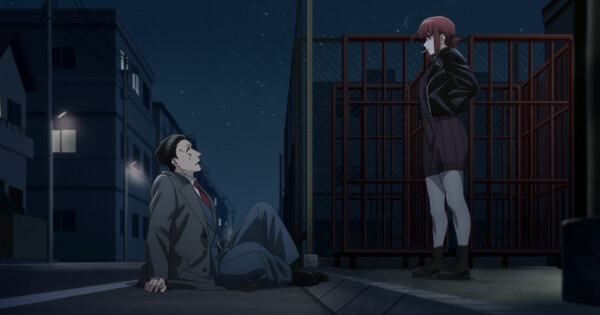

© Jinushi/SQUARE ENIX,Smoking Behind the Supermarket with You Production Committee
The final episode of Smoking Behind the Supermarket with You isn’t necessarily bad, but does double down on some narrative and character attributes that feel pretty secondary to where the story and characters are at the end of this first season.
Beginning with Sasaki’s work year kicking off, he receives an invitation to meet up from his former mentor who’s staring down retirement. This invitation clearly weighs on Sasaki, as he’s even more distracted and clumsy while navigating his daily life than usual. Tayama/Yamada confronts him about this development, first in Yamada then in Tayama-mode, and Sasaki reveals that he doesn’t want to see his former mentor out of some vague sense of guilt or not being good enough to meet with the man. This, understandably, upsets Tayama/Yamada who pushes him out of the smoking area and tells him to get his shit together. Sasaki then heads to Hokkaido to meet with his mentor, the two hit it off, and then Sasaki and Tayama/Yamada have a cute, post-credits hangout to bring the season to a close.
While I do understand that Sasaki’s mentor was set up previously in the season with Sasaki talking about a former coworker that gave him his treasured watch, I didn’t need this season to end with Sasaki getting pushed out of his comfort zone and getting a confidence boost in the process. While I understand that it is difficult for a lot of people to accept that they are loved by others and allowed to take up space in their lives, that part of Sasaki’s growth was already being explored in him and Tayama/Yamada growing closer throughout the season. This storyline would have worked a lot better and been a lot more affecting if it happened in the first half or even two-thirds of this season, but as it stands it kind of feels like a detraction from the core relationship that’s been driving this show so far.
I know the Smoking Behind the Supermarket with You manga is still ongoing and, to the best of my knowledge, Sasaki and Tayama/Yamada haven’t done a love confession or started dating yet, but with so much of this season building their dynamic and a whole destined lovers thing with Sasaki previously inspiring Tayama/Yamada when she was first stating her career I really would have liked to see some kind of payoff here! Even if the themes and takeaways from this episode are good and important for people to learn, I’m growing tired of this perpetual will-they-won’t-they romance. This finale does not undo any of what made this season so special, but I’m now less excited if the story is just going to keep introducing tangents rather than escalate and explore the relationship driving it.
Rating:
Lucas DeRuyter is your one stop shop for smoking hot anime takes, and you can read the best of those by checking out his portfolio. You can also catch him filling a double shift as a columnist for ANN’s recurring This Week in Anime segment, where he shares his insights into that week’s news, trends, or special topics.
Smoking Behind the Supermarket with You is currently streaming on
Crunchyroll.
The views and opinions expressed in this article are solely those of the author(s) and do not necessarily represent the views of Anime News Network, its employees, owners, or sponsors.
>

Welcome back, folks! Gigi Murin has had her annual September 21st meltdown, so that means we’re officially in Autumn. It’s already starting to get overcast on a regular basis in my city. Weirdly, most of the leaves haven’t turned yet. I’m not exactly looking forward to how drafty my room is, but at least Retro Game Expo is around the corner… Also, shout-out to Coop and Chris for the shout-out in yesterday’s This Week in Anime. It never ceases to warm my heart when people associate things with me.
This is…

Choice News from Tokyo Game Show 2026
Well, that’s another Tokyo Game Show done. That’s pretty much the kibosh on new game announcements until The Game Awards this December. But we had some pretty big drops this time around! Even if TGS’s fifth and final day had to be cancelled due to inclement weather (read: a freaking typhoon; I can only hope nobody got hurt). A lot of the announcements and trailers were for games we already knew, so we’ll stick to the new stuff.
In news that’ll definitely mean a lot to old-school RPG fans, Clear River Games announced a collection of the first two Lufia games! Lufia is a cult-classic RPG series, a distant fourth-place to even classics like Breath of Fire. And not for lack of quality; the games were just few and far between. The last Lufia game was Curse of the Sinistrals on the Nintendo DS back in 2010—and that one reimagined the second game as an action RPG. Anyway, the first two Lufia titles encompass an ongoing arc of brave heroes and their descendants battling evil demigods known as the Sinistrals. The first game tells the story of a group of descendants of the famed heroes who have to defeat the resurrected Sinistrals; the sequel is in fact a prequel, and tells the tragic, doomed story of the original heroes’ last stand.
So far, Clear River Games (who you may remember as also working on the upcoming Terranigma port) has promised some “modern enhancements” for the Lufia games, but what those are has not been clarified yet. Considering what they’ve promised for Terranigma, I doubt it’ll be anything drastic; a bit of accommodation for modern displays, fixed menus, maybe quicksaves, that sort of thing. Fixed translations would also be a plus; the first two Lufia games were translated by Taito America and Natsume, respectively. And while those translations aren’t particularly bad, they’re not exactly Squaresoft-caliber either. (Especially not Natsume’s work on Lufia II.) Also somewhat disappointing is that this only covers the first two Lufia titles; while plans for a third Lufia game on PlayStation 1 never materialized, later Lufia games did come to the Game Boy Color and Game Boy Advance. You didn’t even have to include the Nintendo DS remake. Still, it’s great to see Lufia back. We can look forward to these games in 2027.
【#TGS2026 試遊タイトル①】
『闘神伝』
※『闘神伝COLLECTION(仮称)』より3D対戦型格闘ゲームとして発売され、世界的にも大ヒットとなった「#闘神伝」が現行機種で復活!
画面を共有しながらの複数人プレイにも対応しています。
レトロゲー・格ゲーファン必見!#エディア pic.twitter.com/V4jgKJz9BJ— エディア ゲーム総合【公式】 (@edia_game) September 16, 2026
The next two ones don’t have dedicated trailers, but they’re also revivals for classic game franchises. Edia announced a collection for the Battle Arena Toshinden games, an old series of 3D fighting games that had their heyday on the original PS1. The Toshinden games were 3D weapons-based fighting games. While Tsukasa Kotobuki‘s designs for the original games are extremely of-their-era, those games were pretty much the king of the mountain, beating Tekken to the PS1 by a scant three months in 1995. The series has its fans, sure… but even with a fourth numbered title releasing on the PS2, the Toshinden games didn’t quite have the same legs as Tekken, especially when Soulcalibur came onto the scene on the Dreamcast and set the bar for what a 3D weapon-based fighting game could do. With that said, Edia’s Toshinden collection will only collect the first three numbered titles—so that fourth PS2 game is left out. What’s worse, this also leaves out spin-offs and updates like the Game Boy Battle Arena Toshinden, Battle Arena Toshinden URA, or the Toshinden reboot that released on the Wii. So while this is a nostalgic collection of classic 3D fighters, it’s far from comprehensive… this one also arrives in 2027.
Edia also announced a new two-fer pack featuring the PC Engine versions of Dragon Slayer: The Legend of Heroes I and II. We’ve talked about the complicated history of Nihon Falcom’s landmark RPG series before, but to sum it up: Dragon Slayer was a landmark title for them and the first action-RPG ever made. Subsequent Dragon Slayer sequels expanded upon the formula and became spin-off series in their own right, including games like Sorcerian, Xanadu… and The Legend of Heroes, which itself spawned the beloved Trails spin-off series that’s still going to this day. While we don’t know which consoles this collection will land on, we know that they’ll add limited voice acting during “select scenes.” Considering the runaway popularity of the Trails games, a glimpse into the past of the illustrious RPG series will be much appreciated.
Up next is a new action-RPG, Edge of Memories. A co-production between a French dev team and Japanese developers, this game has warriors fighting off an encroaching corruption afflicting their land while also struggling with their own internal corruption. The trailer features Japanese dialogue, which comes from a number of noted seiyuu (none of whom are listed anywhere). But it also features music from Yasunori Mitsuda, whom you can’t go wrong with. Edge of Memories leans much harder into traditional Japanese stylings than Expedition 33, but it takes more than just art to make a good RPG… France loves anime a ton, though (as seen with the likes of Wakfu, Dofus and Code Lyoko), so I’m interested in seeing how a French/Japanese co-production works out in terms of a game. Look forward to it this November 5 on PS5, Steam and Xbox Series X|S.
【速報】
家庭用ゲーム移植
『ドリームクラブZERO R+』
🎉🎉 2027年 新装開店 🎉🎉新たなホストガールも入店決定🥂
キャラクターデザインはもちろん森沢晴行さんです。
続報をお楽しみに!#dreamclub #D3PTGS2026 #TGS2026 pic.twitter.com/pDj6BndWZU— ドリームクラブ開店準備スタッフ (@DCC_OP_Staff) September 20, 2026
Finally, a game I’m astonished to see return: Dream Club! The Dream Club games premiered on the Xbox 360 way back in 2011—utterly wild to think about, considering Microsoft‘s failure to properly develop a Japanese audience over the years. (For the record: The Idolm@ster also had its first home-console release on Xbox 360.) The idea is rather simple: you play as a gentleman who’s invited to spend time at the Dream Club hostess club, where you can drink and schmooze with several archetypal anime girls. It’s not all cutesy faces, though; you spend your days working various day jobs to earn money to impress your chosen hostess. You also need money to buy them the right gifts, as well as succeed at a variety of mini-games. Later games added extra paramours or the addition of cutscenes of the girls eating foods suggestively. But the Dream Club games otherwise didn’t last long past 2014. True story; I had originally thought that the Bunny Garden games were some kind of continuation or spin-off of the Dream Club games! Bunny Garden has its fair share of fans in today’s day and age (I’ve got the second game on my shelf and would like to get around to it sooner or later). I’d like to think that fans would be interested in checking out a sorta predecessor, especially since it feels like the bishoujo community only really follows the new hotness. Dream C Club Zero R+, as this new game is called, comes out next year and features three new paramours to woo, all drawn by series artist Haruyuki Morisawa. No word yet on an American release, but I’d like to think we’ll get it stateside; the Bunny Garden games have a decent audience in North America, after all.
30 Years of Resident Evil
Resident Evil celebrates its 30th anniversary this year! We’re a bit behind; while these are horror games, they had a Spring release back in 1996. But Resident Evil has gone on to be a pillar of survival-horror—and how. So let’s take a moment to look back on the history of the franchise!

© Capcom
Quite famously, Resident Evil‘s origins don’t lie with action games. Rather, it lies with an old licensed RPG on the Famicom. We’ve talked about Sweet Home before, a 1989 game based on a Japanese horror film of the same name. Here, a quintet of filmmakers working on a documentary are trapped in a haunted mansion and must solve the mystery behind the curse left behind by the late artist’s wife. Sweet Home was a precursor for survival-horror games; while it was a turn-based RPG, the rules were extremely strict: characters didn’t gain experience points, so any armor or weapons you found were your only means of getting stronger. Health was also at a premium; while any potion could heal your entire party at once, there were only so many of them to be found in the mansion. There was a very real chance of being left without any way to heal at all. Each of your five characters was also important for progression, carrying tools with which to engage with the world. Burning obstacles with a lighter, healing poison with a first-aid kit, using a vacuum to clean up debris, a lockpick, and a camera for uncovering hidden messages from frescoes were all vital to progressing and solving the game’s mysteries. But each of your five characters could die permanently, and your ending changed depending on how many survivors escaped the mansion. Moreover, you couldn’t travel with all five characters at once; your party would be split, and could potentially split further between each of your five characters. This would prove to be vital, since your secondary characters could be called upon to help the main party in difficult fights—assuming you could traverse the mansion with them and get to the right room in time. There were also more than a few lethal puzzles that required a secondary party to rescue the first from some kind of gruesome death.
Sweet Home was never released outside of Japan, for fairly obvious reasons; even without it being a licensed game for a movie never released abroad, it was too gory for Nintendo of America. But director Tokuro Fujiwara would later revisit the idea in the mid-’90s for a new horror game, a 3D survival-horror game set within a mysterious mansion. And that game was Biohazard—localized as Resident Evil in international markets.
Resident Evil told the story of a commando team investigating a string of gruesome murders in Raccoon City. Their investigation leads them to a mysterious mansion on the outskirts of town that’s crawling with zombies and other weird critters. Fujiwara, who served as general producer for Resident Evil, borrowed and expanded a few ideas from Sweet Home. Obviously, there’s the spooky mansion, but you need a good spooky mansion for a horror game. More important were the diverging characters and their abilities; your two lead characters were Jill Valentine and Chris Redfield. Jill was slightly weaker than Chris, but she could carry more items and had a knack for lockpicking. Chris could use heavier firearms, but couldn’t carry as many items as Jill. The result was a completely different gameplay experience between the two, with Jill and Chris forced into different sections of the mansion.

© Capcom
Resident Evil also operated under some strict rules. For starters, there were the tank controls and the fixed camera angles around the mansion; players had to be very cautious and deliberate as they explored the mansion, as zombies could swarm them easily. For another, ammo was very limited; it was important to determine when it was best to engage and neutralize enemies and when it was best to just run. But the entire game ran on tension, building it further and further until the climax; at first, zombies around the corner were the worst you could deal with. But you also had to make sure zombies stayed down, as some liked playing possum. Later sections of the game forced you to be extremely cautious as you carried high-explosives around, as getting attacked or even running could blow Jill or Chris up. But it was all worth it to blow a fearsome Tyrant to Kingdom Come with a rocket launcher, just in time to hitch a ride with a helicopter and blow the mansion sky-high.
Resident Evil saw several remakes—all the way onto the Nintendo DS, even. It was a huge success, in no small part due to its great use of tension and effective scares. But gruesome as it was, the camp was on full display; a mansion revealing an evil laboratory dedicated to using a virus to turn people into zombies as part of a bid to create bio-weapons was already a lot. The zonky voice acting didn’t help, or the zombies being extremely George Romero-esque. But all in all, Resident Evil was an unmitigated success. CAPCOM tried replicating its success with Dino Crisis, and even Squaresoft would turn its “cinematic RPG” Parasite Eve into more of a Resident Evil-inspired shooter, but CAPCOM would continue to expand on Resident Evil with myriad sequels.
Resident Evil 2 continued the first game’s strict rules (scarce ammo, plentiful enemies, dual characters), but expanded the setting from a spooky mansion to a city overrun with zombies. It also took a unique idea from Sweet Home in allowing players to “jump” between protagonist Leon S. Kennedy’s and Claire Redfield’s perspectives, while also transferring items. This was called the “zapping” mechanic. And then there was Mr. X, a juggernaut of an enemy that would chase you down at certain moments. Mr. X was expanded further in Resident Evil 3: Nemesis, with the literal Nemesis, who chased Jill down around Raccoon City even further. Plenty of spin-offs followed, like a Game Boy Color Resident Evil that used a clever timing mechanic to land headshots on zombies; Resident Evil: Code Veronica, which focused on Claire’s continued adventures against creepy twins; and Resident Evil 0, which also explored the dual-protagonist set-up.
Resident Evil 4 marked a huge leap forward for the games. As opposed to using the series’ traditional fixed viewpoints and tank controls, it shifted to an over-the-shoulder perspective. Scarce ammo was still the order of the day, but there was a much campier action streak to the game; Leon could shoot enemies in the arm to disarm them, shoot thrown projectiles out of the air, or stun enemies with a shot to the leg before finishing them off with a bicycle kick. Also, he had lots and lots of hilarious one-liners. We know them all: “Your arm comes off?” “Having a senior moment, Salazar?” and so on. It was a tremendous shock to horror games at large, and all manner of games that came in the wake of Resident Evil 4 went for an over-the-shoulder style, from Cold Fear to Dead Space. But the focus on action came at a cost… Resident Evil 5 tried to amp up the action by making itself more of a dedicated co-op action game, teaming up Chris Redfield (and his expanding gorilla arms) with Sheva Alomar as they took on more bio-weapons in Africa. And making a horror game isn’t very easy when you’re playing with friends, which Resident Evil 5 really expected you to do. Adding to this was the cheese factor. As much as I love Wesker’s shenanigans, it’s hard to actually take Resident Evil 5 as “scary” when Wesker is basically a cackling supervillain with superpowers. And that’s before you get to Resident Evil 5‘s extremely fraught depictions of local Africans.

© Capcom
Which brings us to Resident Evil 6. Bringing back a who’s-who of Resident Evil protagonists along with a handful of new characters (Leon, Chris, Sherry Birkin, Ada Wong, “Agent” and Jake Mueller), Resident Evil 6 turned the action and bombast up to 11. Hey, it was 2013; the “zombie” craze in pop culture was at its most annoying peak, 28 Days Later had firmly established “fast zombies” as the norm, and everyone was chasing the perceived “fast money” from multiplayer games. So Resident Evil took a nap for four years until Resident Evil 7 in 2017. And again, it was a major departure for the series: it was a first-person game starring a new character, Ethan. And it was very clearly taking cues from the beloved Guillermo del Toro/Hideo Kojima collaboration, P.T. But—it was scary, gruesome, and forced you to be careful walking around corners. Its sequel, Resident Evil: Village, upped the ante with werewolves and psychics and weird blob-babies, but the emphasis was on Ethan being very out of his depth (if not hopelessly clumsy—that poor arm of his…).

© Capcom
And that brings us to Resident Evil: Requiem, the ninth numbered game in the series. It just came out this February, and it’s fantastic. In a lot of ways, it mixes the best of post-4 Resident Evil with the best of the first three games. You’ve got the differing perspectives between Grace and Leon, with Leon having better combat abilities but Grace having a tenser survival experience. You’ve got an over-the-shoulder perspective… but you can also tailor the game to a first-person perspective. Ammo, especially for the lethal screen-clearing Requiem pistol, is scarce, requiring you to be intelligent and craft new ways of dispatching enemies. CAPCOM has put a lot of effort into remaking a lot of their past Resident Evil games, and their efforts are a bit all over (2‘s remake was great, but Nemesis wasn’t as drastic an improvement). Folks are still looking forward to that Code Veronica remake, whose release date is still up in the air.
Also, I’m not one to normally discuss technical stuff, but a lot of credit is owed to the RE Engine CAPCOM developed for Resident Evil 7. It’s been CAPCOM‘s engine of choice for their titles since, including Street Fighter 6 and Monster Hunter Wilds. And it’s not even a dedicated Resident Evil engine; the “RE” stands for “reach for the moon” (hence why the logo is a hand). Again, I lack the technical know-how to really go into why the RE Engine is so great, but it’s been a beast of an engine for years now, and you can bet that it’ll definitely lead to great CAPCOM games in the coming years.
Trio of Titles Get VR Ports for Meta Glasses
Virtual reality is… well, folks are trying to make it A Thing™. If there’s ever been a medium that’s been positively decimated by the rising costs of consumer electronics (no thanks to generative AI), gaming is one of them. And virtual reality is a specialized section of our gaming ecosystem that’s been hit particularly hard. You need specialized gear for it, which is pretty expensive. And once you do get it, there’s not much to do; there are a handful of very-supported programs like VR Chat that allow for the use of VR, but there hasn’t really been a killer app besides Half-Life: Alyx to really make VR the breakout it’s hoped it could be. But we can, at least, get some games made for the platform; this week saw the reveal of Meta’s (née Facebook) Meta Glasses. And with the Meta Glasses comes hardware meant to support it; at least three games are planned for the platform.
The titles announced are Phoenix Wright: Ace Attorney – Dual Destinies VR, Story of Seasons: Your Wonderful Life, and Tetris Effect: Mixed Realities. Not quite the biggest of high-profile properties, but between Phoenix Wright and Story of Seasons, you’ve got a reasonably-sized net to cast to get folks of varying tastes involved. Dual Destinies VR‘s trailer shows players using gestures to make all of Phoenix Wright’s memetic “OBJECTION!” and “TAKE THAT!” calls during cases, while also allowing the usual VR pleasantries of looking around the courtroom in real-time or exploring actual case sites in VR. Story of Seasons‘ take on A Wonderful Life has players treating the game as an interactive diorama, using their hands to lift houses open and interact with their crops and characters. It’s also based on A Wonderful Life, if the title didn’t make it obvious, which is one of the more popular entries in the series. And Tetris Effect is… well, it’s Tetris.
I’m not too surprised that Phoenix Wright is making a swing at VR. While the original games were on Game Boy Advance, the DS entry (which was the first game released in North America) experimented with using the DS’s interactive features like the touchscreen or microphone to interact with cases. So this kind of experimentation is actually par for the course for this series. And Tetris 64 experimented with a Bio-Sensor that could affect the game’s difficulty depending on the player’s heart rate, so experimentation is nothing new for Tetris either. I think the biggest issue is that none of these are games that you’re that hard up for playing on other platforms that won’t run you US$1,200. That’s two and a half Switch 2s, for people keeping track. Not to mention, it’s from Meta, and folks might recall Mark Zuckerberg’s embarrassing attempt at shoehorning the world’s lamest VR world via the Metaverse, which the Zuck believed in so strongly that it led to Facebook getting its name changed.
My VTuber community has monthly virtual meet-ups we hold in VR Chat. Not everyone in the community owns VR headsets, since they’re prohibitively expensive and still inconvenient to set up. So most people (including myself) just participate on desktop, with no major inconvenience. A few of the folks in the community are pretty neck-deep in the VR enthusiast community, keeping up with VR worlds and avatars and all of the latest updates. And they get very mad when I say that I believe VR in its current state will never go beyond a small field for enthusiasts, along the lines of ham radio. Sure, the tech is getting “cheaper”… but it still costs about the same as a gaming console. And you still have to contend with the space issues for VR. With fewer people than ever owning their own houses or even a reasonable studio apartment, VR requires a lot of investments that not everyone can afford. And that’s before you get to the simple truth that there isn’t a lot of hardware that takes advantage of it, besides Half-Life: Alyx and a lot of very ambitious VR mods for games not originally designed for them. Can VR ever catch on? Maybe if the tech becomes cheaper (at this rate, I don’t think it will be in the near future). Maybe if and when the tech isn’t as bulky and temperamental. And even then, it’ll have to contend with lots of people being innately incompatible with it because they’re susceptible to getting motion sick, which no price point or tech bulk can ever fix. I give Meta credit for trying to get some games involved, but when the next great AI ice age comes along, it may take VR with it.
Let’s wrap up with some quick tidbits:
That’ll do it for this week. Currently, I’m hard at work on another game review; I’m hoping folks look forward to this one, especially since it’s my first time actually getting to try this game out for myself. Be good to each other; I’ll see you in seven.
This Week In Games! is written from idyllic Portland by Jean-Karlo Lemus. When not collaborating with Anime News Network, Jean-Karlo can be found playing Japanese RPGs, eating popcorn, watching VTuber content, and watching tokusatsu. You can keep up with him at @ventcard.bsky.social.
The views and opinions expressed in this article are solely those of the author(s) and do not necessarily represent the views of Anime News Network, its employees, owners, or sponsors.
>
Anime
That Time I Got Reincarnated as a Slime Season 4 Anime Returns for 3rd Part in July 2027, Clayman’s Revenge Spinoff Anime Debuts in April – News

The staff for the fourth That Time I Got Reincarnated as a Slime (Tensei Shitara Slime Datta Ken) anime season revealed on Friday that the anime will return for its third cours (quarter of a year) in July 2027. In addition, the staff revealed that Wataru Kajika‘s That Time I Got Reincarnated as a Slime: Clayman’s Revenge (Tensei Shitara Slime Datta Ken: Clayman Revenge) spinoff manga will get a television anime that will debut in April 2027.
Takehito Koyasu is returning to the franchise to voice Clayman.

©カジカ航・伏瀬・講談社/クレイマンR製作委員会
Kentarō Sugimoto (episode director for Blue Lock, Laid-Back Camp TV 3) is directing the spinoff anime at 8-Bit. Yūji Haibara, who handled graphic design for previous entries in the franchise, is overseeing the series scripts. Asumi Hashimoto (sub-character design for The irregular at magic high school TV 3) and Hideki Sakai (chief animation director for previous entries in the franchise) are designing the characters.
Kajika launched the spinoff manga in April 2022. Kodansha‘s K MANGA service is releasing the manga in English digitally, and it describes the story:
After that final scream rang out during the Walpurgis Festival, the dreams of the Marionette Master were thought to be done for good. But either through the vagaries of fate or the decision of the world at large, Clayman’s theater has opened up for one more act. It’s a new Slime spinoff created by Fuse, the mastermind behind the whole series!
Kodansha published the manga’s ninth compiled volume on August 7.

©川上泰樹・伏瀬・講談社/転スラ製作委員会
The fourth season of the main anime debuted on April 3 on NTV‘s now one-hour “Friday Anime Night” programming block, at 11:00 p.m. JST. The new season started airing on BS11 on April 4 at 10:00 p.m. JST and on other streaming services at 11:00 p.m. JST. Crunchyroll streams the anime as it airs.
The anime’s fourth season will air for a total run of five cours, with the first two cours airing continuously.
8-Bit is returning once again to animate the fourth season, and Miho Okasaki returns to voice protagonist Rimuru Tempest.
Fuse serialized the That Time I Got Reincarnated as a Slime story on the “Shōsetsuka ni Narō” (Let’s Become Novelists) website from 2013 to 2016, and the series has since garnered over 400 million page views. Micro Magazine began publishing the series in print with illustration by Mitz Vah in 2014. The novel series ended with its 23rd and final volume on November 29. A spinoff side story volume titled Tensei Shitara Slime Datta Ken: Toaru Kyūka no Sugoshi-kata (That Time I Got Reincarnated as a Slime: How to Spend a Certain Vacation) shipped alongside the final volume. The novels will get a side-story series, with the first part slated for release in 2026.
Yen Press releases the novel series in English.
The first television anime of Taiki Kawakami‘s manga, itself an adaptation of the light novel series, premiered in October 2018. Crunchyroll streamed the anime, and FUNimation Entertainment streamed an English dub.
The second television anime season premiered its first cours (quarter of a year) in January 2021. The television anime of Shiba‘s spinoff manga The Slime Diaries: That Time I Got Reincarnated as a Slime (Tensura Nikki Tensei Shitara Slime Datta Ken) then premiered on Tokyo MX in April 2021. After The Slime Diaries ended, the second cours of the second season began in July 2021 — for nine straight months of television anime from the franchise in 2021.
The three-episode That Time I Got Reincarnated as a Slime: Coleus’ Dream anime debuted in Japan in November 2023 with all three episodes. Crunchyroll is streaming the anime with subtitles and an English dub.
The anime’s third season debuted in April 2024. The show aired for two continuous cours for a half-year run.
The second anime film Gekijō-ban Tensei Shitara Slime Datta Ken: Sōkai no Namida-hen (That Time I Got Reincarnated as a Slime the Movie: Tears of the Azure Sea) opened in Japan on February 27. Crunchyroll screened the film in theaters in the U.S., Canada, the U.K., and Ireland on May 1. The film screened in both Japanese with English subtitles and with an English dub.
The That Time I Got Reincarnated as a Slime: Scarlet Bond film opened in Japan in November 2022.
Source: Press release
Disclosure: Kadokawa World Entertainment (KWE), a wholly owned subsidiary of Kadokawa Corporation, is the majority owner of Anime News Network, LLC. Yen Press, BookWalker Global, and J-Novel Club are subsidiaries of KWE.
Disclosure: Bandai Namco Filmworks Inc. (Sunrise) is a non-controlling, minority shareholder in Anime News Network Inc.
>

Welcome back, folks! Gigi Murin has had her annual September 21st meltdown, so that means we’re officially in Autumn. It’s already starting to get overcast on a regular basis in my city. Weirdly, most of the leaves haven’t turned yet. I’m not exactly looking forward to how drafty my room is, but at least Retro Game Expo is around the corner… Also, shout-out to Coop and Chris for the shout-out in yesterday’s This Week in Anime. It never ceases to warm my heart when people associate things with me.
This is…
Choice News from Tokyo Game Show 2026
Well, that’s another Tokyo Game Show done. That’s pretty much the kibosh on new game announcements until The Game Awards this December. But we had some pretty big drops this time around! Even if TGS’s fifth and final day had to be cancelled due to inclement weather (read: a freaking typhoon; I can only hope nobody got hurt). A lot of the announcements and trailers were for games we already knew, so we’ll stick to the new stuff.
In news that’ll definitely mean a lot to old-school RPG fans, Clear River Games announced a collection of the first two Lufia games! Lufia is a cult-classic RPG series, a distant fourth-place to even classics like Breath of Fire. And not for lack of quality; the games were just few and far between. The last Lufia game was Curse of the Sinistrals on the Nintendo DS back in 2010—and that one reimagined the second game as an action RPG. Anyway, the first two Lufia titles encompass an ongoing arc of brave heroes and their descendants battling evil demigods known as the Sinistrals. The first game tells the story of a group of descendants of the famed heroes who have to defeat the resurrected Sinistrals; the sequel is in fact a prequel, and tells the tragic, doomed story of the original heroes’ last stand.
So far, Clear River Games (who you may remember as also working on the upcoming Terranigma port) has promised some “modern enhancements” for the Lufia games, but what those are has not been clarified yet. Considering what they’ve promised for Terranigma, I doubt it’ll be anything drastic; a bit of accommodation for modern displays, fixed menus, maybe quicksaves, that sort of thing. Fixed translations would also be a plus; the first two Lufia games were translated by Taito America and Natsume, respectively. And while those translations aren’t particularly bad, they’re not exactly Squaresoft-caliber either. (Especially not Natsume’s work on Lufia II.) Also somewhat disappointing is that this only covers the first two Lufia titles; while plans for a third Lufia game on PlayStation 1 never materialized, later Lufia games did come to the Game Boy Color and Game Boy Advance. You didn’t even have to include the Nintendo DS remake. Still, it’s great to see Lufia back. We can look forward to these games in 2027.
【#TGS2026 試遊タイトル①】
『闘神伝』
※『闘神伝COLLECTION(仮称)』より3D対戦型格闘ゲームとして発売され、世界的にも大ヒットとなった「#闘神伝」が現行機種で復活!
画面を共有しながらの複数人プレイにも対応しています。
レトロゲー・格ゲーファン必見!#エディア pic.twitter.com/V4jgKJz9BJ— エディア ゲーム総合【公式】 (@edia_game) September 16, 2026
The next two ones don’t have dedicated trailers, but they’re also revivals for classic game franchises. Edia announced a collection for the Battle Arena Toshinden games, an old series of 3D fighting games that had their heyday on the original PS1. The Toshinden games were 3D weapons-based fighting games. While Tsukasa Kotobuki‘s designs for the original games are extremely of-their-era, those games were pretty much the king of the mountain, beating Tekken to the PS1 by a scant three months in 1995. The series has its fans, sure… but even with a fourth numbered title releasing on the PS2, the Toshinden games didn’t quite have the same legs as Tekken, especially when Soulcalibur came onto the scene on the Dreamcast and set the bar for what a 3D weapon-based fighting game could do. With that said, Edia’s Toshinden collection will only collect the first three numbered titles—so that fourth PS2 game is left out. What’s worse, this also leaves out spin-offs and updates like the Game Boy Battle Arena Toshinden, Battle Arena Toshinden URA, or the Toshinden reboot that released on the Wii. So while this is a nostalgic collection of classic 3D fighters, it’s far from comprehensive… this one also arrives in 2027.
Edia also announced a new two-fer pack featuring the PC Engine versions of Dragon Slayer: The Legend of Heroes I and II. We’ve talked about the complicated history of Nihon Falcom’s landmark RPG series before, but to sum it up: Dragon Slayer was a landmark title for them and the first action-RPG ever made. Subsequent Dragon Slayer sequels expanded upon the formula and became spin-off series in their own right, including games like Sorcerian, Xanadu… and The Legend of Heroes, which itself spawned the beloved Trails spin-off series that’s still going to this day. While we don’t know which consoles this collection will land on, we know that they’ll add limited voice acting during “select scenes.” Considering the runaway popularity of the Trails games, a glimpse into the past of the illustrious RPG series will be much appreciated.
Up next is a new action-RPG, Edge of Memories. A co-production between a French dev team and Japanese developers, this game has warriors fighting off an encroaching corruption afflicting their land while also struggling with their own internal corruption. The trailer features Japanese dialogue, which comes from a number of noted seiyuu (none of whom are listed anywhere). But it also features music from Yasunori Mitsuda, whom you can’t go wrong with. Edge of Memories leans much harder into traditional Japanese stylings than Expedition 33, but it takes more than just art to make a good RPG… France loves anime a ton, though (as seen with the likes of Wakfu, Dofus and Code Lyoko), so I’m interested in seeing how a French/Japanese co-production works out in terms of a game. Look forward to it this November 5 on PS5, Steam and Xbox Series X|S.
【速報】
家庭用ゲーム移植
『ドリームクラブZERO R+』
🎉🎉 2027年 新装開店 🎉🎉新たなホストガールも入店決定🥂
キャラクターデザインはもちろん森沢晴行さんです。
続報をお楽しみに!#dreamclub #D3PTGS2026 #TGS2026 pic.twitter.com/pDj6BndWZU— ドリームクラブ開店準備スタッフ (@DCC_OP_Staff) September 20, 2026
Finally, a game I’m astonished to see return: Dream Club! The Dream Club games premiered on the Xbox 360 way back in 2011—utterly wild to think about, considering Microsoft‘s failure to properly develop a Japanese audience over the years. (For the record: The Idolm@ster also had its first home-console release on Xbox 360.) The idea is rather simple: you play as a gentleman who’s invited to spend time at the Dream Club hostess club, where you can drink and schmooze with several archetypal anime girls. It’s not all cutesy faces, though; you spend your days working various day jobs to earn money to impress your chosen hostess. You also need money to buy them the right gifts, as well as succeed at a variety of mini-games. Later games added extra paramours or the addition of cutscenes of the girls eating foods suggestively. But the Dream Club games otherwise didn’t last long past 2014. True story; I had originally thought that the Bunny Garden games were some kind of continuation or spin-off of the Dream Club games! Bunny Garden has its fair share of fans in today’s day and age (I’ve got the second game on my shelf and would like to get around to it sooner or later). I’d like to think that fans would be interested in checking out a sorta predecessor, especially since it feels like the bishoujo community only really follows the new hotness. Dream C Club Zero R+, as this new game is called, comes out next year and features three new paramours to woo, all drawn by series artist Haruyuki Morisawa. No word yet on an American release, but I’d like to think we’ll get it stateside; the Bunny Garden games have a decent audience in North America, after all.
30 Years of Resident Evil
Resident Evil celebrates its 30th anniversary this year! We’re a bit behind; while these are horror games, they had a Spring release back in 1996. But Resident Evil has gone on to be a pillar of survival-horror—and how. So let’s take a moment to look back on the history of the franchise!
© Capcom
Quite famously, Resident Evil‘s origins don’t lie with action games. Rather, it lies with an old licensed RPG on the Famicom. We’ve talked about Sweet Home before, a 1989 game based on a Japanese horror film of the same name. Here, a quintet of filmmakers working on a documentary are trapped in a haunted mansion and must solve the mystery behind the curse left behind by the late artist’s wife. Sweet Home was a precursor for survival-horror games; while it was a turn-based RPG, the rules were extremely strict: characters didn’t gain experience points, so any armor or weapons you found were your only means of getting stronger. Health was also at a premium; while any potion could heal your entire party at once, there were only so many of them to be found in the mansion. There was a very real chance of being left without any way to heal at all. Each of your five characters was also important for progression, carrying tools with which to engage with the world. Burning obstacles with a lighter, healing poison with a first-aid kit, using a vacuum to clean up debris, a lockpick, and a camera for uncovering hidden messages from frescoes were all vital to progressing and solving the game’s mysteries. But each of your five characters could die permanently, and your ending changed depending on how many survivors escaped the mansion. Moreover, you couldn’t travel with all five characters at once; your party would be split, and could potentially split further between each of your five characters. This would prove to be vital, since your secondary characters could be called upon to help the main party in difficult fights—assuming you could traverse the mansion with them and get to the right room in time. There were also more than a few lethal puzzles that required a secondary party to rescue the first from some kind of gruesome death.
Sweet Home was never released outside of Japan, for fairly obvious reasons; even without it being a licensed game for a movie never released abroad, it was too gory for Nintendo of America. But director Tokuro Fujiwara would later revisit the idea in the mid-’90s for a new horror game, a 3D survival-horror game set within a mysterious mansion. And that game was Biohazard—localized as Resident Evil in international markets.
Resident Evil told the story of a commando team investigating a string of gruesome murders in Raccoon City. Their investigation leads them to a mysterious mansion on the outskirts of town that’s crawling with zombies and other weird critters. Fujiwara, who served as general producer for Resident Evil, borrowed and expanded a few ideas from Sweet Home. Obviously, there’s the spooky mansion, but you need a good spooky mansion for a horror game. More important were the diverging characters and their abilities; your two lead characters were Jill Valentine and Chris Redfield. Jill was slightly weaker than Chris, but she could carry more items and had a knack for lockpicking. Chris could use heavier firearms, but couldn’t carry as many items as Jill. The result was a completely different gameplay experience between the two, with Jill and Chris forced into different sections of the mansion.
© Capcom
Resident Evil also operated under some strict rules. For starters, there were the tank controls and the fixed camera angles around the mansion; players had to be very cautious and deliberate as they explored the mansion, as zombies could swarm them easily. For another, ammo was very limited; it was important to determine when it was best to engage and neutralize enemies and when it was best to just run. But the entire game ran on tension, building it further and further until the climax; at first, zombies around the corner were the worst you could deal with. But you also had to make sure zombies stayed down, as some liked playing possum. Later sections of the game forced you to be extremely cautious as you carried high-explosives around, as getting attacked or even running could blow Jill or Chris up. But it was all worth it to blow a fearsome Tyrant to Kingdom Come with a rocket launcher, just in time to hitch a ride with a helicopter and blow the mansion sky-high.
Resident Evil saw several remakes—all the way onto the Nintendo DS, even. It was a huge success, in no small part due to its great use of tension and effective scares. But gruesome as it was, the camp was on full display; a mansion revealing an evil laboratory dedicated to using a virus to turn people into zombies as part of a bid to create bio-weapons was already a lot. The zonky voice acting didn’t help, or the zombies being extremely George Romero-esque. But all in all, Resident Evil was an unmitigated success. CAPCOM tried replicating its success with Dino Crisis, and even Squaresoft would turn its “cinematic RPG” Parasite Eve into more of a Resident Evil-inspired shooter, but CAPCOM would continue to expand on Resident Evil with myriad sequels.
Resident Evil 2 continued the first game’s strict rules (scarce ammo, plentiful enemies, dual characters), but expanded the setting from a spooky mansion to a city overrun with zombies. It also took a unique idea from Sweet Home in allowing players to “jump” between protagonist Leon S. Kennedy’s and Claire Redfield’s perspectives, while also transferring items. This was called the “zapping” mechanic. And then there was Mr. X, a juggernaut of an enemy that would chase you down at certain moments. Mr. X was expanded further in Resident Evil 3: Nemesis, with the literal Nemesis, who chased Jill down around Raccoon City even further. Plenty of spin-offs followed, like a Game Boy Color Resident Evil that used a clever timing mechanic to land headshots on zombies; Resident Evil: Code Veronica, which focused on Claire’s continued adventures against creepy twins; and Resident Evil 0, which also explored the dual-protagonist set-up.
Resident Evil 4 marked a huge leap forward for the games. As opposed to using the series’ traditional fixed viewpoints and tank controls, it shifted to an over-the-shoulder perspective. Scarce ammo was still the order of the day, but there was a much campier action streak to the game; Leon could shoot enemies in the arm to disarm them, shoot thrown projectiles out of the air, or stun enemies with a shot to the leg before finishing them off with a bicycle kick. Also, he had lots and lots of hilarious one-liners. We know them all: “Your arm comes off?” “Having a senior moment, Salazar?” and so on. It was a tremendous shock to horror games at large, and all manner of games that came in the wake of Resident Evil 4 went for an over-the-shoulder style, from Cold Fear to Dead Space. But the focus on action came at a cost… Resident Evil 5 tried to amp up the action by making itself more of a dedicated co-op action game, teaming up Chris Redfield (and his expanding gorilla arms) with Sheva Alomar as they took on more bio-weapons in Africa. And making a horror game isn’t very easy when you’re playing with friends, which Resident Evil 5 really expected you to do. Adding to this was the cheese factor. As much as I love Wesker’s shenanigans, it’s hard to actually take Resident Evil 5 as “scary” when Wesker is basically a cackling supervillain with superpowers. And that’s before you get to Resident Evil 5‘s extremely fraught depictions of local Africans.
© Capcom
Which brings us to Resident Evil 6. Bringing back a who’s-who of Resident Evil protagonists along with a handful of new characters (Leon, Chris, Sherry Birkin, Ada Wong, “Agent” and Jake Mueller), Resident Evil 6 turned the action and bombast up to 11. Hey, it was 2013; the “zombie” craze in pop culture was at its most annoying peak, 28 Days Later had firmly established “fast zombies” as the norm, and everyone was chasing the perceived “fast money” from multiplayer games. So Resident Evil took a nap for four years until Resident Evil 7 in 2017. And again, it was a major departure for the series: it was a first-person game starring a new character, Ethan. And it was very clearly taking cues from the beloved Guillermo del Toro/Hideo Kojima collaboration, P.T. But—it was scary, gruesome, and forced you to be careful walking around corners. Its sequel, Resident Evil: Village, upped the ante with werewolves and psychics and weird blob-babies, but the emphasis was on Ethan being very out of his depth (if not hopelessly clumsy—that poor arm of his…).
© Capcom
And that brings us to Resident Evil: Requiem, the ninth numbered game in the series. It just came out this February, and it’s fantastic. In a lot of ways, it mixes the best of post-4 Resident Evil with the best of the first three games. You’ve got the differing perspectives between Grace and Leon, with Leon having better combat abilities but Grace having a tenser survival experience. You’ve got an over-the-shoulder perspective… but you can also tailor the game to a first-person perspective. Ammo, especially for the lethal screen-clearing Requiem pistol, is scarce, requiring you to be intelligent and craft new ways of dispatching enemies. CAPCOM has put a lot of effort into remaking a lot of their past Resident Evil games, and their efforts are a bit all over (2‘s remake was great, but Nemesis wasn’t as drastic an improvement). Folks are still looking forward to that Code Veronica remake, whose release date is still up in the air.
Also, I’m not one to normally discuss technical stuff, but a lot of credit is owed to the RE Engine CAPCOM developed for Resident Evil 7. It’s been CAPCOM‘s engine of choice for their titles since, including Street Fighter 6 and Monster Hunter Wilds. And it’s not even a dedicated Resident Evil engine; the “RE” stands for “reach for the moon” (hence why the logo is a hand). Again, I lack the technical know-how to really go into why the RE Engine is so great, but it’s been a beast of an engine for years now, and you can bet that it’ll definitely lead to great CAPCOM games in the coming years.
Trio of Titles Get VR Ports for Meta Glasses
Virtual reality is… well, folks are trying to make it A Thing™. If there’s ever been a medium that’s been positively decimated by the rising costs of consumer electronics (no thanks to generative AI), gaming is one of them. And virtual reality is a specialized section of our gaming ecosystem that’s been hit particularly hard. You need specialized gear for it, which is pretty expensive. And once you do get it, there’s not much to do; there are a handful of very-supported programs like VR Chat that allow for the use of VR, but there hasn’t really been a killer app besides Half-Life: Alyx to really make VR the breakout it’s hoped it could be. But we can, at least, get some games made for the platform; this week saw the reveal of Meta’s (née Facebook) Meta Glasses. And with the Meta Glasses comes hardware meant to support it; at least three games are planned for the platform.
The titles announced are Phoenix Wright: Ace Attorney – Dual Destinies VR, Story of Seasons: Your Wonderful Life, and Tetris Effect: Mixed Realities. Not quite the biggest of high-profile properties, but between Phoenix Wright and Story of Seasons, you’ve got a reasonably-sized net to cast to get folks of varying tastes involved. Dual Destinies VR‘s trailer shows players using gestures to make all of Phoenix Wright’s memetic “OBJECTION!” and “TAKE THAT!” calls during cases, while also allowing the usual VR pleasantries of looking around the courtroom in real-time or exploring actual case sites in VR. Story of Seasons‘ take on A Wonderful Life has players treating the game as an interactive diorama, using their hands to lift houses open and interact with their crops and characters. It’s also based on A Wonderful Life, if the title didn’t make it obvious, which is one of the more popular entries in the series. And Tetris Effect is… well, it’s Tetris.
I’m not too surprised that Phoenix Wright is making a swing at VR. While the original games were on Game Boy Advance, the DS entry (which was the first game released in North America) experimented with using the DS’s interactive features like the touchscreen or microphone to interact with cases. So this kind of experimentation is actually par for the course for this series. And Tetris 64 experimented with a Bio-Sensor that could affect the game’s difficulty depending on the player’s heart rate, so experimentation is nothing new for Tetris either. I think the biggest issue is that none of these are games that you’re that hard up for playing on other platforms that won’t run you US$1,200. That’s two and a half Switch 2s, for people keeping track. Not to mention, it’s from Meta, and folks might recall Mark Zuckerberg’s embarrassing attempt at shoehorning the world’s lamest VR world via the Metaverse, which the Zuck believed in so strongly that it led to Facebook getting its name changed.
My VTuber community has monthly virtual meet-ups we hold in VR Chat. Not everyone in the community owns VR headsets, since they’re prohibitively expensive and still inconvenient to set up. So most people (including myself) just participate on desktop, with no major inconvenience. A few of the folks in the community are pretty neck-deep in the VR enthusiast community, keeping up with VR worlds and avatars and all of the latest updates. And they get very mad when I say that I believe VR in its current state will never go beyond a small field for enthusiasts, along the lines of ham radio. Sure, the tech is getting “cheaper”… but it still costs about the same as a gaming console. And you still have to contend with the space issues for VR. With fewer people than ever owning their own houses or even a reasonable studio apartment, VR requires a lot of investments that not everyone can afford. And that’s before you get to the simple truth that there isn’t a lot of hardware that takes advantage of it, besides Half-Life: Alyx and a lot of very ambitious VR mods for games not originally designed for them. Can VR ever catch on? Maybe if the tech becomes cheaper (at this rate, I don’t think it will be in the near future). Maybe if and when the tech isn’t as bulky and temperamental. And even then, it’ll have to contend with lots of people being innately incompatible with it because they’re susceptible to getting motion sick, which no price point or tech bulk can ever fix. I give Meta credit for trying to get some games involved, but when the next great AI ice age comes along, it may take VR with it.
Let’s wrap up with some quick tidbits:
That’ll do it for this week. Currently, I’m hard at work on another game review; I’m hoping folks look forward to this one, especially since it’s my first time actually getting to try this game out for myself. Be good to each other; I’ll see you in seven.
This Week In Games! is written from idyllic Portland by Jean-Karlo Lemus. When not collaborating with Anime News Network, Jean-Karlo can be found playing Japanese RPGs, eating popcorn, watching VTuber content, and watching tokusatsu. You can keep up with him at @ventcard.bsky.social.
The views and opinions expressed in this article are solely those of the author(s) and do not necessarily represent the views of Anime News Network, its employees, owners, or sponsors.
>

Robert Pattinson’s ‘Primetime’ Earns $2.7 Million in Previews for A24

Ed Sheeran Controversial Gillette Stadium Concerts Canceled For Nor’easter
How to watch Mets vs. Nationals: TV channel and streaming options for September 25
-

 movies4 months ago
Search For Canadian TV Actor Stewart McLean Now Homicide Investigation
-

 Fashion9 years ago
These ’90s fashion trends are making a comeback in 2017
-
Fashion9 years ago
According to Dior Couture, this taboo fashion accessory is back
-
Fashion9 years ago
Model Jocelyn Chew’s Instagram is the best vacation you’ve ever had
-
Fashion9 years ago
Emily Ratajkowski channels back-to-school style
-
Fashion9 years ago
9 Celebrities who have spoken out about being photoshopped
-

 Anime4 months ago
Rurouni Kenshin: Hokkaido Arc Manga Takes 1-Issue Break – News
-

 Anime3 months ago
HIDIVE to Stream English Dubs for The World Is Dancing, The Forsaken Saintess and Her Foodie Roadtrip in Another World, The Dangers in My Heart: The Movie Anime – News