
(L-R) Elon Musk, Mark Zuckerberg, Jeff Bezos & Sam Altman
Getty Images


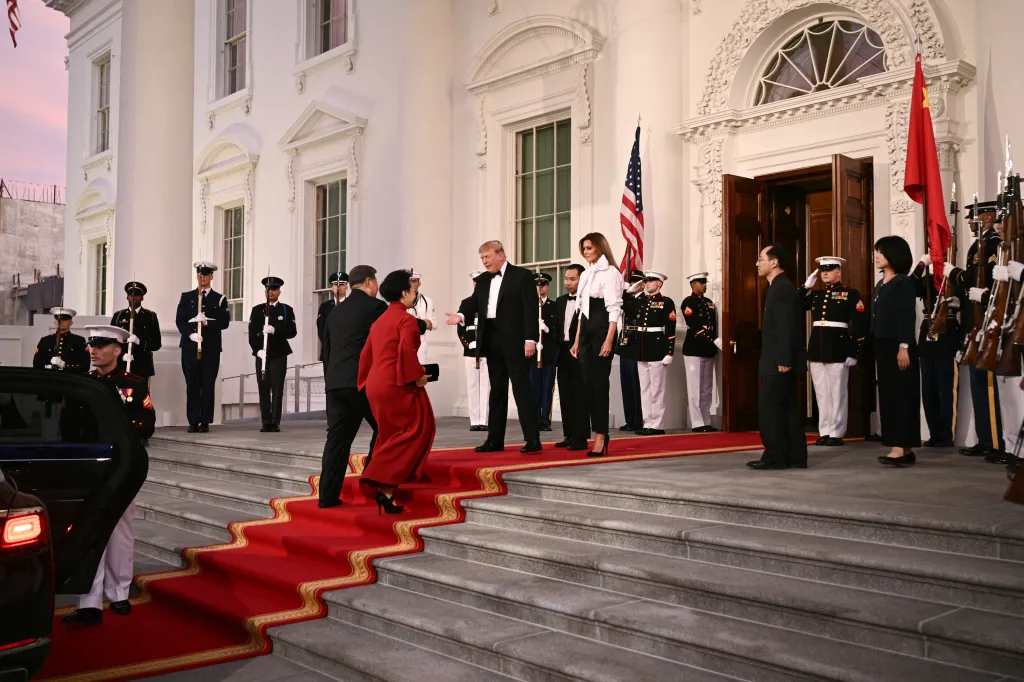
Reporters from CNN aren’t allowed in to the White House’s state dinner for China’s president tonight, but the outlet’s soon-to -be owner will be breaking bread with Xi Jinping and Donald Trump, along with a gaggle of tech bosses.
Striving to get a settlement in his $111 billion merger with Warner Bros Discovery approved by a federal judge, Paramount CEO David Ellison is among the invited guests to the superpower sit-down. A past donor to Democrats, son of Oracle founder and close Trump pal Larry Ellison has become close to the MAGA administration in his pursuit of first Paramount last year and more recently WBD. That closeness to Trump has proven a major concern to opponents of the ParaBros mega-deal, especially when it comes to the now Bari Weiss-run CBS New and, down the line, the Ted Turner created cable newser.
(L-R) Elon Musk, Mark Zuckerberg, Jeff Bezos & Sam Altman
Getty Images
Tech leaning Ellison will be among a band of brothers with OpenAI CEO Sam Altman, META’s Mark Zuckerberg, Google co-founder Sergey Brin, TikTok’s Jeff Yass, NVIDIA’s Jensen Huang, and Microsoft’s Satya Nadella in the People’s House. Along with the titans of traditional industry that the ex-Apprentice host loves to surround himself with like Boeing, CEO Kelly Ortberg, JP Morgan’s Jamie Dimon, and Dell’s Michael Dell, Elon Musk, Apple’s ex-CEO Tim Cook, and Amazon founder and Washington Post owner Jeff Bezos will be partaking of the three course meal too.
Chinese officials, White House senior staff, cabinet members, Trump offspring, Congressional GOP leaders and several members of the Supreme Court are there unsurprisingly. Equally unsurprisingly, Fox News‘ Jesse Waters, Laura Ingraham (called an “American television presenter”) and Bret Baier are at the state dinner too with their respective spouses.
Banned from the White House by Trump last week, CNN, MS Now and Politico took the administration to court. Judge Timothy Kelly ordered the outlets be re-credentialled, which they were for a while and then tonight they were not. With Trump TV now launched online, the saga continues.
Enjoy your meal.
See the entire official guest list for tonight’s State dinner here:
>
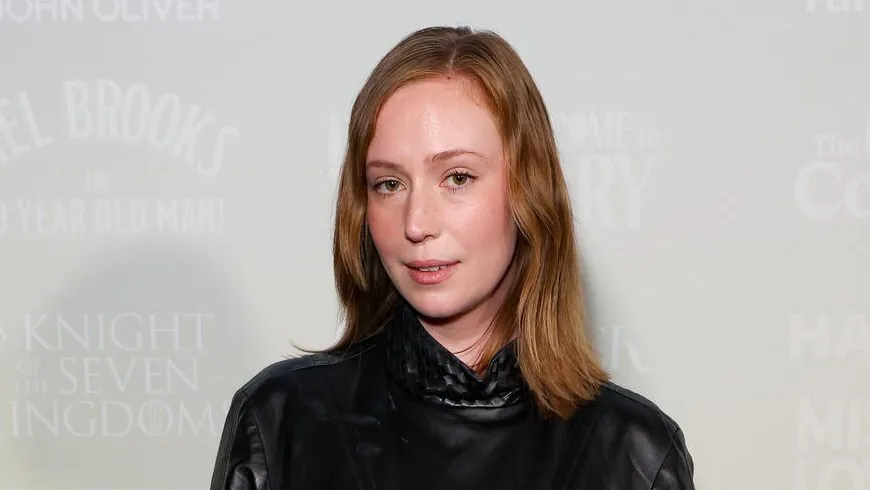
Following her arrest at a demonstration outside the United Nations General Assembly, Hannah Einbinder doesn’t want her message to get lost in the headlines.
On Thursday, the 4x Golden Globe nominee urged the United States government to “bring an end” to Israel’s attacks on Gaza after she was detained for protesting Prime Minister Benjamin Netanyahu‘s arrival at the U.N. building.
“If the pictures of my friends and me getting arrested in protest of Netanyahu’s shameful visit to New York draw attention to anything, let it be to the devastating genocidal war Israel is waging against the people of Palestine and Southern Lebanon-to the settler attacks, the home demolitions, the bombing of people as they sleep; to the crimes that happen every SINGLE day but garner almost no international press coverage,” she began in a statement on her Instagram Story.
“The US government has the power to bring an end to all of this killing, pillaging, and land theft, yet instead it chooses to welcome the butcher of Gaza with open arms. The fact that the orchestrator of all this bloodshed is roaming freely in our cities is an indictment of BOTH REPUBLICANS AND DEMOCRATS who enable and protect architects of genocide like Netanyahu,” Einbinder continued. “Let us not mistake the spectacle for the story: genocide is the headline, and it is time for it to end.”
Einbinder and Susan Sarandon were among as many as 100 anti-war protesters who were detained while blocking Bibi’s entrance to the U.N. building, where he spoke with global leaders at the U.N. General Assembly.
Also present at the demonstration were Cynthia Nixon, Elliot Page, Chelsea Manning, Sarah Sherman, Mary Beth Barone, Indya Moore and Caleb Hearon, protesting Netanyahu and the ongoing strikes on Gaza in the Israel-Hamas conflict.
“Free, free Palestine! Stop the genocide!” protesters chanted at the demonstration organized by the Jewish Voice for Peace, as well as, “Netanyahu, you can’t hide! We charge you with genocide!”
>

While Netflix has Ryan Murphy busy investigating (or flat-out making up) the motives of killers like Jeffery Dahmer, the Menendez Brothers and Lizzie Borden, the streamer has enlisted director Janus Metz to tell the story of Ted Kaczynski, the math prodigy turned reclusive murderer known as the Unabomber — also the movie’s title. But Unabomber, written by Sam Chalsen and Nelson Greaves, is not some sweeping birth-to-death survey of Kaczynski’s life. It instead focuses on a young Kaczynski’s time at Harvard University, where he participated in a brutal psychological study that, in the movie’s framing, may have helped form the anarchic worldview that eventually led to his infamous deeds.
Never mind that Kaczynski himself has said that the study, conducted by psychology professor and sometime government operative Henry Murray, didn’t have much effect on his life. Unabomber presupposes that it did, that Murray’s cruel (and later condemned) experiment in breaking down the philosophical principles of test subjects, stoked a rage — at academia, at technology, at universities — so fierce that Kaczynski later decided to enact his revenge. Perhaps not figuring that argument compelling enough on its own, the film tacks on a 1990s-set plot covering the days leading up to Kaczynski’s capture in Montana.
Unabomber
The Bottom Line
A faint sketch of a killer as a young man.
Release date: Friday, Sept. 25
Cast: Russell Crowe, Jacob Tremblay, Shailene Woodley, Annabelle Wallis, Gus Halper
Director: Janus Metz
Screenwriters: Sam Chalsen, Nelson Greaves
Rated R,
1 hour 37 minutes
Both narratives concern people prying into Kaczynski’s psyche and finding only further questions. In the 1950s, in the hallowed, lacquered-wood halls of Harvard, we watch a perspicacious boy genius — Kacyznski was all of 16 when he started college — as his intellect, his curiosity and his naiveté are weaponized against him, hardening his most radical beliefs into ideology. In the 1990s section, we observe relative lay people as they try to divine specific clues from Kaczynski’s manifesto, markers that might give away something crucial.
These twin analyses are both facile and unenlightening. The investigation arc is so boilerplate that it has an FBI agent placing a pile of documents on her desk and saying to them, “Talk to me.” The 1950s portion of the film is at least able to conjure up some mid-century moodiness, skulking around in the nervous temper of early Cold War days, as academia colluded with government agencies to buttress the country against the perceived Soviet threat. (At its best, the film calls to mind Robert De Niro’s unfairly maligned CIA origin story The Good Shepherd, which begins its postwar tale on the leafy quads of Yale.)
And yet, the ultimate conclusions of that half of the film are just as unpersuasive as everything that happens 40 years later. That’s largely owed to starchy, frequently clichéd writing. But sadly one must put some of the blame on the actor playing Kaczynski, Jacob Tremblay, who long ago escaped the confines of Room and now, at 19, has found himself in this dark mess.
His clean-cut boyish features do actually resemble Kaczynski at that age, but Tremblay otherwise has trouble evoking the volatile storms of Kaczynski’s mind. His voice cracking and eyes wide with alarm, Tremblay effectively communicates Kaczynski’s youth, but it all plays as bratty and insouciant rather than registering as the beginnings of true menace. Tremblay was a better fit for his other recent film about extremism, 2025’s Sovereign, in which his guilelessness served a more poignant purpose.
As Murray, Russell Crowe has dusted off his A Beautiful Mind professorial duds and phones in a performance of avuncular appeal masking sinister motives. We believe that Murray cares, in some way, for Kazcynski — or, at least, that he’s impressed by the student’s prowess — but not enough to stop his predatory work.
The portraiture is not very detailed beyond that. Part of the problem may be that, for the bulk of the experimentation, Murray is out of the room. Kaczynski is instead sparring with a fellow student, a haughty older boy played by the reliable Gus Halper, who did towering work as another collegiate monster in the under-seen 2016 frat-hazing thriller Goat. Had Tremblay and Crowe been given more opportunity to go toe to toe, something in the picture might have caught flame.
Instead, Unabomber trudges through its motions, toggling between grim school daze and a tediously generic FBI manhunt. In the latter part, Shailene Woodley does her best to give some texture to her rogue agent character, Joanne, but she has precious little to work with.
Perhaps cognizant of that, the filmmakers give Joanne a brief, humanizing button at the end of the film, a moment of solitude in which she has a cathartic cry as she processes all that she’s just experienced. The scene might register as thoughtful were it not such a blatant rip-off of the closing seconds of Zero Dark Thirty, in which a dogged investigator who’s finally caught her prey sheds tears of relief and exhaustion and something more ineffable. It doesn’t pack the same punch the second time around, and at the end of something so bland.
Watching Unabomber, one longs for a smarter, more sophisticated, more probing version of this same double-act. A better film about what might have radicalized Ted Kaczynski that also delineates how he was eventually captured could be startling and revealing, complicating the public idea of Kaczynski as mere renegade madman. But this film serves up only the most basic, obvious version of that — try as it might, at times, to immerse us in murky psychological depths. In the end, it has all the markings of a final paper written by a student who got all the dates right, but failed to find the real meaning behind any of the history.
>
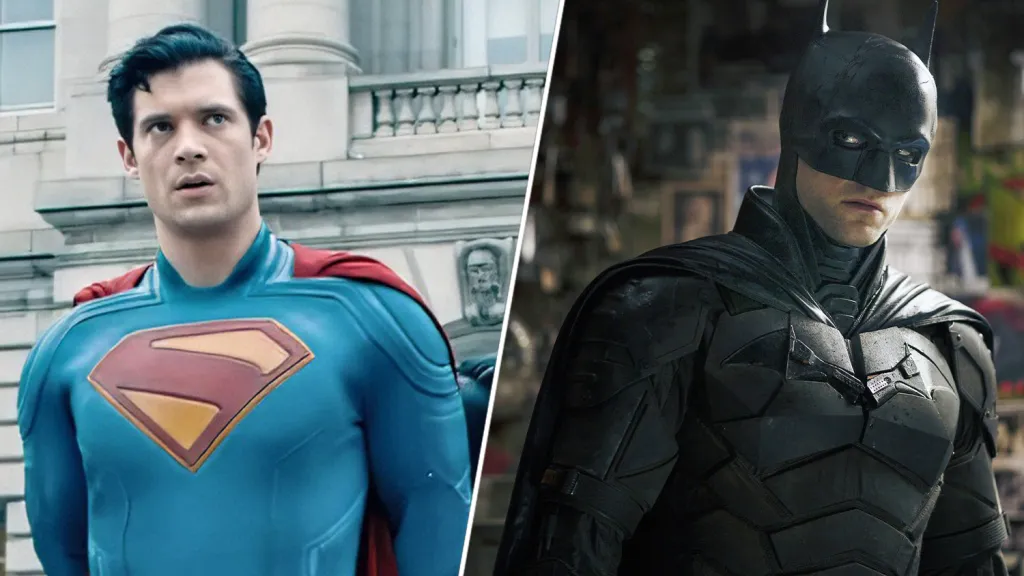
With sequels in the Batman and Superman franchises on the horizon, a DC team-up between the Dark Knight and the Man of Steel doesn’t seem to be in the immediate future.
Robert Pattinson admitted it “would be kind of tough” to make his version of Bruce Wayne in Matt Reeves‘ The Batman movies fit into James Gunn‘s DCU, which he launched with last year’s Superman.
“I think it would be kind of tough to have this version of Bruce outside of [Reeves’] world,” he told LADbible. “It’s one of the only characters I guess because of the length of the shoots but also it’s such a specific kind of [style], the tone of it gets inside you.”
Pattinson added, “I remember that happened to me the last time I did it, it took a while. You’re just in the dark, the whole time. Both mood-wise and light-wise, I can’t see anything for like months. It does affect you like you feel strange afterwards.”
Gunn revealed last July that the script for The Batman: Part II was finished, following several delays. Last August, a letter to Warner Bros. Discovery’s shareholders revealed that filming on the sequel would begin filming in the spring.
Warner Bros. recently pushed the movie’s release date to Feb. 18, 2028 as Reeves continued to tease the sequel with camera test footage of Pattinson in costume.
Meanwhile, Gunn wrapped filming on his Superman sequel Man of Tomorrow last month, which joins Superman (2025), Supergirl (2026) and Clayface, premiering Oct. 23, in Gunn’s expanding DCU.
>


Search For Canadian TV Actor Stewart McLean Now Homicide Investigation


These ’90s fashion trends are making a comeback in 2017
According to Dior Couture, this taboo fashion accessory is back
Model Jocelyn Chew’s Instagram is the best vacation you’ve ever had
Emily Ratajkowski channels back-to-school style
9 Celebrities who have spoken out about being photoshopped


Rurouni Kenshin: Hokkaido Arc Manga Takes 1-Issue Break – News


HIDIVE to Stream English Dubs for The World Is Dancing, The Forsaken Saintess and Her Foodie Roadtrip in Another World, The Dangers in My Heart: The Movie Anime – News