
Entertainment
How Far Can Trump’s War With the Press Go?

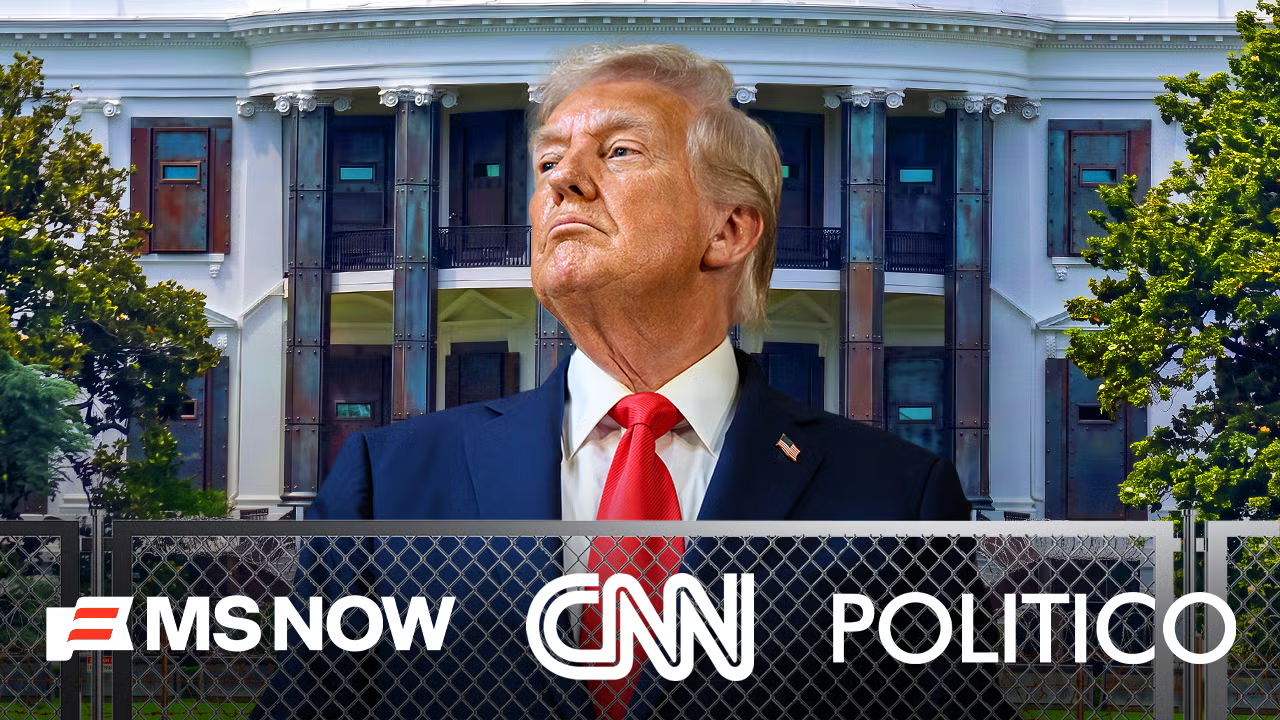
The Trump administration’s latest confrontation with the press ended, for now, with the institutional guardrails holding. But not for lack of the president trying to barrel his way through them.
A federal judge on Thursday ordered the White House to restore access to CNN, MS NOW and Politico. The major television networks stood together rather than replace CNN in the White House TV pool. And reporters from the three barred outlets were eventually allowed back onto the grounds Thursday after initially being turned away despite the court’s order.
But the episode marked the latest escalation in President Donald Trump’s confrontation with the media and raised a more fundamental question about what happens when the White House keeps pushing against both institutional norms and constitutional limits. As the administration keeps escalating its confrontations with the press — including denying CNN and MS NOW reporters access to cover the arrival of Chinese President Xi Jinping for a state dinner even after the ruling — what happens when those protections are tested again?
The administration has been remarkably consistent in its clashes with the media. Trump has regularly sued or threatened to sue news organizations. The White House restricted the Associated Press’ access in February 2025 after it declined to adopt Trump’s preferred “Gulf of America” terminology, then took control of selecting which news organizations participate in the presidential press pool, a role previously handled by the White House Correspondents’ Association. The administration later imposed new restrictions on journalists at the Pentagon, and in January, federal agents searched the home of a Washington Post reporter as part of a national security leak investigation.
In the latest escalation, Trump went further, barring three major national news organizations from the White House after attacking their coverage, once again raising the question of how much discretion the White House has when deciding who gets to cover it.

Jonathan Peters, a University of Georgia professor and the Carter Chair for Excellence in Journalism, said the key distinction is between a president criticizing coverage and the government using its control over access to reward or punish editorial decisions.
“Once access becomes contingent on editorial compliance, the dispute stops being merely another political fight between a president and the press and begins to raise serious First Amendment concerns,” Peters told TheWrap.
The first guardrail was the judiciary
U.S. District Judge Timothy Kelly ordered the administration early Thursday to restore the outlets’ access for 14 days. His ruling granting temporary relief rested on due process — whether the government followed the required procedure before taking away access — while leaving the broader First Amendment fight for another day.

Amy Kristin Sanders, the John and Ann Curley Chair in First Amendment Studies at Penn State University, said that distinction could prove important as the case proceeds.
“We certainly got a sense that Judge Kelly thinks the news organizations’ Fifth Amendment argument is strong, but he kept his cards close to his chest with regard to their First Amendment claims,” Sanders told TheWrap.
That leaves the larger constitutional question unresolved. The White House has substantial authority to manage press access for legitimate reasons including security, space and logistics, Peters said, but that discretion is not unlimited.
“Once the government establishes a system for granting press access, constitutional protections constrain the government’s ability to exclude particular journalists or organizations for impermissible reasons,” Peters said.
Kelly did not settle that issue Thursday. But the confrontation quickly presented another test when questions emerged about whether the White House would comply with his order.
“His willingness to move quickly when it seemed the White House was not going to respect his order was essential,” Sanders said, adding that the administration “seems keen to push the constitutional envelope.”

Hours after Kelly ordered their access restored, reporters from CNN, MS NOW and Politico were still turned away from the White House. The organizations went back to court, and Kelly ordered the administration to explain its compliance. The reporters were eventually allowed back around noon.
Timothy Zick, chancellor professor and John Marshall Professor of government and citizenship at William & Mary Law School, said the delay raised a separate issue.
“It was a temporary violation of a judicial order, which raises serious questions of its own,” Zick told TheWrap. “Had access not been restored, contempt proceedings might have been the next step.”
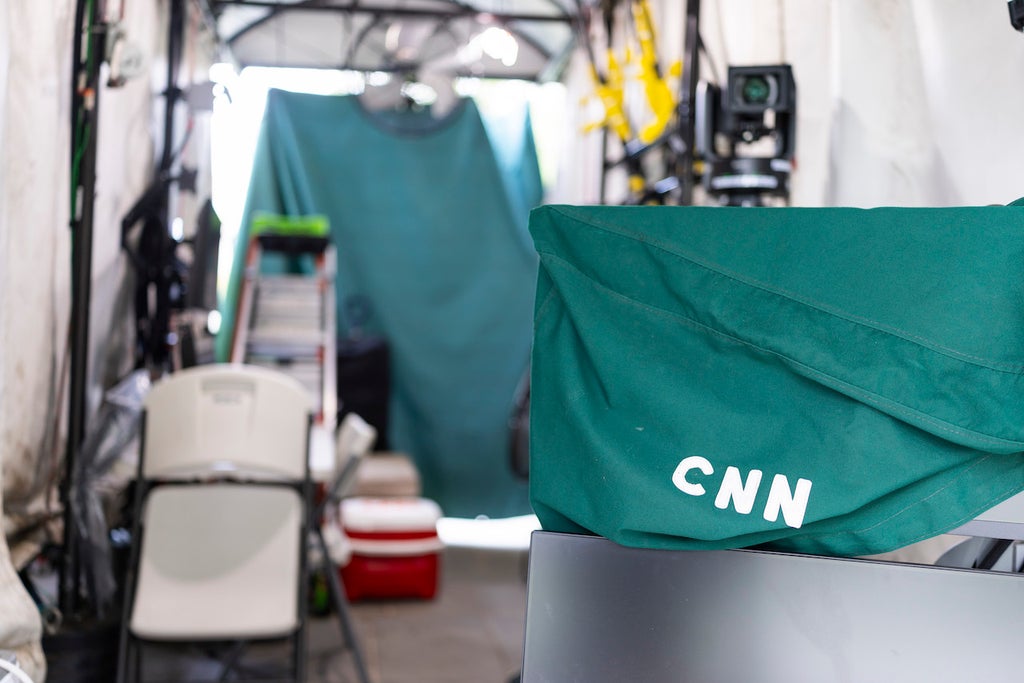
The second guardrail came from the press itself
After CNN was prevented from handling its scheduled television pool duties in the immediate wake of the ban, the other major networks declined to take its place. Still photographers also withheld their participation.
The pool allows a small group of journalists to cover events where there is not enough room for the entire press corps and share their reporting with other news organizations. The networks’ decision meant the White House could not simply remove CNN and rely on another major network to step into its pool slot.
“By declining to take CNN’s place, the other networks effectively treated this as a question about the independence of the press corps rather than CNN’s individual interests,” Peters said.
But the standoff also exposed a weakness: CNN, MS NOW and Politico have the resources to fight the federal government in court. Not every journalist or news organization does.

MS NOW senior legal reporter Lisa Rubin warned Thursday that repeated confrontations could discourage journalists even if the government ultimately loses.
“The process for him is the punishment,” Rubin said on “Morning Joe.” “What concerns me is people who are outside of the mainstream media, who want to do reporting without fear or favor, who are going to be deterred by this kind of behavior from the president.”
The government does not have to prevail in every legal fight for restrictions to have an effect. The expense and disruption of challenging them can fall especially hard on smaller outlets and independent journalists.
Will these guardrails keep holding?
The episode underscored both the strength and the limits of those protections. A federal judge intervened, competing networks refused to benefit from CNN’s exclusion and the three outlets regained their access.
But those protections are being tested in increasingly consequential ways. Each confrontation has pushed against a different boundary — from editorial language and control of the press pool to journalists’ physical access and, now, the outright exclusion of major news organizations.
Now the courts may be asked to decide not only what process the government must follow, but where its constitutional authority over press access ends.
Kelly’s order lasts only 14 days, and the larger First Amendment claims remain unresolved.
And the dispute over access continued Thursday night. CNN and MS NOW said the White House denied their journalists access to cover the arrival of Chinese President Xi Jinping for a state dinner, just hours after reporters from the outlets regained access to the White House grounds.
The networks standing together this time does not guarantee the same response in another dispute. And not every outlet could mount an immediate legal challenge.
Trump has also shown himself willing to continue legal fights even after setbacks in court. To that end, this order may prove more of a speed bump than a wall.
This week showed that the guardrails can still hold. The courts intervened, the networks stood together and the barred reporters got back inside.
What it did not establish is where the breaking point of those protections lies.
As the administration continues pushing the boundaries of its authority over the press, that is the question the next escalation may test.

>

EXCLUSIVE: Here’s a fun one. We can reveal that a Mary Poppins TV series is in the works.
Rather than retelling the Disney film Mary Poppins starring Julie Andrews and Dick Van Dyke from the 1960s, we understand the live action TV adaptation plans to go back to P. L. Travers’ original eight Mary Poppins books and open up the larger, stranger world she created.
The Mary Poppins of the novels is often noted for being more mysterious, mercurial and dangerous than her film incarnation, and the adventures in the books are magical, surreal and sometimes frightening.
The series is being developed and produced by Tom Winchester for Pure Fiction Television, the indie backed by Slow Horses and Heartstopper outfit See-Saw Films and UK talent agency Hamilton Hodell.
Winchester is developing the series on behalf of the trustees of the P.L Travers estate from whom he has optioned the rights. We hear that very early-stage conversations are taking place with Disney, and that Winchester is approaching top level showrunners. As we understand it, the project doesn’t need Disney’s buy-in from a rights perspective, but there’s hope the studio might want to join the project given their history with the IP. Nothing has been agreed to that effect so far. Things are still at pitch stage.
Mary Poppins is a rich IP – Travers’ successful books were most famously adapted by Disney into the Oscar winning musical with Andrews and Van Dyke. But Travers openly critcised Disney’s vision for the 1964 film and their fallout was the basis for the film Saving Mr. Banks starring Emma Thompson and Tom Hanks. Disney’s 2018 sequel, Mary Poppins Returns, starred Emily Blunt and Lin-Manuel Miranda and was directed by Rob Marshall who produced the musical fantasy comedy film alongside John DeLuca and Marc Platt.
Winchester isn’t a stranger to adapting legacy IP. He was a producer on the first season of FX’s Emmy-winning series Shōgun, based on the novel by James Clavell. He is also developing Barry Eisler’s 18 popular John Rain assassin books into a series for Apple TV.
Pure Fiction and Disney declined to comment.
Editor’s note: The Dish is a regular column for Deadline journos to plant their flag in deals, hires and firings and industry developments before they’re fully baked. The column is inspired by Mike Fleming Jr’s longtime trade column of the same name.
>

For more than a century, the American motion picture industry has been an enduring part of our shared experience. Movies bring audiences across the country the unique magic of sitting with their neighbors to see extraordinary stories told on the big screen at their local cinema.
This summer’s strong box office demonstrates once again that Americans still love going to the movies. But that success masks one important truth facing theatrical exhibition today: Over the past six years, studio consolidation, a global pandemic, and multiple labor strikes have all contributed to a long-term erosion of available capital to reinvest in our businesses. For nearly all theater owners, years of lost and disrupted revenue mean that even as audiences are returning, the capital needed for major improvements has not. Thankfully, a bipartisan bill, the Supporting Cinema Renewal, Enhancement, and Enriching Neighborhoods (SCREEN) Act (H.R. 9938), is waiting in the wings. This legislation will have a direct economic impact in all 50 states, and we urge Congress to act.


We are four small business owners who represent this vital piece of the American film industry’s success, and as Congress considers how to restore and strengthen American film, it must ensure movie theaters are part of the solution. We own and operate independent theaters in Northern California, Nashville, rural Montana and Idaho, and America’s oldest drive-in theater in Orefield, Pennsylvania. We are not part of Hollywood, although we’re vital to bringing films to audiences. We are proud Main Street enterprises.
Movie theaters like ours are the economic and cultural cornerstones of communities across this great nation — in all 50 states, in cities and towns, big and small. In some parts of this great country, it is not uncommon for people to drive 50-plus miles to see a movie at our theaters, making it both a gathering place and a driver of economic activity far beyond the doors of the theater. Success at the local theater means additional revenue for surrounding local businesses — shops, restaurants, bars, coffee shops – that benefit from the foot traffic of the local cinema.
Despite the challenges our industry has faced, theater owners across the country — from the world’s largest theater circuits to the family-owned single-screen theaters like ours — are making long-term bets on ourselves and the magic of movies on the big screen. We are reinvesting in our theaters to ensure they remain first-class show houses that movie fans will want to visit again and again. These investments include the industry’s latest advancements in screens, projection, and sound; modern seating; and enhanced concession, dining, and gathering spaces – the kinds of improvements that keep audiences coming back. But there is much more work to be done.
That is why we are grateful to a bipartisan group of leaders in the U.S. House of Representatives who have introduced legislation that will help more movie theater owners make those investments and more movie fans enjoy them. Sponsored by Representatives Claudia Tenney (R-NY), Mike Carey (R-OH), David Kustoff (R-TN), and Tom Suozzi (D-NY), the SCREEN Act is focused and targeted legislation that provides a tax credit for movie theater reinvestment and sunsets after five years. It applies to the modernization and improvement of existing theaters that are five years or older, helping theater owners put private capital to work and securing the future of theaters across the country.
The SCREEN Act does not ask Washington to build or operate movie theaters. Instead, it gives theater owners the help they need to invest their own capital in modernizing existing businesses and strengthening the commercial areas around them. It is exactly the kind of public-private partnership that can have a direct and positive impact in communities of all sizes.
And its impact extends beyond the theaters themselves. When we renovate our theaters, a significant amount of that reinvestment goes to the local contractors who do the work. It goes to suppliers and vendors—typically small or mid-sized companies. And it supports the surrounding businesses that benefit from vibrant, modern centers of community activity and entertainment. For every dollar spent on a movie ticket, an additional $1.50 is spent at surrounding businesses. Simply put, the SCREEN Act will result in more money being spent in Main Street America.
The SCREEN Act also complements recent calls for a production tax credit aimed at keeping more film production in the United States. Modern theaters, serving more communities and driving higher box office, create greater return for the studios, who can reinvest in more home-grown production.
We are proud of the part we have played and will continue to play in the American motion picture industry’s story. The SCREEN Act recognizes that movie theaters matter not only to the future of American entertainment, but to the economic and cultural life of communities across the United States. Congress should pass it and help Main Street theaters write the industry’s next great chapter.
Becky Dupuis is CEO of Polson Theatres, Inc., Polson, Montana (7 locations, 20 screens); Paul Gunsky is president, CineLux Theatres, San Jose, California (8 locations, 62 screens); Lauren McChesney is co-owner, Shankweiler’s Drive-in, Orefield, Pennsylvania (1 location, 1 screen); Stephanie Silverman is executive director, The Belcourt Theatre, Nashville, TN (1 location, 3 screens). All are members of the Executive Board of Cinema United, a trade association representing the global exhibition industry.
>
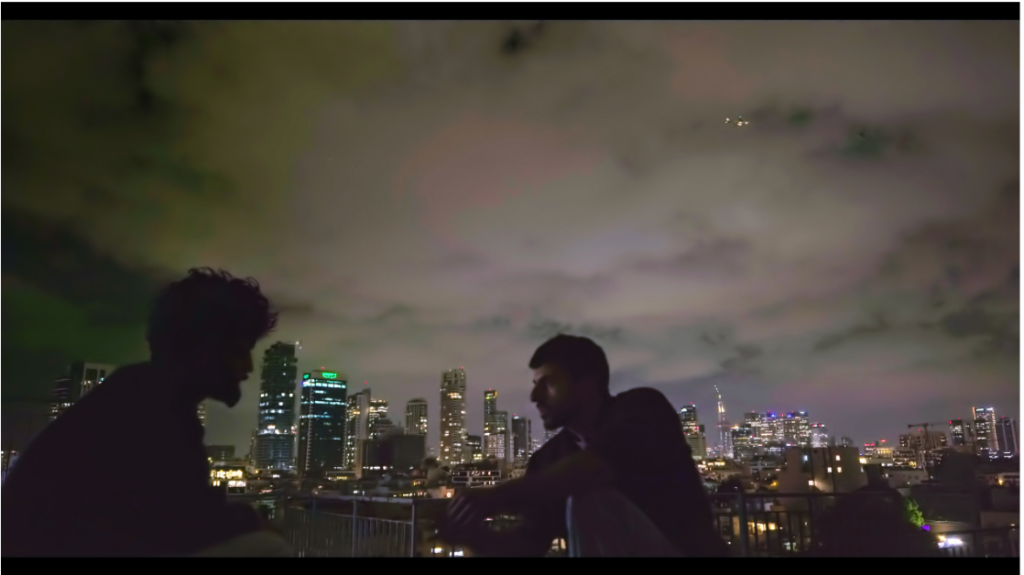
We have the first trailer for Yuval Abraham and Rachel Szor’s NAZA, which debuted to huge acclaim at this year’s Venice Film Festival. Check it out above.
Earlier this week, in an unprecedented move, it was announced that The Guardian newspaper will make NAZA available for global audiences for free on its website after its theatrical run in late November.
The film will be released theatrically from September 28 onwards in 56 territories. The investigative documentary, which exposes the Israeli military’s calculated targeting of civilians in Gaza in missile strikes through the testimony of intelligence personnel and soldiers involved in the killing, has caused a sensation since its Venice debut. It landed a record 25-minute ovation at Venice, but has since been attacked by Israeli politicians, including Prime Minister Benjamin Netanyahu, who has threatened to strip the directors of their Israeli citizenship even though he has no power to do this under the country’s laws.
The film will receive its North American premiere on 26 September at the New York Film Festival, and is set to open in U.S. theaters on September 30, launching exclusively at the IFC Center in New York City. It will expand to Los Angeles and other key markets on October 9, ahead of a national rollout in the weeks to follow.
NAZA is produced by The Guardian and James Wilson (JW Films), and executive produced by Oscar-winning filmmaker Jonathan Glazer.
>

‘Mary Poppins’ TV Series In The Works, Will Lean Into Darker Elements

That Time I Got Reincarnated as a Slime Season 4 Anime Returns for 3rd Part in July 2027, Clayman’s Revenge Spinoff Anime Debuts in April – News
Giants QB Jaxson Dart's knee surgery will include full repair of meniscus: Sources
-

 movies4 months ago
Search For Canadian TV Actor Stewart McLean Now Homicide Investigation
-

 Fashion9 years ago
These ’90s fashion trends are making a comeback in 2017
-
Fashion9 years ago
According to Dior Couture, this taboo fashion accessory is back
-
Fashion9 years ago
Model Jocelyn Chew’s Instagram is the best vacation you’ve ever had
-
Fashion9 years ago
Emily Ratajkowski channels back-to-school style
-
Fashion9 years ago
9 Celebrities who have spoken out about being photoshopped
-

 Anime4 months ago
Rurouni Kenshin: Hokkaido Arc Manga Takes 1-Issue Break – News
-

 Anime3 months ago
HIDIVE to Stream English Dubs for The World Is Dancing, The Forsaken Saintess and Her Foodie Roadtrip in Another World, The Dangers in My Heart: The Movie Anime – News