
Anime
The Worst Anime of Summer 2026

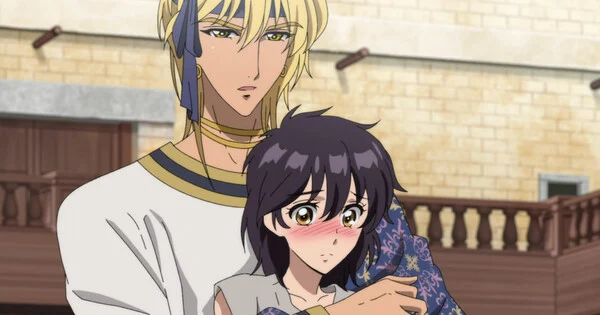

I think we’ve all gotten a little fed up with seminal shojo classics getting the short end of the animation stick. This season includes yet another log to the trash fire as we hope beyond hope that next time, it’ll be different. It joins its disappointing compatriots: the one where the camera is permanently attached to a theme park ride, the boring gamer power fantasy, and, somehow, a show by Kyoto Animation.

© Nanigashi Shima – SB Creative Corp. / Kakekoi Partners
I was so ready to give Love Unseen Beneath the Clear Night Sky the benefit of the doubt. This romance between college student Kakeru and his blind classmate Koharu was a little preachy and clumsy about disability rights. It would lecture the audience about letting disabled people advocate for themselves, but then turn around and have their friend ask Kakeru to watch out for Koharu behind her back. Kakeru was a bit too inward-facing, comparing his sadness over being raised by a single mom to Koharu living with a disability.
But still, there was a charm to it. Koharu was a full person trying to live her life, not a walking avatar of pluck and grit who inspired Kakeru to get over himself. Kakeru was genuinely interested in getting to know Koharu, and the two’s relationship was sweet. Not particularly enthralling and still occasionally preachy, but clearly well-intentioned and engaging enough that I kept watching, planning to write about it when the season wrapped.
But then the big twist dropped, and the whole thing took a turn for the maudlin, saccharine, and outright creepy. See, Koharu lost her vision due to cancer, an illness that has a nasty tendency to refuse to ever truly go away. So, when she stops coming to class or answering her phone, Kakeru and his friends track her down. They follow a rumor that she was seen entering a hospital, go there, and wander the halls until they find her. When she tells them she has no memory of the past few months (what a twist!), they start volunteering in the pediatric ward, where she plays piano. No matter how many times she tells him to buzz off, Kakeru keeps coming back until she accepts him.
It’s so, so, so creepy. It’s literal stalking and harassment of an ill, disabled young woman, dressed up as a story of devotion and determination to live one’s life to the fullest. Koharu deserves to be treated with dignity and to have her wishes heard, but Kakeru simply knows better than her. Even if it weren’t unpalatable for this reason, the show’s emotional tone turns toward mawkish melodrama. Every twist is more ridiculous than the last: Koharu disappears! Koharu has super-cancer! Koharu plays piano for sick kids! Koharu cuts her beautiful hair to donate, which conveniently is the hairstyle she had when she was first diagnosed in middle school! Koharu has medically inexplicable memory loss! Just let us reach in and yank on those heartstrings for you!
I have zero patience for stories that put their female characters through hell for the development of a male protagonist, let alone ones that are this lionizing of violating their boundaries in the process.
—Caitlin Moore

© Nekoko, BroccoLee, Jaian, KODANSHA/“The Exiled Heavy Knight Knows How to Game the System” Production Committee
Sometimes it feels a bit unfair to dunk on a studio so committed to its own artistic vision (however misguided), but GoHands remains committed to its war on human eyeballs, and this show is no exception. All of the usual trademarks of a typical GoHands production are on full display here: A camera that can’t stop rotating to the point of inducing nausea, terrible compositing that makes the overly detailed character designs and photorealistic backgrounds look like they exist on two separate planes of reality, garish color filters, and animation that’s detailed in all the worst areas when it comes to having every strand of hair on a character’s head flowing at all times. The show even adds new visual horrors to the mix, with the first episode featuring what is possibly the single most disorienting action montage I’ve ever seen, with scene transitions so bad it took a full minute for my brain to register what was being attempted. Shockingly, though, I’d say the look of this show is among the least of its problems. Now make no mistake, it does look pretty horrendous, but it’s far from GoHands worst in that regard, and if you can get past the first episode, you’ve likely already seen the heights of its insanity on that end.
The real death knell for this show is that it gives the worst eras of the One Piece anime a run for their money in having some of the most atrocious pacing of any show ever put to television. In nearly any given episode, there is only ever about maybe 10 to 14 minutes of actual progression, with the rest of the show’s runtime being riddled with flashbacks, constant reuse of specific shots, and sometimes quite literally just playing a full minute or two of the same scene back to back if it happened to play just before the spot for a commercial break. At best, only one or two story beats happen in any given episode, and even accounting for the show running for two cours, the narrative barely progresses past its inciting incident, making it an absolute slog to sit through. It’s a shame, too, because there’s otherwise potentially decent material here. Despite kicking off with the usual revenge fantasy premise of a “kicked out of the party” isekai, it manages to avoid coming off as particularly mean-spirited, and Elmyas is a reasonably likable protagonist who is generally more than happy to actually cooperate with others despite being looked down on for his supposedly terrible battle class. It even manages to avoid defaulting towards being a harem, as the jester girl Ruche who joins his party is his only female companion, and even gets to spend more of her screen time building up her confidence after being similarly put down by her ex-party members for also having a less than optimal class, than fawning over all of Elmyas’s actions. None of this is exactly the pinnacle of character writing, but it’s enough that a normal-looking and normal-paced version of this show could have made for some perfectly fine popcorn entertainment if nothing else.
Alas, even if you are a genuine fan of the material, this adaptation really doesn’t have much of anything going for it, and for anyone else, there is a sea of isekai out there that are at least more respectful of your time. Hand Shakers still takes the crown as the worst show GoHands has ever made from a production standpoint, but from an entertainment standpoint, this might actually be even more unwatchable. For all its many sins, you certainly can’t accuse Hand Shakers of being boring, and in terms of being a wild train wreck, there really is no other anime quite like it. This doesn’t even have that much going for it, and while I never would have thought there could be such a thing as a GoHands show so dull that the bad visuals rate among the least of its problems, this certainly seems to have done the impossible.
—Jairus Taylor

© Hiro Yuki, Kyoto Animation/Sparks of Tomorrow Production Committee
Next to the cardinal sin of causing boredom, what is the worst experience an anime can induce in its viewers? I’d argue strongly for disappointment, and Sparks of Tomorrow disappointed me more than almost any other anime of the past few years. The fact that the usually stellar animation studio Kyoto Animation made it was enough to get my hopes up. As the company responsible for such greats as The Melancholy of Haruhi Suzumiya, Miss Kobayashi’s Dragon Maid, and A Silent Voice, I hotly anticipated their next TV show, especially as the trailer looked gorgeous.
As an anime adapted from a novel published by Kyoto Animation‘s own KA Esuma Bunko imprint, Sparks of Tomorrow follows the pattern established by stablemates Free! and Violet Evergarden, and both of those are exceptional series. Like all of KyoAni’s works, Sparks of Tomorrow certainly looks incredible. No effort has been spared in creating a vibrant, colorful world: an alternate 1907 Japan where the invention of electricity never led to an energy revolution, and society still runs on steam power. That’s a fascinating idea, but unfortunately, the show has little beyond looks and ideas.
Every episode is an exercise in frustration at the show’s wasted potential. Perhaps this is a fault of the source material, but without an English-language version, it’s impossible to say. After all, the print and screen versions of Violet Evergarden are reportedly very different from one another. A major issue is the characters. They’re almost entirely static, barely develop, act repetitively, and, worse still, they’re annoying. White-haired main antagonist Yosuke Mizoe is one of the most nails-down-a-chalkboard, screechingly irritating characters ever committed to the screen. He’s a borderline offensive, loud and obnoxious, effeminate gay male caricature who drags down every single scene in which he appears. He has zero redeeming features, and his bizarre fixation on the protagonist’s elder brother is both creepy and off-putting. I know villains are supposed to be loathsome, but the best antagonists are usually at the very least charismatic. Yosuke has a yawning chasm of emptiness where charisma should be.
Protagonist Kihachi Sakamoto isn’t much better, as he rarely drives the narrative, acting more like a reactive cog in a plot machine that barely functions to tell a coherent story. Heroine Inako Momokawa isn’t much more interesting. Neither of them achieves much, and their repetitive adventures often end with them returning to square one. At least some of the supporting characters are amusing, especially Inako’s duo of bemused female friends.
The only episode to truly catch my attention is the gloriously demented “The Sound of Innovation,” where the hapless Kihachi and friends inadvertently invent heavy metal music. It’s a bonkers sequence you have to see (and hear) to believe. The rest of the show utterly fails to match this promise. What a shame.
—Kevin Cormack

© 篠原千絵/小学館/アニメ「天は赤い河のほとり」製作委員会
Adaptation is a tricky game. Stick too close, and format changes can make a story drag. Stray too far, and fans of the source material will be sharpening their pitchforks. Red River somehow manages to create its own new category out of bits and pieces of both of these mistakes: it follows the events of the manga pretty faithfully, but it makes the unfortunate decision to dumb heroine Yuri down as far as it possibly can, rendering the plot devoid of character development and nuance so that it may as well only be a totally different story.
It’s unfair, really, because Chie Shinohara‘s original manga holds up well for a series written in the late 1990s, when shoujo manga took a very different attitude to things like “sexual assault” and “consent.” On the surface, it’s a story about a girl out of time: a modern Japanese teen sent back to the days of the Hittite Empire. But in practice, the manga follows a young woman as she rises to meet the challenges she faces, learns to navigate a difficult and dangerous world, and helps the historical record show why this king and culture were so impressive. Shinohara grounds her story firmly in history, bringing in real events, people, and legends, and carefully inserting Yuri as both the goddess Ishtar and a reasonable facsimile of the real-life Hittite queen Puduhepa. It’s excellent historical fiction.
The anime, though? Not so much. Yes, the events of the manga still play out, but Yuri, instead of growing and maturing through her hardships, spends most of the early episodes wailing or making incredibly stupid mistakes (RIP, Tito) before suddenly morphing into Ms. Competent with little or no reason. Why can this girl suddenly ride a horse? Or use a sword? How does she fall in love with Kail? And why on earth is she being touted as “brilliant” when she consistently does things like blunder into a situation she’s been warned about or scream “Thanks for coming to Rescue Me!” after a secret rescue mission? Manga Yuri and Anime Yuri are almost entirely different people, and that really brings the animated version down.
Also, it looks bad. Oh, I’ve seen worse, but that doesn’t mean that this isn’t plenty awful on its own. Background characters (especially soldiers) move in the same awkward loop in every battle, main characters are consistently off-model, and even their movements are janky. This entire adaptation is a travesty, a slap in the face to fans of the original manga. Maybe it doesn’t come across as badly for anime-only viewers, but for this manga reader? You don’t get much worse than this.
—Rebecca Silverman

© 池田祐輝・講談社/「サンダー3」製作委員会
I am such a sucker for media that gets creative with mixing genres, art styles, and even cinematic techniques. Who Framed Roger Rabbit? is one of the greatest films ever made; the Spider-Verse movies and their universe-melding completely redefined how modern animation looks and feels; and some of the coolest modern video games are going back to old-school methods of visual storytelling, like live-action FMVs and even stop-motion, to push the boundaries of artistic expression. The point is, even though I know absolutely nothing about it, I was really impressed by the first episodes of Thunder 3. When you put aside its limited 3D animation and some odd storytelling choices, the core premise is honestly brilliant: A bunch of goofy kids from a world of comic-strip caricatures get wrapped up in a dangerous rescue mission when protagonist Pyontaro’s little sister gets lost in a completely different dimension defined by its harrowing, relatively realistic alien domination. But since our kid heroes come from a world of nearly nonexistent stakes and lackadaisical physics, they’re blessed with incredible superpowers and resilience that let them fight back against the evil alien hordes.
Alas, what makes Thunder 3 one of the worst anime of this season instead of a secret sleeper-hit is the way it ultimately wastes all of its potential. For one, we have to talk about the animation, which was clearly not very good from the start, but that could have been forgiven if the show leveraged its creative story elements and the novelty of its blended art styles. Yet, at the end of the day, Thunder 3 does shockingly little with the wild setup of two fundamentally incompatible universes colliding. You’d think that the shock of Pyonataro and his friends meeting their more realistically proportioned alternate-universe counterparts would make for some fascinating story threads, but nope. In fact, the show often ignores its heroes to focus on the much less interesting (visually and narratively) characters from the Alien Invasion Universe, which is baffling. The inherent comic potential of seeing little girl Futaba innocently destroying fleets of alien warships practically writes itself; we should have been going full-on Earth Defense Force by, like, episode 4 at the latest.
Instead, Thunder 3 spins its wheels and wastes all of our time while it desperately delays the gratification of goofy, explosive hijinks that we were all promised in those opening episodes. The title characters have barely been a presence in their own show for most of the season. I hear that the manga of Thunder 3 is a much better product overall, which is a small reassurance, I suppose, but it’s a shame that this adaptation was bungled so thoroughly. This is one of those properties that practically begs to be explored in new mediums beyond print. Even if the practical limitations of the production meant that Thunder 3 was never going to be a AAA smash of blockbuster proportions, there is no reason whatsoever that it had to end up as such a lame disappointment.
—James Beckett

© ハム男/アース・スター エンターテイメント/ヘルモード製作委員会
The first season of Hell Mode might be one of the most painfully slow-paced things in all of anime, manga, and light novels. With there being so many isekai anime out there based around protagonists who often land in some pretty optimal circumstances—overpowered innate skills, wealthy families, knowledge of later events, and so on—I can understand all too well the logic through which something like Hell Mode would sound like a breath of fresh air: Finally! An isekai about a protagonist with an ability that requires him to actually grind (a LOT) to see any meaningful results, is reborn into a world they’re wholly unfamiliar with, and in absolute poverty.
But as it turns out, there’s a reason no one else was doing that! It makes for an incredibly slow-paced—well, calling it a “story” in the first season feels generous. It doesn’t really start until the second season, when our protagonist Allen and his friends enter the Academy and learn some harsh truths about their world. Sort of. It doesn’t actually become meaningfully relevant until well into the second season, and even then, it’s surrounded by the series’ trademark grinding-slash-numbers-slop. This might not be a problem if Allen or any of his partymates were interesting characters, or at least had some cool dynamics going on, but even with the new characters in the main cast, there’s nothing of the sort.
A flatness so pervasive in every aspect of this already-tedious show makes it sleep-inducingly boring. The characters, the fights, the power and magic systems, the world, the environments, even what precious little we’ve seen of that story that’s allegedly hanging around somewhere. The production values certainly aren’t doing this show any favors either. In fact, with one of the absolute worst and most skippable intro songs I’ve heard in a while, and CG that I’d rank among the all-time worst in all of anime, they only drag it down further. It’s as though every single thing about this show seeks only to sabotage it.
Overall, this series frustrates me a lot. Not just because of how much work it feels like to get through even a single episode (although that’s obviously a part of it, too), but also because with even slightly better execution, this easily could’ve been so cool. As I said at the beginning, it breaks away from the norms of isekai anime in so many interesting ways. Forget Hell Mode; it should be easy mode making at least a decent series with so many fundamental differences. And yet, against all odds, Hell Mode still found a way to fumble its fortunes tremendously.
—Kennedy
>

Welcome back, folks! Gigi Murin has had her annual September 21st meltdown, so that means we’re officially in Autumn. It’s already starting to get overcast on a regular basis in my city. Weirdly, most of the leaves haven’t turned yet. I’m not exactly looking forward to how drafty my room is, but at least Retro Game Expo is around the corner… Also, shout-out to Coop and Chris for the shout-out in yesterday’s This Week in Anime. It never ceases to warm my heart when people associate things with me.
This is…

Choice News from Tokyo Game Show 2026
Well, that’s another Tokyo Game Show done. That’s pretty much the kibosh on new game announcements until The Game Awards this December. But we had some pretty big drops this time around! Even if TGS’s fifth and final day had to be cancelled due to inclement weather (read: a freaking typhoon; I can only hope nobody got hurt). A lot of the announcements and trailers were for games we already knew, so we’ll stick to the new stuff.
In news that’ll definitely mean a lot to old-school RPG fans, Clear River Games announced a collection of the first two Lufia games! Lufia is a cult-classic RPG series, a distant fourth-place to even classics like Breath of Fire. And not for lack of quality; the games were just few and far between. The last Lufia game was Curse of the Sinistrals on the Nintendo DS back in 2010—and that one reimagined the second game as an action RPG. Anyway, the first two Lufia titles encompass an ongoing arc of brave heroes and their descendants battling evil demigods known as the Sinistrals. The first game tells the story of a group of descendants of the famed heroes who have to defeat the resurrected Sinistrals; the sequel is in fact a prequel, and tells the tragic, doomed story of the original heroes’ last stand.
So far, Clear River Games (who you may remember as also working on the upcoming Terranigma port) has promised some “modern enhancements” for the Lufia games, but what those are has not been clarified yet. Considering what they’ve promised for Terranigma, I doubt it’ll be anything drastic; a bit of accommodation for modern displays, fixed menus, maybe quicksaves, that sort of thing. Fixed translations would also be a plus; the first two Lufia games were translated by Taito America and Natsume, respectively. And while those translations aren’t particularly bad, they’re not exactly Squaresoft-caliber either. (Especially not Natsume’s work on Lufia II.) Also somewhat disappointing is that this only covers the first two Lufia titles; while plans for a third Lufia game on PlayStation 1 never materialized, later Lufia games did come to the Game Boy Color and Game Boy Advance. You didn’t even have to include the Nintendo DS remake. Still, it’s great to see Lufia back. We can look forward to these games in 2027.
【#TGS2026 試遊タイトル①】
『闘神伝』
※『闘神伝COLLECTION(仮称)』より3D対戦型格闘ゲームとして発売され、世界的にも大ヒットとなった「#闘神伝」が現行機種で復活!
画面を共有しながらの複数人プレイにも対応しています。
レトロゲー・格ゲーファン必見!#エディア pic.twitter.com/V4jgKJz9BJ— エディア ゲーム総合【公式】 (@edia_game) September 16, 2026
The next two ones don’t have dedicated trailers, but they’re also revivals for classic game franchises. Edia announced a collection for the Battle Arena Toshinden games, an old series of 3D fighting games that had their heyday on the original PS1. The Toshinden games were 3D weapons-based fighting games. While Tsukasa Kotobuki‘s designs for the original games are extremely of-their-era, those games were pretty much the king of the mountain, beating Tekken to the PS1 by a scant three months in 1995. The series has its fans, sure… but even with a fourth numbered title releasing on the PS2, the Toshinden games didn’t quite have the same legs as Tekken, especially when Soulcalibur came onto the scene on the Dreamcast and set the bar for what a 3D weapon-based fighting game could do. With that said, Edia’s Toshinden collection will only collect the first three numbered titles—so that fourth PS2 game is left out. What’s worse, this also leaves out spin-offs and updates like the Game Boy Battle Arena Toshinden, Battle Arena Toshinden URA, or the Toshinden reboot that released on the Wii. So while this is a nostalgic collection of classic 3D fighters, it’s far from comprehensive… this one also arrives in 2027.
Edia also announced a new two-fer pack featuring the PC Engine versions of Dragon Slayer: The Legend of Heroes I and II. We’ve talked about the complicated history of Nihon Falcom’s landmark RPG series before, but to sum it up: Dragon Slayer was a landmark title for them and the first action-RPG ever made. Subsequent Dragon Slayer sequels expanded upon the formula and became spin-off series in their own right, including games like Sorcerian, Xanadu… and The Legend of Heroes, which itself spawned the beloved Trails spin-off series that’s still going to this day. While we don’t know which consoles this collection will land on, we know that they’ll add limited voice acting during “select scenes.” Considering the runaway popularity of the Trails games, a glimpse into the past of the illustrious RPG series will be much appreciated.
Up next is a new action-RPG, Edge of Memories. A co-production between a French dev team and Japanese developers, this game has warriors fighting off an encroaching corruption afflicting their land while also struggling with their own internal corruption. The trailer features Japanese dialogue, which comes from a number of noted seiyuu (none of whom are listed anywhere). But it also features music from Yasunori Mitsuda, whom you can’t go wrong with. Edge of Memories leans much harder into traditional Japanese stylings than Expedition 33, but it takes more than just art to make a good RPG… France loves anime a ton, though (as seen with the likes of Wakfu, Dofus and Code Lyoko), so I’m interested in seeing how a French/Japanese co-production works out in terms of a game. Look forward to it this November 5 on PS5, Steam and Xbox Series X|S.
【速報】
家庭用ゲーム移植
『ドリームクラブZERO R+』
🎉🎉 2027年 新装開店 🎉🎉新たなホストガールも入店決定🥂
キャラクターデザインはもちろん森沢晴行さんです。
続報をお楽しみに!#dreamclub #D3PTGS2026 #TGS2026 pic.twitter.com/pDj6BndWZU— ドリームクラブ開店準備スタッフ (@DCC_OP_Staff) September 20, 2026
Finally, a game I’m astonished to see return: Dream Club! The Dream Club games premiered on the Xbox 360 way back in 2011—utterly wild to think about, considering Microsoft‘s failure to properly develop a Japanese audience over the years. (For the record: The Idolm@ster also had its first home-console release on Xbox 360.) The idea is rather simple: you play as a gentleman who’s invited to spend time at the Dream Club hostess club, where you can drink and schmooze with several archetypal anime girls. It’s not all cutesy faces, though; you spend your days working various day jobs to earn money to impress your chosen hostess. You also need money to buy them the right gifts, as well as succeed at a variety of mini-games. Later games added extra paramours or the addition of cutscenes of the girls eating foods suggestively. But the Dream Club games otherwise didn’t last long past 2014. True story; I had originally thought that the Bunny Garden games were some kind of continuation or spin-off of the Dream Club games! Bunny Garden has its fair share of fans in today’s day and age (I’ve got the second game on my shelf and would like to get around to it sooner or later). I’d like to think that fans would be interested in checking out a sorta predecessor, especially since it feels like the bishoujo community only really follows the new hotness. Dream C Club Zero R+, as this new game is called, comes out next year and features three new paramours to woo, all drawn by series artist Haruyuki Morisawa. No word yet on an American release, but I’d like to think we’ll get it stateside; the Bunny Garden games have a decent audience in North America, after all.
30 Years of Resident Evil
Resident Evil celebrates its 30th anniversary this year! We’re a bit behind; while these are horror games, they had a Spring release back in 1996. But Resident Evil has gone on to be a pillar of survival-horror—and how. So let’s take a moment to look back on the history of the franchise!

© Capcom
Quite famously, Resident Evil‘s origins don’t lie with action games. Rather, it lies with an old licensed RPG on the Famicom. We’ve talked about Sweet Home before, a 1989 game based on a Japanese horror film of the same name. Here, a quintet of filmmakers working on a documentary are trapped in a haunted mansion and must solve the mystery behind the curse left behind by the late artist’s wife. Sweet Home was a precursor for survival-horror games; while it was a turn-based RPG, the rules were extremely strict: characters didn’t gain experience points, so any armor or weapons you found were your only means of getting stronger. Health was also at a premium; while any potion could heal your entire party at once, there were only so many of them to be found in the mansion. There was a very real chance of being left without any way to heal at all. Each of your five characters was also important for progression, carrying tools with which to engage with the world. Burning obstacles with a lighter, healing poison with a first-aid kit, using a vacuum to clean up debris, a lockpick, and a camera for uncovering hidden messages from frescoes were all vital to progressing and solving the game’s mysteries. But each of your five characters could die permanently, and your ending changed depending on how many survivors escaped the mansion. Moreover, you couldn’t travel with all five characters at once; your party would be split, and could potentially split further between each of your five characters. This would prove to be vital, since your secondary characters could be called upon to help the main party in difficult fights—assuming you could traverse the mansion with them and get to the right room in time. There were also more than a few lethal puzzles that required a secondary party to rescue the first from some kind of gruesome death.
Sweet Home was never released outside of Japan, for fairly obvious reasons; even without it being a licensed game for a movie never released abroad, it was too gory for Nintendo of America. But director Tokuro Fujiwara would later revisit the idea in the mid-’90s for a new horror game, a 3D survival-horror game set within a mysterious mansion. And that game was Biohazard—localized as Resident Evil in international markets.
Resident Evil told the story of a commando team investigating a string of gruesome murders in Raccoon City. Their investigation leads them to a mysterious mansion on the outskirts of town that’s crawling with zombies and other weird critters. Fujiwara, who served as general producer for Resident Evil, borrowed and expanded a few ideas from Sweet Home. Obviously, there’s the spooky mansion, but you need a good spooky mansion for a horror game. More important were the diverging characters and their abilities; your two lead characters were Jill Valentine and Chris Redfield. Jill was slightly weaker than Chris, but she could carry more items and had a knack for lockpicking. Chris could use heavier firearms, but couldn’t carry as many items as Jill. The result was a completely different gameplay experience between the two, with Jill and Chris forced into different sections of the mansion.

© Capcom
Resident Evil also operated under some strict rules. For starters, there were the tank controls and the fixed camera angles around the mansion; players had to be very cautious and deliberate as they explored the mansion, as zombies could swarm them easily. For another, ammo was very limited; it was important to determine when it was best to engage and neutralize enemies and when it was best to just run. But the entire game ran on tension, building it further and further until the climax; at first, zombies around the corner were the worst you could deal with. But you also had to make sure zombies stayed down, as some liked playing possum. Later sections of the game forced you to be extremely cautious as you carried high-explosives around, as getting attacked or even running could blow Jill or Chris up. But it was all worth it to blow a fearsome Tyrant to Kingdom Come with a rocket launcher, just in time to hitch a ride with a helicopter and blow the mansion sky-high.
Resident Evil saw several remakes—all the way onto the Nintendo DS, even. It was a huge success, in no small part due to its great use of tension and effective scares. But gruesome as it was, the camp was on full display; a mansion revealing an evil laboratory dedicated to using a virus to turn people into zombies as part of a bid to create bio-weapons was already a lot. The zonky voice acting didn’t help, or the zombies being extremely George Romero-esque. But all in all, Resident Evil was an unmitigated success. CAPCOM tried replicating its success with Dino Crisis, and even Squaresoft would turn its “cinematic RPG” Parasite Eve into more of a Resident Evil-inspired shooter, but CAPCOM would continue to expand on Resident Evil with myriad sequels.
Resident Evil 2 continued the first game’s strict rules (scarce ammo, plentiful enemies, dual characters), but expanded the setting from a spooky mansion to a city overrun with zombies. It also took a unique idea from Sweet Home in allowing players to “jump” between protagonist Leon S. Kennedy’s and Claire Redfield’s perspectives, while also transferring items. This was called the “zapping” mechanic. And then there was Mr. X, a juggernaut of an enemy that would chase you down at certain moments. Mr. X was expanded further in Resident Evil 3: Nemesis, with the literal Nemesis, who chased Jill down around Raccoon City even further. Plenty of spin-offs followed, like a Game Boy Color Resident Evil that used a clever timing mechanic to land headshots on zombies; Resident Evil: Code Veronica, which focused on Claire’s continued adventures against creepy twins; and Resident Evil 0, which also explored the dual-protagonist set-up.
Resident Evil 4 marked a huge leap forward for the games. As opposed to using the series’ traditional fixed viewpoints and tank controls, it shifted to an over-the-shoulder perspective. Scarce ammo was still the order of the day, but there was a much campier action streak to the game; Leon could shoot enemies in the arm to disarm them, shoot thrown projectiles out of the air, or stun enemies with a shot to the leg before finishing them off with a bicycle kick. Also, he had lots and lots of hilarious one-liners. We know them all: “Your arm comes off?” “Having a senior moment, Salazar?” and so on. It was a tremendous shock to horror games at large, and all manner of games that came in the wake of Resident Evil 4 went for an over-the-shoulder style, from Cold Fear to Dead Space. But the focus on action came at a cost… Resident Evil 5 tried to amp up the action by making itself more of a dedicated co-op action game, teaming up Chris Redfield (and his expanding gorilla arms) with Sheva Alomar as they took on more bio-weapons in Africa. And making a horror game isn’t very easy when you’re playing with friends, which Resident Evil 5 really expected you to do. Adding to this was the cheese factor. As much as I love Wesker’s shenanigans, it’s hard to actually take Resident Evil 5 as “scary” when Wesker is basically a cackling supervillain with superpowers. And that’s before you get to Resident Evil 5‘s extremely fraught depictions of local Africans.

© Capcom
Which brings us to Resident Evil 6. Bringing back a who’s-who of Resident Evil protagonists along with a handful of new characters (Leon, Chris, Sherry Birkin, Ada Wong, “Agent” and Jake Mueller), Resident Evil 6 turned the action and bombast up to 11. Hey, it was 2013; the “zombie” craze in pop culture was at its most annoying peak, 28 Days Later had firmly established “fast zombies” as the norm, and everyone was chasing the perceived “fast money” from multiplayer games. So Resident Evil took a nap for four years until Resident Evil 7 in 2017. And again, it was a major departure for the series: it was a first-person game starring a new character, Ethan. And it was very clearly taking cues from the beloved Guillermo del Toro/Hideo Kojima collaboration, P.T. But—it was scary, gruesome, and forced you to be careful walking around corners. Its sequel, Resident Evil: Village, upped the ante with werewolves and psychics and weird blob-babies, but the emphasis was on Ethan being very out of his depth (if not hopelessly clumsy—that poor arm of his…).

© Capcom
And that brings us to Resident Evil: Requiem, the ninth numbered game in the series. It just came out this February, and it’s fantastic. In a lot of ways, it mixes the best of post-4 Resident Evil with the best of the first three games. You’ve got the differing perspectives between Grace and Leon, with Leon having better combat abilities but Grace having a tenser survival experience. You’ve got an over-the-shoulder perspective… but you can also tailor the game to a first-person perspective. Ammo, especially for the lethal screen-clearing Requiem pistol, is scarce, requiring you to be intelligent and craft new ways of dispatching enemies. CAPCOM has put a lot of effort into remaking a lot of their past Resident Evil games, and their efforts are a bit all over (2‘s remake was great, but Nemesis wasn’t as drastic an improvement). Folks are still looking forward to that Code Veronica remake, whose release date is still up in the air.
Also, I’m not one to normally discuss technical stuff, but a lot of credit is owed to the RE Engine CAPCOM developed for Resident Evil 7. It’s been CAPCOM‘s engine of choice for their titles since, including Street Fighter 6 and Monster Hunter Wilds. And it’s not even a dedicated Resident Evil engine; the “RE” stands for “reach for the moon” (hence why the logo is a hand). Again, I lack the technical know-how to really go into why the RE Engine is so great, but it’s been a beast of an engine for years now, and you can bet that it’ll definitely lead to great CAPCOM games in the coming years.
Trio of Titles Get VR Ports for Meta Glasses
Virtual reality is… well, folks are trying to make it A Thing™. If there’s ever been a medium that’s been positively decimated by the rising costs of consumer electronics (no thanks to generative AI), gaming is one of them. And virtual reality is a specialized section of our gaming ecosystem that’s been hit particularly hard. You need specialized gear for it, which is pretty expensive. And once you do get it, there’s not much to do; there are a handful of very-supported programs like VR Chat that allow for the use of VR, but there hasn’t really been a killer app besides Half-Life: Alyx to really make VR the breakout it’s hoped it could be. But we can, at least, get some games made for the platform; this week saw the reveal of Meta’s (née Facebook) Meta Glasses. And with the Meta Glasses comes hardware meant to support it; at least three games are planned for the platform.
The titles announced are Phoenix Wright: Ace Attorney – Dual Destinies VR, Story of Seasons: Your Wonderful Life, and Tetris Effect: Mixed Realities. Not quite the biggest of high-profile properties, but between Phoenix Wright and Story of Seasons, you’ve got a reasonably-sized net to cast to get folks of varying tastes involved. Dual Destinies VR‘s trailer shows players using gestures to make all of Phoenix Wright’s memetic “OBJECTION!” and “TAKE THAT!” calls during cases, while also allowing the usual VR pleasantries of looking around the courtroom in real-time or exploring actual case sites in VR. Story of Seasons‘ take on A Wonderful Life has players treating the game as an interactive diorama, using their hands to lift houses open and interact with their crops and characters. It’s also based on A Wonderful Life, if the title didn’t make it obvious, which is one of the more popular entries in the series. And Tetris Effect is… well, it’s Tetris.
I’m not too surprised that Phoenix Wright is making a swing at VR. While the original games were on Game Boy Advance, the DS entry (which was the first game released in North America) experimented with using the DS’s interactive features like the touchscreen or microphone to interact with cases. So this kind of experimentation is actually par for the course for this series. And Tetris 64 experimented with a Bio-Sensor that could affect the game’s difficulty depending on the player’s heart rate, so experimentation is nothing new for Tetris either. I think the biggest issue is that none of these are games that you’re that hard up for playing on other platforms that won’t run you US$1,200. That’s two and a half Switch 2s, for people keeping track. Not to mention, it’s from Meta, and folks might recall Mark Zuckerberg’s embarrassing attempt at shoehorning the world’s lamest VR world via the Metaverse, which the Zuck believed in so strongly that it led to Facebook getting its name changed.
My VTuber community has monthly virtual meet-ups we hold in VR Chat. Not everyone in the community owns VR headsets, since they’re prohibitively expensive and still inconvenient to set up. So most people (including myself) just participate on desktop, with no major inconvenience. A few of the folks in the community are pretty neck-deep in the VR enthusiast community, keeping up with VR worlds and avatars and all of the latest updates. And they get very mad when I say that I believe VR in its current state will never go beyond a small field for enthusiasts, along the lines of ham radio. Sure, the tech is getting “cheaper”… but it still costs about the same as a gaming console. And you still have to contend with the space issues for VR. With fewer people than ever owning their own houses or even a reasonable studio apartment, VR requires a lot of investments that not everyone can afford. And that’s before you get to the simple truth that there isn’t a lot of hardware that takes advantage of it, besides Half-Life: Alyx and a lot of very ambitious VR mods for games not originally designed for them. Can VR ever catch on? Maybe if the tech becomes cheaper (at this rate, I don’t think it will be in the near future). Maybe if and when the tech isn’t as bulky and temperamental. And even then, it’ll have to contend with lots of people being innately incompatible with it because they’re susceptible to getting motion sick, which no price point or tech bulk can ever fix. I give Meta credit for trying to get some games involved, but when the next great AI ice age comes along, it may take VR with it.
Let’s wrap up with some quick tidbits:
That’ll do it for this week. Currently, I’m hard at work on another game review; I’m hoping folks look forward to this one, especially since it’s my first time actually getting to try this game out for myself. Be good to each other; I’ll see you in seven.
This Week In Games! is written from idyllic Portland by Jean-Karlo Lemus. When not collaborating with Anime News Network, Jean-Karlo can be found playing Japanese RPGs, eating popcorn, watching VTuber content, and watching tokusatsu. You can keep up with him at @ventcard.bsky.social.
The views and opinions expressed in this article are solely those of the author(s) and do not necessarily represent the views of Anime News Network, its employees, owners, or sponsors.
>


©Bandai Namco Entertainment Inc.
Ace Combat 8: Wings of Theve is one of the best games that I’ve played in 2026. It’s a thrilling, arcadey fighting flight sim whose design team seems to have had a ton of fun playing with their game’s form. Its level design, barring one inordinately frustrating late-game chokepoint, interlinks a rewarding level of challenge with creative mission parameters. Its aesthetics are impeccable, from its loving recreations of real life fighter jets to its sweeping, gorgeous top-of-the-year score. Its story is solid on a macro-level and excellent on a micro-level, particularly when it comes to its antagonists. It’s a blast—and between the joys of its gameplay and the care with which its makers tell their story, it’s one with plenty of replayability in single-player. While I was unable to participate in Wings of Theve‘s multiplayer test for timing reasons, playing its campaign to completion has made me excited to give multiplayer a spin when the game launches.
Gameplay-wise, Wings of Theve‘s campaign gives players a set of tools, teaches them how to use them (along with the context in which they will be using them), and then delights in throwing curveball after curveball. Missions can begin with one type of challenge (say, attacking a fortified position, or protecting a vulnerable target), only for things to go sideways (unexpected enemies arrive, or the wheels come off a carefully laid plan, for instance). Wings of Theve‘s missions demand the player juggle multiple key elements; the amount of armaments they have left, the time left on the mission clock, the role they’re having the rest of Joker flight play. The mid-mission twists in turn demand that the player be flexible and able to adapt on the fly.

©Bandai Namco Entertainment Inc.
It’s intense and exciting, but, provided the player flies with care, never merciless. On “Pilot” difficulty, Wings of Theve‘s normal difficulty, the game is challenging but fair. If you fail a mission, you will know how and why you failed, and what you need to do to succeed. Wings of Theve‘s levels are, with one exception, rewarding to complete. There is one in particular about two-thirds of the way through that was so satisfying it made me stand up and cheer. As for the exception, while it is a mercifully brief moment late in the game, it offers so little margin for error that it is possible to fail repeatedly in rapid succession. Overcoming it is not so much satisfying as it is a relief to be done with. It’s a rare sour note in an otherwise marvellously crafted game—but it is so out of step with Wings of Theve‘s otherwise skilful balance that it stands out.
Wings of Theve‘s gameplay partners well with its narrative. Structurally, the game keeps the majority of its story personal, focusing on Joker Flight’s travails. The flight is a well-realized crew, both as a group and as individuals. Ellington “Professor” Baxter, Rex’s wingman, is a college-level teacher turned fighter pilot. He’s content with himself, but worries for Joker Flight’s younger pilots. The music-loving William “Noise” Coster tries to be professional and reliable, but he struggles with taking on too much responsibility. The energetic Tasha Severskaya is Joker Flight’s best technical pilot by a mile, and she’s a civilian flyer who doesn’t want to take a life if she can help it. While Rex is primarily a cipher for players to project themselves onto, he does get to affect Wings of Theve‘s story via player choice and certain yes/no questions.
As individuals, the members of Joker Flight are working their way through fighting a massive, horrible war. It’s a stressful, soul-grinding experience at the best of times. Surviving, not only in body but in spirit, will take care. Wings of Theve‘s creative team runs with this, giving each pilot space to struggle and to triumph. This in turns gives the voice cast space to do good work. I played Wings of Theve in English, and was consistently impressed with William C. Stephens‘ Baxter, Emi Lo‘s Tasha, and Ray Chase‘s Noise. They play off each other well, and their chemistry sells the flight’s bond. Joker Flight’s development across the game is rewarding. They are, you might say, a winning hand.

©Bandai Namco Entertainment Inc.
Where Wings of Theve‘s writing excels, though, is with its antagonists. Mission-specific foes get just enough space to make themselves memorable. Their superiors, Wings of Theve‘s primary antagonists, are particularly compelling. Shadow 22, the greatest ace of the Shadows and Rex’s chief rival, is a skilled commander. His pilots revere him, and his direct superior respects his abilities. Shadow 22 lives for a good fight and he is more than willing to be ruthless in pursuit of one. His valor and viciousness are inextricably wrapped together.
Shadow 22’s superior officer, meanwhile, is a wonderfully thorny character. To speak personally, her arc is the single most compelling one in the game. Wings of Theve‘s creative team uses their lead villain sparingly. The game’s core focus is on Joker Flight. The audience learns about their foes when our heroes do. Quite a bit about them goes unexplored. When Shadow 22 and his commander do take center stage, they command both Joker Flight and the players’ attention. It’s effective character work, and it uses the confines of Wings of Theve‘s narrative well.

©Bandai Namco Entertainment Inc.
“It uses its shape well” is a good sentence-long review of Ace Combat 8: Wings of Theve. It gives its players their tools and carefully teaches them how and when to use them. It then bends those circumstances in a host of ways to create consistently exciting (minus that one frustrating one), challenging levels. It keeps its narrative focus tight, which lets its leads blossom and play off of each other, and gives its antagonists space to shine when they cut in. It’s a blast, one I count myself fortunate to have played.
>

© Yuji Iwahara/LDF/CLEVATESSⅡ Project” Production Committee.
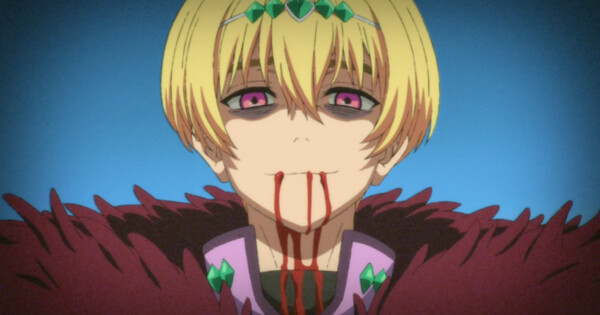
It’s one of the oldest questions asked by hundreds of anime over the decades: “Is there any better time for an extremely lengthy lore-dump flashback than right in the middle of a climactic battle?” The obvious answer is, “Yes, obviously, let’s not interrupt the thrilling action sequence if we can help it,” but this is a truth that has eluded so many shows. While I would have preferred more than a measly few uninterrupted minutes of Clevatess and Vorden duking it out, I cannot deny that the dark history of Toah is a welcome revelation. At long last, the story of the “True Hero” of legend has been told, and it’s a doozy of a tale, indeed.
As any of us could have predicted, Vorden’s motivations stem from his desire to bring back the most formidable and satisfying rival he ever encountered. It’s a pretty classic case of an Anime Dude desperately craving the blood-soaked attention and intimacy that can only be satisfied by the heated rivalry he shares with another Anime Dude, complete with aggressive homoerotic subtext. What is surprising about Write, the Strongest Hero, is how his role in the twisted history of Clevatess‘ fractured fantasy world is more complicated than merely being the doomed protagonist of a forgotten chapter in the war against the Dark Beast Lords. For one,seeing Vorden be so down bad for Write gives me hope that Clevatess will one day understand what an Ultra-Rare-Tier pull he landed with Alicia.
More important to our story, though, is how the ancient kingdom of Toah turns out to have been a deeply cruel and apathetic kingdom that was all too happy to throw its legions of heroes into an endless cycle of brutal violence and reincarnation. What’s more, I’m pretty sure that the Heroes were all victims of Ye Olde Isekai Routine, which means the bastards of Toah absolutely deserved the massacre that was coming for them. The Books of Toah and the Heroic Legend were all Write’s ploys to bore holes into the foundations of Toah’s rotting empire and set the stage for his apocalyptic reckoning. The apocalypse of Toah was not the doing of any Dark Beast, but a nerdy little writer with a talent for playing the long-con. That, my friends, is damned fine world-building. It’s a shame that the production values of this episode were a little too rough to fully sell this cool and entertaining twist, but the overall impact is still felt. No wonder our big bad wants his rival back. Vorden spent a year frolicking with the most heinous Supervillain Isekai Boyfriend that his universe has ever known. Even after a millennium, who else could possibly compare?
Not Clevatess, that is for sure. To be honest, I absolutely love how badly our evil little pupper got his ass handed to him this week. He’s spent the entire season acting like the unkillable King Shit of Demon Doggy Mountain, so it’s been humbling to see Vorden clean Clevvie’s clock while also pointing out the malaise of existential boredom that has been holding him back for so centuries. Also, don’t think I didn’t notice the moment where Vorden punches Clevatess so hard that the entire medium shifts to live action with a cut to a rotoscoped miniature explosion ripped straight out of an Ultraman joint. That single edit alone is enough for me to bump the score of this entire episode back up to four stars. Long live tokusatsu, baby.
Episode Rating:
Clevatess Season 2 is currently streaming on
Crunchyroll.
James is a writer with many thoughts and feelings about anime and other pop-culture, which can also be found on BlueSky, his blog, and his podcast.
Disclosure: Kadokawa World Entertainment (KWE), a wholly owned subsidiary of Kadokawa Corporation, is the majority owner of Anime News Network, LLC. One or more of the companies mentioned in this article are part of the Kadokawa Group of Companies.
The views and opinions expressed in this article are solely those of the author(s) and do not necessarily represent the views of Anime News Network, its employees, owners, or sponsors.
>

‘NAZA’ Trailer Sets the Stage for Yuval Abraham and Rachel Szor’s Gaza Doc
The Bounce: Remembering when Michael Jordan became a Wizard, 25 years ago

Disrupt 2026 Layoff Expo+ Passes available for $75
-

 movies4 months ago
Search For Canadian TV Actor Stewart McLean Now Homicide Investigation
-

 Fashion9 years ago
These ’90s fashion trends are making a comeback in 2017
-
Fashion9 years ago
According to Dior Couture, this taboo fashion accessory is back
-
Fashion9 years ago
Model Jocelyn Chew’s Instagram is the best vacation you’ve ever had
-
Fashion9 years ago
Emily Ratajkowski channels back-to-school style
-
Fashion9 years ago
9 Celebrities who have spoken out about being photoshopped
-

 Anime4 months ago
Rurouni Kenshin: Hokkaido Arc Manga Takes 1-Issue Break – News
-

 Anime3 months ago
HIDIVE to Stream English Dubs for The World Is Dancing, The Forsaken Saintess and Her Foodie Roadtrip in Another World, The Dangers in My Heart: The Movie Anime – News