
Anime
WIT Studio’s George Wada on Attack on Titan, Trust, and Taking on The One Piece – All the News and Reviews from Anime Expo 2026

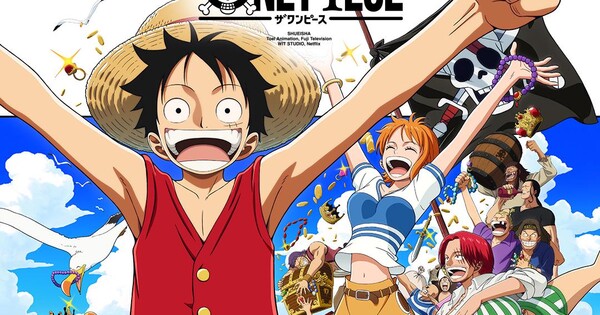

As the current president of Wit Studio and Production I.G, George Wada has played an instrumental role in helping to bring to life some of anime fandom’s most cherished properties. Serving as an animation producer on the first three seasons of Attack on Titan, Wada has since led Wit Studio as it worked on projects including The Ancient Magus’ Bride, Vinland Saga season 1, Ranking of Kings, and SPY x FAMILY. Wit Studio is currently working on The One Piece, a new adaptation of Eiichiro Oda‘s famed manga. Wada sat down with us last month at Anime Expo to talk about the past, present, and future of Wit Studio.
Before we talk about the future, I’d like to talk a little about the past. Looking back almost fourteen years later, did you or anyone else at Wit Studio imagine that Attack on Titan would become such a global phenomenon?
Wada:
Not at all. Before the very first promotional video was released to the public, Tetsuya Nakatake showed it to me. Attack on Titan was the first project for our newly established studio, and Nakatake said to me, “Isn’t this incredible? We should be proud that we’re able to make something like this.”
For a new studio, Attack on Titan seems like an incredibly ambitious project to take on as your first production. What made you think it was the right project for Wit Studio?
Wada:
I chose it because I thought the original manga was a perfect fit for Director Tetsuro Araki. Our studio had just been established, and we were about to go out into the world and face many challenges. I felt that the story of our new animation studio and the story of Attack on Titan were somehow in sync with each other. We made it with the feeling that we were going to face those challenges head-on.
Was Attack on Titan the first project you considered for the studio, or were there other possibilities as well?
Wada:
It was the only one.
Beyond the animation itself, Attack on Titan also has such a strong emotional core. What was it about the story that made you think it was right for your studio?
Wada:
I thought the story of having to go outside, because otherwise you can’t gain anything, was something that could reach people around the world. This was before the world had become as connected as it is now. I think it was truly significant as a story about people all over the world overcoming different kinds of walls.

© Hajime Isayama, Kodansha/“ATTACK ON TITAN” Production Committee. All Rights Reserved.
In the entertainment industry, success is often measured by things like financial performance. But there’s another kind of success when something becomes a global cultural phenomenon. Was there a particular point when you realized that Attack on Titan and Wit Studio‘s work had become something much bigger than simply a commercially successful anime?
Wada:
Attack on Titan was very significant in the sense that it helped Japanese anime spread around the world and helped people around the world understand how incredible Japanese animation can be.
Since Attack on Titan, Wit Studio has gone on to produce and co-produce many beloved series, including SPY x FAMILY and Ranking of Kings. After all this time, what continues to influence the projects you choose?
Wada:
One thing that has remained consistent from Attack on Titan all the way through The One Piece is that we want to pursue forms of expression that can only be achieved through animation. That hasn’t changed. I think the stories that our co-founders Tetsuya Nakatake and Kyoji Asano envision, where the protagonist confronts some kind of difficulty, represent the kinds of works Wit Studio chooses.
With everything the studio has accomplished, how do you continue to challenge yourselves and improve? Once you’ve achieved that level of success, I imagine it must be difficult to keep going and create something even better.
Wada:
I think the essence of entertainment is to keep adding something new.
There is so much entertainment in the world now, so if we want to surprise audiences and make them happy, we have to create something truly incredible. As creators, all we can do is keep adding to what we’ve done so that we don’t disappoint the audience. Once people forget about the things we create, that’s when it’s time for us to leave. I heard that from Masahiko Minami at BONES.
As studio president, so much of your job relies on trust. You have to trust the people you work with and trust your team. After almost fifteen years, do you think you’ve changed in the way you approach that?
Wada:
Over the past ten or fifteen years, I think I’ve gotten better at trusting people.
To trust someone means entrusting something to them. And entrusting something to them means respecting the way that person thinks. There isn’t anyone who can do exactly what I do, and there isn’t anyone who can think exactly the way I do. I think the reason our team has become stronger is that we’ve all gotten better at trusting one another. We started as a studio of six people, and now we’ve grown to more than 300. I’m very happy that the number of people I can trust has grown. More than anything, we want to make a lot of animation.
I think fans will be very excited to hear that you plan to make a lot more anime. Is there a particular upcoming project you’re especially excited for audiences to see?
Wada:
I’m really looking forward to seeing how The One Piece, which will be released in February 2027, reaches audiences today. There is already the existing One Piece anime, and there’s also the live-action version. With our new version of One Piece, I hope we can introduce the work to even more people. I consider One Piece one of Japan’s most precious manga, so I’m really looking forward to bringing it to the world.

© 尾田栄一郎/集英社・「THE ONE PIECE」製作委員会
Taking on such a beloved property as One Piece, would you say it’s scary, exciting, or a little bit of both?
Wada:
We’re really excited. In Japanese, we’d say “waku waku.” As you said, there is some fear and anxiety about heading somewhere we haven’t been before. But the excitement is even greater than that. That’s also what the story of One Piece is about.

© 尾田栄一郎/集英社・「THE ONE PIECE」製作委員会
At your panel, you mentioned Tokyo Anime Next, an international animation event taking place in Ikebukuro later this year? (Tokyo Anime Next will take place in Ikebukuro from October 30 to November 2, 2026, as a launch event for a new annual international animation festival planned for 2027. Organized by the Association of Japanese Animations (AJA) in collaboration with the Tokyo Metropolitan Government, the initiative was announced by Wada during the Production I.G x Wit Studio panel at Anime Expo.)
Wada:
Yes. One reason we decided to do this is that I felt Japan didn’t really have a large, well-established awards event for animation. After discussing it with colleagues at other anime studios, we decided to hold an event like this. A lot of studios will be participating, which means many creators will be gathering there. We’ll also be sharing a variety of information. If you want to learn about Japanese animation, get the latest news, and find out what’s happening in the industry right now, I think this will be a very good event to follow. There will be creators there in person as well, so I hope people from around the world will come to Japan to experience the event.
>
Anime
Monochrome, Good Smile Unveil Ignisphere Mixed Media Project, Along With Project’s Dawngazer Action RPG – News
Unicorn Overlord director, character designer Takafumi Noma helms Dawngazer 2028 game
Monochrome Corp. and Good Smile Company announced a new mixed media IP titled Ignisphere on Friday, along with the first title announced for the franchise, an action RPG titled Dawngazer. Monochrome’s Takafumi Noma, the director and character designer of Vanillaware’s Unicorn Overlord game, is directing Dawngazer at Ignisphere Studio, with Good Smile Company publishing the game. The companies unveiled a teaser (seen below) for Ignisphere.
The game will launch for Nintendo Switch 2, PlayStation 5, and PC via Steam in 2028, with language support for Japanese, English, Traditional Chinese, and Simplified Chinese.
Yoshimi Kudō will compose the music for the game, and composed and arranged the music that is featured in the above teaser. KOCHO, SAK., and Maki Takimoto provided the vocals for the song, and Wataru Mukai played the cello.
Good Smile Company will handle merchandising for the Ignisphere IP. The franchise also has “multiple” light novel projects in development under Kadokawa‘s Fujimi Fantasia Bunko novel imprint.
Atlus released Vanillaware and Noma’s Unicorn Overlord game for Switch, PS5, PlayStation 4, and Xbox Series X|S in March 2024 worldwide.
Source: Press release
Disclosure: Kadokawa World Entertainment (KWE), a wholly owned subsidiary of Kadokawa Corporation, is the majority owner of Anime News Network, LLC. One or more of the companies mentioned in this article are part of the Kadokawa Group of Companies.
>

I think we’ve all gotten a little fed up with seminal shojo classics getting the short end of the animation stick. This season includes yet another log to the trash fire as we hope beyond hope that next time, it’ll be different. It joins its disappointing compatriots: the one where the camera is permanently attached to a theme park ride, the boring gamer power fantasy, and, somehow, a show by Kyoto Animation.

© Nanigashi Shima – SB Creative Corp. / Kakekoi Partners
I was so ready to give Love Unseen Beneath the Clear Night Sky the benefit of the doubt. This romance between college student Kakeru and his blind classmate Koharu was a little preachy and clumsy about disability rights. It would lecture the audience about letting disabled people advocate for themselves, but then turn around and have their friend ask Kakeru to watch out for Koharu behind her back. Kakeru was a bit too inward-facing, comparing his sadness over being raised by a single mom to Koharu living with a disability.
But still, there was a charm to it. Koharu was a full person trying to live her life, not a walking avatar of pluck and grit who inspired Kakeru to get over himself. Kakeru was genuinely interested in getting to know Koharu, and the two’s relationship was sweet. Not particularly enthralling and still occasionally preachy, but clearly well-intentioned and engaging enough that I kept watching, planning to write about it when the season wrapped.
But then the big twist dropped, and the whole thing took a turn for the maudlin, saccharine, and outright creepy. See, Koharu lost her vision due to cancer, an illness that has a nasty tendency to refuse to ever truly go away. So, when she stops coming to class or answering her phone, Kakeru and his friends track her down. They follow a rumor that she was seen entering a hospital, go there, and wander the halls until they find her. When she tells them she has no memory of the past few months (what a twist!), they start volunteering in the pediatric ward, where she plays piano. No matter how many times she tells him to buzz off, Kakeru keeps coming back until she accepts him.
It’s so, so, so creepy. It’s literal stalking and harassment of an ill, disabled young woman, dressed up as a story of devotion and determination to live one’s life to the fullest. Koharu deserves to be treated with dignity and to have her wishes heard, but Kakeru simply knows better than her. Even if it weren’t unpalatable for this reason, the show’s emotional tone turns toward mawkish melodrama. Every twist is more ridiculous than the last: Koharu disappears! Koharu has super-cancer! Koharu plays piano for sick kids! Koharu cuts her beautiful hair to donate, which conveniently is the hairstyle she had when she was first diagnosed in middle school! Koharu has medically inexplicable memory loss! Just let us reach in and yank on those heartstrings for you!
I have zero patience for stories that put their female characters through hell for the development of a male protagonist, let alone ones that are this lionizing of violating their boundaries in the process.
—Caitlin Moore

© Nekoko, BroccoLee, Jaian, KODANSHA/“The Exiled Heavy Knight Knows How to Game the System” Production Committee
Sometimes it feels a bit unfair to dunk on a studio so committed to its own artistic vision (however misguided), but GoHands remains committed to its war on human eyeballs, and this show is no exception. All of the usual trademarks of a typical GoHands production are on full display here: A camera that can’t stop rotating to the point of inducing nausea, terrible compositing that makes the overly detailed character designs and photorealistic backgrounds look like they exist on two separate planes of reality, garish color filters, and animation that’s detailed in all the worst areas when it comes to having every strand of hair on a character’s head flowing at all times. The show even adds new visual horrors to the mix, with the first episode featuring what is possibly the single most disorienting action montage I’ve ever seen, with scene transitions so bad it took a full minute for my brain to register what was being attempted. Shockingly, though, I’d say the look of this show is among the least of its problems. Now make no mistake, it does look pretty horrendous, but it’s far from GoHands worst in that regard, and if you can get past the first episode, you’ve likely already seen the heights of its insanity on that end.
The real death knell for this show is that it gives the worst eras of the One Piece anime a run for their money in having some of the most atrocious pacing of any show ever put to television. In nearly any given episode, there is only ever about maybe 10 to 14 minutes of actual progression, with the rest of the show’s runtime being riddled with flashbacks, constant reuse of specific shots, and sometimes quite literally just playing a full minute or two of the same scene back to back if it happened to play just before the spot for a commercial break. At best, only one or two story beats happen in any given episode, and even accounting for the show running for two cours, the narrative barely progresses past its inciting incident, making it an absolute slog to sit through. It’s a shame, too, because there’s otherwise potentially decent material here. Despite kicking off with the usual revenge fantasy premise of a “kicked out of the party” isekai, it manages to avoid coming off as particularly mean-spirited, and Elmyas is a reasonably likable protagonist who is generally more than happy to actually cooperate with others despite being looked down on for his supposedly terrible battle class. It even manages to avoid defaulting towards being a harem, as the jester girl Ruche who joins his party is his only female companion, and even gets to spend more of her screen time building up her confidence after being similarly put down by her ex-party members for also having a less than optimal class, than fawning over all of Elmyas’s actions. None of this is exactly the pinnacle of character writing, but it’s enough that a normal-looking and normal-paced version of this show could have made for some perfectly fine popcorn entertainment if nothing else.
Alas, even if you are a genuine fan of the material, this adaptation really doesn’t have much of anything going for it, and for anyone else, there is a sea of isekai out there that are at least more respectful of your time. Hand Shakers still takes the crown as the worst show GoHands has ever made from a production standpoint, but from an entertainment standpoint, this might actually be even more unwatchable. For all its many sins, you certainly can’t accuse Hand Shakers of being boring, and in terms of being a wild train wreck, there really is no other anime quite like it. This doesn’t even have that much going for it, and while I never would have thought there could be such a thing as a GoHands show so dull that the bad visuals rate among the least of its problems, this certainly seems to have done the impossible.
—Jairus Taylor

© Hiro Yuki, Kyoto Animation/Sparks of Tomorrow Production Committee
Next to the cardinal sin of causing boredom, what is the worst experience an anime can induce in its viewers? I’d argue strongly for disappointment, and Sparks of Tomorrow disappointed me more than almost any other anime of the past few years. The fact that the usually stellar animation studio Kyoto Animation made it was enough to get my hopes up. As the company responsible for such greats as The Melancholy of Haruhi Suzumiya, Miss Kobayashi’s Dragon Maid, and A Silent Voice, I hotly anticipated their next TV show, especially as the trailer looked gorgeous.
As an anime adapted from a novel published by Kyoto Animation‘s own KA Esuma Bunko imprint, Sparks of Tomorrow follows the pattern established by stablemates Free! and Violet Evergarden, and both of those are exceptional series. Like all of KyoAni’s works, Sparks of Tomorrow certainly looks incredible. No effort has been spared in creating a vibrant, colorful world: an alternate 1907 Japan where the invention of electricity never led to an energy revolution, and society still runs on steam power. That’s a fascinating idea, but unfortunately, the show has little beyond looks and ideas.
Every episode is an exercise in frustration at the show’s wasted potential. Perhaps this is a fault of the source material, but without an English-language version, it’s impossible to say. After all, the print and screen versions of Violet Evergarden are reportedly very different from one another. A major issue is the characters. They’re almost entirely static, barely develop, act repetitively, and, worse still, they’re annoying. White-haired main antagonist Yosuke Mizoe is one of the most nails-down-a-chalkboard, screechingly irritating characters ever committed to the screen. He’s a borderline offensive, loud and obnoxious, effeminate gay male caricature who drags down every single scene in which he appears. He has zero redeeming features, and his bizarre fixation on the protagonist’s elder brother is both creepy and off-putting. I know villains are supposed to be loathsome, but the best antagonists are usually at the very least charismatic. Yosuke has a yawning chasm of emptiness where charisma should be.
Protagonist Kihachi Sakamoto isn’t much better, as he rarely drives the narrative, acting more like a reactive cog in a plot machine that barely functions to tell a coherent story. Heroine Inako Momokawa isn’t much more interesting. Neither of them achieves much, and their repetitive adventures often end with them returning to square one. At least some of the supporting characters are amusing, especially Inako’s duo of bemused female friends.
The only episode to truly catch my attention is the gloriously demented “The Sound of Innovation,” where the hapless Kihachi and friends inadvertently invent heavy metal music. It’s a bonkers sequence you have to see (and hear) to believe. The rest of the show utterly fails to match this promise. What a shame.
—Kevin Cormack

© 篠原千絵/小学館/アニメ「天は赤い河のほとり」製作委員会
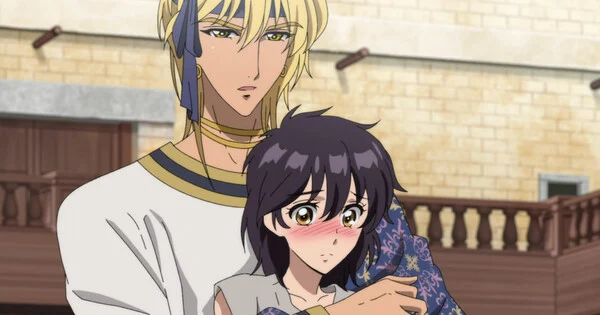
Adaptation is a tricky game. Stick too close, and format changes can make a story drag. Stray too far, and fans of the source material will be sharpening their pitchforks. Red River somehow manages to create its own new category out of bits and pieces of both of these mistakes: it follows the events of the manga pretty faithfully, but it makes the unfortunate decision to dumb heroine Yuri down as far as it possibly can, rendering the plot devoid of character development and nuance so that it may as well only be a totally different story.
It’s unfair, really, because Chie Shinohara‘s original manga holds up well for a series written in the late 1990s, when shoujo manga took a very different attitude to things like “sexual assault” and “consent.” On the surface, it’s a story about a girl out of time: a modern Japanese teen sent back to the days of the Hittite Empire. But in practice, the manga follows a young woman as she rises to meet the challenges she faces, learns to navigate a difficult and dangerous world, and helps the historical record show why this king and culture were so impressive. Shinohara grounds her story firmly in history, bringing in real events, people, and legends, and carefully inserting Yuri as both the goddess Ishtar and a reasonable facsimile of the real-life Hittite queen Puduhepa. It’s excellent historical fiction.
The anime, though? Not so much. Yes, the events of the manga still play out, but Yuri, instead of growing and maturing through her hardships, spends most of the early episodes wailing or making incredibly stupid mistakes (RIP, Tito) before suddenly morphing into Ms. Competent with little or no reason. Why can this girl suddenly ride a horse? Or use a sword? How does she fall in love with Kail? And why on earth is she being touted as “brilliant” when she consistently does things like blunder into a situation she’s been warned about or scream “Thanks for coming to Rescue Me!” after a secret rescue mission? Manga Yuri and Anime Yuri are almost entirely different people, and that really brings the animated version down.
Also, it looks bad. Oh, I’ve seen worse, but that doesn’t mean that this isn’t plenty awful on its own. Background characters (especially soldiers) move in the same awkward loop in every battle, main characters are consistently off-model, and even their movements are janky. This entire adaptation is a travesty, a slap in the face to fans of the original manga. Maybe it doesn’t come across as badly for anime-only viewers, but for this manga reader? You don’t get much worse than this.
—Rebecca Silverman

© 池田祐輝・講談社/「サンダー3」製作委員会
I am such a sucker for media that gets creative with mixing genres, art styles, and even cinematic techniques. Who Framed Roger Rabbit? is one of the greatest films ever made; the Spider-Verse movies and their universe-melding completely redefined how modern animation looks and feels; and some of the coolest modern video games are going back to old-school methods of visual storytelling, like live-action FMVs and even stop-motion, to push the boundaries of artistic expression. The point is, even though I know absolutely nothing about it, I was really impressed by the first episodes of Thunder 3. When you put aside its limited 3D animation and some odd storytelling choices, the core premise is honestly brilliant: A bunch of goofy kids from a world of comic-strip caricatures get wrapped up in a dangerous rescue mission when protagonist Pyontaro’s little sister gets lost in a completely different dimension defined by its harrowing, relatively realistic alien domination. But since our kid heroes come from a world of nearly nonexistent stakes and lackadaisical physics, they’re blessed with incredible superpowers and resilience that let them fight back against the evil alien hordes.
Alas, what makes Thunder 3 one of the worst anime of this season instead of a secret sleeper-hit is the way it ultimately wastes all of its potential. For one, we have to talk about the animation, which was clearly not very good from the start, but that could have been forgiven if the show leveraged its creative story elements and the novelty of its blended art styles. Yet, at the end of the day, Thunder 3 does shockingly little with the wild setup of two fundamentally incompatible universes colliding. You’d think that the shock of Pyonataro and his friends meeting their more realistically proportioned alternate-universe counterparts would make for some fascinating story threads, but nope. In fact, the show often ignores its heroes to focus on the much less interesting (visually and narratively) characters from the Alien Invasion Universe, which is baffling. The inherent comic potential of seeing little girl Futaba innocently destroying fleets of alien warships practically writes itself; we should have been going full-on Earth Defense Force by, like, episode 4 at the latest.
Instead, Thunder 3 spins its wheels and wastes all of our time while it desperately delays the gratification of goofy, explosive hijinks that we were all promised in those opening episodes. The title characters have barely been a presence in their own show for most of the season. I hear that the manga of Thunder 3 is a much better product overall, which is a small reassurance, I suppose, but it’s a shame that this adaptation was bungled so thoroughly. This is one of those properties that practically begs to be explored in new mediums beyond print. Even if the practical limitations of the production meant that Thunder 3 was never going to be a AAA smash of blockbuster proportions, there is no reason whatsoever that it had to end up as such a lame disappointment.
—James Beckett

© ハム男/アース・スター エンターテイメント/ヘルモード製作委員会
The first season of Hell Mode might be one of the most painfully slow-paced things in all of anime, manga, and light novels. With there being so many isekai anime out there based around protagonists who often land in some pretty optimal circumstances—overpowered innate skills, wealthy families, knowledge of later events, and so on—I can understand all too well the logic through which something like Hell Mode would sound like a breath of fresh air: Finally! An isekai about a protagonist with an ability that requires him to actually grind (a LOT) to see any meaningful results, is reborn into a world they’re wholly unfamiliar with, and in absolute poverty.
But as it turns out, there’s a reason no one else was doing that! It makes for an incredibly slow-paced—well, calling it a “story” in the first season feels generous. It doesn’t really start until the second season, when our protagonist Allen and his friends enter the Academy and learn some harsh truths about their world. Sort of. It doesn’t actually become meaningfully relevant until well into the second season, and even then, it’s surrounded by the series’ trademark grinding-slash-numbers-slop. This might not be a problem if Allen or any of his partymates were interesting characters, or at least had some cool dynamics going on, but even with the new characters in the main cast, there’s nothing of the sort.
A flatness so pervasive in every aspect of this already-tedious show makes it sleep-inducingly boring. The characters, the fights, the power and magic systems, the world, the environments, even what precious little we’ve seen of that story that’s allegedly hanging around somewhere. The production values certainly aren’t doing this show any favors either. In fact, with one of the absolute worst and most skippable intro songs I’ve heard in a while, and CG that I’d rank among the all-time worst in all of anime, they only drag it down further. It’s as though every single thing about this show seeks only to sabotage it.
Overall, this series frustrates me a lot. Not just because of how much work it feels like to get through even a single episode (although that’s obviously a part of it, too), but also because with even slightly better execution, this easily could’ve been so cool. As I said at the beginning, it breaks away from the norms of isekai anime in so many interesting ways. Forget Hell Mode; it should be easy mode making at least a decent series with so many fundamental differences. And yet, against all odds, Hell Mode still found a way to fumble its fortunes tremendously.
—Kennedy
>

© 理不尽な孫の手/MFブックス/「無職転生Ⅲ」製作委員会
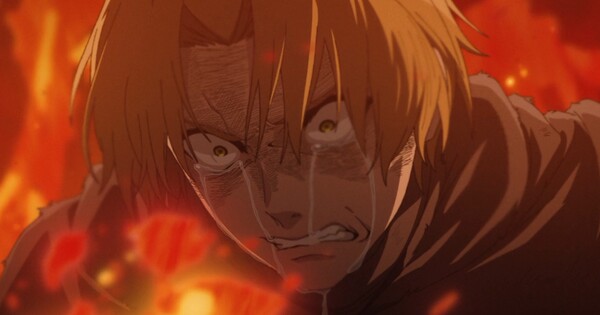
Having seen this abridged version of Future Rudeus’ life, we are left with the question: Who is truly responsible for Rudeus’ misfortune? Of course, the knee jerk reaction would be to blame the Man-God for it all. After all, he is the one who took advantage of Rudeus’ trust and used him to kill Roxy (and her unborn child) in a Rube Goldberg fashion. But while both the inciting action and malicious intent begin with the Man-God, there were numerous chances—numerous points of no return—where better choices from Rudeus would have stopped the chain-reaction of despair in his life.
Rudeus didn’t need to steal from the Church, branding himself a pariah and resulting in Cliff’s death. He didn’t need to turn into a drunk, sleep with prostitutes, and drive his remaining wife to take part in an ill conceived coup. He didn’t need to go on a killing spree, making him an enemy of an entire kingdom. He didn’t need to ignore his friend’s problems when their despair was even greater than his own. He didn’t need to drive Eris away at every possible turn.
Or to put it another way, other people lose loved ones and don’t turn into apostate war criminals. However, the fact of the matter is that Rudeus, despite his growth, is still an inherently selfish individual. His joy and his pain are what matters most to him—even as he claims that his family is the most important thing in the world.
Luckily, with years of distance (following the decades of self-loathing and revenge-seeking), Future Rudeus can see his mistakes for what they are. This is why he not only gives Rudeus the information to save Roxy but also tells him to look after Nanahoshi and make peace with Eris. Moreover, he makes sure to pass on that attempting to get revenge on the Man-God is futile. The only real way to strike back is to deceive him—to aid those with the lifespan needed to get revenge in his stead on the down low.
And all this leaves us wondering, can modern day Rudeus learn from his future self’s mistakes? Is seeing himself die and reading the diary enough for him to make the changes he needs to in the present? Can he forgive Eris? Can he keep his cool around the Man-God? Can he be the friend that Nanahoshi needs? Can he be less self-centered the next time tragedy inevitably strikes?
…Or are these all lessons that can only be learned the hard way?
We’ll just have to wait and see.
Mushoku Tensei: Jobless Reincarnation III is currently streaming on
Crunchyroll.
The views and opinions expressed in this article are solely those of the author(s) and do not necessarily represent the views of Anime News Network, its employees, owners, or sponsors.
>
Just give Brock Purdy his flowers already, in fantasy football or otherwise

Jeffrey Katzenberg Is Launching an AI Animation Studio

WIT Studio’s George Wada on Attack on Titan, Trust, and Taking on The One Piece – All the News and Reviews from Anime Expo 2026
-

 movies4 months ago
Search For Canadian TV Actor Stewart McLean Now Homicide Investigation
-

 Fashion9 years ago
These ’90s fashion trends are making a comeback in 2017
-
Fashion9 years ago
According to Dior Couture, this taboo fashion accessory is back
-
Fashion9 years ago
Model Jocelyn Chew’s Instagram is the best vacation you’ve ever had
-
Fashion9 years ago
Emily Ratajkowski channels back-to-school style
-
Fashion9 years ago
9 Celebrities who have spoken out about being photoshopped
-

 Anime4 months ago
Rurouni Kenshin: Hokkaido Arc Manga Takes 1-Issue Break – News
-

 Anime3 months ago
HIDIVE to Stream English Dubs for The World Is Dancing, The Forsaken Saintess and Her Foodie Roadtrip in Another World, The Dangers in My Heart: The Movie Anime – News