
Entertainment
Q3 2026 Horror Box Office: Why Every Hit Can’t Be the Next ‘Obsession’

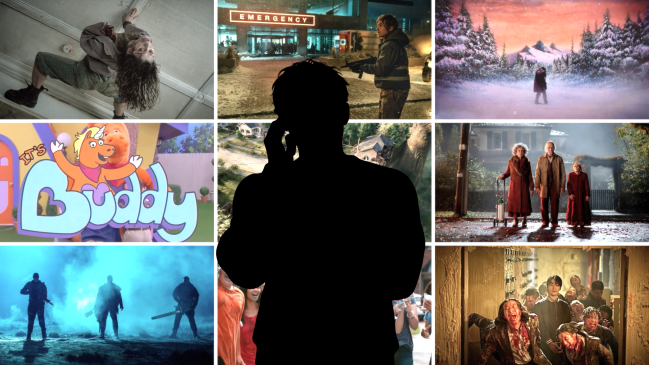
Hollywood fell so hard for “Obsession” that now it wants every new horror movie to look and act like that one. There’s a useful word for that kind of all-consuming romantic fixation: limerence.
Coined by psychologist Dorothy Tennov in 1979, limerence describes a state of extreme infatuation fueled by a prolonged yearning for approval or reciprocation. A little encouragement can go a long way for a person with limerence, and without help, they can wind up imagining an entire future with someone based on evidence that, at most, supports dinner. (No cat for me, thanks!)
Produced for a reported $750,000 and grossing more than $500 million worldwide, of course Curry Barker’s “Obsession” gave the industry so much to daydream about that it started to hear wedding bells. An original low-budget indie became a global hit. Who wouldn’t want another?


But yearning for the next “Obsession” is different from creating a theatrical market where more emerging artists with ambitious projects can thrive. And measuring every new release against Barker’s singular result risks not only overlooking what other movies have accomplished — but drawing the wrong conclusions about why some films fell short in ways that mattered to them.
In Q3, Zach Cregger’s “Resident Evil” arrived big, while “Buddy” slowly but surely built a major hit without becoming an “Obsession”-sized win. “Evil Dead Burn” and “Insidious: Out of the Further” tested whether franchise expectations still matched those sequels’ costs, and smaller releases, like “Teenage Sex and Death at Camp Miasma” and “It Ends,” reminded analysts to use the appropriate framework when considering their financial success.
Wide releases couldn’t rescue “Ice Cream Man” or “Onslaught,” but “Colony” offered a strong case for finding great movies beyond U.S. domestic grosses. Plus, thrillers, like “The End of Oak Street” and “Hope,” broadened the genre conversation, just as the hunt for YouTube’s next breakout filmmaker heads back into theaters this October — where new indie studio, Hades Films, is already taking serious swings at connecting with Gen Z horror fans through offerings like “The Influencer Project,” starring Chiara King.
Considered together, the box office results from the last three months offer a view of the business that’s more complicated than finding Hollywood’s next dream date. Scary movies, by nature, demand room for experimentation that can draw out all kinds of different audiences. And the horror genre’s long-term well-being depends on decision-makers learning to love more than the exception to a rule they wrote.
Here are six lessons from the summer box office, and what they say about horror post-“Obsession.”
1. “Obsession” Grew, Where “Resident Evil” Arrived
By September, “the next ‘Obsession’” was already an industry shopping brief; Gersh agent Julien Levesque, for example, told TheWrap that TIFF buyers were hunting for exactly that. But Q3’s biggest horror newcomer, “Resident Evil,” took a very different route to becoming a hit.
For Sony, Zach Cregger’s third horror feature opened to $60.2 million domestically. That’s more than triple the $17.2 million that launched Curry Barker’s dating nightmare for Focus Features back in May. And through its first 13 days, “Resident Evil” collected $110.6 million, whereas “Obsession” made just $73.5 million over the same stretch.

Cregger’s film was comfortably ahead at that stage judging by ticket sales alone. But the two titles’ trajectories diverged rapidly. “Resident Evil” fell 62 percent in its second weekend, when “Obsession” increased 39 percent — and then grew another 14 percent in weekend three.
Of course, Sony’s adaptation of a Capcom video game had two kinds of recognition working for it. First, it’s a familiar horror property that’s done massive numbers before. And second, it’s part of Cregger’s own developing reputation after “Barbarian” and the Oscar-winning “Weapons.”
The director’s name gave this “Resident Evil” installment a special identity beyond its historically tortured franchise, and effectively paired an established audience with the promise of something creatively fresh. “Obsession,” on the other hand, was praised precisely because it seems to come out of nowhere. For filmmakers like Barker, Cregger’s career offers one possible path from an original horror film to a larger studio assignment. But those opportunities also bring different financial obligations; “Resident Evil” carried a reported $75 million production budget.
Neither opening-weekend grosses nor behind-the-scenes price tags can settle these films’ respective profitability right now. But they do show how horror buzz develops: either through the demonstrated value of anticipation or the shock and awe that comes from exceeding it.
2. “Buddy” Was a Huge Hit, Even Without Making History
“Buddy” didn’t need half a billion dollars to justify its existence; it was unicorn was enough!
Casper Kelly’s fever dream set inside a terrifying children’s TV show finished September with $26.6 million domestically. That’s against a reported $3 million production budget, and nearly five times its $5.5 million opening — reflecting a remarkable run for a truly unusual and artful horror-comedy that never played more than 1,771 theaters.
The “Obsession” comparison is tempting here, too. After “Buddy” opened, Fangoria asked whether it could follow Barker’s film through strong word of mouth (while explicitly cautioning that nobody at the publication was predicting it would actually make $500 million). “Buddy” subsequently increased its second-weekend gross by 6 percent, spurring an expansion from its opening in 1,277 theaters. It also enjoyed the benefit of the Labor Day holiday (“Obsession” got Memorial Day, coincidentally), and fell a manageable 38 percent the weekend after that.

The film’s memorable marketing campaign also continued to give audiences a specific reason to be curious about “Buddy.” Distributors Roadside and Saban leaned into Kelly’s Adult Swim pedigree (he’s behind the programming block’s legendary “Too Many Cooks” short), using teasers that gradually exposed the sinister underside of a seemingly recognizable media format.
The pitch sold Kelly’s sensibility alongside his killer, orange mascot, and resulted in a kind of “Five Nights at Freddy’s”-type affection among audiences with more of an indie spirit. Production costs and ticket sales can’t establish profitability alone, but the scale does matter.
“Buddy” found an audience large enough to make its modest opening the beginning of a meaningful theatrical run, and treating that result as somehow lesser than “Obsession” misses what’s really important here: There is a viable business in giving distinctive indie horror movies room to grow without demanding that every effort become a once-in-a-decade event.
3. For Studio Sequels, Cost and Expectations Still Had to Match
Obviously, “Insidious” and “Evil Dead” had benchmarks that were way more relevant than “Obsession”: their own previous installments. And those comparisons reveal two very different degrees of franchise wear for the studios still stewarding them.
Sony’s “Insidious: Out of the Further” opened to $25.1 million domestically and reached $65.4 million by September 30. That opening was down 24 percent from 2023’s “The Red Door,” which ultimately collected $82.2 million domestically. That said, with a reported $18 million production budget and worldwide grosses reaching $168.3 million by October 4, the new installment still demonstrated substantial commercial strength.

From Warner Bros., “Evil Dead Burn” faced a much sharper contraction. Its $13.7 million opening led to $32.2 million domestically, and earned less than half of the $67.4 million pulled in by “Evil Dead Rise” (which fittingly also came out in 2023). Worldwide, “Burn” collected $72.4 million against $147.3 million for “Rise,” despite its reported production budget increased from $15 million to $20 million. In that sense, Warner Bros. was spending more to reach a smaller audience, and that’s a problem even without “Obsession” looming over it.
Neither sequel is a simple referendum on how audiences feel about familiar IP right now, but with the superhero machine starting back up after a rough few years for Marvel, it’s vital to remember that tentpoles produce hugely influential data — even when the stories of how they find their audiences are considerably less interesting.
4. Limited Releases Needed Their Own Benchmark
“Obsession” forced Hollywood to recognize that original horror can mean blockbuster business. But that doesn’t mean every original horror film was built for the same audience, or given the same opportunity to reach one.
Jane Schoenbrun’s “Teenage Sex and Death at Camp Miasma” opened in five theaters, collecting $249,606 for a per-theater average just shy of $50,000. MUBI eventually expanded it to 1,036 locations, and its domestic run reached $6.8 million. That’s a far more impressive trajectory than simply observing that it made a fraction of “Obsession.”
Schoenbrun’s own filmography offers a useful comparison. Their last film, “I Saw the TV Glow,” earned $4.9 million domestically in 2024, and peaked at 469 theaters. Alternatively, “Camp Miasma” increased that gross by roughly 37 percent — with more than twice the maximum theater count. That suggests Schoenbrun found a much larger theatrical audience, but still raises legitimate questions about how the industry is reaching it.

Alex Ullom’s “It Ends” operated on a smaller scale still, making roughly $1 million domestically from a release that peaked at only 340 theaters. Its expansion was brief, with grosses falling dramatically as theaters dropped it. A different benchmark doesn’t mean immunity from scrutiny. Rather, the point is to ask useful questions about what worked and what didn’t.
How strongly did “Teenage Sex and Death at Camp Miasma” connect in its initial markets? How well did that interest survive expansion? What did the “It Ends” release actually cost? And could it have actually done better on streaming? “Obsession” may illustrate what a theatrical breakout can achieve, but it doesn’t get at the heart of specialized releases working on sustainable terms.
5. Wider Releases Couldn’t Save These Flops
Some films deserved better rubrics for success. These ones just needed people to buy tickets.
For A24, Adam Wingard’s “Onslaught” opened in 1,918 theaters, collecting just $1.9 million. That’s an average of just $998 per location for the entire weekend. In its second weekend, the release collapsed by 86 percent — although, it remained in 1,252 theaters. By the end of September, its domestic total was approximately $3.3 million against a reported $15 million production budget. Evidently, its initial bookings substantially exceeded demand.

Similarly, for his self-proclaimed Horror Section, Eli Roth’s “Ice Cream Man” followed a painfully discouraging trajectory with $2.1 million opening across 1,592 theaters. That’s an average of $1,330 per venue. The following weekend, the theater count contracted to 660 and its gross fell 89 percent to $231,000. Neither the concept nor Roth’s name produced sustained business.
Here, it’s “Buddy” that offers the more helpful comparison. Kelly’s surprise hit opened in fewer theaters than either “Onslaught” or “Ice Cream Man,” and it still earned more than both openings combined. Then, it expanded. Grosses alone can’t explain what went wrong for Wingard and Roth, but those figures do establish that theatrical availability wasn’t enough.
6. Hollywood Hasn’t Found Its Next Big YouTuber Yet

Before Hollywood became obsessed with Curry Barker, Markiplier opened the year in a submarine full of blood. The wildly popular let’s play YouTuber independently released “Iron Lung” — which debuted to $18.2 million domestically in January and collected $51.2 million worldwide. All that against a reported $3 million production budget.
In the spring, Barker brought his own online apprenticeship to Hollywood via the comedy sketches he made with “Obsession” star Cooper Tomlinson on their channel, That’s a Bad Idea, where they also posted viral horror projects, “The Chair” and “Milk & Serial.” Barker told IndieWire YouTube gave him somewhere to practice filmmaking and to find viewers.
After Markiplier, Barker, and Kane Parsons’ YouTube-borne “Backrooms,” Q3 didn’t deliver another comparable arrival from the digital platform. October, however, will offer at least two striking tests of what online audiences can help build — both coming from the same new indie horror studio.
Hades Films just opened “The Influencer Project,” starring content creator Chiara King, on October 2. Later this month, it will also partner with Dead Meat’s James A. Janisse and Chelsea Rebecca for “Fresh Meat”: a horror anthology featuring shorts selected from over 500 submissions with audiences voting for the winner. That’s a concrete investment in auteur discovery, using an established online community to help introduce unfamiliar faces to theaters.
They’ll share the Halloween runway with “Other Mommy” on October 9, “Whalefall” and “Crawlers” on October 16, and “Clayface” on October 23 — meaning, there’s plenty left to scare up and, if the situation warrants it, get obsessed with before the end of the year. Barker will also receive IndieWire’s inaugural Future of Filmmaking Award at its namesake event, an artistic summit, on October 17 in Los Angeles.
>
Entertainment
‘Slam Frank’ Off Broadway Review: How Do You Parody the Holocaust’s Most Beloved Heroine?

>
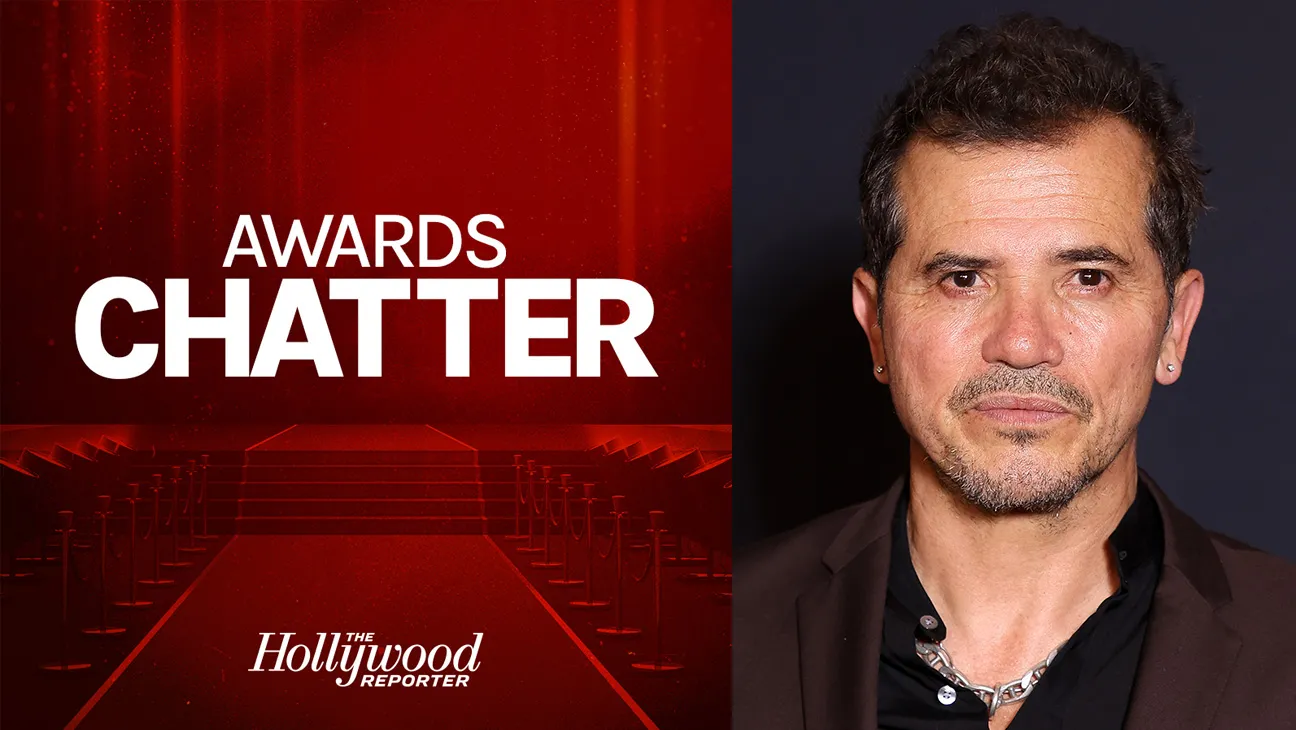
John Leguizamo, the veteran stage and screen actor and leading activist for Latino representation in Hollywood, who is currently garnering career-best notices and Oscar buzz for his portrayal of Eumaeus in Christopher Nolan’s The Odyssey, is our guest on this episode of The Hollywood Reporter’s Awards Chatter podcast, which was recorded in front of an audience of students at Chapman University.
Over the course of 42 years in the business, Leguizamo has worked with everyone. He has been directed by Brian De Palma, Spike Lee, Baz Luhrmann and Jon Favreau multiple times, as well as by Mike Nichols, George A. Romero, Ridley Scott, Todd Haynes, M. Night Shyamalan, Ava DuVernay and Christopher Nolan. And he has shared the screen with the likes of Sean Penn, Harrison Ford, Al Pacino, Leonardo DiCaprio, Wesley Snipes, Arnold Schwarzenegger, Robert De Niro, Keanu Reeves, Nicole Kidman, Kevin Hart, Tina Fey, Amy Poehler and Matt Damon.
In the movies, he has starred in blockbuster studio franchises (Ice Age and John Wick), revered indies (Poison and Chef) and cult classics (Super Mario Bros. and To Wong Foo, Thanks for Everything! Julie Newmar). On TV, he has been on hit network shows (ER) and acclaimed limited series (Waco and When They See Us). And on the stage, he has written and starred in six acclaimed one-man shows. Between them all, he has accumulated an Emmy Award and a special Tony Award, as well as Golden Globe and Critics Choice award nominations.
But Leguizamo has never received an Oscar nomination — something that might well change as a result of his latest turn as the blind loyal servant of Odysseus in The Odyssey, which has been described by The Hollywood Reporter as “a delicate, moving, heartbreaking performance… that emerges as the heartbeat of the film” and by the Wall Street Journal as “the performance of his career.”
Over the course of this episode, the youthful 66-year-old reflected on his journey from Bogotá to Jackson Heights to Hollywood, and how his discovery of comedy and acting saved; how he managed to make early inroads into the business, despite the reluctance of people to cast Latinos as anything other than stereotypes; and why he hated working on ER, loved being part of the Ice Age series and Encanto, and was invited to play the villain Vulture in Spider-Man: Homecoming — before being uninvited.
He also went deep on The Odyssey: why it meant so much to him that Nolan decided to employ non-traditional casting for the film; how he prepared to play a blind and elderly man; what it was like acting in the first film shot entirely with IMAX cameras; how he processed seeing the film — and his performance — for the first time; plus more.
Here are his thoughts on a few assorted matters…
On the trans character that he played in To Wong Foo, Thanks for Everything! Julie Newmar…
“I shouldn’t be playing it today. Yeah, no, it’s not fair. There’s plenty of great LGBTQIA actors out there that could play these roles and should be playing these roles. But that was back then, that was the ’90s.”
On who can play which roles in 2026…
“In a fair world, which it never is, everybody should be able to play anything. But the thing is that nobody gets to play anything except white cisgender males. They were never casting disabled actors ever. And now directors that I know, friends of mine, make it a mandatory thing to cast one disabled actor, to create a role for them. How great is that for them? They wouldn’t cast gay actors, even in gay roles they wouldn’t, that’s the way it was. In Latin roles, a lot of white actors were taking Latin roles in brownface for the longest time, since Touch of Evil with Charlton Heston in brownface with the black mustache. It was crazy. So I think, in this moment of correction, and perhaps it’s an overcorrection, it’s important that we cast the people who are written as the role and give them the opportunities. I really believe that. And then maybe eventually, when things are fair, then everybody can play everything all over again.”
On Nolan’s decision to employ nontraditional casting for The Odyssey…
“Now that ancient story that’s so powerful to Western literature belongs to everyone, and how beautiful is that? How generous is that? How open and inviting is that, to have Lupita Nyong’o play twins, Clytemnestra and Helen of Troy, and Travis Scott be the bard, and Corey Hawkins be Polybus, one of the evil suitors?”
On being uninvited from 2017’s Spider-Man: Homecoming…
“They offered me Spider-Man, the Vulture, and then the head of the studio called me, ‘Oh, John, this is really terrible.’ We had already negotiated. We had accepted terms. I hadn’t signed a contract, but we had accepted terms. It was pretty far along negotiations. And she said, ‘We’d like the role back. Michael Keaton wants it back.’ And I was like, ‘What the fuck is this?” I’ve never heard of such a crazy thing.’ I could have sued, but my reps are all cowards. It could [also] backfire. I mean, I’m not a litigious person anyway. That’s not who I am. I’d rather move on and create my own stuff.”
>
>

‘Slam Frank’ Off Broadway Review: How Do You Parody the Holocaust’s Most Beloved Heroine?

John Leguizamo on Odyssey, Non-Traditional Casting, Spider-Man

Hasan Piker Defends Ms. Rachel After Fox News Issues Parental Warning
-

 movies5 months ago
Search For Canadian TV Actor Stewart McLean Now Homicide Investigation
-

 Fashion9 years ago
These ’90s fashion trends are making a comeback in 2017
-
Fashion9 years ago
According to Dior Couture, this taboo fashion accessory is back
-
Fashion9 years ago
Model Jocelyn Chew’s Instagram is the best vacation you’ve ever had
-
Fashion9 years ago
Emily Ratajkowski channels back-to-school style
-
Fashion9 years ago
9 Celebrities who have spoken out about being photoshopped
-

 Anime4 months ago
Rurouni Kenshin: Hokkaido Arc Manga Takes 1-Issue Break – News
-

 Anime3 months ago
HIDIVE to Stream English Dubs for The World Is Dancing, The Forsaken Saintess and Her Foodie Roadtrip in Another World, The Dangers in My Heart: The Movie Anime – News