
Randall Park at the 35th CAPE gala
CAPE


Warning: Spoilers ahead!
Hal Jordan has never been my favorite Green Lantern.
Don’t get me wrong: I love the character, as evidenced by the Geoff Johns and Dennis O’Neil trades sitting on my bookshelf. But I never connected with him on the same level as some others who took up the mantle, your Kyle Rayners, Jessica Cruzes and, yes, John Stewarts of the world. He was never my guy.

I guess I always just felt a bit removed from Hal. In most of my favorite stories featuring the character, he largely felt like an emblem, the living embodiment of will, courage made manifest and sent to watch over the worlds of Sector 2814. His cockiness and charm made him fun to read, but they never let me get in close.
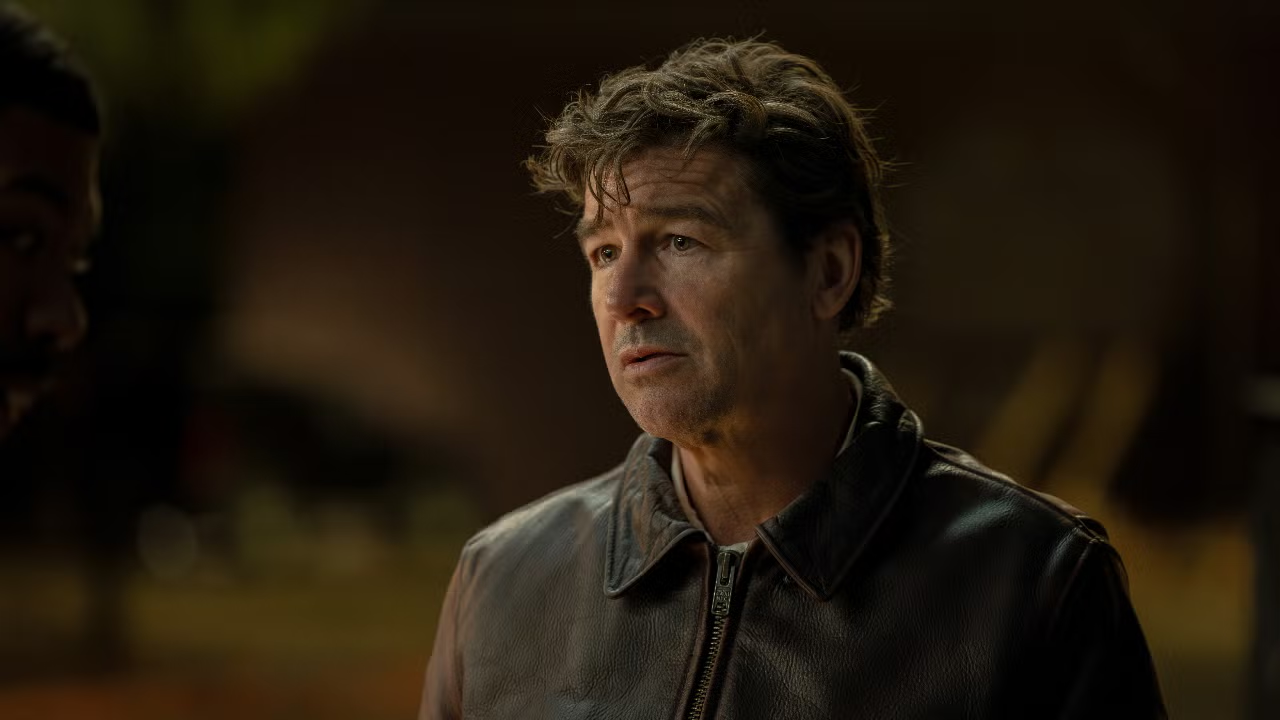
That is, until Kyle Chandler put on the ring.
While many were thrilled by this perfect marriage of actor and character, Chandler’s casting also gave some diehard fans pause. I think that’s fair. He is — I hope he doesn’t mind me saying — a bit old for the part as most comic readers would imagine it. Before the show released, it became clear that Aaron Pierre’s John Stewart (another incredible performance) was the one who was in it for the long haul, flying into theaters next summer with “Man of Tomorrow.” Many of Hal Jordan’s greatest adventures, if they happened at all, occurred before his “Lanterns” journey.
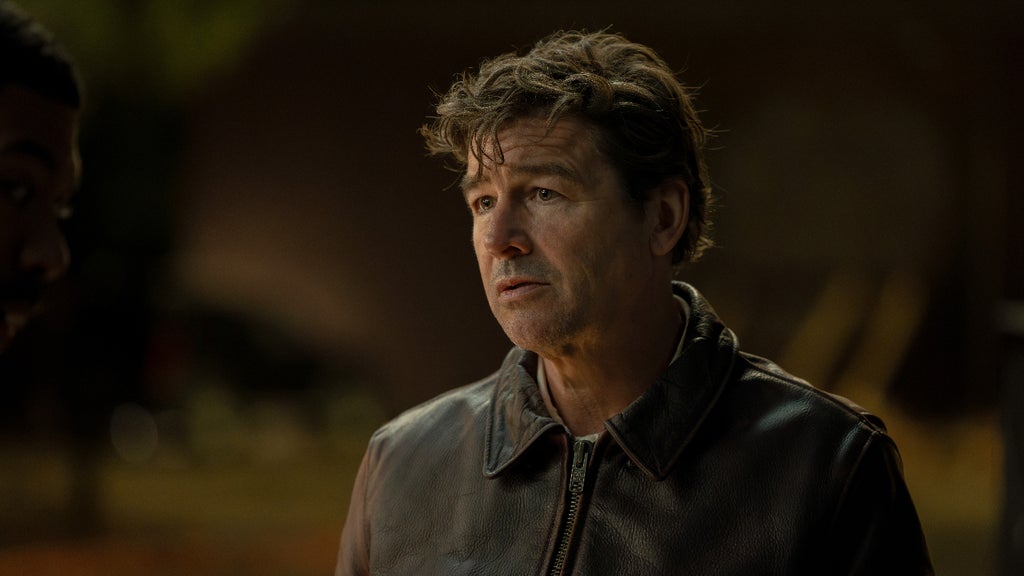
I knew Chandler would be a good fit for the part, but I still remember watching Hal’s scheme at the bar during the premiere episode, and a wave of excitement rippling through me as I realized what exactly he was planning with the jukebox. When the camera cut to Chandler’s s–t-eating grin as Rushville police officers pressed him against the wall, I knew with certainty that, despite whatever changes were in store, this guy was Hal Jordan. This feeling cemented itself later in the episode when Hal cleverly interrogated one of Antaan’s alien scouts — a scene nearly every comic book fanatic I know brought up to me the week of release to say they’re hooked.
In these scenes and numerous others, Chandler embodies everything fans love about DC’s first intergalactic lawman. He’s cocky, but the confidence is earned. He has a big mouth, but he’s willing to take a punch for it. He can be a pest, but damn it if he isn’t charming.
Chandler and the “Lanterns” writers — led by co-creators Chris Mundy, Damon Lindelof and Tom King — soon revealed that they weren’t interested in showing TV watchers the same old Hal. From beginning to end, bold choices and surprising swerves characterized the latest chapter of the DCU.

Suddenly, Hal Jordan wasn’t a character who recited the Green Lantern oath with his full chest, but one who rushed through the words like they were poison on his lips. Hal had become jaded, couldn’t bear to put on his costume or recharge his ring unless it was an absolute must. At the same time, when the prospect of being replaced came about, Hal clung to his title as if his life depended on it — as a seventh-episode origin change revealed, it maybe did.
And then of course, there’s the fact that the first episode concluded with Hal dead on some high school bleachers, staying that way through the end of the finale. To quote a villain from a different superhero universe, “No resurrections this time” — or, at least, this season.
Each of these changes, if done poorly, would be taken as sacrilege by some of the internet’s loudest comic book fans. They’re the kind of swings most shows can’t recover from. I was one of the lucky journalists who got to view the first seven episodes of “Lanterns” before the premiere aired, and with each passing minute, the same thought kept ringing through my head: I love this show, but the internet is going to hate it.
And sure, there has been a little bit of that, of people complaining that Atrocitus and Black Hand didn’t fly in with different-colored Lanterns to validate their theories. But for the most part, people have approached “Lanterns” the way any adaptation should be approached: on its terms rather than your own. Of course, the show isn’t bulletproof or immune to criticism. But I’ve been heartened by how few critiques I’ve seen that boil down to “This isn’t what I wanted.”
Because what people really wanted, it seems, was a good story. We can watch our favorite comics get big-budget adaptations all day long, but I will 10 times out of 10 prefer to see writers animated to carve their own path over an uninspired recreation of what I’ve seen before. I am OK with something being unfaithful to the “lore” as long as it’s faithful to the heart. After all, you can’t be a comic book fan without getting used to some retcons and resets. After a while, the canon starts to be less important than the narrative.

It’s not like “Lanterns” shows us none of the “classic” Hal Jordan fans have come to love. Nearly every scene with the Halogram feels ripped off the pages of “Green Lantern.” One can imagine seeing that era of Chandler’s character living out every iconic adventure from the comics.
Yet many of my favorite Hal Jordan moments come from the contrast between the Halogram and the Hal Jordan of 2016. I think of Hal clawing for the power ring during his Episode 5 fight with John, Chandler morphing his face into a Gollum-like obsession. I think of Hal interrogating Sinestro, confronting the fact that the Guardians seek to punish him despite sacrificing his second father figure. I think about the sadness, the exhaustion that Chandler manages to convey under Hal’s bluster and bravado.
Plenty of comics support this read on Hal. What if his fearlessness was actually a mask? What if the ring was actually a curse? What if his womanizing was a means of keeping others from getting too close? These ideas exist in the text, but I don’t know that I’ve ever seen them explored so well.
“Lanterns” may be Earthbound and alien-light, but it’s a Green Lantern story through and through. Chandler and Pierre’s performances are undeniable.
In the end, Hal Jordan fought the same climactic battle he always does: a battle of will, of proving that he’s more than just a ring on a finger. But instead of conjuring up the biggest weapon or besting Sinestro, powerless, at a construction site, Hal exhibited willpower of a different form.
He had the will to live another day, despite all the darkness swimming in his head. He had the will to seek amends, righting his wrongs from when the ring was all he knew. He had the will to choose “I love you” as his dying words — twice — after his heart was shattered by two father figures.
It may not be a fight against Parallax or Black Hand, but it’s still a hell of a story.
I’ve seen many people say that “Lanterns” would function better as an Elseworlds narrative, something that exists outside the main DCU continuity. I understand the appeal. When a story takes as bold of swings as this one, it’s hard not to wonder about what could have been.

But the DCU is itself an Elseworlds, a universe iterating on roughly a century of DC comics and forging its own path. Franchises like this aren’t as bulletproof as they used to be, and with complicating factors like a looming studio merger, who knows how many years of gas the DCU has left in the tank? I would rather see strong, unique stories like “Lanterns” while we can than perfect facsimiles of what exists on the page.
I have read hundreds of Green Lantern comics in my time, and I am sure I’ll read hundreds more. So let me tell you: This show doesn’t recreate the best Green Lantern stories, but it sure as hell understands what makes them special.
When you’re a fan of comic books for long enough, you come to realize the value of an ending. We of course don’t want to see our heroes die off or be left behind, but it’s often far worse to see them dragged through years of static characterization and inert narratives. I don’t want to see every character I love trotted out until they’re 90. After a while, you come to appreciate good stories — however fleeting they may be — over a bigger sandbox.
Green Lantern is a particularly tough hero to approach in a cinematic universe due to the fact that the name doesn’t belong to any one character. John Stewart fans have just as much a right to want their character to be the DCU Green Lantern as Hal Jordan fans, as Kyle Rayner fans, as Jo Mullein fans. What characters get to be on screen, and for how long, is not an easy choice. But I, for one, am grateful for the eight glorious hours we got to spend with Hal, even if that’s all we see (and frankly, I’d be surprised if that were the case).
I’m not from the planet Krypton, and I can’t breathe in space, but I can relate to the loneliness of Superman sitting by himself on the moon. I can’t swing from webs or crawl on walls, but I can relate to Spider-Man feeling like the punchline of life’s great joke. I don’t have infinite willpower or a glowing green ring, but I can relate to Hal Jordan feeling like a curse lives inside him, fearing what would happen if he stopped moving long enough to sit in solitude.
I don’t need my superheroes to face depression for me to find them relatable. I don’t need every comic book project to be a grim exploration of self. But I will always appreciate when creators treat these characters as more than icons and action figures.
In “Lanterns,” I can relate to Hal Jordan. I don’t know that I ever really could before.
Through Kyle Chandler, we get to see Hal Jordan as both the man and the legend. Despite being Earth’s first Green Lantern, it’s one of the first times I’ve ever felt like he’s truly human. So, as much as I love Geoff Johns’ GL saga, I’m fine with not seeing Hal take on the Yellow Lantern Corps, fight Parallax or survive the Blackest Night.
If these eight hours of Hal are all we get, he’ll still go down as one of the all-time great superhero portrayals. And that’s enough.

>
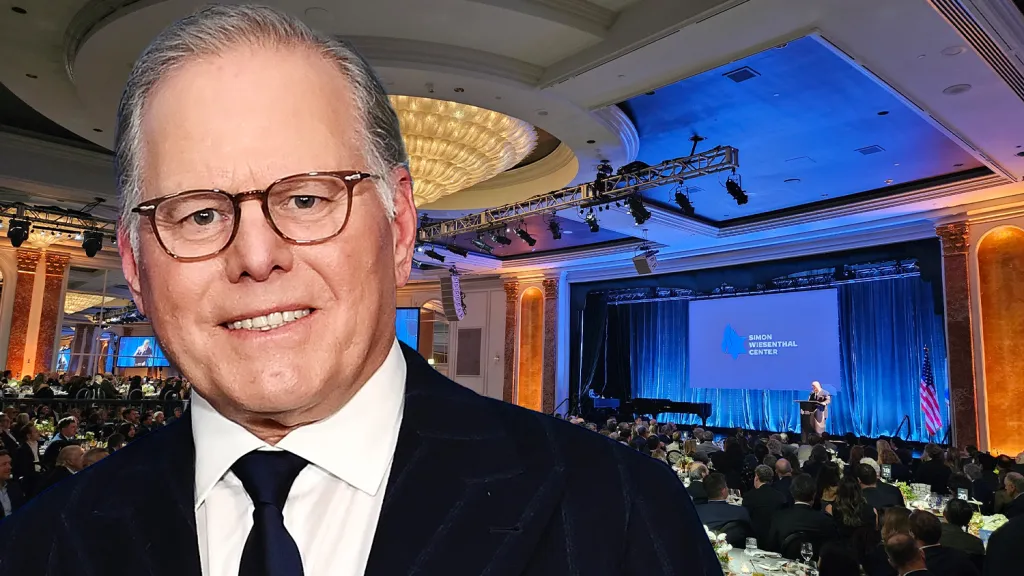
David Zaslav, Warner Bros. Discovery CEO (for a few more hours, anyway) has started his goodbyes, thanking employees in a memo posted Monday on the company’s internal portal.
“It’s been a great honor to be alongside all of you,” says Zaslav speaking to the camera from a director’s chair in the at Warner Bros. Studios’ Ranch facility in Burbank. “I hope you take pride in what you’ve built, what you’ve created, and the role you’ve played in shaping an extraordinary history.”
The executive will be riding int the sunset with a large gold parachute when the Paramount-WBD deal closes on Tuesday. He and the WBD board inked a deal to sell the company to David Ellison’s studio in February. That’s four and half years after Zaslav-run Discovery acquired what was then called Warner Media from AT&T.
He set about paring down the company’s massive debt – a remaining substantial amount of which will be absorbed by the new Skydance – and pushing to turn a streaming profit. The company had planned to split in half, separating studios and streaming from cable networks and later agreed to sell the former to Netflix. Ellison continued to bid for the combined company and was ultimately able to pry the two apart and seal the deal, valued at $110 billion.
It was a rich transaction for WBD stockholders, who will get a $31 a share payout. (WBD finished its last day as a publicly traded stock at $30.95.) Zaslav in particular stands to reap hundreds of billions from his shepherding of the deal, with the official figure to be disclosed in SEC filings over the coming days.
Other sweeteners included a ticking fee from Paramount that kicked in Oct. 1 and an equity financing backstop by Larry Ellison.
“I can’t wait to see what you do in the years ahead,” Zaslav says in the video. “I’m so grateful for all these years at Warner Bros. Discovery, for the wonderful experiences creating content, telling stories and getting to know so many of you.”
>

Anyone who moves to Los Angeles to pursue acting has those “rough times” stories and I’m no exception. Like the job I had selling stolen computer chips in Compton. Or when I was staying in the pool house of a Brooklyn gangster and one late night while partying he challenged me to an arm wrestling match and I accidentally broke his arm and he kicked me out. There was the nightclub bouncer job where my coworkers would eat the mystery drugs they found on the ground and then they’d fall through tables and I’d have to bounce them out as well. Oh, and of course, the night I awakened to my seventy-five year old roommate hovering over me with a kitchen knife because she thought I had stolen her mayonnaise.


That particular un-fun adventure ended with me doing another stretch of living in my ‘92 Honda Accord, which was getting old. Don’t get me wrong, they’re great cars, but they kinda suck as a house. I wasn’t doing well; I had to find a real bed. There was only one big bill left I could axe to get there sooner; the $265 per month I was spending on acting class. I had given up every cost but that, the only thing left feeding my hope. But that too, had to end.
“Whatever you do, don’t stop,” my acting teacher left me with in my last moment in my last class. “Even if you’re just recording a monologue into a camera, don’t stop.”
I liked that idea, and I was determined. I hadn’t escaped the bad part of Florida for nothing, and this was a plan to press on, no matter how tiny the impact of making silly videos may have seemed at the time. I also wanted to challenge myself, so I created a character who told stories so unbelievable that you’d swear he was lying. My goal was to act well enough to convince anyone watching that he wasn’t. I based him off the people I grew up with in Florida and combined it with a terrible Chris Walken impression. I’d shoot my videos right from my Honda Accord house and upload them to YouTube.

That was the start of Skweezy Jibbs.
It’s more than a decade later, in 2024. I’m living in Portland, OR, and Skweezy has racked up millions of social media followers and billions of views. You may have seen Skweezy’s mishap where he accidentally went to India instead of Indiana (a common mistake, could happen to anyone), or when he found a Wendy’s hack that led him to collect free nuggets from every Wendy’s across two states.
Skweezy had evolved over the years from a satire of a roughneck Florida guy to something more progressive, like if you took Florida Man and moved him to Portland, Oregon. I wanted him to have heart and talk about important issues like mental health — things that I had been challenged with in my own life. Skweezy started going on bigger adventures when I started to travel. The lines between myself and Skweezy began to blur with many stories from my actual life being incorporated. I decided to scrub much of my personal info from the internet including my earlier IMDB credits and non-Skweezy content. I was diving in to see how far this could go as a performance art piece.
Skweezy did a live comedy tour where he told his crazy stories alongside comedian Adam Pasi. The tour sold out across the nation and during the final show, I set it up so Skweezy was asked “What are you going to do next?” Without missing a beat I said “I’m going to make a movie.” The crowd went wild.
This is basically where the “Skweezy Jibbs Makes a Movie” began — live on that stage in Florida. I didn’t have a full script or money or really anything figured out yet. But I knew that was the next adventure for Skweezy; returning to what I had always wanted to do. Fast forward to the final product and the movie basically kicks off with that clip from the live show (which I had recorded to use later for the film) and continues on a crazy adventure of Skweezy’s journey to make a movie — one of many very meta things in the film. I began with inspiration from Christopher Guest’s movies, DIY action movies out of Uganda and Ghana, and a fascination for those times when you put everything you have into something only for it to turn out terrible.
I started by writing, as Skweezy, a 28 page script. Titled “The Ballet of Ricky Santangelo,” it’s the movie of his dreams: 50% John Wick, 50% Transformers, 50% Fast and the Furious, and 50% Magic Mike.

It follows former special forces agent and current exotic dancer Ricky Santangelo (played by Skweezy) as he rescues his son from the Russian Mafia. I enveloped that with a second script, the real script, which is the mockumentary that follows Skweezy’s trainwreck of a production. I pitched it to “Portlandia” producers David Cress and Kevin Sullivan, who I had become acquaintances with through the Portland social scene. They were intrigued and liked the concept, coming on board as consultants. I turned my attention to raising money.
A friend planted a bug in my ear about crowdfunding and that’s the route I ended up taking. In hindsight, I would have had more success if I had been more open about the film. But I didn’t want to show my hand and blow Skweezy’s “is he real or isn’t he” illusion. And asking people to trust you with their money is a tough sell when you’re playing a character who looks like he’s going to steal your catalytic converter. Thankfully true Skweezy fans got it. We also had some help due to the unique Kickstarter perks.
I offered shoutout videos, Skweezy autographed photos, stuff like that. But I also did product placement where you could get your business in the movie for $500. The energy drink that I’m always sipping on called Space 55? That’s a theater group in Phoenix. A heating and cooling company from New England has their name flashing on the robot suit.
Two people paid sizable amounts to have a line in the movie. I had a perk where your name could show up somewhere in the film. Art department had a lot of fun with those. I even sold character names. Someone paid for a character to be named Sandy Wormhole. Figuring out how to shoehorn that in was not easy. Does it work? It doesn’t not work.
Ultimately we raised $75K on Kickstarter, which was not nearly enough. So I started to basically beg every rich person I knew. The dentist in the movie is my actual dentist, Dr. Brady. Nothing on paper says putting your actual dentist in your movie should make sense, but I knew he could pull it off. He’s a super funny guy and his scenes always get big laughs. But to be fair, he’s been grinding on the standup circuit for a few years and he’s the real deal so I lucked out with him.
Another investor, Taymer, joined when I started getting creative with fundraising, including livestreams where you could pay to slap Skweezy in the face with a squid or have cockroaches scuttle across his face (a scene we recreated for the movie). He saw that nothing was going to stop me from carrying the project across the goal line so he went all in and became a huge part of not just the funding but the day to day operations.
I had my script and capital and with the momentum we had going, got David and Kevin fully on board as producers. They were the final piece I needed to ensure that despite our meager funds, this would be a real, professionally produced movie. With them we got great deals from locations to equipment to wardrobe to art. We punched way above our weight for the resources we had, including being able to audition potential directors which landed us Mike Ward, who had a great grounding energy on set. Thankfully the script and concept started winning over top crew in Portland and they all signed on even though we couldn’t pay them what they were worth.
I want to get them paid, so we set up our waterfall with two buckets. The first pays back investors. The second pays out cast and crew on what they would have made on a higher tier. After that is when I’ll actually make any real profit. I think that’s a good motivator for me to take this across the goal line.
We made our days. We made our budget. We made a movie. Now what?
71 dates across the US. Full roadshow, with Skweezy in every city doing a Q&A and meet and greet at each screening. Fun, crazy, exhausting, rewarding. This was never the plan, but the distribution offers we heard ranged from oof to straight up insulting. Nobody’s taking a chance on a low budget comedy with no names.
We researched our options, and were impressed by what the “Hundreds of Beavers” team had done. We wanted to give people something they can’t get on their couches. A premiere of the movie in their city, with Skweezy live in person at each show. A full experience. Would it work for us? Over a thousand people donated to the Kickstarter to fund a mystery movie from a character who looks like Temu Vanilla Ice. That was a healthy start.
We did a test run of eight theatrical screenings in November. The premiere sold out in six hours. The rest all sold out in advance as well including big theaters of 400+ seats in both Seattle and tiny Salem, Oregon. With those successes, we agreed to expand. After talking to bookers, we realized we couldn’t afford a middle man and I ended up booking the tour myself. I cold called the events department at AMC and connected with an amazing person there named Dawn and started building a route. Hit up great indie theatres as well. The Hollywood and Clinton in Portland, The Somerville in Boston, Grand Lake in Oakland, The Texas Theatre, The Frida in Santa Ana, and more. It’s been a great combo.
We’re selling out every screening now and have grossed over 300k on a P&A spend of about $120 a day with a dozen more shows to go before wrapping September 30th in LA. Merch has been huge. I get a cut to pay the rent, but the rest of the merch and all ticket sales go into filling those buckets.
It’s tough, but a fantastic adventure and I’d do it all again. I can imagine a new indie strategy where a lead actor tours with the movie, especially if it’s a comedy. Work it into the contract up front. Let them get a cut of the merch sales.
The tour is as much marketing for the next steps as revenue generation. Building letterboxd reviews. Spreading word of mouth. We’re examining scaling options like digital rentals, DVDs, Blu-Rays, merch bundles. Maybe partnering with indie theaters interested in monthly showings.
If Mr. Netflix or Ms. Hulu would like to toss us a couple million, we can definitely talk. In the meantime, I’m traveling the country (maybe then the world?) with a movie that I’m proud of that has all of my blood, sweat, and tears baked in. I get to hide in the theater hallway and listen to people laugh at a movie I never thought I’d get a chance to make, and it’s awesome. Even the worst days doing this are exponentially better than the potential of waking up to my elderly roommate stabbing me in the pancreas.
>

The Coalition of Asian Pacifics in Entertainment (CAPE) celebrated 35 years of advancing Asian American and Pacific Islander representation in film, television and media Saturday night at Downtown Los Angeles’ Vibiana, honoring a group of actors, creators and executives while raising more than $350,000 to support the organization’s continued work.
Presented by Lexus, CAPE’s 35th Anniversary Gala marked its first anniversary celebration in a decade. The organization traditionally holds its anniversary gala every five years, but the schedule was disrupted by the Covid-19 pandemic.
The evening brought plenty of laughs, but also a recognition that the progress CAPE and the broader AAPI entertainment community have made remains vulnerable amid an industry facing contraction, layoffs, and shrinking opportunities.
Host Asif Ali opened the ceremony with a series of jokes about the current state of AAPI representation and the entertainment business, thanking donors for supporting the arts rather than “building data centers and Flock cameras and sending folks into space.”
“This is a big year, a big occasion for CAPE,” Ali said, pointing to recent AAPI successes across television, film and music that included references to KPop Demon Hunters and Forgotten Island. “But the point is that CAPE’s work is proving that we can be anything; we need all of it to make change. We need everybody, we need CEOs, and we need Street Fighter. We can do it all.” He later added, “People are starting to be able to tell the difference between Asians, and that is progress.”
Randall Park at the 35th CAPE gala
CAPE
CAPE Executive Director and CEO Michelle K. Sugihara offered a more sobering assessment of the current industry landscape ahead of the evening’s fundraising push. “Tonight is a celebration of the advances we have made. It is also a moment to take stock of where we are today,” Sugihara said, pointing to milestone wins in representation at award shows and the box office.
“When CAPE started, there seemed to be a ceiling on how much we could ask for. Then for a brief time in the past few years, it seemed that the ceiling had shattered, but it was short-lived. Unless we stay vigilant, that ceiling will descend upon us again.”
Sugihara cited cuts to arts funding, shifting corporate priorities, industry contractions, mass layoffs and shrinking writers’ rooms. “The truth is, it is a strange and concerning time, but nobody ever said a career in the arts would be stable,” she said. “If I can think about what CAPE can try to be, I hope we can provide some measure of stability and strength in this rapidly changing industry.”
Since taking the helm in 2015, Sugihara said CAPE has grown from one fellowship program to nine fellowships and grants. The organization also consults with major studios and streamers on scripts, content and promotion, conducts research, creates resources for writers’ rooms and creative executives, and awards production grants.
The gala’s fundraising reflected the organization’s need for continued support. The evening began with approximately $150,000 raised and reached $181,000 before Ali and his Delhi Boys co-star Saagar Shaikh took the stage for a 10- to 15-minute fundraising break.
The pair made playful appeals to the “many rich people” in the room and referenced The Pitt’s recent Emmy haul as they pushed toward CAPE’s goal of raising at least $350,000 by the end of the night.
Several donations exceeding $20,000, including contributions from Netflix, STARZ and Paramount, quickly pushed the total past the goal to $351,118.
One donor also got in on the corporate humor, contributing $35 and identifying the gift as coming from the newly merged Paramount-Warner Bros. company, Skydance, after Paramount made its sizable donation.
CAPE donation screen
Destiny Jackson/Deadline
Looking back on his two decades-plus in the industry, Randall Park, the second honoree of the evening, accepting the Renaissance Award, delivered one of the night’s biggest laughs when he compared his career as an actor, writer and director to the great Renaissance figures Leonardo da Vinci and Michelangelo. “I say this with humility. I can’t think of anyone who deserves this award more than me,” Park joked. After describing da Vinci and Michelangelo’s accomplishments, Park offered his own resume: “The man who played Asian Jim in one scene of The Office. Kim Jung Un in a movie that almost started a war. And in an episode of House, M.D., I played a man who tried to circumcise himself. Look it up, it’s a real thing.”
But his speech eventually moved away from the joke and toward the community that has supported him throughout his career. “Look, all of this career stuff is great, but the best stuff happens amongst our family and friends and our community,” Park said. “So I want to take this time to thank my family and thank my friends and thank you all because you all are my community.”
Accepting the Radiance Award for the women of The Pitt, executive producer and writer Simran Baidwan was joined onstage by members of the cast and crew, including Isa Briones and Tal Anderson. The series’ AAPI talent also includes Supriya Ganesh, Amielynn Abellera and Krista Villanueva.
“This means more to me than I can adequately express,” Baidwan said. “Yes, it is a recognition of all the hard work that comes from behind the camera to in front of the camera, but it’s also a recognition that representation matters. Our stories matter. We matter,” she continued. “Gina Prince-Bythewood once said: ‘Cultural specificity doesn’t yell your name, it brings you in.’ And in The Pitt, we truly take that to heart by spending great time and care to tell authentic, meaningful, complex stories from the very perspectives of AAPI women and non-binary folks working in the healthcare industry, all of whom are too often tokenized or cast aside from television.”
Baidwan added: “But as API writers, actors, directors and producers, we’ve been given the privileged platform with which we can not only entertain, but also educate, elevate and effectuate positive change in the way the world sees us.”
Baidwan also credited showrunner and creator R. Scott Gemmill, along with John Wells and Noah Wyle, as “fearless allies” in that effort.
Jacinto closed the ceremony by looking back at his first CAPE gala 10 years ago. He recalled seeing actors and creatives he had admired from afar, including Ali Wong, Bing Chen and Daniel Dae Kim. He also remembered that the invitation gave him an excuse to ask a woman out on a date. “Being invited also gave me an excuse to ask a girl out on a date as well, so thank you, CAPE, for that, for being my wing man,” Jacinto said of his then-girlfriend, now wife Dianne Doan.
The women of The Pitt at the 35th CAPE gala
CAPE
Jacinto joked about how much his peers had accomplished over the past decade, from Wong’s Emmy win for Beef to Kim’s ever-sharp cheekbones, but said one thing had remained consistent: CAPE’s support for the community. “They continue to push diverse stories to connect all of us and provide resources to upcoming talent, especially to those who don’t necessarily feel like this industry is meant for them,” he said.
Other honorees of the night included Walt Disney Studios’ Kalikolehua Hurley, who received the Changemaker Award; Ben Wang, who received the Rising Star Award; Kitao Sakurai, who received the Visionary Award; Netflix executive Jinny Howe, who was honored with the Decision Maker Award; and filmmaker Cami Kwan, who spoke on behalf of CAPE’s Julia S. Gouw Short Film Challenge program.
The evening also featured presenters including Auliʻi Cravalho, Nisha Ganatra, Ali Ahn, Sherry Cola, Lilly Singh, and Callina Liang, as well as the indie band Chanpan.
>


Search For Canadian TV Actor Stewart McLean Now Homicide Investigation


These ’90s fashion trends are making a comeback in 2017
According to Dior Couture, this taboo fashion accessory is back
Model Jocelyn Chew’s Instagram is the best vacation you’ve ever had
Emily Ratajkowski channels back-to-school style
9 Celebrities who have spoken out about being photoshopped


Rurouni Kenshin: Hokkaido Arc Manga Takes 1-Issue Break – News


HIDIVE to Stream English Dubs for The World Is Dancing, The Forsaken Saintess and Her Foodie Roadtrip in Another World, The Dangers in My Heart: The Movie Anime – News